Funky Chicken Breeds: 12 Unusual Varieties to Know
By Dr. Zubair Khalid, DVM, MS, PhD ·
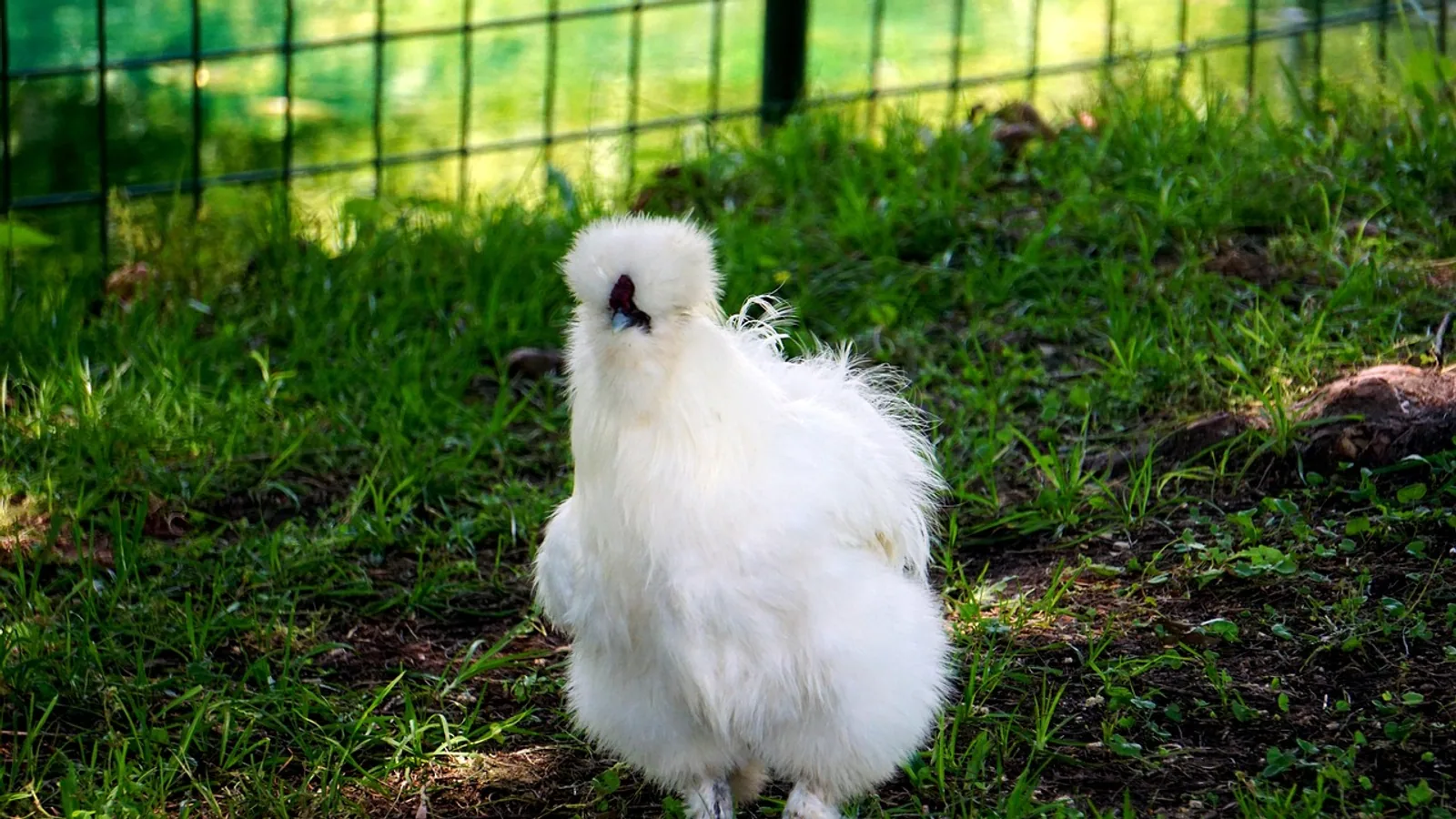
Funky chickens are breeds whose defining traits sit outside the commercial egg-laying and meat-production mainstream. A Silkie carries feathers that behave like fur. A Frizzle carries feathers that curl backward. An Ayam Cemani carries black pigment through its skin, muscle, and connective tissue. A Naked Neck carries a bare strip of skin down its throat. These traits are not styling choices. Most of them trace to single genes or small groups of genes, and several of those genes cause real health problems when a chick inherits two copies.
This guide covers 12 unusual breeds with practical numbers on egg color and annual output, temperament, climate tolerance, and the health pitfalls that owners most often miss. The focus is on what the bird actually needs, not on show-ring language or hatchery sales copy. Where the veterinary literature is specific, it is cited. Where a number varies by strain, line, or management, the range is given as a range.
This article is educational and is not a substitute for veterinary diagnosis or treatment.
At a Glance
| Feature | Typical range across these 12 breeds |
|---|---|
| Adult weight | 0.5 kg to 5.5 kg depending on breed and sex |
| Plumage | Normal, silked, frizzled, crested, naked-necked, or rumpless |
| Lifespan | 6 to 10 years with good management, shorter in heavy breeds |
| Egg color | White, cream, tinted, brown, or green depending on breed |
| Annual egg output | 50 to 200 eggs depending on breed |
| Energy level | Low to moderate in most ornamental breeds |
| Grooming | Crest trimming, foot-feather hygiene, and feather care in several breeds |
| Trainability | Moderate. Most respond to routine and food, not to commands |
| Good with children | Variable. Calm breeds suit supervised contact, nervous breeds do not |
| Good with other pets | Variable. Depends on flock integration and predator pressure |
What Makes a Chicken "Funky"

.jpg)
Three categories of trait show up again and again in unusual breeds.
The first is feather structure. Silkies carry a gene that replaces the barbicels that normally hold feather vanes together, so the plumage stays loose and downy. Frizzles carry a gene that makes the feather shaft curve, so the plumage curls outward. Both are structural changes to the same organ, and both change how the bird regulates heat and how waterproof it is.
The second is pigment. Ayam Cemani and other fibromelanotic breeds carry excess melanin in skin, fascia, periosteum, and muscle. The bird is not dyed. The pigment is developmental.
The third is skeletal and integumentary shape. Crested breeds such as the Polish and the Sultan carry a vaulted skull, meaning the frontal bones dome upward under the crest. Naked Neck birds carry a reduced feather count on the neck and often on the vent. Rumpless birds such as the Tukong lack a tail and the free caudal vertebrae that normally support it.
Many of these traits follow simple Mendelian inheritance. That matters because some of the same genes that produce an attractive look in one copy can be lethal, or cause serious deformity, in two copies. The classic example is the crest and vaulted skull complex in crested breeds. A chick that inherits two copies of the crest allele can die in the shell or hatch with a brain exposed. Breeders manage this by mating crested birds to non-crested birds and accepting that only a fraction of offspring show the full crest.
1. Silkie
Origin and purpose. The Silkie is an ancient Asian breed kept for centuries as an ornamental and broody bird. It is small, soft-feathered, and almost never used for commercial production.
Eggs. Cream to tinted, roughly 100 to 120 per year in a well-managed hen. Egg size is small. A study of ornamental breed eggs found that Silkie eggs had the lowest levels of polyunsaturated fatty acids among the breeds tested, which is a compositional difference rather than a quality defect [1].
Temperament. Silkie temperament is often described as docile, and that reputation is partly deserved. A pilot study that scored four ornamental breeds for animal-assisted therapy suitability found the opposite of what the authors expected. Silkie bantams showed the highest fear levels and the most avoidance of human contact of the four breeds tested, and scored worst on the study's seven-point predisposition scale [2]. Pekin bantams scored best. This does not mean every Silkie is nervous. It means the calm-Silkie story is not universal, and individual birds vary.
Climate tolerance. Poor in wet and cold conditions. The loose, non-interlocking feather structure does not shed water and does not trap air the way a normal feather coat does. Silkies get soaked through quickly and chill fast.
Health pitfalls. The feathering itself is the main problem. Because the plumage does not insulate or waterproof normally, Silkies are vulnerable to hypothermia in damp weather and to skin problems under wet feathers. The same study that scored Silkie behavior also noted the breed's weak performance in a handling test, which is relevant for owners who plan to handle birds frequently [2]. Silkie eggs are smaller than standard breed eggs, so a Silkie hen needs more eggs per gram of feed to match a layer breed.
Who it suits. Owners in dry, mild climates who want a broody, ornamental flock and who can provide a dry coop with good drainage.
2. Frizzle
Origin and purpose. The Frizzle is defined by a single dominant gene that curls the feathers outward. The trait appears in many breeds and is sometimes treated as a variety rather than a breed. The Cochin Frizzle and the Japanese Frizzle are the most common forms.
Eggs. Tinted to light brown, roughly 120 to 180 per year depending on the underlying breed. A Frizzle Cochin lays less than a Frizzle based on a lighter body type.
Temperament. Generally calm and easy to handle. The curled plumage makes the bird look larger than it is, which can intimidate new owners but does not reflect aggression.
Climate tolerance. Poor. Frizzled feathers do not lie flat, so they do not form a continuous insulating or waterproof layer. Frizzles are prone to chilling in rain and to sunburn on exposed skin in hot, bright conditions.
Health pitfalls. Frizzle feathering is fragile. The curled shafts break more easily than normal feathers, and the exposed skin at the base of the feather is vulnerable to injury, sunburn, and pecking by flockmates. The Frizzle gene is incompletely dominant. A chick with two copies (often called a "frazzle") has severely curled, brittle feathers that break off, leaving large areas of bare skin. Frazzles are prone to poor thermoregulation and skin damage and are generally not kept as breeding birds. Breeders pair a Frizzle with a smooth-feathered bird so that only about half the chicks inherit the curl.
Who it suits. Owners in mild, dry climates who can provide shade and shelter and who do not need high egg output.
3. Ayam Cemani
Origin and purpose. The Ayam Cemani comes from Indonesia and is the best-known fibromelanotic breed. The bird is black in plumage, skin, comb, wattles, beak, legs, and internal connective tissue. It is kept as an ornamental and ceremonial bird.
Eggs. Cream to light tinted, roughly 60 to 100 per year. The eggs are not black. The shell is normal colored because the shell gland does not deposit melanin the way the skin does. Hens are seasonal layers and often stop in short-day conditions.
Temperament. Active, alert, and often flighty. Cemani hens go broody readily. Roosters can be assertive.
Climate tolerance. Moderate. The breed handles warm, humid conditions better than cold, wet ones. The black plumage absorbs heat, which is an advantage in cool weather and a liability in extreme heat.
Health pitfalls. Fibromelanosis is a developmental pigment trait, not a disease, and it does not by itself cause illness. The practical problems are the breed's small population and the resulting inbreeding in some lines. A whole-genome study of rare dwarf and bantam breeds found that some rare breeds carry elevated inbreeding rates and reduced effective population sizes, meaning they descend from a limited number of ancestors [3]. Rare breeds with narrow founder pools need outcrossing to maintain vigor. Cemani chicks are also small and slow to feather, so brooding them in cool weather requires attention.
Who it suits. Owners who want a striking ornamental bird and who are willing to source stock from breeders who track lineage.
4. Polish
Origin and purpose. The Polish is a crested breed with a large, spherical feather crest and, in some varieties, a beard and muffs. It is ornamental and has been kept as a show and curiosity bird for centuries. A whole-genome study included Polish White-crested Black among six dwarf and small breeds and used it as a reference point for genetic diversity comparisons [3].
Eggs. White, roughly 100 to 150 per year. Egg size is small to medium.
Temperament. Calm but easily startled. The crest blocks forward and upward vision, so the bird cannot see approaching threats from above or the front. This is a management issue, not a personality flaw.
Climate tolerance. Moderate. The crest holds moisture and can freeze in cold, wet weather. Polish birds do better in dry cold than in wet cold.
Health pitfalls. The vaulted skull is the central concern. The crest sits on a dome of frontal bone that in some birds leaves a soft spot. A sharp peck to the crest, or a knock against a feeder or coop wall, can injure the brain. Chicks with two copies of the crest allele can die before hatching or hatch with exposed brain tissue. Owners should avoid housing Polish with aggressive flockmates and should not handle the crest roughly. The crest also collects moisture and debris, which can lead to skin infections under the feathers. Trimming the crest around the eyes improves vision and reduces startle injuries, but trimming is a management decision to discuss with a veterinarian if the bird shows signs of eye irritation.
Who it suits. Owners who can provide a calm, predator-secure coop and who accept reduced egg output in exchange for a distinctive bird.
5. Brahma
Origin and purpose. The Brahma is a large Asiatic breed developed for meat and, secondarily, for eggs. It is one of the heaviest backyard breeds and is often kept for its size and its feathered legs and feet.
Eggs. Brown, roughly 150 to 200 per year. Egg size is large. A study of ornamental breed eggs included Brahma and found that eggshell composition varied significantly between breeds in mean phosphorus content, while calcium content did not differ significantly, and that eggshell strength varied significantly between breeds [1].
Temperament. Calm and slow-moving. Brahmas are among the more handleable large breeds and rarely fly.
Climate tolerance. Good in cold, poor in heat. The dense plumage and feathered feet suit cold climates. In hot, humid weather Brahmas are prone to heat stress.
Health pitfalls. Feathered feet and legs trap mud and moisture, which sets up foot problems in wet runs. The breed's size puts stress on the legs and joints, and heavy birds are more likely to develop leg weakness if they are fed too much energy early. Because Brahmas are large, they need wider roosts and more floor space than a standard breed. The egg study also found that Brahmas produce eggs with breed-specific shell characteristics, so shell quality should be monitored as hens age [1].
Who it suits. Owners in cold climates with space for a large, slow bird and a dry, well-drained run.
6. Sultan
Origin and purpose. The Sultan is a Turkish ornamental breed with a crest, a beard, muffs, feathered feet, and five toes. It is one of the most heavily ornamented breeds and is kept almost entirely for display.
Eggs. White, roughly 50 to 100 per year. Egg size is small. The ornamental egg study found that Sultan eggs were among the breeds analyzed for external and internal quality, and that ornamental breeds as a group produce eggs with distinct compositional profiles compared with commercial layers [1].
Temperament. Calm and docile. Sultans are not aggressive and integrate into mixed flocks without much conflict.
Climate tolerance. Poor in wet conditions. The combination of crest, beard, muffs, and feathered feet means the bird has a lot of feather mass that holds water and mud.
Health pitfalls. The Sultan carries the same vaulted skull risk as the Polish, because the crest sits on a domed frontal bone. The beard and muffs can obscure vision and collect food and moisture, which promotes skin problems around the face. Feathered feet need dry footing. The breed's small population means many lines are closely related, and the same inbreeding concerns that apply to other rare breeds apply here [3]. Sultans are also low producers, so owners should not expect commercial egg numbers.
Who it suits. Owners who want a calm ornamental bird and who can keep the run dry and the crest clean.
7. Naked Neck (Transylvanian)
Origin and purpose. The Naked Neck, also called the Turken, carries a dominant gene that reduces feathering on the neck and often on the vent. The breed is a dual-purpose bird in many parts of the world and is valued for heat tolerance.
Eggs. Brown, roughly 150 to 200 per year. Egg size is medium to large.
Temperament. Calm and hardy. Naked Necks are less flighty than many ornamental breeds and handle mixed flocks well.
Climate tolerance. Excellent in heat, poor in cold. The reduced feather cover on the neck helps the bird dissipate heat, which is why the trait persists in hot regions. In cold weather the bare skin is a liability, and the bird needs a draft-free coop.
Health pitfalls. The bare neck skin is exposed to sunburn, insect bites, and pecking by flockmates. The Naked Neck gene is dominant and not lethal in homozygous form, so the trait breeds true. The main management issue is protecting exposed skin. The breed's heat tolerance is well documented in the broader literature on tropical chicken genotypes, where native and black-boned breeds show genotype-specific heat stress thresholds and Thai native chickens tolerate higher thermal loads than black-boned birds [4][5]. Naked Necks fit the heat-tolerant end of that spectrum.
Who it suits. Owners in hot, humid climates who want a productive bird with reduced feather cover.
8. Appenzeller Spitzhauben
Origin and purpose. The Appenzeller Spitzhauben is a Swiss breed with a forward-pointing crest, a V-shaped comb, and a distinctive spangled plumage. It is an active, light-bodied bird kept for eggs and ornament.
Eggs. White, roughly 150 to 180 per year. Egg size is medium.
Temperament. Active, alert, and good at foraging. Spitzhaubens are more independent than the calm ornamental breeds and can be flighty if not handled regularly.
Climate tolerance. Good in cold, moderate in heat. The breed originated in alpine conditions and handles cold well. The crest is smaller than a Polish crest, so it holds less moisture.
Health pitfalls. The crest is smaller and the skull vault is less pronounced than in Polish or Sultan birds, so the brain-injury risk is lower but not zero. The V-shaped comb is less prone to frostbite than a large single comb, which is an advantage in cold climates. Spitzhaubens are light and fly well, so they need taller fencing or a covered run. The breed is rare, and rare breeds generally carry higher inbreeding and lower effective population sizes than common breeds [3].
Who it suits. Owners in cold climates with secure, tall fencing who want an active forager.
9. Cochin (Standard and Bantam)
Origin and purpose. The Cochin is a large Asiatic breed with abundant plumage and feathered feet. The bantam form is one of the most popular ornamental bantams. A whole-genome study included Cochin Bantam among six dwarf and small breeds and found that rare breeds in the group came from limited numbers of ancestors or had been under strong selection pressure for many generations [3].
Eggs. Brown, roughly 100 to 150 per year in standard Cochins, fewer in bantams. A study of ornamental breed eggs found that Cochin Bantam eggs had the lowest mean weight of the breeds tested and the highest cholesterol content, while White Leghorn eggs had the highest weight and the lowest cholesterol [1]. The same study found a positive correlation between egg weight and albumen percentage and a negative correlation between egg weight and yolk percentage [1].
Temperament. Calm, friendly, and very broody. Cochins are among the easiest large breeds to handle.
Climate tolerance. Good in cold, poor in heat. The dense plumage and feathered feet suit cold weather. In hot, humid conditions Cochins are prone to heat stress and foot problems.
Health pitfalls. Feathered feet require dry footing. The breed's heavy body and abundant plumage make it prone to overheating in summer. Cochins are also very broody, which reduces annual egg output because hens spend weeks on nests instead of laying. The egg study's finding that Cochin Bantam eggs are small and high in cholesterol is a compositional note, not a health warning for the hen [1].
Who it suits. Owners in cold climates who want a calm, broody bird and who can keep the run dry.
10. Japanese Bantam (Chabo)
Origin and purpose. The Japanese Bantam, also called the Chabo, is a true bantam with an extremely short shank, a large upright tail, and a small body. It is ornamental and has been kept in Japan for centuries. A pilot study on chicken-assisted therapy included Chabo daruma and found moderate behavioral predispositions for therapy work, between the high-scoring Pekin bantam and the low-scoring Silkie [2].
Eggs. Cream to tinted, roughly 50 to 80 per year. Egg size is very small.
Temperament. Calm and confiding when handled from a young age. Chabos are not aggressive and do well in small flocks.
Climate tolerance. Moderate. The short legs and large tail reduce the bird's ability to move through deep litter or snow. Chabos do best in mild, dry conditions.
Health pitfalls. The breed carries a lethal gene complex. Chicks that inherit two copies of the short-leg gene die in the shell. This is one of the clearest examples of a funky trait that is lethal in homozygous form. Breeders manage it by mating short-legged birds to long-legged birds, which produces a mix of short-legged and long-legged chicks. Chabos also have a large tail that can drag and soil, and the short legs make the vent area close to the ground, so hygiene matters. The breed's small size means it is vulnerable to bullying in mixed flocks.
Who it suits. Owners who want a small, calm ornamental bird and who keep a clean, dry coop.
11. Korolyok (Russian Kinglet)
Origin and purpose. The Korolyok, translated as "kinglet," is a rare Russian dwarf breed. A whole-genome study characterized it relative to five other dwarf and small breeds, including Cochin Bantam, Hamburg Bantam Silver Spangled, Polish White-crested Black, Red White-tailed Dwarf, and Silkie White [3]. The study estimated phenotypes, heterozygosity, inbreeding, effective population size, and runs of homozygosity, and identified candidate genes within runs of homozygosity that may relate to the breed's small body size and other traits [3].
Eggs. Cream to tinted, roughly 80 to 120 per year. Egg size is small.
Temperament. Active and alert. The breed is not widely kept outside Russia, so temperament descriptions come from a small number of breeders.
Climate tolerance. Good in cold. The breed was developed in a cold climate and handles low temperatures better than most ornamental bantams.
Health pitfalls. The Korolyok is rare, and the whole-genome study found that rare breeds in its comparison group had lower effective population sizes and higher inbreeding rates than common breeds [3]. Owners who keep Korolyoks should source stock from breeders who track lineage and avoid close matings. The breed's small body size also means it needs a lower roost and smaller feeders than standard breeds.
Who it suits. Owners in cold climates who want a rare dwarf breed and who are willing to work with a small breeder network.
12. Tukong
Origin and purpose. The Tukong is an Indonesian breed with a rumpless phenotype, meaning it lacks a tail and the free caudal vertebrae. A study of Tukong egg and meat quality found that the breed maintains favorable egg quality and nutritional profiles under tropical conditions, with a carcass yield of 78.9 percent that the authors associated with the rumpless phenotype [6].
Eggs. Tinted to light brown, roughly 100 to 150 per year. The study found Tukong eggs were round, with an egg index of 79.32 percent, and had good internal quality with a Haugh unit of 71.73, which is a Grade A score [6]. Average yolk color score was 10.43, and egg composition was 11.23 percent protein, 13.98 percent fat, and 72.91 percent moisture [6].
Temperament. Active and hardy. Tukong birds are kept in tropical free-range systems and are adapted to foraging.
Climate tolerance. Excellent in heat. The study recorded ambient temperatures of 26 to 34 degrees Celsius and afternoon temperature-humidity index values frequently above the severe heat stress threshold of 82, and the Tukong maintained favorable egg quality under those conditions [6].
Health pitfalls. The rumpless phenotype means the bird lacks a tail, which changes balance and mating behavior. Rumpless roosters can have difficulty mating because they lack the tail support that normally helps them balance during mounting. The breed is also adapted to tropical conditions, so it does poorly in cold climates. The study's finding that Tukong meat had 19.74 percent protein and 18.15 percent fat is a compositional note, not a health warning [6].
Who it suits. Owners in hot, humid climates who want a heat-tolerant, rumpless breed.
Comparison Table
| Breed | Egg color | Eggs per year | Temperament | Climate fit | Notable health risk |
|---|---|---|---|---|---|
| Silkie | Cream to tinted | 100 to 120 | Often described as docile, but a pilot study found high fear and avoidance in the breed [2] | Poor in wet and cold | Feathering does not waterproof or insulate well |
| Frizzle | Tinted to light brown | 120 to 180 | Calm | Poor in wet and cold | Fragile curled feathers. Two copies of the gene cause severe feather loss |
| Ayam Cemani | Cream to light tinted | 60 to 100 | Active, alert, can be flighty | Moderate. Better in warm than cold, wet | Inbreeding in rare lines [3] |
| Polish | White | 100 to 150 | Calm but easily startled | Moderate. Better in dry cold | Vaulted skull. Crest injury can expose the brain |
| Brahma | Brown | 150 to 200 | Calm and slow | Good in cold, poor in heat | Feathered feet trap mud. Large body stresses legs |
| Sultan | White | 50 to 100 | Calm and docile | Poor in wet | Vaulted skull. Crest, beard, and muffs hold moisture |
| Naked Neck | Brown | 150 to 200 | Calm and hardy | Excellent in heat, poor in cold | Exposed neck skin sunburns and is vulnerable to pecking |
| Appenzeller Spitzhauben | White | 150 to 180 | Active and alert | Good in cold, moderate in heat | Smaller crest but still a vaulted skull risk. Flies well |
| Cochin | Brown | 100 to 150 | Calm, friendly, very broody | Good in cold, poor in heat | Feathered feet. Heavy body overheats |
| Japanese Bantam | Cream to tinted | 50 to 80 | Calm when handled | Moderate. Needs mild, dry conditions | Short-leg gene is lethal in homozygous form |
| Korolyok | Cream to tinted | 80 to 120 | Active and alert | Good in cold | Rare breed with low effective population size [3] |
| Tukong | Tinted to light brown | 100 to 150 | Active and hardy | Excellent in heat | Rumpless roosters have difficulty mating |
How Funky Traits Are Inherited
Most of the traits in this article follow simple Mendelian patterns, and several have lethal or sublethal effects in homozygous form.
The crest and vaulted skull trait in Polish, Sultan, and other crested breeds is the clearest example. A single copy produces the crest. Two copies cause embryonic death or severe cranial defects. Breeders mate crested birds to non-crested birds to avoid producing homozygous chicks.
The Frizzle gene is incompletely dominant. One copy produces the curled plumage that defines the breed. Two copies produce the "frazzle" phenotype, with brittle feathers that break and leave bare skin. Frazzles are not a separate breed. They are the homozygous form of the same gene.
The short-leg gene in Japanese Bantams is lethal in homozygous form. Chicks with two copies die in the shell.
The Naked Neck gene is dominant and not lethal in homozygous form, so the trait breeds true.
The rumpless trait in Tukong and other rumpless breeds is a skeletal change that removes the free caudal vertebrae. It is not lethal, but it changes mating mechanics.
Fibromelanosis in Ayam Cemani is a pigment trait with no direct health effect. The health concerns in that breed come from population genetics, not from the pigment gene itself.
Health Screening and Preventive Care
A few screening points apply across all 12 breeds.
Feather and skin checks. For Silkies, Frizzles, and any breed with abnormal feather structure, check the skin under the plumage monthly. Look for redness, broken shafts, bare patches, and signs of pecking by flockmates. Wet feathers and bare skin are both entry points for infection.
Crest and skull checks. For Polish, Sultan, and Appenzeller Spitzhauben, inspect the crest for moisture, debris, and skin irritation. Watch for signs of head injury after any flock disturbance. A bird that shows head tilt, circling, or reluctance to move after a knock to the crest needs veterinary assessment.
Foot and leg checks. For Brahma, Cochin, and Sultan, check the feathered feet weekly. Mud and moisture trapped in foot feathers cause skin problems and can lead to lameness. Keep the run dry and trim foot feathers only if a veterinarian advises it.
Heat stress monitoring. For Brahma, Cochin, and other heavy breeds in hot weather, watch for panting, wing holding, and reduced feed intake. Research on heat stress in chickens shows that egg production declines as the temperature-humidity index rises, with genotype-specific thresholds. Black-boned chickens began losing production at a temperature-humidity index of 72, while Thai native chickens tolerated up to 74 [4][5]. Heavy, densely feathered breeds sit at the sensitive end of that range.
Cold stress monitoring. For Naked Necks, Frizzles, and Silkies in cold weather, watch for huddling, shivering, and pale combs. These breeds lack the feather cover to retain heat.
Parasite and respiratory checks. All backyard flocks need routine monitoring for external parasites and respiratory signs. According to the Merck Veterinary Manual, backyard poultry are susceptible to a range of parasites and respiratory pathogens that spread quickly in confined, damp conditions. A veterinarian can advise on a flock health plan.
Egg quality monitoring. For breeds with small eggs or unusual shell characteristics, track shell strength and internal quality as hens age. The ornamental breed egg study found that eggshell strength varies significantly between breeds and that shell phosphorus content differs while calcium content does not [1]. This means shell problems in ornamental breeds are not always a calcium issue and may need veterinary assessment.
Housing, Feeding, and Daily Care
Housing. All 12 breeds need a dry, draft-free coop with good ventilation. The specific needs vary by breed. Heavy breeds such as Brahma and Cochin need wider roosts and more floor space. Light breeds such as Appenzeller Spitzhauben and Japanese Bantam need taller fencing or a covered run because they fly well. Crested breeds need feeders and waterers that do not force the bird to push its crest into a sharp edge.
Feeding. Ornamental breeds generally need less energy than commercial layers, and heavy breeds can develop leg problems if they are fed a high-energy diet early. A veterinarian or poultry nutritionist can help set a feeding plan based on the breed and the bird's body condition. The EFSA has assessed feed additives for laying hens and other birds kept for egg production, and the regulatory framework for poultry feed additives in the United States is managed by the FDA. Owners who use supplements should confirm they are labeled for laying hens.
Water. Clean water at all times. In hot weather, water intake rises sharply and heat stress reduces egg production [4][5]. In cold weather, check that water is not frozen and that the bird can reach it without walking through mud.
Litter and bedding. Keep litter dry. Damp litter is the single biggest driver of foot problems in feathered-foot breeds and of skin problems in Silkie and Frizzle breeds.
Flock integration. Ornamental breeds are often smaller and less assertive than production breeds. Introduce new birds gradually and provide multiple feeders and waterers so that low-ranking birds can eat without competition. Research on laying hen behavior shows that fear and exploration responses vary by breed and housing system, and that housing design affects how birds respond to novelty and humans [7]. A well-designed coop with escape space reduces stress in nervous breeds.
Who Should Not Get These Breeds
Do not choose a funky breed if you need maximum egg output per bird. Most of these breeds lay 50 to 180 eggs per year, well below commercial layer output. A study of dual-purpose genotypes under free-range conditions found that a local breed had a feed conversion ratio above 8.2, compared with 2.9 to 3.9 for two commercial dual-purpose genotypes, and the authors associated the difference with brooding behavior in the local breed [8]. Ornamental breeds are even less efficient.
Do not choose a crested breed if you cannot supervise the flock or cannot keep aggressive birds separate. A single peck to a vaulted skull can cause serious injury.
Do not choose a Silkie or Frizzle if you live in a wet, cold climate and cannot provide a dry, sheltered coop.
Do not choose a Naked Neck or Tukong if you live in a cold climate and cannot heat or heavily insulate the coop.
Do not choose a rare breed such as Ayam Cemani or Korolyok unless you are willing to source stock from a breeder who tracks lineage and to manage inbreeding over time.
Do not choose any of these breeds if you are not prepared for the possibility of a bird that needs individual veterinary care. Ornamental breeds often need more hands-on management than production breeds.
Limitations and When to Contact a Veterinarian
This article covers breed-level tendencies. Individual birds vary, and a veterinarian who examines your flock can give advice specific to your setup.
Contact a veterinarian promptly if you see any of the following.
- A bird with a head injury, head tilt, circling, or reluctance to move after a knock to the crest
- A bird with a swollen, hot, or discolored foot, or a foot that is bleeding or has a foul smell
- A bird with bare, red, or broken skin under the feathers, especially in a Silkie or Frizzle
- A bird that is panting heavily, holding its wings out, or refusing feed in hot weather
- A bird that is shivering, huddling, or has a pale or blue comb in cold weather
- A hen that stops laying suddenly, lays soft-shelled or malformed eggs, or has a swollen abdomen
- A bird with labored breathing, nasal discharge, or a swollen face
- A bird that is being pecked by flockmates or is isolating itself from the flock
- Any bird that has not eaten or drunk for 24 hours
For flock-level concerns, contact a veterinarian who works with poultry. According to the AVMA, backyard poultry owners should work with a veterinarian on flock health planning, including parasite control and biosecurity. The Merck Veterinary Manual is a useful reference for common poultry diseases, but it does not replace an examination.
Frequently Asked Questions
What are the most unusual chicken breeds?
Silkie, Frizzle, Ayam Cemani, Polish, Sultan, Naked Neck, Appenzeller Spitzhauben, Japanese Bantam, Korolyok, and Tukong are among the most unusual. Each carries a distinctive trait such as silked feathers, curled feathers, fibromelanosis, a crest, a naked neck, or a rumpless body.
Do funky chicken breeds lay well?
Most lay less than commercial layers. Annual output ranges from about 50 eggs in the Sultan and Japanese Bantam to about 200 in the Brahma and Naked Neck.
Are Silkie chickens good pets?
Silkies can be calm, but a pilot study found the breed showed the highest fear levels and the most avoidance of human contact among four ornamental breeds tested [2]. Individual birds vary, so handle chicks from a young age if you want a tame adult.
Why do Frizzle chickens have curly feathers?
A single dominant gene makes the feather shaft curve. One copy produces the breed's characteristic curl. Two copies produce brittle feathers that break and leave bare skin.
What is a vaulted skull in crested chickens?
A vaulted skull is a domed frontal bone that sits under the crest in breeds such as the Polish and Sultan. The dome can leave a soft spot, so a peck or knock to the crest can injure the brain.
Can Ayam Cemani chickens lay black eggs?
No. Ayam Cemani eggs are cream to light tinted. The black pigment affects skin, connective tissue, and plumage, not the eggshell.
Are Naked Neck chickens good in hot climates?
Yes. The reduced feather cover on the neck helps the bird dissipate heat. Research on heat stress in chickens shows that genotype affects the temperature-humidity index at which egg production begins to decline [4][5].
What should I feed a funky chicken breed?
Feed a complete poultry diet appropriate for the bird's age and production status. Heavy breeds need controlled energy intake to protect their legs, and ornamental breeds generally need less energy than commercial layers. Ask a veterinarian or poultry nutritionist for a plan that fits your flock.
Related Articles
- Pigeon Breeds: A Guide to Popular Varieties
- Poodle Dog Breed: Varieties, History, Temperament, Health Records, Grooming, and Home Fit
- Goldfish Types and Varieties Guide
- Tabby Cat: Everything You Need to Know About Patterns, Breeds & Temperament
- Munchkin Cat: Everything You Need to Know About This Short-Legged Breed
- Raising Chickens for Eggs: Breed Selection, Care, and Egg Production
- Goose Types: Breeds Compared for Eggs and Meat
- Turkey Colors: Plumage Varieties Explained
- How to Tell If a Cat Is Pregnant: Signs and Timeline
Sources
- External and internal quality traits of eggs from different ornamental chicken breeds.
- Assessment of Behavioral Predispositions of Selected Chicken Breeds for Use in Animal-Assisted Therapy: A Pilot Study.
- Kinglet in the Poultry Court of Russia: Whole-Genome Insights into Ancestry, Genetic Variability, Selection Footprints and Candidate Genes in a Unique Local Chicken Breed Relative to Other Bantam/Dwarf Breeds.
- Refined THI Models for Evaluating the Effects of Heat Stress on Egg Production in Thai Native and Black-Boned Chickens.
- Resilience of black-boned and Thai native chickens to heat stress: Implications of temperature-humidity index for sustainable egg production.
- Egg and meat quality attributes of Tukong, a rumpled chicken breed in Indonesia.
- Hen fearfulness and exploration is associated with strain/breed, housing system and feeder space in Australian free-range commercial egg farms.
- Comparative Performance of Three Hen Genotypes for Dual-Purpose Egg and Meat Production in Free-Range Systems.