Do Possums Eat Chickens? Predation Facts
By Dr. Zubair Khalid, DVM, MS, PhD ·
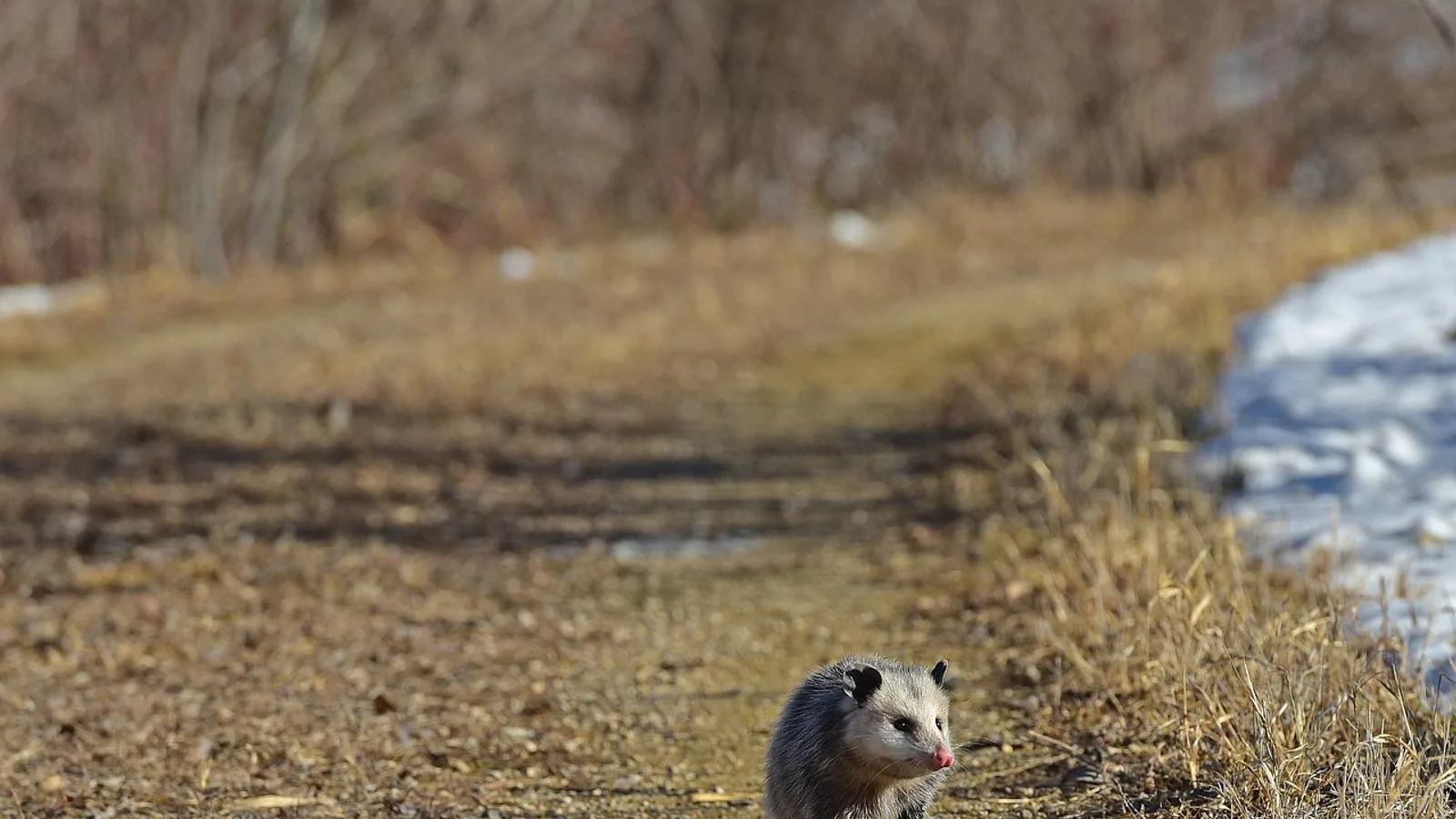
Opossums can eat chickens, but documented cases almost always involve eggs, chicks, or a bird that was already dead or dying. A healthy adult hen on the roost is not a realistic target for a Virginia opossum, and the animal most backyard keepers blame for a torn-up carcass is usually a raccoon, fox, dog, or hawk. This article breaks down what opossums actually eat, how to read a kill site correctly, and how to build a coop that stops the real predators.
The Direct Answer
Yes, an opossum will eat chicken if it can get it. No, an opossum is not a major poultry predator in the way a raccoon or fox is. The distinction matters because it changes how you respond. Trapping or killing an opossum that wandered through your yard does not solve a raccoon problem, and in many US states it may violate wildlife law.
The confusion comes from three things. Opossums are nocturnal, so they are present at the scene of night kills. They are carrion eaters, so they will feed on a bird another predator killed. And they have a mouth full of sharp teeth, which makes their bite marks easy to misattribute.
What Opossums Actually Eat


The Virginia opossum (Didelphis virginiana) is the species most US backyard keepers encounter. It is a marsupial, not a rodent, and it is best described as an opportunistic omnivore. Its diet shifts with whatever is available, which is exactly why it shows up near coops and trash cans.
Diet Composition
Opossums eat insects, carrion, fruit, small rodents, amphibians, reptiles, worms, snails, and human food waste. They are generalists with a strong scavenging component. Captive dietary studies of related opossum species confirm this flexibility. The gray short-tailed opossum (Monodelphis domestica) shows clear food preferences in a laboratory setting, which tells us these animals make active dietary choices rather than eating indiscriminately [1]. Woolly opossums (Caluromys species) kept in a laboratory colony stayed healthy on a meat, egg, and fruit diet and showed a particular liking for fruit, especially bananas [2]. That is not a chicken-killer profile.
Anatomy supports the same conclusion. The masseter muscle structure of the common opossum is more similar to that of carnivorous placental mammals than to herbivorous marsupials like the red kangaroo, and food habits shape these jaw muscle layers across species [3]. In plain terms, opossums have a jaw built for a mixed diet that includes animal matter. A jaw built for mixed feeding is not the same as a jaw built for bringing down large prey.
Why Carrion Matters
Carrion is a core food source for opossums, and this single fact explains most poultry "predation" reports. If a raccoon kills a hen at 2 a.m. and an opossum finds the carcass at 3 a.m., you will find an opossum at the kill site in the morning. The opossum did not do the killing. It did the cleanup.
Opossums also have unusual metabolic handling of food scarcity. During fasting, Virginia opossums do not enter a hypometabolic state. Instead they shift fuel use toward lipids and reduce the carbohydrate contribution to total energy expenditure roughly sixfold, which protects limited carbohydrate reserves [4]. An animal adapted to ride out lean periods by burning fat is an animal adapted to scavenge rather than to hunt hard every night.
Can Possums Kill Chickens?
Can possums kill chickens? Physically, yes. Will a possum kill a chicken in most backyard settings? Rarely, and almost never a healthy adult bird.
An adult opossum typically weighs 4 to 14 pounds. A healthy adult standard-breed hen weighs 5 to 8 pounds and has a beak, wings, and a strong flight-or-fight response. A direct confrontation between the two is not a sure thing for the opossum. The realistic targets are:
- Eggs. An opossum will eat eggs it finds in a nest box. This is the most common real loss.
- Chicks and young pullets. Small birds are vulnerable because they cannot defend themselves.
- Sick, injured, or dying birds. An opossum will finish a bird that is already down.
- Birds trapped or unable to escape. A hen wedged in a fence or stuck in a corner is at risk.
- Dead birds. Carrion feeding is normal opossum behavior.
What an opossum will not reliably do is scale a wall, force a locked latch, and kill a healthy adult hen on an elevated roost. That is raccoon and fox territory.
Reading a Kill Site: Opossum vs Raccoon vs Fox vs Hawk vs Dog
The single most useful skill for a poultry keeper is reading a kill site. Wound pattern, what is missing, and tracks tell you which animal you are dealing with. Misreading the evidence leads to killing the wrong animal and leaving the real predator in place.
Wound Pattern
- Opossum. Bite marks are small and scattered. Feeding often starts at the abdomen or an existing wound. The carcass is frequently messy because the animal is scavenging, not methodically killing. Feathers are pulled rather than sheared.
- Raccoon. Raccoons often kill multiple birds in one night and leave them mostly intact, sometimes eating only the crop or the head. They reach into a coop and pull birds through gaps, leaving heads and necks behind.
- Fox. Foxes typically carry birds away. You find a scatter of feathers and a missing bird rather than a body. Fox kills often show a clean bite to the neck.
- Hawk. Hawks strike from above in daylight. The kill is usually a single bird, plucked at the breast, with the body left in the open. Feathers are sheared cleanly.
- Dog. Dogs chase and maul. Multiple birds may be killed or injured with crush wounds and no feeding. The scene is chaotic rather than a feeding site.
Missing Birds and Tracks
Count your flock before you draw conclusions. A missing bird points to a predator that carries prey away, which is fox and sometimes raccoon behavior. A body left in place with feeding damage points to raccoon or opossum. A single plucked bird in the open during daylight points to a hawk. Multiple dead birds with no feeding points to a dog.
Track size and shape help confirm. Opossum tracks show five toes on the front foot and an opposable thumb on the rear foot, which produces a distinctive spread pattern. Raccoon tracks look like small human handprints. Fox tracks are narrow and dog-like in a straight line. Dog tracks are larger and blunter.
Predation Evidence Table
| Species | Typical prey size | Kill signature | Likelihood for adult chickens |
|---|---|---|---|
| Opossum | Eggs, chicks, small rodents, carrion | Scattered small bites, feeding from abdomen or existing wound, messy carcass, often found at a site it did not create | Low for healthy adults, moderate for eggs and chicks |
| Raccoon | Eggs, chicks, adult birds | Multiple kills in one night, birds pulled through gaps, heads and crops eaten, bodies left largely intact | High |
| Fox | Chicks, adults | Bird carried away, feather scatter, clean neck bite | High |
| Hawk | Chicks, adults | Single bird, daylight, breast plucked, body left in the open | Moderate to high in exposed runs |
| Dog | Any size | Multiple dead or injured birds, crush wounds, no feeding, chaotic scene | High when dogs have access |
| Opossum on carrion | Already dead birds | Feeding damage on a carcass killed by another animal | Not a kill, a scavenge |
The Biology Behind the Low Risk
Three biological facts explain why opossums are low-risk poultry predators.
They Are Scavengers by Design
Opossums are nocturnal and largely solitary. Woolly opossums in captivity were completely nocturnal and rarely active during daylight hours, and their general behavior varied with individual temperament and enclosure size [2]. The same pattern holds broadly for opossums. They move slowly, they do not run down prey, and they rely on finding food rather than chasing it. A slow-moving nocturnal scavenger is a poor fit for taking down a fast, alert, 6-pound bird.
They Are Not Built for the Hunt
Opossums have a mixed-diet jaw and a metabolism tuned to storing and burning fat during food scarcity [3][4]. Neither trait supports high-intensity predation. Compare that with a fox, which is a dedicated cursorial hunter, or a raccoon, which has the dexterity to reach into a coop and pull a bird out through a gap.
They Are Not the Predator at the Scene
The most common error keepers make is assuming the animal present at dawn is the animal that killed. Opossums are drawn to carrion, so they are overrepresented at kill sites relative to their actual role as killers. This is a classic case of correlation being mistaken for cause.
Common Myths About Opossums and Chickens
Myth: Opossums Are Major Poultry Killers
There is no evidence that opossums are a leading cause of backyard flock losses. The predators that consistently cause major losses are raccoons, foxes, hawks, and free-roaming dogs. Opossums rank far below these.
Myth: An Opossum in the Coop Means It Killed a Bird
An opossum in the coop means it found a way in. It may have eaten eggs, it may have scavenged a dead bird, or it may have simply been sheltering. Presence is not proof of predation.
Myth: Opossums Are Rabid and Dangerous
Opossums have a lower body temperature than many mammals, which makes them poor rabies hosts. Their main defense is playing dead, not attacking. A cornered opossum will hiss, drool, and bare its teeth, which is a bluff display. This is not a reason to kill it.
Myth: Killing the Opossum Solves the Problem
If a raccoon is pulling birds through a gap and an opossum is eating the leftovers, removing the opossum changes nothing. The raccoon keeps killing. Fix the gap.
Coop Protection: What Actually Works
Predator-proofing is the only reliable solution. The following steps address the real predators and also exclude opossums.
Hardware Cloth, Not Chicken Wire
Chicken wire keeps chickens in. It does not keep predators out. Raccoons can tear it, and opossums can push through loose sections. Use welded hardware cloth with openings no larger than 2.5 centimeters (about 1 inch). This size excludes raccoon and opossum paws and prevents reach-through killing.
Close Every Gap Over 2.5 Centimeters
Walk the entire coop and run and look for gaps over 2.5 centimeters. Check:
- The base of the coop where soil has settled.
- Roof seams and eave gaps.
- Vent openings.
- Door frames and corners.
- Anywhere two panels meet.
A raccoon can reach through a gap of a few centimeters and kill a bird without ever entering. An opossum can push through a slightly larger gap. Seal all of them.
Secure Latches
Raccoons can open simple hooks, sliding bolts, and twist latches. Use two-step latches, carabiners, or spring-loaded locks that require opposing motions. This also stops opossums, which are less dexterous but will follow an open door.
Elevate Roosts
Elevated roosts give birds a place to escape ground-level threats. A hen on a high roost is far harder for an opossum to reach than a hen on the floor. Combine elevated roosts with a solid coop floor and no floor gaps.
Dusk Lockdown
Close the coop at dusk and open it after full daylight. Most predation happens at night. A dusk lockdown removes the overnight window entirely. If you cannot be home at dusk, install an automatic door with a light sensor and check it weekly.
Remove Attractants
Opossums are drawn by food. Secure feed in metal bins, clean up spilled grain, collect eggs daily, and remove dead birds promptly. A coop with no easy food is a coop an opossum has little reason to revisit.
A Simple Decision Path
The flow below shows how to move from a suspected loss to the right action.
flowchart TD
    A[Found dead or missing bird] --> B{Was the bird carried away}
    B -->|Yes| C[Likely fox]
    B -->|No| D{Multiple dead birds with no feeding}
    D -->|Yes| E[Likely dog]
    D -->|No| F{Feeding damage present}
    F -->|No| G[Look for hawk in daylight]
    F -->|Yes| H{Body pulled through a gap}
    H -->|Yes| I[Likely raccoon]
    H -->|No| J{Small scattered bites and messy carcass}
    J -->|Yes| K[Possible opossum or scavenging]
    J -->|No| L[Reassess gaps and tracks]
    K --> M[Fix gaps and lockdown]
    I --> M
    C --> M
    E --> M
    G --> M
    L --> M
Legal and Ethical Reality Check
Killing an opossum is often unjustified and frequently illegal. Opossums are protected as furbearers or nongame wildlife in many US states, and taking them outside a defined season or without a permit can carry fines. Even where legal, removing an opossum does not address the predator that actually killed your birds.
The ethical case is straightforward. Opossums provide real benefits. They eat ticks, insects, snails, and small rodents. They clean up carrion. They are one of the few native mammals that reliably eat pest species. A dead opossum in your yard is a net loss to your property's pest control.
If you have a persistent opossum problem, contact your state wildlife agency or a licensed wildlife control operator. Do not handle, relocate, or kill wildlife on your own without checking the rules first.
What Is Still Uncertain
We do not have controlled field studies that quantify how often opossums kill healthy adult chickens. The evidence we have is indirect. It comes from dietary studies of related opossum species, anatomical work on jaw structure, metabolic studies of fasting, and behavioral observations in captivity [1][3][4][2]. These sources support the conclusion that opossums are opportunistic omnivores with a strong scavenging component, not dedicated poultry predators.
That means the risk assessment in this article is a reasoned inference, not a measured rate. Individual opossums vary. A hungry opossum in a coop with a sick hen may behave differently than the general pattern predicts. Treat the risk as low but not zero, and build your coop as if every predator is possible.
Limitations and When to Contact a Veterinarian
This article is educational and is not a substitute for veterinary diagnosis or treatment.
Contact a veterinarian promptly if:
- A bird has puncture wounds, torn skin, or exposed tissue.
- A bird is lethargic, unwilling to stand, or breathing abnormally after a suspected attack.
- Multiple birds are affected, which suggests a disease outbreak rather than predation.
- You see swelling, discharge, or foul odor from a wound.
- A bird stops eating or drinking after an incident.
Wounds from predator attacks can look minor and still cause deep tissue damage or infection. A veterinarian can assess wound depth, clean and close injuries appropriately, and prescribe treatment if needed. If you are unsure whether a bird was attacked or is sick, have it examined.
For flock-level concerns such as sudden deaths, reduced egg production, or respiratory signs, contact a poultry veterinarian or your state diagnostic laboratory. Do not wait for the problem to resolve on its own.
Frequently Asked Questions
Do possums eat chickens?
Opossums can eat chickens, but documented cases usually involve eggs, chicks, or already-dead birds. Healthy adult hens are rarely targeted.
Can possums eat chickens?
Yes, an opossum will eat chicken meat if it finds it. This is most often carrion or a bird that was already dead or dying.
Does possum eat chickens?
A possum may eat chicken, but it is not a primary poultry predator. Most losses blamed on opossums are caused by raccoons, foxes, hawks, or dogs.
Does possums eat chickens?
Opossums will eat chicken eggs, chicks, and dead birds. They rarely kill healthy adult chickens.
Will possums eat chickens?
A possum will eat a chicken that is already dead or unable to defend itself. It will not reliably kill a healthy adult hen.
Will a possum eat a chicken?
Yes, if the chicken is small, sick, injured, or already dead. A healthy adult bird on an elevated roost is not a realistic target.
Can possums kill chickens?
Possums can kill chicks and weak or injured birds. Killing a healthy adult hen is uncommon and not typical opossum behavior.
Will possums kill chickens?
Possums rarely kill healthy adult chickens. The predators that consistently kill adult birds are raccoons, foxes, hawks, and dogs.
Related Articles
- Chicken-Duck Hybrids: Separating Fact from Fiction
- Biology Facts
- Can Cats Eat Tuna And Chicken
- Dog Eats Chicken Bones Treatment
- Can Dogs Eat Chicken liver? Vitamin A Hypervitaminosis
- Dog Food Nutrition Facts
- Can Chickens Eat Strawberries? Safe Feeding Guide
- What Do Turtles Eat? Diet Guide by Species
Further Reading
- Contraction pattern of opossum gallbladder during fasting and after feeding.
- Diet of the lesser-grison, Galictis cuja (Mammalia, Carnivora): a review and new data from the Brazilian semiarid Caatinga.