Chicken Treats: Safe Options and Portion Limits
By Dr. Zubair Khalid, DVM, MS, PhD ·
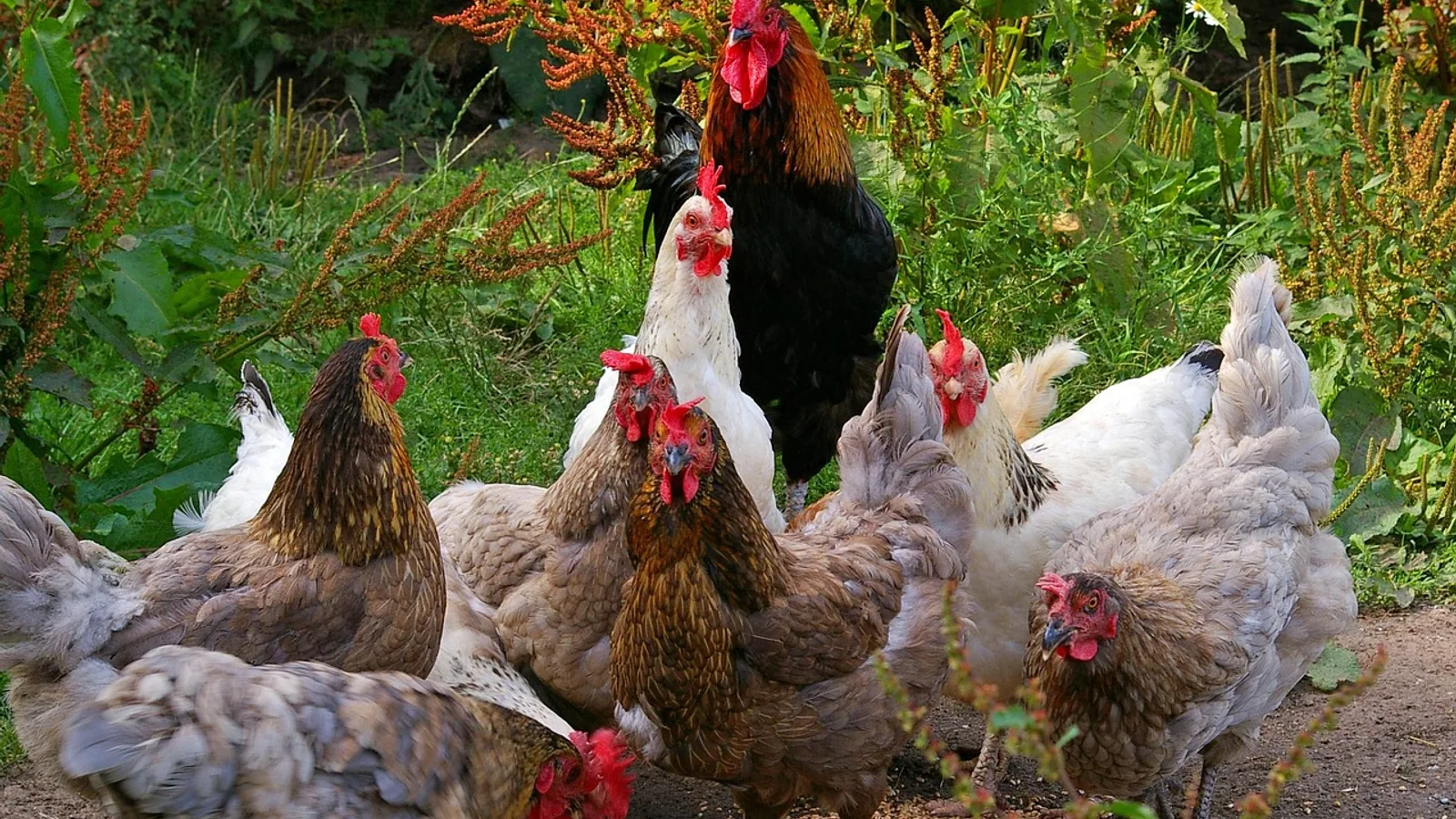
Treats should make up no more than about 10 percent of a chicken's daily diet by weight. The other 90 percent should come from a balanced layer ration for hens in lay or a grower ration for young birds. That single rule solves most of the confusion around chicken treats. A hen that eats a complete ration gets the protein, calcium, energy, vitamins, and minerals she needs. A hen that fills up on scratch grains, bread, and kitchen scraps does not, even when she looks well fed.
This guide covers which treats are safe, which are dangerous, how much to feed per bird per day, and how to scale portions for a whole flock. It also explains why the 10 percent ceiling matters and what happens when owners drift past it.
This article is educational and is not a substitute for veterinary diagnosis or treatment.
At a Glance: The Treat Rules That Matter Most
| Rule | What to do |
|---|---|
| , - | , - |
| Daily treat ceiling | About 10 percent of daily diet by weight, 90 percent complete ration |
| Best treats | Mealworms, crickets, oats, plain cooked eggs, leafy greens, squash, berries, small amounts of plain yogurt |
| Never feed | Avocado, chocolate, caffeine, raw dried beans, moldy or spoiled food, salty or sugary snacks, xylitol, large amounts of onion or garlic |
| Watch the volume | Scratch grains and bread dilute protein and calcium and can cause obesity, feather pecking, and eggshell problems |
| Flock math | Weigh or estimate the flock's total daily feed, take 10 percent of that number, and split it across the birds |
| Water | Clean water available at all times, treats never replace it |
| Scraps | Kitchen scraps are common but are not a balanced diet, so keep them inside the 10 percent budget |
Why the 10 Percent Rule Exists
A chicken's digestive tract and nutrient needs are built around a complete feed. Commercial layer and grower rations are formulated so that a bird eating normal amounts gets the right balance of amino acids, calcium, phosphorus, and vitamins. When you add treats, you subtract from that balance. The math is simple. If a hen eats 120 grams of feed a day and you give her 30 grams of scratch, roughly a quarter of her intake is now low-protein, low-calcium grain. She has less room for the ration that actually supports egg production and bone health.
Backyard flocks are a large and growing population, and feeding practices vary widely. A UK survey of backyard chicken keepers found that 29 percent fed kitchen scraps, and the authors identified feeding, enrichment, and biosecurity as areas where keeper education matters [1]. That finding is a useful reminder that scraps and treats are normal in backyard settings. The goal is not to ban them. The goal is to keep them small enough that the ration still does its job.
Nutrition research in poultry continues to show how sensitive birds are to what they eat. Work on plant-derived feed additives in broiler nutrition describes how gut morphology, gut integrity, microflora composition, antioxidant capacity, and immune function all respond to diet [2]. You do not need to understand the microbiology to act on the principle. A bird on a consistent, balanced diet has a gut environment that supports health. A bird on a chaotic diet of scraps and grains does not.
Treats Are Enrichment, Not Nutrition
Treats do real work in a backyard flock. They are a handling tool, a way to move birds, a way to check body condition, and a source of foraging activity. Enrichment was provided by 78.4 percent of keepers in the same UK survey [1], which shows that owners already treat enrichment as part of good husbandry. Scattering a small amount of safe treats in the run encourages natural foraging behavior and gives birds something to do. That is a welfare benefit. It is not a nutritional strategy.
Keep those two roles separate. Use treats for behavior and bonding. Use the ration for nutrition.
The Safe Treat List
Each item below is safe when fed in small amounts inside the 10 percent budget. Portion guidance is per bird per day. These are practical amounts, not exact prescriptions. Adjust for bird size, age, and production status.
Mealworms
Mealworms are the classic chicken treat. Dried mealworms are high in protein and fat, which makes them palatable and useful for training birds to come when called. The fat content is the reason to keep portions small. A reasonable daily amount is about 1 to 2 teaspoons of dried mealworms per bird. Live mealworms work the same way and can be scattered for foraging.
Mealworms are a treat, not a protein supplement. If your birds need more protein, that is a ration question, not a mealworm question.
Crickets
Crickets are another high-protein insect treat with strong palatability. Offer about 1 to 2 teaspoons of dried crickets per bird per day, or a small handful of live crickets scattered across the run for a flock. Live crickets double as enrichment because birds have to chase them.
Oats
Plain rolled oats or plain quick oats are safe in small amounts. Offer about 1 to 2 tablespoons per bird per day as part of the treat budget, not in addition to it. Oats are a carbohydrate source, so they dilute protein and calcium the same way scratch does. Treat oats as a grain treat and count them against the 10 percent.
Avoid flavored instant oatmeal packets. They often contain added sugar and salt.
Plain Cooked Eggs
Plain cooked eggs are an excellent treat. Scrambled eggs cooked without butter, oil, salt, or seasoning are safe and highly digestible. A good portion is about 1 to 2 tablespoons of cooked egg per bird per day. Some owners feed crushed eggshell separately for calcium, which is a separate topic from treats and should be discussed with a veterinarian if you are managing eggshell quality problems.
Cook eggs fully. Raw egg white contains a protein that binds biotin, and raw eggs also carry a food safety risk for the flock and the household.
Leafy Greens
Leafy greens are among the best low-calorie treats. Safe options include romaine, leaf lettuce, spinach in moderation, kale, collard greens, Swiss chard, and dandelion greens. Offer about 1 to 2 small leaves or a small handful of chopped greens per bird per day.
Wash greens thoroughly. Greens from the garden are fine as long as they have not been treated with pesticides or contaminated by wild bird droppings.
Squash
Cooked or raw squash and pumpkin are safe. Winter squash, butternut, acorn, and pumpkin all work. Offer about 1 to 2 tablespoons of cubed or mashed squash per bird per day. Pumpkin seeds in small amounts are also acceptable.
Do not feed squash that has begun to mold. Moldy food is on the avoid list for good reason.
Berries
Berries are a safe, low-volume treat. Blueberries, strawberries, raspberries, blackberries, and similar fruits are fine. Offer about 1 to 2 berries per bird per day, or a small handful for a flock of several birds. Berries are mostly water and sugar, so they should not crowd out the ration.
Plain Yogurt
Plain, unsweetened yogurt in small amounts is generally well tolerated. Offer about 1 teaspoon per bird per day, and only occasionally rather than daily. Choose yogurt with live cultures and no added sugar, fruit syrup, or artificial sweeteners. Never feed yogurt or any product containing xylitol.
If your flock has never had yogurt, offer a tiny amount to a few birds first and watch for digestive upset.
The Avoid List
These items should not be fed to backyard chickens. Some are acutely toxic. Others are dangerous because of contamination or because they unbalance the diet.
Avocado
Avocado, including the fruit, pit, leaves, and skin, should not be fed to chickens. Persin, a compound found in avocado, is associated with toxicity in birds. Keep avocado out of the run and out of the compost pile where birds can reach it.
Chocolate
Chocolate contains theobromine and caffeine, both of which are toxic to birds. Even small amounts are a risk. Do not offer chocolate in any form, including baked goods made with chocolate.
Caffeine
Caffeine is a stimulant that birds cannot handle. Coffee, tea, cola, energy drinks, and coffee grounds should not be offered. Do not put coffee grounds in the run or compost where birds can scratch through them.
Raw Dried Beans
Raw dried beans contain compounds that are toxic until the beans are thoroughly cooked. Raw or undercooked dried beans can cause serious illness. Cooked beans in small amounts are a different question, but raw dried beans belong on the avoid list. Never scatter raw dried beans as scratch.
Moldy or Spoiled Food
Moldy bread, spoiled produce, fermented leftovers, and anything with visible mold should be discarded, not fed. Mold can produce mycotoxins that damage the liver and cause illness. This includes moldy hay, moldy grain, and moldy scraps.
Salty or Sugary Snacks
Chips, crackers, pretzels, cookies, cake, candy, and sweetened cereals are all poor choices. High salt intake can cause serious problems in birds. High sugar intake adds empty calories and supports obesity. These foods also teach birds to beg for scraps and can lead to overfeeding.
Onion and Garlic in Quantity
Small amounts of onion or garlic in a mixed scrap are unlikely to cause harm, but large quantities should be avoided. Onion and garlic in quantity can damage red blood cells in birds. Do not feed onion or garlic as a deliberate treat, and do not feed leftovers that are heavily seasoned with either.
Xylitol
Xylitol is an artificial sweetener that is highly toxic to some animals. Never feed sugar-free gum, sugar-free candy, sugar-free baked goods, or any product containing xylitol. Check labels on any processed food before it goes near the flock.
Safe Versus Avoid: Treat Table With Daily Portions
| Treat | Safe or avoid | Portion per bird per day | Notes |
|---|---|---|---|
| , - | , - | , - | , - |
| Mealworms (dried) | Safe | 1 to 2 teaspoons | High fat, count against 10 percent |
| Crickets (dried or live) | Safe | 1 to 2 teaspoons or a small handful for a flock | Good foraging enrichment |
| Plain rolled oats | Safe | 1 to 2 tablespoons | Grain treat, dilutes protein and calcium |
| Plain cooked eggs | Safe | 1 to 2 tablespoons | Cook fully, no butter, oil, salt, or seasoning |
| Leafy greens | Safe | 1 to 2 small leaves or a small handful | Wash well, avoid pesticide residue |
| Squash and pumpkin | Safe | 1 to 2 tablespoons | Cooked or raw, never moldy |
| Berries | Safe | 1 to 2 berries | Mostly water and sugar |
| Plain yogurt | Safe | About 1 teaspoon, occasionally | No sugar, no sweeteners, no xylitol |
| Scratch grains | Limit | Count within the 10 percent budget, not on top of it | Dilutes protein and calcium, supports obesity |
| Bread | Limit | Small occasional piece within the 10 percent budget | Low nutrient density, easy to overfeed |
| Avocado | Avoid | None | Toxic to birds |
| Chocolate | Avoid | None | Contains theobromine and caffeine |
| Caffeine | Avoid | None | Coffee, tea, cola, energy drinks, grounds |
| Raw dried beans | Avoid | None | Toxic until thoroughly cooked |
| Moldy or spoiled food | Avoid | None | Mycotoxin risk |
| Salty snacks | Avoid | None | Salt toxicity risk |
| Sugary snacks | Avoid | None | Empty calories, obesity risk |
| Onion and garlic in quantity | Avoid | None as a deliberate treat | Can damage red blood cells |
| Xylitol | Avoid | None | Highly toxic |
How to Calculate the 10 Percent Limit for Your Flock
The 10 percent rule is easy to apply once you know how much your flock eats. Use this step-by-step method.
- Estimate daily feed intake per bird. A typical laying hen eats roughly 100 to 150 grams of complete feed per day, depending on body size, breed, age, and weather. Larger dual-purpose hens eat more. Bantams eat less. Use your own feed records if you have them.
- Multiply by the number of birds. A flock of six hens eating about 120 grams each takes in about 720 grams of feed per day.
- Take 10 percent of that total. For the six-hen example, the treat budget is about 72 grams per day for the whole flock.
- Split the treat budget across the birds. That is about 12 grams per bird per day, which is roughly 2 to 3 teaspoons of mixed treats.
- Weigh treats when you can. Kitchen scales are inexpensive and remove the guesswork. Volume measures like teaspoons and tablespoons are a reasonable substitute when a scale is not available.
- Subtract treats from the ration, do not add them on top. If your birds eat a full ration and a full treat allowance, they are overfed. Reduce the ration slightly on heavy treat days, or reduce the treats.
- Recheck body condition monthly. Feel the breastbone. A healthy hen has a slight padding over the keel. A sharp keel means she is too thin. A keel you cannot feel means she is too heavy.
Flock-Size Portion Examples
| Flock size | Estimated daily ration | Daily treat budget (10 percent) | Per-bird treat allowance |
|---|---|---|---|
| , - | , - | , - | , - |
| 3 hens | About 360 grams | About 36 grams | About 12 grams |
| 6 hens | About 720 grams | About 72 grams | About 12 grams |
| 12 hens | About 1,440 grams | About 144 grams | About 12 grams |
| 25 hens | About 3,000 grams | About 300 grams | About 12 grams |
These numbers assume a 120-gram daily ration per hen. Adjust up or down based on your birds and your feed.
Why Scratch Grains and Bread Are the Most Common Mistakes
Scratch grains and bread are the two treats that cause the most problems in backyard flocks. Both are low in protein and calcium relative to a complete ration. Both are easy to overfeed because birds love them and owners enjoy giving them.
Protein Dilution
A laying hen needs a ration formulated for layers, typically around 16 to 18 percent protein depending on the product. Scratch grains are mostly carbohydrate and run far lower in protein. When scratch makes up a large share of intake, total protein drops. Low protein shows up as reduced egg size, poor feather quality, slower molt recovery, and reduced overall condition.
Calcium Dilution
Laying hens need steady calcium intake to build eggshells and protect their bones. Scratch grains and bread contribute little calcium. When they displace layer ration, calcium intake falls. The result can be thin-shelled eggs, soft-shelled eggs, and over time, bone weakness as the hen mobilizes calcium from her skeleton.
Obesity
Scratch grains and bread are calorie dense and easy to overfeed. An obese hen has more trouble in heat, moves less, and is at higher risk during laying. Obesity also worsens the next problem on this list.
Feather Pecking
Feather pecking and cannibalism are behavioral problems with many causes, including crowding, boredom, and nutritional imbalance. A diet diluted by scratch and bread can contribute to feather pecking because birds are not getting the protein and amino acids they need for feather maintenance. Overweight, under-stimulated birds in a bare run are a classic setup for pecking.
Eggshell Problems
Thin shells, soft shells, and shell-less eggs are common complaints in backyard flocks. Diet is one of several factors. When scratch and bread crowd out layer ration, calcium and vitamin D intake fall, and shell quality follows. If shell problems persist after you tighten the treat budget, that is a veterinarian conversation.
How to Feed Treats Safely: Step by Step
- Start with a complete ration. Choose a layer ration for hens in lay or a grower ration for young birds. Keep feeders full and clean.
- Set your daily treat budget. Use the 10 percent calculation above. Write the number down so you do not drift.
- Choose treats from the safe list. Rotate among insects, greens, squash, berries, oats, and eggs so no single item dominates.
- Feed treats at a consistent time. Many owners use treats as a flock check. Birds come to the treat, and you get a look at each one.
- Scatter rather than pile. Scattering treats across the run spreads them out, prevents bullying, and encourages foraging.
- Use a shallow dish for wet treats. Yogurt and cooked egg should go in a shallow dish that you remove and wash after feeding. Do not leave wet food to spoil.
- Remove uneaten treats. Anything left after 15 to 20 minutes should be picked up, especially in warm weather.
- Keep water clean and available. Treats never replace water.
- Track body condition monthly. Adjust the treat budget if birds gain or lose weight.
- Review the ration when production changes. If egg numbers or shell quality drop, look at the ration and the treat budget before adding supplements.
Kitchen Scraps: What Counts and What Does Not
Kitchen scraps are common in backyard flocks, and the UK survey found that 29 percent of keepers fed them [1]. Scraps can be a reasonable part of the treat budget if you follow three rules.
First, scraps count against the 10 percent. A plate of leftovers is a treat, not a meal.
Second, scraps must be safe. Leftover pasta with garlic and onion sauce, salty soups, sugary desserts, and anything with xylitol are not safe. Vegetable trimmings, plain cooked grains, and plain cooked vegetables are fine in small amounts.
Third, scraps must not be spoiled. Leftovers that have sat out, food with visible mold, and anything that smells off should go in the trash, not the run.
A practical approach is to keep a small scrap container and empty it into the run once a day, then remove what is left. That keeps scraps inside the budget and prevents the run from becoming a compost pile.
Water, Feeders, and the Rest of the Diet
Treats only make sense inside a well-run feeding program. A few basics matter as much as the treat list.
Clean water should be available at all times. Birds drink more in heat and during peak lay. Dirty water reduces intake and worsens every other problem.
Feeders should be raised enough to keep feed out of the litter and should be cleaned regularly. Wet, moldy feed in a dirty feeder is a health risk.
Feed should be stored dry and cool. Moldy feed is on the avoid list for the same reason moldy scraps are.
Feeders and waterers should be positioned so that all birds can access them. A hen at the bottom of the peck order may not get her share if feeders are crowded. Watch for birds that hang back and check their body condition separately.
Special Situations
Chicks and Growing Birds
Young birds should be on a grower ration. Treats should be a very small part of the diet, well under 10 percent, because growing birds need consistent protein and mineral intake for skeletal development. Small amounts of safe greens and cooked egg are reasonable. Avoid scratch grains and bread for growing birds.
Molting Hens
Molting hens need more protein, not more scratch. Feather regrowth is protein intensive. Keep treats small during molt and prioritize the ration. If a molting hen is losing weight or looking poor, contact a veterinarian.
Hens in Peak Lay
Hens in heavy production have high calcium and energy demands. Keep the treat budget tight during peak lay. Thin shells are a signal that the ration is being diluted.
Older or Retired Hens
Older hens that no longer lay have lower calcium needs but still need balanced nutrition and controlled calories. Obesity is a common problem in retired pet hens. Keep treats small and monitor body condition.
Sick Birds
A sick bird should be evaluated by a veterinarian. Do not use treats to coax a sick bird to eat without veterinary guidance. Appetite loss and weight loss are clinical signs that need diagnosis.
Common Mistakes to Avoid
Feeding treats on top of a full ration instead of within the 10 percent budget.
Using scratch grains as the main feed because birds like them.
Feeding bread daily because it is convenient.
Leaving wet treats like yogurt or cooked egg in the run to spoil.
Feeding kitchen scraps without checking for onion, garlic, salt, sugar, or xylitol.
Assuming a fat hen is a healthy hen.
Ignoring thin or soft eggshells and hoping they resolve on their own.
Letting one or two birds dominate the treat pile while others get nothing.
Feeding moldy or fermented scraps because birds seem willing to eat them.
Skipping body condition checks because the birds look fine from a distance.
Welfare and Safety Points
Treats are a welfare tool when used well. Scattering safe treats supports foraging, which is a natural behavior. A flock that forages is a flock with less boredom and less feather pecking. Enrichment provision was reported by 78.4 percent of keepers in the UK survey [1], which suggests most owners already value this. Treats are one part of enrichment, not the whole plan. Space, perches, dust bathing areas, and clean litter matter too.
Food safety matters as well. Backyard flocks are part of the household food chain when eggs are collected. Feed contaminated with Salmonella is a recognized route of introduction into poultry [3]. That is another reason to keep feed and treats clean, dry, and free of spoilage. Do not feed scraps that have been sitting out, and do not let wild birds share your feeders.
Biosecurity is a related point. The UK survey found that 70.2 percent of keepers isolated new additions to the flock, and the authors identified biosecurity as an area for continued education [1]. Treats and scraps can be a weak link if they bring contaminated material into the run. Keep scraps in a clean container, wash your hands after handling birds and equipment, and keep wild birds away from feed.
When Treats Are Not the Problem
Not every flock problem is a treat problem. If birds are losing weight, laying poorly, or showing respiratory or digestive signs, the cause may be infectious, parasitic, or environmental. A veterinarian who treats backyard poultry can examine the flock, review the diet, and recommend testing when needed. Finding a veterinarian willing to see poultry can take some effort, and the UK survey noted that 4 percent of keepers struggled to find one [1]. In the United States, look for a veterinarian with poultry or exotic animal experience, or contact your state poultry extension service for a referral.
Limitations and When to Contact a Veterinarian
This article gives general guidance for healthy backyard flocks. Individual birds vary, and a diet that works for one flock may not fit another. Contact a veterinarian if any of the following apply.
- A bird stops eating or drinking for more than 24 hours.
- A bird loses weight or has a sharp, prominent keel bone.
- Eggshells become consistently thin, soft, or misshapen despite a corrected diet.
- A bird shows lethargy, ruffled feathers, or labored breathing.
- You see bloody droppings, persistent diarrhea, or a sudden drop in egg production across the flock.
- A bird has a prolapse, a swollen abdomen, or difficulty walking.
- You suspect a bird ate something on the avoid list, especially avocado, chocolate, caffeine, xylitol, or moldy food.
- Feather pecking or cannibalism causes open wounds or spreads through the flock.
- You are managing a chronic condition and want to adjust the diet safely.
Bring a written record of what you feed, how much, and when the problem started. That information helps your veterinarian narrow the list of causes quickly.
Frequently Asked Questions
What percentage of a chicken's diet should be treats?
Treats should make up no more than about 10 percent of a chicken's daily diet by weight. The remaining 90 percent should come from a balanced layer or grower ration.
Are mealworms a healthy treat for chickens?
Yes, mealworms are a safe treat in small amounts, about 1 to 2 teaspoons of dried mealworms per bird per day. They are high in fat, so they should stay inside the 10 percent treat budget.
Can chickens eat bread and scratch grains?
They can eat small amounts, but bread and scratch grains dilute protein and calcium and are easy to overfeed. Keep them inside the 10 percent treat budget and never use them as the main feed.
Is yogurt safe for chickens?
Plain, unsweetened yogurt without xylitol is generally safe in small amounts, about 1 teaspoon per bird occasionally. Avoid sweetened yogurt and any product containing artificial sweeteners.
What foods are toxic to chickens?
Avocado, chocolate, caffeine, raw dried beans, moldy or spoiled food, salty and sugary snacks, large amounts of onion or garlic, and anything containing xylitol should not be fed to chickens.
How much should I feed a flock of six hens in treats?
If six hens eat about 720 grams of ration per day, the treat budget is about 72 grams per day for the whole flock, or roughly 12 grams per bird. Adjust based on your birds and their actual feed intake.
Can treats cause eggshell problems?
Yes. When treats like scratch grains and bread crowd out layer ration, calcium and protein intake fall, and thin or soft eggshells can follow. Tighten the treat budget and review the ration first.
Do treats replace a complete feed?
No. Treats are enrichment and a handling tool. A complete layer or grower ration should supply nearly all of the bird's nutrition every day.
Related Articles
- Can Dogs Eat Mulberries? Safe Portions Guide
- Can Cats Eat Blueberries? Antioxidant Treat Portions
- Can Dogs Eat Strawberries? Safe Portions & Health Benefits
- Safe Dog Treats For Diabetic Dogs
- Safe Treats For Diabetic Dog
- Safe Treats For Diabetic Cats
- Cat Cold Medication: Safe Options and What to Avoid
- Antihistamine for Cats: Safe Options and Dosing
Further Reading
- Optimizing male layer chicken performance and health with probiotic supplementation: A sustainable alternative to antibiotic growth promoters.
- Improving the efficiency of crossbred Pradu Hang Dam chicken production for meat consumption using cold plasma technology on eggs.
- Evaluation of the safety and insecticidal efficacy of ivermectin-treated bird feed formulations in different avian species.