Ancona Duck: Breed Profile and Care Guide
By Dr. Zubair Khalid, DVM, MS, PhD ·
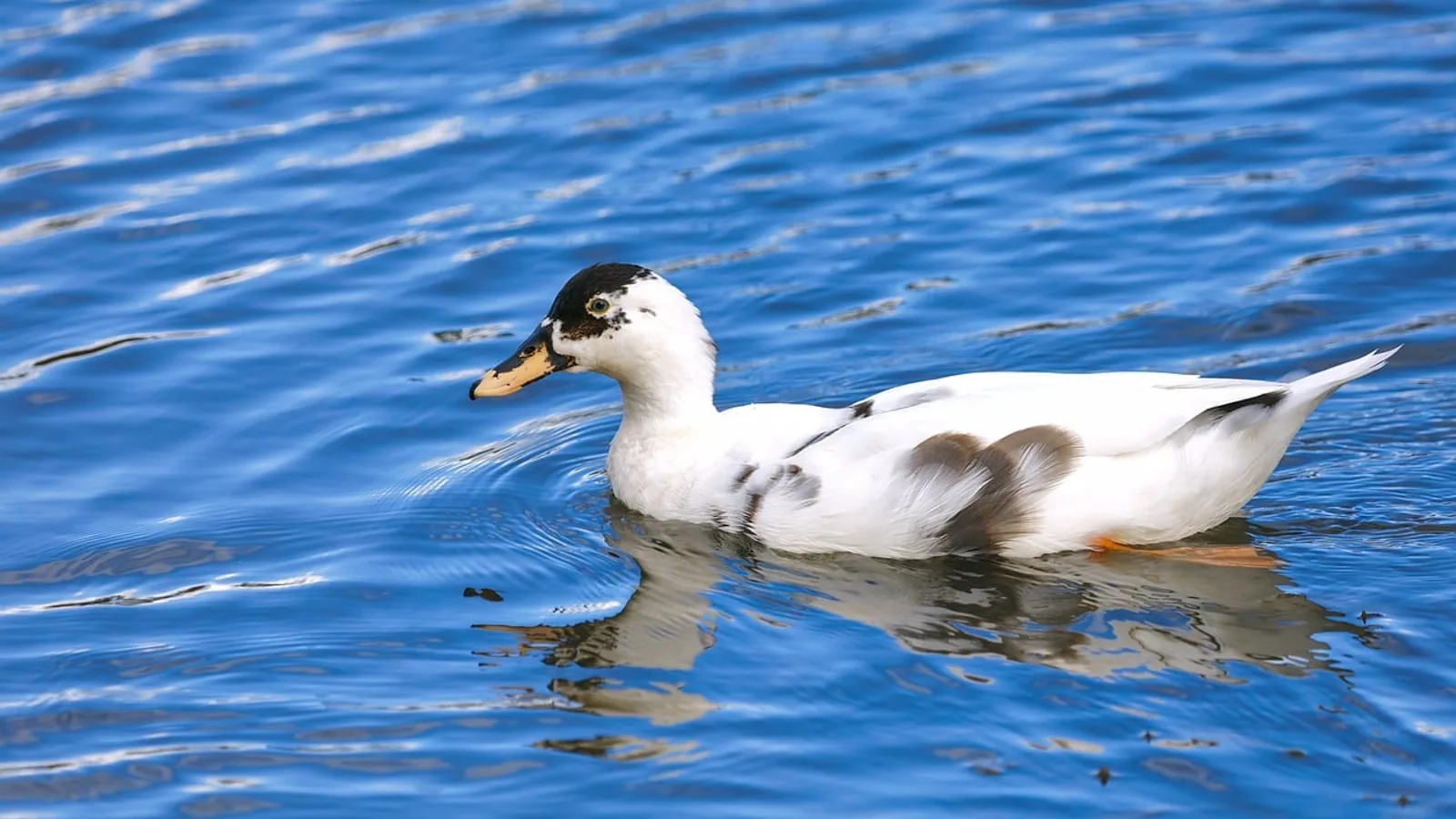
The Ancona duck is a medium-weight, dual-purpose breed recognized by its mottled black and white plumage, active foraging habit, and dependable egg production of roughly 200 to 280 eggs per year. It originated in England in the early twentieth century and was developed as a practical farm duck that could lay well and still dress out to a respectable table weight. The breed is not broody, which makes it a poor choice for anyone hoping a duck will hatch and raise its own young, but a strong choice for keepers who want steady egg numbers without fighting a hen for her nest. Anconas adapt well to backyard housing when they have predator-proof shelter, clean water deep enough for bathing, and a balanced layer ration. This guide covers the breed's history and purpose, its appearance and temperament, housing and nutrition, and the three health problems backyard keepers most often encounter in ducks: bumblefoot, niacin deficiency in ducklings, and avian botulism from stagnant water.
This article is educational and is not a substitute for veterinary diagnosis or treatment.
At a Glance
| Trait | Detail |
|---|---|
| Origin | England, early twentieth century |
| Primary purpose | Dual-purpose: eggs and meat |
| Adult weight | Medium weight class |
| Plumage | Mottled black and white |
| Temperament | Active, busy foragers |
| Egg production | Roughly 200 to 280 eggs per year |
| Broodiness | Low. The breed is not considered broody |
| Housing | Backyard coop with predator-proof shelter |
| Water needs | Clean water for bathing and preening |
| Feeding | Balanced layer feed |
| Lifespan | Productive laying life measured in years, not months |
| Good with children | Generally calm and handleable |
| Grooming | Minimal. Self-maintained through bathing and preening |
Detailed weight and body measurements for the Ancona specifically are not standardized in the peer-reviewed literature in the same way they are for commercial meat and egg lines. Breeders describe the Ancona as a medium-weight duck, smaller than the heavy Pekin and Aylesbury types and larger than the lightweight runner and call ducks. For a keeper selecting stock, the practical question is not the exact gram weight on a scale. It is whether the bird looks well-fleshed, stands and walks without a limp, and lays at the rate you expect for a working backyard duck.
History and Purpose of the Ancona Duck
The Ancona duck takes its name from the Ancona chicken, an Italian breed whose mottled black and white pattern the duck resembles. The duck itself was developed in England during the early 1900s. Breeders at the time were working with the Indian Runner and other laying breeds, and the goal was a farm duck that combined reasonable table weight with a long, productive laying season. That dual-purpose framing is the key to understanding the breed. Anconas were never built to compete with the Pekin on meat yield or with a specialized egg line on peak production. They were built to do both jobs competently on a small farm, and to forage for a meaningful share of their own calories while they did it.
This history explains several traits that show up in modern backyard flocks. The Ancona is an active, alert duck that spends much of its day hunting for insects, slugs, and plant matter. That foraging drive is one reason the breed stays in good body condition on modest rations, and it is also why the birds need secure fencing. An active forager that ranges widely is an active forager that finds the weak point in a fence line.
The broader genetic literature on ducks helps put Ancona egg production in context. Across Asian duck populations, a large meta-analysis of more than 10,000 ducks found an average age at first lay of about 150 days, a fertility rate near 78 percent, and roughly 120 eggs per production cycle, with breed origin and management practices strongly influencing these figures [1]. That pooled estimate spans many breeds and management systems. The Ancona sits at the productive end of the backyard spectrum, which is why breed descriptions put its annual output at 200 to 280 eggs rather than the more modest cycle figure reported for indigenous Asian ducks. Cumulative egg production in ducks is also moderately heritable, with reported heritability estimates of 0.35 at 210 days, 0.37 at 280 days, and 0.48 at 300 days in a commercial Pekin population, meaning that selecting stock from productive parents has real predictive value [2].
Appearance: The Mottled Black and White Plumage
The Ancona's defining visual feature is its mottled plumage. Individual feathers carry irregular patches of black and white, and the overall bird reads as a speckled mix rather than a uniformly colored duck. The pattern is roughly symmetrical across the body, though no two Anconas are identical. The bill may be mottled or flecked, and the legs and feet typically show orange with dark markings. The result is a duck that photographs well against grass and is easy to distinguish from solid-colored breeds at a distance.
The mottling is more than decorative. In a mixed flock, a mottled bird is harder for a hawk to single out than a solid white or solid black duck, though this should not be treated as a substitute for real predator protection. The Ancona's body is compact and well-proportioned, with a slightly carried head and a horizontal carriage. The breed does not have the exaggerated upright stance of the Indian Runner or the deep keel of the Aylesbury. It moves efficiently, which matches its foraging lifestyle.
Temperament and Behavior
Anconas are active, busy ducks. They are not a placid decorative breed that sits in one spot all day. They walk and forage constantly, turning over leaf litter, probing wet ground for invertebrates, and working the margins of a yard. Keepers who value a duck that earns part of its keep by reducing slug and insect populations tend to appreciate this trait. Keepers who want a calm ornamental bird may find the breed more restless than expected.
The breed is generally calm with people and is easy to handle when it is habituated to routine from a young age. It does well in small groups and integrates into mixed flocks. Drakes can be assertive during breeding season, so the standard ratio of one drake to several hens applies. A single drake with a single hen is a recipe for over-mating and injury to the hen. Three to five hens per drake is a more workable arrangement, though exact ratios depend on the individual birds and the size of the space.
The Ancona is not a broody breed. This is one of its most practical features and one of its biggest limitations. Because the hens rarely sit on nests, they keep laying through the season instead of shutting down for weeks to incubate. That is exactly what a keeper who wants eggs wants. It is also why a keeper who wants to hatch Ancona ducklings will usually need an incubator or a broody hen of another breed. The genetics of broodiness in ducks is an active research area. In Muscovy ducks, intense broody behavior has a substantial negative effect on egg production efficiency, and researchers have identified genes such as FOXO3 and RHOB that regulate granulosa cell function and are differentially expressed between laying and broody birds [3][4]. Serum prolactin levels, the hormone most associated with incubation behavior, are significantly higher in broody ducks than in laying ducks [4]. The Ancona's low broodiness reflects the same basic biology: less prolactin-driven nesting behavior means more of the year spent in lay.
The Ancona in the Backyard Flock: A Comparison
The table below compares the Ancona with other common backyard duck types on the traits keepers care about most. Where numeric ranges vary by strain and management, the table gives qualitative characterizations rather than false precision.
| Trait | Ancona | Pekin | Indian Runner | Muscovy |
|---|---|---|---|---|
| Weight class | Medium | Heavy | Light | Heavy |
| Primary use | Dual-purpose | Meat | Eggs | Meat, limited eggs |
| Plumage | Mottled black and white | Solid white | Solid, many colors | Black and white, variable |
| Egg production | Roughly 200 to 280 per year | Moderate | High | Low to moderate |
| Broodiness | Low | Low to moderate | Low | High |
| Foraging drive | High | Moderate | High | High |
| Flight ability | Low | Very low | Low | Moderate to high |
| Noise level | Moderate | Moderate | Low | Low, hisses |
| Best fit | Egg-focused backyard flock | Meat-focused flock | Egg-focused flock with space to range | Keepers wanting natural incubation |
Two points about this table deserve explanation. First, the Muscovy is a different species (Cairina moschata) from the mallard-derived domestic ducks, and its strong nesting tendency is the single biggest reason its egg output lags. Research in Muscovy ducks has identified genes involved in granulosa cell apoptosis and follicular development that help explain why heavy broody behavior suppresses laying [5][3][4]. Second, egg production figures for any breed are heavily influenced by management. The same meta-analysis that reported 120 eggs per cycle for indigenous Asian ducks found that extended lighting duration significantly accelerated the onset of lay, and that management practices were a major source of variation between studies [1]. A well-managed Ancona flock on good feed and adequate daylight will sit near the top of its breed range. A flock on marginal feed and short winter days will sit near the bottom.
Egg Production in Detail
The Ancona's headline number is 200 to 280 eggs per year. Several factors move a flock within that range.
Age at first lay matters. The pooled estimate for Asian ducks is about 150 days to first egg [1], and Anconas generally fall in that broad window, with some starting slightly earlier or later depending on hatch date, lighting, and nutrition. A duck that starts laying at 20 weeks will contribute more total eggs to a season than one that starts at 24 weeks, all else equal.
Nutrition matters, and the peer-reviewed literature on laying ducks is direct about this. In a study of 720 laying ducks, supplementing the diet with 1 to 2 percent beef tallow, coconut oil, or a mixed oil significantly improved laying rate and daily egg mass and reduced feed conversion ratio compared with an unsupplemented control, with the best overall performance at the 2 percent inclusion level, and without evidence of liver stress [6]. The takeaway for a backyard keeper is not to start pouring oil into the feed bucket. It is that energy density in the ration has a measurable effect on how many eggs a duck produces, and that a thin or underfed laying duck will not lay to her potential. A balanced commercial layer ration is the simplest way to hit the right energy and protein targets.
Specific amino acids and vitamins also drive egg output. In a study of 648 Longyan duck breeders, adding L-threonine to a threonine-deficient diet at a level that brought total dietary threonine to 0.60 percent produced significantly better egg production, egg weight, egg mass, feed conversion ratio, and yolk weight than the unsupplemented control [7]. In aged duck breeders, supplementing vitamin D as 25-hydroxycholecalciferol at increasing levels improved egg production, ovarian weight, and the number and weight of dominant follicles in a dose-dependent manner [8]. These are commercial breeder studies, not backyard Ancona trials, and they are included here to make one point: the difference between a duck that lays 200 eggs and one that lays 280 is often nutritional and managerial, not genetic.
Disease can interrupt lay abruptly. Duck-origin picornaviruses have been isolated from breeding ducks experiencing reduced egg production, and the researchers characterized these as egg-reducing syndrome viruses [9]. An unexplained, sharp drop in egg production across a flock, especially with any change in droppings, appetite, or behavior, is a reason to call a veterinarian rather than to wait and see.
One more production consideration is the cumulative nature of laying. Egg production traits in ducks show very strong genetic correlations with one another across the laying cycle, with cumulative production figures at 210, 280, and 300 days correlating at 0.95 or higher [2]. In practical terms, a duck that is laying well early is very likely to keep laying well. If a hen in your flock is consistently behind her flockmates in the first months of lay, that pattern tends to persist.
Housing the Ancona
Anconas are hardy and adapt to a range of backyard setups, but three requirements are non-negotiable: a predator-proof shelter, clean bathing water, and enough space to forage without escaping.
Shelter and Predator Protection
A duck that forages widely is a duck that encounters predators. Secure nighttime housing is the single most important investment a keeper makes. The coop must be solid on all six sides, with hardware cloth rather than chicken wire on vents and openings, and a latch that a raccoon cannot work. Ducks do not perch the way chickens do, so provide floor-level bedding rather than roosts. Anconas are medium-weight ducks and do not fly well, but they can clear low fences, and a top on the run prevents both escape and entry from above.
Bedding should be dry and changed regularly. Wet, soiled bedding is the substrate for the foot problems discussed below, and it also drives respiratory and skin issues. Ventilation without drafts keeps the coop air fresh while keeping the birds dry.
Space and Foraging
Because Anconas are active foragers, they benefit from a run that offers something to explore. Bare dirt gets scratched into mud. A run with leaf litter, low vegetation, and turning opportunities keeps the birds busy and reduces the pressure to feather-peck or pace. Keepers who let their ducks free-range during the day must accept the predator risk and the fact that ducks will find and exploit any gap in a fence line.
Water for Bathing and Preening
Ducks need water deep enough to submerge their heads and splash their bodies. This is not a luxury. Bathing and preening distribute oil across the feathers and maintain the waterproofing that keeps a duck warm and dry. A small plastic tub, a child's wading pool, or a stock tank all work. The water must be dumped and refilled regularly. Stagnant, fouled bathing water is the single most common source of the botulism problem described later in this guide. A separate, shallower waterer for drinking is useful because ducks foul their drinking water quickly by dabbling in it. Keeping drinkers and bathing water separate reduces how often you have to change both.
Cold tolerance in ducks is generally good, but wet and windy conditions are not the same as cold and dry. A dry, draft-free shelter with deep bedding lets Anconas handle winter well. In extreme cold, bathing water should be offered in a container that can be emptied before it freezes solid, and the birds should not be left wet going into a freezing night.
Feeding the Ancona Duck
The foundation of an Ancona diet is a balanced commercial layer ration appropriate to the bird's age. Ducklings need a starter ration formulated for waterfowl, growers need a grower ration, and laying hens need a layer ration with adequate calcium for shell formation. Do not feed chicken layer feed to ducklings. The niacin problem described below is directly tied to inappropriate early nutrition.
Anconas forage for a meaningful share of their diet when given the opportunity. Insects, slugs, snails, worms, and tender plant matter all contribute. Foraging supplements a balanced ration. It does not replace one, particularly during peak lay when calcium and energy demands are high.
Treats and scratch should be a small fraction of the diet. Overweight laying ducks lay poorly and develop reproductive problems. The research on oil supplementation in laying ducks found improved productivity at 1 to 2 percent inclusion but reduced egg shape index at 4 percent [6], which is a useful reminder that more of a good thing is not always better. For a backyard flock, the safest approach is a quality layer ration as the base, with foraging and modest treats on top.
Fresh, clean drinking water must be available at all times. Ducks drink heavily and foul water quickly. Check and refresh drinkers at least daily, more often in hot weather.
Common Health Problems in Ancona Ducks
Three conditions account for a large share of the health problems backyard duck keepers see: bumblefoot, niacin deficiency in ducklings, and avian botulism. Each has a clear set of risk factors and a clear set of prevention steps.
Bumblefoot
Bumblefoot is an infection and inflammation of the foot pad, usually presenting as a swollen, hot, painful foot with a dark scab or abscess on the pad. It develops when the skin of the foot is injured and bacteria enter the wound. In backyard ducks, the injury is almost always caused by the environment: rough, abrasive surfaces, wire flooring, hard-packed ground with sharp debris, or wet, filthy bedding that softens the skin and allows bacteria to take hold.
Anconas are active and heavy enough to load their feet substantially when walking and landing from a short flight or jump. A bird that limps, favors a leg, or refuses to walk to the feeder should have its feet examined. Prevention is largely environmental. Keep bedding dry and clean, provide smooth but not slick walking surfaces, remove sharp rocks and wire from the run, and control the mud around bathing areas. Treatment of an established bumblefoot infection typically requires veterinary care. A veterinarian will assess the extent of the infection, determine whether the abscess needs to be opened and drained, and choose an appropriate antimicrobial. Do not attempt to cut a bumblefoot abscess at home. Do not use human antibiotics without a veterinary prescription. In the United States, the use of medically important antimicrobials in food-producing poultry is regulated, and a veterinarian who examines the bird can advise on legal and appropriate treatment, including any egg withdrawal period required after treatment.
Niacin Deficiency in Ducklings
Niacin (vitamin B3) deficiency is one of the most common and most preventable problems in hand-raised ducklings. Ducklings have a higher niacin requirement than chicks, and feeding a chick starter or chick ration without adequate niacin supplementation is a classic cause. The condition presents as weakness, reluctance to walk, sitting on hocks, and a characteristic bowing or trembling of the legs. In severe cases, ducklings cannot stand and may develop permanent leg deformities.
Prevention is straightforward. Feed a duckling starter ration formulated for waterfowl from day one, or supplement a chick starter with niacin according to a veterinarian's or waterfowl-formulated product's directions. Do not guess at doses. A veterinarian can confirm the correct supplement and amount for your specific feed and birds. If a duckling is already showing leg weakness, contact a veterinarian promptly. Early correction of the deficiency often allows normal leg development, while prolonged deficiency can leave lasting damage.
Avian Botulism from Stagnant Water
Avian botulism is a paralytic disease caused by a toxin produced by Clostridium botulinum. In backyard ducks, the classic scenario is a bird drinking or feeding from stagnant, warm, fouled water, particularly water with rotting vegetation or dead invertebrates in it. The toxin is produced in these anaerobic, decaying conditions. Affected birds may show progressive weakness, inability to hold the head up, flaccid paralysis of the legs and wings, and difficulty breathing. The condition can progress rapidly and can be fatal.
Prevention is entirely environmental. Dump and refresh all bathing water frequently. Do not let water sit for days in warm weather. Clean waterers daily. Remove any dead birds, rodents, or rotting plant material from water sources promptly. If a duck shows sudden weakness or paralysis, contact a veterinarian immediately. Botulism is a medical emergency, and affected birds need prompt supportive care. Do not attempt to treat a suspected botulism case with home remedies.
Biosecurity and Zoonotic Considerations
Backyard poultry keepers as a group have been associated with outbreaks of both exotic and endemic disease, and survey work has shown that keeper knowledge and biosecurity practices vary widely [10]. This matters for ducks specifically. Avian influenza and Newcastle disease viruses circulate in backyard flocks, and studies have detected these viruses at meaningful rates in backyard poultry, including ducks [11][12]. Ducks in particular can be involved in avian influenza epidemiology. In a large outbreak investigation of H7N2 low-pathogenicity avian influenza in Pennsylvania, the outbreak was believed to have originated from live-bird market sources and affected a mixed backyard flock that included ducks, geese, guinea hens, and quail alongside chickens [13]. Backyard flock surveillance in other regions has found H5N1 and H9N2 in backyard chickens and ducks, with scavenging and poor biosecurity practices identified as risk factors [14]. Chlamydiaceae, including the zoonotic species Chlamydia psittaci, has also been detected on backyard poultry farms [15].
The practical implications for an Ancona keeper are simple and non-negotiable. Wash your hands after handling birds or cleaning coops. Isolate any new bird before introducing it to the flock. Keep footwear and equipment separate between flocks if you visit other poultry premises. Do not let your ducks mingle with wild waterfowl, which are the natural reservoir for avian influenza. Report unusual or sudden deaths to your state veterinarian or the appropriate animal health authority. Your veterinarian is the right source for current guidance on flock health, vaccination, and any registration requirements that apply where you live.
Lifespan and Long-Term Care
Ducks are long-lived birds when they receive good care, and a productive Ancona hen can lay across multiple seasons. Egg production in ducks is a cumulative trait with strong genetic correlations across the laying cycle [2], which means that the first season's performance is a reasonable guide to what to expect in subsequent years. As a hen ages, production naturally declines. A commercial breeding population studied for egg production traits showed good genomic prediction accuracy for cumulative production at 210, 280, and 300 days [2], a reminder that productivity is a property of the individual bird, not just of the breed.
Older Anconas need attention to foot health, body condition, and mobility. A heavier or arthritic bird loads its feet more, so the environmental prevention steps for bumblefoot become even more important with age. Monitor body condition through the laying years and adjust feed to prevent obesity, which impairs productivity and strains the legs.
Who Should Get an Ancona Duck
An Ancona duck suits a keeper who wants reliable egg production, enjoys watching active foragers work a yard, and is willing to provide secure housing and clean bathing water. It suits a mixed backyard flock where a productive, non-broody layer is the priority. It suits a keeper who understands that ducks are long-lived and that the initial setup for shelter and water is an ongoing responsibility, not a one-time task.
It does not suit a keeper who wants a hen to hatch and raise ducklings. The Ancona is not broody, and a keeper who wants natural incubation should look at a breed with a strong nesting tendency or plan to use an incubator. It does not suit a keeper who cannot or will not maintain clean bathing water, because stagnant water is a direct path to botulism. It does not suit a keeper looking for a purely ornamental bird that will sit still for display. Anconas work, and they expect to be allowed to work.
Anyone acquiring ducks should plan for veterinary care before they need it. Identify a veterinarian who sees poultry or waterfowl in your area. Find out in advance who you would call about a sick duck, and where you would take a bird that needs an examination. The most common mistake new keepers make is waiting until a bird is severely ill to look for a vet who can see it.
Finding a Responsible Breeder or Rescue
Responsible Ancona sources are breeders who can show you the parent stock, who keep clean facilities, who will let you observe the birds moving normally, and who are candid about health history. Look at the birds' feet. A breeder whose adult ducks have clean, unswollen foot pads is managing the environment well. Look at the ducklings. A breeder who raises ducklings on a proper waterfowl starter ration is preventing niacin deficiency before it starts. Ask what the birds are fed, how they are housed, and whether the breeder has had any disease problems in the flock.
Avoid any source that will not let you see the facilities or the parent birds, that sells birds that are limping or listless, or that cannot answer basic questions about nutrition and housing. Hatchery marketing language is not a substitute for seeing the actual birds. Regional waterfowl breed clubs and agricultural extension services are reasonable places to look for breeder referrals, and local rescues sometimes have ducks, including Anconas and Ancona crosses, needing homes.
If you are adding to an existing flock, quarantine new birds away from your current ducks for a period your veterinarian recommends before introducing them. This single practice prevents more flock disasters than any other biosecurity step.
Limitations and When to Contact a Veterinarian
This article is educational and is not a substitute for veterinary diagnosis or treatment. Breed-level information cannot replace an examination of your individual bird.
Contact a veterinarian promptly if you observe any of the following:
- A duck that is limping, has a swollen or hot foot, or has a dark scab or open wound on the foot pad (possible bumblefoot)
- A duckling that is reluctant to walk, sitting on its hocks, or showing leg bowing or trembling (possible niacin deficiency)
- A duck with sudden weakness, inability to hold its head up, flaccid leg or wing paralysis, or difficulty breathing (possible botulism, an emergency)
- A sudden, sharp drop in egg production across the flock
- Any bird with labored breathing, nasal or ocular discharge, or a change in droppings that persists more than a day
- Any sudden death in the flock, or multiple deaths
- A duck that has stopped eating or drinking
- A duck that is being picked on or over-mated, with visible wounds or feather loss
- Any suspected exposure to wild waterfowl or to birds from another premises
Do not attempt home surgery on a bumblefoot abscess. Do not give antibiotics without a veterinary prescription, both because the wrong drug or dose can harm the bird and because antimicrobial use in food-producing poultry is regulated in the United States. Do not wait to see whether a paralyzed duck recovers on its own.
Frequently Asked Questions
How many eggs do Ancona ducks lay per year?
Ancona ducks typically lay roughly 200 to 280 eggs per year. A hen usually begins laying around 150 days of age or slightly earlier, and output depends heavily on nutrition, lighting, and management.
Are Ancona ducks broody?
No. The Ancona is not a broody breed. Hens rarely sit on nests, which keeps them laying through the season but means a keeper who wants ducklings will generally need an incubator or a broody hen of another breed.
What do Ancona ducks eat?
A balanced commercial layer ration appropriate to the bird's age is the base of the diet, supplemented by forage. Ducklings need a waterfowl starter ration to prevent niacin deficiency. Clean drinking water must be available at all times.
Can Ancona ducks live with chickens?
Anconas generally integrate into mixed flocks, and ducks have been housed alongside chickens in backyard settings. The practical requirements are separate feeding and watering that suit each species, secure housing, and biosecurity practices that prevent disease spread between birds.
How much space do Ancona ducks need?
Anconas are active foragers and do best with a run that gives them room to move and explore. Secure housing and a predator-proof run matter more than a specific square footage figure. Provide deep, dry bedding and room to bathe.
Do Ancona ducks need a pond?
No. They need water deep enough to submerge their heads and splash their bodies so they can bathe and preen. A plastic tub or small pool that is dumped and refilled regularly works well and is safer than a stagnant pond.
What are the most common health problems in Ancona ducks?
Bumblefoot, niacin deficiency in ducklings, and avian botulism from stagnant water are the three problems backyard duck keepers see most often. All three are largely preventable through clean housing, proper nutrition, and fresh water.
How long do Ancona ducks live?
Ducks are long-lived birds when well cared for, and a productive Ancona hen can lay across multiple seasons. Egg production naturally declines with age, and older birds need closer attention to foot health and body condition.
Related Articles
- Netherland Dwarf Rabbit: Breed Profile and Care Essentials
- What Is Duck Disease? Clinical Overview and Pathogen Profile
- Boer Goat Breed Profile: Characteristics and Management
- Duck Care Guide
- Winter Care for Backyard Ducks
- Hairless Cat: Care, Health, and Breed Guide
- Pekin Duck Breeding: Timing, Fertility and Care
- Duck Foot Anatomy: Webbed Feet Explained
- American Pekin Duckling: Care and Growth Guide
Sources
- Quantitative synthesis of growth, reproductive, and egg production traits in Asian ducks: a meta-analysis.
- Genetic parameters and genomic prediction of egg production traits in ducks.
- RHOB Regulates Apoptosis of Granulosa Cells in Muscovy Duck Follicles via Mitochondrial Pathway.
- FOXO3 regulated granulosa cells apoptosis and AKT1 phosphorylation in Muscovy duck follicles (Cairina moschata).
- Research note: Genome-wide association study reveals candidate genes for egg production in Muscovy duck.
- Effects of dietary oil type and level on production performance and egg quality in laying ducks.
- Effects of maternal dietary threonine concentrations on the productive performance, amino acid profile in plasma and eggs of laying duck breeders, and performance of ducklings one-week post-hatching.
- Dietary supplementation with 25-hydroxycholecalciferol is more effective than cholecalciferol in improving reproductive performance in aged duck breeders.
- Genomic characterization of two duck-origin picornaviruses with seven putative 2A peptides.
- Exploring the attitudes of backyard poultry keepers to health and biosecurity.
- Sero-surveillance and risk factors for avian influenza and Newcastle disease virus in backyard poultry in Oman.
- Detection of Newcastle disease virus and assessment of associated relative risk in backyard and commercial poultry in Kerala, India.
- Epidemiology, production losses, and control measures associated with an outbreak of avian influenza subtype H7N2 in Pennsylvania (1996-98).
- Assessment of poultry rearing practices and risk factors of H5N1 and H9N2 virus circulating among backyard chickens and ducks in rural communities.
- Cross-sectional study on Chlamydiaceae prevalence and associated risk factors on commercial and backyard poultry farms in Mexico.