Do Goldfish Play? Behavior and Enrichment
By Dr. Zubair Khalid, DVM, MS, PhD ·
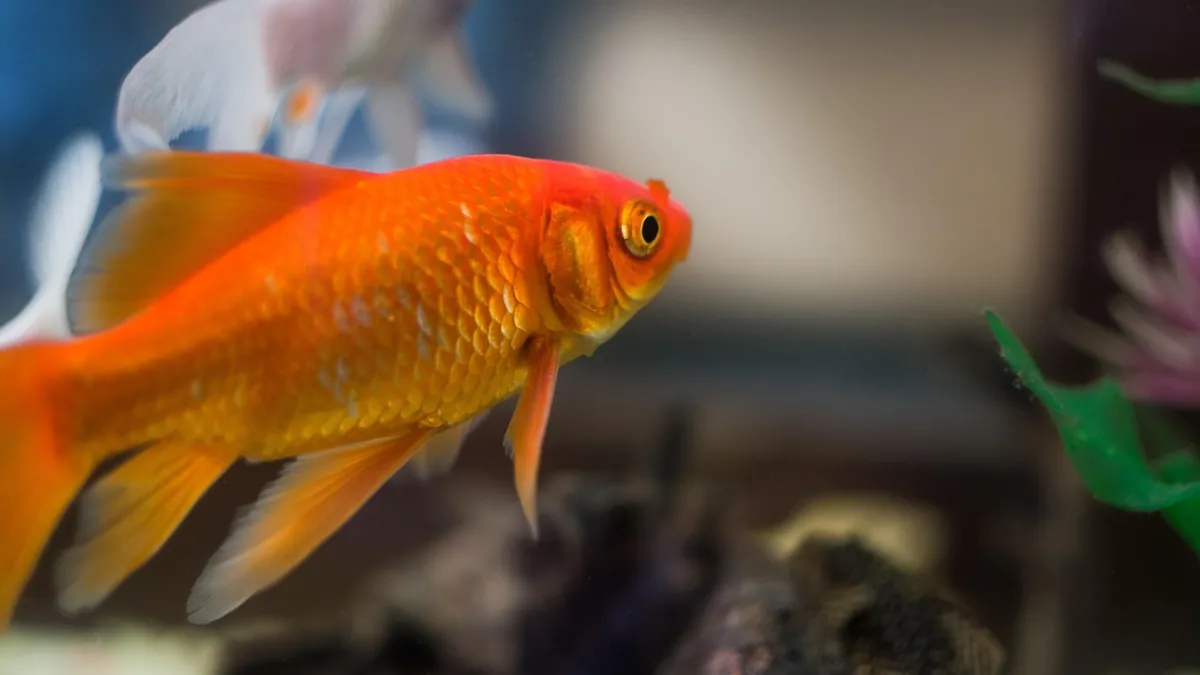
Do goldfish play? In the way a dog or cat plays, no. Goldfish do not chase toys for fun or invent games, but they do show curiosity, exploration, and food-seeking activity that can look a lot like play to an owner watching the tank [1]. What you are seeing is usually normal foraging, social, and investigative behavior, and you can shape your tank to encourage more of it.
This article is educational and is not a substitute for veterinary diagnosis or treatment.
Quick Answer
- Goldfish do not play the way mammals do, but they explore, root, and investigate their surroundings, which is normal and healthy [1].
- Fish use different parts of a tank in nonrandom ways, so adding structure and microhabitats gives them choices and mental stimulation [2].
- Food anticipation is real in goldfish. They learn when meals arrive and become more active before feeding time [3].
- Boredom and poor tank design can lead to repetitive swimming, glass surfing, or hiding, which are welfare concerns worth fixing [4].
- Enrichment means better water quality, more space, plants, substrate, and a predictable feeding routine, not toys.
Why Goldfish Do Things That Look Like Play
Normal foraging and exploration
Goldfish are opportunistic feeders. In the wild, they spend much of their day sifting through mud, plants, and debris looking for food. That drive does not disappear in an aquarium. When your goldfish noses along the gravel, pecks at a plant leaf, or mouths a new object in the tank, it is doing what its brain is built to do. This is investigative behavior, and it is one of the closest things to play you will see [1].
Food anticipation and activity bursts
Goldfish learn your routine. If you feed at the same time each day, they will start swimming more actively shortly before that time. Researchers call this food anticipatory activity, and in goldfish it reflects an anxiety-like state tied to expecting food, driven in part by the hormone ghrelin [3]. So when your fish dart to the front of the glass as you walk by, that is anticipation, not a greeting. It is a normal, predictable response to a learned schedule [3].
Social and shoaling behavior
Goldfish are social and do best with company of their own kind. Watching two goldfish follow each other, nudge, or swim in loose groups is normal social behavior. It is not play in the mammalian sense, but it is interaction, and it matters for welfare [4].
Curiosity about new objects
Fish notice changes in their environment. Adding a new plant, rock, or piece of decor often triggers investigation. Fish in enriched settings use their space in nonrandom ways, choosing certain areas over others based on what those areas offer [2]. That preference is a sign the fish is paying attention to its surroundings.
Medical Causes to Rule Out First
Before you decide a behavior is "play" or "personality," make sure it is not a sign of illness. Fish hide illness well, and changes in activity are often the first clue [1].
What to check
- Water quality. Ammonia, nitrite, nitrate, pH, and temperature should be within the correct range for goldfish. Poor water quality is the most common cause of odd behavior.
- Tank size and stocking. Goldfish grow large and produce a lot of waste. A crowded tank causes stress and abnormal swimming.
- Feeding. Overfeeding and underfeeding both cause problems. Goldfish should not be constantly begging because they are starving, and they should not be so overfed that they sit on the bottom.
- Signs of disease. Look for clamped fins, gasping at the surface, white spots, frayed fins, bloating, or a fish that isolates itself.
If a fish that normally swims actively becomes lethargic, or a calm fish suddenly starts racing around the tank, treat that as a health question first. A veterinarian who works with fish can examine the animal and the tank setup [1].
When Normal Behavior Becomes a Problem
Some repetitive behaviors look like play but are actually signs of poor welfare. Fish welfare research now focuses heavily on cognitive and emotional states, and repetitive or abnormal behavior is a red flag [4].
Warning signs
- Pacing or glass surfing. Swimming up and down the same corner for hours often means the tank is too small or too bare.
- Constant hiding. A fish that never comes out may be stressed by tankmates, poor water, or lack of cover.
- Bottom sitting. Resting on the bottom most of the day is not laziness. It often signals illness or bad water.
- Fin nipping or aggression. This is a social problem, usually from crowding or the wrong mix of fish.
- Loss of feeding response. A goldfish that stops coming to food needs a health check.
If you see these patterns, do not assume your fish is bored and needs a toy. Fix the environment and the water first, then look at enrichment.
What to Do Step by Step
Step 1: Get the basics right
No amount of enrichment fixes bad water or a tank that is too small. Test your water, do regular partial water changes, and make sure your filtration can handle the waste load. Goldfish are hardy, but they are not low-maintenance. If you keep goldfish outdoors, review Goldfish Pond Care: Water Quality, Feeding, and Winter Management for seasonal care.
Step 2: Add structure and microhabitats
This is the single best enrichment tool for goldfish. In a study at the Tennessee Aquarium, fish used different microhabitats (a plunge pool, a riffle, and a run) in nonrandom ways, and behavior varied by area [2]. Your tank can copy that idea on a smaller scale. Create zones with plants, rocks, driftwood, and open swimming space. Give your fish places to explore, rest, and forage.
Step 3: Use substrate that invites foraging
Goldfish naturally sift through substrate. A smooth, rounded gravel or sand that is too large to swallow lets them root around without risk. Avoid sharp gravel that can injure their mouths.
Step 4: Feed in a way that uses their brain
Instead of dumping all food in one spot, scatter it. Drop a few pellets in one corner, then another. This turns feeding into a search. You can also use a feeding ring or a sinking pellet that makes them work a little. Keep the total amount the same so you do not overfeed.
Step 5: Keep a predictable routine
Goldfish learn schedules, and food anticipation is a normal part of their biology [3]. Feed at roughly the same times each day. This reduces stress and gives them something to anticipate. It also makes it easier for you to notice when something is off.
Step 6: Provide social contact
Goldfish are social. Keep them in appropriate groups for their size and species. Watching tankmates is a form of stimulation. If you keep other species, research compatibility first.
Step 7: Rotate decor occasionally
You do not need to redecorate weekly. Changing one plant or rock every few weeks gives your fish something new to investigate. This is simple and effective.
Step 8: Consider sound and light
Light and sound matter to fish. Research on larval reef fish shows that acoustic cues can attract fish and influence their behavior [5]. You do not need to play recordings for your goldfish, but you should avoid constant loud noise, tapping on the glass, and sudden bright light changes. A steady day and night light cycle supports normal behavior.
If you enjoy enrichment planning for other pets, the same principles of choice, novelty, and control apply. See Ferret Enrichment: Mental Stimulation and Play and Enrichment Activities For Dogs for comparison, though fish needs are different.
What Not to Do
Do not punish your fish
Punishment does not work for fish. Tapping the glass, netting a fish to "teach it a lesson," or withholding food does not change behavior. It causes stress and can make problems worse [4].
Do not assume every behavior is play
A fish that races in circles may be stressed, not happy. A fish that floats at the top may be gasping for oxygen. Always check water and health first [1].
Do not add "toys" that do not fit a fish
Small plastic toys, mirrors, and floating objects can injure fish or leach chemicals. Stick to aquarium-safe plants, rocks, and decor.
Do not overcrowd the tank to add "friends"
More fish does not mean more fun. It means more waste and more stress. Match your stocking to your tank size and filtration.
Do not ignore species differences
Fancy goldfish with heavy bodies swim differently than common goldfish. A setup that works for one may not work for another. If you are unsure what you have, see Goldfish Types and Varieties Guide.
When to Involve a Veterinarian or Fish Behavior Professional
Fish medicine is growing, and more veterinarians now work with fish, especially with the rise of show-quality koi and fancy goldfish [1]. If your fish shows persistent abnormal behavior, weight loss, buoyancy problems, or skin and fin changes, contact a veterinarian who treats fish. You can ask the American Veterinary Medical Association or the American Association of Fish Veterinarians for a referral [1].
For behavior that seems tied to tank design, a knowledgeable aquarium professional or experienced fish keeper can help you assess space, filtration, and stocking. There is no formal certified behavior specialty for fish in the way there is for dogs and cats, so rely on a veterinarian with fish experience for medical questions.
Limitations and When to Contact a Veterinarian
This article gives general guidance. Individual cases need a veterinarian who can examine your fish and your tank.
Contact a veterinarian the same day if you see:
- A fish that cannot stay upright or keeps floating to the surface
- Rapid breathing, gasping, or hanging at the surface
- Sudden loss of appetite in a fish that normally eats
- New white spots, red streaks, fuzzy patches, or open sores
- Multiple fish affected at once
Treat as an emergency now if:
- A fish is bleeding heavily or has a prolapsed organ
- A fish is trapped against a filter intake or heater
- All fish in the tank are gasping or dying within hours
Schedule a routine visit or consultation if:
- Behavior changes have lasted more than a few days
- You cannot get water quality into a safe range despite changes
- You are unsure whether a behavior is normal
Frequently Asked Questions
Do goldfish get bored?
Goldfish can show repetitive behavior in bare or cramped tanks, which suggests poor welfare. Adding plants, structure, and foraging opportunities gives them more to do [2][4].
Why does my goldfish swim to the front when I walk by?
Your fish has learned that you bring food. This is food anticipatory activity, a normal response tied to ghrelin and reward circuits in the brain [3].
Is it cruel to keep a single goldfish?
Goldfish are social, so most do better with appropriate tankmates. A single fish can live well if the tank is large, enriched, and well maintained, but social contact is part of good welfare [4].
Can I train my goldfish to do tricks?
Goldfish can learn to associate cues with food, which is how training works. Keep sessions short, use food rewards, and never punish mistakes. This is enrichment, not entertainment at the fish's expense [3].
Does music or sound help goldfish?
Sound affects fish behavior, and acoustic cues can attract some species [5]. For goldfish, steady, quiet conditions are best. Avoid loud music, tapping, and sudden noises near the tank.
A Final Word on Tank Setup
If you are new to goldfish, start with the fundamentals before you think about enrichment. Tank size, filtration, water changes, and diet come first. Our Goldfish Care Guide: Tank Size, Diet, and Lifespan walks through those basics. Once the environment is right, the "play" you see will be a sign of a fish that feels safe enough to explore.
Related Articles
- Goldfish Pond Care: Water Quality, Feeding, and Winter Management
- Goldfish Care Guide: Tank Size, Diet, and Lifespan
- Goldfish Types and Varieties Guide
- Do Goldfish Need Friends? Social Needs Explained
- Do Goldfish Feel Pain? What Science Says About Fish Welfare
- Do Goldfish Sleep? Rest and Activity Explained
References
- Introduction to Fish - All Other Pets. Merck Veterinary Manual.
- Fish Space Use and Behavior in an Aquarium: The Use of Microhabitats as Enrichment. Zoo biology, 2026.
- Food anticipation, ghrelin and anxiety in juvenile goldfish: evidence for a mesolimbic dopaminergic link?. The Journal of experimental biology, 2026.
- Fish welfare in a changing world: New developments and current challenges. Journal of fish biology, 2026.
- Autonomous cameras reveal larval reef fish responses to acoustic enrichment and lunar phase. Scientific reports, 2026.