Betta Fish Poop: What Normal Looks Like
By Dr. Zubair Khalid, DVM, MS, PhD ·
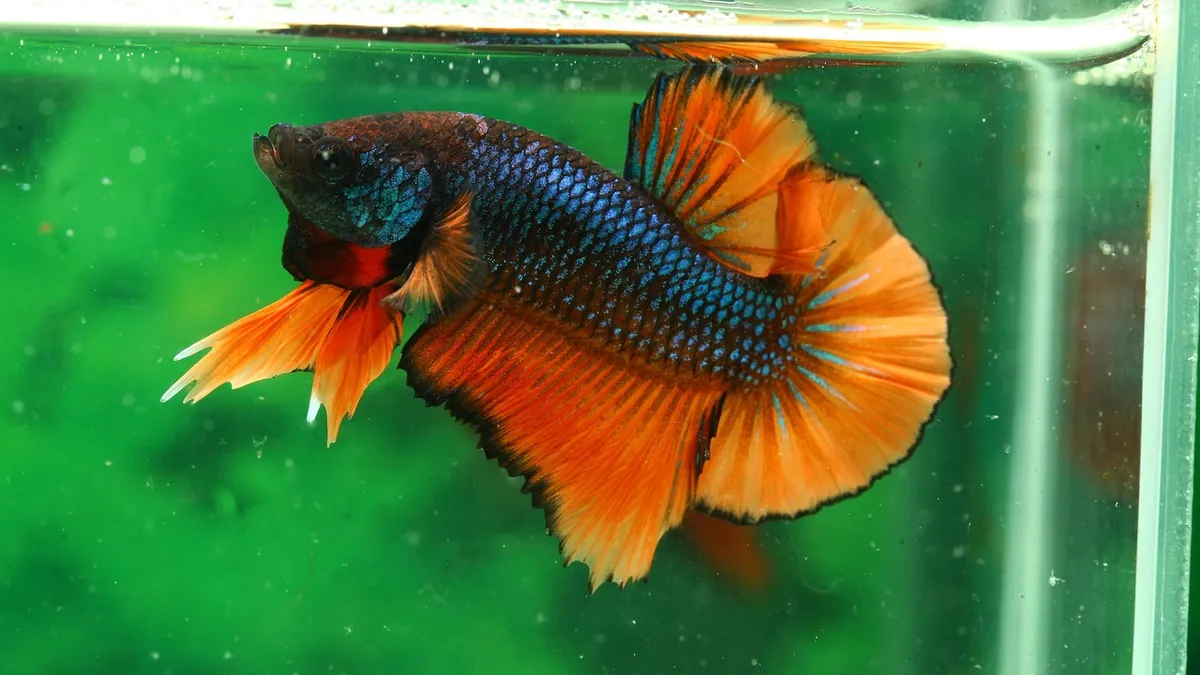
Yes, betta fish poop. Every betta produces waste, and what comes out tells you something about what is going on inside. Normal betta fish poop is short, dark brown to black, and sinks to the bottom of the tank. When the color, shape, or amount changes, it can be the first sign of a gut problem, a parasite, or something wrong with the water.
This article is educational and is not a substitute for veterinary diagnosis or treatment.
Quick Answer
- Normal betta poop is a short, thin, dark brown or black piece that sinks and breaks apart easily.
- Long, stringy, white, or clear poop often points to constipation, internal parasites, or an empty gut passing mucus.
- A betta that has not pooped in several days, has a swollen belly, or is sitting on the bottom needs a closer look.
- Check water temperature, water quality, and how much you feed before assuming your fish is sick.
- Any fish with a bloated body, raised scales, or labored breathing needs a veterinarian who treats aquatic animals.
What Normal Betta Fish Poop Looks Like
A healthy betta produces waste that matches the color of what it eats. Most commercial betta pellets and frozen foods are brown or reddish, so normal stool is usually dark brown, black, or a deep rust color. It is short, roughly the length of the fish's eye, and slightly thicker than a hair. It sinks. It may trail briefly behind the fish and then drop off.
You will not see poop every hour. A betta that eats a normal amount may pass waste once or twice a day, sometimes less. If your fish is active, eating, and swimming normally, an occasional missed day is not a crisis.
One thing owners often mistake for poop is a long, thin, clear or white strand hanging from the vent. That is usually mucus, not food waste. A short strand now and then can be normal. A long strand that hangs for hours, over and over, is a sign to investigate.
Where does it go?
In a filtered tank, waste breaks down and gets pulled into the filter. In a small unfiltered bowl, it settles on the bottom and clouds the water. Either way, waste adds ammonia to the water. That is one reason water changes matter. Fish feces also carry nutrients and minerals that vary by species and diet [1]. In a closed aquarium, those nutrients do not disappear. They feed algae and bacteria until you remove them.
What Changes in Betta Fish Poop Mean
Color and texture are clues, not diagnoses. Use them together with appetite, activity, and body shape.
| Cause | Typical clues | How urgent |
|---|---|---|
| Constipation | Long stringy poop, swollen belly, no poop for days, fish still eating | Act within a day or two |
| Overfeeding | Large amounts of waste, cloudy water, bloated look | Fix diet now, monitor |
| Internal parasites | White or clear stringy poop, thin body, poor appetite, lethargy | See a vet soon |
| Bacterial gut infection | Pale or bloody stool, clamped fins, sitting on bottom | Same day |
| Dropsy or organ failure | Bloated body, raised scales, pale poop, labored breathing | Emergency |
| Stress or poor water quality | Irregular poop, gasping at surface, dull color | Test water today |
| Normal diet change | Color shifts with new food, no other signs | No action needed |
Constipation
Constipation is one of the most common gut complaints in bettas. The classic picture is a fish with a rounded, swollen belly that has not passed waste in a few days. The poop, when it comes, may be long and stringy. Constipation often follows overfeeding, a diet low in fiber, or water that is too cold. Bettas are tropical fish and digest best in warm water.
If your betta looks bloated, compare what you see with the signs in Betta Fish Bloated Belly. A swollen belly is not always constipation. It can also be fluid from organ disease, which is a very different problem.
Internal parasites
Parasites are a leading cause of white, stringy poop in bettas. The stool may look like a thin thread of mucus, sometimes with a clear or whitish cast. The fish may lose weight even though it eats, or it may stop eating. Its color may fade and it may hang near the bottom or behind the filter.
Parasites are common in newly purchased fish and in tanks where new fish were added without quarantine. If your betta has stringy white poop plus weight loss, do not wait weeks to act. A veterinarian who treats fish can examine a stool sample and recommend the right treatment.
Bacterial and internal infections
Bacterial infections in the gut can change stool color to pale yellow, gray, or bloody. The fish usually looks sick in other ways too. Fins may clamp. The fish may sit on the bottom, refuse food, or breathe fast. These cases need prompt treatment because internal infections can spread.
Dropsy and organ failure
Dropsy is not a disease by itself. It is a sign that fluid is building up in the body, usually because the kidneys or other organs are failing. A dropsy betta has a swollen body and scales that stick out like a pinecone. Poop may be pale, thin, or absent. This is an emergency. Read more about the underlying causes in Betta Fish Care: Dropsy kidney failure bloat diagnosis guide.
Diet and water quality
Sometimes the poop is fine and the tank is the problem. A diet of only dry pellets can cause constipation. A sudden switch to a new food can change stool color for a few days. Cold water slows digestion. Poor water quality adds stress, and stress affects the gut. Microplastic particles in water can harm intestinal structure and digestion in fish [2], which is one more reason to keep tanks clean and avoid plastic debris.
Red Flags That Make It an Emergency
Contact a veterinarian who treats fish right away if you see any of these:
- A swollen body with scales that stand out from the skin
- Labored breathing at the surface or lying on the bottom
- Bloody or black tarry stool
- No poop for more than four or five days with a growing belly
- Refusing all food for more than two or three days
- Pale, white, or clear stringy poop along with rapid weight loss
- Any open sores, fin rot, or red streaks on the body
These signs can move fast in a small fish. A betta that looks mildly off in the morning can be critical by evening.
Safe Things You Can Do at Home While You Wait
You cannot diagnose your betta at home, but you can remove obvious triggers and keep the fish stable until you get help.
Check the water first
Test for ammonia, nitrite, nitrate, and pH. Ammonia and nitrite should be zero in a cycled tank. Warm the water to the low end of the tropical range if it has dropped. Bettas do best in stable, warm water. Do a partial water change with a conditioner if ammonia or nitrite is present.
Review the diet
Write down exactly what you feed and how much. Many owners feed more than they think. A betta's stomach is small, about the size of its eye. If you feed several pellets twice a day, that may be too much. Try smaller portions and see if the stool normalizes.
Fast for a short time
A one to two day fast is a common first step for a constipated betta. It gives the gut a rest. Do not fast a thin or weak fish. Do not fast for more than a couple of days without veterinary advice.
Offer the right foods
Some owners offer a small piece of a cooked, peeled pea or a fiber-rich frozen food to help move things along. This is a home remedy, not a proven treatment. If your fish does not improve in a day or two, stop guessing and get help.
Keep the tank calm
Dim the lights, reduce traffic around the tank, and keep the temperature steady. Stress makes gut problems worse.
Do not medicate blindly
Do not pour antibiotics or parasite treatments into the tank without a diagnosis. The wrong medication can harm your fish and wipe out the good bacteria in your filter. If your betta is not eating, see Betta Fish Not Eating for a step-by-step look at what to check.
What Your Veterinarian Will Check and Test
A fish-savvy veterinarian starts with the history. Bring notes on diet, water test results, tank size, tankmates, temperature, and how long the problem has lasted. Photos and a short video of the fish swimming and pooping are genuinely helpful.
The physical exam looks at body shape, scale position, fin condition, gills, eyes, and behavior. The vet may gently press the belly to feel for swelling or masses.
Testing may include:
- A stool sample examined under a microscope for parasites and bacteria
- A skin or gill scraping to check for external parasites
- Water quality testing from your tank
- Imaging in some cases, if the clinic has the equipment
Treatment depends on the diagnosis. If parasites are found, the vet will choose an antiparasitic and calculate the dose from your fish's weight and health. If constipation is the issue, the plan may be a diet change, a short fast, or a prescription food. If organ failure is present, the focus shifts to comfort and supportive care.
Never guess at a dose. Fish medications are dosed by weight and by water volume, and the numbers are very different for a 3-gram betta than for a dog. Your veterinarian will do the math.
Preventing Gut Problems in Bettas
Most betta poop problems start with husbandry. Get these basics right and you prevent a lot of trouble.
Feed a measured amount
Feed once or twice a day, only what your betta eats in a couple of minutes. Remove uneaten food. Vary the diet with frozen or freeze-dried foods if your fish accepts them.
Keep the water warm and clean
Stable temperature and regular partial water changes do more for gut health than any supplement. Test water weekly. Change 25 to 50 percent of the water weekly in a small tank, depending on the bioload.
Quarantine new fish
New bettas and tankmates can carry parasites. Keep new fish in a separate tank for two to four weeks before adding them to a community setup.
Watch the poop
Make it a habit. Once a week, spend a minute looking at the bottom of the tank and at your fish. You will learn what is normal for your betta, and you will notice changes early. Early action is the single best thing you can do for a fish.
Keep learning
Bettas have specific needs for tank size, temperature, filtration, and diet. A solid overview helps you avoid the most common mistakes. See the Complete Betta Fish Care Guide and Common Betta Fish Diseases and How to Treat Them for more detail.
Limitations and When to Contact a Veterinarian
You can learn a lot from watching your betta's waste, but you cannot diagnose a disease from poop alone. Constipation, parasites, bacterial infections, and organ failure can look similar at home. Only a veterinarian can examine the fish, test a stool sample, and confirm what is wrong. Individual cases need a veterinarian.
Call the same day if your betta has white or bloody stool, has stopped eating, or has a swollen belly that is getting worse.
Go to an emergency clinic or call an aquatic veterinarian immediately if your betta has raised scales, is gasping at the surface, is lying on its side, or has not passed waste in more than four or five days with a growing abdomen.
Schedule a routine visit if the poop has changed color or texture for more than a few days but your fish is still eating and swimming normally.
If you are not sure whether a sign is urgent, call and ask. Most fish veterinarians would rather answer a quick question than treat a fish that waited too long.
Frequently Asked Questions
Do betta fish poop?
Yes. Every betta produces waste, just like any other animal. You may not see it often because it sinks and breaks down quickly in a filtered tank.
What color is normal betta fish poop?
Normal betta poop is dark brown, black, or deep rust, matching the color of the food it eats. A sudden change to white, clear, or pale yellow is a reason to look closer.
Why does my betta have stringy poop?
A long, stringy stool can mean constipation, especially if the belly looks swollen. If the strand is white or clear and the fish is losing weight, parasites are a concern and you should see a veterinarian.
How can I tell if my betta is constipated?
A constipated betta often has a rounded belly, passes long stringy waste, and may skip a day or two of pooping. It usually still eats and swims. If the belly keeps growing or the fish stops eating, get help.
Can I treat my betta's poop problem at home?
You can fix the easy things, such as overfeeding, cold water, and poor water quality. You cannot treat parasites or internal infections at home without a diagnosis. If simple changes do not help within a day or two, contact a veterinarian.
Related Articles
- Betta Fish Bloated Belly
- Betta Fish Not Eating
- Betta Fish Care: Dropsy kidney failure bloat diagnosis guide
- Complete Betta Fish Care Guide
- Common Betta Fish Diseases and How to Treat Them
- How Long Do Betta Fish Live? Lifespan Guide
- Is My Betta Fish Hungry or Overfed? Feeding Signs
- Do Betta Fish Overeat? Feeding Limits and Risks
- Why Is My Betta Fish Swollen? Eye, Face, and Belly
References
- Fish feces reveal diverse nutrient sources for coral reefs. Ecology, 2023.
- Global analysis of the adverse effects of micro- and nanoplastics on intestinal health and microbiota of fish. Journal of hazardous materials, 2024.