Neobenedenia melleni: Biology, Pathogenesis, Diagnosis, and Control of a Capsalid Monogenean Ectoparasite of Marine Teleosts
By Dr. Zubair Khalid, DVM, MS, PhD ·
Key Takeaways
- Neobenedenia melleni is a highly pathogenic monogenean ectoparasite with broad host specificity across marine teleosts, causing significant economic losses in aquaculture and public aquaria due to its direct life cycle and rapid reproduction.
- Infestation, termed benedeniose, manifests as erratic swimming, epidermal damage with excessive mucus, ocular lesions, and secondary bacterial infections, with environmental factors like elevated temperatures (e.g., 32°C) accelerating its life cycle and lower salinities (below 20 ppt) inhibiting egg hatching.
- Diagnosis relies on microscopic identification of characteristic haptoral morphology from skin scrapings or biopsies, with molecular methods like 18S rRNA gene sequencing available for confirmation.
- Effective control strategies include chemotherapeutic baths with praziquantel (2-3 mg/L) or formalin (1:4,000), physical treatments such as short freshwater immersions (10-15 minutes), and biological control using cleaner fish species.
- Integrated pest management (IPM) combining quarantine, biosecurity, regular monitoring, and appropriate treatment modalities is crucial for preventing and managing outbreaks, with evidence suggesting that fish can develop specific antibody-mediated immunity.
Introduction
Neobenedenia melleni (MacCallum, 1927) Yamaguti, 1963 is a monogenean ectoparasite belonging to the family Capsalidae, subfamily Benedeniinae [<a href="#ref-1">1</a>, <a href="#ref-2">2</a>]. This parasite is recognized as a significant pathogen in marine teleost aquaculture and public aquarium systems worldwide, causing substantial economic losses due to morbidity, mortality, and reduced marketability of infected fish [<a href="#ref-3">3</a>, <a href="#ref-4">4</a>, <a href="#ref-5">5</a>]. The species exhibits exceptionally low host specificity, having been reported from many teleost families across tropical and subtropical waters [<a href="#ref-6">6</a>]. Its ability to cause epizootics in captive fish populations has driven extensive research into its biology, host-parasite interactions, and control measures [<a href="#ref-7">7</a>, <a href="#ref-8">8</a>, <a href="#ref-9">9</a>].
Taxonomy and Morphology
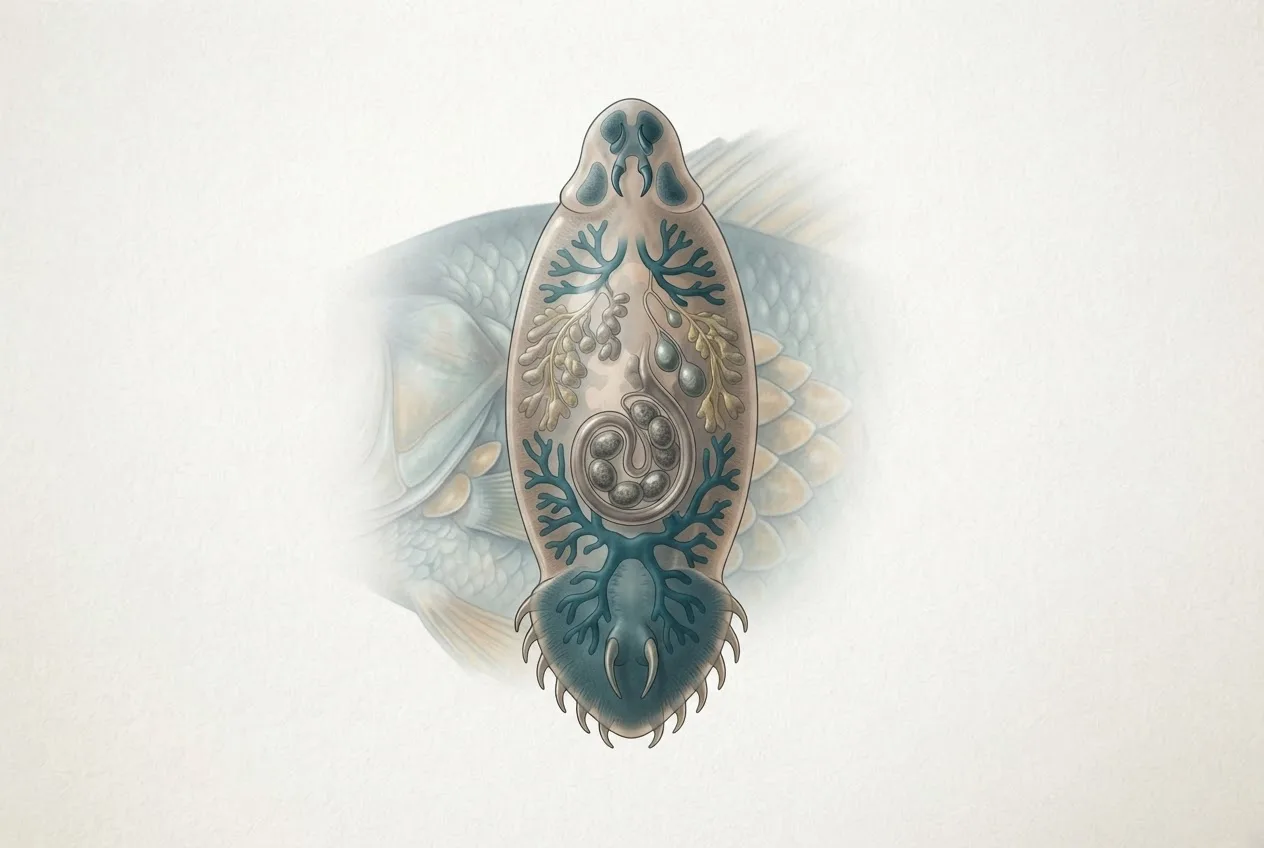
Neobenedenia melleni is a capsalid monogenean characterized by a large, dorsoventrally flattened body, a prominent haptor (opisthaptor) armed with three pairs of large marginal hooks and numerous accessory sclerites, and two pairs of eyespots [<a href="#ref-1">1</a>, <a href="#ref-10">10</a>]. The anterior region bears two prohaptors (anterior suckers) and a pharynx. Adults can reach several millimeters in length, with body size varying according to host species and environmental conditions [<a href="#ref-10">10</a>, <a href="#ref-11">11</a>]. The species was originally described by MacCallum in 1927 as Epibdella melleni and later transferred to the genus Neobenedenia by Yamaguti in 1963 [<a href="#ref-1">1</a>]. Morphological differentiation from congeneric species such as Neobenedenia pargueraensis relies on details of the haptoral sclerites and reproductive anatomy.
Life Cycle and Transmission
The life cycle of N. melleni is direct, involving no intermediate host [<a href="#ref-1">1</a>, <a href="#ref-2">2</a>]. Adult hermaphroditic parasites reside on the skin, fins, and eyes of the fish host, where they feed on mucus and epithelial cells [<a href="#ref-5">5</a>, <a href="#ref-12">12</a>]. Eggs are released into the water column and are tethered to substrates via filamentous appendages [<a href="#ref-13">13</a>, <a href="#ref-14">14</a>]. Embryonation and hatching occur within days, depending on temperature and salinity [<a href="#ref-11">11</a>]. The free-swimming oncomiracidium larva is ciliated and must locate and attach to a suitable host within a limited time window [<a href="#ref-9">9</a>]. Upon attachment, the larva undergoes metamorphosis into a juvenile and matures to an adult, completing the cycle in as little as 10-14 days under optimal conditions [<a href="#ref-15">15</a>, <a href="#ref-16">16</a>]. Temperature strongly influences development: higher temperatures (e.g., 32°C) accelerate egg hatching and larval survival compared to lower temperatures (e.g., 18°C) [<a href="#ref-11">11</a>]. Salinity also affects hatching success, with reduced salinity (below 24 ppt) inhibiting egg development and hatching [<a href="#ref-13">13</a>, <a href="#ref-14">14</a>].
Host Range and Geographic Distribution
Neobenedenia melleni infects a remarkably broad spectrum of marine teleosts, including both wild and cultured species [<a href="#ref-6">6</a>]. Documented hosts include cobia (Rachycentron canadum) [<a href="#ref-17">17</a>], red snapper (Lutjanus erythropterus) [<a href="#ref-11">11</a>], dog snapper (Lutjanus jocu) [<a href="#ref-18">18</a>], dusky grouper (Epinephelus marginatus), Florida red tilapia (Oreochromis hybrids) [<a href="#ref-13">13</a>, <a href="#ref-19">19</a>], Mozambique tilapia (Oreochromis mossambicus) [<a href="#ref-15">15</a>, <a href="#ref-20">20</a>], bullseye puffer fish (Sphoeroides annulatus) [<a href="#ref-7">7</a>], Lebranche mullet (Mugil liza) [<a href="#ref-3">3</a>], and various ornamental reef fish such as Arabian angelfish (Pomacanthus asfur), yellowbar angelfish (Pomacanthus maculosus), regal angelfish (Pygoplites diacanthus), and bluecheek butterflyfish (Chaetodon semilarvatus) [<a href="#ref-8">8</a>]. Wild hosts include Atlantic cutlassfish (Trichiurus lepturus) in Brazilian coastal waters [<a href="#ref-10">10</a>] and Caribbean surgeonfishes (Acanthuridae) [<a href="#ref-21">21</a>]. The parasite has been reported from the western Atlantic, Caribbean, Gulf of Mexico, Pacific coast of the Americas, Hawaii, Australia, Southeast Asia, and the Mediterranean [<a href="#ref-22">22</a>]. Its introduction to new regions is often linked to the movement of infected cultured or ornamental fish [<a href="#ref-8">8</a>, <a href="#ref-17">17</a>].
Pathogenesis and Clinical Signs
Infestation with N. melleni causes a condition known as benedeniose or capsalid monogenean disease [<a href="#ref-2">2</a>]. Clinical signs include erratic swimming, flashing (rubbing against surfaces), anorexia, skin darkening, excessive mucus production, corneal opacity, exophthalmia, ocular lesions, hemorrhages on the body surface, and secondary bacterial infections [<a href="#ref-4">4</a>, <a href="#ref-5">5</a>]. Heavy infestations can lead to severe epithelial damage, osmoregulatory dysfunction, and mortality [<a href="#ref-15">15</a>, <a href="#ref-16">16</a>]. The parasite's feeding activity and mechanical irritation compromise the skin barrier, predisposing fish to opportunistic bacterial pathogens [<a href="#ref-5">5</a>]. Hyperparasitism by the dinoflagellate Amyloodinium ocellatum on N. melleni has been documented, potentially exacerbating pathology [<a href="#ref-12">12</a>].
Molecular Biology and Genomics
The complete mitochondrial genome of N. melleni has been sequenced and characterized, revealing a circular molecule of approximately 14,000 bp containing 12 protein-coding genes, 2 rRNA genes, and 22 tRNA genes [<a href="#ref-23">23</a>]. The gene arrangement differs from that of other capsalids such as Benedenia species, providing phylogenetic markers [<a href="#ref-23">23</a>]. The 18S ribosomal RNA gene sequence shows high similarity (99%) to other N. melleni isolates, confirming species identity [<a href="#ref-11">11</a>]. Several functional genes have been cloned and characterized, including a cathepsin L-like cysteine protease (NmCL), a thioredoxin (NmTrx), and a heat shock protein 60 (NmHSP60). NmTrx exhibits antioxidant activity and is differentially expressed across life stages and temperatures, with higher expression in adults and at 32°C. NmHSP60 expression is upregulated in adults at 32°C and downregulated at 18°C, and is also modulated by salinity changes. The sterol profile of N. melleni is dominated by cholesterol (free and esterified), with detectable levels of squalene and desmosterol, suggesting either host sterol uptake or an unusual active biosynthetic pathway that could be targeted pharmacologically [<a href="#ref-24">24</a>].
Immunological Aspects
Mozambique tilapia (Oreochromis mossambicus) continuously exposed to N. melleni develop immunity characterized by reduced parasite loads after 102-120 days post-exposure [<a href="#ref-20">20</a>]. This protection correlates with increased specific mucosal and systemic antibody levels, as measured by enzyme-linked immunosorbent assay (ELISA) [<a href="#ref-20">20</a>]. Larval and adult antigens from N. melleni have been used in in vivo and in vitro studies to characterize immune responses in yellowtail (Seriola lalandi), demonstrating that parasite-derived molecules can modulate host immune parameters [<a href="#ref-9">9</a>]. The role of antibodies in protective immunity suggests potential for vaccine development, though no commercial vaccine currently exists [<a href="#ref-20">20</a>].
Diagnostic Methods
Diagnosis of N. melleni infestation is typically achieved by microscopic examination of skin scrapings, fin biopsies, or gill clips from live or recently dead fish [<a href="#ref-8">8</a>]. The characteristic morphology of the haptor and body allows identification to genus level; species confirmation may require molecular analysis [<a href="#ref-10">10</a>, <a href="#ref-11">11</a>]. Molecular diagnostics include PCR amplification and sequencing of the 18S rRNA gene or mitochondrial genes [<a href="#ref-11">11</a>, <a href="#ref-23">23</a>]. Quantitative PCR (qPCR) has been used to assess gene expression levels of NmTrx and NmHSP60 under different environmental conditions. For epidemiological surveys, prevalence and mean intensity are calculated using standard parasitological indices [<a href="#ref-10">10</a>, <a href="#ref-11">11</a>, <a href="#ref-21">21</a>].
Treatment and Control
Chemotherapy
Praziquantel (PZQ) is the most commonly used chemotherapeutic agent against N. melleni [<a href="#ref-7">7</a>, <a href="#ref-8">8</a>]. Bath treatments at 2-3 mg/L for 12-24 hours are effective against adult parasites but have limited ovicidal activity [<a href="#ref-7">7</a>, <a href="#ref-8">8</a>]. A combination anthelmintic product containing PZQ, ivermectin, pyrantel pamoate, and fenbendazole (Adecto) has shown concentration-dependent efficacy, with 20 mg/L killing all parasites within 12-16 hours in vitro [<a href="#ref-7">7</a>]. Formalin baths (1:2,000 to 1:4,000 for 10 minutes) are also effective against adults.
Physical Treatments
Freshwater immersion is a widely used, low-cost control method [<a href="#ref-4">4</a>, <a href="#ref-13">13</a>]. Exposure to freshwater for 10-15 minutes effectively detaches and kills adult N. melleni without causing mortality in many marine fish species, provided the fish are acclimated [<a href="#ref-4">4</a>]. Hyposalinity (reduced salinity) treatments targeting eggs, juveniles, and adults have been studied; eggs fail to hatch at salinities below 20 ppt [<a href="#ref-13">13</a>, <a href="#ref-14">14</a>]. However, some fish species (e.g., bullseye puffer) show tolerance to freshwater, while others may experience stress [<a href="#ref-7">7</a>].
Biological Control
Cleaner fish species offer a non-chemical control option. The cleaner goby Elacatinus figaro has been shown to reduce N. melleni loads on Lebranche mullet without adversely affecting the host's hematological parameters [<a href="#ref-3">3</a>]. Similarly, the cleaner wrasse Thalassoma bifasciatum has been used to control infestations on Florida red tilapia [<a href="#ref-19">19</a>]. The efficacy of cleaner fish depends on species compatibility, stocking density, and environmental conditions [<a href="#ref-3">3</a>, <a href="#ref-19">19</a>].
Integrated Management
An integrated pest management (IPM) approach combining quarantine, regular monitoring, chemotherapeutic baths, freshwater or hyposaline treatments, and biological control is recommended for aquaculture settings [<a href="#ref-16">16</a>, <a href="#ref-17">17</a>]. Quarantine of new stock and prophylactic treatment with PZQ or freshwater can prevent introduction [<a href="#ref-8">8</a>, <a href="#ref-17">17</a>]. Reducing stress through optimal water quality and nutrition enhances host resistance [<a href="#ref-2">2</a>, <a href="#ref-16">16</a>].
flowchart TD
 A["Fish stock introduction"] --> B{"Quarantine period?"}
 B -->|"Yes"| C["Prophylactic freshwater or PZQ bath"]
 B -->|"No"| D["Direct to production system"]
 C --> E["Monitor for clinical signs"]
 D --> E
 E --> F{"Skin scraping examination"}
 F -->|"Negative"| G["Continue routine monitoring"]
 F -->|"Positive"| H["Confirm N. melleni morphology"]
 H --> I["Assess infestation intensity"]
 I --> J{"Intensity threshold exceeded?"}
 J -->|"No"| K["Enhanced monitoring + cleaner fish"]
 J -->|"Yes"| L["Treatment selection"]
 L --> M["Freshwater bath 10-15 min"]
 L --> N["PZQ bath 2-3 mg/L"]
 L --> O["Formalin bath 1:4000"]
 M --> P["Post-treatment re-examination"]
 N --> P
 O --> P
 P --> Q{"Parasites eliminated?"}
 Q -->|"Yes"| R["Resume routine monitoring"]
 Q -->|"No"| S["Repeat treatment or switch modality"]
 S --> P
Prevention and Biosecurity
Prevention relies on strict biosecurity protocols: sourcing fish from certified disease-free facilities, maintaining quarantine with prophylactic treatment, and avoiding cross-contamination between tanks [<a href="#ref-8">8</a>, <a href="#ref-17">17</a>]. Water source management (e.g., UV sterilization, filtration) can reduce introduction of oncomiracidia [<a href="#ref-2">2</a>]. Regular health monitoring and early detection through skin scrapings are critical. In cage culture, fallowing periods and site rotation can reduce environmental parasite loads.
Public Health and One Health Considerations
Neobenedenia melleni is not zoonotic and poses no direct human health risk. However, its economic impact on aquaculture and ornamental fish trade has indirect implications for food security and livelihoods [<a href="#ref-1">1</a>, <a href="#ref-2">2</a>]. The parasite is a model for studying host-parasite coevolution and immune evasion in marine systems [<a href="#ref-9">9</a>, <a href="#ref-20">20</a>]. Understanding its biology contributes to broader knowledge of monogenean pathogenesis and control, relevant to other aquatic parasites such as Gyrodactylus salaris (see Gyrodactylus salaris in Salmon: Pathogen Ecology and Diagnostic Surveillance) and sea lice (see Sea Lice Infestation in Salmon Aquaculture: Biology, Economic Impact, and Integrated Pest Management).
Frequently Asked Questions
What is Neobenedenia melleni?
Neobenedenia melleni is a capsalid monogenean ectoparasite that infects the skin, fins, and eyes of marine teleost fish, causing significant disease in aquaculture and public aquarium settings [<a href="#ref-1">1</a>, <a href="#ref-2">2</a>].
Which fish species are affected by Neobenedenia melleni?
The parasite infects a very broad range of marine teleosts, including cobia, snappers, groupers, tilapia, mullet, pufferfish, and numerous ornamental reef fish species [<a href="#ref-3">3</a>, <a href="#ref-6">6</a>, <a href="#ref-7">7</a>, <a href="#ref-8">8</a>, <a href="#ref-11">11</a>, <a href="#ref-17">17</a>, <a href="#ref-18">18</a>].
How is Neobenedenia melleni diagnosed?
Diagnosis is made by microscopic examination of skin scrapings or fin biopsies, revealing the characteristic capsalid morphology with a large haptor and three pairs of marginal hooks [<a href="#ref-8">8</a>, <a href="#ref-10">10</a>]. Molecular confirmation uses 18S rRNA gene sequencing [<a href="#ref-11">11</a>].
What treatments are effective against Neobenedenia melleni?
Effective treatments include freshwater baths (10-15 minutes), praziquantel baths (2-3 mg/L), formalin baths (1:4,000 for 10 minutes), and combination anthelmintics [<a href="#ref-4">4</a>, <a href="#ref-7">7</a>, <a href="#ref-8">8</a>]. Cleaner fish such as Elacatinus figaro can also reduce parasite loads [<a href="#ref-3">3</a>].
Can fish develop immunity to Neobenedenia melleni?
Yes, Mozambique tilapia continuously exposed to the parasite develop protective immunity associated with specific mucosal and systemic antibody responses [<a href="#ref-20">20</a>].
What environmental factors influence Neobenedenia melleni outbreaks?
Higher water temperature (e.g., 32°C) accelerates egg development and parasite reproduction, while lower salinity (below 20 ppt) inhibits egg hatching and survival [<a href="#ref-11">11</a>, <a href="#ref-13">13</a>, <a href="#ref-14">14</a>].
Is Neobenedenia melleni a risk to human health?
No, N. melleni is a fish-specific parasite with no zoonotic potential [<a href="#ref-1">1</a>, <a href="#ref-2">2</a>].
Related Clinical & Scientific Guides
- Tick-Borne Diseases in Dogs: Pathogens, Clinical Signs, Diagnosis, and Prevention
- Toxoplasmosis in Cats and the Risk of Brain Infection in Humans
- Dog Heartworm and Tick-Borne Disease Prevention