Transformation Definition: Meaning in Molecular Biology
By Dr. Zubair Khalid, DVM, MS, PhD ·
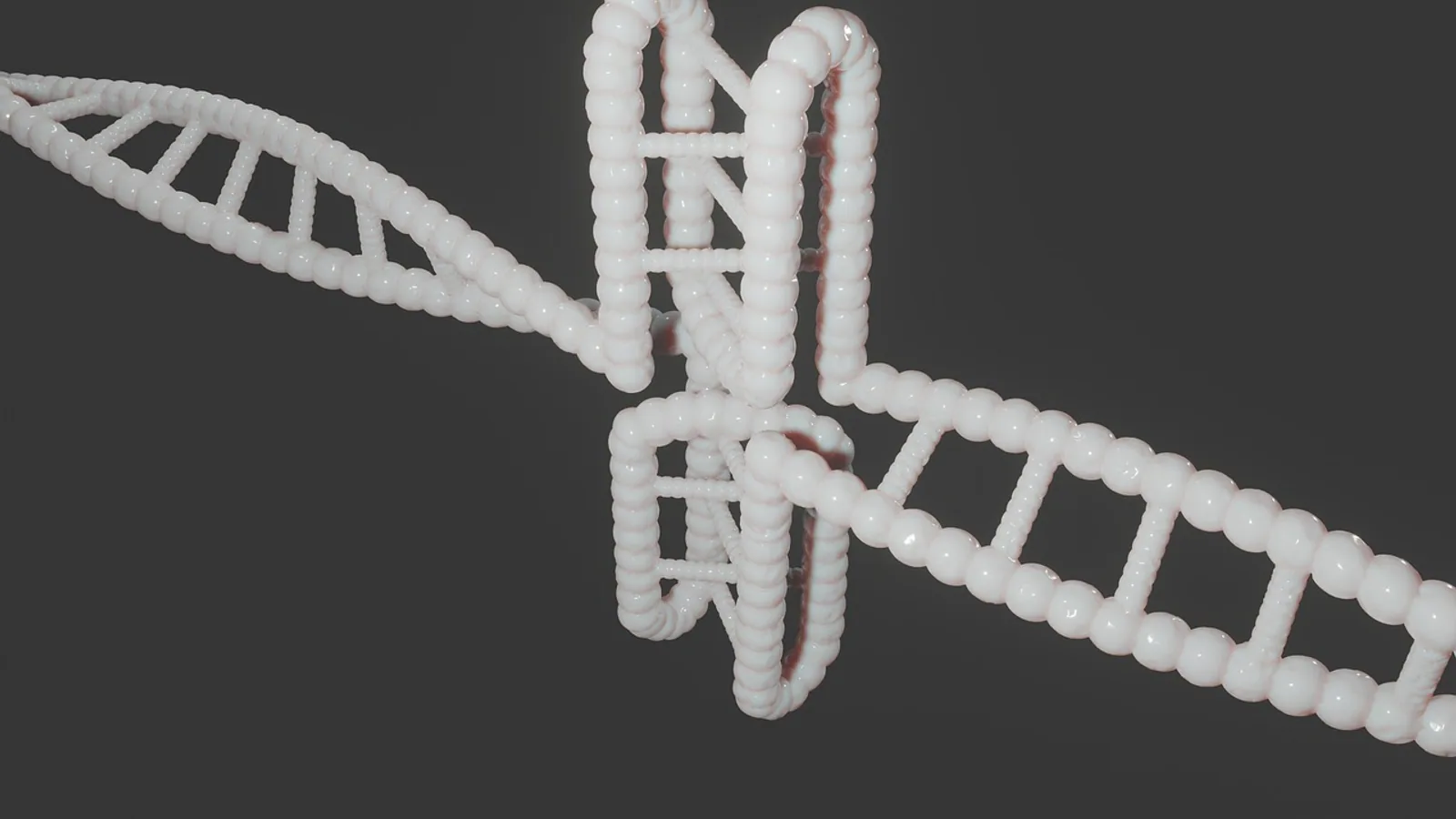
Transformation is the process by which a bacterial cell takes up free DNA from its surroundings and, if that DNA can replicate or integrate, acquires new genetic information. In molecular cloning, transformation is the step where a recombinant plasmid is introduced into a competent bacterial host so that the plasmid can be amplified, selected, and later purified.
The term matters because it sits at the center of recombinant DNA work. Every cloning project, from a simple subcloning experiment to building an infectious clone of a virus, depends on getting a plasmid into a bacterium and recovering colonies that carry it. A recent reverse genetics protocol for chikungunya virus, for example, treats bacterial transformation as a routine but essential step between ligation and colony screening [1]. If transformation fails or works poorly, the downstream experiment never starts.
Transformation is also one of the most confused terms in molecular biology. Students mix it up with transfection, transduction, and the malignant transformation of cells in cancer biology. Those are different processes in different hosts. This article defines transformation precisely, walks through the mechanism step by step, compares it with the terms it is most often confused with, and explains how efficiency is measured.
What Transformation Means in Molecular Biology
The transformation def in bacterial genetics is narrow and specific: the uptake of naked or free DNA by a bacterial cell. The DNA is not packaged in a virus, it is not injected by a phage, and it is not delivered by a chemical carrier into a eukaryotic cell. It is simply DNA in solution that the bacterium takes across its cell envelope.
Two forms of transformation exist. Natural transformation happens when a bacterium is genetically competent, meaning it expresses the machinery to bind, import, and sometimes integrate extracellular DNA. This is a regulated developmental state, not a permanent property. Artificial transformation is what laboratories do when they force bacteria to take up plasmid DNA using chemical treatment or an electric pulse.
The distinction matters because the two are regulated differently. Natural competence is switched on by environmental signals such as nutrient limitation, cell density, or specific polysaccharides. In Vibrio cholerae, natural transformation is induced in the presence of chitin, and the transcriptional regulators TfoS and ChiS coordinate to activate a small RNA called TfoR that is critical for the process [2]. That work showed that ChiS binds the tfoR promoter with higher affinity than TfoS, and that the relatively low affinity of TfoS for the same promoter enforces its dependence on ChiS. A mutant TfoS allele with higher affinity activated the promoter without ChiS and dysregulated chitin-dependent phenotypes [2]. This is a good illustration of how tightly natural competence is controlled and how species-specific the regulatory logic is.
Artificial transformation bypasses that regulation. The laboratory supplies the DNA and the conditions, and the bacterium takes up the plasmid without needing to be naturally competent.
Why Transformation Matters in the Lab
Transformation is the amplification step of molecular cloning. A ligation reaction produces a small amount of recombinant plasmid, often far too little to work with directly. Introducing that plasmid into Escherichia coli lets the bacterium replicate it to high copy number, and each successful uptake event produces a colony on a selective plate. Picking that colony and growing it in liquid culture yields enough plasmid for sequencing, restriction mapping, or downstream transfection into eukaryotic cells.
Transformation is also a selection tool. Because the plasmid carries an antibiotic resistance gene, only cells that took up the plasmid survive on antibiotic-containing medium. This converts a rare event (uptake by a small fraction of cells) into a countable, clonable output. The same logic underlies colony screening by PCR and Sanger sequencing, which confirm that the correct insert is present before the plasmid is used further [1].
Beyond routine cloning, transformation underpins reverse genetics, protein expression, and synthetic biology. When a recombinant bacterial laccase from Yersinia enterocolitica was expressed in E. coli BL21 for biochemical characterization, transformation was the entry point that put the expression construct into the host [3]. The same pattern repeats across thousands of experiments.
The Mechanism of Artificial Transformation
Artificial transformation works by making the bacterial envelope transiently permeable to DNA. Two main approaches dominate: chemical competence with divalent cations, and electroporation.
Chemical competence and heat shock
In the chemical method, log-phase bacteria are chilled and washed in a solution containing a divalent cation, classically calcium chloride. The cation neutralizes the negative charges on both the DNA backbone and the lipid phosphate groups of the outer membrane, reducing electrostatic repulsion. The cells are then incubated on ice with DNA, which allows the plasmid to associate with the cell surface.
A brief heat shock follows, typically a rapid rise to around 42 degrees Celsius for under a minute, then an immediate return to ice. The temperature shift is thought to create a transient disturbance in the membrane that lets DNA cross the envelope. The exact physical mechanism is still debated, but the empirical result is reliable: a fraction of cells take up the plasmid.
Electroporation
Electroporation uses a short high-voltage pulse instead of a temperature shift. The electric field transiently permeabilizes the membrane, and DNA in the surrounding buffer enters the cell. Electroporation generally gives higher efficiency than chemical methods and works well for large plasmids, but it requires cells free of salt, since arcing destroys the sample and the cuvette.
Natural competence as an alternative
Some bacteria can be transformed without any artificial treatment if they are induced into natural competence. This is exploited in species such as Bacillus subtilis and Acinetobacter, but the conditions are species-specific and often not practical for routine cloning. For most laboratory work with E. coli, artificial competence is the standard route.
The workflow below summarizes the decision path from DNA to confirmed colonies.
flowchart TD
    A[Recombinant plasmid DNA] --> B{Host and method}
    B --> C[Chemical competence with calcium chloride]
    B --> D[Electroporation]
    C --> E[Incubate DNA and cells on ice]
    D --> F[Pulse in cuvette]
    E --> G[Heat shock]
    F --> H[Add recovery medium]
    G --> H
    H --> I[Recovery in SOC]
    I --> J[Plate on antibiotic medium]
    J --> K[Count colonies and calculate efficiency]
    K --> L[Screen colonies by PCR]
    L --> M[Confirm by sequencing]
Step by Step Through a Transformation Experiment
The following steps describe the logic of a standard bacterial transformation. They are not a protocol recipe but a conceptual map of what each stage accomplishes.
- Prepare competent cells. Cells are grown to mid-log phase, chilled, and made permeable by calcium chloride treatment or by washing in a low-conductivity buffer for electroporation. Competent cells can be used immediately or frozen for later use.
- Mix DNA with cells. A small volume of plasmid DNA is added to the competent cells and incubated on ice. This allows the DNA to contact the cell surface.
- Apply the uptake stimulus. For chemical competence, a brief heat shock is applied. For electroporation, a high-voltage pulse is delivered.
- Recover in rich medium. Immediately after the uptake step, cells are diluted into a nutrient-rich medium such as SOC and incubated with shaking. This recovery period lets the cells repair membrane damage and, critically, begin expressing the antibiotic resistance gene encoded on the plasmid. Without recovery, cells that took up the plasmid would die on the selection plate before resistance protein accumulates.
- Plate on selective medium. The recovered culture is spread on agar containing the antibiotic that the plasmid confers resistance to. Only transformants grow into colonies.
- Count and screen. Colony number gives a measure of transformation efficiency. Individual colonies are then screened by PCR and confirmed by sequencing to verify the correct construct [1].
Measuring Transformation Efficiency
Transformation efficiency is reported as colony-forming units per microgram of DNA, abbreviated CFU per microgram. The calculation is straightforward: count the colonies on the plate, divide by the mass of DNA plated in micrograms, and correct for the fraction of the recovery culture that was plated.
A worked example makes this concrete. Suppose a transformation used 10 nanograms of plasmid, and after recovery the cells were resuspended in 1 milliliter, of which 100 microliters were plated. If 200 colonies appear, the plated fraction represents 0.1 of the total, so the total transformants are 2000. The DNA plated was 0.01 micrograms, so the efficiency is 2000 divided by 0.01, which equals 2 times 10 to the fifth CFU per microgram.
Efficiency values span a wide range depending on method, host, and plasmid. A study using the Yoshida effect, in which sepiolite fibers and friction were used to transform non-competent E. coli JM109 with pUC19, reported efficiencies up to 4.1 times 10 to the fourth CFU per microgram [4]. That is a modest number by electroporation standards but adequate for the intended purpose, and it illustrates that efficiency requirements depend on the downstream application.
What affects efficiency
Several factors move the number up or down.
Plasmid size. Larger plasmids transform less efficiently than small ones. The DNA must cross the envelope, and a bigger molecule presents a larger physical and electrostatic barrier.
Supercoiling. Supercoiled plasmid DNA transforms more efficiently than relaxed or nicked forms. Supercoiling compacts the molecule and appears to favor uptake and subsequent replication.
DNA purity and quality. Salt, ethanol, and protein contamination reduce efficiency, especially for electroporation, where residual salt causes arcing.
Host strain. Different E. coli strains have different transformation capacities. Strains engineered for high efficiency are widely used for cloning, while expression strains may be less efficient but better suited to protein production.
Recovery conditions. The length and richness of the recovery period affect how many transformants survive selection, particularly when the antibiotic resistance gene must be expressed before plating.
Transformation Compared with Transfection and Transduction
These three terms describe DNA delivery into different hosts by different mechanisms, and confusing them is one of the most common errors in molecular biology writing.
| Feature | Transformation | Transfection | Transduction |
|---|---|---|---|
| Host | Bacterial cells | Eukaryotic cells | Bacterial cells |
| Mechanism | Uptake of free DNA from solution | Delivery of nucleic acid by chemical, physical, or lipid carriers | Transfer of DNA by a bacteriophage |
| DNA source | Naked plasmid or linear DNA | Plasmid, siRNA, mRNA, or protein complexes | Phage-packaged DNA |
| Typical use | Cloning, plasmid amplification, protein expression | Gene expression studies, knockdown, reporter assays | Stable gene delivery, library construction |
| Example method | Calcium chloride heat shock, electroporation | Lipid nanoparticles, electroporation, pressure-based methods | Bacteriophage infection |
Transfection covers a broad set of techniques for getting nucleic acids into eukaryotic cells. A study describing pressure-jump-poration lists calcium condensation, polyethylenimine, modified lipids, electroporation, viral production, biolistics, and microinjection as established transfection approaches [5]. That same work notes a dichotomy between primary and transformed cells in their response to the method, which is a reminder that "transformed" in the eukaryotic context means something different from bacterial transformation [5].
Transduction is phage-mediated. A bacteriophage carries DNA from one bacterium to another. Temperate phages can also remodel host phenotypes without transferring a classical gene cassette. A clinical Enterobacter isolate carrying a flagellin remodeling prophage uses phage-encoded RNA-guided transcription factors to alter flagellar composition, which enhances motility and immune evasion and improves gut colonization in a murine model [6]. That is a phage-driven change in host behavior, conceptually distinct from plasmid uptake.
The word "transformation" also appears in cancer biology, where it means the conversion of a normal cell into a malignant one. That usage is unrelated to bacterial transformation. A study on Her2 protein delivery into nonmalignant breast acinar cultures used the term in this oncogenic sense, showing that Her2 transfer increased the probability of forming tumor-like structures [7]. Similarly, work on Helicobacter pylori and gastric cancer describes malignant transformation driven by infection-associated gene networks [8]. When you read "transformation" in a cancer paper, check the context before assuming it means plasmid uptake.
Natural Competence Is Regulated and Species-Specific
Natural competence is not a universal bacterial trait. It appears in a subset of species and is switched on only under specific conditions. The regulatory logic is often layered, involving membrane-anchored transcription factors, small RNAs, and environmental sensors.
In Vibrio cholerae, chitin serves as the trigger. Two transmembrane transcriptional regulators, TfoS and ChiS, coordinate to induce TfoR, a small RNA required for natural transformation. ChiS binds the tfoR promoter more tightly than TfoS and recruits the locus to the membrane, while TfoS activates transcription. The low affinity of TfoS for the promoter reinforces its dependence on ChiS, and a high-affinity TfoS mutant bypasses that requirement and dysregulates chitin-dependent phenotypes [2]. This is a clear example of how natural competence is gated by protein-DNA affinity and membrane organization.
Species-specific regulation means you cannot assume a bacterium is naturally competent just because a related species is. Bacillus subtilis and Streptococcus pneumoniae have well-characterized natural competence systems. E. coli is not naturally competent under standard laboratory conditions, which is why artificial methods are used.
Transformation in Practice: Screening and Confirmation
After transformation, colony count alone does not tell you whether the correct plasmid was taken up. A plate may contain colonies with the empty vector, colonies with a rearranged insert, or colonies with the desired construct. Screening closes that gap.
Colony PCR is the first check. Individual colonies are picked, lysed, and amplified with primers that flank the insert or span a junction. A product of the expected size suggests the correct construct. Sanger sequencing then confirms the sequence, especially when the goal is to introduce a specific point mutation. The chikungunya reverse genetics protocol follows exactly this sequence: transformation, colony screening by PCR, and Sanger sequencing to confirm the mutation before plasmid purification by miniprep [1].
This matters because transformation efficiency and construct correctness are separate questions. A high-efficiency transformation can still yield mostly wrong clones if the ligation was inefficient or the insert was contaminated. Screening is what separates a successful cloning experiment from a plate full of colonies that happen to be resistant.
Common Mistakes and Limitations
Confusing transformation with transfection. Transformation is bacterial. Transfection is eukaryotic. Using the terms interchangeably in a manuscript or lab report signals a conceptual error, not a stylistic choice.
Assuming all bacteria are naturally competent. Most laboratory E. coli strains are not. They require chemical treatment or electroporation to take up DNA.
Skipping the recovery step. Antibiotic resistance takes time to express. Plating immediately after the uptake step reduces or eliminates transformants, especially with antibiotics that act quickly.
Using too much DNA. Excess DNA can reduce efficiency by saturating uptake machinery or by introducing contaminants that inhibit the process. The optimal amount depends on the method and the plasmid.
Ignoring plasmid size and topology. A large, relaxed plasmid will transform poorly compared with a small supercoiled one. If efficiency is low, check the plasmid before blaming the cells.
Treating efficiency as a single universal number. Reported CFU per microgram values depend on the method, the host, the plasmid, and the calculation. Comparing values across experiments requires matching those variables.
Forgetting that colony count is not construct confirmation. Resistance tells you the plasmid is present. It does not tell you the insert is correct. PCR and sequencing are still required.
Quick Review
- Transformation is the uptake of free DNA by a bacterial cell.
- Artificial transformation uses calcium chloride heat shock or electroporation to make cells transiently permeable.
- Recovery in rich medium such as SOC allows antibiotic resistance to be expressed before selection.
- Selection on antibiotic plates converts rare uptake events into countable colonies.
- Transformation efficiency is reported as CFU per microgram of DNA.
- Plasmid size and supercoiling affect efficiency, with smaller supercoiled plasmids transforming better.
- Transfection is eukaryotic, transduction is phage-mediated, and malignant transformation is a separate cancer biology term.
Frequently Asked Questions
What is the simplest definition of transformation?
Transformation is the uptake of free DNA by a bacterial cell. In the laboratory, it usually means introducing a plasmid into a competent bacterial host so the plasmid can be replicated and selected.
How is transformation different from transfection?
Transformation delivers DNA into bacteria. Transfection delivers nucleic acids into eukaryotic cells using chemical, physical, or lipid-based methods. The hosts and the delivery mechanisms differ.
How is transformation different from transduction?
Transduction is phage-mediated DNA transfer between bacteria. Transformation uses free DNA in solution. A bacteriophage is required for transduction and is not involved in transformation.
Why do cells need a recovery period after heat shock?
Recovery lets the cells repair membrane damage and express the antibiotic resistance gene carried on the plasmid. Without it, transformants may die on the selection plate before resistance protein accumulates.
What does CFU per microgram mean?
It is the number of colony-forming units obtained per microgram of plasmid DNA plated. It is the standard way to report transformation efficiency and allows comparisons between experiments when the calculation is consistent.
Does plasmid size affect transformation efficiency?
Yes. Larger plasmids transform less efficiently than smaller ones, and supercoiled plasmid DNA transforms better than relaxed or nicked forms. Both factors should be considered when troubleshooting low efficiency.
Related Articles
- meaning of molecular biology
- Molecular Biology Meaning
- biology def
- Transcription Biology Def
- cell biology def
- Fitness Biology Def
- Optimum Definition: Meaning in Biology and Physiology
- Stability Definition: Meaning in Science and Biology
Sources
- Molecular Cloning and Reverse Genetics.
- Low-affinity DNA-binding promotes cooperative activation of natural transformation in Vibrio cholerae.
- Mediator-assisted tetracycline transformation and dye decolorization by a thermostable recombinant laccase from Yersinia enterocolitica.
- Transformation of Escherichia coli JM109 using pUC19 by the Yoshida effect.
- Cellular transfection using rapid decrease in hydrostatic pressure.
- Temperate phages enhance bacterial host fitness via RNA-guided flagellar remodelling.
- Nanolipoprotein-Mediated Her2 Protein Transfection Induces Malignant Transformation in Human Breast Acinar Cultures.
- H. pylori infection amplifies oncogenic functions of CXCL8, CXCL1, CCL20, and MMP1 in gastric cancer: Evidence from network biology and functional assays.