Gas Liquid Chromatography: Uses and Principle
By Dr. Zubair Khalid, DVM, MS, PhD ·
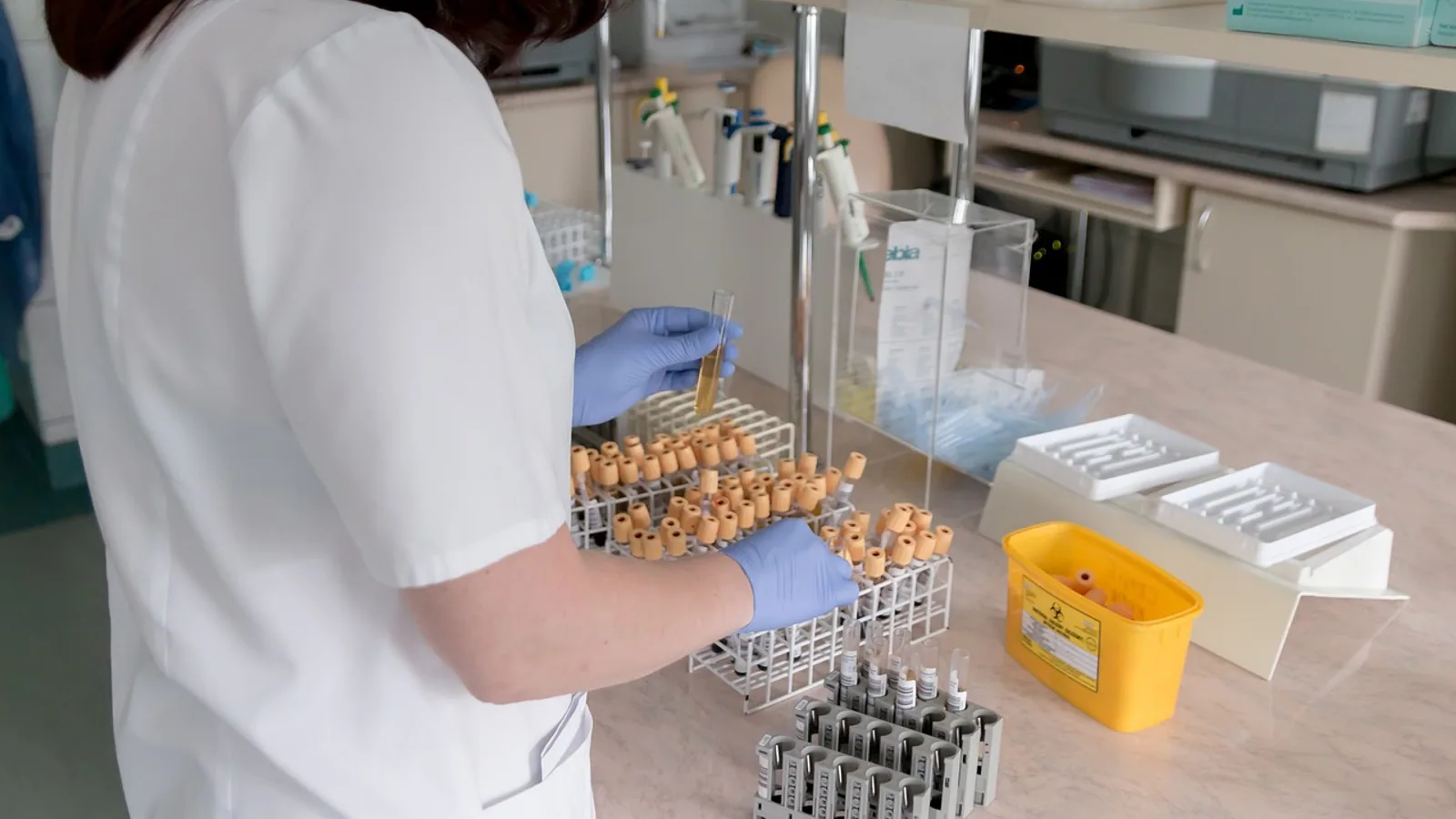
Gas liquid chromatography (GLC) is an analytical technique that separates volatile compounds by passing them in a stream of inert carrier gas through a column coated with a liquid stationary phase. Each compound divides its time between the moving gas and the stationary liquid according to its own partition behavior, so different compounds exit the column at different times and can be identified and measured.
The technique sits at the center of clinical chemistry, forensic toxicology, veterinary drug monitoring, and food and environmental residue testing. It answers a simple question with high precision: what volatile substances are present in this sample, and how much of each? This article explains the principle, the roles of the carrier gas and the column, the main detector types, and the practical uses of gas liquid chromatography across laboratory medicine and residue analysis.
What Gas Liquid Chromatography Measures
GLC measures volatile and semi-volatile organic compounds. A compound is suitable for GLC if it can be vaporized without decomposing at the temperatures used in the instrument, typically from about 40 °C up to 380 °C for high-temperature methods [1]. Compounds that are too polar, too heavy, or too heat-sensitive are usually handled by liquid chromatography instead, or they are chemically modified before injection.
The output of a GLC run is a chromatogram, a plot of detector signal against time. Each peak corresponds to a compound or a group of compounds that eluted together. Peak position (retention time) helps identify the compound. Peak area or height helps quantify it. When a mass spectrometer is used as the detector, the mass spectrum of each peak provides a second, independent layer of identification.
GLC is a separation technique, not a standalone identification method. A retention time alone can be misleading if two compounds happen to elute at the same time. For that reason, laboratories pair GLC with detectors that add chemical information, or they confirm results with a second column, a second detector, or a mass spectral library match.
The Principle of Gas Liquid Chromatography


The core principle is partitioning between two phases. One phase is a gas, the carrier gas, which moves continuously through the system. The other phase is a liquid, the stationary phase, which is coated as a thin film on the inside wall of a capillary column or on the surface of a packed support. A volatile sample is vaporized at the inlet, swept into the column by the carrier gas, and repeatedly distributed between the gas phase and the liquid phase as it travels.
Compounds that prefer the gas phase spend more time moving and exit the column quickly. Compounds that prefer the liquid phase spend more time dissolved in the coating and exit later. This difference in affinity, described as the partition coefficient, is what produces separation. The process is dynamic: molecules continually enter the liquid film and leave it again, and the net effect is that each compound migrates at its own characteristic rate.
Three variables control how well the separation works.
- Column temperature. Higher temperatures push compounds into the gas phase and shorten run times. Lower temperatures favor retention in the liquid phase and improve resolution of closely related compounds.
- Carrier gas flow. Faster flow shortens run times but can reduce resolution. Flow is usually held constant or pressure-programmed.
- Stationary phase chemistry. A nonpolar phase retains nonpolar compounds more strongly. A polar phase retains polar compounds. Choosing the right phase is often the single most important decision in method development.
Temperature Programming
Most modern GLC methods use temperature programming rather than a single constant oven temperature. The oven starts cool, which allows early-eluting volatile compounds to separate, then ramps upward at a controlled rate, which drives heavier compounds off the column in a reasonable time. A representative program might run from 60 °C to 380 °C over a defined ramp for high-boiling adulterant analysis in essential oils [1]. Temperature programming compresses the total run time while preserving resolution across a wide boiling range, which is why it is standard in pesticide residue, fatty acid, and solvent impurity methods.
The Role of the Carrier Gas
The carrier gas is the mobile phase. It does not react with the sample. Its job is to transport the vaporized sample through the column at a controlled rate and to deliver eluted compounds to the detector. Common carrier gases are helium, hydrogen, and nitrogen.
Helium has long been the default because it is inert and gives good efficiency. Supply and cost pressures have driven interest in alternatives. A collaborative study across 11 Japanese laboratories compared helium, hydrogen, and nitrogen for fatty acid methyl ester analysis on a cyanopropyl siloxane capillary column and found no significant difference in the area percentages of a 37-component standard mixture or in the major fatty acid percentages of soybean and sardine oils [2]. Analysis time was longer with nitrogen than with hydrogen or helium, though a fast selective column improved that [2]. Hydrogen offers a faster optimal linear velocity than helium for comparable efficiency, and it can be produced on site by water electrolysis, which addresses sustainability concerns [3]. Nitrogen is inexpensive and safe but slower.
The carrier gas also interacts with the detector. A thermal conductivity detector responds poorly to hydrogen when helium is the carrier gas, because the two gases have similar thermal conductivity [4]. That is one reason hydrogen analysis by GLC has traditionally required special column and detector arrangements.
The Role of the Stationary Phase
The stationary phase is the liquid coating inside the column. It is the phase that actually does the separating. Common chemistries include:
- 100% dimethylpolysiloxane (nonpolar). Good general-purpose phase for hydrocarbons, solvents, and fatty acid methyl esters.
- 5% phenyl, 95% dimethylpolysiloxane (slightly polar). Widely used for drugs, pesticides, and general screening.
- Cyanopropyl siloxane (polar). Used for fatty acid methyl esters and compounds that need polar retention [2].
- Polyethylene glycol and wax phases. Used for alcohols, acids, and short-chain fatty acids. A DB-Fatwax column has been used to analyze short-chain fatty acids such as formic, acetic, butyric, and valeric acid without extra extraction or derivatization steps [5].
- 6% cyanopropylphenyl, 94% dimethylpolysiloxane. Used for residual solvent analysis in pharmaceutical and nanomedicine formulations [5].
Column dimensions matter too. A 30 m × 0.53 mm capillary with a 0.88 µm film was used for high-temperature essential oil adulterant testing [1]. Narrower columns (0.18 mm internal diameter) give faster, more efficient separations but lower sample capacity and are common in comprehensive two-dimensional GLC work [6].
Column Types and the Move to Capillary Columns
Early GLC used packed columns, which were glass or metal tubes filled with a solid support coated in liquid phase. Packed columns are robust and tolerate dirty samples, but they produce broader peaks and lower resolution than capillary columns.
Modern GLC almost always uses open tubular capillary columns. The liquid phase is coated directly on the inner wall, leaving an open path through the center. This design produces sharper peaks, better resolution, and lower detection limits. Capillary columns also tolerate temperature programming better because there is no packed support to cause uneven heating or bleeding.
Comprehensive two-dimensional GLC (GC×GC) takes this further by coupling two columns of different selectivity through a modulator. The first column separates broadly, and the modulator slices each peak into small segments that are re-injected onto a second, faster column. This approach resolved 2.8 to 5.3 times more peaks than one-dimensional GLC in a pyrolysis oil study [7], and it has been applied to atmospheric intermediate volatility organic compounds that one-dimensional GLC leaves as unresolved mixtures [6]. For routine clinical and residue work, one-dimensional capillary GLC remains the standard because it is simpler, faster, and easier to validate.
Detectors in Gas Liquid Chromatography
The detector converts the presence of an eluted compound into an electrical signal. Detector choice determines sensitivity, selectivity, and what information the chromatogram carries. The four detectors most relevant to clinical, veterinary, and residue laboratories are the flame ionization detector, the thermal conductivity detector, the electron capture detector, and the mass spectrometer.
Flame Ionization Detector (FID)
The FID burns the column effluent in a hydrogen-air flame. Carbon-containing compounds produce ions in the flame, and the resulting current is proportional to the number of carbon atoms entering the detector. The FID responds to almost any organic compound, which makes it a general-purpose detector with a wide linear range.
The FID is the workhorse of blood alcohol testing. Headspace GLC with FID (HS-GC/FID) is used to measure postmortem blood ethanol, and a study of 110 autopsied samples showed that the enzymatic oxidation method gave significantly different results from HS-GC/FID because elevated lactate and lactate dehydrogenase in postmortem blood interfered with the enzymatic assay [8]. The FID is also used for residual solvent quantitation in nanomedicine formulations, where 19 Class 2 and Class 3 solvents were validated with headspace GLC-FID and helium carrier gas [5]. High-temperature GLC-FID has been validated for detecting triacylglyceride and mineral oil adulterants in essential oils, with limits of quantitation of 0.03% and 0.63% respectively [1].
Thermal Conductivity Detector (TCD)
The TCD measures changes in the thermal conductivity of the carrier gas stream. When an analyte passes through, the gas mixture conducts heat differently from pure carrier gas, and the change is recorded. The TCD is universal and non-destructive, meaning it does not consume the sample, so it can be placed in series before another detector.
The TCD is less sensitive than the FID for organic compounds, but it is the standard choice for permanent gases such as carbon dioxide, methane, and nitrogen. A validated GLC method using TCD was compared with an electron capture detector method for carbon dioxide in greenhouse gas samples, and both methods showed similar precision (3.1% to 3.4%) and accuracy (101% to 106%) for CO2 [9]. The TCD limit of quantitation for CO2 was lower than the ECD limit in that comparison (99 versus 300 µmol mol⁻¹) [9]. The TCD also has a well-known weakness for hydrogen when helium is the carrier gas, which has driven the development of alternative GLC-MS approaches for hydrogen quantification [4].
Electron Capture Detector (ECD)
The ECD uses a radioactive nickel-63 source, or increasingly a non-radioactive electron source, to generate free electrons at atmospheric pressure. Compounds with high electron affinity, such as halogenated pesticides, chlorofluorocarbons, and nitrous oxide, capture electrons and reduce the standing current. The ECD is extremely sensitive for these compounds, with detection limits in the low parts-per-billion range for electron-affine species [10].
The ECD is the detector of choice for organochlorine pesticides, polychlorinated biphenyls, and other halogenated residues. It has also been applied to greenhouse gas analysis. A method for simultaneous determination of CO2, CH4, and N2O in environmental samples used an ECD for CO2 and N2O alongside a flame ionization detector for CH4 [9]. A non-radioactive ECD has been developed with a linear range of 6.5 × 10³ for 1,1,2-trichloroethane and a detector volume of 100 µL, achieving performance comparable to radioactive ECDs and offering a path away from radioactive source regulation [10].
Mass Spectrometry (MS)
The mass spectrometer ionizes eluted molecules and separates the resulting ions by mass-to-charge ratio. It provides both quantitative signal and structural information, because the fragmentation pattern of a compound is a fingerprint that can be matched against reference libraries. This makes GLC-MS the most information-rich routine configuration.
Several MS variants are used with GLC:
- Single quadrupole with electron ionization (EI). The standard configuration for library-searchable identification. EI at 70 eV produces reproducible fragmentation patterns that match the NIST library.
- Triple quadrupole (MS/MS). Adds a second mass selection step, which improves selectivity in complex matrices. Used for pesticide residue confirmation.
- High-resolution MS (orbitrap, time-of-flight). Provides accurate mass measurement, which helps distinguish compounds with similar nominal masses. A comparison of Cold EI, MS/MS, and high-resolution MS for pyrethroid insecticides in barley found that each technique had advantages, and that standard EI selectivity was often insufficient because the molecular ion is rarely present and many pyrethroids share fragment ions [11].
- Time-of-flight MS coupled with GC×GC. Used for very complex mixtures such as atmospheric organic compounds and pyrolysis oils [6][7].
Mass spectrometry also enables unusual applications. Hydrogen has been detected and quantified directly by GLC-MS using a modified EI source and a cryogenically cooled capillary column, achieving baseline separation from permanent gases and hydrocarbons in a refinery gas mixture with helium as carrier gas [4]. Pyrolysis GLC-MS has been compared with FTIR imaging for microplastic analysis, and while overall contamination trends were similar, polymer composition results differed between the two methods [12].
Detector Comparison Table
| Detector | What it detects | Typical use | Relative sensitivity | Selectivity |
|---|---|---|---|---|
| Flame ionization (FID) | Carbon-containing organic compounds | Blood alcohol, residual solvents, fatty acids, essential oil adulterants | High for organics | Low, responds to most organics |
| Thermal conductivity (TCD) | Any compound that changes gas thermal conductivity | Permanent gases, CO2, methane, refinery gas | Moderate | Low, universal |
| Electron capture (ECD) | Electron-affine compounds, especially halogenated | Organochlorine pesticides, N2O, chlorofluorocarbons | Very high for electron-affine compounds | High for halogenated species |
| Mass spectrometry (MS) | Ionized molecules by mass-to-charge ratio | Drug confirmation, pesticide residues, unknown identification, hydrogen | High, varies by mode | Very high, structural information |
How a GLC Analysis Flows
The workflow from sample to result follows a consistent path regardless of application. The diagram below shows the main steps.
flowchart TD
    A[Sample collection] --> B[Sample preparation]
    B --> C[Injection and vaporization]
    C --> D[Carrier gas transport]
    D --> E[Column separation]
    E --> F[Detector response]
    F --> G[Data processing]
    G --> H[Identification and quantitation]
    H --> I[Quality review and reporting]
Sample preparation depends on the matrix. Blood alcohol testing uses headspace sampling, where the vial is heated and the vapor above the liquid is injected. Pesticide residue analysis in fruits, vegetables, and edible fungi uses cleanup steps such as multiplug filtration or solid-phase extraction before injection [13]. Residual solvent analysis in nanomedicine formulations uses headspace GLC-FID with a short equilibration time [5]. Some methods avoid derivatization entirely, as with short-chain fatty acid analysis on a wax column [5].
Common Uses of Gas Liquid Chromatography
Gas liquid chromatography uses span clinical chemistry, forensic toxicology, veterinary diagnostics, pharmaceutical quality control, food safety, and environmental monitoring. The common thread is that the target compounds are volatile enough to be vaporized and stable enough to survive the run.
Clinical and Forensic Toxicology
Blood alcohol determination is the most familiar clinical GLC application. HS-GC/FID is considered more reliable than enzymatic oxidation for postmortem samples because lactate and lactate dehydrogenase interfere with the enzymatic method, producing a positive bias [8]. Forensic laboratories also use GLC-MS for drugs of abuse, therapeutic drug monitoring, and poisoning investigations, where mass spectral confirmation is required for legal defensibility.
Veterinary Diagnostics and Drug Residue Monitoring
Veterinary laboratories use GLC to detect drug residues in tissues, milk, and eggs, to monitor anesthetic and analgesic compounds in research animals, and to screen for environmental toxicants in wildlife. Residue analysis in food-producing animals is a regulatory requirement in most markets, and GLC with ECD or MS is a standard confirmatory technique for halogenated and other volatile residues. The same principles that apply to human clinical toxicology apply to veterinary samples, with the added consideration that matrix effects differ across species and tissue types.
Pesticide and Environmental Residue Analysis
Pesticide residue testing is one of the largest uses of GLC worldwide. A validated method using GLC with ECD and flame photometric detection analyzed 37 pesticide residues across 8 fruit, vegetable, and edible fungus matrices, achieving recovery rates from 67.0% to 112.8% and relative standard deviations from 0.2% to 15.2%, with detection limits from 0.0001 to 0.03 µg kg⁻¹ [13]. The method detected 17 pesticides across 150 real samples [13]. Pyrethroid insecticides, which are difficult to analyze by liquid chromatography because they ionize poorly by electrospray, are analyzed by fast GLC-MS with Cold EI, MS/MS, or high-resolution MS depending on the required selectivity [11].
Pharmaceutical and Industrial Quality Control
Residual solvent testing is a regulatory requirement for pharmaceutical products. A validated headspace GLC-FID method quantified 19 common Class 2 and Class 3 solvents used in nanomedicine formulation, with correlation coefficients above 0.99, intra-day precision below 7.4%, and recoveries from 83% to 104% [5]. The same method handled short-chain fatty acids without additional extraction or derivatization [5]. Essential oil authenticity testing uses high-temperature GLC-FID to detect vegetable oil and mineral oil adulterants [1].
Petrochemical, Environmental, and Emerging Applications
GLC characterizes fuels, pyrolysis oils, and combustion aerosols. A comprehensive comparison of ship diesel engine fuel and emitted aerosol particles used GLC coupled with atmospheric pressure chemical ionization and ultra-high-resolution mass spectrometry to profile compound classes and identify differences between diesel and heavy fuel oil feeds [14]. Pyrolysis GLC-MS has been used alongside FTIR imaging to analyze microplastics in environmental samples [12]. Greenhouse gas monitoring uses GLC with ECD and TCD for CO2, CH4, and N2O in agricultural and environmental samples [9].
Common Mistakes and Limitations
Several practical pitfalls trip up new users of GLC.
Injecting non-volatile material. Salts, proteins, and heavy polymers do not vaporize. They accumulate at the inlet and on the column head, causing peak tailing, retention time drift, and eventually column failure. Sample cleanup is not optional.
Choosing the wrong stationary phase. A nonpolar column will not resolve polar analytes well, and a polar column may retain nonpolar compounds too weakly. Method development starts with phase selection.
Ignoring matrix effects. Complex matrices such as blood, tissue, or plant extract can enhance or suppress detector response. The m-PFC cleanup method reduced matrix effects compared with Florisil solid-phase extraction in a pesticide residue study [13].
Over-relying on retention time. A single retention time is not proof of identity. Confirmation requires a second column, a second detector, or mass spectral matching.
Running too hot or too cold. Excessive temperature shortens column life and can decompose analytes. Insufficient temperature leaves heavy compounds on the column, causing carryover into the next run.
Assuming all detectors are interchangeable. The TCD cannot match the ECD for halogenated compounds, and the FID gives no structural information. Detector choice must follow the analytical question.
Forgetting carrier gas compatibility. Hydrogen analysis by TCD is problematic with helium carrier gas [4]. Nitrogen carrier gas slows analysis compared with hydrogen or helium [2].
What Is Still Uncertain
GLC method development continues to evolve. Carrier gas selection is shifting as helium supply and cost pressures grow, and hydrogen and nitrogen are being evaluated as replacements across many applications [3][2]. Non-radioactive ECD designs are maturing and may eventually replace radioactive sources in routine laboratories, though linear range and long-term stability data are still accumulating [10]. Comprehensive two-dimensional GLC offers much higher peak capacity but requires more method development and data processing than one-dimensional GLC, so its routine adoption in clinical laboratories remains limited [7][6].
For any individual patient or animal, results must be interpreted by a veterinarian or physician who knows the clinical context. A chromatogram is a measurement, not a diagnosis.
Frequently Asked Questions
What is the difference between the carrier gas and the stationary phase?
The carrier gas is the mobile phase, an inert gas that transports the vaporized sample through the column. The stationary phase is the liquid coating inside the column that retains compounds selectively. Separation depends on how each compound partitions between these two phases.
Why is temperature programming used in gas liquid chromatography?
Temperature programming starts the oven cool to resolve volatile compounds, then raises the temperature to drive heavier compounds off the column in a reasonable time. It compresses run time while preserving resolution across a wide boiling range.
Which detector is most sensitive for pesticides?
The electron capture detector is the most sensitive routine detector for halogenated pesticides, with detection limits in the low parts-per-billion range for electron-affine compounds [10]. Mass spectrometry is preferred when structural confirmation is also required.
Can gas liquid chromatography measure blood alcohol?
Yes. Headspace GLC with a flame ionization detector is a standard method for blood alcohol concentration, and it is more reliable than enzymatic oxidation for postmortem samples because lactate and lactate dehydrogenase interfere with the enzymatic assay [8].
What kinds of samples can be analyzed by gas liquid chromatography?
Any sample containing volatile or semi-volatile compounds that survive vaporization. Common matrices include blood, urine, tissue, food, water, air, fuels, and pharmaceutical formulations.
How does mass spectrometry improve gas liquid chromatography results?
Mass spectrometry adds structural information by fragmenting each eluted compound and measuring the resulting ions. This allows library-based identification and confirmation that a retention time alone cannot provide.
Is gas liquid chromatography the same as gas solid chromatography?
No. Gas liquid chromatography uses a liquid stationary phase coated on the column. Gas solid chromatography uses a solid adsorbent as the stationary phase. The two techniques separate compounds by different mechanisms.
What carrier gas is best for gas liquid chromatography?
Helium has been the traditional choice for its inertness and efficiency. Hydrogen offers faster analysis with comparable efficiency and can be generated on site, while nitrogen is inexpensive but slower [2][3]. The best choice depends on the detector, the analytes, and available supply.
Related Articles
- Affinity Column Chromatography: Principles and Applications
- Gel Permeation Chromatography: Principles and Applications
- Gel Filtration Chromatography Matrix: Principles and Applications
- Gel Filtration Chromatography (GFC): Principles and Applications
- Gel Filtration Chromatography: Principles and Applications
- Affinity Chromatography for Protein Purification: Principles and Column Selection
- HPLC Liquid Chromatography: Principles and Steps
- Gas Chromatography-Mass Spectrometry (GC-MS) Explained
Sources
- Detection of Essential Oil Adulteration Using High-Temperature Gas Chromatography with a Flame Ionization Detector.
- Analysis of Fatty Acid Composition by Gas Chromatography Using Hydrogen or Nitrogen as an Alternative Carrier Gas to Helium: a JOCS Collaborative Study.
- Hydrogen Carrier Gas Method Translation in Comprehensive Two-Dimensional Gas Chromatography for Sustainable Nontargeted Analysis.
- Hydrogen Analysis by Gas Chromatography-Mass Spectrometry.
- Gas Chromatography Method for Quantitation of Residual Solvent Impurities in Nanoformulations.
- [[Determination of atmospheric intermediate volatility organic compounds with thermal desorption-flow modulator comprehensive two-dimensional gas chromatography- time-of-flight mass spectrometry].](https://pubmed.ncbi.nlm.nih.gov/41969263/)
- Characterization of polyolefins-based pyrolysis oils: A comparison between one-dimensional gas chromatography and two-dimensional gas chromatography.
- A comparison between the enzymatic oxidation method and headspace gas chromatography with a flame ionization detector in the determination of postmortem blood ethanol.
- Determination of carbon dioxide by gas chromatography using an electron capture detector for the analysis of greenhouse gases: A comparison and validation with the standard method.
- Non-radioactive electron capture detector for gas chromatography - A possible replacement for radioactive detectors.
- Comparison of different fast gas chromatography - mass spectrometry techniques (Cold EI, MS/MS, and HRMS) for the analysis of pyrethroid insecticide residues in food.
- Comparison of pyrolysis gas chromatography/mass spectrometry and hyperspectral FTIR imaging spectroscopy for the analysis of microplastics.
- A comparison of the determination of multiple pesticide residues in fruits, vegetables, and edible fungi using gas chromatography combined with filtration purification and solid-phase extraction.
- Comprehensive chemical comparison of fuel composition and aerosol particles emitted from a ship diesel engine by gas chromatography atmospheric pressure chemical ionisation ultra-high resolution mass spectrometry with improved data processing routines.