
Clostridium novyi: Black Disease in Sheep, Association with Liver Fluke, Diagnosis, and Prevention
Introduction
Black disease, also known as infectious necrotic hepatitis, is a peracute, highly fatal toxemic condition of sheep caused by Clostridium novyi type B [1, 2]. The disease is recognized globally in regions where sheep husbandry is practiced and where the intermediate host of the liver fluke Fasciola hepatica is present [1, 3]. The pathogenesis of black disease is unique among clostridial infections because it requires a predisposing hepatic insult, most commonly the migration of immature liver flukes through the parenchyma, to create the anaerobic environment necessary for spore germination and toxin production [2, 4]. Although sporadic, outbreaks can cause substantial economic losses in flocks with endemic fasciolosis [3].
This article provides a publication-grade review of C. novyi black disease, focusing on the bacterial etiology, the critical role of liver fluke in pathogenesis, diagnostic approaches including molecular methods, and integrated prevention strategies combining vaccination and parasite control.
Etiology and Pathogenesis
Clostridium novyi (formerly Clostridium oedematiens) is a Gram-positive, spore-forming, obligately anaerobic rod [1, 2]. Four types (A, B, C, D) are recognized, with type B being the primary cause of black disease in sheep [1]. Pathogenicity is primarily mediated by the production of potent exotoxins: alpha toxin (a phospholipase C lecithinase) is the major lethal toxin responsible for tissue necrosis, increased vascular permeability, and hemolysis [2, 4]. Type B also produces beta and eta toxins, though their individual contributions to the clinical syndrome are less defined [1].
Spores of C. novyi are ubiquitous in soil and the gastrointestinal tract of healthy sheep, often present in the liver and spleen without causing disease [1, 3]. Disease occurs only when the liver is damaged, creating a localized area of hypoxia and reduced oxidation-reduction potential that permits spore germination and vegetative growth [2, 4]. The most common trigger is the migratory activity of immature Fasciola hepatica (liver fluke) through the liver parenchyma, which produces necrotic tracts [3, 5]. Other predisposing factors include liver biopsies, hepatic trauma, or telangiectasis, but in sheep the association with fluke is epidemiologically dominant [1, 4].
Once germination occurs, vegetative bacilli multiply rapidly and secrete exotoxins that cause extensive hepatic necrosis and severe toxemia, leading to death within 24 to 48 hours in peracute cases [2, 3].
Association with Liver Fluke
The synergy between C. novyi and F. hepatica is a paradigmatic example of a predisposing parasitic infection enabling a clostridial toxemic disease [3, 5]. The life cycle of F. hepatica involves an intermediate snail host (predominantly Galba truncatula) and the ingestion of metacercariae on pasture by sheep [3]. After excystation in the small intestine, juvenile flukes penetrate the intestinal wall, migrate through the peritoneal cavity, and invade the liver parenchyma over a period of 5 to 7 weeks [3, 5]. Their migration produces hemorrhagic tracts that create the anaerobic microenvironments required for germination of latent C. novyi spores [1, 4].
Black disease in sheep typically shows a seasonal pattern corresponding to fluke transmission: outbreaks are most common in late summer, autumn, and early winter when metacercarial challenge is highest [3, 5]. Flocks with chronic fasciolosis that are not adequately managed are at greatest risk, as the continuous presence of migrating flukes maintains a constant potential for spore activation [1, 3]. For a comprehensive discussion of fluke diagnosis and anthelmintic resistance, see the dedicated article on Fasciolosis in Cattle and Sheep: Liver Fluke Diagnosis via Coproantigen ELISA, Pooled PCR, and Anthelmintic Resistance to Triclabendazole and Liver Fluke (Fasciola hepatica) in Sheep: Anthelmintic Resistance Diagnosis and Herd-Level Management.
Clinical Signs and Postmortem Findings
Clinical Presentation
Black disease is typically peracute; most affected sheep are found dead without premonitory signs [1, 2]. In cases where clinical progression is observed, the following signs may appear within 12 to 24 hours of onset: depression, anorexia, high fever (40 to 42 degrees Celsius), rapid pulse and respiration, and reluctance to move [1, 3]. Icterus may be evident in sheep that survive longer than 24 hours [2]. The characteristic "black" discoloration of the skin on the dependent side of the body, caused by subcutaneous venous congestion and cyanosis, is a postmortem feature rather than an antemortem sign [1, 2]. Death results from toxemic shock and hepatic failure [2, 4].
Gross Pathology
The hallmark postmortem lesion is a focal or multifocal necrotizing hepatitis, often involving large areas of the diaphragmatic and visceral surfaces of the liver [1, 2]. Affected areas appear dark red to black, friable, and sharply demarcated from adjacent normal parenchyma, with a dry, "nutmeg" appearance on cut section [1, 3]. The liver capsule overlying the lesion is often covered by a thin layer of fibrin or fibrinous exudate [2]. Subcutaneous edema and congestion of the ventral abdominal wall give the characteristic blackening of the skin [1]. Serosanguinous fluid may be present in the thoracic and peritoneal cavities [2, 3]. Histopathological examination reveals extensive coagulative necrosis with large Gram-positive bacilli at the periphery of the necrotic zone, but minimal inflammatory cell infiltration due to the rapidity of the toxemia [1, 4].
Diagnosis
A definitive diagnosis of black disease requires integration of clinical history, epidemiological context, gross and histopathological findings, and laboratory confirmation of C. novyi or its toxins [1, 2, 4].
Anaerobic Culture
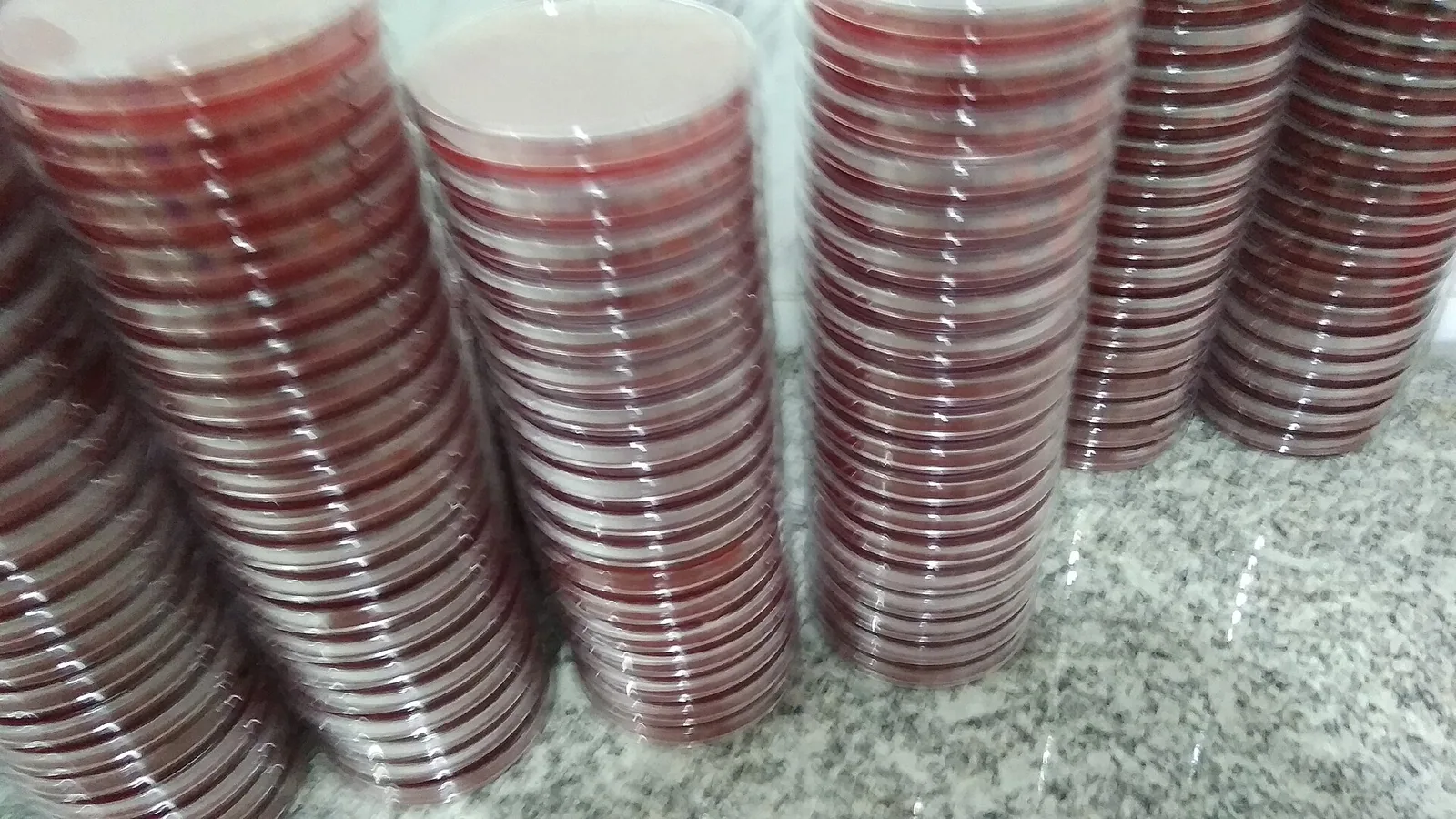
C. novyi is an obligate anaerobe and is fastidious in culture [1]. Samples must be collected as soon as possible after death, ideally from the liver lesion, using aseptic technique into an anaerobic transport medium [2]. Primary isolation is performed on anaerobic blood agar (e.g., CDC anaerobe agar) containing hemin and vitamin K, incubated at 37 degrees Celsius under strict anaerobic conditions (80% N₂, 10% H₂, 10% CO₂) for 48 to 72 hours [1, 4]. Colonies of C. novyi are typically irregular, flat, and have a zone of hemolysis on sheep blood agar (double hemolysis is characteristic but may vary) [1]. Phenotypic identification relies on Gram stain, fermentation patterns, and biochemical reactions [2]. However, culture is time-consuming and may be negative due to autolysis or prior antimicrobial therapy [1, 4].
Fluorescent Antibody Test (FAT)
Direct fluorescent antibody testing on tissue impression smears or frozen sections of the liver provides rapid detection of C. novyi vegetative cells [1, 2]. Conjugated polyclonal or monoclonal antibodies against somatic antigens are applied to fixed smears, and positive samples show bright green fluorescence (using FITC conjugate) corresponding to rod-shaped bacteria within the necrotic tissue [1]. FAT is particularly useful when culture is impractical or when samples are autolyzed [2].
Molecular Diagnosis (PCR)
Polymerase chain reaction (PCR) assays targeting species-specific genes, such as the flagellin gene (fliC) or the alpha toxin gene (cnoA), allow highly sensitive and specific detection of C. novyi DNA directly from liver tissues, even in frozen or formalin-fixed paraffin-embedded samples [1, 4]. Multiplex PCR panels that differentiate C. novyi types A, B, and D are available in reference laboratories [1]. Real-time PCR provides rapid quantitation and is increasingly used for outbreak investigations [4]. Molecular methods are preferred over culture for confirmation because they circumvent the difficulties of anaerobic isolation [1, 2].
Toxin Detection
The alpha toxin can be detected in peritoneal fluid or tissue homogenates using immunodiffusion, latex agglutination, or enzyme-linked immunosorbent assay (ELISA) [1, 4]. Mouse neutralization testing, once a gold standard, is now rarely used in routine diagnostics due to ethical considerations and the availability of in vitro methods [2].
Differential Diagnosis
The peracute death with hepatic necrosis must be differentiated from other clostridial diseases of sheep, including enterotoxemia caused by C. perfringens type D (pulpy kidney disease), blackleg due to C. chauvoei, and malignant edema [1, 2]. Hepatic necrobacillosis (Fusobacterium necrophorum), acute fasciolosis without bacterial involvement, and plant toxicoses (e.g., pyrrolizidine alkaloidosis) also present with similar pathological features [3, 5].
The following Mermaid diagram outlines a diagnostic workflow for suspected black disease in sheep.
flowchart TD
 A["Suspected black disease (sudden death, hepatic necrosis)"] --> B{"Postmortem examination"}
 B -->|"Gross liver lesion"| C["Impression smear / frozen section"]
 C --> D["Direct FAT for C. novyi"]
 D -->|Positive| E["Confirm with PCR (cnoA)"]
 D -->|Negative| F["Anaerobic culture from liver lesion"]
 F -->|Positive| G[Identified as C. novyi type B]
 F -->|Negative or contaminated| H["Test peritoneal fluid for alpha toxin (ELISA)"]
 E --> I["Case confirmed: Black disease"]
 H --> I
 B -->|"No liver lesion"| J["Consider alternative diagnoses (e.g., enterotoxemia, blackleg, fasciolosis)"]
Prevention and Control
Prevention of black disease relies on two interrelated strategies: effective vaccination against C. novyi and rigorous control of liver fluke infection [1, 3].
Vaccination
Multivalent clostridial vaccines containing C. novyi type B toxoid are widely available and are administered to ewes as part of the standard flock health program [1, 2]. The priming course consists of two doses given 4 to 6 weeks apart, followed by annual boosters [1]. Revaccination of pregnant ewes 4 to 6 weeks prior to lambing ensures passive transfer of maternal antibodies to lambs via colostrum [1, 2]. Lambs born to vaccinated ewes can be protected for up to 12 weeks; those from unvaccinated ewes should be vaccinated starting at 3 to 4 weeks of age [1]. Proper handling and storage of vaccines (refrigeration, avoidance of freezing) is essential to maintain potency [1]. While vaccination greatly reduces the incidence of disease, it does not eliminate the risk if heavy fluke challenge overwhelms the anaerobic threshold of the liver [1, 3].
Liver Fluke Control
Integrated fluke management reduces the burden of migrating immature flukes, thereby decreasing the hepatic injury that triggers spore germination [3, 5]. Strategic anthelmintic treatments using flukicides such as triclabendazole (effective against early immature stages), closantel, or albendazole should be timed according to fluke epidemiology (late autumn, early winter, and follow-up in spring) [3, 5]. Grazing management, including drainage of wet pastures and rotational grazing to reduce snail habitat, further lowers metacercarial exposure [3]. The use of coproantigen ELISA or pooled PCR for fluke detection on fecal samples allows targeted treatment and reduces reliance on blanket anthelmintic administration [3]. Refer to the articles on fasciolosis for detailed control strategies.
Other Management Practices
Prompt removal and proper disposal of dead sheep reduces environmental contamination with C. novyi spores [1]. Avoiding invasive procedures on the liver (e.g., biopsy) during periods of high fluke challenge is prudent [1]. In outbreak settings, immediate booster vaccination of in-contact sheep with a multivalent clostridial vaccine can provide some protective effect [1, 2]. Ensuring adequate colostral immunity in lambs is equally critical [1].
Conclusions
Black disease remains a significant cause of peracute mortality in sheep in regions where fasciolosis is endemic. The condition exemplifies a sophisticated interplay between a spore-forming bacterium and a parasitic helminth, where the parasite creates the permissive microenvironment for clostridial activation. Diagnosis requires a high index of suspicion and confirmatory testing via FAT, PCR, or anaerobic culture. The most effective preventive strategy combines regular vaccination with comprehensive liver fluke control, supported by strategic grazing and anthelmintic management. Continued awareness and prompt diagnostic intervention are essential to minimize flock losses.
References
[1] Merck Veterinary Manual. Clostridial Diseases. Merck & Co. Kenilworth, NJ. (General reference for clinical features, diagnosis, and prevention.)
[2] Quinn PJ, Carter ME, Markey BK, Carter GR. Veterinary Microbiology and Microbial Disease. Blackwell Science. (Reference for bacterial characteristics, culturability, and pathogenesis.)
[3] Radostits OM, Gay CC, Hinchcliff KW, Constable PD. Veterinary Medicine: A Textbook of the Diseases of Cattle, Horses, Sheep, Pigs and Goats. 10th edition. Saunders Elsevier. (Reference for host-parasite interactions, epidemiology, and control of fasciolosis and black disease.)
[4] Uzal FA, Songer JG, Prescott JF, Popoff MR. Clostridial Diseases of Animals. Wiley-Blackwell. (Reference for clostridial pathogenesis, toxin characterization, and molecular diagnostics.)
[5] Skuce PJ, Zadoks RN. Liver fluke in sheep and cattle: epidemiology, diagnosis, and control. In Practice. (Reference for fluke biology, diagnosis, and anthelmintic resistance management.) *** Disclaimer: This article is for educational and informational purposes only. It is not intended to substitute for professional veterinary advice, diagnosis, treatment, or regulatory guidance. Always consult a licensed veterinarian or qualified specialist regarding animal health, disease diagnosis, and therapeutic decisions.