Seals: Species, Biology, and Conservation
By Dr. Zubair Khalid, DVM, MS, PhD ·
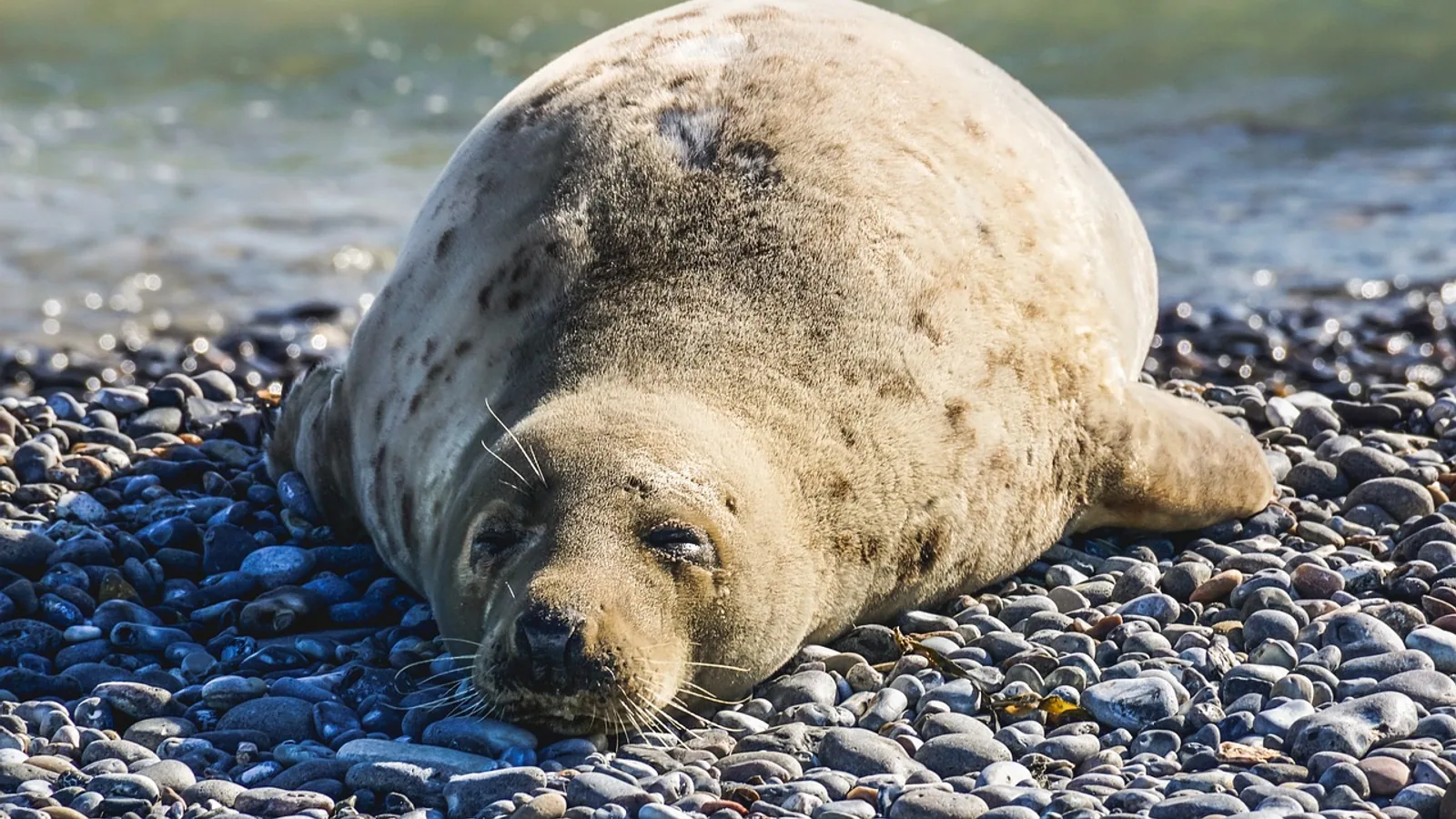
A seal is a marine mammal in the suborder Pinnipedia, a group that also includes sea lions, fur seals, and walruses. The word "seal" is colloquial and can mean any pinniped, but in scientific use it most often refers to the true seals of the family Phocidae, which have no external ear flaps, cannot rotate their hind flippers forward, and move on land by crawling on their bellies.
That single distinction explains most of the confusion people have when they point at an animal on a beach or a rock and ask what it is. Three families dominate the conversation: Phocidae (true seals), Otariidae (sea lions and fur seals), and Odobenidae (walruses, a single genus with two subspecies). This guide covers the first two in depth, explains the biology that separates them, and reviews what is known about the threats they face.
The Three Groups People Call "Seals"
Pinnipeds are carnivores. Molecular work on complete mitochondrial cytochrome b sequences places them as a monophyletic group, meaning they share a single common ancestor, with Otariidae and Odobenidae sitting on a common evolutionary branch separate from Phocidae [1]. In plain terms, sea lions and walruses are each other's closest relatives among the pinnipeds, and true seals branched off earlier.
True seals (family Phocidae)
True seals have no external ear flap, just a small opening. Their hind flippers point backward and cannot be rotated forward under the body, so on land they move by undulating the belly and pulling with the foreflippers. In water they generate thrust primarily with the hind flippers, using a side-to-side sweep.
Phocidae includes the elephant seals (genus Mirounga), the leopard seal (Hydrurga leptonyx), the Weddell seal (Leptonychotes weddellii), the grey seal (Halichoerus grypus), the harbor seal (Phoca vitulina), the spotted seal (Phoca largha), the harp seal, the hooded seal (genus Cystophora), and the monk seals (genus Monachus and Neomonachus). Genetic comparisons suggest Cystophora and Phoca separated at least 6 million years ago, and that the hooded seal, with a chromosome number of 2n = 34, is the sister taxon to the Phoca complex, which carries 2n = 32 [1]. That same analysis did not support keeping grey seals in a separate genus from Phoca, which is why Halichoerus is often folded into Phoca in modern treatments [1].
The Phocidae split into two subfamilies. The Monachinae, or southern seals, include the leopard seal, the Weddell seal, and the monk seals. The Phocinae are the northern group. A 2025 genome study assembled the first reference genomes for the leopard seal and the Mediterranean monk seal (Monachus monachus), one of the world's most endangered mammals, using long-read sequencing from stranded individuals [2]. That work confirmed very low genetic variability and small population size in the Mauritanian population of Mediterranean monk seals, while leopard seals showed heterozygosity comparable to common carnivores [2].
Sea lions (family Otariidae, subfamily Otariinae)
Sea lions have a small but visible external ear flap. Their hind flippers can rotate forward under the body, which lets them support their weight and walk on all fours on land. In water they swim primarily with the foreflippers, using a flapping, underwater flight stroke rather than a side-to-side sweep.
Living sea lion genera include Zalophus (California and Galapagos sea lions), Eumetopias (the Steller sea lion, the largest otariid), Otaria (the South American sea lion), Neophoca (the Australian sea lion), and Phocarctos (the New Zealand sea lion). The Steller sea lion has a fossil record extending into the early Pleistocene of the North Pacific, with a mandible from the Omma Formation in Japan dated to roughly 1.36 to 0.83 million years ago that is essentially indistinguishable from modern male Eumetopias jubatus [3].
Fur seals (family Otariidae)
Fur seals are otariids too, and they move like sea lions. What sets them apart is a dense underfur layer beneath the longer guard hairs, which is why they were hunted so heavily for pelts. The name is a commercial and descriptive label, not a taxonomic one, because fur seals and sea lions are interleaved within Otariidae rather than forming two clean branches.
Fur seal genera include Callorhinus (northern fur seal), Arctocephalus (eight or so southern species including the Cape fur seal, Australian fur seal, and South American fur seal), and the extinct-then-rediscovered northern lineage. The northern fur seal (Callorhinus ursinus) breeds on islands such as St. Paul in the Pribilof Archipelago, Alaska, where researchers examining skins from five rookeries found the filariid nematode Acanthocheilonema odendhali in 18 percent of animals, with prevalence from 12.5 to 22.9 percent across haul-out areas and a mean intensity of 1.3 worms (range 1 to 7) [4].
Identification Table: Telling Them Apart
| Feature | True seals (Phocidae) | Sea lions (Otariidae) | Fur seals (Otariidae) |
|---|---|---|---|
| External ear flap | Absent, small opening only | Present, small and visible | Present, small and visible |
| Foreflipper claws | Well developed, used for grooming and hauling | Reduced, mainly cartilage and skin | Reduced, similar to sea lions |
| Hind flipper mobility | Cannot rotate forward | Rotates forward under the body | Rotates forward under the body |
| Swimming style | Hind flippers sweep side to side | Foreflippers flap in underwater flight | Foreflippers flap in underwater flight |
| Land locomotion | Belly crawl, undulating | Walks on all fours | Walks on all fours |
| Fur | Short, no dense underfur | Coarse, no dense underfur | Dense underfur under guard hairs |
| Typical posture | Slumped, head often raised on foreflippers | Upright on extended foreflippers | Upright on extended foreflippers |
The foreflipper claw row is the fastest field check. If you can see a strong claw on the front flipper, you are almost certainly looking at a true seal. The ear flap check is next, but it is easy to miss because otariid ear flaps are small and lie flat when wet.
Anatomy and Locomotion: Why the Split Matters
The forelimb of a fur seal or sea lion is a thrust machine. Dissections, manipulation of ligament preparations, limb proportion analysis, and quantitative forelimb myology show that otariids generate forward thrust through abduction, adduction, and rotary movements centered on the glenohumeral (shoulder) joint [5]. The muscles are built to produce large force across the full range of motion, and the recovery stroke is shaped to reduce water resistance [5]. That architecture is what allows fur seals and sea lions to swim fast enough to catch fast-swimming prey [5].
True seals took a different route. They lost the ability to bring the hind flippers forward, gained a more streamlined rear-driven stroke, and kept strong foreflipper claws for grooming and for hauling out on ice and rock. The trade-off is speed on land versus efficiency in water, and each family landed on a different solution.
Otariids also share a hearing profile. A Steller sea lion tested with psychophysical methods had an aerial hearing range of roughly 0.250 to 30 kHz, with best sensitivity from 5 to 14.1 kHz [6]. That audiogram closely matched earlier aerial audiograms for California sea lions and northern fur seals, which supports treating otariids as a single functional hearing group [6]. The same study found that auditory steady-state response thresholds were elevated relative to behavioral thresholds, from +1 dB at 20 kHz to +31 dB at 1 kHz [6]. In practical terms, objective electrophysiological testing can estimate hearing at higher frequencies but tends to overestimate the threshold at low frequencies.
Skin and fur are another place where lineages diverge. A near telomere-to-telomere genome assembly of the spotted seal, spanning 2.39 Gb across 16 chromosome-length sequences with a scaffold N50 of 184.39 Mb and 99.34 percent complete BUSCOs, resolved P. largha as the sister species to P. vitulina with an estimated divergence around 2.1 million years ago [7]. The same analysis found that keratin gene families form large chromosomal clusters with broadly conserved synteny across Carnivora but lineage-dependent remodeling within clusters, while matrix metalloproteinases are dispersed and largely conserved [7]. That is the genomic backdrop for the difference in insulation and skin structure between true seals and otariids.
Diet, Diving, and Daily Life
Pinnipeds are predators. Diet varies enormously by species and season, from schooling fish and squid to penguins, other seals, and seabirds. Northern elephant seals (Mirounga angustirostris) forage in the deep ocean, taking fish and squid at mesopelagic depths of 200 to 1000 meters in the remote North Pacific [8]. That deep foraging has consequences that show up in their pups, discussed below.
Cape fur seals (Arctocephalus pusillus pusillus) in South Africa prey on Cape gannet fledglings, and a study at Lambert's Bay found that predation probability dropped when both fledgling numbers and fish biomass were high, while selective culling of individual predatory seals reduced predation within years [9]. The authors framed the sustainable path as promoting the conservation of the gannet through prey availability rather than through repeated culling [9]. This is a useful example of how predator-prey conflict plays out when one species is endangered and the other is abundant.
Tracking is now central to understanding how these animals use the ocean. A comparison of ARGOS satellite locations against Fastloc GPS positions from the same tags on five pinniped species found that ARGOS errors at the 68th percentile were 0.49 km for Location Class 3, 1.01 km for LC-2, 1.20 km for LC-1, 4.18 km for LC-0, 6.19 km for LC-A, and 10.28 km for LC-B [10]. Those numbers matter because many of the most commonly acquired ARGOS locations carry no declared error estimate at all [10]. Foraging ecology conclusions drawn from low-quality location classes should be read with that in mind.
Energy expenditure is harder to measure directly, so researchers use proxies. Accelerometers attached to harnesses or taped to the fur of captive fur seals and sea lions were used to estimate foreflipper stroke rate, and the estimates differed from video counts by up to about 20 percent depending on the parameters chosen [11]. The window size used to calculate the running mean and the choice of axis had little effect on overall differences, though variability dropped when the x and z axes were combined [11]. When tuned properly, accelerometers are a simple and valid tool for estimating stroke rate in swimming otariids [11].
Vital signs can now be read at a distance. Infrared thermography paired with Eulerian video magnification captured respiration rate in 74.3 percent of individuals and heart rate in 93.3 percent of individuals, with high accuracy, in northern elephant seals in North America and Weddell seals in Antarctica [12]. The method worked across environments from sandy beaches to icy shores and at longer range than the roughly 1 meter used in zoological settings [12]. This matters for wild populations because it allows health monitoring with minimal disturbance.
Health, Disease, and What Wild Seals Carry
Wild pinnipeds carry a wide range of infectious organisms, and most of them are not a threat to people who keep their distance. A few are worth understanding because they illustrate how disease moves between species.
Streptococcus halichoeri was first described from a grey seal and has since been reported in a European badger, a Steller sea lion, and humans [13]. A retrospective survey in Finland identified 138 S. halichoeri-like isolates from canine infections and 36 from fur animal infections, most often associated with skin infections but rarely as the only species present [13]. The isolates were catalase positive, which differed from the original description, and resistance to erythromycin and clindamycin was common in canine isolates but rare in fur animal isolates [13]. The takeaway is that this organism circulates across wild marine mammals, farmed fur animals, and pets, and that resistance patterns differ by host population.
Salmonella moves between species in shared environments too. On the Auckland Islands, S. Cerro and S. Newport were isolated from New Zealand sea lions (Phocarctos hookeri) and feral pigs, and pulsed-field gel electrophoresis with Xba1 produced indistinguishable patterns, suggesting an infection cycle between the two [14]. S. Newport is associated with gastroenteritis in humans, and the authors flagged contamination of the marine environment by human waste as a possible source for marine mammals [14].
Herpesviruses are a major concern in otariids. Otariid gammaherpesvirus 1 (OtGHV1) is associated with high rates of urogenital carcinoma in free-ranging California sea lions, and it was long thought to be a Northern Hemisphere virus [15]. A survey at Punta San Juan, Peru found that 21 percent (14 of 67) of urogenital swabs from South American sea lions and South American fur seals tested positive by pan-herpesvirus PCR over three years [15]. Sequencing showed 100 percent homology to OtGHV1 in South American fur seals, while South American sea lions carried a novel related virus designated Otariid gammaherpesvirus 8 [15]. Across both species, 38.6 percent of urogenital swabs, 5.6 percent of conjunctival swabs, and 1.1 percent of oropharyngeal swabs were positive for OtGHV1 or OtGHV8 [15]. Sample site clearly matters when screening for these viruses.
Gastric disease is another recurring theme. The first reported case of gastritis in an Australian sea lion (Neophoca cinerea) involved members of the family Helicobacteraceae, particularly the genus Wolinella, with spiral-shaped organisms 5 to 12 micrometers long seen in two of the gut biopsy specimens [16]. Wolinella species were detected in four of five gastric specimens, and a possibly novel gastric Helicobacter species was also identified [16]. A follow-up survey found Helicobacter species in 18 of 21 fecal samples from captive seals and 12 of 16 from wild seals, with three species identified and one sequence type shared with harp seals and sea otters [17]. These organisms have a broad host range in the marine environment.
Avian influenza is a newer and more acute concern. A global review of highly pathogenic avian influenza in pinnipeds documented many cases of mass pinniped deaths from spillover events attributed to infected sympatric aquatic birds, and it focused specifically on the endangered Caspian seal (Pusa caspica), which shares haul-out habitats with migratory aquatic birds around the Caspian Sea [18]. The seasonal migrations of Caspian seals create repeated opportunities for contact with viruses from infected birds, which makes those locations critical for surveillance [18].
Conservation: What Threatens Seals Today
Conservation status varies enormously across the group. Some species number in the millions, and others are down to a few hundred breeding adults. The Mediterranean monk seal is among the world's most endangered mammals, with low genetic variability and small numbers confirmed by whole-genome data from the Mauritanian population [2]. The Caspian seal is endangered and faces highly pathogenic avian influenza as one of its acute threats [18]. The spotted seal is a species of conservation concern under increasing environmental and anthropogenic pressure in the Northwest Pacific [7].
Bycatch and fisheries interactions
Bycatch, the incidental capture of non-target animals in fishing gear, is one of the most persistent threats to coastal pinnipeds worldwide. It is difficult to quantify for many species because much of it happens unobserved, and the sources summarized here do not provide global bycatch totals. What they do show is that seals and fisheries interact directly. Cape fur seals prey on Cape gannet fledglings, and management responses have included selective culling of individual seals [9]. That is a fisheries-adjacent conflict, not bycatch, but it illustrates the same underlying dynamic: when prey availability shifts, predator behavior shifts with it, and the consequences fall on whichever species is least able to absorb them.
Climate change and habitat loss
Ice-associated seals depend on sea ice for pupping, molting, and resting. The spotted seal is described as an ice-associated pinniped in the Northwest Pacific [7]. As ice extent and timing change, those platforms change with it. The sources here do not quantify projected population declines from ice loss, so the honest statement is that ice-dependent species face habitat disruption whose magnitude is still being worked out.
Contaminants
Northern elephant seals are biosentinels of a remote deep-sea ecosystem, and their pups carry some of the highest mercury concentrations observed worldwide for young pinnipeds. Lanugo, the hair grown in utero, had a geometric mean mercury concentration of 23.01 micrograms per gram dry weight, with a range of 8.03 to 63.09 micrograms per gram dry weight across 373 pups [8]. Fetal exposure was tied to maternal foraging location and depth, with the highest concentrations in pups of the deepest-diving, most pelagic females, and concentrations were strongly repeatable across successive pups of the same female [8]. Some pups may face elevated risk of sub-lethal health effects from that exposure [8].
Disease as a conservation threat
For small populations, a single disease event can be catastrophic. The Caspian seal review is explicit that highly pathogenic avian influenza H5N1 transmitted from infected avifauna sharing haul-out habitats poses a great challenge to conservation, and that future reassortments could present a pandemic threat to humans [18]. This is one of the clearest examples of how wildlife disease, domestic poultry, and human health intersect.
Common Mistakes and Limitations
The most common mistake is calling every pinniped a seal. Sea lions and fur seals are otariids, not phocids, and the differences in ear flaps, hind flipper rotation, and land locomotion are real and visible. If you see an animal walking on all fours, it is not a true seal.
The second mistake is assuming that a seal on a beach is sick or stranded. Healthy pinnipeds haul out to rest, thermoregulate, and molt. A seal that looks slumped and immobile may simply be sleeping.
The third mistake is approaching a hauled-out animal. These are large wild carnivores with sharp teeth, and they can move faster than people expect over short distances. Keep your distance and keep dogs leashed.
The fourth mistake is treating fur seals and sea lions as interchangeable in research or management. They are not. Fur seals have dense underfur that changes their thermal biology and made them a target for the commercial fur trade, and their population histories reflect that.
A limitation worth stating plainly: health decisions for any individual animal require a veterinarian with marine mammal experience. Wild pinniped medicine is not a do-it-yourself field, and the reference ranges that exist, such as hematology and serum chemistry values for South American fur seal lactating females and 2-month-old pups, are population-level tools, not diagnostic thresholds for a single animal [19].
Frequently Asked Questions
What is the difference between a seal and a sea lion?
True seals have no external ear flap, cannot rotate their hind flippers forward, and crawl on their bellies. Sea lions have a small external ear flap, can rotate their hind flippers under the body, and walk on all fours.
Are fur seals actually seals?
Fur seals are otariids, the same family as sea lions, not true seals. They move like sea lions and are distinguished mainly by a dense underfur layer beneath their guard hairs.
Do seals have ears?
True seals have no external ear flap, only a small opening. Sea lions and fur seals have a small visible ear flap.
How do seals swim?
True seals swim mainly with side-to-side sweeps of the hind flippers. Sea lions and fur seals swim with a flapping foreflipper stroke that works like underwater flight.
Are seals endangered?
It depends entirely on the species. The Mediterranean monk seal is one of the world's most endangered mammals, while other species number in the millions. Conservation status is assessed species by species, not for seals as a group.
What are the main threats to seals?
Bycatch in fishing gear, climate-driven habitat change for ice-associated species, contaminant exposure, and infectious disease outbreaks. Highly pathogenic avian influenza has caused mass pinniped deaths and is a specific concern for the endangered Caspian seal.
Can seals walk on land?
True seals cannot walk. They move by undulating the belly and pulling with the foreflippers. Sea lions and fur seals can rotate their hind flippers forward and walk on all fours.
Is "seal" a scientific term?
No. "Seal" is colloquial and can refer to any pinniped. In scientific use it most often means the family Phocidae, the true seals, which excludes sea lions, fur seals, and walruses.
Related Articles
- Animal Science Careers in Conservation NGOs
- What Is Conservation Biology? A Career-Focused Definition
- Animal science degree wildlife conservation jobs
- Animal Science Skills in Conservation Genetics
- Animal Biology
- Animal Conservation Careers: How to Turn Passion into a Profession
- Sable Animal: Species, Habitat and Fur Biology
- Lungfish: Anatomy, Habitat, and Unique Biology
- Lemmings: Biology, Behavior, and Population Cycles
Sources
- A molecular view of pinniped relationships with particular emphasis on the true seals.
- Mediterranean monk seal (Monachus monachus) and leopard seal (Hydrurga leptonyx) de novo genomes to study the demographic history and genetic diversity of southern seals.
- The oldest record of the Steller sea lion Eumetopias jubatus (Schreber, 1776) from the early Pleistocene of the North Pacific.
- Ecological, morphological, and molecular studies of Acanthocheilonema odendhali (Nematoda: Filarioidea) in northern fur seals (Callorhinus ursinus) on St. Paul Island, Alaska.
- Structural correlates of forelimb function in fur seals and sea lions.
- Psychophysical and electrophysiological aerial audiograms of a Steller sea lion (Eumetopias jubatus).
- A Near-Telomere-to-Telomere Genome Assembly of the Spotted Seal (Phoca largha) Reveals Genomic Architecture Underlying Skin and Fur Adaptation.
- Foraging behavior and age affect maternal transfer of mercury to northern elephant seal pups.
- Factors that influence Cape fur seal predation on Cape gannets at Lambert's Bay, South Africa.
- Accuracy of ARGOS locations of Pinnipeds at-sea estimated using Fastloc GPS.
- The utility of accelerometers to predict stroke rate in captive fur seals and sea lions.
- Application of infrared thermography coupled with Eulerian Video Magnification to monitor vital signs in wild seals, from sandy beaches to icy shores.
- Comparison of Streptococcus halichoeri isolates from canine and fur animal infections: biochemical patterns, molecular characteristics and genetic relatedness.
- A comparison of Salmonella serotypes isolated from New Zealand sea lions and feral pigs on the Auckland Islands by pulsed-field gel electrophoresis.
- Otariid gammaherpesvirus 1 in South American fur seals (Arctocephalus australis) and a novel related herpesvirus in free-ranging South American sea lions (Otaria byronia): Prevalence and effects of age, sex, and sample type.
- Species of the family Helicobacteraceae detected in an Australian sea lion (Neophoca cinerea) with chronic gastritis.
- Comparison of Helicobacter spp. genetic sequences in wild and captive seals, and gulls.
- Pinnipeds and avian influenza: a global timeline and review of research on the impact of highly pathogenic avian influenza on pinniped populations with particular reference to the endangered Caspian seal (Pusa caspica).
- Hematology, Serum Chemistry, and Early Hematologic Changes in Free-Ranging South American Fur Seals ( Arctocephalus australis ) at Guafo Island, Chilean Patagonia.