Raccoon Dog: Species Facts, Range, and Rabies Risk
By Dr. Zubair Khalid, DVM, MS, PhD ·
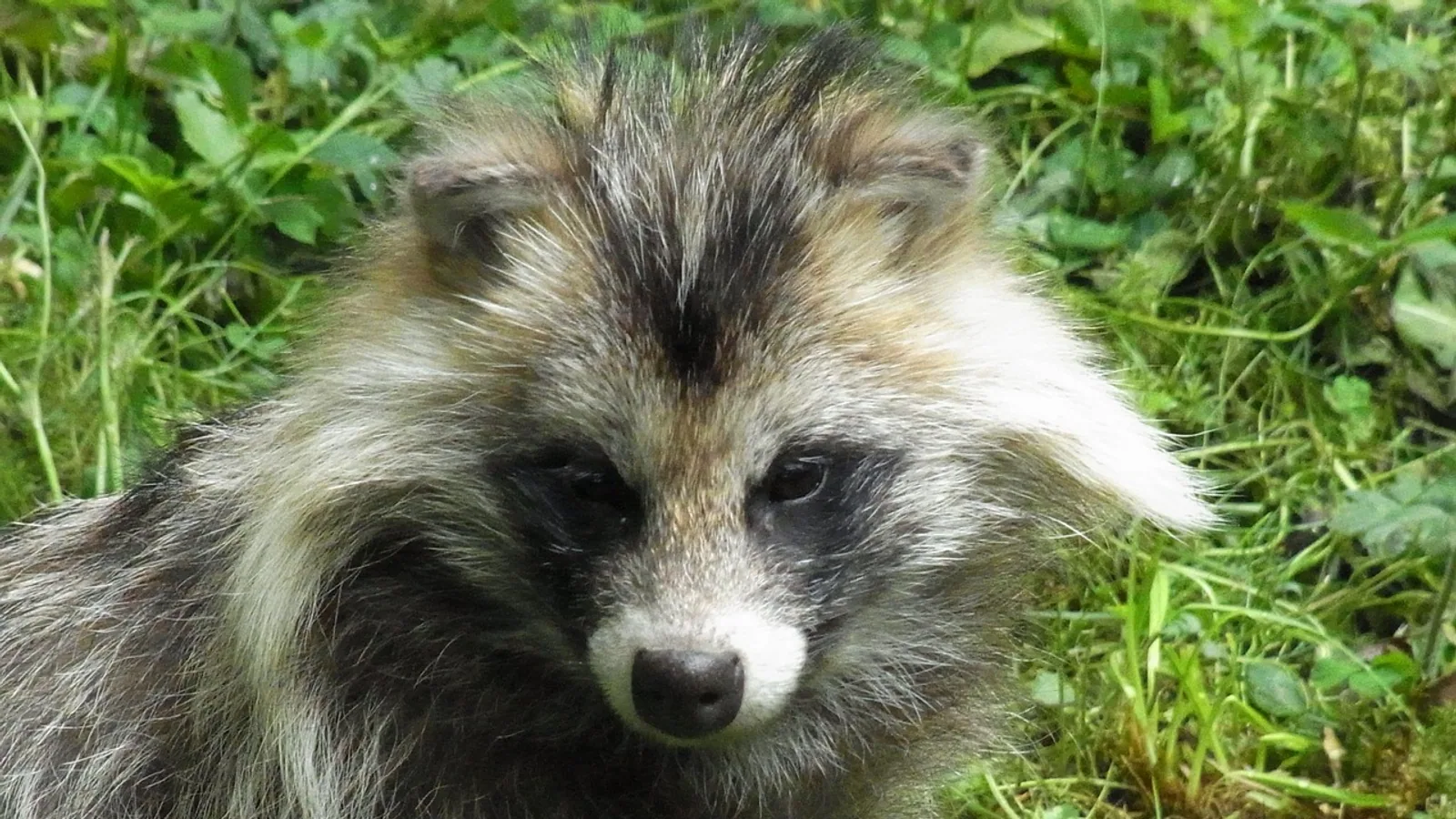
The raccoon dog is a canid, not a raccoon, and its scientific name is Nyctereutes procyonoides. It is native to East Asia, was introduced to the European part of the former Soviet Union for fur farming, and now lives across much of Northern, Eastern, and Central Europe, where it acts as a secondary rabies reservoir alongside the red fox [1][2].
If you see one, treat it as wild rabies-competent wildlife. Do not approach, feed, or handle it. Any bite, scratch, or saliva contact with a raccoon dog is a medical emergency that requires same-day care, because rabies is almost always fatal once symptoms begin. This guide covers what the animal is, where it lives, the diseases it carries, and why it matters for public health and wildlife management.
What Is a Raccoon Dog?
A raccoon dog is a small, stocky canid with a raccoon-like black facial mask, short rounded ears, and a bushy tail. The resemblance to a raccoon is superficial and convergent: both animals evolved similar markings, but they belong to different mammalian families. Raccoons are procyonids. Raccoon dogs are members of the dog family, Canidae, alongside foxes, wolves, coyotes, and domestic dogs.
The common name is the source of most public confusion. The animal is not a raccoon, cannot interbreed with a raccoon, and does not share a raccoon's climbing habits. It is a ground-dwelling omnivore that eats insects, rodents, amphibians, birds, carrion, fruit, and human food waste.
Nyctereutes procyonoides has several recognized subspecies. The nominate form, N. p. procyonoides, and N. p. ussuriensis are the main lineages involved in the European invasion [3]. The Japanese raccoon dog, N. p. viverrinus, is a separate island form that has been the subject of its own anatomical and clinical studies [4][5][6]. Taxonomists still debate whether the Japanese form deserves full species status, and comparative anatomy work on the brachial plexus (the nerve network supplying the forelimb) is one line of evidence being used to address that question [5][6].
Physical and behavioral basics
Raccoon dogs are small for a canid. Adults are roughly the size of a large domestic cat or a small fox, with a body length typically in the range of 50 to 70 cm and a short tail. Body weight varies strongly with season because northern populations accumulate fat in autumn and can lose a large fraction of it over winter.
Two traits set them apart from most other canids:
- Facultative hibernation. In northern parts of their range, raccoon dogs can enter a winter torpor, reducing activity and metabolism. This matters for disease modeling because hibernation changes how often animals contact each other and how a rabies virus moves through a population [2].
- Cathemeral activity. They are not strictly nocturnal. Camera-trap monitoring in Natura 2000 wetland habitat in northwestern Poland found that during late spring and early summer, when nights are very short, raccoon dogs were active during both day and twilight periods without a clear peak [7].
The same Polish study found that sniffing, which is food searching, was the most frequent behavior recorded, and that May and June were the months of highest activity [7].
Reproduction and why the invasion succeeded
Raccoon dogs have a high reproductive potential, eat almost anything, tolerate a wide range of habitats, and disperse well. A review of the European invasion identified these traits, plus the sheer scale of the original introductions (more than 9,000 individuals from different localities), as the features behind the species' rapid colonization [1]. Genetic work across seven European countries using 16 microsatellite loci found strong gene flow and little population structure, consistent with a fast expansion and long-distance dispersal rather than isolated founder populations [8].
Native Versus Introduced Range
The raccoon dog's native range covers East Asia, including parts of China, Korea, Japan, and the Russian Far East. In China, the species is protected at the national level, and a region-wide occupancy study in northeast Beijing found that predicted occupancy dropped sharply as minor road density and human population density rose, with higher occupancy inside nature reserves and in the northern part of the study area [9].
The introduced range is the story that drives most of the public health interest. Raccoon dogs were brought to the European part of the former Soviet Union starting in the mid-20th century for fur farming, and animals either escaped or were released. From there the species spread west and north. Today it is widespread in Northern and Eastern Europe and continues to spread into Central Europe [1]. It is established in Finland, the Baltic states, Poland, Germany, Denmark, and Romania, among other countries [1][10][8][11].
| Region | Status | Notes |
|---|---|---|
| East Asia (China, Korea, Japan, Russian Far East) | Native | Includes multiple subspecies. Protected nationally in China. Occupancy falls near roads and dense human settlement [9]. |
| European part of the former Soviet Union | Introduced, source population | More than 9,000 animals introduced from different localities for fur farming [1]. |
| Finland, Baltic states | Introduced, established | Raccoon dog is a secondary rabies host and can outcompete foxes under some rabies conditions [2]. |
| Poland, Germany, Denmark | Introduced, established | Genetic clusters show high connectivity across the central European range [8]. |
| Romania | Introduced, range still limited | Confined mainly to the Danube Delta, Lower Danube Meadow, and Prut Meadow [11]. |
| North America | Not established | No wild population. Any animal seen is captive or escaped. |
The table above summarizes range status. It does not include every country where the species has been recorded, because the front is still moving.
Why the Raccoon Dog Matters for Rabies
Rabies is a viral encephalitis transmitted mainly through saliva, usually by a bite. In Europe, the red fox (Vulpes vulpes) is the main terrestrial wildlife reservoir. The raccoon dog is the important secondary host, and in the Baltic states it has become increasingly significant [2].
The reason this matters is a modeling result, not just a count of infected animals. A study of rabies epizootics in a community of foxes and raccoon dogs found that rabies could persist in the combined community even when it would not persist in either species alone, because each species' density was too low on its own to sustain transmission [2]. In that model, raccoon dogs were usually the major rabies host, and where raccoon dog territory density was high, they could outcompete native foxes through apparent competition mediated by the virus [2]. Apparent competition means two species affect each other indirectly because a shared pathogen hits one harder than the other.
That finding has a direct management consequence. Wildlife rabies control strategies in Europe were designed around the fox, and the modeling work concluded that current strategies should be reviewed in light of the raccoon dog's role [2].
Oral rabies vaccination and the raccoon dog
The most effective and sustainable way to control and eliminate rabies in European wildlife is oral rabies vaccination (ORV) of the target species, which are foxes and raccoon dogs [12]. Vaccine baits are distributed in the environment, animals eat them, and immunity develops without anyone handling the animal.
Because you cannot easily draw blood from a wild canid, programs monitor effectiveness by testing rabies antibodies in animals found dead, and by disease surveillance. Body fluids from field cadavers are often of poor quality, so enzyme-linked immunosorbent assay (ELISA) methods have been developed as an alternative to older serum tests. An international collaborative study evaluated a commercial ELISA kit for rabies antibody detection and reported an overall specificity of 96.7% on naive samples, with coefficients of concordance of 97.2% for fox samples and 97.5% for raccoon dog samples [12]. Agreement values for the four marketed oral vaccines used in Europe were all at or above 95% [12].
In practice, this means raccoon dogs are not just a rabies problem. They are also a target of the vaccination programs designed to solve it, and the diagnostic tools used to verify those programs have been validated specifically in this species [12].
How rabies risk translates to human risk
Rabies in wildlife becomes a human problem through contact. The exposure routes that matter are bites, scratches that break skin, and direct contact between animal saliva and a person's eyes, nose, mouth, or an open wound. Because raccoon dogs in parts of Europe are a maintenance host, not a dead-end host, a rabid raccoon dog is a realistic scenario rather than a freak event [2].
Rabies post-exposure prophylaxis is time-critical and highly effective when started promptly. It is not something to schedule for later in the week. If you are bitten or scratched by a raccoon dog, wash the wound thoroughly with soap and water, and seek emergency medical care the same day. Do not wait to see whether the animal was sick.
Other Zoonotic Pathogens Carried by Raccoon Dogs
Rabies gets the headlines, but the raccoon dog carries a broader pathogen load. A review of the species as an invasive host identified 35 species of endoparasites, five ectoparasites, six bacterial or protozoan species, and five viruses recorded in N. p. ussuriensis in its original and newly occupied habitats, or in N. p. koreensis in its original habitat [3]. The review singled out Trichinella spp., Echinococcus multilocularis, Francisella tularensis, rabies virus, and canine distemper virus for detailed description [3].
Trichinella
Trichinella are nematodes (roundworms) that form larvae in muscle tissue. People become infected by eating undercooked meat containing those larvae. Raccoon dogs and red foxes are well-adapted hosts.
A study in Estonia tested 20 g of masseter (jaw) muscle from 113 raccoon dogs and 87 red foxes using artificial digestion, then identified larvae to species by multiplex polymerase chain reaction (PCR). The apparent infection prevalence was 57.5% in raccoon dogs and 69.0% in red foxes, and the species present were T. nativa and T. britovi [10]. Larval burden had increased in both hosts. The estimated Trichinella biomass was more than 15 times higher in raccoon dogs in 2011 to 2012 than in 1992 to 2000 based on mean larval burden, and almost 20 times higher based on median larval burden [10]. The authors concluded that raccoon dogs and red foxes are relevant reservoirs [10].
Trichinella britovi was confirmed in a raccoon dog in Romania for the first time in a study of six hunting grounds in Ialomița County, using artificial digestion followed by multiplex PCR and sequencing of ESV and ITS1 DNA fragments [11]. T. britovi is the species most commonly identified in wild carnivores in temperate zones [11].
The practical implication for hunters and trappers is straightforward: any raccoon dog carcass should be treated as potentially infected with Trichinella, and meat should never be eaten without proper cooking or inspection. Freezing does not reliably kill all Trichinella species, particularly cold-tolerant ones like T. nativa.
Echinococcus multilocularis
Echinococcus multilocularis is a tapeworm whose eggs can cause alveolar echinococcosis in people, a serious liver disease. Foxes are the classic definitive host, and raccoon dogs can serve the same role, shedding eggs in feces. The eggs are microscopic and environmentally resistant. This is why foraging in areas with known fox and raccoon dog activity carries a hand-hygiene risk, and why gloves matter when handling soil, gardens, or carcasses in endemic regions.
Other pathogens
Francisella tularensis causes tularemia, a bacterial disease that can be transmitted by contact with infected animals, by arthropod bites, or by inhalation. Canine distemper virus is primarily a concern for domestic dogs and wildlife rather than people, but it circulates in the same populations.
A pathological survey of red foxes, stone martens, and raccoon dogs in Schleswig-Holstein, Germany, between November 2013 and January 2016 screened animals for a panel of infectious and zoonotic agents including influenza A virus, parvovirus, Borna disease virus, tick-borne encephalitis, Toxoplasma gondii, and Listeria monocytogenes [13]. The study's framing point is worth keeping in mind: as wild carnivores move into urban and peri-urban areas, the chance of interspecies spillover and zoonotic transmission rises [13].
Additional pathogens have been documented in raccoon dogs more recently. A captive Japanese raccoon dog that died after self-mutilation was found on necropsy to have disseminated nocardiosis caused by Nocardia aobensis, with pyogranulomatous inflammation across the lungs, spleen, brain, liver, and kidneys [14]. Wild Korean raccoon dogs have been described with pulmonary vascular proliferative lesions, in some cases alongside heartworm infection and scabies-associated skin crusts [15]. A novel gut bacterium, Acidaminococcus nyctereutis, was isolated from the intestinal tract of a raccoon dog [16]. These findings broaden the known pathogen list but are not established human transmission routes.
Practical Guidance for People Who Encounter Raccoon Dogs
The raccoon dog is not a pet and should never be treated as one. It is wild, it is a rabies-competent carnivore in parts of its range, and it carries parasites that infect people. The following points are the ones that matter most in practice.
- Do not approach, feed, or attempt to rescue a raccoon dog. Habituation to human food increases the chance of a bite.
- Keep dogs and cats vaccinated against rabies where required by law, and keep them leashed or supervised in areas with known raccoon dog activity.
- Treat any bite or scratch as an emergency. Wash with soap and water and go to an emergency department the same day.
- Wear gloves when handling carcasses. Hunters, trappers, and wildlife workers should use gloves and eye protection, and should not eat raccoon dog meat without proper inspection and cooking.
- Wash hands after gardening or foraging in areas where raccoon dog or fox feces may be present, because of Echinococcus egg risk.
- Report sightings to local wildlife authorities, especially outside the known established range. Distribution is still expanding, and records feed into management decisions [1].
Institutional responses exist for a reason. Wildlife rescue centers handle large numbers of raccoon dogs, and a study of 1,376 raccoon dogs rescued by the Chungnam Wild Animal Rescue Center over 13 years built a scoring system to decide which animals could be rehabilitated and released and which required euthanasia [17]. That system exists because release decisions have public health and animal welfare consequences, not just conservation ones.
Common Mistakes and Limitations
Several recurring errors distort how people think about this animal.
Mistake 1: Calling it a raccoon. The name is misleading. It is a canid, and its closest relatives are foxes and other dogs, not raccoons. This matters because rabies risk, parasite profile, and legal status all follow from its canid biology.
Mistake 2: Assuming it is harmless because it looks cute. The black mask and small size make it look approachable. It is a wild carnivore and a documented rabies maintenance host in parts of Europe [2].
Mistake 3: Treating a bite as a minor wound. Rabies post-exposure prophylaxis is highly effective when given promptly and unreliable when delayed. The wound size tells you nothing about the risk.
Mistake 4: Assuming freezing makes raccoon dog meat safe. Cold-tolerant Trichinella species such as T. nativa are not reliably killed by freezing [10].
Mistake 5: Assuming the range is fixed. The European population expanded rapidly after introduction and is still spreading [1][8]. Local wildlife authorities, not old range maps, are the right source for current status.
Limitations. Individual animal cases, exposure decisions, and post-exposure care all require a physician or veterinarian. Population-level findings describe patterns, not what will happen to one person or one animal. Diagnostic tests and vaccine programs have performance characteristics measured across populations, and a single test result needs clinical context.
Frequently Asked Questions
Is a raccoon dog a raccoon?
No. The raccoon dog is a canid in the family Canidae, related to foxes and domestic dogs, while raccoons are procyonids. The similar face mask is a result of convergent evolution, not shared ancestry.
Is the raccoon dog dangerous to humans?
Yes, in the sense that it is a wild carnivore that can carry rabies and other zoonotic pathogens. The main risk is a bite or scratch. It is a documented rabies maintenance host in parts of Europe [2].
Where do raccoon dogs live?
They are native to East Asia and were introduced to the European part of the former Soviet Union, from which they spread across Northern, Eastern, and Central Europe [1]. They are not established in the wild in North America.
Do raccoon dogs carry rabies?
Yes. They are a secondary rabies reservoir in Europe and can be the major host in some mixed fox and raccoon dog communities [2]. Rabies vaccination programs in Europe target both foxes and raccoon dogs [12].
What should I do if a raccoon dog bites me?
Wash the wound thoroughly with soap and water and seek emergency medical care the same day. Rabies post-exposure prophylaxis is time-critical.
Can I keep a raccoon dog as a pet?
No. It is wild, it is a rabies-competent carnivore in parts of its range, and it carries zoonotic parasites. Keeping one creates serious legal, welfare, and public health problems.
What parasites do raccoon dogs carry?
Trichinella species and Echinococcus multilocularis are the two most important zoonotic parasites, and a review documented dozens of endoparasite species in the genus [3][10][11].
Are raccoon dogs protected?
Status varies by country. In China, the raccoon dog is protected at the national level [9]. In parts of Europe it is an invasive species subject to management, and in others it is treated as wildlife with hunting seasons.
Related Articles
- Parasite Control in Multi-Species Exotic Collections
- Animal Architects: How Different Species Build Their Homes
- Biology Facts
- Risk-Based Surveillance in Animal Health
- How to Assess Risk of Bias in Animal Studies
- Avian Coccidiosis in Chickens: Prevention, Life Cycle, and Cross-Species Risks
- Fisher Animal: Facts, Habitat, and Behavior
- Seals: Species, Biology, and Conservation
Sources
- Invasion of the raccoon dog Nyctereutes procyonoides in Europe: History of colonization, features behind its success, and threats to native fauna.
- Rabies in northeastern Europe--the threat from invasive raccoon dogs.
- The biological potential of the raccoon dog (Nyctereutes procyonoides, Gray 1834) as an invasive species in Europe-new risks for disease spread?
- Temporary joint immobilization using external skeletal fixation for recurrent medial shoulder luxation in a captive Japanese raccoon dog (Nyctereutes procyonoides viverrinus).
- Gross Anatomical Study of the Brachial Plexus in the Japanese Raccoon Dog (Nyctereutes procyonoides viverrinus).
- Fusion of the musculocutaneous nerve with the median nerve in a Japanese raccoon dog (Nyctereutes procyonoides viverrinus).
- Camera-trap monitoring of common raccoon dog (Nyctereutes procyonoides) activity in Natura 2000 wetland habitats in Poland.
- Homogenous Population Genetic Structure of the Non-Native Raccoon Dog (Nyctereutes procyonoides) in Europe as a Result of Rapid Population Expansion.
- Predicted Relative Occupancy Probability of Raccoon Dogs (Nyctereutes procyonoides) in Northeast Beijing Using Bayesian Occupancy Models.
- Trichinella spp. biomass has increased in raccoon dogs (Nyctereutes procyonoides) and red foxes (Vulpes vulpes) in Estonia.
- The First Identification of Trichinella britovi in the Raccoon Dog (Nyctereutes procyonoides) in Romania.
- First international collaborative study to evaluate rabies antibody detection method for use in monitoring the effectiveness of oral vaccination programmes in fox and raccoon dog in Europe.
- Pathological findings in the red fox (Vulpes vulpes), stone marten (Martes foina) and raccoon dog (Nyctereutes procyonoides), with special emphasis on infectious and zoonotic agents in Northern Germany.
- Disseminated nocardiosis in a Japanese raccoon dog (Nyctereutes procyonoides viverrinus).
- Pulmonary Vascular Proliferative Lesions in Wild Korean Raccoon Dogs (Nyctereutes procyonoides): Description of 13 Cases.
- Acidaminococcus nyctereutis sp. nov., a bacterium isolated from the gut of a raccoon dog (Nyctereutes procyonoides).
- A scoring system for euthanasia decisions in rescued raccoon dogs (Nyctereutes procyonoides): Standardized criteria in wildlife rehabilitation.