Human Digestive System: Organs, Steps and Functions
By Dr. Zubair Khalid, DVM, MS, PhD ·
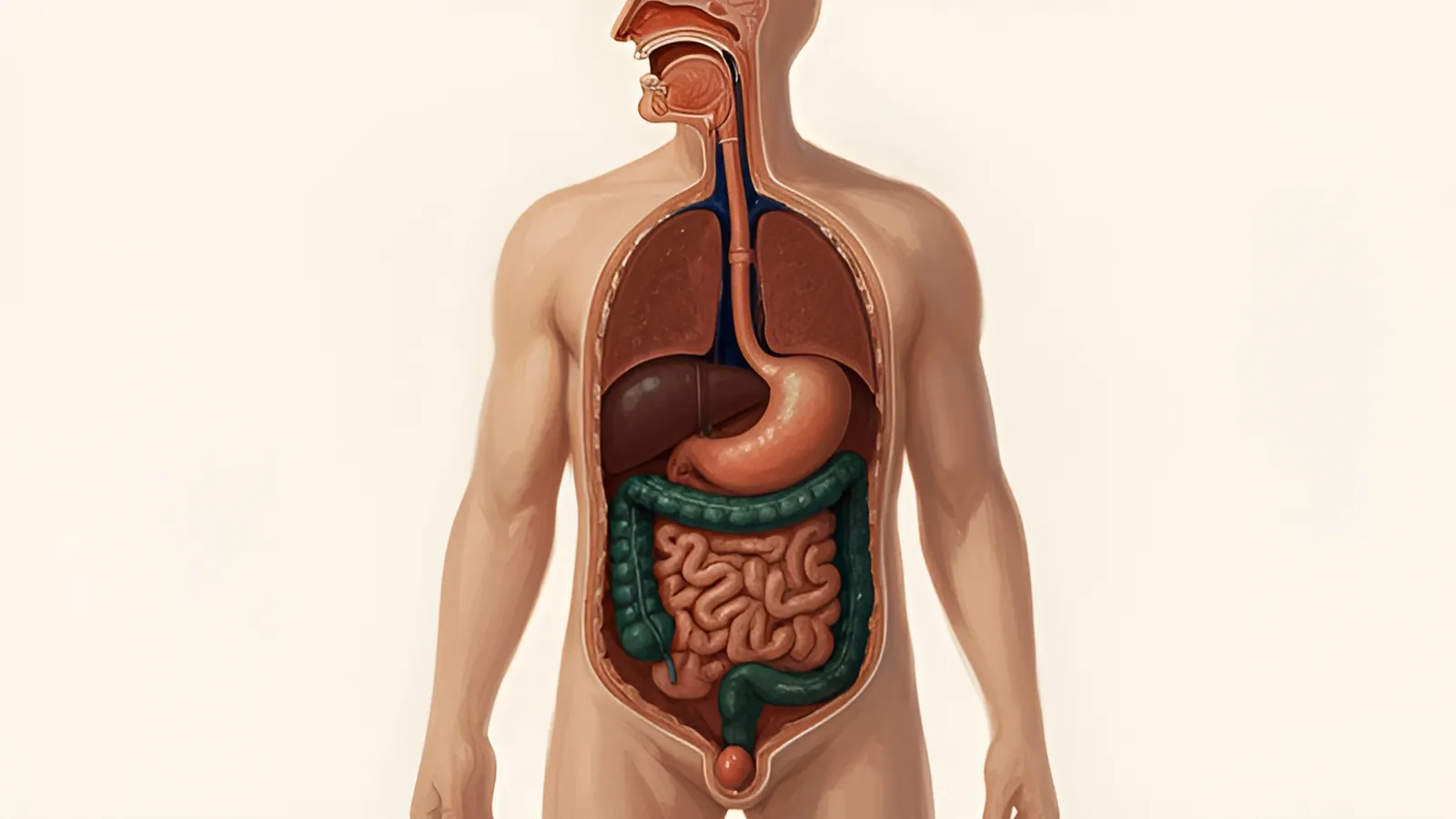
The human digestive system is a group of organs that work together to break down food and absorb the nutrients the body needs (What Is the Digestive System?). It has two main parts: the gastrointestinal (GI) tract, a long tube that runs from the mouth to the anus, and the solid organs that support it, the liver, pancreas, and gallbladder (Your Digestive System & How it Works).
Food moves through the GI tract in a set order: mouth, esophagus, stomach, small intestine, large intestine, and anus (Your Digestive System & How it Works). Each organ moves the contents along, breaks them into smaller pieces, or does both, and the released nutrients are used for energy, growth, and cell repair. The large intestine absorbs water, and the leftover waste becomes stool (What Is the Digestive System?; Your Digestive System & How it Works).
Key Points
- The hollow organs of the GI tract are the mouth, esophagus, stomach, small intestine, large intestine, and anus; the liver, pancreas, and gallbladder are the solid organs (Your Digestive System & How it Works).
- The small intestine has three sections: the duodenum first, then the jejunum, and the ileum at the end.
- The large intestine includes the appendix, cecum, colon, and rectum, with the appendix attached to the cecum.
- Food is pushed along by peristalsis, in which the muscle behind the food contracts while the muscle ahead of it relaxes.
- Nutrients the body extracts include proteins, fats, carbohydrates, vitamins, minerals, and water.
- Gut bacteria, also called the microbiome, help with digestion, and nerves and hormones help control the process.
At a Glance
| Item | Details |
|---|---|
| Main organs | Mouth, esophagus, stomach, small intestine, large intestine, rectum, anus (Your Digestive System & How it Works) |
| Accessory organs | Liver, pancreas, gallbladder, salivary glands (What Is the Digestive System?) |
| Core functions | Digestion, nutrient absorption, waste removal |
| Control | Nerves, hormones, and gut bacteria |
| Transit time | Varies by person, meal, and health status |
The digestive system is a group of organs that work together to break down food and pull nutrients from it (What Is the Digestive System?). What the body cannot use is turned into stool and removed.
What the Digestive System Does
The digestive system has one central job: turn food and drink into materials the body can use, then clear out what is left (What Is the Digestive System?). The other tasks it performs, from hormone release to support of gut bacteria, all serve that central job.
Breaking Food into Absorbable Pieces
The nutrients in food and drink are proteins, fats, carbohydrates, vitamins, minerals, and water (Your Digestive System & How it Works). Most arrive as large molecules or bound packages that cells cannot take in directly. Digestion breaks them into parts small enough for the body to absorb and use for energy, growth, and cell repair.
Two kinds of breakdown run at the same time. Mechanical digestion is physical: chewing in the mouth and churning in the stomach. Chemical digestion uses acid and enzymes to cut large molecules into smaller ones. Each part of the digestive system either moves contents along, breaks them down, or does both (Your Digestive System & How it Works).
Moving Nutrients into the Blood
Once nutrients are small enough, they cross the lining of the small intestine and enter the blood (Your Digestive System & How it Works). Blood carries them to the liver first, then to the rest of the body. The large intestine absorbs water, and the material left behind becomes stool. Water absorption decides how firm or loose that stool will be.
Removing Waste
Undigested material, shed cells, and bacterial mass leave the body as stool (What Is the Digestive System?). The rectum stores stool until a suitable time, and the anus releases it. This step is easy to overlook until it slows down, speeds up, or becomes painful.
Controlling Speed and Timing
Nerves and hormones control the digestive process (Your Digestive System & How it Works). Nerves adjust muscle activity in the gut wall, and hormones signal organs to release enzymes or bile at the right moment. Blood flow to the gut rises during digestion, which supports absorption.
Barrier and Bacterial Roles
The GI tract forms a long boundary between the outside world and the inside of the body. Gut bacteria, also called the microbiome or gut flora, live in this space and help with digestion (Your Digestive System & How it Works). They break down some fibers that human enzymes cannot handle and produce compounds the gut lining uses. Keeping the digestive system healthy supports overall health (What Is the Digestive System?).
The GI Tract: A Tube from Mouth to Anus
The GI tract, also called the digestive tract, is a series of hollow organs joined in a long, twisting tube that runs from the mouth to the anus (Your Digestive System & How it Works). The hollow organs are the mouth, esophagus, stomach, small intestine, large intestine, and anus. Each section has its own task, and the order matters.
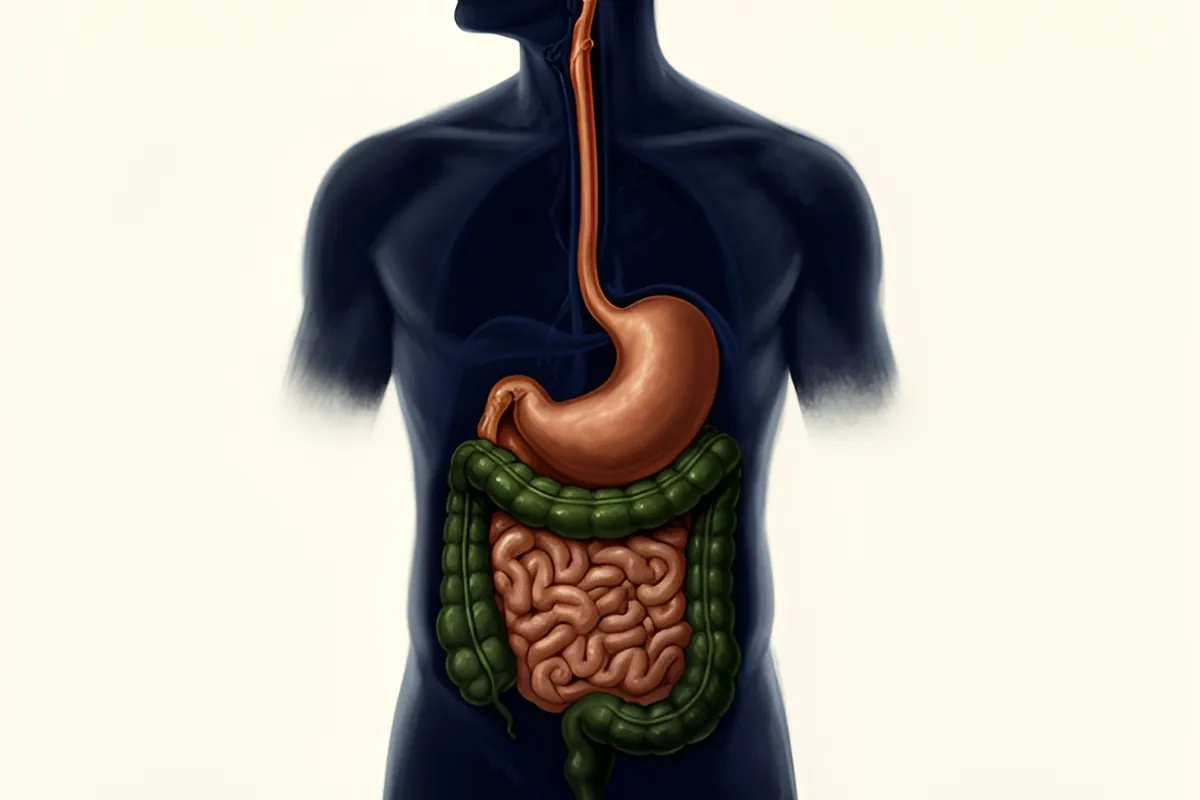
| Part | Main job |
|---|---|
| Mouth | Chewing and saliva begin starch digestion (Your Digestive System & How it Works) |
| Esophagus | Muscular tube that pushes food downward |
| Stomach | Mixes food with acid and enzymes |
| Small intestine | Main site of nutrient absorption |
| Large intestine | Absorbs water and forms stool |
| Rectum and anus | Store and release stool |
Mouth
Food starts to move through the GI tract when a meal begins. Chewing breaks food into smaller pieces and mixes it with saliva, which starts starch digestion and makes the mass slippery enough to swallow (Your Digestive System & How it Works). During swallowing, the tongue pushes food into the throat and the epiglottis folds over the windpipe to prevent choking.
Esophagus
The esophagus is a muscular tube. Its walls push the swallowed bolus downward toward the stomach. Little absorption happens here; the work is transport.
Stomach
The stomach holds a meal, churns it, and mixes it with acid and enzymes (Your Digestive System & How it Works). The result is a semi-liquid paste that passes into the small intestine in controlled amounts. A layer of mucus protects the stomach lining from its own acid.
Small Intestine
The small intestine is the main site of nutrient absorption (Your Digestive System & How it Works). It has three parts: the duodenum, the jejunum, and the ileum. The duodenum receives bile and pancreatic enzymes. The inner surface is folded and covered with tiny projections, which packs a large absorbing area into a modest length of tube.
Large Intestine
The large intestine includes the appendix, cecum, colon, and rectum (Your Digestive System & How it Works). It absorbs water and turns the remaining material into stool. The appendix is a finger-shaped pouch attached to the cecum.
Rectum and Anus
The rectum is the end of the large intestine (Your Digestive System & How it Works). It stores stool until release. The anus is the exit, guarded by sphincter muscles that stay closed at rest and relax during a bowel movement.
Accessory Organs: Liver, Pancreas, Gallbladder
The liver, pancreas, and gallbladder are the solid organs of the digestive system (Your Digestive System & How it Works). They sit outside the main tube and deliver their secretions into it (What Is the Digestive System?). Salivary glands belong to the same group: they lie outside the GI tract and add fluid and enzymes to it.
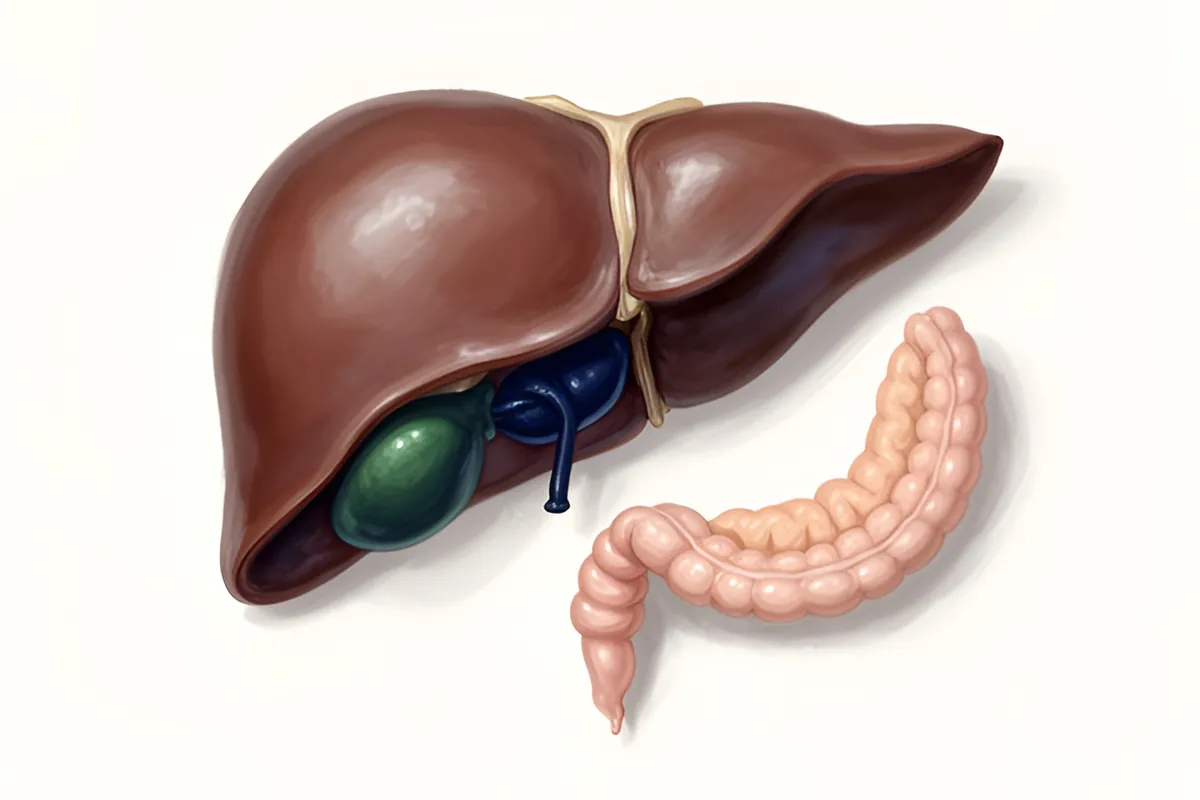
| Organ | What it adds | Main digestive role |
|---|---|---|
| Liver | Bile | Makes bile and processes absorbed nutrients (What Is the Digestive System?) |
| Gallbladder | Stored bile | Stores bile and releases it after meals (Your Digestive System & How it Works) |
| Pancreas | Enzymes, bicarbonate | Sends enzymes and bicarbonate to the small intestine |
| Salivary glands | Saliva | Adds enzymes that start digestion |
Liver
The liver makes bile, which helps break down fats, and it processes nutrients absorbed from the intestine (What Is the Digestive System?). Blood from the small intestine travels to the liver before reaching the rest of the body, so the liver sees the nutrient mix first. It stores some nutrients, converts others, and packages fats for transport.
Gallbladder
The gallbladder stores bile made by the liver and releases it after meals (Your Digestive System & How it Works). Bile flows into the duodenum, where it disperses fat into small droplets so enzymes can act on it. Between meals, the gallbladder concentrates the bile it holds.
Pancreas
The pancreas sends enzymes and bicarbonate to the small intestine (Your Digestive System & How it Works). The enzymes digest proteins, fats, and carbohydrates. Bicarbonate neutralizes stomach acid so those enzymes can work at the right pH. The pancreas also releases hormones into the blood, including insulin, which places it in both the digestive and endocrine systems.
Salivary Glands
Salivary glands add enzymes that start digestion (What Is the Digestive System?). Salivary amylase begins breaking starch into smaller sugars while food is still in the mouth. Saliva also moistens food, which makes swallowing easier.
Why They Are Called Accessory
These organs sit outside the main tube (What Is the Digestive System?). Food never passes through them. They work by adding fluids, enzymes, and bile into the GI tract at set points, and by processing what the intestine absorbs. Damage to an accessory organ can disturb digestion even when the GI tract itself is normal.
The Steps of Digestion, in Order
Digestion follows a fixed sequence. Each stage prepares material for the next, and a problem at one step changes what reaches the steps after it. In healthy adults the full trip from mouth to stool takes about a day to a few days, depending on diet, activity, and individual variation.
Ingestion
Ingestion is the act of taking food and drink into the mouth (Your Digestive System & How it Works). Chewing breaks food into smaller pieces and mixes it with saliva. The tongue shapes the softened mass into a bolus and pushes it into the throat during swallowing. A small flap of tissue called the epiglottis folds over the windpipe to keep food out of the airway. From there the bolus enters the esophagus, a muscular tube that carries it to the stomach.
Mechanical and Chemical Breakdown
Mechanical breakdown is physical: chewing in the mouth, churning in the stomach, and mixing movements in the small intestine. Chemical breakdown uses acid and enzymes to split large molecules into units small enough to absorb (Your Digestive System & How it Works). The stomach adds acid and enzymes and turns the bolus into a semi-liquid mixture. The small intestine continues chemical digestion with enzymes from its own lining and from the pancreas, while bile from the gallbladder helps the body handle fat.
Peristalsis Moves the Mixture Along
Food does not slide through the tract by gravity. The hollow organs of the GI tract contain a layer of muscle that lets their walls move, pushing contents forward and mixing them inside each organ (Your Digestive System & How it Works). The muscle behind the food contracts and squeezes it forward, while the muscle in front relaxes to allow the food to move. This wave-like motion is peristalsis, and it works in the esophagus, stomach, small intestine, and large intestine.
Absorption
Absorption is the transfer of nutrients across the intestinal lining into blood or lymph (Your Digestive System & How it Works). Most absorption happens in the small intestine, whose inner surface is folded and lined with tiny projections that create a large surface area. The small intestine has three parts: the duodenum, the jejunum, and the ileum. Sugars and amino acids pass into blood vessels and travel to the liver. Most fats enter lymph vessels first and reach the bloodstream later.
Elimination
Material that is not absorbed moves into the large intestine, which includes the appendix, cecum, colon, and rectum (Your Digestive System & How it Works). The large intestine absorbs water, and the waste products of digestion become stool. Stool is stored in the rectum until a bowel movement pushes it out through the anus. Bacteria in the GI tract, also called gut flora or the microbiome, take part in this final stage by breaking down material that human enzymes cannot handle.
| Step | Main site | What happens |
|---|---|---|
| Ingestion | Mouth | Food enters; chewing and saliva form a bolus (Your Digestive System & How it Works) |
| Mechanical and chemical breakdown | Mouth, stomach, small intestine | Churning and enzymes split food into small units |
| Movement | Entire GI tract | Peristalsis pushes and mixes contents |
| Absorption | Small intestine, large intestine | Nutrients cross into blood or lymph; water is absorbed |
| Elimination | Large intestine, rectum, anus | Undigested waste leaves as stool |
How Food Moves: Peristalsis and Sphincters
Movement through the digestive tract depends on two mechanisms: waves of muscle contraction that push contents forward, and rings of muscle that open and close at the right moments. Together they keep contents moving in one direction and stop them from flowing backward.
Peristalsis: The Push
The large, hollow organs of the GI tract contain a layer of muscle that lets their walls move (Your Digestive System & How it Works). This movement pushes food and liquid through the tract and mixes the contents within each organ. The pattern is consistent: the muscle behind the food contracts and squeezes it forward, while the muscle in front relaxes to allow the food to move. The result is a traveling wave called peristalsis.
Peristalsis starts in the esophagus and carries a swallowed bolus to the stomach even when a person is lying down. It continues in the stomach, small intestine, and large intestine. In the small intestine, additional mixing movements bring contents into contact with the absorptive surface. In the large intestine, slower waves move material toward the rectum over hours.
Sphincters Act as Valves
Sphincters are rings of muscle that act as valves between organs (What Is the Digestive System?). They stay closed between meals and open on cue, so each organ handles its contents at its own pace. A sphincter that opens too often allows backflow. One that opens too rarely causes a backup behind it.
The Main Sphincters
| Sphincter | Position | Function |
|---|---|---|
| Upper esophageal sphincter | Top of the esophagus | Opens during swallowing, then closes to protect the airway |
| Lower esophageal sphincter | Between the esophagus and stomach | Keeps stomach acid in the stomach (What Is the Digestive System?) |
| Pyloric sphincter | Between the stomach and duodenum | Controls emptying of stomach contents into the small intestine |
| Ileocecal valve | Between the small and large intestine | Limits backflow from the colon into the small intestine |
| Internal anal sphincter | End of the rectum | Opens involuntarily as stool arrives |
| External anal sphincter | Around the anus | Controls defecation |
One Bite, Followed Through
A bite of bread shows how the two mechanisms cooperate. Chewing and saliva form a bolus, and the tongue pushes it back. The upper esophageal sphincter opens, the epiglottis covers the windpipe, and peristalsis carries the bolus down the esophagus. The lower esophageal sphincter relaxes to let the bolus into the stomach, then closes to keep acid inside (What Is the Digestive System?). The stomach churns the bolus into a semi-liquid mixture. The pyloric sphincter opens in small spurts to release that mixture into the duodenum. Peristalsis and mixing continue through the small intestine, where most nutrients are absorbed. What is left enters the colon, water is absorbed, and stool collects in the rectum. The anal sphincters relax during defecation.
Digestion by Nutrient Type
Different nutrients are handled by different enzymes at different points along the tract. The table below summarizes the route; the sections that follow explain each one.
Carbohydrates
Carbohydrate digestion starts in the mouth, where chewing mixes food with saliva, and finishes in the small intestine (Your Digestive System & How it Works). Salivary enzymes begin splitting starch into shorter chains while the food is still being chewed. Stomach acid pauses that work, because salivary enzymes stop functioning in a strongly acidic environment. In the small intestine, enzymes from the pancreas and from the intestinal lining finish the job, breaking starches and sugars into single sugars such as glucose. Those single sugars cross the intestinal lining into blood and travel to the liver.
Proteins
Proteins are broken down in the stomach and the small intestine (Your Digestive System & How it Works). Stomach acid unfolds the tightly coiled protein chains and activates an enzyme that cuts them into shorter pieces. The stomach absorbs little protein itself; its role is to prepare the material for the small intestine. There, pancreatic enzymes and enzymes on the intestinal surface cut the fragments into single amino acids and small peptides, which are absorbed into blood.
Fats
Fats need help because they do not mix with water. Bile, made by the liver and stored in the gallbladder, is released into the small intestine, where it emulsifies fat into tiny droplets (Your Digestive System & How it Works). Emulsification does not digest fat; it spreads the fat over a larger surface so pancreatic enzymes can reach it. Those enzymes then split fat molecules into fatty acids and monoglycerides, which are absorbed and reassembled inside the intestinal cells. Most of this fat leaves the gut through lymph vessels before entering the bloodstream.
Water and Minerals
Water is absorbed along the length of the tract. The large intestine absorbs water, and the waste products of digestion become stool (Your Digestive System & How it Works). Minerals follow similar routes: sodium, potassium, calcium, and iron are taken up mainly in the small intestine, with the colon recovering additional amounts from the fluid that reaches it. The amount absorbed depends on the body's needs, so the gut adjusts uptake instead of passing a fixed fraction into the blood.
Fiber
Fiber passes mostly undigested because human enzymes cannot break the bonds that hold its sugars together (Your Digestive System & How it Works). Bacteria in the GI tract, also called gut flora or the microbiome, help with digestion and break down part of this material. Soluble fiber is fermented more readily and yields compounds that colon cells use for fuel. Insoluble fiber adds bulk and holds water, which helps the colon move contents along.
| Nutrient | Where breakdown happens | Where absorption happens | Route out of the gut |
|---|---|---|---|
| Carbohydrates | Mouth, then small intestine (Your Digestive System & How it Works) | Small intestine | Blood |
| Proteins | Stomach, then small intestine | Small intestine | Blood |
| Fats | Small intestine, after emulsification by bile | Small intestine | Lymph, then blood |
| Water and minerals | Small intestine, large intestine | Small intestine and large intestine | Blood |
| Fiber | Fermented by gut bacteria | Large intestine | Compounds used by colon cells |
How the Gut Is Controlled
The digestive tract has its own nervous system, receives signals from the brain, responds to hormones, and depends on blood flow and gut bacteria. Nerves, hormones, bacteria, and blood work together with the organs of the digestive system to process the food and liquid taken in each day (Your Digestive System & How it Works).
The Enteric Nervous System
A dense network of nerve cells sits inside the wall of the GI tract. This local network can run many digestive reflexes on its own, which is why the gut keeps moving and secreting even when signals from the brain are interrupted. It senses stretch when food arrives, triggers muscle contractions behind the food, and coordinates the release of secretions from the lining. The enteric nervous system also communicates with the rest of the body through connections to the spinal cord and brain.
The Vagus Nerve and the Brain-Gut Link
The vagus nerve links the gut and the brain (Your Digestive System & How it Works). Signals travel in both directions. Descending signals adjust stomach acid, muscle activity, and blood flow before and during a meal. Ascending signals report fullness, nausea, and discomfort. This two-way traffic explains why stress, anxiety, and poor sleep often change appetite and bowel habits.
Hormones That Regulate Secretions
Hormones such as gastrin and secretin regulate digestive secretions (Your Digestive System & How it Works). Gastrin is released by the stomach when food arrives and signals the lining to produce acid. Secretin is released by the small intestine when acidic contents enter from the stomach and signals the pancreas to send a bicarbonate-rich fluid that neutralizes the acid. Other hormones slow stomach emptying when the small intestine is full and signal the gallbladder to release bile when fat is present.
Blood Flow After a Meal
Blood flow to the gut increases after a meal (Your Digestive System & How it Works). The extra blood carries oxygen to working muscle and delivers absorbed nutrients to the liver through the portal vein before they reach the rest of the body. The circulatory system is one of the support systems that work with the digestive organs. When blood flow falls, as in shock or severe dehydration, digestion slows.
Gut Bacteria
Bacteria in the GI tract, also called gut flora or the microbiome, help with digestion (Your Digestive System & How it Works). They break down fiber that human enzymes cannot split, produce some vitamins, and interact with the immune tissue in the intestinal wall. The mix of species shifts with diet, antibiotics, illness, and age. Because these bacteria influence digestion and overall health, keeping the digestive system healthy supports health in general (What Is the Digestive System?).
Common Misconceptions
Digestive complaints are common, and so are beliefs about them that do not match how the gut works. Some of these ideas lead people to ignore symptoms; others cause worry about the wrong thing. The corrections below follow standard descriptions of digestive anatomy and function (What Is the Digestive System?; Your Digestive System & How it Works).
Myth: Digestion happens only in the stomach
The stomach is one stop on a long route. Digestion begins in the mouth, where chewing breaks food apart and saliva starts working on starch, and it continues in the small intestine, where most nutrients are absorbed (Your Digestive System & How it Works). The stomach mixes food with acid and enzymes, turns it into a semiliquid, and releases it in small amounts into the small intestine. Treating the stomach as the whole system leaves out the organs that do most of the work.
Myth: The small intestine is short
The small intestine is about 20 feet long in an adult (Your Digestive System & How it Works). Its name refers to its diameter, not its length. It has three parts: the duodenum, the jejunum, and the ileum. Most chemical digestion and nutrient absorption happen along this coiled tube, which is why conditions that damage its lining can affect nutrition.
Myth: Food always takes 24 hours to digest
Transit time is not fixed. How long a meal takes to move through the GI tract depends on what was eaten, how much was eaten, and the person's own gut function (Your Digestive System & How it Works). The large intestine absorbs water and turns what is left into stool, and that final stage is often the slowest. One number does not describe every person or every meal.
Myth: Spicy food alone causes stomach ulcers
Spicy food can make an existing ulcer or reflux feel worse, but it does not create the ulcer (What Is the Digestive System?). Ulcers have other causes, including infection and regular use of certain pain relievers. Blaming chili peppers can delay a proper evaluation.
Myth: Heartburn always means too much stomach acid
Heartburn is a symptom of reflux, not a measurement of how much acid the stomach makes (What Is the Digestive System?). Acid that reaches the esophagus causes burning because that lining is not built to handle it, even when acid production is normal. Some people with reflux produce ordinary amounts of acid; the problem is where the acid goes.
Myth: Everyone needs one bowel movement daily
Normal bowel habits vary. Some healthy people go several times a day, others a few times a week. What matters is the pattern for that person and whether it changes (What Is the Digestive System?). A sudden, lasting change in frequency, consistency, or color is more informative than the number itself.
When to See a Doctor
Most digestive symptoms settle on their own within a day or two. Others point to a problem that needs evaluation. The signs below are reasons to contact a clinician instead of waiting (What Is the Digestive System?). A single episode may not be serious, but a pattern that repeats or persists should be checked.
Blood in stool or black, tarry stools
Blood can appear as bright red streaks on the stool, or it can turn the stool black and tarry when bleeding happens higher in the GI tract (What Is the Digestive System?). Either finding deserves medical attention. Hemorrhoids are a common cause of bright red blood, but they are not the only one, and a clinician may need to test the stool to confirm what is happening.
Persistent abdominal pain or cramping
Pain that lasts for hours, keeps returning, or wakes a person at night is not ordinary indigestion (What Is the Digestive System?). Location matters. Pain that is severe, confined to one area, or paired with fever, vomiting, or a swollen abdomen needs prompt care. Mild cramping that passes with gas or a bowel movement is usually less concerning.
Trouble swallowing or food getting stuck
Difficulty swallowing, a sensation that food sticks on the way down, or pain when swallowing should be evaluated (What Is the Digestive System?). These symptoms can come from narrowing, inflammation, or a problem with the muscle movements that push food along. Eating slowly and chewing well may reduce the chance of choking, but it does not fix the underlying cause.
Unintended weight loss or ongoing vomiting
Losing weight without trying, or vomiting that continues beyond a short illness, suggests that food is not being digested or absorbed as it should be (What Is the Digestive System?). Vomiting also removes fluid and electrolytes. Persistent vomiting, especially with blood or material that looks like coffee grounds, needs urgent care.
Bowel habit changes lasting several weeks
A change in how often stools pass, their consistency, or their size that lasts several weeks is worth a visit (What Is the Digestive System?). This includes new constipation, new diarrhea, or alternating between the two. The change itself does not identify a cause, but it is a signal that the gut is not working the way it used to.
| Sign | Why it needs attention |
|---|---|
| Bright red blood on stool | Possible bleeding in the lower GI tract (What Is the Digestive System?) |
| Black, tarry stool | Possible bleeding higher in the GI tract |
| Food sticking when swallowing | Possible narrowing or motility problem |
| Vomiting blood or coffee-ground material | Possible active bleeding |
| Weight loss without trying | Possible poor absorption or another illness |
Keeping the Digestive System Healthy
The gut responds to daily habits. Fiber, fluids, movement, and the way food is eaten all influence how smoothly the GI tract moves contents along and how well nutrients are absorbed (Your Digestive System & How it Works). None of these steps is complicated, and together they support the whole system.
Eat fiber-rich foods and drink enough water
Fiber adds bulk to stool and helps it hold water, which makes it easier to pass (Your Digestive System & How it Works). Water is the other half of that pair; fiber without enough fluid can make constipation worse. Good sources include vegetables, fruits, whole grains, beans, and lentils. Increase fiber gradually so the gut has time to adjust, since a sudden jump can cause gas and bloating.
Limit highly processed foods and excess alcohol
Highly processed foods tend to be low in fiber and high in added sugar, salt, and fat, and they can crowd out foods that support the gut (Your Digestive System & How it Works). Alcohol irritates the stomach lining and can worsen reflux. Cutting back on both, without eliminating them entirely, is a practical step for most people.
Stay active to support gut motility
Physical activity helps move contents through the GI tract (Your Digestive System & How it Works). A walk after meals, regular movement during the day, and general exercise all support motility. Activity also helps with weight, sleep, and stress, each of which can affect digestion.
Eat slowly and chew food well
Chewing breaks food into smaller pieces and mixes it with saliva, which begins starch digestion (Your Digestive System & How it Works). Eating slowly gives the stomach time to signal fullness and reduces swallowed air, a common source of bloating. Putting the fork down between bites and avoiding meals while rushed are simple ways to slow down.
See a doctor for persistent digestive symptoms
Symptoms that last for weeks, keep returning, or interfere with eating, sleeping, or daily life deserve medical attention (What Is the Digestive System?). Early evaluation can identify treatable problems and rule out serious ones. Keeping a simple record of symptoms, meals, and bowel habits can make that visit more useful.
| Habit | Main effect on the gut |
|---|---|
| Fiber plus adequate water | Softer, bulkier stool that is easier to pass (Your Digestive System & How it Works) |
| Less processed food and alcohol | Fewer irritants and more room for nutrient-dense foods |
| Regular physical activity | Supports movement of contents through the GI tract |
| Slow eating and thorough chewing | Smaller particles, less swallowed air |
| Medical review of lasting symptoms | Identifies treatable problems early (What Is the Digestive System?) |
Related Guides
- Organ System Definition Biology: Defines organ systems and how they organize body functions
- What Is Human Biology? Cells, Systems, and Health: Broad overview of human biology, cells, systems, and health
- Human Anatomy and Biology Basics: Body Systems, Bones, Muscles and Cells: Covers anatomy basics and how body systems fit together
- Function of Nerves: How the Nervous System Works: Explains how nerves control gut movement and digestion
- Peritoneal Cavity Anatomy: Boundaries, Organs, and Fluids: Describes the cavity surrounding many digestive organs
- Thoracic Cavity Anatomy: Organs and Boundaries: Covers chest cavity anatomy where the esophagus passes
- Respiratory System: Organs, Function and How Breathing Works: Explains airway anatomy mentioned during swallowing
Frequently Asked Questions
What are the main organs of the digestive system?
The digestive system has two groups of organs. The gastrointestinal tract is a hollow, twisting tube that runs from the mouth to the anus. Its parts are the mouth, esophagus, stomach, small intestine, large intestine, and anus (Your Digestive System & How it Works). The solid organs are the liver, pancreas, and gallbladder. Cleveland Clinic groups these as the GI tract and the biliary tract (What Is the Digestive System?). The small intestine has three sections: duodenum, jejunum, and ileum. The large intestine includes the appendix, cecum, colon, and rectum. Nerves, hormones, blood, and gut bacteria also support the process.
What is the order of the digestive system from mouth to anus?
Food travels in one direction. It starts in the mouth, where chewing begins breakdown and the tongue pushes food into the throat when you swallow (Your Digestive System & How it Works). Next comes the esophagus, then the stomach, then the small intestine. The small intestine has three parts in order: duodenum, jejunum, ileum. Food then enters the large intestine, which includes the cecum, colon, and rectum, and finally leaves through the anus. Movement along this tube happens by peristalsis, in which muscle behind the food contracts and muscle ahead relaxes.
How long does it take to digest food?
The sources for this article describe the steps of digestion but do not give one fixed duration. Cleveland Clinic notes that digestion is a complicated process with many steps and several stops as food and liquid move through the system (What Is the Digestive System?). Each organ either moves the contents forward, breaks them into smaller parts, or does both (Your Digestive System & How it Works). The stomach and small intestine handle most nutrient breakdown and absorption, while the large intestine absorbs water and turns what remains into stool. Timing therefore differs from person to person and from meal to meal.
What is the difference between the small and large intestine?
The small intestine is the main site of nutrient absorption. It has three parts: the duodenum, the jejunum, and the ileum (Your Digestive System & How it Works). The large intestine comes after it and includes the appendix, cecum, colon, and rectum. Its main job is to absorb water, and the waste products of digestion become stool. The small intestine breaks food into parts small enough for the body to absorb and use for energy, growth, and cell repair. Bacteria in the GI tract, also called gut flora or the microbiome, help with digestion.
What causes digestive problems?
Cleveland Clinic states that conditions and disorders can disrupt the digestive process, which is why knowing how the system works helps you recognize when to seek care (What Is the Digestive System?). Digestion depends on nerves, hormones, bacteria, blood, and the organs themselves working together, so a problem in any of these can affect it (Your Digestive System & How it Works). Some diseases elsewhere in the body also involve the digestive system; rheumatoid arthritis, a systemic autoimmune disease, can damage organs including the digestive tract (Systemic complications of rheumatoid arthritis: Focus on pathogenesis and...). The digestive system can also develop tumors, which the World Health Organization classifies by anatomical site (Changes in the 6th edition of the World Health Organization classification...).
How can I improve my digestion naturally?
The sources do not list specific home remedies. What they do support is basic care. Cleveland Clinic notes that keeping your digestive system healthy and working well supports your overall health, and that understanding how it works may help you keep it healthy and know when to get medical care (What Is the Digestive System?). The body needs proteins, fats, carbohydrates, vitamins, minerals, and water from food and drink for energy, growth, and cell repair (Your Digestive System & How it Works). Gut bacteria help with digestion, and nerves and hormones control the process. Ongoing symptoms deserve a clinician's review.
References and Further Reading
- What Is the Digestive System?, my.clevelandclinic.org
- Your Digestive System & How it Works, niddk.nih.gov
- Digestive System, medlineplus.gov