Do Chickens Pee? Avian Urinary Anatomy Explained
By Dr. Zubair Khalid, DVM, MS, PhD ·
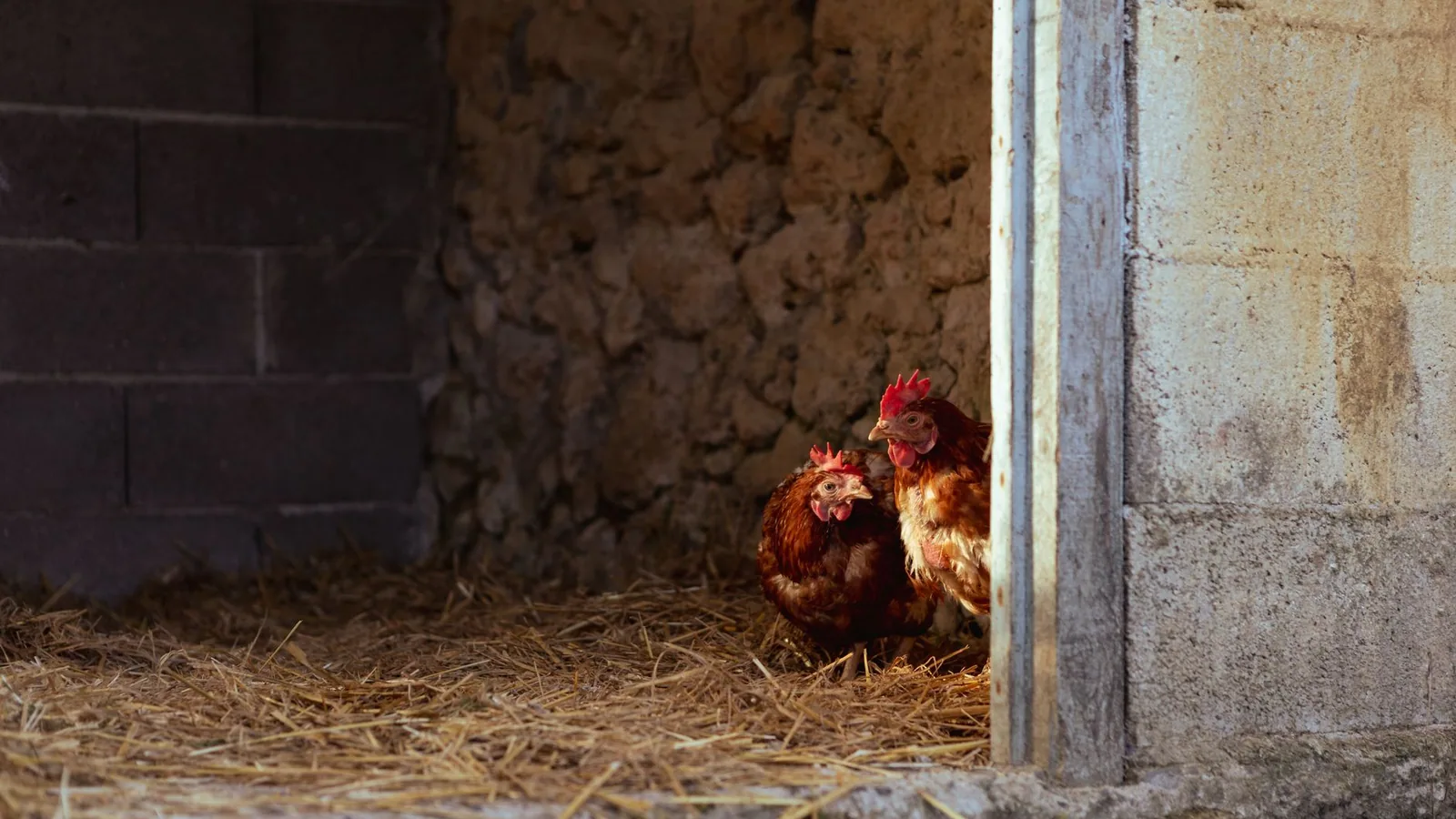
No, chickens do not pee in the way a dog, cat, or human does. They produce no liquid urine at all. Instead, the kidneys package nitrogen waste as uric acid, a thick white paste that leaves the body through the cloaca mixed with feces.
That single fact explains almost everything an owner notices about chicken droppings. The white cap on top of a fresh dropping is not pus, it is not calcium, and it is not a sign of infection. It is urate, the avian equivalent of urine. Understanding how chickens urinate, and why the end product looks the way it does, matters for anyone keeping backyard flocks, because the appearance of that white material is one of the most useful health signals a bird gives you.
This article is educational and is not a substitute for veterinary diagnosis or treatment.
The Short Answer: No Liquid Urine, Ever
Birds convert waste ammonia into uric acid, while mammals convert it into urea and pass it out dissolved in water [1]. That difference is the whole story. A chicken's kidneys still filter blood and still remove nitrogen, but the final product is a semi-solid slurry rather than a stream of fluid.
The practical consequence is that you will never see a chicken lift a leg, squat, and void a puddle of clear urine. There is no separate urinary opening, no urethra, and no bladder. Urine and feces share one exit, the cloaca, and they usually arrive together. When people ask whether chickens pee, the honest answer is that they do, in a chemical sense, but the physical form is unrecognizable as pee.
Why Uric Acid Instead of Urea
The Water Conservation Problem
A bird that flies cannot carry a heavy tank of water. Excreting nitrogen as urea requires dissolving that urea in urine, and mammals pay for it by losing water every time they urinate. Uric acid takes a different route. It is nearly insoluble, so it can be precipitated out of solution as a solid and moved through the excretory tract with very little water attached.
Both avian and nonavian reptiles excrete excess nitrogen in solid form, a group of materials collectively called urates, and this is understood as an evolutionary adaptation that aids water conservation [2]. For a chicken, that adaptation has a direct production benefit. A hen loses far less water to nitrogen disposal than a mammal of similar size would, which leaves more water available for egg formation and for surviving heat.
The Chemistry in Plain Language
Proteins are built from amino acids, and when the body breaks amino acids down for energy, the nitrogen group has to go somewhere. In mammals, the liver runs that nitrogen through the urea cycle. In birds, the pathway ends in uric acid, a purine-derived molecule with a high nitrogen content per unit mass.
Uric acid excretion is not free. Synthesizing uric acid costs the bird energy. One analysis put the energy cost of uric acid synthesis at about 60.7 kJ per gram of excreted nitrogen, compared with about 40.3 kJ per gram for urea in mammals, and roughly 56 percent of that energy ends up retained in the excreted molecule itself [3]. Birds pay more energy per gram of nitrogen removed, but they save water. For a flying animal, that is a good trade.
The synthesis pathway also creates a specific nutritional demand. Glycine is used for uric acid synthesis, which is why poultry nutritionists track glycine and serine supply carefully when formulating low-protein diets [3].
The Kidneys: Small, Fixed, and Efficient
A chicken has two kidneys, each divided into three lobes, tucked into depressions along the underside of the spine. They are not bean-shaped organs sitting in a fat capsule the way mammalian kidneys are. They are thin, elongated, and firmly attached to the skeleton, which makes them difficult to examine by palpation and easy to miss on a quick physical exam.
Avian kidneys receive a large share of cardiac output and filter blood continuously. The nephrons of birds include both reptilian-type and mammalian-type units, and the mammalian-type nephrons with loops of Henle allow birds to produce urine that is more concentrated than their plasma. That detail matters clinically because it means the kidney is not the only place water gets reclaimed.
Uric acid leaves the kidney tubule cells through specific transport proteins. Two of these, breast cancer resistance protein (BCRP) and multidrug resistance protein 4 (MRP4), have been studied directly in laying hens. When hens were given sulfamonomethoxine sodium in drinking water at 8 mg/L, or injected intraperitoneally with uric acid at 250 mg/kg body weight, serum uric acid, creatinine, and blood urea nitrogen all rose significantly and renal tubular epithelial cells showed damage [4]. Those same treatments changed BCRP and MRP4 expression in the liver, ileum, and kidney. The takeaway is that uric acid handling is an active, transporter-dependent process, not passive spillover.
Another transporter, ABCG2, has been tied to uric acid excretion in chickens. In chicks infected with nephropathogenic infectious bronchitis virus, uric acid levels rose abnormally, uric acid transport proteins changed expression, and renal tubular epithelial cells underwent epithelial-mesenchymal transition through the TGF-β/p38 pathway. The change in uric acid concentration was linked specifically to ABCG2, whose expression was negatively regulated by that transition [5]. This is a good example of how a viral disease can convert a normal excretory system into a urate-depositing one.
The Cloaca: One Exit, Three Chambers
The cloaca is a common chamber into which the gastrointestinal, urinary, and genital tracts all emerge [6]. It is not a simple tube. It has three compartments arranged in sequence, and each one handles different material.
Coprodeum
The coprodeum is the most cranial chamber and receives the rectum. This is where fecal material collects before voiding. In birds, the coprodeum is also a site of water and sodium reabsorption from the intestinal contents, which is one reason droppings can vary so much in moisture depending on how long material sat there.
Urodeum
The urodeum sits in the middle and receives the ureters, which carry urates down from the kidneys. In a hen, the oviduct also opens into the urodeum, which means the same chamber handles urate delivery and egg passage. In a rooster, the ductus deferens enters here. This shared anatomy is why reproductive tract infections and urinary tract problems can present with overlapping signs.
Proctodeum
The proctodeum is the most caudal chamber and the common exit. It opens to the outside through the vent. The bursa of Fabricius, an immune organ important in young birds, sits dorsal to the proctodeum. When a bird defecates, material from the coprodeum and urodeum is expelled together through the proctodeum.
| Structure | Function | What exits |
|---|---|---|
| Kidneys (cranial, middle, caudal lobes) | Filter blood, produce uric acid, regulate water and electrolytes | Urates in a semi-solid slurry via ureters |
| Ureters | Transport urates from kidneys to the urodeum | Uric acid paste |
| Coprodeum | Receives and stores feces, reabsorbs some water and sodium | Fecal material |
| Urodeum | Receives ureters and reproductive ducts | Urates, and in hens the egg passes through this region |
| Proctodeum | Common terminal chamber, opens at the vent | Combined feces and urates, plus reproductive products |
| Cloaca overall | Shared exit for digestive, urinary, and reproductive tracts | All waste and reproductive output through one opening |
Why Chicken Droppings Look the Way They Do
A normal chicken dropping has three visible components. The brown or greenish portion is digested feed residue and bile pigment. The white portion on top is urate. The small amount of clear to slightly viscous fluid is urine water that was not reabsorbed.
The white cap is the single most misread feature of poultry droppings. Owners frequently describe it as pus, or assume it means the bird is shedding excess calcium. Neither is correct. It is uric acid, and its presence is normal. What matters clinically is the amount, the texture, and the color of that white material, and whether it is accompanied by other signs.
Uric acid concentration in excreta varies with diet. In broilers fed a range of crude protein levels and grain types, uric acid concentrations ranged from 28.5 to 69.4 mg/g, and uric acid nitrogen made up between 27.4 and 42.6 percent of total excreta nitrogen [7]. That is a wide range, and it reflects real biology rather than lab error. Birds on high-protein diets excrete more urate. Birds on reduced-protein diets supplemented with crystalline amino acids excrete less.
Heat changes the picture too. Broilers kept at high temperature (cycling between 28 and 32 °C) showed decreased nitrogen excretion overall but increased uric acid content in the feces, along with higher fecal pH and fecal moisture [8]. So a heat-stressed bird may produce fewer droppings that are wetter and more urate-rich.
Water Reabsorption and the Dehydration Effect
The cloaca is not just a passageway. It is a reclamation site. Water and sodium are absorbed across the coprodeal and urodeal epithelium, which means the final composition of a dropping depends partly on how long it stayed in the cloaca before being voided.
When a chicken is well hydrated, urates pass through quickly and appear as a loose white paste or even a slightly watery white component. When a chicken is dehydrated, the cloaca pulls more water back, and the urates become firmer, chalkier, and more concentrated. Severely dehydrated birds can pass urates that look like dry white toothpaste or crumbly chalk.
This is why water availability is not a minor husbandry detail. A bird without access to clean water for even part of a hot day will show concentrated urates before it shows any other sign. Checking the white portion of droppings is a fast, free hydration check on a flock.
Polyuria Versus True Polyuria: A Clinical Distinction That Matters
Owners and even some clinicians use the word polyuria loosely. Polyuria means production of abnormally large volumes of urine. In birds, that definition gets complicated because urine is not produced or voided separately.
What owners usually see and call polyuria is actually increased water content in the droppings, which can come from several sources. A bird eating wet mash, drinking heavily because of heat, or eating a diet high in certain ions may produce watery droppings without any kidney problem at all. This is sometimes called pseudopolyuria or simply increased excreta moisture.
True polyuria, meaning a genuine increase in renal water loss, points to a different set of problems. Renal disease, diabetes insipidus, and certain endocrine disorders can all increase urine flow. The distinction matters because the treatments are completely different, and because a bird with watery droppings from diet does not need a kidney workup.
The practical problem is that you cannot separate urine from feces in a chicken the way you can in a mammal. The diagnostic evaluation of glomerular filtration rate by urinary clearance has significant practical limitations in birds precisely because urine is excreted together with feces [9]. That is why avian clinicians often use plasma creatinine clearance instead. In racing pigeons, exogenous creatinine given intravenously or intramuscularly allowed calculation of creatinine excretion between 6.30 and 6.44 mL/min per kg, with intramuscular administration recommended for practical reasons [9]. The same principle applies across avian species: you measure kidney function in the blood, not in a urine sample, because there is no clean urine sample to collect.
For an owner, the useful rule is this. Watery droppings with a normal white urate component are usually a diet, heat, or water intake issue. Watery droppings with no visible urate, or with urate that has changed color or consistency, need veterinary attention.
What Goes Wrong: Urate Deposition and Gout
When uric acid production outpaces excretion, or when kidney function drops, urates can deposit in tissues. This is avian gout, and it is a serious condition.
Several disease processes drive it. Nephropathogenic infectious bronchitis virus causes kidney enlargement and urate deposition in chickens, sometimes with sudden death, through the mechanism described earlier involving ABCG2 and epithelial-mesenchymal transition [5]. Goose astrovirus causes gout in goslings, with one quarter of infected birds dying in one study, and the surviving birds showing kidney and liver degeneration, necrosis, and inflammatory cell infiltration. Serum uric acid rose while creatinine, calcium, and phosphorus did not differ, and liver enzyme activities for uric acid production increased while a kidney transporter and Na-K-ATPase activity decreased [10].
Nutrition and management also matter. High stocking density in ducks increased serum uric acid, lipopolysaccharide, and inflammatory cytokines, and produced significant liver and kidney lesions by the ninth week [11]. This is a reminder that urate problems are not always infectious. Crowding, poor ventilation, and heat stress all push the system.
Dietary protein level is a controllable lever. Feeding broilers reduced crude protein diets with adequate essential amino acids decreased nitrogen excretion by 14.1 percent in one comparison and lowered plasma uric acid concentration [12]. A separate study found that low-protein diets supplemented with six crystalline essential amino acids increased nitrogen retention and decreased total nitrogen and uric acid nitrogen excretion compared with a control diet [13]. Uric acid excretion in laying hens also dropped when soyhulls replaced part of the diet, by roughly 66 percent in one report [14]. For producers, these are environmental and bird-health wins at the same time.
Practical Implications for Owners and Keepers
Check the white part of droppings daily. It should be present, white to off-white, and roughly paste-like. A dropping with no white component at all is worth investigating.
Watch for changes in urate consistency. Chalky, crumbly urates suggest dehydration. Watery urates with normal feces suggest increased water intake or a diet effect. Urates that turn yellow or green can indicate liver involvement, since biliverdin from the liver can tint excretory material.
Provide constant access to clean water. This is the single most effective way to keep urate concentration normal. In hot weather, check waterers more often and consider adding a second station.
Do not panic over the white cap. It is normal anatomy, not disease. The mistake owners make is assuming the white material is abnormal and treating the bird for an infection it does not have.
Be careful with high-protein treats and supplements. Excess protein means excess nitrogen to excrete, and the kidney has to keep up. Layer feed is formulated for the bird's production stage for a reason.
Clinical Relevance, Limitations and Common Mistakes
The most common mistake is treating the white urate cap as pus. It is not. Purulent material in a chicken dropping is unusual and would look different, typically as a thick yellow or green exudate rather than a clean white cap.
The second common mistake is assuming watery droppings mean kidney failure. Most watery droppings in backyard flocks come from heat, wet feed, or high water intake. A kidney problem usually comes with other signs such as lethargy, reduced appetite, swollen joints, or a sudden drop in egg production.
The third mistake is trying to collect a urine sample. There is no separate urine to collect. Any diagnostic testing on excretory function in a bird has to account for the fact that urine and feces are mixed [9].
A real limitation is that you cannot judge kidney function from dropping appearance alone. Droppings tell you about hydration and nitrogen load, not about glomerular filtration rate. Blood work is needed for that.
Individual birds vary, and a single abnormal dropping is not a diagnosis. Persistent changes, changes with other clinical signs, or changes across multiple birds in a flock need a veterinarian. This article is educational and is not a substitute for veterinary diagnosis or treatment.
Frequently Asked Questions
Do chickens pee?
No. Chickens do not produce liquid urine. They excrete nitrogen waste as uric acid, a semi-solid white paste, through the cloaca.
Does a chicken urinate at all?
Yes, in the physiological sense. The kidneys filter blood and remove nitrogen, but the waste leaves as urate rather than as watery urine.
How do chickens pee?
Urates travel from the kidneys down the ureters into the urodeum, one of three cloacal chambers, and exit through the vent mixed with feces.
Can chickens pee separately from poop?
No. Urates and feces share the cloaca and normally leave together. There is no separate urinary opening.
What is the white stuff on chicken poop?
It is urate, the avian form of urine. It is not pus and it is not undigested calcium.
Why do chicken droppings have a white cap?
The white cap is uric acid that has precipitated out of solution. Its position on top reflects the order in which material is expelled.
Does dehydration change chicken droppings?
Yes. Dehydration makes urates firmer and chalkier because the cloaca reabsorbs more water before the dropping is voided.
Can chickens get kidney failure?
Yes. Kidney disease occurs in birds and can cause urate deposition in tissues, a condition called gout. Blood testing is needed to assess kidney function because urine cannot be collected separately.
Related Articles
- Comparative Anatomy of the Avian Respiratory System
- Cat Unable to Urinate: Recognize a Blocked Cat
- Dog Unable to Urinate: A Life-Threatening Emergency
- Comparative Anatomy of the Avian Skeleton: Flight and Locomotion
- Cat Straining To Pee
- Dog Pee On Train
- E. coli UTI: Causes, Symptoms, and Treatment
Sources
- What Goes in Must Come out: The Story of Uric Acid.
- Uric Acid Monohydrate Nanocrystals: An Adaptable Platform for Nitrogen and Salt Management in Reptiles.
- The role of energy, serine, glycine, and 1-carbon units in the cost of nitrogen excretion in mammals and birds.
- Uric acid transporters BCRP and MRP4 involved in chickens uric acid excretion.
- Nephropathogenic infectious bronchitis virus induces epithelial-mesenchymal transition of renal tubular epithelial cells through the TGF-β/p-P38 pathway causing uric acid excretion disorder in chickens.
- The timing of enteric neural crest cell colonisation of the chick embryo cloaca.
- Implications of excreta uric acid concentrations in broilers offered reduced-crude protein diets and dietary glycine requirements for uric acid synthesis.
- Interactive effects of high temperature and crude protein levels on growth performance, nitrogen excretion, and fecal characteristics of broilers.
- Plasma exogenous creatinine excretion for the assessment of renal function in avian medicine--pharmacokinetic modeling in racing pigeons (Columba livia).
- Goose astrovirus infection affects uric acid production and excretion in goslings.
- Effects of stocking density on the homeostasis of uric acid and related liver and kidney functions in ducks.
- Effects of feeding reduced crude protein diets on growth performance, nitrogen excretion, and plasma uric acid concentration of broiler chicks during the starter period.
- Effects of Feeding Low Protein Diets with Different Energy-to-Protein Ratios on Performance, Carcass Characteristics, and Nitrogen Excretion of Broilers.
- The Chemical Composition of Soyhulls and Their Effect on Amino Acid and Nutrient Digestibility in Laying Hens during the Peak of Production.