Is the Marijuana Plant Toxic to Cats? Leaves and Smoke
By Dr. Zubair Khalid, DVM, MS, PhD ·
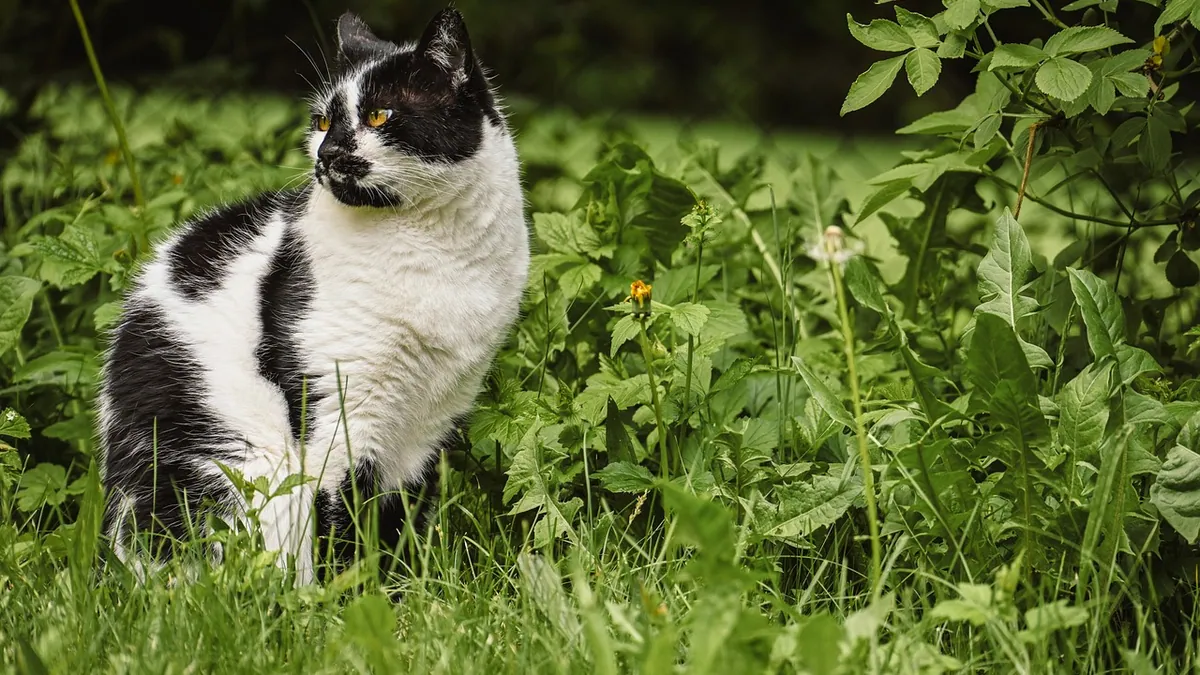
Yes, the marijuana plant is toxic to cats. Every part of the plant, including leaves, flowers, and stems, contains compounds that can poison a cat, and edibles and secondhand smoke are risks too [1]. Cats are especially sensitive because of their small size and how they process these chemicals [2].
This article is educational and is not a substitute for veterinary diagnosis or treatment.
Quick Answer
- Marijuana (Cannabis sativa) is listed as toxic to cats, with delta-9-THC as the main toxic principle [1].
- Leaves, flowers, stems, edibles, oils, and secondhand smoke can all cause poisoning in cats [1][2].
- Even a small amount of THC can seriously affect a cat because of its size and metabolism [2].
- Common signs include vomiting, wobbling, sleepiness or agitation, drooling, dilated pupils, a slow heart rate, and a low body temperature [1].
- If you think your cat ate marijuana or breathed in smoke, call your veterinarian or a poison control hotline right away. Do not wait for signs to appear.
Is the Marijuana Plant Toxic to Cats?
Yes. The ASPCA Animal Poison Control Center lists marijuana, also called Cannabis sativa, Indian Hemp, or Hashish, as toxic to cats [1]. The plant is toxic because of delta-9-tetrahydrocannabinol, usually shortened to THC [1].
This applies to the whole plant, not one part of it. The leaves contain THC, and so do the flowers, stems, and any concentrated products made from them [1]. That means a cat chewing on a houseplant, a discarded stem, or a bud left on a table is at risk.
Is Marijuana Leaves Toxic to Cats?
Yes, marijuana leaves are toxic to cats. THC is present in the leaves, and the ASPCA lists the plant itself as toxic to cats with THC as the toxic principle [1]. A cat does not need to eat a large amount to be affected, because cats are small and process THC differently than people do [2].
Is Marijuana Flower Toxic to Cats?
Yes, marijuana flower is toxic to cats for the same reason. The flower, or bud, is the part of the plant with the highest concentration of THC in many cases, and it is still the same toxic plant under the ASPCA listing [1]. Dried flower left out to dry or cure is a common way cats get into trouble, since it looks like something to bat around or chew.
Is Weed Plant Toxic to Cats?
Yes, a weed plant is the same Cannabis sativa plant, and it is toxic to cats [1]. Whether you call it weed, marijuana, pot, or cannabis, the toxic principle is THC, and cats are vulnerable to it [1][2].
What About Edibles, Oils, and Other Products?
Edibles and concentrated oils are a serious concern. Cats can be poisoned by eating a marijuana plant, by eating edibles, or by ingesting highly concentrated oil products [2]. Edibles often contain chocolate, raisins, or xylitol, which add their own risks. Xylitol is a well known dog poison that causes dangerous low blood sugar and liver failure in dogs, though a controlled study in cats did not find the same effects. Even so, sugar-free products do not belong in a cat's diet, and a cat that eats a marijuana edible needs veterinary attention.
CBD products deserve a separate note. CBD is not the same as THC, and it is being studied for use in cats. Research on CBD in cats is still limited, and not all formulations behave the same way in the body [3]. One study looked at CBD for noise-induced fear in cats and reported a decrease in unwanted urination, but that study has since been retracted [4]. A systematic review of cannabis-based products in dogs and cats found only a small number of studies, mostly on CBD formulations [5]. A field study of a CBD and CBDA hemp paste in cats with osteoarthritis pain looked at safety and pain scores, but the evidence base overall remains thin [6]. Never give your cat a cannabis product without talking to your veterinarian first [2].
The Toxic Principle and What It Does in the Body
The main toxic compound is delta-9-THC [1]. THC acts on the nervous system and can behave as a stimulant or a depressant depending on the product and the amount [2]. In cats, the effects tend to be more severe than in people, and even small amounts of THC can be dangerous [2].
Cats are more vulnerable for two reasons. First, they are small, so a dose that would be minor for a person is much larger relative to a cat's body weight [2]. Second, cats metabolize these compounds differently than humans do, which can prolong or intensify the effects [2].
CBD is the other main compound in marijuana. THC is more toxic than CBD, but both can act as stimulants or depressants depending on the strain or concentration [2]. This is one reason a product label alone cannot tell you how sick your cat might get.
Signs of Marijuana Poisoning in Cats and Their Timeline
Signs can range from mild to severe, and they depend on how much your cat took in and by what route [2]. The ASPCA lists prolonged depression, vomiting, incoordination, sleepiness or excitation, hypersalivation, dilated pupils, low blood pressure, low body temperature, seizure, coma, and rarely death [1].
In plain terms, you might see a cat that seems dazed or "out of it," vomits, dribbles urine, wobbles when it walks, drools, or has a change in heart rate [2]. Some cats become sleepy and quiet, while others become agitated or startle easily [1].
How Soon Do Signs Show Up?
Timing depends on the route of exposure. Smoke exposure tends to cause signs faster because the compounds are inhaled. Eating plant material or edibles usually takes longer because digestion has to happen first. If you know or suspect your cat was exposed, treat it as urgent even if your cat looks normal right now, because signs can worsen over hours.
Secondhand Smoke and Your Cat
Is marijuana smoke harmful to cats? Yes. Cats can be poisoned by marijuana through smoke exposure, along with eating the plant, eating edibles, or ingesting concentrated oils [2]. A cat in a small, poorly ventilated room while someone smokes can breathe in enough to develop signs. Cats also groom themselves, so residue that settles on their coat can be swallowed.
If you smoke or vape, do it away from your cat, in a ventilated space, and never blow smoke toward your cat. Store all products, including ash, roaches, and used packaging, where a cat cannot reach them.
What to Do Right Now
If you suspect your cat ate any part of a marijuana plant, ate an edible, or was exposed to smoke, act immediately.
- Call your veterinarian, the ASPCA Animal Poison Control Center at (888) 426-4435, or Pet Poison Helpline at (855) 764-7661 [1].
- Do not induce vomiting unless a veterinarian tells you to. Vomiting can be dangerous in a cat that is already wobbly, sedated, or having trouble breathing.
- Do not give your cat food, milk, oil, or any home remedy to "soak up" the drug.
- Keep your cat warm, quiet, and away from stairs, furniture edges, and other hazards, since incoordination can lead to falls.
- Bring the product or packaging with you if you go to a clinic. Knowing the product, the amount, and the time of exposure helps your veterinarian plan treatment.
If your cat is having a seizure, is unresponsive, is struggling to breathe, or has a very slow heart rate, go to an emergency clinic now.
How Veterinarians Treat Marijuana Poisoning in Cats
There is no home antidote. Treatment is supportive and depends on your cat's signs. Your veterinarian will assess breathing, heart rate, body temperature, and neurologic status, then decide what your cat needs.
Treatment may include intravenous fluids, medications to control vomiting or agitation, active warming for a low body temperature, and monitoring for seizures or heart rhythm changes. If the exposure was recent and your cat is stable, your veterinarian may discuss decontamination, but that decision is made case by case. Never try to make your cat vomit on your own.
If your cat was given a CBD or hemp product, tell your veterinarian the exact product and amount. Dosing for any cannabis-related product should be set by your veterinarian based on your cat's weight and health, not by a label or an online chart [2][3].
Outlook After Exposure
Most cats that receive prompt veterinary care recover, but the outcome depends on how much THC was absorbed, the route of exposure, and how quickly treatment started. Severe cases can involve seizures, coma, and, rarely, death [1]. Cats with underlying heart, liver, or kidney disease may be more fragile.
Because signs can progress, a cat that seems only mildly affected still needs a veterinary call. Early treatment is easier than treating a cat that has become severely sedated or is seizing.
Prevention and Safer Alternatives
Prevention is straightforward. Store all marijuana products, including plants, edibles, oils, vapes, and used packaging, in a locked cabinet or a container your cat cannot open [7]. If there is marijuana in the home, it should be securely stored out of the reach of cats, because even small amounts can cause harm [7].
Other steps that help:
- Do not leave edibles in purses, backpacks, or on coffee tables.
- Clean up ash, roaches, and resin right away.
- Smoke outdoors or in a room your cat cannot enter, and ventilate well.
- Check the floor for dropped buds, stems, or crumbs after handling products.
- Tell houseguests about the rules, since visitors often leave items within reach.
If you want a cat-safe plant collection, choose nontoxic options and check each one before bringing it home. Our guides on Plants Toxic To Cats and House Plants Toxic To Cat can help you screen what you already own. If you are shopping for something new, What Plants Can Be Toxic To Cats walks through common culprits.
For pain, anxiety, or other conditions in your cat, talk to your veterinarian about proven treatments. Cannabis products are not a substitute for veterinary care, and the evidence for their use in cats is still limited [3][5].
Limitations and When to Contact a Veterinarian
No article can tell you how your individual cat will respond. Exposure amount, product type, your cat's weight, and existing health conditions all matter, so every case needs a veterinarian's assessment.
Contact your veterinarian the same day if your cat ate plant material or an edible, even if it seems fine right now.
Go to an emergency clinic now if your cat is having a seizure, is unresponsive or very difficult to wake, is breathing abnormally, has a very slow or irregular heartbeat, or cannot stand or walk without falling.
Schedule a routine visit if your cat had a mild exposure and has recovered, so your veterinarian can check for any lingering effects. If you use cannabis at home, ask your veterinarian for storage tips at your next wellness visit.
Frequently Asked Questions
Can a cat get high from secondhand marijuana smoke?
Yes, cats can be poisoned by inhaling marijuana smoke [2]. Signs like wobbling, drooling, and sleepiness can appear after smoke exposure, especially in a small, closed room. Keep your cat out of any space where marijuana is being smoked.
How much marijuana does it take to poison a cat?
There is no safe amount you can calculate at home. Cats are more sensitive to THC because of their small size and unique metabolism, and even a small amount of weed can harm them [2]. If any amount was eaten or inhaled, call a veterinarian or poison control.
Will my cat be okay after eating a marijuana leaf?
Many cats recover with prompt veterinary care, but it depends on the amount and your cat's health. Signs can range from mild to severe, and some cases involve seizures or coma [1][2]. Call your veterinarian right away instead of waiting to see what happens.
Is CBD safe to give my cat?
CBD is not the same as THC, but that does not make it risk-free or appropriate to give on your own. Evidence for CBD use in cats is still limited, and formulations differ in how they are absorbed [3][5]. Ask your veterinarian before giving any cannabis product to your cat [2].
Should I make my cat throw up after eating marijuana?
No. Do not induce vomiting unless a veterinarian specifically tells you to. A sedated, wobbly, or struggling cat can aspirate vomit, which makes things worse. Call your veterinarian or a poison control hotline and follow their instructions.
Related Articles
- Plants Toxic To Cats
- What Plants Can Be Toxic To Cats
- House Plants Toxic To Cat
- Are Snake Plants Toxic To Cats
- What Plants And Flowers Are Toxic To Cats
- What Plants Are Toxic To Cats With Pictures
- Is Marijuana Toxic to Cats and Dogs? THC Poisoning Signs
- Is Marijuana Toxic to Pets? Risks and What to Do
- Are Fake Plants Poisonous to Cats?
References
- Toxic and Non-toxic Plants: Marijuana. ASPCA Animal Poison Control Center.
- Cats and Marijuana. Pet Poison Helpline.
- Cats and cannabinoids: past, present and future. Journal of feline medicine and surgery, 2025.
- RETRACTED: Possible Anxiolytic Effects of Cannabidiol (CBD) Administration on Feline Responses to a Fear Response Test. Animals : an open access journal from MDPI, 2025.
- Cannabis-based products for medicinal use in dogs and cats: a systematic review. The Journal of small animal practice, 2025.
- Field safety and efficacy study with a cannabidiol/cannabidiol acid-rich hemp paste in cats with osteoarthritic pain. Journal of feline medicine and surgery, 2025.
- Effects of Marijuana on Cats. Pet Poison Helpline.