Is Grass Seed Poisonous to Dogs? Lawn Seed Risks
By Dr. Zubair Khalid, DVM, MS, PhD ·
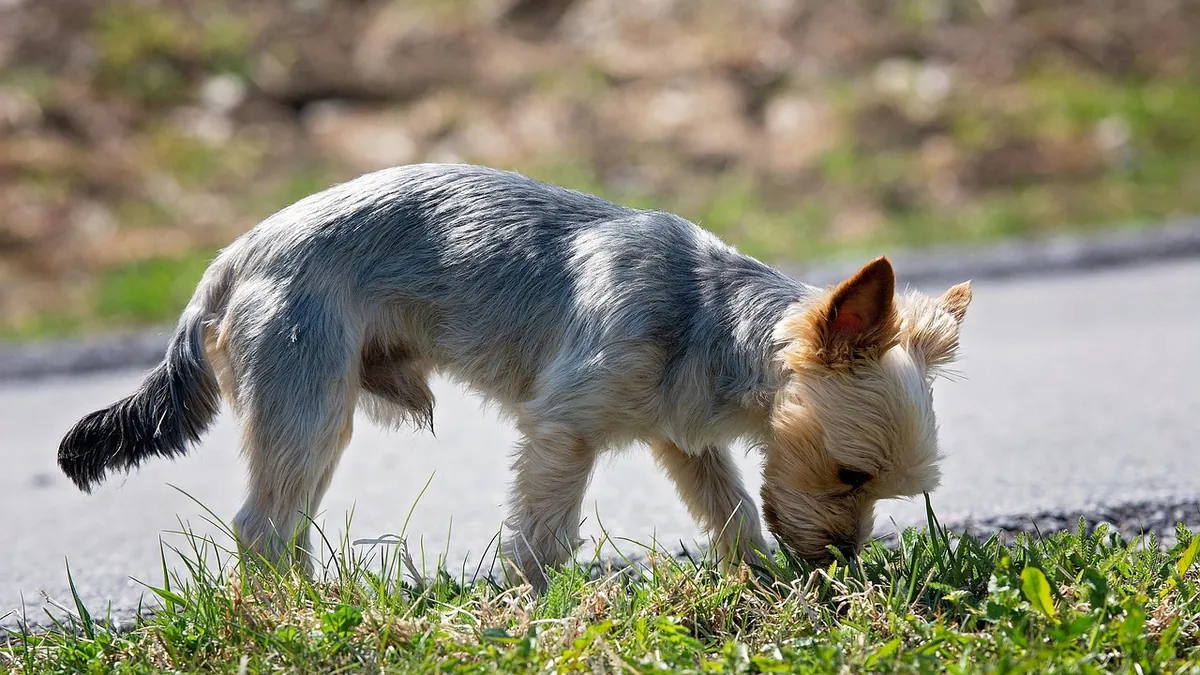
Grass seed itself is not poisonous to dogs. The seed kernels of common lawn grasses like Kentucky bluegrass, fescue, and ryegrass do not contain a toxin that poisons dogs. The real dangers are the coatings and treatments on some seed products, mold that grows on damp seed, and the physical damage a swallowed seed or awn can cause. So when someone asks "is grass seed poisonous to dogs," the honest answer is that the seed usually is not, but the product around it and the shape of it can be.
This article is educational and is not a substitute for veterinary diagnosis or treatment.
Quick Answer
- Plain, untreated grass seed is not toxic to dogs. Eating a small amount is unlikely to poison your dog.
- Coated or treated lawn seed can carry insecticides, fungicides, or fertilizers that are toxic. Check the label before you assume it is safe.
- Moldy seed and moldy compost can produce tremorgenic mycotoxins, which cause tremors, seizures, and hyperthermia [1][2].
- Grass awns and seed heads can migrate through tissue. They have been found in a dog's brain, prostate, and bronchus [3][4].
- If your dog ate seed and is trembling, seizuring, vomiting repeatedly, or breathing hard, call your veterinarian or a poison control line right away.
Is Grass Seed Poisonous to Dogs? What Is Actually Toxic
The seed itself is not the problem. Kentucky bluegrass seed, often called blue grass seed, is not toxic to dogs. The same is true for most cool-season lawn grasses sold in the United States. If your dog licks up a few seeds off the driveway, that alone is not a poisoning emergency.
The risk comes from three places.
Coatings and treatments. Many bagged lawn seeds are coated to help them germinate or to protect them from insects and fungus. Those coatings can include fertilizers, fungicides, and insecticides. Some of these ingredients are toxic to dogs, and some are simply irritating to the stomach. A coated seed is a very different product from a bare seed.
Mold and mycotoxins. Seed that sits in a damp bag, a wet pile, or a compost heap can grow mold. Certain molds produce tremorgenic mycotoxins, which are poisons that affect the nervous system. In one report, a dog developed whole-body seizures after vomiting parts of compost from a garden pile, and testing found Penicillium mold plus the mycotoxins paxilline, penitrem A, and roquefortine C in the vomit [1]. A separate review of 54 dogs found tremor, hyperesthesia, hyperthermia, and ataxia after they ate walnuts, another mold-prone food [2]. Moldy grass seed can behave the same way.
The seed as a foreign body. Grass seeds and awns are shaped like tiny darts. They can lodge in a paw, an ear canal, a nostril, or the throat, and they can migrate deeper. A 4-month-old puppy was found to have a 1.7 cm grass seed inside its brain after weeks of seizures, vomiting, lethargy, and neck pain [3]. A 13-year-old dog had a migrating grass awn removed from its prostate after showing blood in the urine and fever [4]. These are uncommon but serious outcomes.
If your dog also eats plants around the yard, see Plants Poisonous To Dogs for a broader list of garden risks.
Is Lawn Seed Toxic to Dogs? Reading the Label
"Is lawn seed toxic to dogs" is a better question than "is grass seed toxic," because the answer depends on the bag.
Look for words like coated, treated, insecticide, fungicide, fertilizer, or "do not allow children or pets on treated areas." If those words appear, treat the product as a potential poison, not as birdseed. Keep the bag sealed and stored where your dog cannot reach it.
If your dog eats coated seed, save the bag or take a photo of the label. The ingredient list is the single most useful thing you can give your veterinarian or a poison control specialist. Without it, treatment has to be based on symptoms alone.
Some owners ask specifically about Scotts grass seed. The brand name does not tell you whether a particular bag is toxic. Scotts sells both plain seed and coated, fertilized, or weed-and-feed products. The label on your bag is what matters, not the logo.
What the Toxic Principle Does in the Body
There are two separate mechanisms, and they cause very different signs.
Mycotoxins attack the nervous system. Tremorgenic mycotoxins cause fine muscle tremors that can progress to full-body tremors, rigidity, hyperthermia, and seizures. In the compost case, the dog's signs began within hours of eating moldy material and it recovered fully within 24 hours of intensive care [1]. In the 54-dog walnut review, most dogs were hospitalized for decontamination and supportive care, and anticonvulsants were needed in 14 of the 54 dogs (26%) [2]. The timeline is usually fast, often within a few hours of ingestion.
Coatings and fertilizers irritate the gut. These cause vomiting, diarrhea, drooling, and stomach pain. Some also cause neurological signs if enough is eaten. The severity depends on the ingredient and the amount.
Awns cause mechanical damage. A grass awn does not poison tissue, it tunnels through it. As it moves, it drags bacteria along, which is why infections, abscesses, and inflammation show up far from where the seed went in. In the puppy with the brain seed, imaging showed focal inflammation, a defect in the skull bone, and brain swelling around the foreign body [3]. In the prostate case, the dog had blood in the urine and fever [4].
Signs and Timeline to Watch For
Signs depend on what your dog actually ate.
After moldy seed or compost, watch for tremors, twitching, stiff limbs, unsteadiness, sensitivity to touch or sound, a high body temperature, vomiting, and seizures. These can start within a few hours [1][2].
After coated seed or fertilizer, watch for vomiting, diarrhea, drooling, lip licking, belly pain, and lethargy. Neurological signs are possible with some products.
After swallowing a seed head or awn, watch for sudden head shaking, pawing at an ear, sneezing with bloody discharge from one nostril, a lump between the toes, coughing, or a draining tract that will not heal. A dog with a bronchial foreign body was evaluated for a persistent cough, and imaging showed focal pneumonia [5]. A seed in the airway or lung can look like a stubborn respiratory infection that does not improve.
If your dog eats grass and vomits, that pattern is common and often unrelated to seed. This article explains the difference: Dog Eating Grass and Vomiting: Normal or a Problem?.
What to Do Right Now
If you saw your dog eat grass seed, do these things in order.
- Remove your dog from the area and take the seed bag, label, or a photo of it with you.
- Call your veterinarian, the ASPCA Animal Poison Control Center at (888) 426-4435, or Pet Poison Helpline at (855) 764-7661.
- Note the time of ingestion and the amount, even if it is a rough guess.
- Do not induce vomiting unless a veterinarian tells you to. Vomiting can be dangerous if the material is caustic, if your dog is already neurological, or if a sharp awn could injure the throat on the way back up.
- Do not give food, milk, oil, or home remedies to "soak it up." Those can make things worse or delay real treatment.
If your dog is actively seizuring, collapse, struggling to breathe, or has a body temperature that feels very high, skip the phone call and go to the nearest emergency hospital.
How Veterinarians Treat Grass Seed and Lawn Seed Exposure
Treatment is tailored to what your dog ate and how sick it is.
For recent ingestion of a coated product, a veterinarian may decontaminate. In the 54-dog mycotoxin review, forced emesis was performed in only 6 dogs (11%) because of the severity of their neurological signs, and activated charcoal was given orally to 39 dogs (72%) after their clinical signs improved [2]. That pattern shows why you should not try to make your dog vomit at home. Whether emesis is safe depends on how your dog is doing.
For mycotoxin poisoning, care is supportive. That means controlling tremors and seizures with anticonvulsants when needed, managing body temperature, giving intravenous fluids, and monitoring closely. In the walnut review, anticonvulsant therapy was used in 14 of 54 dogs (26%) and antiemetics in 27 of 54 dogs (50%) [2]. Most dogs were hospitalized [2].
For a suspected foreign body, your veterinarian will examine the ears, nose, throat, eyes, and paws, and may recommend imaging. Removing a migrating awn can require surgery. In the prostate case, the awn was removed through laparotomy with ultrasound guidance, and the dog recovered fully with no signs four months later [4]. In the brain case, the seed was removed through a craniectomy using intraoperative ultrasound, the puppy went home two days later, and long-term follow-up showed no abnormal neurological signs [3]. These outcomes are good when the problem is found and treated.
If your dog has eaten other seeds or nuts, this article covers a common one: Can Dogs Eat Sunflower Seeds? Shell Hazards and Fat.
Outlook
The outlook is generally good when the exposure is small, plain seed and your dog is acting normally. Most dogs that eat a little untreated seed need nothing more than monitoring at home.
The outlook is also good for mycotoxin poisoning when treatment starts early. In the compost case, the dog recovered fully within 24 hours of intensive care [1]. In the walnut review, the majority of dogs were hospitalized and treated, and the study focused on how their signs developed under treatment [2].
The outlook for a migrating awn depends on where it ends up and how quickly it is found. Seeds removed from the brain and prostate both resulted in full recovery in the cases described. Delays matter, because a seed that keeps moving causes more damage and more infection over time.
Prevention and Safer Alternatives
Prevention is mostly about storage and supervision.
- Store grass seed in a sealed container in a cabinet or garage your dog cannot open. A chewed bag is the most common way dogs get into seed.
- Do not leave seed bags, spreaders, or open trays where a dog can reach them.
- Keep compost piles fenced off. Moldy compost is a known source of tremorgenic mycotoxins [1].
- Rake up and dispose of seed heads and dry grass awns after mowing, especially in late summer.
- Check your dog's paws, ears, and coat after walks in tall dry grass.
- Supervise your dog in newly seeded areas until the seed has germinated and the coating has broken down.
- If you want a low-risk lawn, choose plain untreated seed and skip the coated, fertilized, or weed-and-feed blends.
If your dog's grass eating is a habit you want to understand better, these two articles can help: Why Is My Dog eating grass and vomiting? GI Distress vs Normal Behavior and Dog Vomiting Bile Eating Grass.
Limitations and When to Contact a Veterinarian
This article gives general information. Your dog's individual case needs a veterinarian who can examine your dog, see the product label, and decide on testing and treatment.
Call your veterinarian the same day if your dog ate coated, treated, or moldy seed, even if it seems fine right now. Early decontamination is easier than treating seizures later.
Go to an emergency hospital now if your dog is seizuring, trembling uncontrollably, cannot stand, is breathing hard, has a body temperature that feels very high, is vomiting repeatedly, or is unresponsive.
Make a routine visit if your dog has a cough that will not go away, a swollen or draining spot on a paw or ear, one-sided nose discharge, head shaking, or blood in the urine with a fever. These can be signs of a seed that has migrated and needs to be found and removed [5][4].
Frequently Asked Questions
Is grass seed harmful to dogs if they only eat a little?
A small amount of plain, untreated grass seed is unlikely to harm your dog. The risk rises with coated products, moldy seed, and large amounts that could clump in the stomach. If you are unsure what was on the seed, call your veterinarian or a poison control line.
Can a dog pass grass seed on its own?
Sometimes a swallowed seed passes through the gut without a problem. Other times it lodges in the throat, stomach, or intestine, or it works its way into tissue and keeps migrating. A seed that causes repeated vomiting, belly pain, or a fever needs veterinary evaluation.
What should I do if my dog ate seed from a bag labeled as coated or treated?
Call your veterinarian, the ASPCA Animal Poison Control Center at (888) 426-4435, or Pet Poison Helpline at (855) 764-7661 right away. Keep the bag and read the ingredient list to the specialist. Do not make your dog vomit unless a veterinarian tells you to.
Why did my dog start trembling after eating something in the yard?
Trembling after eating moldy material can be a sign of tremorgenic mycotoxin poisoning. In reported cases, dogs developed tremors, hyperthermia, and seizures within hours of eating moldy compost or walnuts [1][2]. This is a medical emergency, so call your veterinarian or an emergency hospital immediately.
Can a grass awn really get inside a dog's body?
Yes. Grass awns can enter through the skin, ear, nose, or mouth and then migrate. They have been surgically removed from a dog's brain and from a dog's prostate, and both dogs recovered after treatment. If you notice a non-healing sore, one-sided nasal discharge, or a new cough, ask your veterinarian to check for a foreign body.
Related Articles
- Plants Poisonous To Dogs
- Can Dogs Eat Sunflower Seeds? Shell Hazards and Fat
- Dog Eating Grass and Vomiting: Normal or a Problem?
- Why Is My Dog eating grass and vomiting? GI Distress vs Normal Behavior
- Dog Vomiting Bile Eating Grass
- Why Does My Dog Eat Grass?
- Is Rye Grass Seed Toxic to Dogs?
- Is Bermuda Grass Seed Toxic to Dogs?
- Is Pennington Grass Seed Toxic to Dogs? Coating Risks
References
- Tremorgenic mycotoxin poisoning in a dog: A case report. Veterinarni medicina, 2023.
- Mycotoxin intoxication in 54 dogs after ingestion of walnuts. Tierarztliche Praxis. Ausgabe K, Kleintiere/Heimtiere, 2024.
- Successful intraoperative ultrasound-guided retrieval of intracranial grass seed foreign body in a 4-month-old puppy. Veterinary radiology & ultrasound : the official journal of the American College of Veterinary Radiology and the International Veterinary Radiology Association, 2023.
- Prostatic Localization of a Migrating Grass Awn Foreign Body in a Dog. Veterinary sciences, 2020.
- Bronchial foreign body caused by a grasshopper in a dog. Veterinary research communications, 2025.