Can Cats Eat Olives With Pimentos or Garlic?
By Dr. Zubair Khalid, DVM, MS, PhD ·
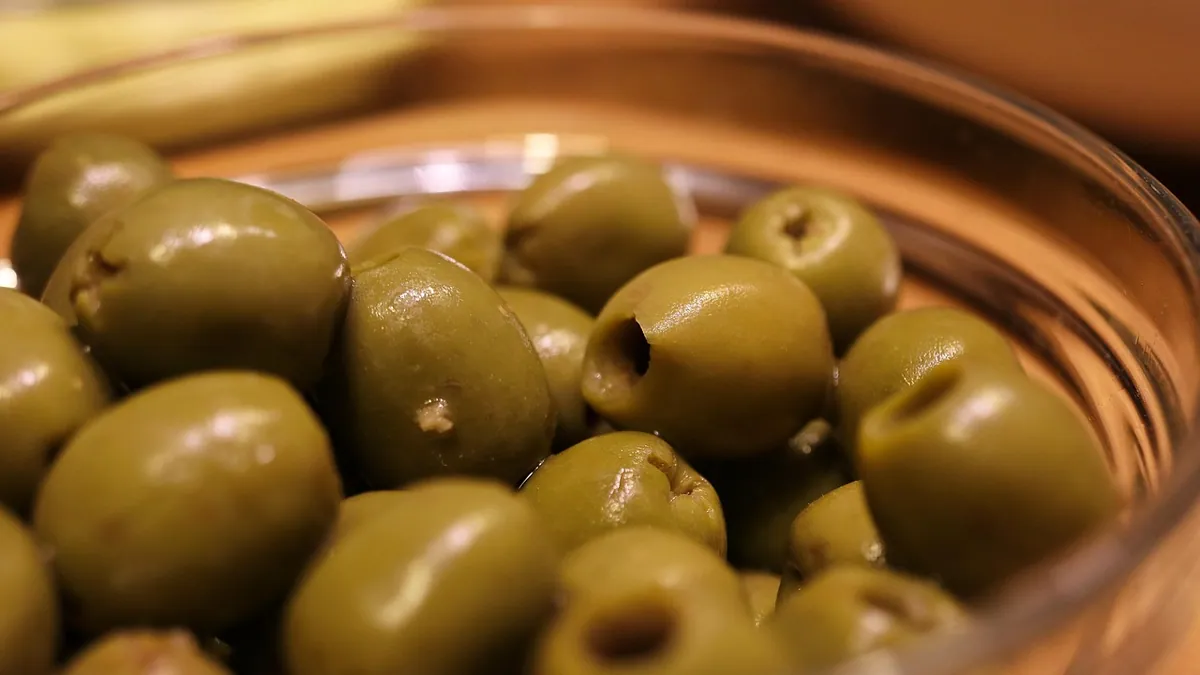
Can cats eat olives with pimentos? Usually no, and the reason is not the olive itself. Pimento-stuffed olives are often packed with garlic, onion, or salty brine, and those additions are the real problem for cats. Plain, unseasoned olives are not toxic, but they offer no nutritional benefit and can still upset a cat's stomach.
This article is educational and is not a substitute for veterinary diagnosis or treatment.
Quick Answer
- Plain green or black olives with no garlic, onion, brine, or seasoning are not toxic to cats, but they are high in fat and salt and should only ever be a tiny taste.
- Pimento-stuffed olives frequently contain garlic or onion in the stuffing or brine, and both can damage feline red blood cells.
- Garlic causes oxidative damage to red blood cells, which can lead to hemolytic anemia [1].
- Never feed olives from a pizza, a martini, or a jar of tapenade, because these almost always carry garlic, onion, salt, or oil.
- If your cat ate a garlic or onion stuffed olive, call your veterinarian or a pet poison hotline right away, even if your cat seems fine.
Can Cats Eat Olives With Pimentos? The Direct Verdict
The olive fruit itself is not poisonous to cats. A small piece of a plain, pitted olive is unlikely to cause serious harm. The trouble starts with what is stuffed inside or floating in the jar.
Pimentos are roasted red peppers. On their own, a tiny bit of plain pimento is not considered toxic to cats. The problem is that pimento-stuffed olives are almost always sold in a brine that contains salt, and many brands add garlic, onion, or both for flavor. Garlic and onion belong to the Allium family, and Allium plants are the ingredients that make stuffed olives a genuine hazard for cats.
So the honest answer is this. If you can confirm the olive is plain with no garlic, onion, or heavy brine, a tiny taste is low risk. If you cannot confirm that, treat the olive as unsafe.
Why Garlic and Onion Are the Real Danger
What Alliums Do to Cat Red Blood Cells
Garlic and onion contain organosulfur compounds that trigger oxidative damage in red blood cells [2]. In cats, that damage shows up as Heinz bodies, which are clumps of damaged hemoglobin inside the red blood cell. When enough red blood cells are damaged, they rupture, and the cat develops hemolytic anemia.
Research on red blood cells from dogs found that every form of garlic tested caused hemolysis, meaning red blood cell rupture [1]. Granulated garlic at the higher concentration caused the strongest effect, and blood smears confirmed more Heinz bodies and eccentrocytes (damaged, misshapen red blood cells) in the dried and granulated garlic samples [1]. Processing methods like drying and granulation appeared to increase the hemolytic activity instead of reduce it [1].
Cats are generally considered more sensitive to Allium toxicity than dogs, so a small amount of garlic in a stuffed olive matters more for a cat than it would for a dog. This is also why a cat who licks garlic butter or eats a piece of garlic bread needs attention. You can read more about that specific scenario in Cat Ate Garlic.
How Much Garlic Is a Problem?
There is no safe established dose of garlic for cats. The exact amount that causes anemia depends on the form of garlic (fresh, dried, granulated, or powder), the concentration, and the individual cat's size and health [1]. Because of that, your veterinarian calculates risk based on your cat's weight, the amount eaten, and the form of the garlic, not on a fixed number you can look up at home.
Do not try to estimate a safe dose yourself. If garlic was involved, call for guidance.
Can Cats Eat Olives in Brine?
No, and brine is a separate problem from garlic. Olive brine is extremely salty. A cat's body is not built to handle a big sodium load, and salty foods can cause vomiting, diarrhea, and in serious cases, neurological signs from sodium imbalance.
Brine also often contains garlic, herbs, lactic acid, or other flavorings. Even a "plain" jar of olives usually has enough salt that a cat should not be drinking the liquid or eating multiple olives.
If your cat licked a small amount of brine off your fingers, that is usually not an emergency. If your cat drank a noticeable amount of brine or ate several olives, call your veterinarian.
Can Cats Eat Olives From Pizza?
No. Pizza olives come with too many other risks. They sit in oil, they are usually the salty sliced kind, and they are surrounded by cheese, sauce, garlic, and onion. Garlic and onion powder are common in pizza sauce, and onion is a frequent topping.
Cheese and oily toppings add their own problems, mainly fat and lactose. If you are wondering about dairy separately, see Can Cats Eat Cheese. The short version is that a single olive pulled off a slice is not worth the combined risk of garlic, onion, salt, and fat.
Can Kittens Eat Olives?
No, and kittens deserve extra caution. Kittens have smaller bodies, developing organ systems, and less blood volume to spare if red blood cells are damaged. A dose of garlic that might cause mild signs in an adult cat could hit a kitten harder.
Kittens also have no nutritional need for olives, salt, or oil. Keep all human table food away from kittens, and stick to a complete and balanced kitten diet. If you are comparing safe human foods, Can Cats Eat Eggs covers a food that is far more appropriate in small amounts.
Can Cats Eat Olives and Mushrooms?
These are two different questions, and the answer differs for each. Plain olives are not toxic but are high in fat and salt. Mushrooms are a mixed bag. Common white button mushrooms from a grocery store are not considered highly toxic to cats, but wild mushrooms can be seriously poisonous, and any mushroom dish made with garlic, onion, butter, or cream sauce carries the same Allium and fat risks as stuffed olives.
The safest rule is simple. Do not feed your cat mushrooms, and do not feed olives that came from a cooked dish. If your cat ate a wild mushroom, treat it as an emergency.
Nutritional Content: Is There Any Real Benefit?
There is no nutritional benefit to feeding olives to a cat. Olives are mostly fat and water, with some fiber and a small amount of vitamin E. Cats are obligate carnivores, which means their nutritional needs are met by animal-based protein and fat, not by plant foods.
A review of feline nutrition notes that even for senior cats, where research on enriched diets and targeted supplements exists, the evidence base is still limited and there are no official guidelines for senior or geriatric cats [3]. That review focuses on nutrients like energy, protein, fat, water, fish oil, B vitamins, arginine, vitamin E, and beta-carotene, not on olives or table scraps [3]. In other words, olives do not fill a nutritional gap in any cat's diet at any life stage.
Risks Beyond Garlic and Onion
Choking and Blockage
Olives are round and slippery. A whole olive, especially a large one, can lodge in a cat's throat. Pits are worse. A swallowed pit can cause a choking hazard or an intestinal blockage that requires surgery.
Always assume a pit is a problem. If your cat swallowed an olive pit, call your veterinarian.
Digestive Upset
Fat and salt are the two most common causes of stomach upset from olives. Signs include vomiting, diarrhea, gas, and a reduced appetite. A single small piece may cause nothing at all, but repeated feeding can lead to pancreatitis in sensitive cats.
Hidden Additives
Jarred and deli olives can contain garlic, onion, sulfites, lactic acid, herbs, spices, and sometimes sweeteners. Xylitol is a sweetener that is dangerous to pets, and while it is uncommon in olives, it does appear in some flavored and sweetened products. Read labels, and when in doubt, do not feed it.
Salt and Sodium
High sodium intake can cause vomiting, diarrhea, lethargy, and in severe cases, tremors or seizures. A cat with heart disease or kidney disease is even more vulnerable to a salt load.
How to Offer Olives Safely
If you truly want to let your cat taste an olive, follow these steps.
- Confirm the olive is plain. No garlic, no onion, no pimento stuffing, no herbs, no oil, no brine.
- Choose a plain black or green olive packed in water with no added salt if you can find one.
- Remove the pit completely.
- Cut the olive into a piece no larger than a pea.
- Offer one piece, then watch your cat for 24 hours for vomiting, diarrhea, or lethargy.
- Do not make it a habit. Once is a taste. Repeated feeding is where problems build.
Form and Preparation Table
| Form | Safe? | Notes |
|---|---|---|
| Plain green or black olive, pitted, no salt | Low risk in a tiny piece | No nutritional benefit, high in fat |
| Pimento-stuffed olive | Unsafe | Stuffing and brine often contain garlic or onion |
| Olive in brine | Unsafe | Very high in salt, often contains garlic |
| Olive from pizza | Unsafe | Garlic, onion, oil, cheese, and salt all present |
| Olive with garlic or onion seasoning | Unsafe | Alliums damage red blood cells [1] |
| Olive pit | Unsafe | Choking and blockage risk |
| Tapenade or olive spread | Unsafe | Usually contains garlic, onion, and heavy oil |
What to Do If Your Cat Ate a Dangerous Olive
Act based on what was in the olive, not on how your cat looks right now. Allium toxicity can take hours to days to show up, so a cat who seems fine an hour later is not out of the woods.
If your cat ate a garlic or onion stuffed olive, or drank brine, call your veterinarian or a pet poison hotline immediately. Have this information ready: your cat's weight, the number of olives eaten, the brand and label if you have it, and the time of ingestion.
Do not induce vomiting unless a veterinarian tells you to. Do not give milk, oil, or home remedies. Do not wait for symptoms to appear before calling.
If your cat only licked a plain olive or ate a tiny piece of a plain pitted olive, you can monitor at home and call your veterinarian if any signs develop.
Safer Alternatives
If your cat wants a treat, reach for something built for cats. A small piece of cooked, unseasoned chicken or a commercial cat treat is a better choice. Cooked plain egg in a small amount is another option, covered in Can Cats Eat Eggs. For fiber, plain cooked peas without salt or seasoning are sometimes used in small amounts, discussed in Can Cats Eat Peas? Fiber & Commercial Cat Food.
The best treat for most cats is more of their regular complete and balanced food, or a treat formulated for cats. That keeps fat, salt, and Allium exposure at zero.
Limitations and When to Contact a Veterinarian
This article cannot tell you whether your specific cat is safe. Individual cases need a veterinarian who can examine your cat, ask about the exact product, and run blood work if needed.
Call your veterinarian the same day if your cat ate a garlic or onion stuffed olive, ate several olives, drank brine, or swallowed a pit.
Go to an emergency clinic now if your cat has pale gums, white or yellow gums, rapid breathing, weakness, collapse, a racing heart, dark or reddish urine, vomiting that will not stop, or tremors. These can be signs of hemolytic anemia or a serious sodium problem, and they need immediate care.
Schedule a routine visit if your cat ate a small amount of a plain olive and seems normal, but you want reassurance or a baseline blood check.
Signs of anemia can appear hours to days after ingestion, so keep watching even if the first day goes well. If you are ever unsure, a phone call costs far less than waiting.
Frequently Asked Questions
Can cats eat olives with pimentos if I rinse them first?
Rinsing removes surface salt but does not remove garlic or onion that was cooked into the stuffing or absorbed into the olive. If the label lists garlic, onion, or "spices," rinsing does not make it safe. Choose a plain olive instead, or skip olives entirely.
Are black olives safer than green olives for cats?
Neither color is inherently safer. The risk comes from the brine, the stuffing, and any added garlic or onion, not from the color of the fruit. A plain black olive and a plain green olive carry similar low risk in a tiny piece.
How long after eating a garlic olive would a cat get sick?
Signs of red blood cell damage can take hours to several days to appear. Some cats show vomiting, drooling, or lethargy early, while anemia signs like pale gums and weakness may come later. Because of that delay, call your veterinarian right after ingestion instead of waiting for symptoms.
Can a cat get sick from just licking olive brine off my fingers?
A small lick is usually not an emergency, but brine is high in salt and may contain garlic. Watch for vomiting, diarrhea, or lethargy over the next 24 hours. If your cat drank a larger amount or the brine contains garlic, call your veterinarian for advice.
Do cats need any vegetables or plant foods in their diet?
No. Cats are obligate carnivores and meet their needs through animal-based nutrients in a complete and balanced cat food. Plant foods like olives, peppers, and mushrooms are not required and add risks like salt, fat, and Allium exposure without any benefit.
Related Articles
- Cat Ate Garlic
- Can Cats Eat Cheese
- Can Cats Eat Peas? Fiber & Commercial Cat Food
- Can Cats Eat Eggs
- Can Cats Eat Peas? Fiber and Lectin Content
- Can Cats Eat Tuna Packed In Olive Oil
- Can Cats Eat Onions or Garlic? Toxicity Signs to Watch
- Can Cats Eat Curry? Spice, Onion and Garlic Dangers
References
- The Effect of the Type and Concentration of Garlic (Allium sativum) on Heinz Body Concentrations in Canine Erythrocytes-An In Vitro Study. Animals : an open access journal from MDPI, 2025.
- Which Constituents Determine the Antioxidant Activity and Cytotoxicity of Garlic? Role of Organosulfur Compounds and Phenolics. International journal of molecular sciences, 2024.
- EXPRESS: What Goes in the Bowl? Evidence-Based Nutrition for Ageing Domestic Cats. Journal of feline medicine and surgery, 2026.