Head Pressing in Senior Dogs: Why It Happens and Urgency
By Dr. Zubair Khalid, DVM, MS, PhD ·
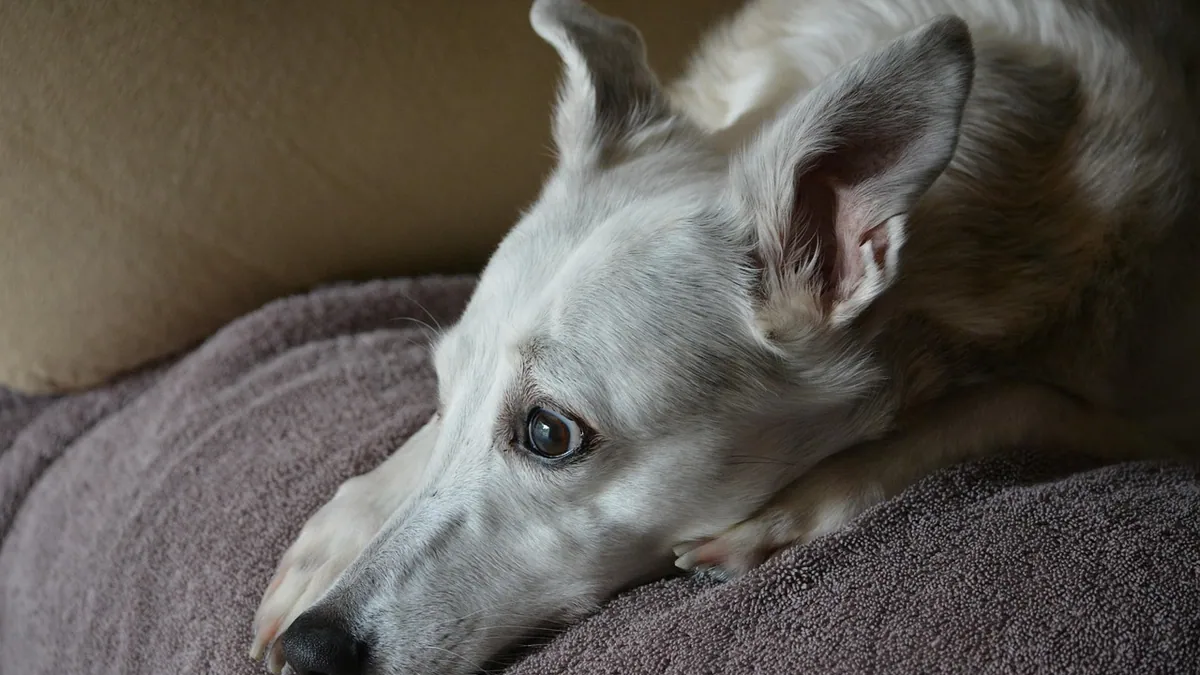
Head pressing in senior dogs means your dog stands and pushes the top of the head into a wall, couch, or corner for no clear reason. It is not a behavior problem and it is not a sign of affection. It points to a problem inside the brain or a metabolic condition, and it needs veterinary attention quickly.
This article is educational and is not a substitute for veterinary diagnosis or treatment.
Quick Answer
- Head pressing is a neurologic red flag, not a quirky habit. It usually means something is wrong with the brain or with the body's metabolism.
- It looks different from head butting. Head butting is a brief, social nudge for attention. Head pressing is a long, fixed push against a hard surface, often with a blank stare.
- The most common causes are brain disease, liver shunts, toxin exposure, infections, and high blood pressure.
- Call your veterinarian today if you see it once. Go to an emergency hospital now if it happens with seizures, circling, blindness, or collapse.
- Do not try to treat it at home. Keep your dog safe, remove hazards, and get a diagnosis.
What Head Pressing Looks Like and What Is Normal
The classic picture
A dog that is head pressing will walk up to a wall, a door, a cabinet, or the back of a couch and press the top of the skull against it. The dog may hold that position for minutes. Some dogs push hard enough to leave a mark. Others stand in a corner facing the wall and seem unable to back out.
The behavior often comes with other changes. Your dog may seem disoriented, pace at night, stare at nothing, or fail to recognize familiar people. These can overlap with cognitive changes in older dogs, which appear gradually and can be easy to miss [1].
Head pressing vs head butting in dogs
Head butting is normal. A dog that wants petting or food may bump your hand or leg with the top of the head, then look at you and wag. The contact is brief, directed at a person, and has a clear social purpose.
Head pressing is not social. The dog targets a solid object, not you. The push is sustained, the posture is stiff or blank, and the dog does not respond normally when you call. If you can distract your dog easily and the behavior stops, it was probably head butting. If your dog seems "not there," treat it as head pressing.
Other normal behaviors that get confused with it
Some dogs lean on people for balance or comfort. Some rub their faces on carpets after eating. Some push into pillows to sleep. None of these involve a fixed, trance-like press against a vertical surface. When in doubt, record a short video. A veterinarian can often tell the difference from a few seconds of footage, and remote review of neurologic signs can support accurate localization of a brain lesion [2].
Main Causes of Head Pressing in Senior Dogs
Head pressing is a symptom, not a disease. It reflects increased pressure inside the skull, inflammation, or a buildup of toxins that affect the brain. In older dogs, several of these causes become more likely with age.
| Cause | Typical clues | How urgent |
|---|---|---|
| Brain tumor (including hemangioma) | Slow onset over weeks, seizures, circling, behavior change, one-sided deficits. Risk rises with age and peaks around nine years [3] | Urgent, same day to 48 hours |
| Liver disease or portosystemic shunt | Head pressing after meals, drooling, staring, wobbling, small breed or young dog history, but can appear later in life | Emergency if sudden, otherwise same day |
| Brain infection or abscess | Fever, pain, rapid worsening, sometimes a recent dental problem or oral injury [4] | Emergency now |
| Encephalitis (brain inflammation) | Rapid onset, seizures, neck pain, personality change | Emergency now |
| Toxins (lead, moldy food, some plants) | Sudden onset, vomiting, tremors, known exposure | Emergency now |
| High blood pressure or metabolic disease | Older dog, kidney or thyroid history, sudden blindness, head tilt | Same day |
| Head trauma | Known injury, unequal pupils, bleeding, collapse | Emergency now |
| Cognitive dysfunction (dog dementia) | Gradual disorientation, altered sleep, house soiling, staring at walls [1][5] | Routine visit, but rule out other causes first |
A few points matter here. First, cognitive dysfunction in senior dogs is real and common, and it can include staring and getting stuck in corners [1]. But dementia does not usually cause hard, repetitive head pressing. If you see true pressing, your veterinarian will look for a physical cause before settling on dementia.
Second, many behavior changes in older dogs are signs of treatable medical disorders, so do not assume your dog is "just getting old" [5]. That advice applies directly to head pressing.
Third, brain masses are not limited to old dogs. A cerebral hemangioma has been reported in a five-month-old dog, and hemangiomas in dogs carry an increasing risk with age that peaks at nine years [3]. Age raises the odds, but it does not rule a tumor in or out.
Fourth, infections can reach the brain from the mouth. One reported case involved a young dog with a subdural empyema that tracked from a tooth root or oral injury into the skull, causing a mass, brain compression, and raised intracranial pressure [4]. Dental disease in a senior dog is common, and this is one reason it deserves attention.
Red Flags That Make Head Pressing an Emergency
Call an emergency hospital right away if head pressing happens with any of these:
- Seizures, especially repeated or lasting more than a couple of minutes
- Collapse, inability to stand, or sudden weakness
- Circling in one direction, or a head tilt that will not stop
- Sudden blindness or pupils that look different sizes
- Vomiting with a wobbly, drunk walk
- A known toxin exposure or a recent head injury
- Pain when you touch the head or neck
- Confusion that comes on over hours, not weeks
Any of these suggests a brain emergency. Time matters because swelling inside the skull can worsen fast.
If your dog presses the head but is otherwise bright, eating, and walking normally, call your regular veterinarian the same day. Do not wait a week to see if it passes. A single episode still deserves a phone call.
Safe Things You Can Do at Home While You Wait
You cannot treat head pressing at home. What you can do is keep your dog safe and gather information for the veterinarian.
- Remove hazards. Block stairs, pools, and sharp corners. A disoriented dog can fall or walk into glass.
- Keep the routine steady. Senior dogs often do best when meals and walks stay on schedule [1].
- Do not force food or water if your dog seems confused or is vomiting.
- Do not give any human medication. Pain relievers and sedatives can be toxic or can hide signs your veterinarian needs to see.
- Record video. Capture the pressing, any circling, and how your dog walks. This helps with diagnosis, and video-based neurologic assessment has shown strong agreement with in-person exams [2].
- Write down the timeline. When did it start? What changed this week? Any new food, medication, or possible exposure?
- Keep your dog leashed outdoors. A confused dog may wander or get stuck.
If your dog also shows a new limp, that can be a separate problem worth checking. Our guide on how to tell if your senior dog's limp is an emergency or can wait walks through that decision.
If your dog has noisy breathing or exercise intolerance along with the neurologic signs, see our article on laryngeal paralysis in senior dogs and GOLPP symptoms. GOLPP is a nerve condition, and nerve problems can affect more than the throat.
What Your Veterinarian Will Check and Test
The neurologic exam
Your veterinarian will start with a full physical and neurologic exam. They will check your dog's mentation, pupil responses, facial symmetry, gait, and reflexes. This exam helps localize the problem to the brain, the spinal cord, or somewhere else.
Spinal cord disease can also change how a dog stands and moves, and reflexes like the crossed extensor reflex can appear in acute myelopathies [6]. Muscle tone assessment is part of this picture, and a canine scale for limb tone has shown good agreement between examiners [7]. These details help your veterinarian decide where the lesion is.
Bloodwork and other first-line tests
Expect bloodwork, a chemistry panel, and a urinalysis. These screen for liver shunts, liver disease, kidney disease, diabetes, and electrolyte problems. Your veterinarian may also check blood pressure and, if a shunt is suspected, bile acids.
Imaging
If the exam points to the brain, imaging is the next step. MRI is the standard for finding tumors, abscesses, inflammation, and bleeding. In the reported empyema case, MRI showed a mass filling one side of the brain, midline shift, and a tract running from a tooth root to the eye area [4]. That kind of detail guides treatment.
CT can also help, especially for shunt evaluation. A dog with a portosystemic shunt was diagnosed by CT before surgery [8].
Advanced testing
Depending on findings, your veterinarian may recommend a spinal tap, infectious disease testing, or referral to a neurologist. Treatment depends on the cause. Options range from antibiotics for infection to seizure medication, blood pressure control, diet and medication for liver disease, or surgery for a shunt or mass.
One reported treatment for neurologic signs after shunt surgery used a modified manual plasma exchange technique, with marked improvement after the procedure [8]. This is a specialized option, and your veterinarian will decide whether any treatment fits your dog. Doses for any medication are calculated from your dog's weight and health, so never use a dose from the internet.
Prevention and Monitoring in Senior Dogs
You cannot prevent every cause of head pressing, but you can lower risk and catch problems earlier.
- Keep senior wellness visits. Twice-yearly exams help find liver, kidney, dental, and blood pressure problems before they affect the brain.
- Treat dental disease. Oral infection can spread, and one reported brain abscess tracked from the mouth into the skull [4].
- Control blood pressure and metabolic disease. Follow your veterinarian's plan for kidney, thyroid, and heart conditions.
- Track behavior with a simple log. Cornell recommends the DISHAA assessment guide to track declining mental capacity in older dogs [1].
- Report all changes. Do not assume nothing can be done, because many senior behavior changes are treatable [5].
- Watch for related nerve and mobility problems. A dog that shakes the head repeatedly may have ear or nerve disease, covered in our article on dog shaking head every few seconds.
- Keep anxiety and routine changes in mind. Older dogs can struggle with being alone, and our guide on dog separation anxiety in older dogs explains what to watch for.
Limitations and When to Contact a Veterinarian
Head pressing has many possible causes, and no article can tell you which one your dog has. Your dog needs an in-person examination, and often testing, to get an answer.
Call your veterinarian the same day if you see head pressing for the first time, even if your dog seems fine otherwise.
Go to an emergency hospital now if head pressing comes with seizures, collapse, circling, sudden blindness, vomiting with wobbliness, a known toxin exposure, or a head injury.
Schedule a routine visit soon if you are seeing gradual changes like night pacing, staring, or getting stuck in corners without true pressing. Those signs can fit cognitive dysfunction, but other medical causes still need to be ruled out [1][5].
Frequently Asked Questions
Is head pressing always a sign of a brain tumor?
No. Tumors are one cause, but liver disease, infections, inflammation, toxins, high blood pressure, and head trauma can all produce it. Your veterinarian will use the exam and testing to sort out which one fits your dog.
Can head pressing in senior dogs be treated?
Often yes, depending on the cause. Infections may respond to antibiotics, seizures can be managed with medication, and liver problems can be supported with diet and drugs. Some causes, like large brain masses, have a guarded outlook, and your veterinarian will discuss options for your dog.
How fast does head pressing progress?
It varies widely. A toxin or infection can cause signs over hours, while a slow-growing tumor may build over weeks. Any sudden change is more concerning and needs faster care.
Should I wait to see if it happens again?
No. A single episode is enough reason to call your veterinarian the same day. Waiting can let a treatable problem become an emergency.
Can I give my dog anything at home for this?
No. There is no safe home treatment for head pressing, and human medications can harm your dog. Keep your dog safe, avoid hazards, and let your veterinarian decide on treatment and any medication dose.
Related Articles
- Laryngeal Paralysis in Senior Dogs: GOLPP Symptoms and Tie-Back Surgery
- How to Tell If Your Senior Dog's Limp Is an Emergency or Can Wait
- Dog Separation Anxiety in Older Dogs: Special Considerations
- Dog Separation Anxiety In Older Dog
- Dog Shaking Head Every Few Seconds
- Dog Shaking Head Quickly
- Head Pressing in Dogs: Causes, Symptoms, and What to Do
- Senior Dog Unable to Stand: Causes and Emergency Steps
- Senior Dog Zoning Out and Pacing: Cognitive Changes
References
- Senior dog dementia. Cornell University College of Veterinary Medicine.
- Teleneurology video recordings and live streams provide reliable neuroanatomic lesion localization in dogs and cats. Journal of the American Veterinary Medical Association, 2026.
- Cerebral hemangioma in a 5-month-old Chow Chow dog displaying seizures of acute onset. Acta veterinaria Scandinavica, 2026.
- Subdural Empyema in a Dog Originating From the Oral Cavity. Veterinary radiology & ultrasound : the official journal of the American College of Veterinary Radiology and the International Veterinary Radiology Association, 2026.
- Behavior Problems in Older Dogs. ASPCA Animal Poison Control Center.
- Review: spinal shock, crossed extensor reflex, and mass reflex in dogs and cats-a literature review, clinical observations and considerations. Frontiers in veterinary science, 2026.
- Inter-rater agreement of the canine modified Ashworth scale for assessment of limb tone in dogs presenting with acute myelopathic signs. The Veterinary record, 2026.
- Modified Manual Therapeutic Plasma Exchange Technique as a Successful Treatment for Postattenuation Neurological Signs (PANS) in a Dog. Journal of veterinary emergency and critical care (San Antonio, Tex. : 2001), 2026.