Is My Dog Pregnant or Just Fat? How to Tell the Difference
By Dr. Zubair Khalid, DVM, MS, PhD ·
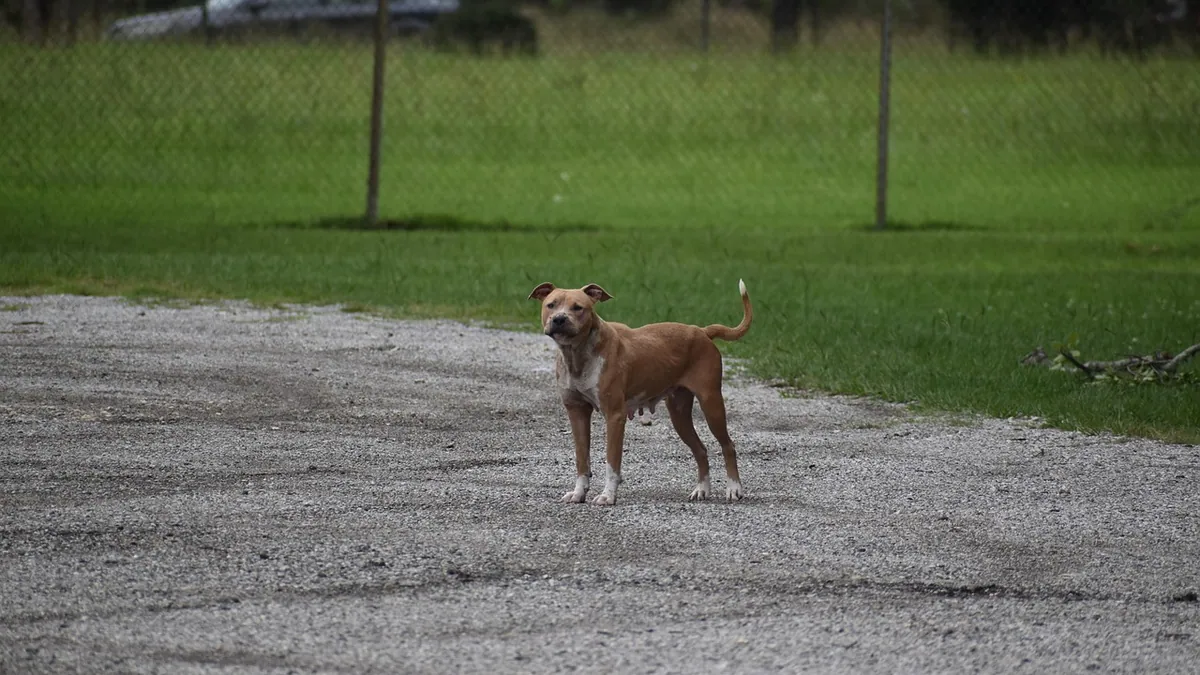
Is your dog pregnant or just fat? The honest answer is that early on, you usually cannot tell by looking. A pregnant belly and a fat belly can look nearly identical for the first few weeks, and some dogs show almost no visible change until late in pregnancy. This article is educational and is not a substitute for veterinary diagnosis or treatment.
Quick Answer
- A dog's belly does not look clearly pregnant until roughly the last third of pregnancy. Before that, weight gain and a rounder middle are the main visible clues, and both have many causes.
- The most reliable early sign is a change in the nipples. They often swell and darken within a few weeks of breeding, before the belly changes much.
- A veterinarian can confirm pregnancy with a relaxin blood test after about 22 to 27 days of gestation, or with ultrasound, which is best performed at 25 to 35 days [1].
- If you do not know when your dog was bred, an exam plus imaging is the fastest way to get real answers.
- Never give any medication, dewormer, or supplement to a dog who might be pregnant without asking your veterinarian first.
What a Pregnant Belly and a Fat Belly Actually Look Like
The pregnant abdomen
A pregnant dog's belly changes in a predictable pattern. In early pregnancy, fetal swellings grow quickly, roughly doubling in diameter every 7 days [1]. That growth is happening inside the uterus, though, so it may not show on the outside yet.
By around day 35 to 38, those individual swellings become less distinct and are harder to feel [1]. The abdomen starts to fill out more evenly. In late pregnancy, a veterinarian can sometimes feel fetal heads and rumps as firm, nodular structures in the lower rear abdomen [1].
So the classic "pregnant look" (a low, rounded, slightly pendulous belly with visible mammary development) usually appears in the final weeks. If your dog was bred three weeks ago and looks the same as always, that tells you very little.
The fat belly
A dog carrying extra body fat tends to gain weight all over, not only in the abdomen. You may notice a thicker neck, a fuller chest, and fat deposits over the hips and shoulders. The belly can look round or saggy, especially in older dogs or dogs who have had litters before.
A key difference is the ribs and waist. In a dog at a healthy weight, you can feel the ribs easily under a thin layer of fat, and there is a visible waist tuck behind the ribs when viewed in published veterinary research. In an overweight dog, the ribs become hard to feel and the waist disappears. You can read more about how to check this at home in How to Tell If Your Dog Is Overweight: Body Condition Score Explained.
Why body condition scoring matters here
Body condition scoring is a hands-on system that rates fat cover over the ribs, spine, and hips. It is designed to measure body fat, not pregnancy. A dog can be pregnant and thin, or fat and not pregnant, or both pregnant and overweight.
That last combination is common and worth taking seriously. In one study, overweight bitches showed a possible trend toward higher early pregnancy loss and slower labor progression before the first puppy was born, though the difference was not statistically significant in that small group [2]. Keeping your dog at a healthy weight before breeding is one of the simplest things you can control.
Main Causes of a Changing Belly
| Cause | Typical clues | How urgent |
|---|---|---|
| Pregnancy | Nipple swelling and darkening, appetite changes, weight gain over weeks, possible morning sickness | Routine visit to confirm and date the pregnancy |
| Normal weight gain | Gradual weight gain all over, ribs harder to feel, no nipple changes | Routine visit, adjust diet and exercise |
| Pseudopregnancy | Nesting, mothering toys, mammary development, milk production, restless behavior weeks after heat | See a vet, this is a real condition that involves inflammation and should be managed, not ignored [3] |
| Pyometra (infected uterus) | Vaginal discharge, drinking a lot, vomiting, lethargy, poor appetite, usually within weeks after heat | Emergency, same day |
| Ascites (fluid in the abdomen) | Distended belly that feels tight or fluid-filled, often with weight loss elsewhere, labored breathing | Emergency, same day |
| Bloat (gastric dilatation and volvulus) | Sudden swollen abdomen, retching without vomiting, pacing, drooling | Emergency, go now |
| Intestinal parasites or poor digestion | Pot-bellied appearance, especially in puppies, diarrhea, dull coat | Routine visit soon |
Pseudopregnancy deserves a special mention because it fools many owners. A dog who is not pregnant can develop mammary tissue, produce milk, and act like she is expecting. This is not simply a behavioral quirk. Research shows pseudopregnancy involves a localized inflammatory response in the milk, and it should be actively managed [3]. If your dog had a heat cycle 6 to 12 weeks ago and now looks and acts pregnant, that is a strong clue.
Red Flags That Mean Emergency
Some causes of a swollen abdomen are life threatening. Go to an emergency clinic immediately if you see any of these:
- A hard, tight, or rapidly swelling abdomen
- Unproductive retching, pacing, or drooling (possible bloat)
- Labored breathing or a blue tint to the gums
- Collapse, weakness, or pale gums
- Vaginal discharge that is pus-like, bloody, or foul smelling, especially with lethargy or fever
- Vomiting and refusing water for more than a few hours
- Straining to give birth for more than 30 minutes with no puppy produced, if you know she is at term
Uterine problems such as pyometra and uterine inertia are serious conditions that affect both pregnant and non-pregnant dogs and can harm the mother and the puppies [4]. Do not wait to see if things improve on their own.
What You Can Safely Do at Home While You Wait
You cannot diagnose pregnancy at home, but you can gather useful information for your veterinarian.
- Write down the date of her last heat cycle and any possible breeding dates. This single detail changes everything about how the pregnancy is dated.
- Check her nipples every few days. Note color, size, and whether milk can be expressed.
- Weigh her on the same scale at the same time of day, once a week. A steady trend is more useful than a single number.
- Feel her ribs and waist gently. This helps you judge body condition separately from belly size.
- Take photos of her in published veterinary research and from the side each week. Owners often spot changes in photos that they miss in person.
- Keep her on her normal, complete diet unless your veterinarian says otherwise. Do not start supplements or puppy food early without guidance.
- Do not give any medication, including over-the-counter pain relievers, flea products, or dewormers, without asking your vet first.
If you are tracking a possible pregnancy, our guide to dog pregnancy symptoms walks through the week-by-week changes in more detail.
What Your Veterinarian Will Check and Test
Physical examination
Your vet will start with a full exam, including body condition scoring, abdominal palpation, and a check of the mammary glands and vulva. Palpation is most informative in a specific window. Early fetal swellings are distinct, then become harder to feel after day 35 to 38, and only become clearly palpable again late in pregnancy when fetal heads and rumps can be felt [1].
Relaxin blood test
A commercial relaxin assay detects the presence of placentas, which means pregnancy, and it is reliable after 22 to 27 days of gestation [1]. This is a simple blood test and a good option if you want a clear yes or no without imaging.
Ultrasound
Ultrasound is the most useful tool for confirming pregnancy and checking fetal viability [1]. It is best performed at 25 to 35 days of gestation, and before 21 days it can give false negative results [1]. Ultrasound is also the best way to tell pregnancy apart from other causes of a distended uterus, such as hydrometra, mucometra, or pyometra [1]. Measurements taken during the scan can even be used to estimate gestational age [1].
X-rays
X-rays are typically used later in pregnancy, once the puppies' skeletons are mineralized enough to be seen. Your veterinarian will tell you the right timing for your dog.
Other tests
If your dog is sick instead of simply pregnant, your vet may run blood work and other tests. Pregnancy itself changes many laboratory values, and diagnosing infection during pregnancy can be complicated because pregnant dogs and dogs with pyometra can look similar on some tests [5]. Pregnancy also shifts antioxidant and biochemistry parameters compared with non-pregnant dogs [6]. Your veterinarian knows how to interpret these changes in context.
If you want to understand the full range of diagnostic options, see Pregnancy Diagnosis in the Bitch: Methods and Interpretation.
How to Tell If Your Dog Is Pregnant or Just Fat: A Practical Approach
Here is a simple way to think about it.
- If she was bred or escaped within the last 3 weeks, assume she could be pregnant and act accordingly. No visible belly change means nothing at this stage.
- If she has nipple swelling and darkening, that leans toward pregnancy or pseudopregnancy, not simple weight gain.
- If she is gaining weight all over with no nipple changes, weight gain or another medical issue is more likely.
- If she had a heat cycle 6 to 12 weeks ago and now has mammary development, pseudopregnancy belongs on the list.
- If she has discharge, vomiting, lethargy, or a painful belly, stop guessing and get her seen.
The only way to know for certain is a veterinary test. Guessing wastes time, and some of the conditions that mimic pregnancy need treatment.
Prevention and Monitoring
If she might be pregnant
- Schedule a veterinary visit for around day 25 to 30 after breeding. That timing lines up well with both the relaxin test and ultrasound [1].
- Ask your vet about a whelping date estimate. Our Dog Pregnancy & Whelping Date Calculator can help you plan, and How Long Do Dogs Stay Pregnant explains the normal range.
- Keep her at a healthy weight. Overweight bitches in one study showed a possible trend toward more early pregnancy loss and slower early labor, though the finding was not statistically significant [2].
- Feed a complete and balanced diet. The dam's diet during gestation can influence birth weight, neonatal health, and even the puppy's long-term risk of becoming overweight [7]. The first 120 days, covering pregnancy plus the first two months of life, is considered the most critical window in dogs [7].
- Avoid stress and unnecessary medications. Ask before giving anything.
If she is not pregnant
- If weight gain is the issue, measure her food, cut treats, and increase safe exercise gradually.
- If she had a recent heat cycle, watch for signs of pyometra for the next several weeks.
- If pseudopregnancy is suspected, talk to your vet about management. It involves real inflammation and should not be dismissed as harmless behavior [3].
- Consider spaying if you are not planning to breed. This removes the risk of pyometra and pregnancy entirely.
Limitations and When to Contact a Veterinarian
No article can tell you whether your individual dog is pregnant. Only an examination and testing can do that, and individual cases need a veterinarian.
Contact your veterinarian the same day if your dog has vaginal discharge, vomiting, poor appetite, lethargy, or a belly that seems painful to touch. These can point to pyometra or another serious uterine problem [4].
Go to an emergency clinic right away for a hard or rapidly swelling abdomen, unproductive retching, labored breathing, collapse, pale gums, or straining to deliver a puppy with no progress.
Schedule a routine visit if your dog is gaining weight without explanation, if you suspect pregnancy and want it confirmed and dated, or if she shows signs of pseudopregnancy such as nesting and milk production [3].
Frequently Asked Questions
Can I tell if my dog is pregnant by looking at her belly?
No, not reliably, especially in the first month. The belly usually does not look clearly pregnant until the final weeks, and a fat belly can look very similar. A veterinary test is the only way to know.
How soon can a vet confirm pregnancy?
A relaxin blood test is reliable after about 22 to 27 days of gestation, and ultrasound works best at 25 to 35 days. Testing too early can give a false negative result.
Do dogs get morning sickness like people do?
Some dogs do have a brief period of reduced appetite or mild vomiting in early pregnancy. If vomiting is repeated, lasts more than a day, or comes with lethargy, have her examined instead of assuming it is normal.
Can a dog look pregnant but not be pregnant?
Yes. Pseudopregnancy causes mammary development, milk production, and mothering behavior in dogs who are not pregnant, and it involves a real inflammatory response that should be managed. Other causes of a swollen abdomen, including pyometra and fluid accumulation, can also mimic pregnancy.
Is it safe to walk my dog if she might be pregnant?
Gentle, regular walks are generally fine and help maintain fitness. Avoid intense or high-impact activity, rough play, and anything that risks a fall or a blow to the abdomen, and follow your veterinarian's advice for your dog's specific situation.
Related Articles
- dog pregnancy symptoms
- How Long Do Dogs Stay Pregnant
- Dog Pregnancy & Whelping Date Calculator
- How to Tell If Your Dog Is Overweight: Body Condition Score Explained
- Pregnancy Diagnosis in the Bitch: Methods and Interpretation
- Canine Pregnancy Diagnosis: Ultrasound and Hormonal Assays
- False Pregnancy in Dogs: Signs, Duration, and Care
- Pregnant Dog Nipples: Changes Week by Week
- Pregnant Dog Discharge: What's Normal and What's Not
References
- Pregnancy Determination in Bitches and Queens - Management and Nutrition. Merck Veterinary Manual.
- The impact of an overweight body condition on pregnancy, parturition, and physical activity in the bitch. Reproduction & fertility, 2026.
- Serum, milk and saliva cytokines in canine pseudopregnancy. A pilot study. Research in veterinary science, 2026.
- Uterine Dysfunctions in Non-Pregnant and Pregnant Small Animals. Reproduction in domestic animals = Zuchthygiene, 2026.
- Differences in canine serum N-glycosylation pattern during infection and pregnancy. Scientific reports, 2026.
- Changes in lipid peroxidation, antioxidant and serum biochemistry parameters: A comparison between pregnant and non-pregnant dogs. Theriogenology, 2026.
- Developmental programming in dogs. Biology of reproduction, 2026.