When to Euthanize a Ferret: Quality of Life Signs
By Dr. Zubair Khalid, DVM, MS, PhD ·
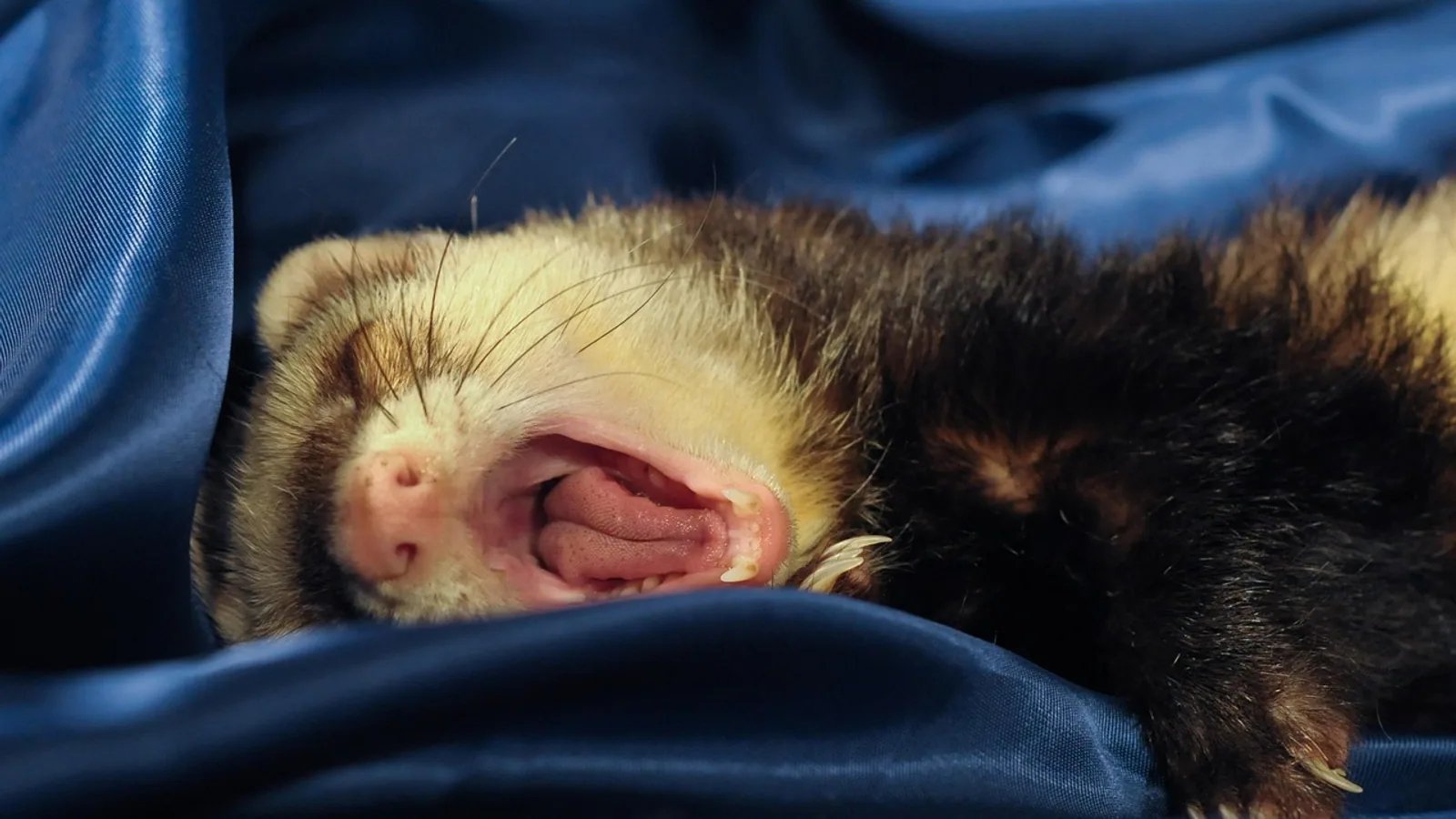
Euthanasia deserves serious consideration when a ferret experiences more bad days than good days, when pain or distress can no longer be controlled with treatment, or when basic functions such as eating, drinking, moving, and resting comfortably are failing despite veterinary care. The decision belongs to you and your veterinarian together, and it should be made based on your individual ferret's condition rather than on a fixed age or a single symptom. Ferrets decline quickly compared with dogs and cats, so owners who learn to read quality of life daily are better prepared to act at the right moment, neither too early nor after prolonged suffering.
This guide walks through the practical work of that decision. You will find a quality of life checklist you can start using today, the clinical signs that suggest a ferret is nearing the end of life, concrete ways to keep a declining ferret comfortable, what to expect at the euthanasia appointment, and support for the grief that follows.
This article is educational and is not a substitute for veterinary diagnosis or treatment.
At a Glance: Quality of Life Checkpoints for a Declining Ferret
| Question to ask each day | What decline looks like | What to do today |
|---|---|---|
| Is pain controlled? | Hunched posture, grimace-like facial expression, reluctance to be touched, flinching when lifted | Ask your veterinarian about a pain assessment and analgesic plan |
| Is appetite holding? | Refusing favorite foods, dramatic weight loss, weakness from low blood sugar | Weigh your ferret, offer warmed favored foods, contact your vet if intake drops |
| Is hydration adequate? | Tacky gums, sunken eyes, skin that tents slowly, lethargy after fluid loss | Ask about subcutaneous fluids at home or in clinic |
| Is hygiene maintained? | Soiled rear, matted coat, urine scalding, abandonment of the litter pan | Provide gentle cleaning, low-entry litter boxes, absorbent bedding |
| Is your ferret still engaged? | No interest in free roaming, toys, cage mates, or interaction | Track engagement daily and share the pattern with your veterinarian |
| Is mobility adequate? | Dragging hind limbs, falling, inability to reach food, water, or the litter pan | Rearrange the cage for one-level access, add ramps and padding |
| Are there more good days than bad? | Bad days now outnumber good days over a rolling one to two week window | Schedule a quality of life conversation with your veterinarian |
Why This Decision Is Hard for Ferret Owners
Ferrets hide weakness. A prey species by evolutionary history, a ferret in the wild that looked sick would be an easy target, so even well-socialized pet ferrets tend to mask illness until disease is advanced. By the time a ferret stops eating or stops playing, the underlying problem is often well established. This is the central trap in end-of-life ferret care. Owners who wait for their ferret to look obviously sick often wait too long, while owners who panic at the first sleepy afternoon cause unnecessary anxiety.
A second complication is that ferrets age fast. Chronic disease shows up in middle age for many ferrets, and large owner surveys confirm that age matters. In a questionnaire study of 422 ferret owners across Slovakia, the Czech Republic, North America, and other regions, ferrets older than 4 years had roughly four times higher odds of reported adrenal disease than younger ferrets, and diagnosed adrenal disease was reported most frequently by owners in the United States and Canada [1]. If your ferret is in that age range, an honest quality of life conversation with your veterinarian is not premature. It is good planning.
A third complication is emotional. Ferrets are small, interactive, and intensely bonded to their routines and people. Owner-based research on 1,029 ferrets found stable personality dimensions including extraversion, sociability, attentiveness, and neuroticism, and found that extraversion tends to decrease with age [2]. That means some slowing and mellowing in an older ferret is normal. The skill lies in distinguishing expected aging from decline caused by disease, and your veterinarian is the right partner for that judgment.
The Health Problems That Shape End-of-Life Decisions
You do not need a diagnosis list to use a quality of life framework, but knowing the conditions that commonly affect aging ferrets helps you understand what decline looks like.
Adrenal disease is one of the most frequently reported conditions in pet ferrets in North America, and as noted above, it becomes markedly more likely after age 4 [1]. It can cause hair loss, itching, and in some ferrets urinary blockage in males, a problem that is an emergency rather than an end-of-life issue in itself.
Respiratory disease deserves special mention because ferrets are unusually susceptible to viral respiratory infections. Ferrets have been a standard research model for influenza since the early twentieth century, and they remain central to respiratory disease research because their airway anatomy and disease susceptibility resemble those of humans [3]. For owners, the practical message is that coughing, sneezing, nasal discharge, or labored breathing in a ferret is never a wait-and-see symptom, and labored breathing in a declining ferret is an emergency. The same research literature notes that ferrets with respiratory disease and systemic illness require careful anesthetic and handling considerations, which matters when you and your veterinarian are weighing whether further diagnostics or procedures are fair to a fragile patient [3].
Other chronic conditions occur in ferrets, and your veterinarian can explain how any specific diagnosis tends to progress. The quality of life framework below works regardless of the diagnosis.
A Ferret Quality of Life Scale You Can Actually Use
Formal scoring tools exist for many species, and a practical daily checklist adapted to ferrets serves the same purpose at home. The version below asks seven questions. Score each one honestly, share the pattern with your veterinarian, and revisit it weekly or sooner if something changes. Individual cases vary, so treat this as a structured conversation starter with your veterinary team rather than a verdict.
1. Is pain controlled?
Pain is the single most important factor in this decision, and untreated pain is never acceptable. Facial expressions of pain have been identified across mammal species, and a systematic review of grimace scales found that the Ferret Grimace Scale carries a moderate level of evidence for pain assessment, alongside validated scales in mice, rats, horses, and cats [4]. Watch for a tense, squinting expression, hunched posture, grinding of the teeth, reluctance to move, and guarding when touched. If pain cannot be brought under control with veterinary treatment, that is a central marker in the euthanasia decision.
2. Is appetite and thirst holding?
Ferrets have fast metabolisms and short digestive tracts, so even short periods of not eating cause rapid deterioration. Feeding surveys of nearly 500 ferret owners show how variable owner feeding practices are, with dry commercial diets offered free choice by many households and homemade diets or whole prey used by meaningful proportions of caregivers [5]. Whatever your feeding routine, the relevant question in decline is whether your ferret still shows interest in food, still seeks preferred items, and maintains body weight. A ferret that must be coaxed through every meal, or that is losing weight despite eating, is telling you something. Discuss assisted feeding options with your veterinarian before weight loss becomes severe.
3. Is hygiene maintained?
A healthy ferret grooms itself and uses the litter pan reliably. Decline shows up as a greasy or matted coat, soiled fur around the rear, urine scalding on the skin, and accidents far from the pan. Some loss of litter pan accuracy can accompany illness rather than laziness, and inappropriate elimination is in fact the most commonly reported undesirable behavior in pet ferrets in international survey data, so interpret changes against your own ferret's baseline rather than against perfection [5]. When a ferret can no longer stay clean even with your help, skin pain and infection follow, and quality of life drops sharply.
4. Is your ferret still engaged?
Engagement means the things your individual ferret has always loved. For most ferrets that includes daily free-roaming time outside the cage, which the large international husbandry survey identified as standard practice for the majority of caregivers, along with environmental enrichment [5]. A ferret that no longer wants out, ignores toys and stash spots, stops playing with cage mates, or no longer responds to your presence is showing you a welfare signal that cuts deeper than any single physical symptom. Personality research confirms that ferrets have measurable individual behavioral profiles, so the best comparison is always your ferret's own baseline, not another ferret's behavior [2].
5. Is mobility adequate?
Declining ferrets may drag their hind limbs, wobble, fall, or become unable to climb to food, water, or the litter pan. Mobility loss has a double impact. It restricts the free-roam activity that defines normal ferret life, and it creates practical suffering through pressure sores and repeated injury from falls. Simple modifications such as one-level cage access, padded flooring, and ramps buy comfort, but progressive immobility that prevents a ferret from reaching its own resources is a serious quality of life failure.
6. Is the burden of care fair to the ferret and to you?
Treatment itself has a cost to the patient. Multiple daily medications, repeated clinic visits, injections, and frequent handling can distress a fragile ferret, and the research literature on ferrets with systemic illness emphasizes minimizing stress and handling burden in sick animals [3]. Ask directly whether each intervention is likely to restore quality or merely prolong decline. Ask the same question of your own capacity, because caregiver exhaustion leads to inconsistencies in care that the ferret experiences.
7. Are there more good days than bad?
Keep a simple calendar and mark each day good, neutral, or bad. Good means eating well, moving freely, engaging, and comfortable. Bad means not eating, hiding, painful, or struggling to breathe or move. When bad days outnumber good days across a one to two week window despite treatment, most veterinarians and most owners reach the same conclusion, and the AVMA's owner guidance frames euthanasia in exactly this context, as a compassionate option when suffering cannot be relieved.
Recognizing Pain in a Ferret
Pain recognition deserves its own section because ferret pain is underdiagnosed. Beyond the facial signs noted above, watch for:
- A hunched or hunkered posture with the head lowered
- Squinting, a fixed stare, or a tense muzzle
- Bruxism, which is grinding of the teeth
- Reluctance to be picked up, or vocalizing when lifted
- A ferret that stops the dooking, war dancing, and exploring that marked its healthy days
- Sudden aggression or withdrawal in a previously handleable ferret
If you observe these signs, ask your veterinarian specifically whether your ferret's pain is being adequately managed. Pain control is often the fastest available quality of life improvement, and it is also a prerequisite to an honest quality of life assessment. You cannot judge a ferret's true condition while it is in uncontrolled pain.
Signs a Ferret Is Dying
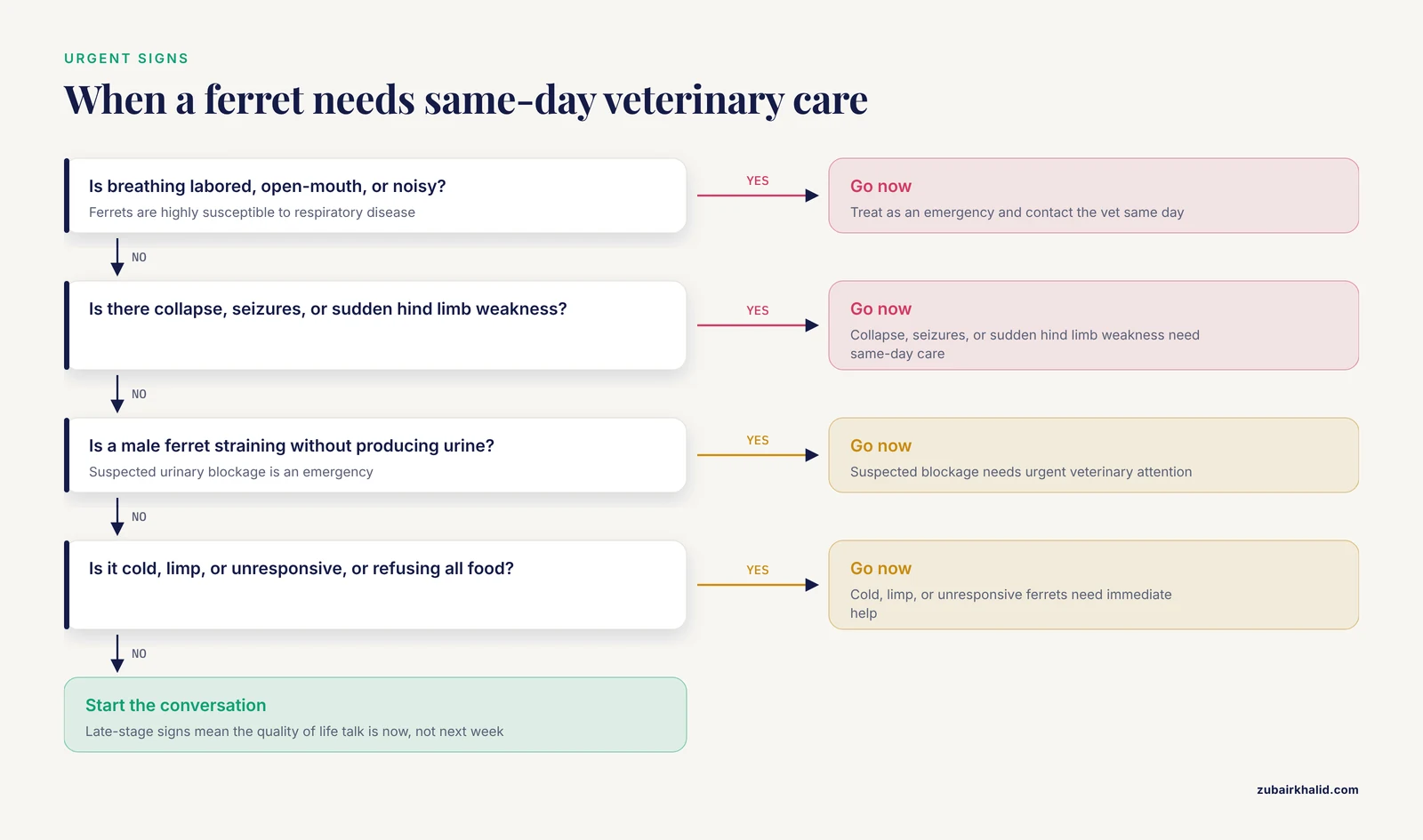
Knowing the signs a ferret is dying helps you distinguish an urgent but treatable crisis from the active dying process. Contact your veterinarian promptly for any of these, and treat the first group as emergencies.
Signs that need same-day veterinary attention:
- Labored, open-mouth, or noisy breathing, which warrants urgency in a species so susceptible to respiratory disease [3]
- Complete refusal of all food and treats
- Collapse, seizures, or sudden hind limb weakness
- A cold, limp, or unresponsive ferret
- Suspected urinary blockage, especially straining without producing urine in a male ferret
- Persistent vomiting or diarrhea with lethargy
Signs that a ferret is in the final stage of decline:
- Profound lethargy with little or no response to surroundings
- Dramatic weight loss and muscle wasting along the spine and hips
- An unkempt coat the ferret no longer grooms
- Cold extremities and a lowered body temperature
- Extended time lying flat and stretched out, with no interest in the cage, tunnel, or free-roam time
- Withdrawal from cage mates and from human contact
- Irregular or shallow breathing while at rest
Any of these late-stage signs means the time for the quality of life conversation is now, not next week. If your ferret is in distress outside clinic hours, ask your veterinary clinic about emergency options in advance so you are not searching for help at the worst possible moment.
Tracking the Decline: A Simple Daily Log
Between veterinary visits, your observations are the most valuable data your veterinarian has. Keep a notebook or phone note and record four things each day:
- Food intake, in rough terms such as ate well, ate some, refused food
- Mobility and engagement, such as came out for free roam time, played, stayed in the hammock
- Pain or comfort signs, using the facial and posture cues described above
- An overall good day or bad day rating
Photograph your ferret weekly from the same angle. Weight loss and muscle wasting that are invisible day to day become obvious across a month of photos. Bring the log to every appointment. It converts a vague sense that things are worse into a concrete record both you and your veterinarian can act on.
How to Comfort a Dying Ferret
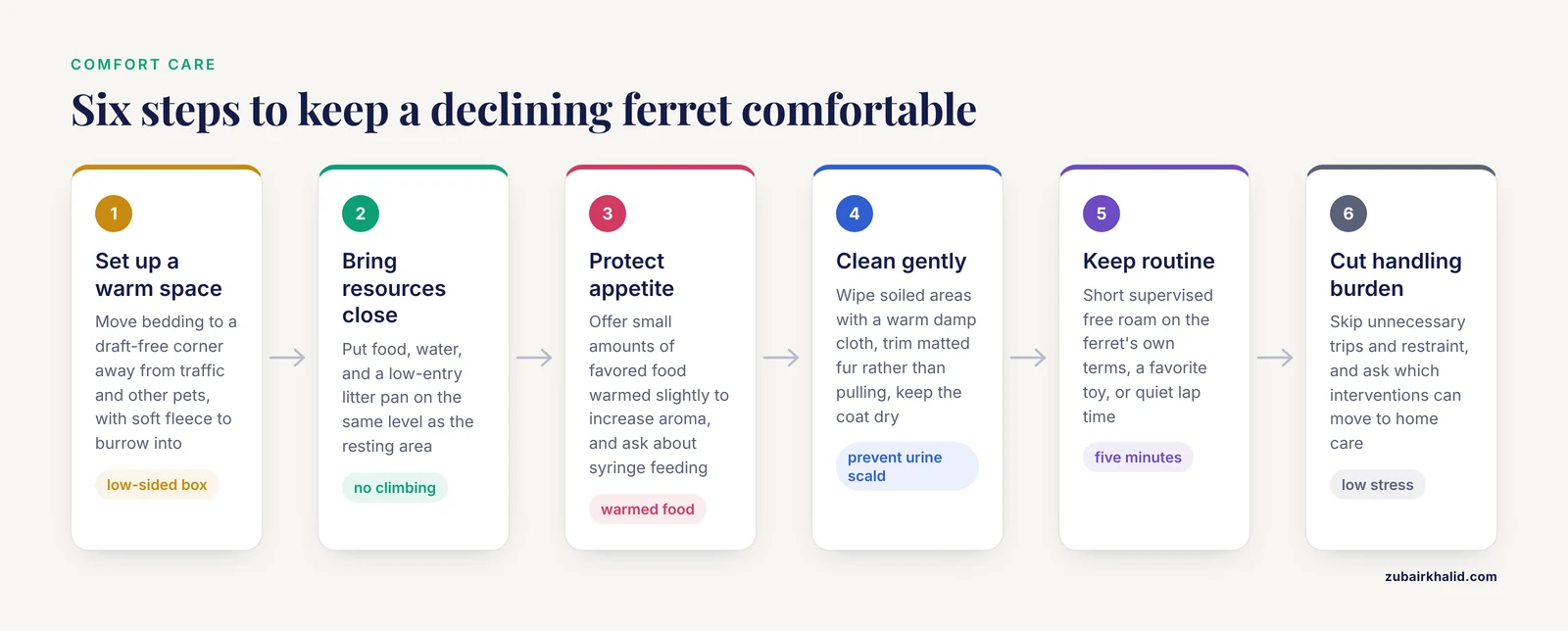
Comfort care aims to maximize whatever good time remains. The following measures are low-risk and high-value for almost every declining ferret, and your veterinarian can tailor them to your ferret's specific condition.
Create a warm, quiet recovery space
Move your ferret's sleeping area to a draft-free corner away from household traffic and other pets. Offer soft fleece bedding it can burrow into, and consider a low-sided sleeping box that requires no climbing. Older and sick ferrets lose tolerance for temperature stress, so keep the space thermally stable.
Bring the world within reach
Rearrange so that food, water, and a low-entry litter pan sit on the same level as the resting area. A ferret that has to climb to drink will quietly drink less. Add absorbent pads under the bedding for a ferret that is soiling itself, and change them often.
Protect appetite
Offer small amounts of a favored food warmed slightly to increase aroma. Whatever your usual feeding routine, decline is the time to lead with preference. The international feeding survey illustrates how individually tailored ferret feeding already is across households, with dry diets, homemade diets, and whole prey all in common use, so lean into whatever your own ferret has always valued [5]. If your ferret will not eat on its own, ask your veterinarian about syringe feeding a recovery diet and whether that step fits your ferret's condition. Never force food or fluids into a weak or lethargic ferret without instruction, because aspiration is a real risk.
Maintain hygiene gently
Wipe soiled areas with a warm damp cloth, trim matted fur rather than pulling it, and keep the coat dry to prevent urine scald. Gentle daily contact during cleaning doubles as bonding time and as a chance to check for new sores.
Preserve routine and gentle enrichment
Short, supervised free-roam periods on the ferret's own terms still matter even in decline. The international husbandry survey found that daily free roaming and environmental enrichment are the norm for pet ferrets, and that routine shapes their behavior and welfare [5]. A five-minute exploration of one room, a favorite toy, or quiet lap time preserves identity and dignity in a way that pure cage rest does not. Follow the ferret's lead and stop when it signals it is done.
Minimize stress and handling burden
Every unnecessary trip, restraint, or procedure costs a fragile ferret energy. The clinical literature on managing ferrets with systemic illness stresses careful, low-stress handling and thoughtful decisions about anesthesia and diagnostics in compromised patients [3]. Ask your veterinarian which interventions are still worthwhile and which can be replaced by home-based comfort measures. Telehealth follow-ups, where available, can reduce travel for simple progress checks.
When to Euthanize a Ferret: Making the Decision With Your Veterinarian
The actual decision point usually arrives as a convergence rather than a single event. The clearest signals that euthanasia should be on the table are:
- Pain that cannot be controlled with available treatment
- Persistent refusal of food and progressive weight loss despite assisted feeding
- Loss of mobility to the point that the ferret cannot reach its own resources
- Labored breathing at rest or other signs of organ system failure
- A rolling record in which bad days clearly outnumber good days
- A ferret that no longer engages with anything it once loved, and whose remaining time consists of suffering
The American Veterinary Medical Association's owner-facing guidance positions euthanasia as a humane and responsible option when an animal's suffering cannot be relieved, and veterinary teams are trained to walk owners through this decision without judgment. A good veterinarian will tell you honestly whether further treatment offers realistic improvement, will never pressure you in either direction, and will document the reasoning so the whole family understands the choice.
Plan the appointment before it is urgent. Ask your clinic in advance:
- Whether the appointment can be scheduled at a calm time of day, and whether a home visit is available through the practice or a house-call veterinarian
- Whether a sedative is given first so your ferret relaxes before the final injection
- Whether you can be present, and what presence looks like in that clinic
- What aftercare options exist, including communal or private cremation, and what each costs
- Whether other family members, including children, should attend, and how the clinic supports that
On the day, bring a familiar fleece item from your ferret's sleeping area, handle the visit as gently as any other handling of a sick ferret, and give yourself permission to stay or step away as your emotions dictate. Many owners later say that being present brought closure. Many others choose not to attend and feel at peace with that. Both are right.
Common Mistakes in Ferret End-of-Life Care
- Waiting for the ferret to look obviously sick. Ferrets mask illness, so visible collapse usually arrives late in the course of disease.
- Relying on appetite alone. A ferret can eat a little and still be in severe pain or decline. Use the full seven-question checklist.
- Deciding during a crisis. Emergency decisions are the hardest and often the most regretted. Having the quality of life conversation during a stable window gives you a plan.
- Isolating the ferret completely. Rest matters, but removing all free-roam time, enrichment, and contact removes the remaining sources of pleasure.
- Skipping pain medication because the ferret seems fine on some days. Pain control under veterinary guidance supports the good days rather than masking the decision.
- Forgetting the cage mates. Ferrets often live in groups, and a bonded companion's reaction to loss deserves attention too.
Grieving the Loss of a Ferret
Grieving the loss of a ferret is real grief, and it deserves to be treated that way. Ferrets occupy a particular emotional niche. They are small enough to hold, playful enough to make you laugh daily, and short-lived enough that many owners go through this loss repeatedly. Research on ferret ownership confirms how closely these animals integrate into household life, with the majority kept indoors and given daily free-roaming time as genuine companions [5], so the hole they leave is proportionate to the daily presence they had.
What helps most owners:
- Mark the loss deliberately. A photo, a paw print, a burial or cremation keepsake, or a written memory gives grief a place to land.
- Talk about it. Owner communities, ferret-experienced veterinarians, and grief hotlines offered by veterinary schools and pet loss organizations all exist for this purpose.
- Watch your other pets. Bonded ferrets may search for the missing cage mate, eat less, or seem restless for a period. Keep their routine steady and give extra contact.
- Do not rush a new ferret. Some owners find comfort in a new companion within weeks, others need months or years. Both timelines are normal.
- Seek help if grief stays heavy. When loss disrupts sleep, work, or appetite for weeks, a grief counselor or support group is a reasonable next step, the same as for any significant bereavement.
Limitations and When to Contact a Veterinarian
Every ferret's situation is individual, and the decision about euthanasia must be made with a veterinarian who has examined your animal, so nothing in this article replaces that examination. The conditions that shorten a ferret's life vary, their trajectories vary, and two ferrets with the same diagnosis can have very different remaining experiences.
Contact your veterinarian promptly, or an emergency exotic animal clinic if your regular clinic is closed, for any of the following:
- Labored, open-mouth, or noisy breathing
- Complete refusal of food lasting more than a day
- Collapse, seizures, or sudden hind limb weakness
- Straining to urinate without producing urine, particularly in a male ferret
- Persistent vomiting or diarrhea with lethargy
- A ferret that is cold, limp, or unresponsive
- Pain signs that are not covered by your ferret's current treatment plan
- A quality of life checklist that has tipped to mostly bad days, to schedule the end-of-life conversation
Frequently Asked Questions
How do I know when it is time to euthanize my ferret?
The time is near when pain cannot be controlled, when your ferret cannot eat, drink, move, or stay clean without constant struggle, and when bad days outnumber good days despite treatment. Review the seven-question checklist with your veterinarian and decide together based on your ferret's condition rather than its age alone.
What is a ferret quality of life scale?
It is a structured checklist of daily questions covering pain, appetite, hydration, hygiene, engagement, mobility, and the balance of good versus bad days. Using it daily creates a record you and your veterinarian can review together to time the decision well.
What are the signs a ferret is dying?
Late-stage signs include profound lethargy, refusal of all food, dramatic weight loss, an unkempt coat, cold extremities, labored breathing, withdrawal from cage mates and people, and no interest in free-roam time. Labored breathing or collapse needs same-day veterinary attention.
How can I comfort a dying ferret?
Provide a warm, quiet space with soft bedding, bring food, water, and a low-entry litter pan within easy reach, offer warmed favored foods, keep the coat clean and dry, and preserve short periods of gentle free roam and contact on the ferret's own terms. Ask your veterinarian about pain control and assisted feeding.
Do ferrets hide their illness?
Yes. Ferrets tend to mask weakness until disease is advanced, which is why daily quality of life tracking matters more in ferrets than in many other pets. Sudden visible decline usually reflects a longer underlying process.
Should I be present at my ferret's euthanasia?
That choice is personal, and both attending and not attending are legitimate. Many clinics allow presence and offer sedation first so the ferret is calm. Ask your clinic in advance how it handles presence so you can decide without pressure on the day.
What happens during a ferret euthanasia appointment?
Most commonly the veterinarian places an intravenous or intraosseous access, often after sedation so the ferret is relaxed, and then administers an anesthetic overdose that stops the heart peacefully. Your clinic will walk you through each step beforehand and discuss aftercare options such as communal or private cremation.
Is it normal to grieve deeply after losing a ferret?
Yes, and the depth of grief reflects the daily bond you shared, not the animal's size. Memorial rituals, ferret owner communities, and pet loss support lines all help, and professional grief support is appropriate if the loss continues to disrupt daily life.
Further Reading
Sources
- The Ferret as a Companion Animal: A Welfare Analysis of Husbandry, Health and Behavior Across Regions.
- Identifying Behavioural Traits and Underlying Personality Dimensions in Domestic Ferrets (Mustela putorius furo).
- Ferrets as Models for Viral Respiratory Disease.
- Measurement properties of grimace scales for pain assessment in nonhuman mammals: a systematic review.
- Feeding and Husbandry Practices in Pet Ferrets (Mustela putorius furo): A Cross-Sectional International Study.