When to Euthanize a Chinchilla: Quality of Life Signs
By Dr. Zubair Khalid, DVM, MS, PhD ·
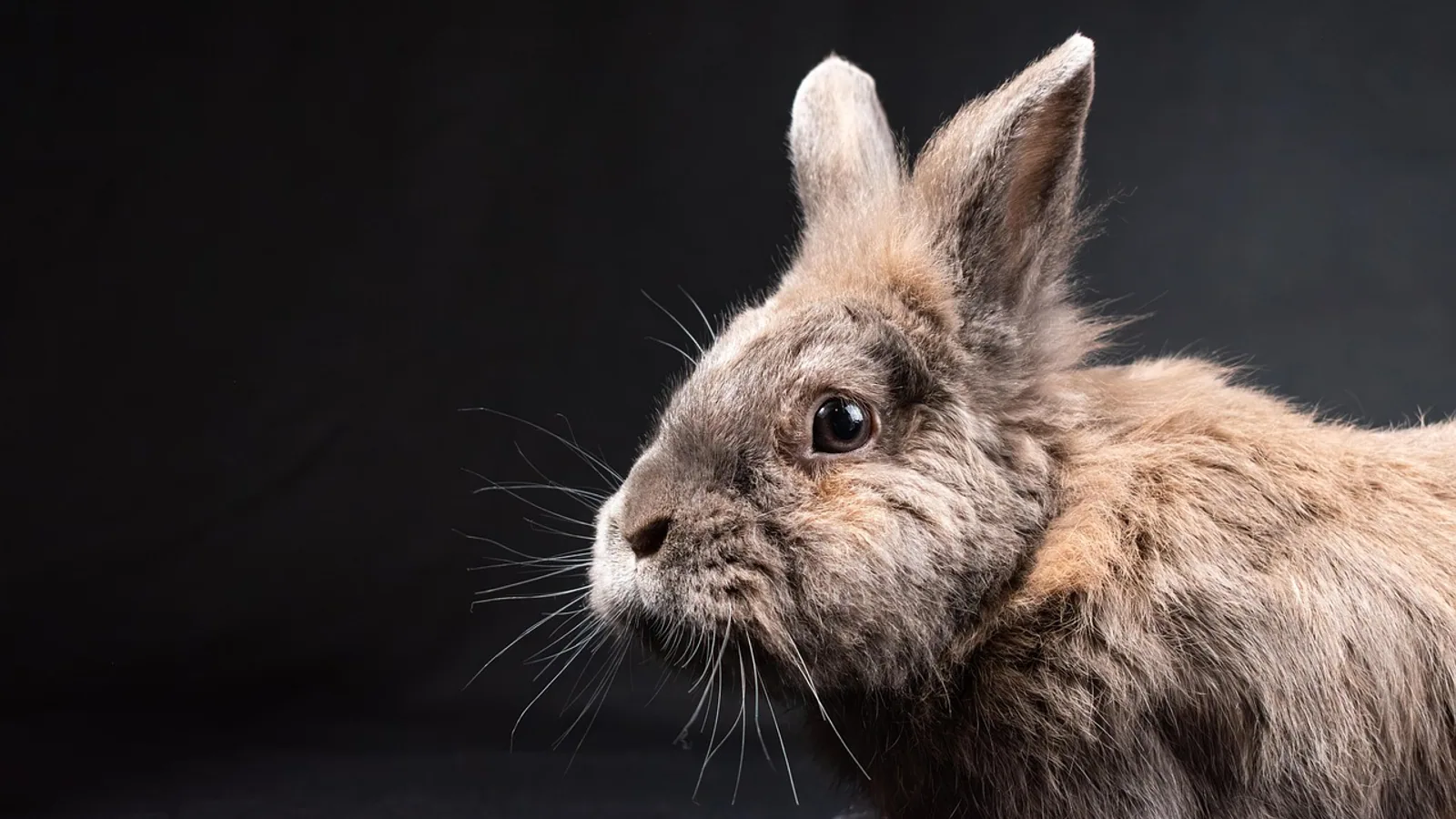
The most humane time to euthanize a chinchilla is when treatment can no longer restore the things that make life worth living for that individual animal, meaning your chinchilla has stopped eating, drinking, grooming, and interacting in ways that are normal for it, pain cannot be controlled, and bad days outnumber good ones. This decision belongs to you and your veterinarian together, and it should be based on what you observe at home over days and weeks, not on a single crisis moment. Research on how small mammal owners assess health at home shows that behavioral indicators, how an animal moves, eats, rests, and reacts to people, are the most commonly used and most reliable signals of welfare, and that framework applies directly to end of life decisions [1].
This article walks you through a practical quality of life framework built for chinchillas specifically, the physical signs that suggest a chinchilla is approaching the end of life, how to keep a dying chinchilla comfortable, what to expect from the euthanasia appointment itself, and how to handle the grief that follows.
This article is educational and is not a substitute for veterinary diagnosis or treatment. If your chinchilla is in obvious distress right now, contact an exotics veterinarian before doing anything else.
At a Glance: A Daily Quality of Life Checklist
Use this checklist every day while your chinchilla is ill or aging. Score each item honestly. A pattern of mostly "no" answers over several days is the clearest signal that a comfort-focused conversation with your veterinarian is needed.
| Domain | Ask yourself daily | Suggests good quality of life | Suggests suffering |
|---|---|---|---|
| Appetite | Is my chinchilla eating hay and pellets with normal enthusiasm? | Eats at normal times, seeks food | Ignores food, drops food, chews and stops |
| Hydration | Is water being drunk at the usual level? | Normal drinking pattern | Water bottle untouched, sunken eyes, dry stool |
| Mobility | Can my chinchilla move, jump, and reach food and water? | Moves freely within its ability | Lying flat, reluctance to move, dragging limbs |
| Grooming and coat | Is the fur dense, clean, and free of drooling? | Well-groomed coat | Matted or greasy fur, wet chin and chest from drooling |
| Behavior and interaction | Does my chinchilla react to me and its surroundings the way it always has? | Recognizes routines, reacts to handling | Unresponsive, hiding constantly, no reaction to touch |
| Pain signs | Am I seeing grinding of teeth without eating, hunched posture, or vocalizing? | No pain signs | Hunched stance, pressing abdomen, crying out |
| Breathing | Is breathing quiet and easy? | Quiet breathing at rest | Open-mouth breathing, wheezing, flared effort |
| Good days vs bad days | Over the last week, were more days good than bad? | Good days majority | Bad days are now the majority |
The behavioral side of this table is grounded in how owners of small mammals actually detect welfare problems at home. Survey-based research on small mammal ownership found that owners overwhelmingly rely on behavioral indicators to judge health and welfare, and those observations map cleanly onto the Five Domains model of animal welfare, which covers nutrition, physical environment, health, behavior, and mental state [1]. That same structure is what a chinchilla quality of life scale should measure.
Why Chinchillas Need a Different Quality of Life Framework
Chinchillas are prey species. Their instinct is to hide weakness, which means by the time a chinchilla looks obviously sick to an owner, illness is usually advanced. This is the single most important fact shaping end of life care in this species. A chinchilla that is sitting fluffed in a corner, refusing food, is not at the beginning of a problem. It is near the end of one.
To judge decline fairly, you need to know what normal looks like for a healthy chinchilla, because much of a chinchilla's day is spent resting. Research using round-the-clock video recording of chinchillas found they spend roughly 68 percent of the day resting, about 23 percent in locomotion, and the remainder eating [2]. A resting chinchilla is not necessarily a suffering chinchilla. The signal of decline is a change from your individual animal's baseline, not the total hours of sleep.
That same research also showed something encouraging for end of life care: chinchillas housed in larger, enriched enclosures with deep litter flooring showed significantly less fearful behavior toward humans than animals in bare standard cages [2]. Practically, this means a chinchilla that has lived with good space and gentle handling will show you clearer behavioral signals throughout its life, which makes your quality of life observations more trustworthy when it matters most.
Chinchillas are also long-lived rodents, commonly living well beyond a decade with proper care, so owners often face these decisions with an elderly animal whose slow decline must be separated from treatable acute illness. That distinction always requires a veterinarian, ideally one experienced with hystricomorph rodents, the group that includes chinchillas and guinea pigs.
Understanding the Chinchilla Quality of Life Scale
Formal scoring tools exist for dogs and cats, but a chinchilla quality of life scale works best when adapted from the Five Domains framework, the same model small mammal owners intuitively use when they assess their animals at home [1]. Here is how each domain translates to a chinchilla at the end of life.
Domain 1: Nutrition
Appetite is the most sensitive early indicator in this species. Watch for:
- Reduced interest in hay, the backbone of the diet
- Dropping food after picking it up, which often indicates oral pain
- Weight loss you can feel along the spine and hips
- Reduced fecal output or smaller, drier droppings
Poor nutrition is itself a recognized cause of disease in chinchillas and guinea pigs, so a chinchilla that stops eating creates a downward spiral in which the original problem and the malnutrition reinforce each other [3]. Once a chinchilla has gone more than a short period without eating, this is an emergency, not a waiting situation.
Domain 2: Hydration and Physical Environment
Water intake in small mammals is tightly linked to feed intake, and the ratio between the two is a meaningful clinical indicator. Comparative research on small mammal water consumption found that water and feed daily intake are interlaced, that water requirements vary widely between individuals and species, and that behavioral abnormalities can change drinking patterns, including drinking as a displacement behavior [4]. At the end of life, the practical takeaway is simple. Check the water bottle daily. A bottle level that has not moved in a day, combined with reduced eating, is one of the most concrete data points you can bring to your veterinarian.
Adequate water supply is described in the veterinary literature as indispensable for health and welfare in these species, partly because insufficient intake contributes to urolithiasis, urinary stone formation [4]. A chinchilla with recurrent urinary problems in its final months may need its comfort plan revisited repeatedly.
Domain 3: Health and Pain
Chinchillas cannot tell you where it hurts, so you read pain from posture and behavior:
- Hunched, huddled posture with the abdomen tucked
- Teeth grinding when not eating, distinct from the normal soft grinding of a content chinchilla
- Reluctance to be handled in areas that were previously fine
- Lethargy that goes beyond the species' normal heavy resting pattern
- Wet fur around the chin and chest, which suggests drooling from dental pain
Dental disease is one of the most common serious problems in this species and is strongly connected to diet. The veterinary literature on chinchilla care identifies poor diets as a direct route to disease, and the continuously growing teeth of hystricomorph rodents make dental problems a chronic, painful, and often progressive condition rather than a one-time event [3]. When dental disease reaches the stage where a chinchilla cannot chew hay comfortably, quality of life collapses quickly, and this is one of the most common contexts in which euthanasia decisions arise.
Domain 4: Behavior and Mental State
This is where your knowledge of your individual animal matters more than any chart. Compare current behavior to the baseline you know:
- A chinchilla that once reacted to the sound of the food container and no longer does
- An animal that stops performing its species-typical behaviors, such as dust bathing, exploring, or jumping to ledges
- Loss of interest in a bonded companion
- Reactions toward humans becoming unresponsive rather than fearful or curious
Research on chinchilla behavior toward humans shows that these animals show measurable, consistent reactions to people, and that these reactions change meaningfully with their circumstances [2]. A flattening of those reactions in a sick or dying chinchilla is a real signal, not imagination.
Domain 5: The Good Days Ledger
Start a simple daily log the moment you begin worrying. Each evening, mark the day good, fair, or bad. When bad days clearly outnumber good ones across two or more weeks despite veterinary treatment, the scale has tipped. Most veterinarians consider this ledger the single most honest measure, because it integrates everything else.
Signs a Chinchilla Is Dying
Distinguishing a treatable crisis from the active process of dying requires veterinary input, but there are signs that indicate the body is shutting down. If you observe several of these together, contact your veterinarian immediately, and if the animal has a terminal diagnosis already, these signs tell you the final phase has arrived.
- Complete refusal of food and water over more than 24 hours
- Cold extremities and a body that feels cool to the touch despite warm ambient temperature
- Lying on its side, unable or unwilling to right itself
- Shallow, labored, or open-mouth breathing
- Extreme lethargy with no response to gentle stimulation
- Body temperature loss, trembling, or stiffness
- Eyes that remain half closed and unresponsive to movement around them
Chinchillas losing condition may also stop producing normal droppings. Because water and feed intake are physiologically linked in this species, a shutdown of eating and drinking together produces a rapid collapse of gut function [4]. This cascade is why waiting to "see how tomorrow goes" is rarely kind once these signs appear.
Signs that overlap with dying but may still be treatable include acute anorexia from gastrointestinal stasis, heat stress, and dental pain flare-ups. Never assume death is certain without an examination. Chinchillas can sometimes be pulled back from a crisis, and only a veterinarian can tell you which situation you are in. The limitations section at the end of this article lists the specific thresholds for immediate escalation.
How to Comfort a Dying Chinchilla
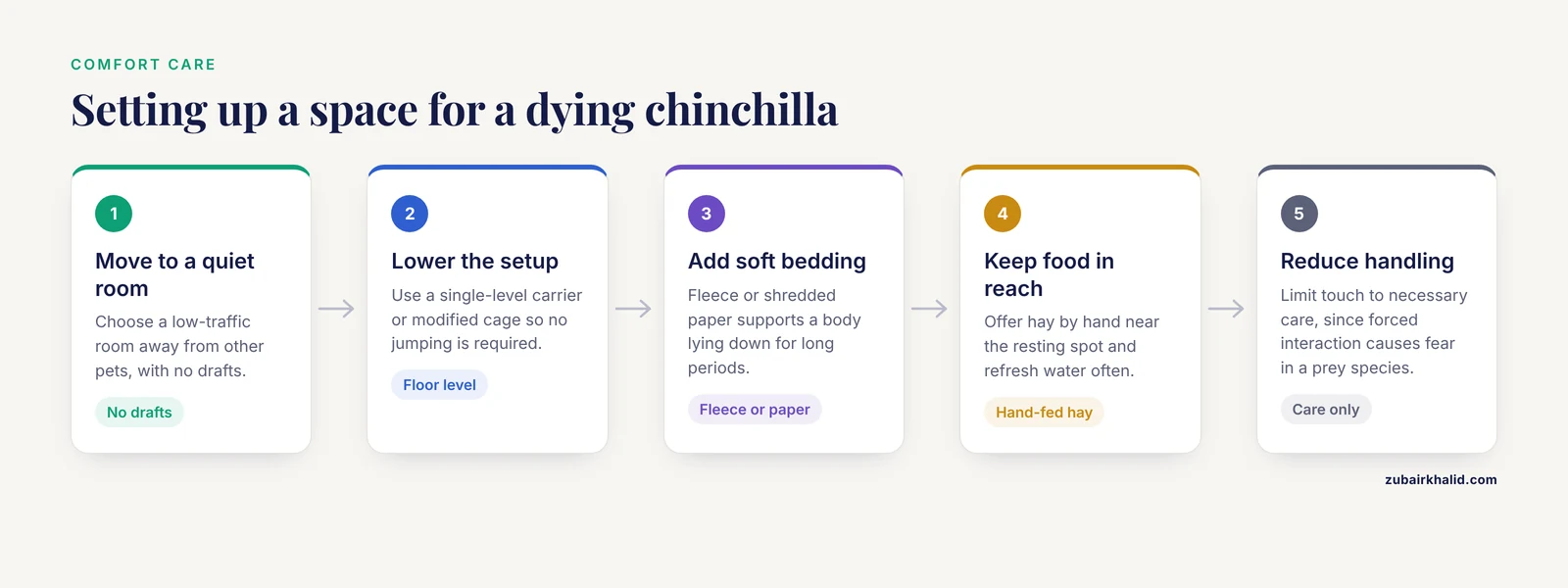
Comfort care, sometimes called palliative care, has one goal, which is minimizing distress during the final days or hours. Everything below is supportive in nature and does not replace medical treatment. Discuss each element with your veterinarian, especially anything involving assisted feeding or warming.
Adjust the Environment
- Move your chinchilla to a quiet, low-traffic room away from other pets
- Keep the temperature in the species' appropriate range and avoid drafts, since a weakening animal cannot thermoregulate well
- Lower the setup. Move food, water, and the resting area to floor level in a single-level carrier or modified cage so no jumping is required
- Provide soft, clean bedding such as fleece or shredded paper that supports a body lying down for long periods
- Reduce handling to what is necessary for care. Force interaction with a dying prey species causes fear without benefit
Keep Food and Water Within Reach
- Offer hay by hand near the resting spot
- Syringe feeding may be appropriate, but the technique, fluid choice, and volume must be demonstrated by your veterinarian, since incorrect syringe feeding can cause aspiration in small rodents
- Refresh water frequently and consider offering it in a shallow dish as well as a bottle, since a weak animal may not drink from a bottle mechanism
- Record approximately how much water disappears from the bottle each day, because this is the kind of concrete observation that helps your veterinarian assess hydration [4]
Manage Pain and Hygiene
- Never give pain medication intended for other species or purchased without guidance. Chinchillas have specific sensitivities, and the veterinary literature on this species documents that antibiotic and drug choices require species-specific knowledge [3]
- Check for urine scalding and fecal soiling, and gently clean the hindquarters with a damp cloth, drying thoroughly
- If your chinchilla has a bonded companion, allow supervised contact unless your veterinarian advises otherwise. Separation distress is real in bonded pairs
- Keep the routine. Familiar sounds, familiar low voices, and the normal light cycle reduce stress even when an animal seems unresponsive
What Not to Do
- Do not leave a dying chinchilla in a multi-level cage where it may fall
- Do not apply external heat sources such as heating pads directly against the body, which can burn thin-skinned, immobile animals. Warm the ambient air instead
- Do not delay euthanasia out of your own fear of the appointment. Prolonging the final decline to postpone the decision transfers suffering from you to the animal
- Do not introduce new foods, supplements, or home remedies at this stage
The Euthanasia Appointment: What to Expect and How to Decide
When you and your veterinarian agree that the time has come, understanding the process reduces fear for both of you.
Choosing the Moment
Most owners find it easier to choose a calm day slightly early than to wait for an emergency at 2 a.m. A planned appointment lets you say goodbye at home or in a quiet clinic, lets a bonded companion remain nearby if you wish, and prevents the crisis scenario in which the decision is made under panic. Ask your veterinarian whether the appointment can happen in your home, since many exotics practices offer this.
What Happens During Euthanasia
Euthanasia in small mammals is performed by a veterinarian using an anesthetic overdose, administered typically by injection into a vein, or sometimes by other routes in very small or compromised patients. Your veterinarian will explain the specific method. The process is painless. The animal first loses consciousness, and death follows while it is unaware.
Two questions worth asking your veterinarian in advance:
- Can I hold my chinchilla or keep my hand on it during the procedure?
- Will my chinchilla receive a sedative first so it drifts off calmly before the final injection?
Aftercare Options
Ask before the appointment, not after, about body care. Options typically include home burial where local regulations permit it, communal or private cremation, and return of ashes. Your veterinarian or local exotics community can explain what is available in your area.
Common Mistakes Owners Make at End of Life
- Waiting for the animal to stop eating entirely. In chinchillas, anorexia is a late sign. React to reduced appetite, not absent appetite.
- Attributing all inactivity to the species' normal rest pattern. Chinchillas do rest for most of the day [2], but the character of the rest changes when an animal is in pain. A painful chinchilla rests tense and hunched rather than relaxed and sprawled.
- Reading a water bottle wrong. Dribbling, leaks, and cage mates all complicate bottle readings. In a single-housed chinchilla, an unmoved bottle across a full day alongside reduced eating is significant.
- Projecting human timelines. Owners often wait for a moment of clarity that never comes. Degradation in chinchillas can be gradual, and the good days ledger is a better guide than a hypothetical final crisis.
- Keeping the decision private. Isolation makes the decision heavier. Involve your household and your veterinarian. Research on small mammal owners found that most are willing and able to provide good welfare when they have the practical means to act, and that means having support systems matters [1].
- Assuming an old chinchilla simply cannot be treated. Some conditions in geriatric chinchillas are manageable for extended periods. Age alone is not a reason for euthanasia. Untreatable pain and irreversible loss of function are.
Grieving the Loss of a Chinchilla
Grief after losing a chinchilla is real and is often compounded by the sense that others will not understand mourning a small animal. Chinchillas live long lives, form strong bonds with their owners, and are part of daily household routine for a decade or more. You are allowed to grieve fully.
Practical points that help many owners:
- Acknowledge the specific loss. You have lost the dust bath sounds, the evening routines, the particular personality. Naming those specifics helps more than general consolations.
- Do not rush to replace. Taking on a new animal before the grief has settled often shortchanges both the new chinchilla and your own processing.
- Consider the bonded companion. If a surviving chinchilla has lost its partner, watch it closely for weeks. Changes in eating, activity, and reaction to humans mirror the domains described earlier in this article [1] [2]. Some surviving chinchillas benefit from carefully introduced new companions, a topic your veterinarian or an experienced rescue can help you navigate.
- Memorialize in a way that fits you. A photograph, a written account of your chinchilla's life, or a planted纪念 item gives grief a place to go.
- Seek support where small animals are understood. Exotics-focused veterinary practices, small mammal rescue communities, and general pet loss support lines all exist. The AVMA provides pet owner resources on end of life decisions and pet loss that many owners find useful in the days after a euthanasia.
Grief that disrupts sleep, appetite, or work for extended weeks, or grief complicated by guilt over the euthanasia decision, deserves the same respect as any other bereavement. Talking to a counselor about pet loss is normal and effective.
Limitations and When to Contact a Veterinarian
Every chinchilla is an individual, and only a veterinarian who has examined your animal can diagnose its condition, estimate prognosis, or perform euthanasia. This article provides a framework for observation and decision making, not a diagnosis.
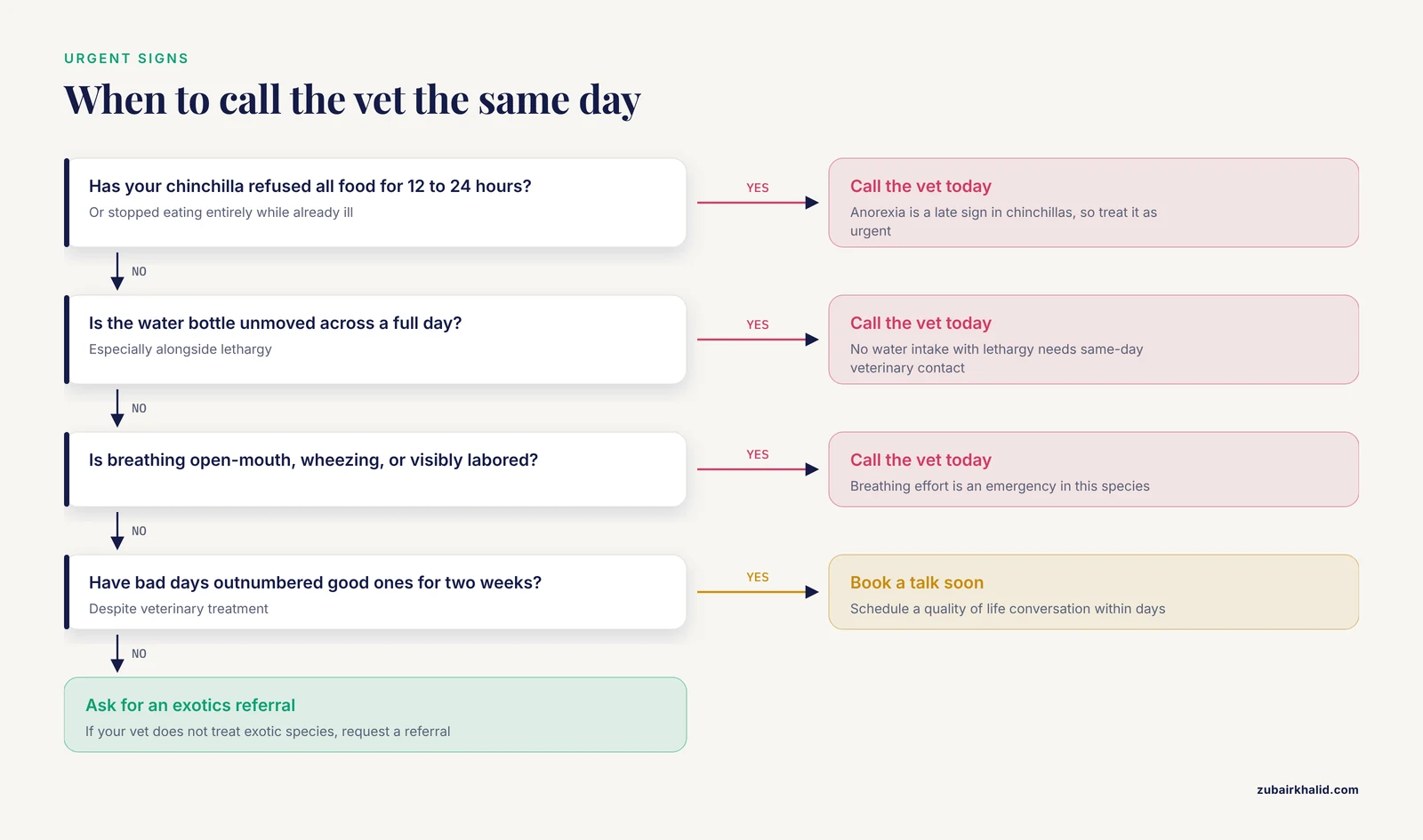
Contact your veterinarian urgently, the same day, if you observe any of the following:
- No food intake for 12 to 24 hours, or complete refusal to eat at any point in an animal already ill
- No water consumption across a full day, or an unmoved water bottle alongside lethargy [4]
- No fecal output, or very small, dry, or misshapen droppings
- Open-mouth breathing, wheezing, or visible effort while breathing
- Lying on its side, unable to stand, or circling
- A fall from any height, since trauma in this species can cause internal injury not visible from outside
- Drooling, a wet chin or chest, or dropping food from the mouth
- Sudden swelling of any body part, or bleeding from any opening
- Signs of pain such as hunching, teeth grinding without food, or crying out when touched
- Heat exposure of any kind, since chinchillas are extremely heat-sensitive
Contact your veterinarian for a scheduled conversation, within days, if:
- The good days ledger shows bad days overtaking good ones over two weeks
- A previously diagnosed chronic condition, such as advanced dental disease, is worsening despite treatment
- You are uncertain whether a behavior change reflects aging, illness, or normal variation [2]
- You are considering euthanasia and want a second opinion on prognosis or options
If your regular veterinarian does not treat exotic species, ask directly for a referral to an exotics or zoological companion animal practice. General small animal clinics vary widely in rodent experience, and an experienced exotics veterinarian makes a measurable difference in both treatment options and the quality of end of life guidance.
Frequently Asked Questions
When should I euthanize my chinchilla?
Euthanize when your chinchilla's suffering cannot be relieved by treatment, when it has lost the ability to eat, drink, move, and interact in ways normal for it, and when bad days outnumber good ones despite veterinary care. Make the decision with your veterinarian using a daily quality of life log rather than a single moment of crisis.
What is a chinchilla quality of life scale?
It is a structured daily checklist covering nutrition, hydration, mobility, grooming, pain signs, behavior, and the balance of good versus bad days. The behavioral indicators that small mammal owners naturally use to assess welfare map onto the Five Domains model of animal welfare, which is the best framework for scoring quality of life in this species [1].
What are the signs a chinchilla is dying?
The clearest signs are complete refusal of food and water, cold extremities, lying on the side without righting itself, shallow or open-mouth breathing, extreme unresponsiveness, and loss of body warmth. Several of these appearing together indicate the final phase, and they warrant an immediate call to your veterinarian to confirm whether anything can still be done.
How can I comfort a dying chinchilla?
Move it to a quiet, single-level, warmly kept space with soft bedding, keep food and water within reach without forcing intake, minimize handling, gently clean any soiled fur, and allow contact with a bonded companion. Ask your veterinarian to demonstrate syringe feeding before attempting it, and never medicate without veterinary direction.
How long can a chinchilla go without eating before it becomes dangerous?
Any significant period of complete anorexia is dangerous in this species, because reduced eating rapidly disrupts gut function and dehydration follows quickly since water and feed intake are physiologically linked [4]. Treat refusal of food as an emergency that warrants same-day veterinary contact rather than a watch-and-wait situation.
How do I know if my chinchilla is in pain?
Look for a hunched posture with a tucked abdomen, teeth grinding without eating, reluctance to be handled, a fluffed and tense resting position rather than a relaxed sprawl, drooling or a wet chin, crying out when touched, and reduced grooming. Pain in chinchillas is read almost entirely from posture and behavior because they cannot vocalize pain the way mammals with predator ancestry do.
Will my chinchilla's companion grieve after a euthanasia?
Bonded chinchillas can show behavioral changes after losing a partner, including reduced eating and altered activity. Monitor the survivor daily using the same quality of life domains for several weeks, and discuss with your veterinarian whether supervised introductions to a new companion are appropriate later.
How do I cope with grieving the loss of a chinchilla?
Allow the grief, name the specific routines and traits you miss, delay bringing home a new chinchilla until you have processed the loss, and use pet loss support resources such as those offered by the AVMA for owners after euthanasia. If grief disrupts your sleep or daily functioning for many weeks, speaking with a counselor experienced in pet loss is a reasonable and effective step.
Sources
- Small mammal owners' experiences of housing challenges and animal welfare: A COM-B and word frequency analysis.
- The effects of age, size, and cage complexity on the behaviour of farmed female chinchillas (Chinchilla lanigera).
- Guinea pig and chinchilla care and husbandry.
- Water consumption in small mammals (dwarf rabbits, Guinea pigs and chinchillas): New data about possible influencing factors.