Bringing Home a New Hedgehog: First Week Guide
By Dr. Zubair Khalid, DVM, MS, PhD ·

The first week with a new hedgehog is about one thing: stability. Your job is to provide a warm, quiet, escape-proof enclosure, offer food and water, and let the animal settle at its own pace while you keep handling short and calm. Most hedgehogs begin exploring, eating reliably, and tolerating brief handling within a few days to a couple of weeks. A hedgehog that refuses food for more than a day or two, feels cool and sluggish, or has loose or discolored droppings needs a call to an exotics veterinarian right away.
Hedgehogs kept as pets in the United States are usually African pygmy hedgehogs. They are small, solitary, nocturnal insect eaters with a lifespan commonly reported in the range of four to six years, so bringing one home is a genuine multi-year commitment. They are also regulated animals. A number of states and cities restrict or prohibit private hedgehog ownership, so confirm your local rules before you bring one home, and keep your purchase or adoption paperwork in case you need to show legal provenance.
This guide walks through the new hedgehog checklist, enclosure setup, the first 48 hours, feeding, handling, the settling-in timeline, and the first vet visit.
At a Glance: Your First Week Plan
| Day | Main goals |
|---|---|
| , - | , - |
| Before pickup | Enclosure assembled, heat source running, thermometer in place, food and water ready, exotics vet identified |
| Day 1 | Place the hedgehog in the enclosure, dim the lights, keep the room quiet, no handling beyond a brief health glance |
| Days 2 to 3 | Confirm the hedgehog eats and drinks at night, check droppings, weigh if possible, start very short handling sessions |
| Days 4 to 5 | Build a short daily handling routine, book the first vet visit if not already scheduled |
| Days 6 to 7 | Establish a consistent feeding and light schedule, add gentle enrichment, reassess temperature and enclosure security |
Print or copy this table and work through it one row at a time. The rest of the article explains the reasoning behind each step.
New Hedgehog Checklist
Get everything on the ground and running before the hedgehog arrives. Setting up after the animal comes home means cold temperatures and unsettled nights, which are the two things you most want to avoid.
Enclosure. Choose a cage with a solid floor, smooth walls high enough to prevent climbing out, and good ventilation. Glass aquariums and plastic modular enclosures both work if they are large enough. Aim for several square feet of floor space so the hedgehog can separate sleeping, eating, and toileting areas. Wire floors are unsuitable because they trap and injure small feet. A secure lid matters more than many beginners expect, since hedgehogs are surprisingly good climbers and escape artists.
Bedding. Use a dust-free, absorbent substrate such as recycled paper bedding or aspen shavings, laid an inch or two deep so the hedgehog can burrow, a natural behavior for this species. Avoid cedar shavings, which release aromatic oils associated with respiratory irritation in small mammals.
Hide box. Provide at least one enclosed sleeping shelter. A small plastic hide, a cardboard box with an entrance hole, or a fabric snuggle sack all serve the same purpose. Hedgehogs sleep through most of the day and need a dark retreat.
Heat source and thermometer. This is the single most important supply on the list. African pygmy hedgehogs evolved in warm climates, and if their environment cools too much they may attempt a state of torpor or hibernation, which is dangerous and can be fatal in pet hedgehogs. The Merck Veterinary Manual recommends keeping pet African hedgehogs warm, on the order of 75 to 85°F, monitored with a thermometer inside the cage. A ceramic heat emitter on a thermostat, or a heat pad designed for enclosures that warms the air rather than only the floor, works well. Room thermometers and small digital probe thermometers are inexpensive and worth owning two of.
Exercise wheel. Hedgehogs are strong runners and may travel considerable distances on a wheel each night. Select a solid-surface wheel with no rungs or mesh, because open wire and spaced rungs catch toes and limbs. Size it so the hedgehog runs with a flat back rather than an arched spine.
Food and water dishes. Heavy ceramic bowls resist tipping. Some owners use a water bottle, but a shallow dish is easier for a newly arrived animal to find. Offer both during the first week if you like, and keep whichever your hedgehog uses reliably.
Diet. Stock a base diet before pickup. Commercial hedgehog kibble, a high-quality dry cat or kitten food used as a base, and live or dried insects such as mealworms and crickets are the standard building blocks, covered in detail in the feeding section below.
Carrier. A small hard-sided pet carrier with bedding inside for transport home and for vet visits.
Scale. A digital kitchen scale that reads in grams lets you track weight, one of the most useful health numbers you can collect on a small mammal.
Setting Up the Enclosure Before Arrival
Place the cage in a room that stays warm, stays quiet during daytime hours, and is free of drafts and direct sunlight through windows. Because hedgehogs are nocturnal, the enclosure should not sit next to a television or in a room with heavy evening foot traffic, but it should be somewhere the family passes through so the hedgehog learns household sounds.
Set the heat source on one side of the cage so the hedgehog can move between a warmer zone and a cooler zone. Put the thermometer at hedgehog level, not at human eye level, because the temperature your pet feels is the one near the floor of the cage. Run the heat for at least a full day before pickup and confirm the cage holds a steady reading in the recommended range around the clock, including overnight when rooms naturally cool.
Arrange the interior with the hide box on the cooler side, food and water on the opposite end, and the wheel in the middle or wherever space allows. Leave the layout unchanged for the whole first week. A newly arrived hedgehog is building a mental map of a small territory, and moving furniture daily resets that process.
One check many owners skip: sit on the floor at hedgehog eye level and look at the cage from below and from the side. Gaps under lid rims, unsecured doors, and openings around attachments are exactly where escapes happen.
The First 48 Hours
When you bring your hedgehog home, place the carrier inside the enclosure, open it, and let the animal come out on its own. Do not reach in and pull it out. Some hedgehogs will march straight into the hide box and stay there until nightfall. That is normal and healthy behavior, not a sign that something is wrong.
Keep these rules for the first two days:
- Minimal handling. One or two very short sessions, a minute or two each, are enough. The goal is simply that the hedgehog learns your scent without learning to associate your hands with stress.
- Quiet daytime. The hedgehog will sleep. Resist the urge to wake it for visits. Waking a nocturnal animal repeatedly during its sleep period is a genuine welfare issue and slows settling.
- Observe from a distance. In the evening, watch whether the hedgehog leaves the hide, investigates food, drinks, and uses the wheel. Nightly activity and appetite are your two best early health indicators.
- Check droppings. Normal hedgehog droppings are dark, formed, and modest in size. Note anything loose, green, or bloody, since diarrhea in a new small mammal is a reason to contact a veterinarian promptly.
- Confirm warmth. Recheck the thermometer each morning and evening. A newly arrived animal that feels cool to the touch, is fluffed and sluggish, or is lying sprawled and unresponsive may be attempting torpor because the enclosure is too cold, and that is an emergency requiring immediate gentle warming and a vet call.
Do not bathe, trim nails, or rearrange the cage in the first two days. Grooming tasks can wait until the hedgehog is eating and moving normally.
Feeding During the First Week
Hedgehogs are insectivores with a high need for animal protein and a well-documented tendency to gain weight easily in captivity. In the first week, offer the same diet the hedgehog was eating before it came to you whenever you know it. An abrupt full diet change on top of the stress of a new home is a common trigger for refusing food.
The practical structure used by most exotic animal veterinarians looks like this:
- A measured base diet of commercial hedgehog food or a high-quality dry cat food, available in the evening.
- A small portion of insects, such as gut-loaded mealworms or crickets, offered as enrichment and a protein source.
- Fresh water available at all times.
Offer food in the evening shortly before the hedgehog naturally wakes. In the morning, check how much was eaten. A healthy settling hedgehog typically shows real appetite within the first night or two. Treats, new foods, and dietary variety can all wait until after the first vet visit, when you can discuss portions with a veterinarian who has actually weighed your animal. Obesity is one of the most common health problems in pet hedgehogs and is far easier to prevent than to reverse.
Avoid milk and other dairy items, which hedgehogs digest poorly, and avoid leaving large piles of food, which encourages overeating. If you use a water bottle, confirm the hedgehog can operate the ball bearing, some newly arrived animals never learned, and place a shallow dish alongside until you are sure.
Handling and Socialization in the First Week
Pet hedgehogs are not social animals in the way dogs or rats are. They do not need companionship from humans to be healthy, but regular calm handling from an early age makes them far easier to examine, medicate, and manage for life. The first week sets that pattern.
Start with short sessions once the hedgehog has spent a settled night in the enclosure. Sit near the open cage, let the hedgehog walk onto your flat palms at its own pace, and keep the session brief. Expect the classic defensive response at first, the hedgehog huffing, raising its spines, and rolling into a tight ball. This is normal hedgehog behavior, not aggression or a sign of failure. Stay low, keep your hands flat, and wait. A hedgehog that unrolls and begins exploring in your hands is telling you the session is going well.
A few specific first-week handling points:
- Quills. Hedgehog spines are modified hairs. They are prickly but not barbed and not normally painful with gentle contact. A relaxed hedgehog lays its spines flat against your skin.
- Self-anointing. Some hedgehogs, especially when encountering new smells, produce frothy saliva, twist their heads, and spread the foam over their own spines. This behavior, sometimes called anointing, is normal and harmless, though startling, the first time you see it.
- Timing. Handle in the evening when the hedgehog is naturally awake. A hedgehog roused from deep daytime sleep starts every interaction in defensive mode.
- Children and other pets. Keep dogs and cats completely separated from the hedgehog, and supervise all handling by children closely.
How long for a hedgehog to settle in? Plan for the first several days to be mostly observation, with real progress often visible between one and two weeks. Individual animals differ enormously. Some walk out of the carrier curious on night one, others take two weeks before they accept handling without balling. Judge progress by appetite, nightly activity, and dropping quality rather than by how quickly the hedgehog tolerates being held.
The First Vet Visit for a Hedgehog
Book the first vet visit for a hedgehog within the first week, ideally within the first few days, unless the hedgehog is showing stress that a trip would worsen, in which case discuss timing by phone. Two things make this visit different from a dog or cat appointment:
Find an exotics veterinarian first. Many small-animal clinics do not treat hedgehogs. Before pickup day, search for a clinic that lists exotic companion mammals among its patients, or ask a local hedgehog breeder or rescue which veterinarians they use. The Merck Veterinary Manual emphasizes that African hedgehogs have species-specific husbandry and medical needs that general practitioners may not routinely manage, which is why experienced exotics care matters.
What the visit covers. A reasonable new-hedgehog examination includes a full physical exam, a weight recorded on the clinic chart as a baseline, an assessment of teeth, skin, and quill condition, and a discussion of diet and enclosure temperature. Fecal testing for parasites is commonly recommended in newly acquired small mammals, and your veterinarian may also discuss screening for conditions seen in the species, such as external mites and, later in life, the neurologic condition known as wobbly hedgehog syndrome. Bring a fresh fecal sample in a clean container if the clinic asks for one.
Bring three things to the appointment: a list of everything the hedgehog has eaten this week, a note of any droppings or behaviors that seemed abnormal, and photographs of the full enclosure including the thermometer reading. These turn a fifteen-minute exam into genuinely useful preventive care.
If your new hedgehog came from a home with other animals, ask your veterinarian whether a quarantine period from your other pets is advisable. This is an individual recommendation that depends on the source of your animal and the other pets in your household.
Common First-Week Mistakes
Almost every problem seen in a hedgehog's first week traces back to one of a short list of avoidable errors:
- Enclosure too cold. This is the classic mistake. Owners underestimate how much heat a small cage loses overnight, the hedgehog cools down and goes off food or attempts torpor, and the family mistakes this for illness alone. Verify temperature at hedgehog level, at night, with a real thermometer.
- Too much handling too soon. Daily marathon handling sessions teach a frightened animal that humans mean stress. Short, frequent, predictable sessions work.
- Wrong bedding. Cedar shavings and heavily scented substrates irritate small-mammal airways. Paper-based or aspen bedding is the safe choice.
- Wire or rung wheels. These cause toe and limb injuries. Solid surface only.
- Immediate diet change. Switching foods entirely in week one invites food refusal and GI upset. Transition gradually after the animal is settled.
- Free-roam time too early. Loose in a house, a new hedgehog can disappear into furniture, ingest something harmful, or escape entirely. Floor time comes later, in a closed small room, after the animal is settled.
- Assuming daytime sleepiness is illness. A hedgehog that sleeps all day and refuses to perform on demand is behaving normally. Judge health on nighttime behavior, appetite, and droppings instead.
Troubleshooting the First Week
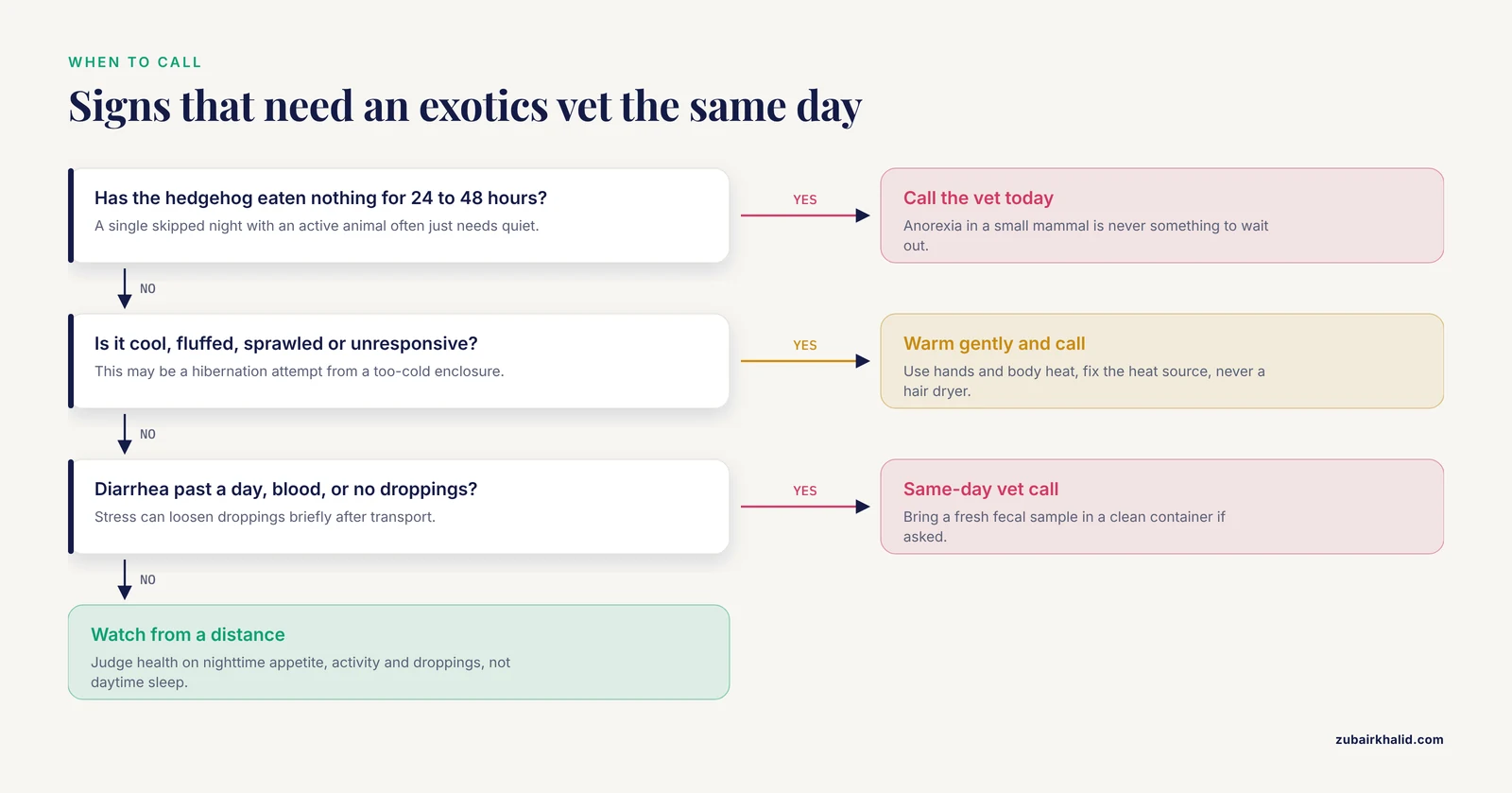
Not eating. A hedgehog that skips a single night but is active and alert often needs another night of quiet. A hedgehog that has not eaten for more than about 24 to 48 hours, or that is also lethargic, needs veterinary attention. Small animals lose condition fast, and anorexia in a hedgehog is never something to wait out.
Cool, floppy, or sluggish behavior. Suspect a hibernation attempt from a too-cold environment. Warm the animal gradually with your hands and body heat, fix the heat source, and call your exotics veterinarian. Never use a hair dryer or hot water.
Diarrhea or abnormal droppings. Stress can loosen droppings briefly during transport. Diarrhea that persists beyond a day, or any stool with blood, warrants a vet call, and pair it with a review of recent diet changes.
Constant hiding beyond day three or four. Recheck room noise, temperature, and whether other pets have line of sight to the cage. If the environment is genuinely quiet and warm and the hedgehog still never emerges at night to eat, mention it at the first vet visit.
Scratching, flaky skin, or quill loss. Some skin irritation appears with stress, but persistent scratching and quill loss raise the question of mites, a common hedgehog parasite problem that a veterinarian can diagnose and treat.
Frequent huffing and balling at every approach. Not a medical problem. Give more time, shorten sessions, and let the hedgehog come to you.
Welfare and Safety Points
Two safety issues deserve their own space because they affect the whole household.
Salmonella and hand hygiene. Hedgehogs, like many reptiles and small mammals, can carry Salmonella bacteria without appearing sick, and human infections linked to pet hedgehogs have been documented in the United States. Wash hands with soap and water after every handling session, after cleaning the cage, and after touching food or water dishes. Keep the enclosure and its equipment out of kitchens and away from food preparation surfaces, and never wash cage items in the kitchen sink. Supervise children's contact closely for the same reason.
Escape and predators. A hedgehog loose in a home shared with dogs or cats is in serious danger regardless of how friendly those pets seem. Handle the hedgehog in a closed room with other pets outside the door, and store the carrier somewhere you can grab quickly if the animal escapes.
Household temperatures drop in winter, so owners in cold climates should plan for a heat source that works during power interruptions and should know the early signs of a too-cold hedgehog described in the troubleshooting section.
Limitations and When to Contact a Veterinarian
This article is educational and is not a substitute for veterinary diagnosis or treatment. Individual hedgehogs differ in temperament, background, and health status, and only a veterinarian who has examined your animal can give care specific to your situation.
Contact an exotics veterinarian promptly, the same day if possible, for any of the following:
- No food intake for more than roughly 24 to 48 hours
- Diarrhea lasting more than a day, blood in droppings, or no droppings at all
- A cool, fluffed, unresponsive, or sprawled hedgehog, which may indicate a hibernation attempt or another emergency
- Labored breathing, nasal discharge, sneezing, or wheezing
- Open wounds, a broken or bleeding quill area, or a limb held off the ground
- Swelling of the face or jaw, or dropping food
- Sustained scratching with quill loss or crusted skin
- Any behavior change that worries you. With small exotic mammals, early intervention is disproportionately valuable, and no owner should hesitate to call over a question that seems minor.
Keep the clinic's after-hours or emergency referral contact saved in your phone before the hedgehog comes home, because exotic emergencies are not handled by every emergency hospital.
Frequently Asked Questions
How long does it take for a hedgehog to settle in?
Most hedgehogs settle into a new home over one to two weeks, though some are comfortable within a few days and shy individuals may take longer. Judge progress by appetite, nighttime activity, and normal droppings rather than by handling tolerance alone.
What should I do the very first night?
Place the hedgehog in the pre-warmed enclosure, let it exit the carrier on its own, dim the lights, keep the room quiet, and leave it alone apart from confirming the temperature is in range. Expect it to sleep or hide until evening.
When can I start handling my new hedgehog?
Begin very short sessions after the first settled night, once you have seen the hedgehog eat and move normally. Keep early sessions to a few minutes, always in the evening, and let the hedgehog walk onto your hands at its own pace.
Why is my hedgehog covering itself in foamy saliva?
That is self-anointing, a normal hedgehog behavior in which the animal produces frothy saliva and spreads it over its spines, often triggered by new smells. It looks alarming and is harmless.
What temperature does the enclosure need?
Keep the enclosure warm, on the order of 75 to 85°F, monitored with a thermometer at hedgehog level, and avoid letting it fall much below that, since cold can trigger dangerous hibernation attempts.
Can I use a wire exercise wheel?
No. Wire and rung-style wheels catch toes and injure limbs. Choose a solid-surface wheel large enough that the hedgehog runs with a flat back.
What should I feed a hedgehog during the first week?
Feed what the hedgehog was already eating if you know it, using commercial hedgehog food or a quality dry cat food as the base with small amounts of insects, offered in the evening, with fresh water always available. Save diet changes and new foods for after the first vet visit.
When should the first vet visit happen?
Schedule it within the first week with an exotics veterinarian, unless your hedgehog is showing significant stress, in which case call the clinic and discuss timing. The visit establishes a baseline weight, checks skin, teeth, and overall condition, and typically includes a discussion of fecal testing and husbandry.