Bringing Home a New Guinea Pig: First Week Guide
By Dr. Zubair Khalid, DVM, MS, PhD ·
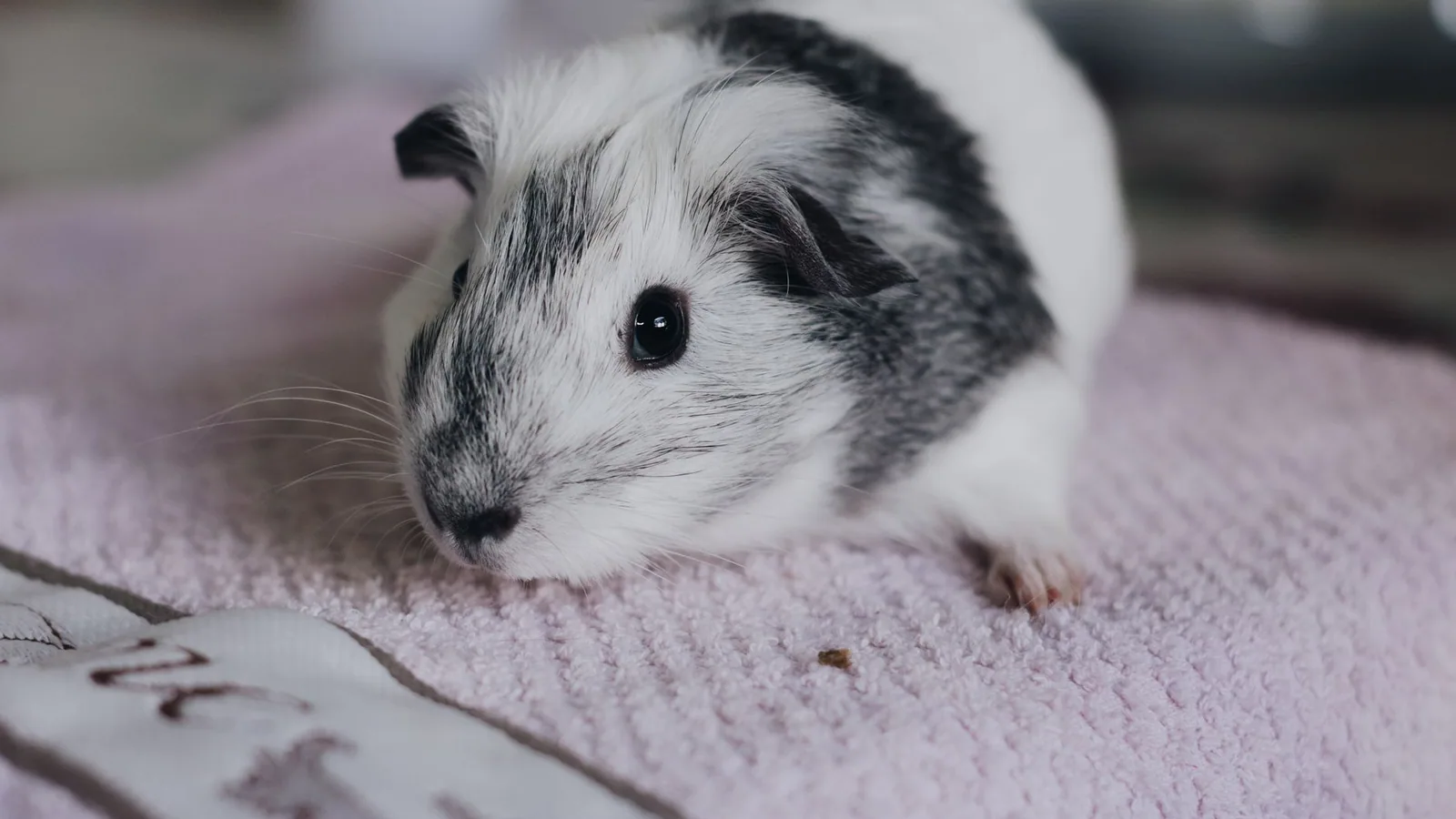
Most new guinea pigs begin eating, drinking, and moving around their enclosure within the first day or two in a calm home. Shyer animals can take several weeks before they feel fully secure, and both patterns are normal. If you are wondering how long for a guinea pig to settle in, the honest answer is that the timeline is individual, but the first week sets the pattern for everything that follows.
A new guinea pig's first week comes down to three practical jobs. Keep the environment quiet. Keep unlimited hay and fresh water available so the digestive tract keeps moving. Watch appetite, droppings, and weight so you can catch illness early, because small prey animals hide disease well. This guide walks through bringing home a guinea pig day by day, from the carrier ride to the first vet visit, with a supplies checklist you can act on today.
This article is educational and is not a substitute for veterinary diagnosis or treatment.
At a Glance: Your New Guinea Pig's First Week
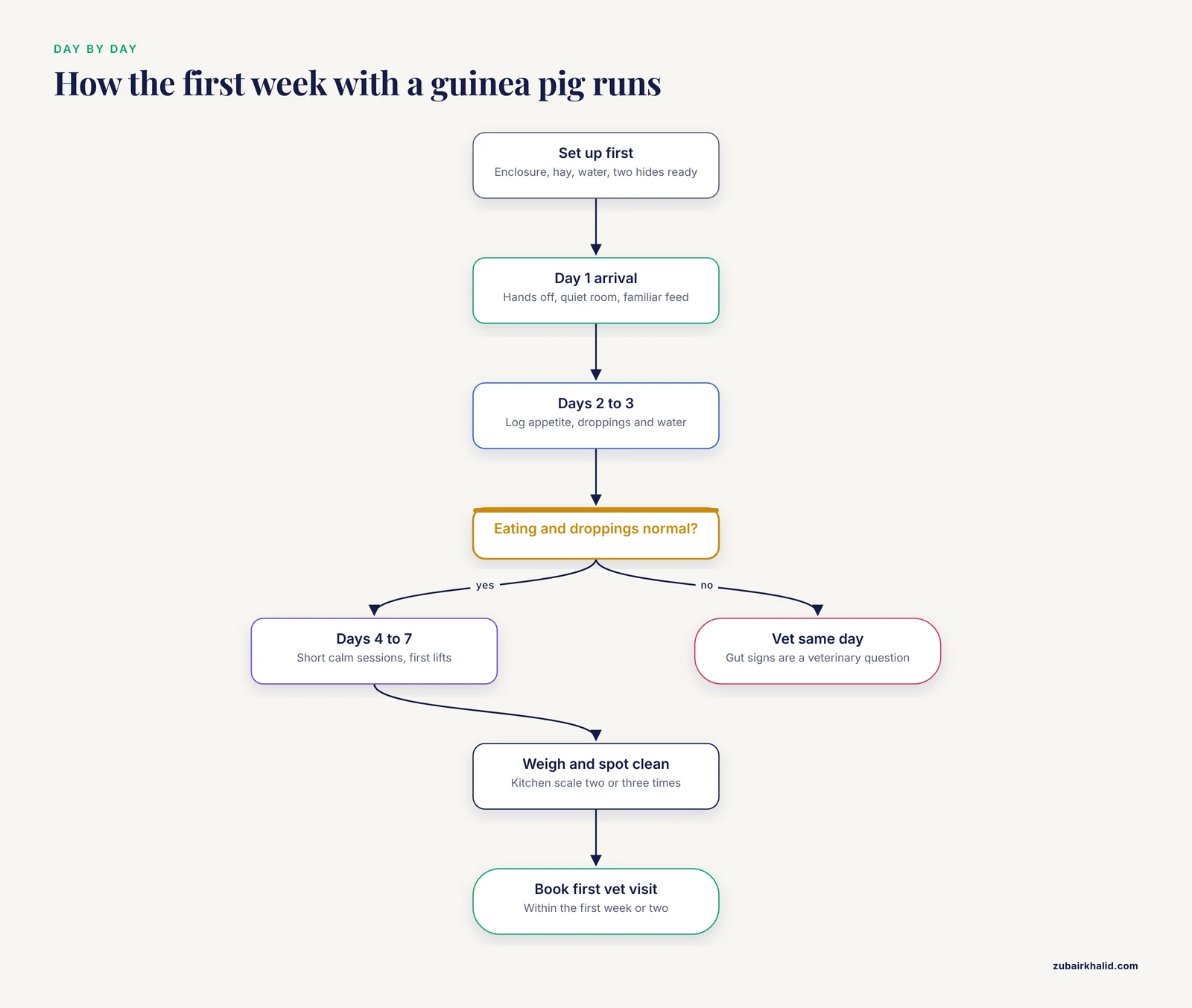
Use this plan as a template and adjust it to the animal in front of you. A confident rescue pig may want interaction on day two. A nervous pet-store pig may need the full week before it wants to be seen.
| Day | Main goal | Key actions |
|---|---|---|
| Day 1 | Safe arrival | Quiet room, hands off, unlimited hay, fresh water, two hides, same feed as before |
| Days 2 to 3 | Confirm gut function | Track appetite, droppings, and water intake, clean containers daily |
| Days 4 to 5 | Gentle trust building | Short calm visits, hay offered by hand, first brief handling only if the pig approaches you |
| Days 6 to 7 | Routine and health baseline | Weigh on a kitchen scale, start daily spot cleaning, book the first vet visit |
New Guinea Pig Checklist
Set the enclosure up and running before pickup day so your guinea pig walks into a finished habitat:
- A large, solid-bottom enclosure. In a survey of 330 owners, the median enclosure measured 2.0 square meters, and 21.1% of owners using enclosures provided less than the 1.0 square meter per pair recommended by the Royal New Zealand Society for the Prevention of Cruelty to Animals [1]. Buy or build bigger than the minimum.
- Unlimited grass hay, available at all times. Lack of constant hay access is flagged in welfare research as a negative husbandry practice [2], and timothy hay forms the basis of urinary-healthy adult rations [3].
- A plain, timothy-based pellet fed in a measured daily portion [3].
- Fresh water in a bottle or heavy bowl, cleaned daily [4][5].
- Absorbent bedding on a solid floor. Bedding was provided by 93.6% of surveyed owners [4].
- At least two hides, one at each end of the enclosure, so the animal always has a covered exit.
- Chew-safe toys and food enrichment. Toys were provided by just over half of surveyed owners (51.1%), and food enrichment was associated with more natural behavior in a large caretaker survey [4][2].
- A kitchen scale for weekly weight checks.
- A small carrier lined with a towel for travel and vet visits.
- The phone number of a veterinarian who treats guinea pigs, saved before you need it.
Before Bringing Home a Guinea Pig: Set the Room First
The best first week starts before the animal arrives. Three decisions matter most.
Enclosure Size and Location
Guinea pigs spend nearly all of the first week inside their enclosure, so size and placement do most of the settling work. In the New Zealand housing survey, the most common setups were a hutch or cage with an attached run (47.0% of owners) and an indoor enclosure in its own area of the house (27.3%) [1]. Choose a room that is quiet, free of drafts, and out of direct sunlight, and keep the enclosure away from televisions, speakers, and hallway traffic. A stable environment matters more than any single accessory.
Companionship
Guinea pigs are social animals. In the same survey, 85.7% of owners kept their guinea pigs in groups of two or more [1]. Individual housing appeared in 7.5% of animals in a large German caretaker survey and is classified among the husbandry practices that can negatively affect welfare [2]. If you plan to keep a pair, arrange a same-sex companion or discuss neutering with your veterinarian, and have the sex of every animal confirmed by a professional before they share space [6]. Keep a newcomer in its own enclosure and its own room for the first week while you book a health check.
Food Continuity
Ask the rescue, breeder, or store exactly which hay and pellet your pig has been eating, and buy enough of both to last through a gradual transition. Diet changes are a genuine gut risk in this species. In an outbreak of colonic impaction in a research colony, one of the husbandry changes that reduced the incidence was simply increasing acclimatization time on the commercial feed after shipping [7]. Keeping the familiar diet running through the first week is one of the simplest insurance policies you can buy.
Day 1: Arrival
Travel home in a secure carrier lined with a towel, with a small handful of hay inside. Keep the car warm and the radio low.
When you arrive, place the carrier inside the prepared enclosure or transfer the pig gently with two hands, then step back. Your new guinea pig will probably freeze, dash to a hide, and stay there. That is normal prey-species behavior, not a problem to fix. In an observational study of guinea pigs during interactive activities, freezing appeared specifically when interactions became excessive, which is a useful calibration for day one, when restraint is the right instinct [8].
For the rest of the day:
- Leave the room largely undisturbed and check quietly every few hours.
- Keep unlimited hay, a measured portion of the familiar pellet, and fresh water topped up.
- Keep dogs, cats, and children out of the room.
- Skip the bath, the free-roam session, and the photo shoot. There will be time for all three.
Do not worry if your pig eats little while you are watching. Guinea pigs often wait for stillness before they eat. Judge day one on whether the animal settles into a hide and calms, not on how much it performs for you.
Days 2 and 3: Appetite, Droppings, and Water
Days two and three are the gut-check days. Guinea pigs are continuous grazers, so a healthy animal produces droppings steadily through the day and keeps hay moving. Start a simple log with three columns: appetite, droppings, and behavior. A pig that is eating hay and producing normal droppings is settling well regardless of how much it hides.
Water deserves the same attention. Water and feed intake are interlinked in small herbivores, and the ratio between them is a meaningful veterinary indicator [5]. There is no single daily water figure to memorize, because intake varies with diet, ambient temperature, and the individual [5], so watch the trend instead. Refill with fresh water daily and scrub the container. In the New Zealand husbandry survey, only about half of owners cleaned water bowls (50.1%) and food bowls (55.0%) daily, and only a third picked up droppings daily [4]. Daily container cleaning is a five-minute habit that keeps both gut and bladder problems less likely.
Keep your interactions short and low to the ground. Sit near the enclosure, speak softly, and offer a strand of hay through the bars without demanding a response. Learning your pig's vocal repertoire starts now. Guinea pigs are among the most vocal rodents, and their sounds carry useful information about their state [6].
Days 4 to 7: Trust, Handling, and Routine
Building Positive Associations
From day four, aim for several brief, calm sessions per day rather than one long one. Positive human-animal interaction is linked with better outcomes in this species. In the German caretaker survey, affiliative behavior, use of enrichment, and locomotor play were all reported more often when interactions were more frequent and more positive [2]. Let the pig choose to approach, reward approach with a strand of hay, and end each session before the pig loses interest.
First Handling
When your pig approaches readily, practice lifting. Sit on the floor, scoop with two hands, one under the chest and one under the hindquarters, and hold the animal against your body so it cannot leap. Handling and sexing are described as core clinical skills for this species in the veterinary literature [6]. Keep early lifts to a minute or two. Research on guinea pig interactions found that salivary cortisol rose during all interactive activities, and negative behaviors such as head turning and increased locomotion rose when interactions were excessive [8]. Short and calm beats long and thrilling.
Weighing and Record Keeping
Place your pig in a bowl on a kitchen scale two or three times this week and record the numbers. For context, the median adult bodyweight of pet guinea pigs under veterinary care in a large UK study was 1.05 kg [9]. A single reading matters less than the trend, and a baseline from a good week makes every later check more meaningful.
Cleaning and Enrichment
Start daily spot cleaning now, removing droppings and soiled bedding, and plan deeper cleans on a schedule your veterinarian can confirm. Surveyed owners cleaned their cages less frequently than recommended, so this is a common place to do better than average [4]. Add enrichment in the form of hay scattered in several locations and chew-safe items. If your enclosure has a ramp, keep it shallow with solid footing and make sure your pig can see where it leads. In a ramp study, guinea pigs climbed to heights of 63 centimeters when they kept visual contact with a food reward but stopped at 18 centimeters when they could not, and the authors flagged visual guidance as a husbandry consideration for ramps [10]. Floor time in a fenced, escape-proof area cleared of wires can wait until the second week if your pig is still nervous. Fenced floor areas were used by 21.1% of caretakers in the German survey [2].
How Long for a Guinea Pig to Settle In
Most guinea pigs eat, drink, and move normally within the first day or two. Visible confidence, meaning approaching you, taking food from your hand, and resting in the open, usually builds across the first one to two weeks. Cautious animals, especially adults with limited prior handling, can need longer, and that reflects temperament rather than failure.
Judge settling by observable markers instead of a calendar. Positive markers include eating hay while you are in the room, resting in a relaxed sprawl, approaching the enclosure side when you pass, and, in pairs, eating and resting next to each other. In the German survey, 87.6% of animals were reported eating next to a companion several times per day [2]. Warning markers include persistent freezing, repeated head turning, constant hiding with no eating in your presence, and repetitive behaviors such as bar chewing, which was rare in the same survey, reported several times daily in only 0.7% of animals [2]. Freezing and restless movement during handling are documented stress signals [8].
Welfare researchers recommend reading several indicators together rather than any single sign, combining animal-based measures such as behavior and body condition with resource-based measures such as space, hay access, and cleanliness, in line with frameworks like the Five Domains model [11]. As a working benchmark, appetite and normal droppings should be present from day one or two. If they are not, that is a veterinary question, not a patience question.
The First Vet Visit for a Guinea Pig
Book the first appointment within the first week or two, even if everything looks perfect. A baseline exam prevents small problems from becoming emergencies, and the numbers suggest many owners never go at all. In the New Zealand husbandry survey, only 53.5% of owners reported taking their guinea pig to a veterinarian [4].
Finding the Right Clinic
Ask practices directly how many guinea pigs they treat. Experience varies widely. In a survey of New Zealand veterinarians, 86% of respondents reported that rodents and lagomorphs made up 0 to 5% of their caseload, and drug choices were influenced mainly by how much information was available for the species [12]. A clinic that sees guinea pigs regularly is worth a longer drive.
What the Visit Usually Covers
- Weight, body condition, and a full physical exam.
- Sex confirmation. Accurate sexing is a recognized clinical skill for this species, and it matters before any pairing.
- Nail check and trim. Overgrown nails were the most commonly diagnosed disorder in a UK study of 51,622 guinea pigs under primary veterinary care, recorded in 26.55% of the sampled records [9]. Ask the team to show you trimming technique.
- Skin and coat exam. Dermatophytosis, or ringworm, was the second most common diagnosis at 6.02% and was the disorder affecting the youngest animals, at 1.11 years [9].
- Eye exam. Corneal ulceration was the third most common diagnosis at 4.99% [9].
- Teeth and diet review. Many digestive problems in guinea pigs stem from inadequate tooth wear and poor feeding, so bring your full diet, including hay, pellets, and anything else, for review [13].
Questions to Ask
Ask about a complete diet plan, including produce and any supplements appropriate for your pig's age. Ask what the clinic considers an emergency and when it wants rechecks. If you plan a mixed-sex pair, discuss neutering. Neutering is uncommon in the pet population, with only 2.08% of guinea pigs in the UK study recorded as neutered [9]. Also ask for a realistic picture of lifespan. The median age at death in that study was 4.03 years [9], so a young guinea pig is a multi-year commitment.
Medication Realities
Two facts shape medication safety in this species. First, no validated grimace scale or in-clinic pain scale has been developed for guinea pigs, and analgesic doses are often extrapolated from other species. Meloxicam is the only analgesic licensed for guinea pigs in the UK, and its licensed dose is lower than doses suggested in the reviewed literature [14]. Second, the guinea pig intestinal flora is gram-positive dominant, and inappropriate antibiotics can trigger fatal dysbiosis and enterotoxemia [6][13]. The practical rule for the first week and beyond is simple: no borrowed antibiotics, no leftover medication, no over-the-counter pain relief, and any suspected pain goes to a veterinarian.
Common First Week Mistakes
- Changing the diet on arrival. Sudden feed changes are a documented risk for serious digestive disease in this species [7]. Keep the old brand running and transition gradually over the following days.
- Handling too much, too soon. Freezing, head turning, and increased locomotion are documented responses to excessive interaction [8]. Build trust in short sessions on the pig's terms.
- Underestimating space. Enclosure surveys show a substantial share of owners fall short of recommended minimums [1]. If your pig will grow into a pair, plan the space now.
- Keeping a single pig. Individual housing is classified among practices that can negatively affect welfare [2]. Plan for a compatible companion once the newcomer has a clean bill of health.
- Feeding calcium-heavy rations to adults. A calcium-rich diet has been suggested as a risk factor for urolithiasis, and one colony moved from an alfalfa-based pellet diet to a portioned timothy-based pellet with unlimited timothy hay specifically to improve urinary tract parameters [3].
- Skipping the vet because the pig looks fine. A baseline visit catches exactly the common early problems, from overgrown nails to skin disease, that owners otherwise miss [9].
- Using borrowed or leftover medication. Antibiotic-associated gut toxicity is a real risk in guinea pigs [6][13], and pain drugs carry species-specific dosing uncertainties [14].
- Letting other pets near the enclosure. A predator walking past the bars can undo a week of trust building. Keep the first week single-species.
Warning Signs That Need Same-Day Veterinary Care
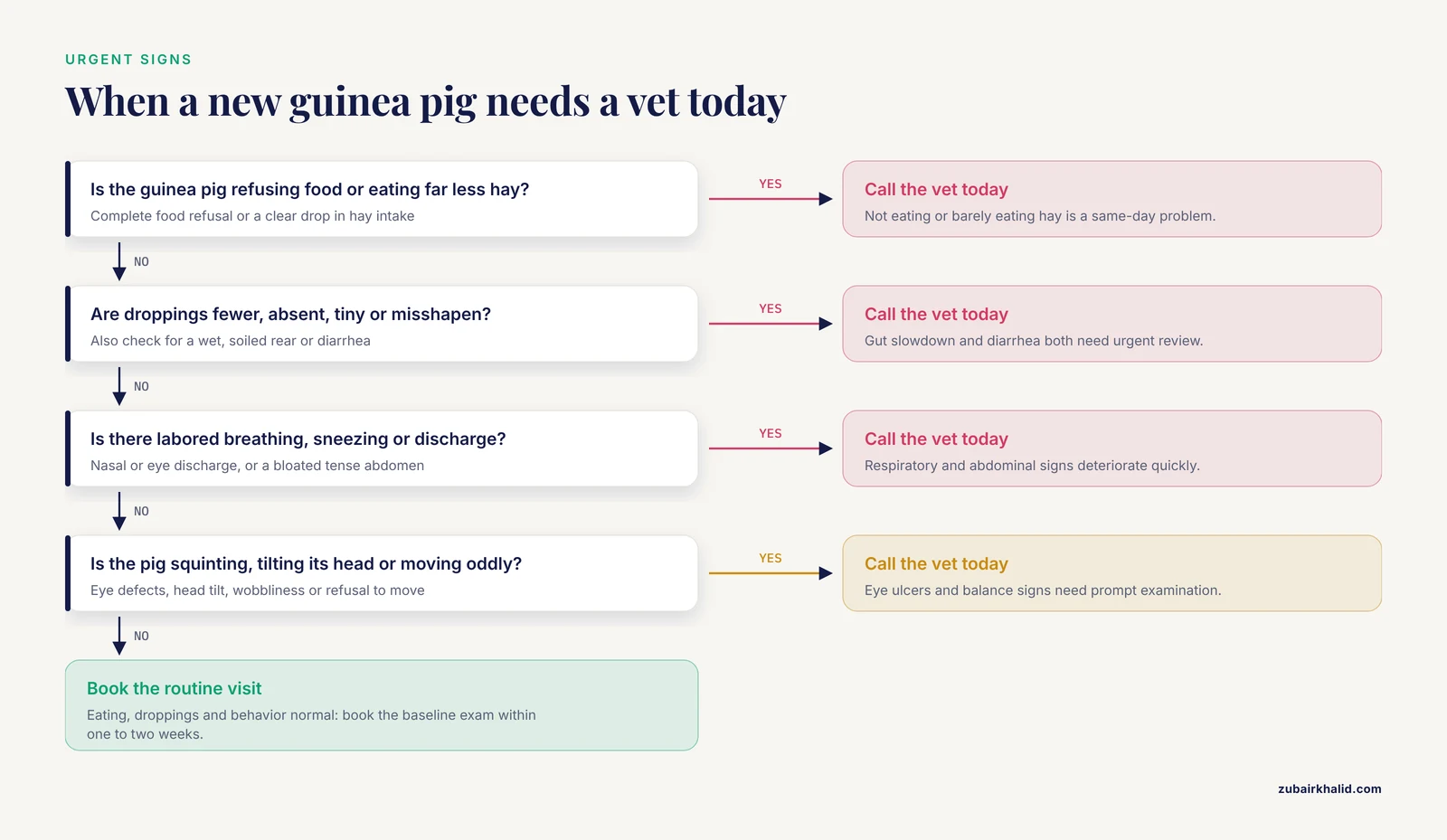
Small herbivores deteriorate quickly, so treat these signs as urgent rather than watch-and-wait:
- Not eating, or eating far less than usual, especially hay.
- Fewer or no droppings, or droppings that are tiny, dry, or misshapen.
- A distended, tense abdomen, depression, or rapid weight loss. In the colonic impaction outbreak, affected animals were depressed, lost weight, and had distended abdomens [7].
- Diarrhea or a wet, soiled rear.
- Sneezing, nasal discharge, eye discharge, or labored breathing. Respiratory disease is the most commonly reported bacterial problem in pet guinea pigs. In an owner survey of 524 respondents, 39.39% reported a clinically diagnosed bacterial infection, and upper respiratory tract infections accounted for 46.95% of those, ahead of urinary tract (15.49%) and gastrointestinal (11.73%) infections [15].
- Squinting, cloudiness, or a visible defect on the eye. Corneal ulceration is a common diagnosis in this species [9].
- Circular hair loss, crusting, or intense scratching, which can indicate dermatophytosis [9].
- Head tilt, wobbliness, or refusal to move.
- Any behavior suggesting pain. Pain in guinea pigs is difficult to grade even for professionals, so suspected pain goes straight to a veterinarian [14].
Limitations and When to Contact a Veterinarian
Every guinea pig is an individual, and the patterns described here come from population studies and clinical reviews rather than from a single animal in your home. Nothing in this guide replaces an examination by a veterinarian experienced with this species, and individual cases always need professional judgment.
Contact a veterinarian the same day for complete food refusal, absent droppings, diarrhea, a bloated abdomen, labored breathing, discharge from the eyes or nose, sudden lethargy, or any suspected injury or fall. Book a routine appointment within the week for the baseline exam, a nail trim, a diet review, weight concerns that do not affect appetite, and advice on pairing or neutering. If your pig is eating well but remains unusually withdrawn after the first two weeks, describe the pattern to your veterinarian so pain and illness can be ruled out before it is attributed to temperament [14]. Follow whatever recheck schedule your veterinarian sets, particularly after any illness during the early weeks.
Frequently Asked Questions
How long does it take for a new guinea pig to settle in?
Many guinea pigs eat and move normally within the first day or two, while shyer animals need several weeks to feel fully secure. Judge progress by appetite, droppings, weight, and relaxed behavior rather than by the calendar.
What goes on a new guinea pig checklist?
The essentials are a spacious solid-bottom enclosure, unlimited grass hay, plain timothy-based pellets, fresh water in a cleaned container, absorbent bedding, at least two hides, chew-safe enrichment, a kitchen scale, a carrier, and contact details for an exotic-savvy veterinarian.
When should the first vet visit for a guinea pig happen?
Book it within the first week or two, even if the animal looks healthy. A baseline exam catches early problems such as overgrown nails, ringworm, and eye ulcers, which are among the most commonly diagnosed conditions in pet guinea pigs.
Should I hold my guinea pig on the first day?
Not on day one. Let your guinea pig eat, hide, and rest undisturbed, then start short, calm sessions at floor level once it approaches you willingly.
Can a guinea pig live alone, or does it need a companion?
Guinea pigs are social and do best with at least one compatible companion. Plan a same-sex pair or a neutered mixed pair, and ask your veterinarian before combining animals.
What should I feed my guinea pig during the first week?
Keep the same hay and pellet the animal ate before the move, with unlimited grass hay at all times. Change brands gradually over the following days, and ask your veterinarian to review the full diet at the first visit.
Why is my new guinea pig hiding all day?
Hiding is normal prey-species behavior in a new environment. Offer hay and covered hides, keep the room calm, and judge adjustment by whether your pig eats and produces droppings when the room is quiet.
When can my new guinea pig meet my other pets?
Keep dogs, cats, and other pets separated for the whole first week. Wait until a veterinarian has examined the newcomer and confirmed its sex before any introduction to another guinea pig.
Sources
- Cross-sectional survey of housing for pet guinea pigs (Cavia porcellus) in New Zealand.
- Guinea Pig (Cavia porcellus) Welfare: Associations Between Husbandry Practices, Human-Animal Interactions, and Animal Behaviour.
- Effect of Adopting a Timothy Hay-based Diet at Weaning or in Adulthood on Urinary Tract Parameters in Strain 13/N Guinea Pigs (Cavia porcellus).
- Cross-sectional survey of husbandry for pet guinea pigs (Cavia porcellus) in New Zealand.
- Water consumption in small mammals (dwarf rabbits, Guinea pigs and chinchillas): New data about possible influencing factors.
- Guinea pig and chinchilla care and husbandry.
- Colonic impaction in guinea pigs fed a chemically defined diet: a case report.
- Relationship between Ear Temperature, Behaviour and Stress Hormones in Guinea Pigs (Cavia porcellus) during Different Interactive Activities in Zoos.
- Demography, commonly diagnosed disorders and mortality of guinea pigs under primary veterinary care in the UK in 2019-A VetCompass study.
- The role of line-of-sight in operant experiments using food reinforcers in guinea pigs.
- Review of Rat (Rattus norvegicus), Mouse (Mus musculus), Guinea pig (Cavia porcellus), and Rabbit (Oryctolagus cuniculus) Indicators for Welfare Assessment.
- Attitudes towards perception and management of pain in rabbits and guinea pigs by a sample of veterinarians in New Zealand.
- [[Digestive disorders in rabbits and guinea pigs].](https://pubmed.ncbi.nlm.nih.gov/1481206/)
- Pain management in pet guinea pigs (Cavia porcellus): a review of limitations of current knowledge and practice.
- Frequency of Owner-Reported Bacterial Infections in Pet Guinea Pigs.