Bringing Home a New Chinchilla: First Week Guide
By Dr. Zubair Khalid, DVM, MS, PhD ·
Most chinchillas need three to seven days of quiet, low-pressure time to begin settling into a new home, and some cautious adults need two to four weeks before they act fully relaxed. The new chinchilla first week is not the week to train, bathe, or show off your pet. It is the week to provide a correct enclosure, a consistent hay-based diet, fresh water, and calm, predictable surroundings while your chinchilla maps out its new territory.
This guide walks you through everything that matters during those first seven days: the supplies to have ready before pickup, how to set up the cage, what to feed, how and when to handle, when to schedule the first veterinary visit, and the warning signs that mean you should call an exotics veterinarian sooner rather than later.
Veterinary disclaimer: This article is educational and is not a substitute for veterinary diagnosis or treatment.
At a Glance: Your First-Week Action Plan
| Step | When | What to do |
|---|---|---|
| Prepare the room | Before pickup | Quiet, cool room away from drafts, direct sun, and other pets |
| Set up the cage | Before pickup | Large multi-level cage, solid or deep-litter floor, hideout, hay rack, water bottle |
| Book the vet | Days 1 to 3 | Locate an exotics veterinarian and schedule a wellness check |
| Arrival day | Day 1 | Place the chinchilla in the prepared cage, do not handle, keep the room quiet |
| Observation only | Days 2 to 3 | Watch appetite, droppings, and behavior without removing the chinchilla from the cage |
| First short interactions | Days 4 to 7 | Offer a treat from your open hand at the cage door, brief low handling if the chinchilla is calm |
| Full routine | End of week 1 | Establish fixed feeding times, quiet handling habits, and a hay-led diet |
Your New Chinchilla Checklist
Small mammals are almost entirely dependent on the housing and husbandry their owners provide, and research on small mammal owners found that the availability of suitable enclosures was the single biggest barrier to good welfare, even though most owners were willing and motivated to do the right thing [1]. Preparing everything before your chinchilla walks through the door removes that barrier entirely.
Here is the complete new chinchilla checklist.
Cage and flooring
- A large, multi-level wire cage. Chinchillas are jumpers and climbers, not burrowers, so vertical space matters more than floor footprint alone. Choose the largest enclosure you can accommodate. Housing studies show that chinchillas kept in enlarged, more complex cages show significantly fewer fearful reactions toward humans than those in standard cages, so generous space directly supports a smoother settling-in period [2].
- A solid or deep litter floor. Research comparing cage types found that chinchillas housed on a deep litter floor of shavings in enlarged cages were noticeably less timid than those on wire floors, and wire flooring alone can be hard on delicate feet [2].
- Bedding. Use appropriate small-animal bedding such as kiln-dried shavings or paper-based product. Avoid aromatic woods.
- A hideout or nest box. Chinchillas rest for most of the day. In one round-the-clock behavioral study, captive chinchillas spent roughly 68 percent of their time resting, 23 percent in locomotion, and the remainder eating [2]. A covered retreat lets your new pet rest securely while it learns your household sounds.
- Shelves and ledges. Solid, securely mounted platforms at different heights let a jumping animal use the full cage volume.
- A chew-safe exercise wheel if included, solid-surface without spokes, sized appropriately for the species.
Food, water, and grooming supplies
- Unlimited grass hay. Timothy hay or a similar grass hay should form the backbone of the diet from day one. Veterinary husbandry reviews emphasize that poor diets are a major source of disease in hystricomorph rodents such as chinchillas and guinea pigs, so correct nutrition from the first day prevents problems later [3].
- Plain chinchilla pellets. A consistent, species-appropriate pellet in modest measured amounts.
- Heavy ceramic food bowl or hay rack. Something that cannot be tipped over.
- Water bottle with a metal sipper tube. Fresh water daily. Water intake in small mammals varies considerably between individuals and species, and it changes with diet and ambient conditions, so establishing a baseline of what your chinchilla normally drinks matters for spotting illness later [4].
- Chinchilla dust and a dust bath house. Chinchillas clean their dense coats by rolling in fine dust rather than in water. Offer the bath on a schedule rather than leaving it in the cage permanently, and ask your veterinarian to confirm an appropriate frequency for your animal.
- Chew items. Safe wood chews or untreated apple wood sticks, since rodent teeth grow continuously.
Environment and handling supplies
- A thermometer and hygrometer for the room. Chinchillas come from cool, dry mountain habitats and are far more tolerant of cool conditions than heat. Keep the room cool and dry, and discuss your specific home temperature range with your exotics veterinarian during the first visit.
- A secure carrier lined with hay for transport home and for veterinary trips.
- An exercise pen or chinchilla-proofed room for later, once the chinchilla is settled, for supervised out-of-cage time.
Setting Up the Cage Before Pickup
Set the entire cage up and run it for at least a day before your chinchilla arrives. Fill the hay rack, hang the water bottle at a comfortable drinking height, place the hideout on a lower shelf, and add bedding to the floor tray. Put the cage in its final location now, because moving a cage after arrival resets the settling-in clock.
Choose a room that is:
- Quiet, with low foot traffic during the day when the chinchilla will be sleeping
- Cool and free of drafts, direct sunlight, and heat sources
- Free of household hazards such as loose electrical cords if free-roam time is ever planned
- Separate from predator species, including cats and dogs whose presence, sight, or smell can keep a prey species in a constant state of alarm
Position the cage so part of it sits at your seated eye level. This makes calm, low-stakes interactions easier later, and it lets you observe eating and droppings without reaching into the cage.
Day One: Bringing Home a Chinchilla
When you actually bring home a chinchilla, the goal of the entire day is a quiet, uneventful transfer.
- Transport in a secure carrier lined with hay. Keep the car cool and the radio off or low.
- Place the carrier next to the cage and let the chinchilla walk out on its own, or gently tip the carrier into the cage. Do not pull the animal out.
- Confirm water and hay are accessible, then leave the room.
- Do not handle the chinchilla on day one. No visitors, no children handling, no photographs with flash.
- Check quietly a few times that the chinchilla has found the water bottle and is sitting calmly or exploring.
Chinchillas express discomfort and alarm through a range of vocalizations as well as body posture, and learning your animal's normal sounds early gives you a baseline for the rest of its life [3]. On day one, expect barking, chirping, or sharp alarm calls as the chinchilla processes new surroundings. Some vocalizing is normal. Persistent frantic alarm calling for hours, however, is a reason to give the animal more space and check the room for stressors.
The First Week, Day by Day
| Day | Handling | Food and water | What to watch |
|---|---|---|---|
| 1 | None | Hay and water only, familiar pellets | Hiding, alertness, water bottle use |
| 2 | None | Continue same diet | Droppings present and normal shaped |
| 3 | Sit quietly by the cage, speak softly | Same diet | Eating hay, activity during evening hours |
| 4 | Offer a treat through the open cage door | Same diet | Willingness to approach you |
| 5 | Brief, low handling inside the cage if calm | Same diet | Grooming, stretching, relaxed posture |
| 6 | Hand feeding and short holds | Same diet, ask vet about treats | Consistent appetite and droppings |
| 7 | Establish routine | Establish fixed feeding schedule | Book or attend the first vet visit |
Two principles govern this schedule.
Keep the diet identical to what the chinchilla was already eating. Sudden dietary change in herbivores causes digestive upset. Ask the breeder, pet store, or rescue exactly what hay, pellets, and water the animal has been receiving, and buy the same products before pickup. If you plan to change brands or hay types, transition gradually over a week or more once the animal is settled, and confirm the plan with your veterinarian. Veterinary reviews of hystricomorph rodent care note that diet-related disease is common and largely preventable through correct feeding from the start [3].
Feed on a fixed schedule. Chinchillas are most active in the evening and overnight, and they rest through much of the day [2]. Offer the main pellet portion and fresh hay in the evening, refresh water daily, and keep the routine identical every day. Predictability is one of the fastest ways to reassure a prey animal.
How Long for a Chinchilla to Settle In
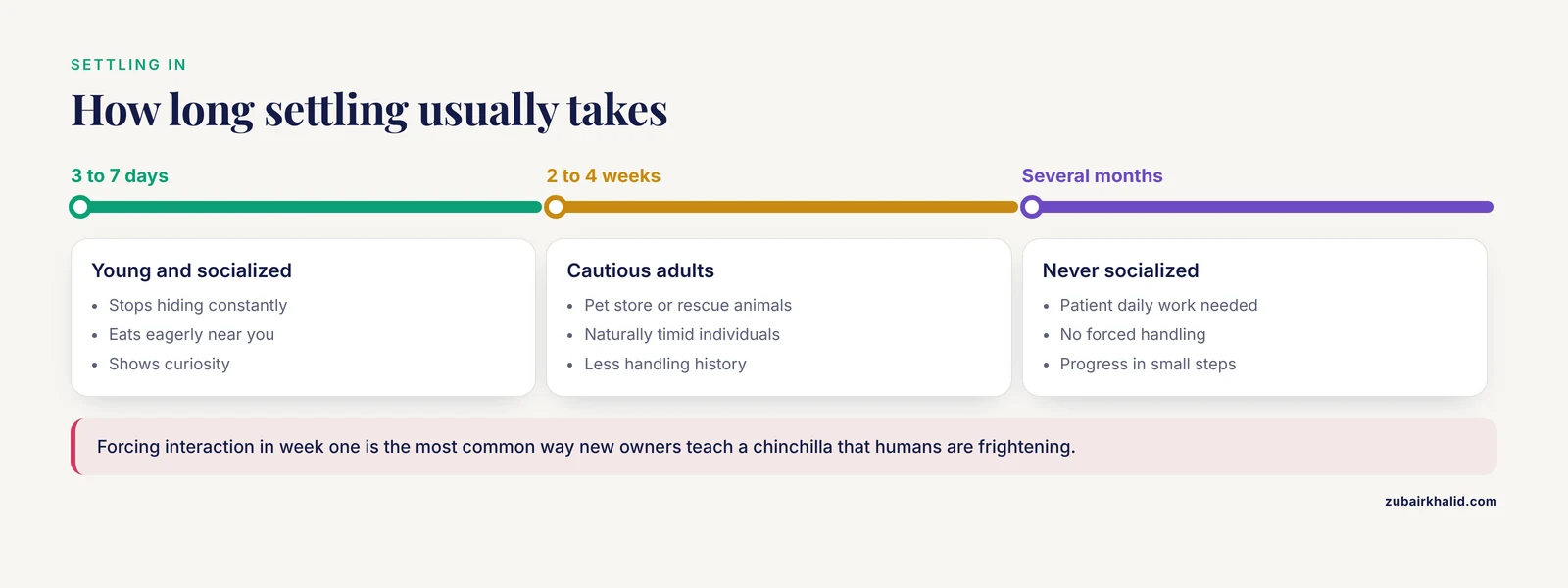
This is the question almost every new owner asks, and the honest answer depends on the individual animal's age, temperament, and previous handling history.
- Three to seven days is typical for a young, well-socialized chinchilla to stop hiding constantly, begin eating eagerly in your presence, and show curiosity about you.
- Two to four weeks is normal for adults from less-handled backgrounds, pet store animals, or naturally timid individuals.
- Several months of patient work is not unusual for a chinchilla that was never socialized before adulthood.
Look for these signs that settling is progressing: consistent eating and drinking, well-formed droppings, use of multiple cage levels, grooming and stretching in the open, evening activity on the wheel or in locomotion, and eventually approaching the cage bars when you enter the room.
The cage environment itself accelerates settling. The finding that chinchillas in larger, more complex cages with deep litter flooring showed significantly less fearful behavior toward humans tells you something practical, namely that the money and floor space you invest in the enclosure directly buys you a braver, more interactive pet [2]. A chinchilla crammed in a bare starter cage has nowhere to feel safe, and a frightened chinchilla does not settle.
Resist the urge to accelerate the timeline. Forcing interaction in week one is the most common way new owners teach their chinchilla that humans are frightening, which turns a one-week settling period into a months-long trust problem.
Handling and Bonding in the First Week
Handling a chinchilla correctly matters from the very first touch. Veterinary husbandry guidance for these species covers proper handling technique as a core care skill, and poor technique has real consequences [3]. Chinchillas can release patches of fur if grabbed or restrained roughly, a defense response known as fur slip, and the fur regrows slowly. Never grab your chinchilla, never scruff it, and never chase it around the cage.
Use this progression once the chinchilla is calm at the cage door, generally from day four or five onward.
- Hand in the cage, motionless. Let the chinchilla come to you. Sit still for a few minutes each day with your open hand resting in the cage.
- Treat on the palm. Once the chinchilla approaches, place a small piece of its normal food or a vet-approved treat on your open palm.
- Light touching. Stroke the shoulders and back briefly while the chinchilla eats. Stop at the first sign of withdrawal.
- Scoop, do not grab. When ready to lift, place one hand under the chest and the other under the hindquarters, supporting the whole body. Hold the animal against your chest facing away from you, in a calm, enclosed posture.
- Short sessions. One to three minutes is plenty at first. End every interaction before the chinchilla struggles to get away, so the last memory is always a good one.
Chinchillas are agile and fast. Handle them low over a stable surface or while seated so a sudden leap does not end in a fall.
Feeding and Water During the First Week
The first-week diet is deliberately boring. Unlimited grass hay, the same pellets the chinchilla already knows, and fresh water.
Water deserves special attention. A comparative study of water consumption in small mammals including chinchillas found that water intake varies substantially between individuals and species, that water and feed intake are interlinked, and that factors such as ambient temperature and dietary mineral content influence how much an animal drinks [4]. Practical takeaways for your first week:
- Offer fresh water in a sipper bottle daily and check that the chinchilla has learned to use the tube. Some newly homed animals have only seen bowls or only seen bottles.
- Note roughly how much the bottle level drops each day. This becomes your baseline for detecting illness, since reduced drinking is one of the earliest observable signs that something is wrong.
- If you switch from the water the chinchilla was used to, expect a short adjustment period, and watch intake closely.
Droppings are your daily health dashboard. A healthy chinchilla produces abundant, uniform, dark oval droppings throughout the day. Fewer droppings, tiny droppings, or misshapen or soft droppings during the first week are an early warning that deserves a veterinary call, because digestive slowdown in herbivores can become life threatening quickly.
Dust baths can begin once the chinchilla is eating well and moving confidently, usually in the first week. Offer the bath for a short supervised period a few times per week rather than leaving it in the cage, and remove it afterward. Excessive access to dust can dry the coat and irritate the eyes.
The First Vet Visit for a Chinchilla
Schedule the first vet visit for a chinchilla within the first one to two weeks of ownership, ideally during or immediately after the settling-in window. Do not wait for a problem. Two things make this visit urgent work rather than optional work.
First, you need an exotics veterinarian. Not every small animal clinic treats chinchillas, so locate one before you need one. Call and confirm the practice sees chinchillas, and ask whether the veterinarian has specific experience with hystricomorph rodents. Book the appointment in the first days of ownership so the first available slot falls inside your first two weeks.
Second, the baseline exam is where most future problems are prevented. A proper first visit for a chinchilla typically includes:
- A hands-on physical examination, including body condition, teeth and oral cavity, coat and skin, and auscultation of the heart and lungs
- Weighing the animal to establish a baseline weight for future comparison
- A fecal examination to screen for parasites
- Discussion of diet, because feeding errors are among the most common husbandry problems in these species, with documented links between poor diets and disease [3]
- Discussion of environment, including cage setup, flooring, and ambient temperature, aligned with the housing and welfare principles emphasized in current small mammal welfare research [1]
- Guidance on antibiotic safety in chinchillas, since these rodents are sensitive to certain antibiotic classes and inappropriate prescriptions can cause severe digestive disease, a toxicity issue specifically highlighted in veterinary reviews of the species [3]
Bring three things to the appointment: a fresh fecal sample from the cage, a photo or note of the exact pellet and hay brands you are feeding, and your list of questions about temperature range, dust bathing frequency, and long-term diet.
If the chinchilla is a juvenile, ask the veterinarian to confirm sexing at the same visit. Sexing hystricomorph rodents is a specific clinical skill, and accidental misidentification is a common cause of surprise litters in multisexual households [3].
Common First-Week Mistakes
Avoid these errors, each of which shows up repeatedly in exotic pet practice.
- Handling too soon. Grabbing a frightened chinchilla on day one teaches it to fear hands and can trigger fur slip.
- Changing the diet immediately. Switching pellets or hay types during the stress of a move invites digestive upset. Match the previous diet exactly.
- Undersized cage. A small starter cage delays settling and undermines the behavioral benefits shown for larger, more complex housing [2].
- Wire-only flooring. Bare wire floors are associated with more timid behavior and are harder on feet than deep litter setups [2].
- Hot rooms. Placing the cage near a radiator, in direct sun, or in a warm upstairs room puts a cold-climate animal under heat stress. Confirm a safe temperature range with your exotics veterinarian.
- Free roam too early. Loose time in the house during week one risks escapes, falls, electrical cords, and baseboard chewing. Wait until the animal is settled and the space is chinchilla proofed.
- Ignoring droppings. New owners watch the face and forget the litter tray. Droppings are the most reliable early indicator of trouble.
- Wet bathing. Never bathe a chinchilla in water. Dust bathing is the correct grooming method for this species.
- Treating antibiotics as routine. Never give leftover antibiotics from another pet. Certain antibiotic classes are toxic to hystricomorph rodents [3].
Welfare and Safety Points
Modern animal welfare frameworks, including the Five Domains model used in recent small mammal owner research, assess welfare across nutrition, physical environment, health, behavior, and mental state [1]. Your first week maps onto each domain directly.
- Nutrition: hay-led diet, matched to the previous diet initially, fresh water daily.
- Environment: cool, dry, quiet room, generous and complex cage, deep litter or solid flooring, secure hideout [2].
- Health: baseline veterinary exam, daily dropping checks, weight tracking after the first visit.
- Behavior: predictable routine, evening activity respected, gradual handling progression, dust baths for natural grooming behavior.
- Mental state: calm household, freedom to hide, freedom to retreat, no forced interaction.
One safety point belongs at the top of the list. Chinchillas tolerate cold far better than heat, and overheating is an emergency in this species. Know your room's temperature, watch for panting, drooling, or limpness in warm weather, and treat heat stress as an immediate veterinary emergency. Your first vet visit is the right time to confirm the exact temperature limits appropriate for your individual animal and your local climate.
Limitations and When to Contact a Veterinarian
Every chinchilla is an individual, and the timelines and recommendations in this article describe typical patterns rather than guarantees. Individual cases, especially young, geriatric, pregnant, or previously ill animals, need assessment by a veterinarian experienced with exotic companion mammals.
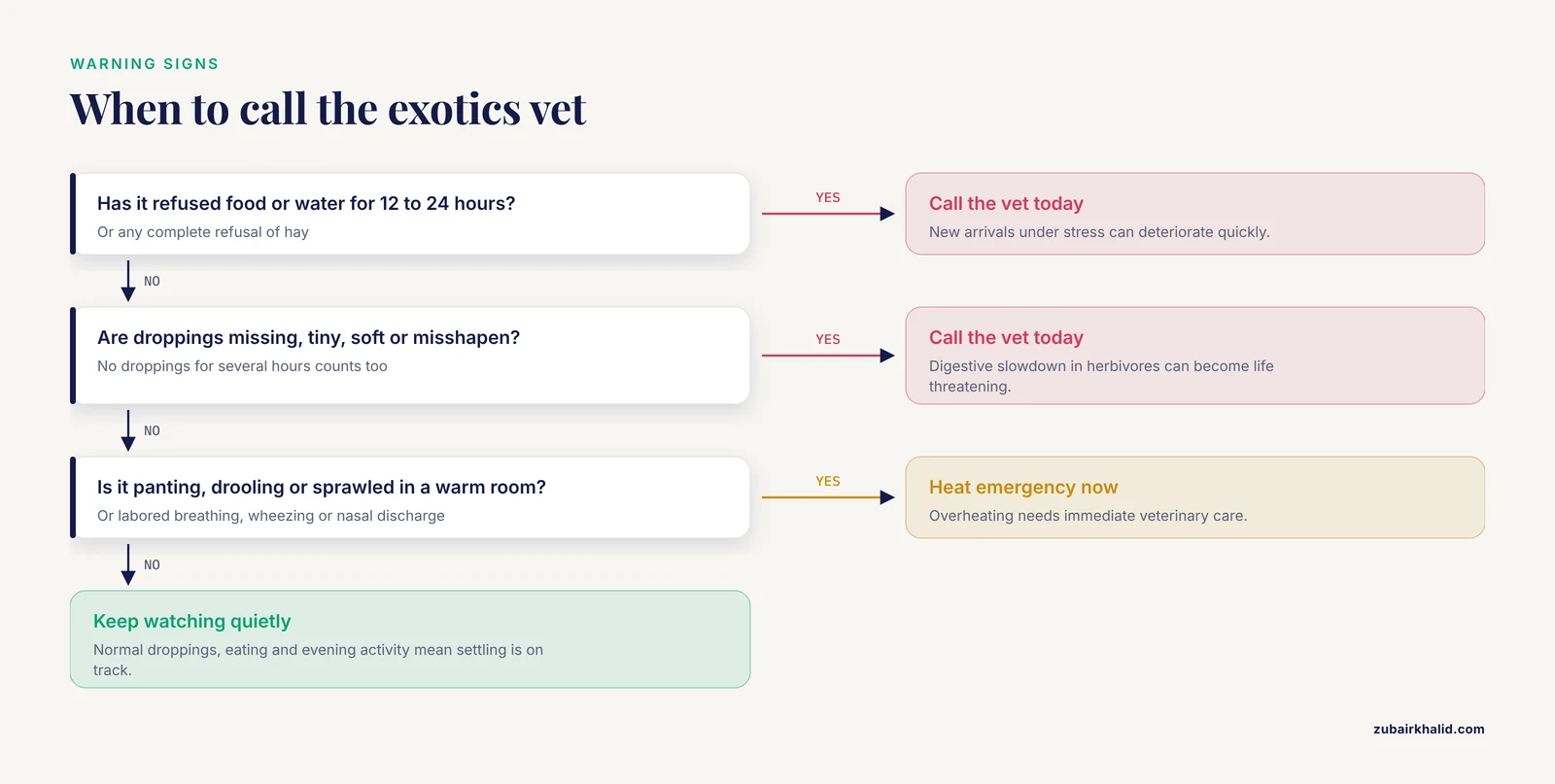
Contact your exotics veterinarian promptly, ideally the same day, if you observe any of the following during the first week:
- Not eating or drinking for more than 12 to 24 hours, or any complete refusal of hay
- No droppings for several hours, or dramatically fewer, tiny, soft, or misshapen droppings
- Lethargy, meaning the chinchilla sits hunched, unresponsive, or unwilling to move when normally active in the evening
- Drooling or a wet chin, which can indicate dental disease
- Labored breathing, wheezing, or discharge from the nose or eyes
- Diarrhea or very wet droppings stuck to the fur
- Panting, sprawled posture, or drooling in a warm room, which is a heat emergency requiring immediate care
- Injury, limping, bleeding, or a suspected fall
- Persistent frantic alarm vocalizing for hours after the first day, or self-trauma such as barbering its own fur
Any of these signs in a newly homed animal is more urgent than the same signs in an established pet, because new arrivals are already under stress and can deteriorate quickly.
Frequently Asked Questions
How long does it take a chinchilla to settle in?
Most chinchillas begin to settle within three to seven days, while cautious or previously unhandled adults may take two to four weeks or longer. Consistent routine, a generous cage, and minimal forced handling shorten the timeline.
Should I handle my chinchilla during the first week?
Not during the first two or three days. Start with quiet presence near the cage, then hand feeding, then brief supported holds from around day four or five if the chinchilla is calm. Never grab or chase the animal.
What should I feed my new chinchilla in the first week?
Feed exactly what the chinchilla was eating before you brought it home, with unlimited grass hay, the same pellets, and fresh water daily. Make any diet change gradually later, after the animal has settled.
When should the first vet visit for a chinchilla happen?
Book it during your first days of ownership so the appointment falls within the first one to two weeks. A baseline wellness exam, weight, and fecal screen early in ownership prevents most surprises later.
Why is my new chinchilla hiding all day?
Hiding is normal first-week behavior. Chinchillas rest for the majority of the day and are prey animals that need a secure hideout to feel safe. If the animal eats well, produces normal droppings, and shows evening activity, hiding alone is not a concern.
Can my new chinchilla live with my other chinchilla or other pets?
Not during the first week, and not without planning. Keep the new chinchilla separated from all other pets, and discuss gradual, supervised introductions with your veterinarian before any cohabitation, since chinchillas can injure each other seriously.
My chinchilla seems to barely drink. Is that normal?
Chinchillas naturally drink less than many larger pets, and water intake varies considerably between individuals and with diet and room conditions. Establish a daily baseline during the first week, and call your veterinarian if intake drops clearly below that baseline or stops.
Do I need to give a dust bath right away?
You can offer a short dust bath in the first week once the chinchilla is eating and moving confidently. Offer it a few times per week for a limited period rather than leaving the bath in the cage permanently.
Sources
- Small mammal owners' experiences of housing challenges and animal welfare: A COM-B and word frequency analysis.
- The effects of age, size, and cage complexity on the behaviour of farmed female chinchillas (Chinchilla lanigera).
- Guinea pig and chinchilla care and husbandry.
- Water consumption in small mammals (dwarf rabbits, Guinea pigs and chinchillas): New data about possible influencing factors.