How to Groom a Long-Haired Rabbit or Guinea Pig
By Dr. Zubair Khalid, DVM, MS, PhD ·
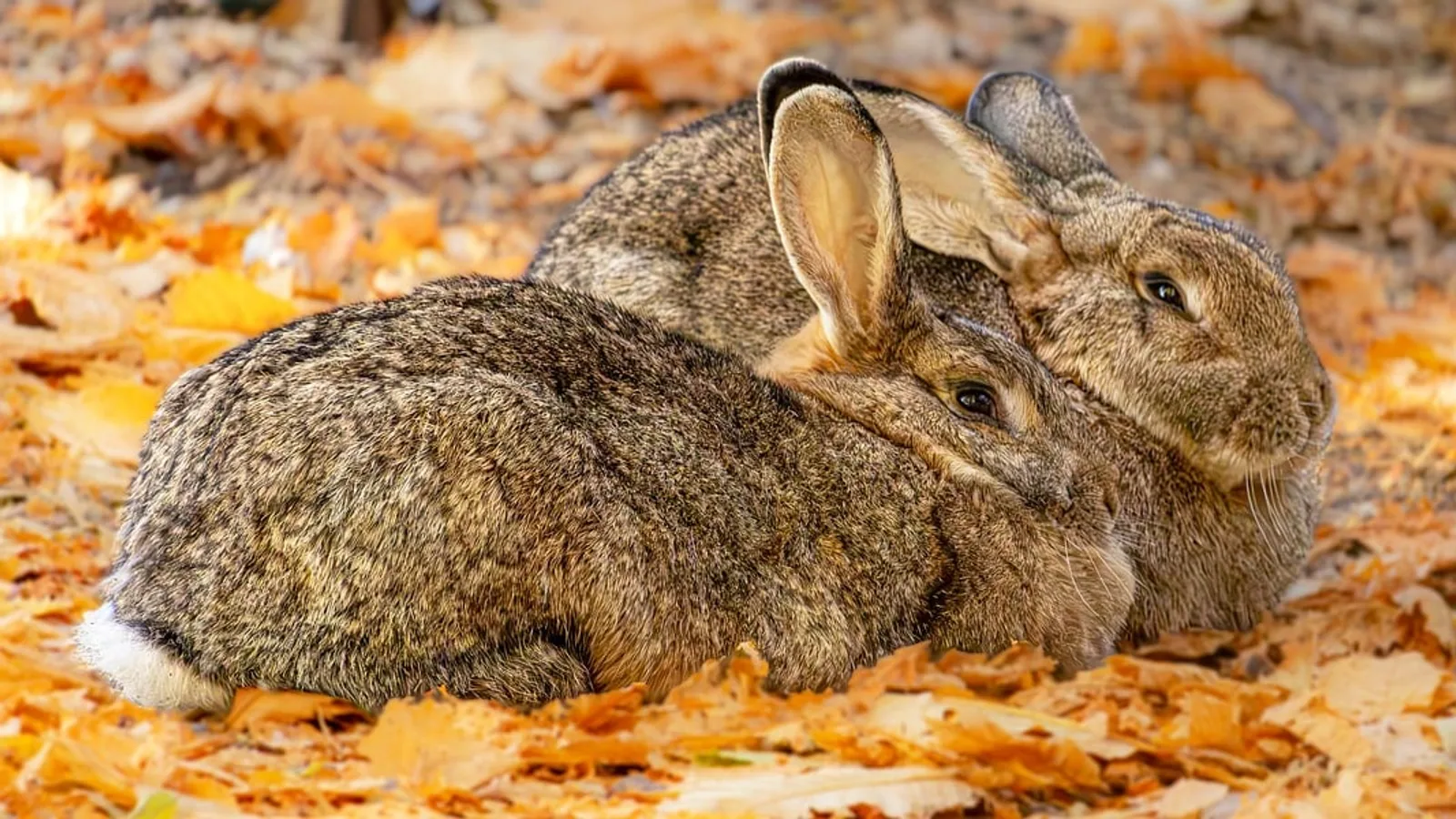
Grooming a long-haired rabbit or guinea pig comes down to four repeating jobs: brush the coat daily or near-daily, keep the fur around the rear end short and clean, trim the nails on a regular schedule, and remove or clip any mat before it tightens against the skin. Rabbits and guinea pigs with Angora-type coats (Jersey Woolies, French and English Angoras, Fuzzy Lops, Peruvians, Silkies, Coronets, Texels, and Alpacas) cannot maintain their own fur. Their self-grooming was designed for short, close-lying coats, and a show-length coat will always outrun their tongue and teeth. When owners skip the routine, the result is matting, skin disease under the mats, flystrike, and painful nail overgrowth.
This article gives you a complete long-haired rabbit grooming routine step by step, the same framework applied to long-haired guinea pigs, the equipment that actually works on fine wool coats, the mistakes that send small mammals to emergency clinics, and the point at which a groomer or veterinarian should take over.
Why Grooming Matters So Much for These Species
Grooming is a core hygiene behavior in mammals. It serves parasite defense, removal of dirt and debris, and thermoregulation, and it is built into daily routines rather than being purely a reaction to dirt [1]. Both rabbits and guinea pigs are dedicated self-groomers, and rodent self-grooming in particular follows organized, sequential patterns rather than random licking [1]. That matters for owners in a practical way: these animals already spend a large share of their awake time cleaning themselves, so a coat that still mats despite that effort is a coat that genuinely needs human help.
The problem is coat length and coat texture. Wool-type fur has a fine undercoat with little guard hair to hold the structure together. Loose undercoat does not fall out cleanly. It tangles against itself, locks into mats, and traps moisture and debris against the skin. Mats pull on the skin with every movement, and skin hidden under a dense mat is often thin, inflamed, or already broken by the time an owner notices. On the rear end, damp, soiled long fur attracts flies and holds urine and feces against the skin. Resources from the Rabbit Welfare Association and Fund (RWAF) and the Merck Veterinary Manual both identify poor rear-end coat condition and flystrike as among the most serious preventable welfare problems in pet rabbits, and the same logic applies to long-haired guinea pigs.
There is also an owner-side reality worth naming. A study of clients using a subsidized pet grooming service found that 92 percent of owners reported at least one barrier to keeping up with their pet's grooming needs, such as cost, time, transportation, or lack of supplies, and nearly half reported three or more barriers [2]. The same study found that owners who received a hands-on nail-trimming demonstration reported a statistically significant increase in confidence afterward [2]. Both findings translate directly to small-mammal ownership. If brushing and nail trims feel impossible, the fix is usually a lower-frequency plan plus one demonstration at a veterinary clinic, not giving up on the routine.
Grooming at a Glance
| Task | Long-haired rabbit | Long-haired guinea pig |
|---|---|---|
| Brushing | Daily during molts, at least every 2 to 3 days otherwise | Daily or every other day for Peruvian, Silkie, Coronet, Texel coats |
| Rear-end check and cleaning | Daily visual check, spot clean as needed | Daily visual check, spot clean as needed |
| Full grooming session | Weekly, longer during heavy molt | Weekly |
| Nail trim | Every 4 to 6 weeks, or as advised by your veterinarian | Every 4 to 6 weeks, or as advised by your veterinarian |
| Sanitary clip (rear fur) | Short but not bald, especially during molt or in overweight rabbits | Short around the perineal area for coats that drag |
| Bathing | No. Spot clean or clip instead. Full baths only on veterinary instruction | No. Spot clean or clip instead. Full baths only on veterinary instruction |
| Mat removal | Comb out loose mats, clip tight mats with blunt-nosed clippers or have a professional do it | Same approach, smaller scale |
| Veterinary check | Any skin wound, fly eggs, urine scald, or refusal to eat | Any skin wound, fly eggs, urine scald, or refusal to eat |
Long-Haired Rabbit Grooming Step by Step
Angora and wooly-type coats are the most demanding coats kept as pets. House Rabbit Society and RWAF guidance both emphasize that these rabbits need owner grooming on a fixed schedule, not on a "when it looks bad" schedule, because by the time a wool coat looks bad, mats have already formed at the skin level.
Step 1. Set Up and Position the Rabbit Correctly
Work on a low, non-slip surface, such as a bath towel on a table, close to the floor so a startled rabbit cannot fall far. Keep treats within reach. Rabbits are prey animals. A rabbit that feels trapped will thrash, and a thrashing rabbit can fracture its back. Never scruff a rabbit as a routine hold, and never leave a rabbit unattended on an elevated surface. If your rabbit panics, stop, let it settle in a hide box, and try a shorter session later. Several short sessions beat one long fight.
Step 2. Brush With the Right Tool, in the Right Order
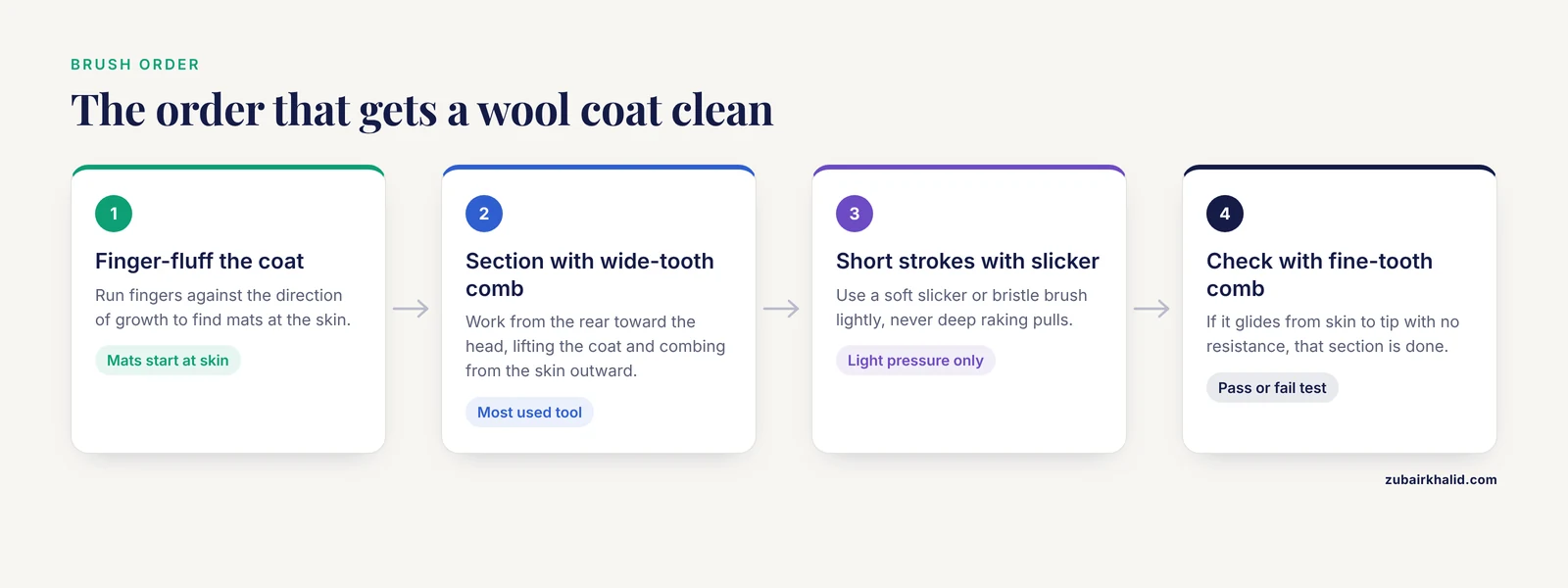
For wool coats, the reliable progression is:
- Finger-fluff first. Run your fingers through the coat against the direction of growth to find hidden mats at the skin. On Angora coats, mats almost always start at the skin, not at the surface.
- Break up the coat with a wide-tooth comb. Work from the rear toward the head, in sections, lifting the coat so you are combing from the skin outward rather than dragging through tangles.
- Use a soft slicker brush or bristle brush in short strokes. Long coats respond to repeated shallow strokes, not deep raking pulls. Keep slicker contact light. Rabbit skin is paper thin and tears easily.
- Finish with a fine-tooth comb as your inspection tool. If the fine comb glides through from skin to tip with no resistance, the section is done. If it stops, there is a mat you cannot see from the surface.
During a molt, a rabbit can shed an enormous volume of undercoat in days. Increase brushing to daily, and expect to groom in multiple short sessions because loose wool comes out faster than any single session can remove it.
Step 3. Handle Mats Conservatively
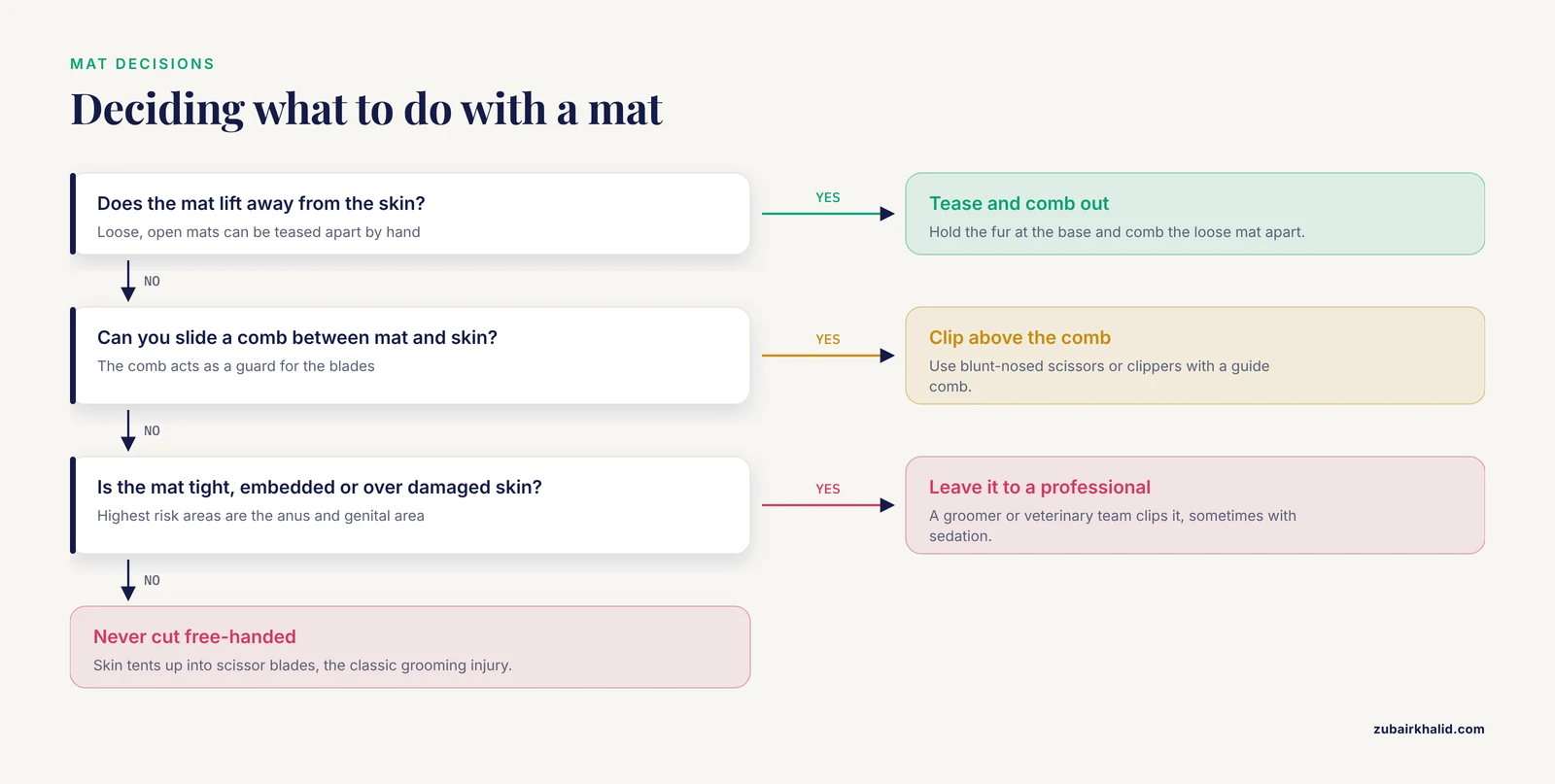
Loose, open mats can often be teased apart with your fingers, then combed out, holding the fur at the base so you do not pull the skin. Mats that sit tight against the skin are a different problem. The safe options are:
- Slide a metal comb between the mat and the skin as a guard, then clip the mat above the comb with small blunt-nosed scissors or clippers.
- Use small animal clippers with a fine blade and a guide comb, moving slowly in the direction the skin lies flat.
- Leave deeply embedded mats for a rabbit-savvy groomer or veterinary team. Vets commonly clip matted rabbits under supervision or sedation precisely because matted skin is fragile.
Do not cut a tight mat free-handed with scissors. The classic small-mammal emergency is a owner lifting skin into the scissor blades along with the mat. If you are not confident, this is the single task most worth outsourcing.
Step 4. Keep the Rear End Short
Check the anus and surrounding fur every day. Rabbits produce two kinds of droppings, and the softer cecotropes are normally eaten directly from the anus. Long fur around the rear intercepts cecotropes, holds urine, and builds a crust that no amount of brushing fixes once it is established. For long-haired rabbits, especially during molts, in overweight rabbits that cannot reach their own rear, and in rabbits with chronic soft stools, a sanitary clip is routine maintenance. Clip the fur around the anus and down the back of the thighs to roughly a fingertip length. Short, not bald. The fur still protects the skin.
If the rear is already soiled, spot clean with a damp cloth and a small amount of small-pet safe cleaning as advised by your veterinarian, then dry the area completely. A full bath is not the answer. Wet rabbits chill easily, and RWAF and House Rabbit Society both warn against routine bathing because of the stress and hypothermia risk.
Step 5. Trim the Nails
Rabbit nails grow continuously and curve. Overgrown nails catch in fleece and wire floors and can split or curl into the pad. Trim every 4 to 6 weeks using small animal nail clippers, trimming only the clear tip well ahead of the pink quick. In dark nails, use a bright light and take off less. If your rabbit has white hind feet and kicks, wrap it loosely in a towel with one leg exposed at a time. The study data on nail trims is worth repeating here because it is practical: owners who watched a nail-trimming demonstration reported significantly increased confidence afterward [2]. Ask your veterinary clinic or a rabbit rescue for exactly that, a ten-minute demonstration on your own rabbit.
Step 6. Run a Quick Health Scan While You Groom
Grooming time is the best early-warning system a rabbit owner has. While brushing, check:
- Ears for wax, debris, or odor
- Eyes for discharge or damp fur at the corner
- Nose for crusting
- Teeth alignment and any drooling
- Skin under the coat for flakes, scabs, redness, or parasites
- Nails for splits or overgrowth
- Rear end for dampness, odor, or fly eggs (small pale specks, often along the fur shafts)
Fly eggs on the fur are an emergency. The Merck Veterinary Manual treats flystrike as a urgent condition because maggots can cause extensive skin damage within a short time. If you see eggs or maggots, contact a veterinarian immediately, the same day.
Grooming a Long-Haired Guinea Pig
The same framework applies to Peruvian, Silkie, Coronet, Texel, Merino, and Alpaca guinea pigs, scaled down and adjusted for guinea pig anatomy and stress tolerance.
Brushing
Work daily or every other day with a wide-tooth comb followed by a soft brush, sectioning a Peruvian coat from the skin outward. Guinea pig skin is fragile and tears easily when a comb yanks through tangles, so always support the fur at the base. Peruvian coats grow continuously and can reach the floor, so many pet owners keep them trimmed to a manageable show-free length. A blunt-tipped small clipper with a guide comb makes this safe and quick.
The Rear End and the Boar Cleaning Issue
Daily rear-end checks matter even more in guinea pigs than rabbits because both sexes are low to the ground and close to their own droppings. For intact male guinea pigs, VCA Animal Hospitals and other small-mammal veterinary resources describe routine cleaning of the grease gland and the perineal sac as part of long-haired boar care, since impaction and odor build up in these areas. If you have a male guinea pig with a long coat, ask your veterinarian or an experienced rescue to show you a perineal sac check before attempting it yourself. Never dig or squeeze. If the area is impacted, that is a veterinary visit.
Nail Trims and Feet
Guinea pig nails need trimming every 4 to 6 weeks. Overgrown nails in guinea pigs curve and can cause the toes to splay, changing how the animal walks. Use small guinea-pig sized clippers, watch for the quick in pale nails, and take less off in dark nails. Check the feet at the same time. Long-haired guinea pigs that sit in damp or dirty bedding are prone to bumblefoot, and fur hidden over the pads can hide early redness. Part the fur and look at the actual foot pads during every grooming session.
Bathing, Again, No
Guinea pigs do not need baths. Frequent bathing strips skin oils, dries the skin, and stresses the animal. Spot cleaning with a damp cloth, clipping soiled fur, and keeping bedding dry accomplish everything a bath would. Full bathing is reserved for veterinary instruction in specific dermatologic conditions, with species-appropriate products.
Equipment That Actually Works on Long Coats
Skip the gimmick brushes. On wool and silk-type coats, a small toolkit covers everything:
- Wide-tooth metal comb for sectioning and detangling. The single most used tool.
- Fine-tooth metal comb as the pass-fail test for whether a section is truly mat-free.
- Soft slicker brush with fine, flexible pins for surface work and loose undercoat during molts. Light pressure only.
- Soft bristle brush for finishing long silky guinea pig coats.
- Blunt-nosed scissors and small clippers with a guide comb for sanitary clips and mat removal.
- Small animal nail clippers sized for rabbit and guinea pig nails.
- Styptic powder on hand for a nail trimmed too short.
- Microfiber cloths and a spray bottle for spot cleaning without bathing.
If cost is the barrier, the grooming-access research found that most owners felt a small number of targeted supplies would meaningfully help them maintain grooming at home [2]. A comb, a brush, and clippers is a complete starting kit. Everything else is refinement.
Long-Haired Rabbit Grooming Tips That Prevent Problems
- Groom on a schedule, not on appearance. Mats form at the skin level days before they are visible.
- Short sessions, high frequency. Ten minutes daily beats a sixty-minute battle monthly, for both the animal's stress and your own consistency.
- Molt season is a different sport. When a rabbit blows coat, brush daily, vacuum the area, and watch fecal output. Ingested fur contributes to gastrointestinal slowdown, a risk that House Rabbit Society veterinary resources emphasize for Angora-type rabbits.
- Anchor the fur, never pull from the tip. Hold the coat at the base near the skin whenever you comb or clip.
- Make the grooming spot a good place. Same towel, same time, treat at the start and end. Grooming behavior in mammals is regulated as part of normal routines rather than purely reactive [1], and calm, predictable handling works with that routine rather than against it.
- Get one hands-on demonstration. A vet technician showing you nail trims or a sanitary clip on your own animal, exactly the model that improved owner confidence in published grooming-access research [2], prevents years of anxiety.
Common Mistakes in Long-Haired Rabbit and Guinea Pig Grooming
These are the errors veterinary teams see repeatedly:
- Bathing the whole animal. Full baths in rabbits and guinea pigs cause stress, chilling, and sometimes shock. Spot clean and clip instead.
- Cutting mats free-handed with scissors. Skin tents up into the blades. This is the most common serious self-inflicted grooming injury in small mammals.
- Using slicker brushes hard. Rabbit and guinea pig skin is thin. Deep, forceful slicker strokes cause brush burn and lacerations.
- Skipping the rear end between full groomings. Rear-end problems develop in days, not weeks.
- Trimming nails with dog clippers or guillotine clippers too large for the nail. Oversized clippers crush rather than cut and split the nail.
- Using dog or cat flea products. Several flea treatments safe in dogs and cats are toxic in rabbits and guinea pigs. Any parasite product must come from a veterinarian.
- Grooming wet coats. Wet wool mats worse and hides skin problems. Clip and comb dry.
- Waiting until the animal is matted to start. A matted long-haired rabbit often needs professional clipping, sometimes under sedation, when ten minutes of weekly prevention would have avoided it.
- Restraining heavily and calling it necessary. A rabbit that thrashes is telling you the hold is wrong. Fight, wrap, release, retry later.
- Treating grooming as optional for indoor pets. Indoor coat cycles, bedding, and reduced wear still produce mats and overgrown nails.
Troubleshooting
The coat mats faster than I can brush. You are likely brushing the surface and missing the undercoat at the skin. Change your technique to section-and-lift combing, and consider a shorter practical trim. Many owners of Peruvian guinea pigs and Angora rabbits keep pet-length coats, not show-length coats, for exactly this reason.
My animal panics during grooming. Shorten the session to two minutes, groom while the animal eats, use a non-slip towel burrito for restraint, and end on success. If panic persists, a veterinary visit to rule out pain is worthwhile. Animals in pain often resist handling that they previously tolerated.
There is a mat right at the anus or genital area. Do not attempt this one at home if it is tight to the skin. This is the highest-risk clip in small-mammal grooming and the area where flystrike starts. Have a groomer or veterinary team handle it.
I cut a nail and it is bleeding. Press styptic powder, or cornstarch in a pinch, into the tip for thirty seconds. Bleeding from a trimmed quick stops with pressure. A nail that splits lengthwise, or persistent bleeding, needs veterinary attention.
My rabbit or guinea pig has bald or thinning patches despite grooming. Fur loss with normal grooming has many causes, from parasites to hormonal and dental disease, and none of them can be diagnosed from a coat alone. That is a veterinary consultation, not a grooming adjustment.
Welfare and Safety Points
Grooming is not cosmetic for these species. The consequences of not receiving routine grooming care pose significant risks to animal health and welfare, a conclusion drawn directly from companion-animal grooming research [2]. Two welfare rules frame everything above:
- Handling gentleness beats efficiency. A slightly less perfect coat groomed calmly is worth more than a flawless coat achieved through restraint the animal experiences as predation.
- Grooming is also monitoring. Every session is a head-to-tail health check. Early detection of fly eggs, urine scald, lumps, or dental drooling changes outcomes more than any grooming technique.
Rabbit Care Checklist and Guinea Pig Care Guide: The Grooming Portion
If you keep a broader rabbit care checklist or guinea pig care guide, here is the grooming column, written so it can be pasted into any weekly planner:
Daily
- Visual rear-end check, both species
- Quick hand-through the coat to feel for forming mats
- During molt, a full brushing session for rabbits
Weekly
- Full grooming session, section by section, skin to tip
- Nail length check
- Skin check under the coat, ears, eyes, feet
- Guinea pig boar check for intact males
- Clip or spot clean the rear as needed
Every 4 to 6 weeks
- Nail trim
Seasonally
- Increased brushing frequency during molts
- Consider a maintenance sanitary clip before heavy shedding periods
Limitations and When to Contact a Veterinarian
Every animal is an individual, and coat type, age, body condition, and health status all change what grooming plan is appropriate. This article is educational and is not a substitute for veterinary diagnosis or treatment.
Contact a veterinarian, the same day or urgently, for any of the following:
- Fly eggs or maggots anywhere on the animal
- A mat that is red, weeping, or odorous underneath
- Skin wounds from scissors or clippers
- Urine scald, a red and raw perineal area
- Refusal to eat, reduced droppings, or no droppings, which in rabbits and guinea pigs can indicate gastrointestinal stasis
- Labored breathing or collapse during restraint
- Bleeding that does not stop with pressure
- Sudden behavior change around handling, which may signal pain
Schedule a routine veterinary visit for a nail-trimming or sanitary-clip demonstration, a first professional clip of a badly matted coat, and an annual health exam where the coat and skin get a professional look. Ask specifically for clinics or rescues experienced with rabbits and guinea pigs, since restraint and anesthesia decisions in these species differ from dogs and cats.
Frequently Asked Questions
How often should I brush a long-haired rabbit?
Brush a long-haired rabbit daily during a molt and at least every 2 to 3 days otherwise. Angora and wooly coats mat at the skin level before mats are visible, so frequent shorter sessions beat infrequent long ones.
Can I bathe my rabbit or guinea pig?
No, do not bathe them routinely. Rabbits and guinea pigs are spot-cleaned with a damp cloth and clipped when soiled. Full baths cause stress and chilling risk and should only happen under veterinary instruction for a specific skin condition.
How short should I clip the fur around the rear end?
Clip the rear fur to roughly a fingertip length, short enough that droppings and urine cannot cling but not down to bald skin. If the matting is tight to the skin in this area, have a groomer or veterinary team do the clip.
What brush works best for long-haired rabbits and guinea pigs?
A wide-tooth metal comb for sectioning, a soft slicker or bristle brush for surface work, and a fine-tooth comb as the final check cover nearly every long coat. Force and gimmick tools matter less than sectioning from the skin outward.
How do I remove a mat that is tight against the skin?
Slide a metal comb between the mat and the skin as a guard and clip above it, or use clippers with a guide comb. If the mat is tight, embedded, or the skin underneath looks damaged, leave it for a professional, because small-mammal skin tears easily.
How often do rabbits and guinea pigs need nail trims?
Plan on nail trims every 4 to 6 weeks for both species. Ask your veterinary clinic for a demonstration on your own animal if you have never trimmed small-mammal nails, since a hands-on demo reliably builds owner confidence.
Why is my long-haired rabbit losing fur or refusing to be groomed?
Both can be normal during a molt, or signs of pain, parasites, dental disease, or skin infection. Fur loss or a new dislike of handling that persists beyond a few days deserves a veterinary examination rather than a change in grooming products.
When should I hand grooming over to a professional?
Hand it over when mats are tight to the skin over large areas, when the animal panics dangerously during handling, when you cannot safely trim nails, or when there is any skin damage under the coat. Badly matted small mammals are often clipped at veterinary clinics, sometimes with sedation, for safety.
Further Reading
- Practitioners' experiences of deteriorating personal hygiene standards in people living with depression in Australia: A qualitative study.
- The effect of personal grooming on self-perceived body image.
- Feminine Intimate Hygiene: A Review of Healthy and Unhealthy Habits in Women.
- Prevalence and Motivation: Pubic Hair Grooming Among Men in the United States.