How to Bathe a Rabbit Safely
By Dr. Zubair Khalid, DVM, MS, PhD ·
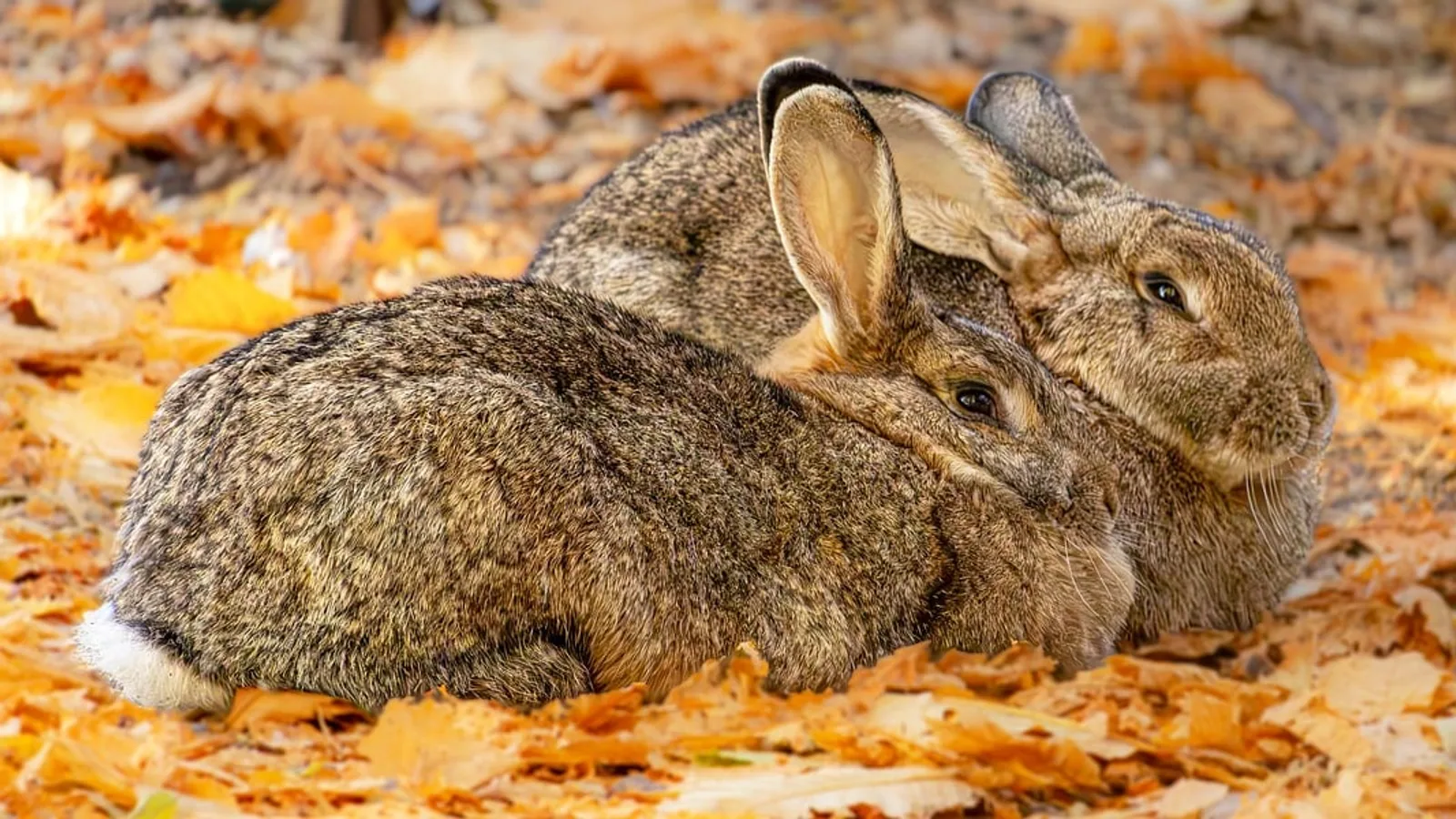
Most rabbits never need a full bath, and a full immersion bath can genuinely endanger them. Rabbits are fastidious self-groomers, and a healthy rabbit keeps its coat clean on its own. When a rabbit does get dirty, the safe approach is almost always a spot clean, a dry bath, or a shallow bottom-only wash, done with lukewarm water, minimal handling, and a warm drying period afterward. The goal of this guide is to show you exactly how to bathe a rabbit safely when cleaning is truly necessary, and how to avoid the bathing mistakes that send frightened, chilled rabbits to emergency clinics.
This article is educational and is not a substitute for veterinary diagnosis or treatment.
Bathing a Rabbit at a Glance
| Question | Safe answer |
|---|---|
| Does a healthy rabbit need baths? | No. Self-grooming handles routine coat hygiene. |
| When is cleaning necessary? | Soiled rear end, urine scald, flystrike risk, toxin on fur, vet-directed medicated washing. |
| Safest methods | Spot cleaning with a damp cloth, dry bath with cornstarch, shallow bottom-only wash. |
| Water depth and temperature | One to two inches, lukewarm, never hot or cold. |
| Head and ears | Never submerge or spray the head, ears, or face. |
| Shampoo | Plain warm water is safest. Any product choice should be confirmed with a rabbit-savvy veterinarian. |
| Drying | Towel dry thoroughly, keep the room warm, monitor for chilling. |
| Stop immediately and call a vet | Trembling, limpness, open-mouth breathing, collapse, or any suspicion of flystrike. |
Why Rabbits Rarely Need Baths
Rabbits are built to maintain their own coats. Grooming serves core functions in mammals, including parasite defense, removing dirt, and thermoregulation, and research on grooming sequences in domestic cats shows that self-cleaning is a structured, routine-driven behavior rather than a purely reactive one [1]. The same logic applies to rabbits. A rabbit with a clean environment, a proper diet, and normal mobility keeps its coat in good condition through regular self-grooming and through social grooming with bonded partners.
This matters because bathing overrides a system that already works. Water strips the natural oils from a rabbit's coat, wet fur takes a very long time to dry in an animal with dense undercoat, and a soaked rabbit loses body heat rapidly. On top of the physical risks, most rabbits experience bathing as a capture-and-restraint event. Behavioral research on hygiene routines in other species shows that problem behavior during routine hygiene care is common and is often driven by the restraining and handling involved rather than by the cleaning itself [2][3]. A rabbit that fights, thrashes, or freezes during a bath is not being difficult. It is responding exactly as a prey species responds to restraint.
Parasite pressure is one situation where owners sometimes assume bathing helps, but the evidence does not support that instinct. In white-footed mice, a well-studied wild rodent host, researchers found no increased grooming response to tick infestation, which shows that grooming alone is not a reliable parasite control strategy and that targeted veterinary treatment, not bathing, is the correct response to ectoparasites [4]. If you see fleas, mites, or ticks on your rabbit, ask your veterinarian for rabbit-safe treatment instead of reaching for the tub.
When a Bath Is Actually Necessary
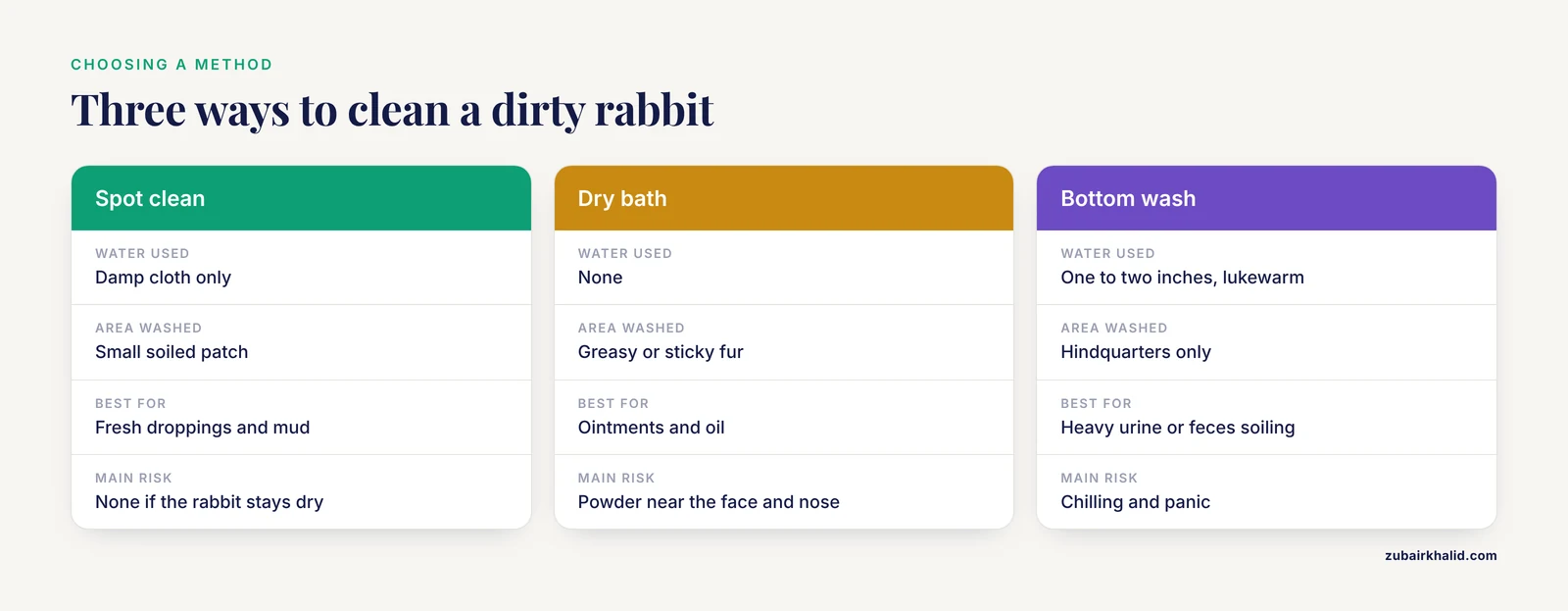
There are a small number of situations where cleaning a rabbit is medically necessary. In nearly all of them, the problem is localized and the solution is localized too.
Soiled rear end or diarrhea. Soft or sticky droppings matting the fur around the anus are the most common reason a rabbit needs washing. This is also a warning sign, because cecal dysbiosis and true diarrhea in rabbits are medical problems, not grooming problems. Clean the area, then call your veterinarian.
Urine scald or persistent wetness. Rabbits with mobility problems, arthritis, obesity, or urinary disease may stay damp around the hindquarters. Washing removes the soiled fur and urine residue, but the underlying cause needs veterinary workup.
Flystrike risk. Fur contaminated with feces or urine, especially in warm weather, attracts blowflies that lay eggs on the soiled area. Flystrike is a life-threatening emergency in which maggots hatch and eat into the rabbit's skin. Cleaning a soiled rear end is part of prevention, but if you see maggots, eggs resembling small grains of rice, or a foul smell, this is an immediate veterinary emergency. Do not spend time bathing while maggots are active.
A toxic or sticky substance on the fur. Paint, adhesive, oil, or any chemical the rabbit could ingest while grooming needs prompt removal. Spot clean first. If the substance covers a large area or you do not know what it is, call your veterinarian or a poison resource before washing.
Vet-directed medicated baths. Some skin conditions are treated with prescribed medicated washing. Follow the product label and your veterinarian's instructions exactly.
Guidance from the House Rabbit Society and the Rabbit Welfare Association and Fund consistently makes the same point in different words. Bathing is a targeted intervention for a specific soiled area, not a scheduled grooming step.
Supplies You Need Before You Start
Gather everything before you touch the rabbit. Leaving a wet, frightened rabbit to search for a towel is one of the fastest ways to turn a minor task into a disaster.
- Two or three clean, absorbent towels, one for the work surface, one for restraint wrapping, one for drying
- A shallow basin, sink, or tub with a non-slip surface such as a towel or rubber mat in the bottom
- Lukewarm water, tested on the inside of your wrist, cooler than you would use for yourself
- A pitcher, cup, or gentle spray attachment for controlled pouring
- Food-grade cornstarch for dry bathing of greasy or soiled spots
- Cotton pads or soft washcloths for spot cleaning and face cleaning
- A rabbit-appropriate grooming brush and a fine-toothed comb for post-bath coat work
- A helper, if possible, so one person supports the rabbit while the other washes
- A warm, draft-free room and a pre-warmed drying area
Skip hair dryers on hot settings, human shampoos, dish detergents, and flea products made for dogs or cats. Small mammal guidance from the Merck Veterinary Manual and VCA Animal Hospitals stresses that rabbits have sensitive skin and that product selection for any species other than rabbits must be confirmed with a veterinarian before use.
How to Bathe a Rabbit Step by Step
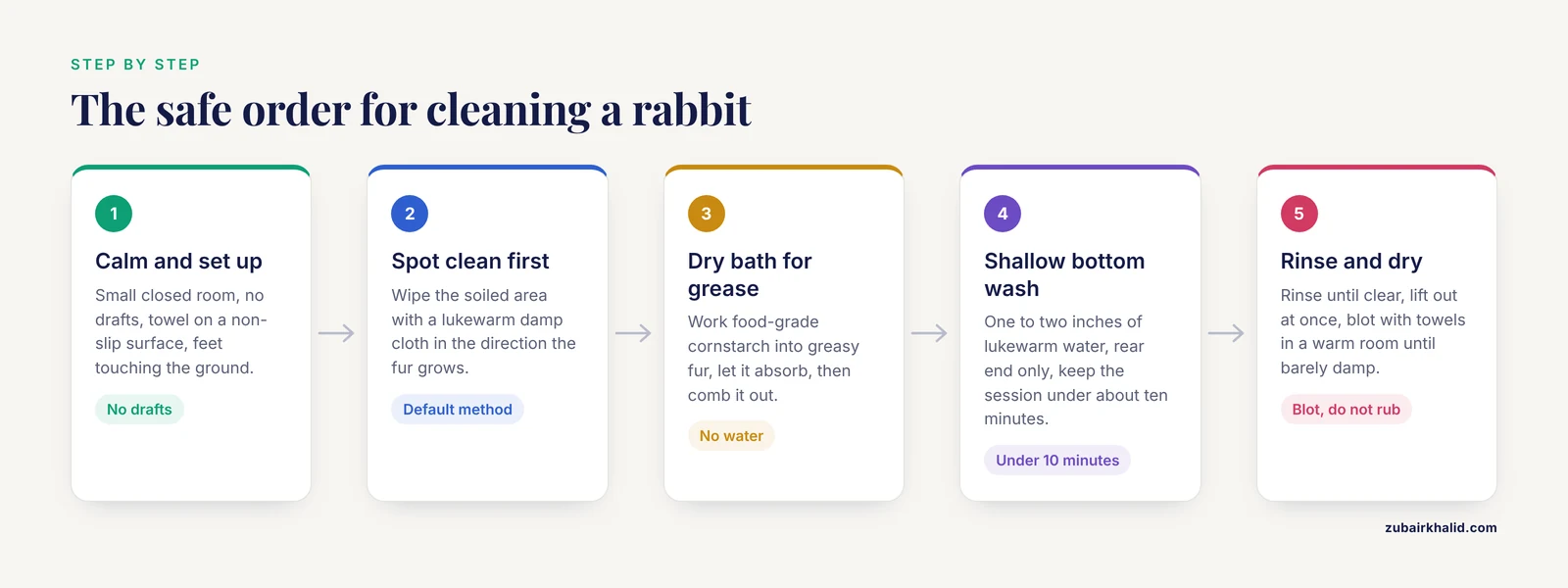
Work from the least invasive method to the most invasive one. Most soiled rabbits never need step four.
Step 1. Calm the rabbit and set up the space
Choose a small, closed room with no drafts. Lay a towel on your non-slip surface. Speak quietly and move slowly. Grooming and handling go best when the rabbit can keep its feet in contact with a surface, so plan to wash the rabbit in a position where its paws touch the towel or the basin floor rather than being suspended in the air. Compliance and cooperation in any hygiene routine improve when the individual's environment and physical constraints are addressed first, a principle documented across clinical hygiene-routine research [5].
Step 2. Try a spot clean first
Dampen a soft cloth or cotton pad with lukewarm water and wipe the soiled area in the direction the fur grows. Work in small passes, rewetting and re-wiping rather than soaking. For dried feces or mud, hold the warm damp cloth against the clump for several seconds to soften it before wiping. Many messes end here, and this is the method owners should default to every time.
Step 3. Try a dry bath for greasy or sticky spots
For substances like vaseline-type ointments, motor oil contact, or stubborn greasy mats on the hindquarters, work plain food-grade cornstarch into the affected fur, let it absorb the grease for a few minutes, then comb it out. Repeat as needed. A dry bath removes the substance without any water, which eliminates the chilling and stress risks entirely. Never use talc-based powders, and keep powder away from the face and nose.
Step 4. Give a shallow bottom bath only when nothing else works
This is the wet method used for a soiled hindquarters, and it is the only form of wet bathing that should ever be routine.
- Place one to two inches of lukewarm water in the basin, with the non-slip towel in the bottom.
- Lower the rabbit's rear end into the water while its front feet stay on the towel or on your helper's hand. The rabbit should never float or swim.
- Scoop water over the soiled area with your hand or a cup. Do not pour water over the back, shoulders, or head.
- If your veterinarian has recommended a shampoo, use the smallest effective amount, work it into the soiled fur only, and rinse completely. Leftover residue irritates skin and is ingested during later self-grooming.
- Keep the entire session under about ten minutes. Watch the rabbit's body language continuously. Flat ears, wide eyes, thrashing, or going rigid mean you should stop and return to spot cleaning.
The head, ears, eyes, nose, and mouth stay dry throughout. Water in a rabbit's ear canal is painful and slow to resolve, and a startled rabbit that gets water in its nose can aspirate.
Step 5. Rinse and remove the rabbit from water promptly
Any soap residue must be rinsed until the water runs clear over the washed area. Then lift the rabbit out immediately. Do not let a rabbit sit in water, even shallow water, while you do anything else.
Step 6. Dry thoroughly and warmly
Wrap the rabbit in a clean dry towel, supporting its hindquarters, and blot rather than rub. Keep wrapping and blotting with fresh dry towels until the fur is barely damp. Keep the room warm and draft-free until the coat is fully dry. If you use a hair dryer at all, use it only on the coolest setting, held far away, and only if the rabbit tolerates the noise without panic. Most rabbits dry faster and calmer with towel pressure alone plus time in a warm room.
Step 7. Finish the coat and return the rabbit to a clean space
Once the fur is nearly dry, comb out the hindquarters gently to prevent mats from forming as the damp fur dries. Put the rabbit back in a clean, dry enclosure with fresh hay and water. Check the rear end again over the next few hours, because damp fur wicks new moisture and soils quickly if the rabbit is still producing soft droppings.
How to Bathe a Rabbit Safely With Tips for Nervous Rabbits
Some rabbits tolerate hygiene care with minimal fuss and others find any restraint overwhelming. The behavioral literature on hygiene routines offers strategies that transfer well to rabbit care.
Break the routine into predictable small steps. Children with sensory sensitivities and difficulty remembering event sequences cooperate with hygiene routines more reliably when the routine is decomposed into short, predictable, repeated elements with consistent cues [6]. Do the same with your rabbit. Same room, same basin, same towel, same sequence, every time. Predictability lowers arousal.
Offer competing stimuli. In applied behavior work on hygiene routines, providing a competing item, such as a preferred food, reduced problem behavior during the procedure [3]. A handful of hay or a favored herb presented during the wash gives a rabbit something to do with its mouth and attention other than panic.
Prompt gently rather than forcing. Studies of destructive behavior during hygiene routines found that nondirective prompting, rather than physical forcing, reduced resistance [2]. For a rabbit, that translates to inviting the rabbit onto the towel, letting it step into the basin itself where possible, and applying the least restraint that keeps it safe.
Watch for learned fear. A rabbit that has one frightening bath experience will resist harder the next time. If your rabbit panics, stop, dry it, and revert to spot cleaning on later days. If regular hindquarter cleaning is genuinely needed because of chronic urinary or mobility problems, ask your veterinarian about a cooperative care plan and about treating the underlying condition so that frequent washing becomes unnecessary.
Common Mistakes When Bathing a Rabbit
Review this list before every bath. These are the errors that cause real harm.
- Filling a tub deep enough for the rabbit to swim. A soaking-wet rabbit chills fast and can panic so severely that it injures itself. Water should touch the belly, never the back.
- Wetting the head, ears, or face. Water in the ears causes pain and infection risk, and water near the nose risks aspiration. Clean the face with a barely damp cloth only.
- Using hot water. Rabbit skin burns at temperatures that feel merely warm to human hands. Lukewarm means cooler than your bath.
- Using dog shampoo, cat shampoo, human shampoo, or dish soap. These products are not formulated for rabbit skin and can cause irritation and gastrointestinal upset when the rabbit grooms residue. Use plain water unless your veterinarian prescribes something specific.
- Applying dog or cat flea products. Topical flea treatments labeled for dogs and cats can be toxic to rabbits. Parasite treatment belongs in your veterinarian's hands.
- Leaving soap residue in the coat. Incomplete rinsing leaves residue the rabbit ingests while grooming.
- Skipping the drying phase. A damp rabbit in a drafty room loses heat quickly. Dry to barely damp, then let body heat finish the job in a warm space.
- Using a hot hair dryer close to the coat. Heat stress and burns happen fast in small animals. Towels and a warm room are safer.
- Bathing a rabbit that is already sick, cold, or lethargic. A rabbit that is not acting normally needs a veterinarian, not a bath. Washing adds stress the animal cannot afford.
- Treating the bath as the fix. A dirty rear end has a cause, such as diet, dental disease, obesity, arthritis, or urinary disease. If your rabbit soils itself repeatedly, the bathing problem is really a medical problem.
Troubleshooting Common Bathing Problems
The rabbit bites or thrashes. Stop. End the session, dry the rabbit, and reassess. Deep scratches and bite wounds from a panicking rabbit are common injuries for owners, and forced restraint teaches the rabbit that handling means danger. Resume later with spot cleaning only.
The mess will not come out. Repeat warm compress passes before you escalate to water. For mats rather than dirt, combing and, where needed, careful scissors work by a groomer or veterinary nurse is safer than soaking a matted area, because wet mats hold water against the skin far longer than you expect.
The rabbit is damp hours later. Blot again with dry towels, brush the fur to lift the undercoat, and keep the rabbit in a warm room. If the coat stays wet into the evening, contact your veterinarian, because prolonged dampness in rabbits leads to chilling and skin problems.
My rabbit keeps getting a dirty bottom. Schedule a veterinary visit. Recurrent soiling in rabbits is linked with diet, pain, reduced grooming flexibility from arthritis or obesity, and urinary tract disease, all of which are treatable when identified.
Welfare and Safety Points
Restraint itself is a stressor. The hygiene-routine literature in both clinical and behavioral settings shows that individuals resist hygiene care most when the procedure involves immobilization and loss of control [2][3], so minimize how much you hold the rabbit down and let its feet touch a surface at all times. Keep sessions short. Never leave a rabbit unattended near water, including a few inches in a sink. Keep the door closed so a startled rabbit cannot bolt onto a hard floor while wet. And never bathe a rabbit you have just acquired or a rabbit that has stopped eating, because both situations need veterinary assessment first.
Rabbits hide illness, and a rabbit whose grooming has declined is often a rabbit that is in pain. A study of personal grooming decline in people living with depression found that practitioners treat deteriorating grooming as a meaningful clinical indicator rather than a cosmetic issue [7]. Veterinarians read your rabbit the same way. A coat that has become greasy, matted, or stained despite good care is information your veterinarian wants, so mention it even after you have cleaned the area successfully.
Aftercare and Your Rabbit Care Checklist
Use this rabbit care checklist to keep bathing almost never necessary:
- Brush regularly, increasing frequency during heavy shedding periods, so loose fur and debris leave the coat before they become mats.
- Check the hindquarters and underside daily, especially in elderly, overweight, or arthritic rabbits.
- Keep the enclosure dry and clean, because damp bedding contributes to urine scald and attracts flies.
- Feed the high-fiber diet your veterinarian recommends, since healthy droppings are the single biggest factor in a clean rear end.
- Provide unrestricted movement and weight management support so the rabbit can reach and groom its own hindquarters.
- Warm weather means checking for flies and soiled fur daily in rabbits with any history of hindquarter soiling.
- Book a veterinary exam if grooming habits change, droppings soften, or the rear end soils more than once.
A Note for Guinea Pig Owners
Owners researching small-mammal care often keep both species, and a guinea pig care guide overlaps with rabbit care here in a useful way. Guinea pigs are also self-grooming animals that rarely need baths, they are equally vulnerable to chilling and stress during wet bathing, and the same hierarchy applies for them. Spot clean first, use a dry method where possible, keep water shallow and lukewarm, keep the head dry, and dry thoroughly. The main species differences that matter are dietary, since guinea pigs require dietary vitamin C, and housing, since guinea pigs have different social and enclosure needs. Species-specific guidance from VCA Animal Hospitals and the Merck Veterinary Manual covers those differences in detail, and any product you are considering for either species should be confirmed with a small-mammal veterinarian before use.
Limitations and When to Contact a Veterinarian
Individual cases vary, and a rabbit-savvy veterinarian should guide any cleaning plan beyond a simple spot clean. Contact your veterinarian promptly, the same day, in any of these situations.
- Soft or liquid droppings, or a rabbit that has not passed normal droppings for several hours
- Any suspicion of flystrike, including maggots, rice-like eggs on the fur, foul odor, or a rabbit collapsing or seizuring, which is an emergency requiring immediate care
- Reddened, broken, or raw skin around the hindquarters or under the tail
- Recurrent soiling, wetness, or urine scald
- A rabbit that is cold, limp, trembling, open-mouth breathing, or unresponsive after any cleaning attempt
- Toxic substance exposure of unknown type or quantity
- Skin wounds, parasites, or persistent odor that does not resolve with cleaning
Skip the bath and call first whenever your rabbit is already lethargic, not eating, or visibly unwell. Stress from restraint can push a compromised rabbit into decompensation, and your veterinarian can often clean and stabilize the rabbit safely in clinic.
Frequently Asked Questions
Do rabbits ever need baths?
Only rarely. A healthy rabbit grooms itself thoroughly and needs no scheduled bathing. Cleaning is limited to spot cleaning a soiled area, a dry bath for greasy substances, or a shallow bottom-only wash when the hindquarters are contaminated with feces or urine.
Can a bath harm or kill a rabbit?
Yes, a full immersion bath can harm a rabbit through chilling, extreme panic, and aspiration of water. Rabbits have dense coats that dry slowly, and a soaked rabbit loses body heat quickly. Shallow, localized washing with thorough drying avoids most of these risks.
What should I do if my rabbit has a dirty bottom?
Spot clean with a warm damp cloth first, escalate to a shallow bottom bath only if needed, and call your veterinarian, because recurring soiling usually reflects a medical cause such as diet, dental disease, obesity, arthritis, or urinary disease rather than a grooming failure.
Can I use dog or cat shampoo on my rabbit?
No. Products made for other species are not formulated for rabbit skin and leave residue the rabbit ingests while grooming. Plain lukewarm water is the default, and any shampoo choice should be prescribed or confirmed by your veterinarian.
How do I dry a rabbit after a bath?
Blot the fur with dry towels until it is barely damp, then keep the rabbit in a warm, draft-free room until the coat dries fully. If you use a hair dryer, use only the coolest setting at a distance and only if the rabbit stays calm.
How often should I groom my rabbit instead of bathing?
Brush regularly, and daily during shedding seasons, and check the hindquarters every day. Routine brushing plus a clean environment makes bathing unnecessary for most rabbits. Your veterinarian can recommend a brushing schedule suited to your rabbit's breed and coat.
Can I bathe my guinea pig the same way?
The principles match. Guinea pigs also rarely need baths, tolerate water no better than rabbits, and should be spot cleaned first, washed shallowly and lukewarm when necessary, kept dry on the head, and towel dried thoroughly in a warm room.
When should I take my rabbit to the vet instead of bathing at home?
Go to the veterinarian instead of bathing whenever you see maggots or suspected flystrike, diarrhea or no droppings, broken or raw skin, lethargy, loss of appetite, coldness or trembling, or a toxic substance of unknown type on the coat. These situations need medical care first, and cleaning alone will not address them.
Sources
- Decoding diversity: Are there patterns in the organization of grooming movements in domestic cats?
- Nondirective prompting and noncontingent reinforcement in the treatment of destructive behavior during hygiene routines.
- Competing stimuli in the treatment of multiply controlled problem behavior during hygiene routines.
- Permission to Bite: White-footed mice show no increased grooming response to tick infestation
- Factors influencing compliance to hygiene routines in community care - the viewpoint of medically responsible nurses in Sweden.
- School Nurses Increasing the Compliance of Hygiene Routines for Students With Autism Spectrum Disorder
- Practitioners' experiences of deteriorating personal hygiene standards in people living with depression in Australia: A qualitative study.