How Often to Clean a Hamster Habitat: Cleaning Schedule
By Dr. Zubair Khalid, DVM, MS, PhD ·
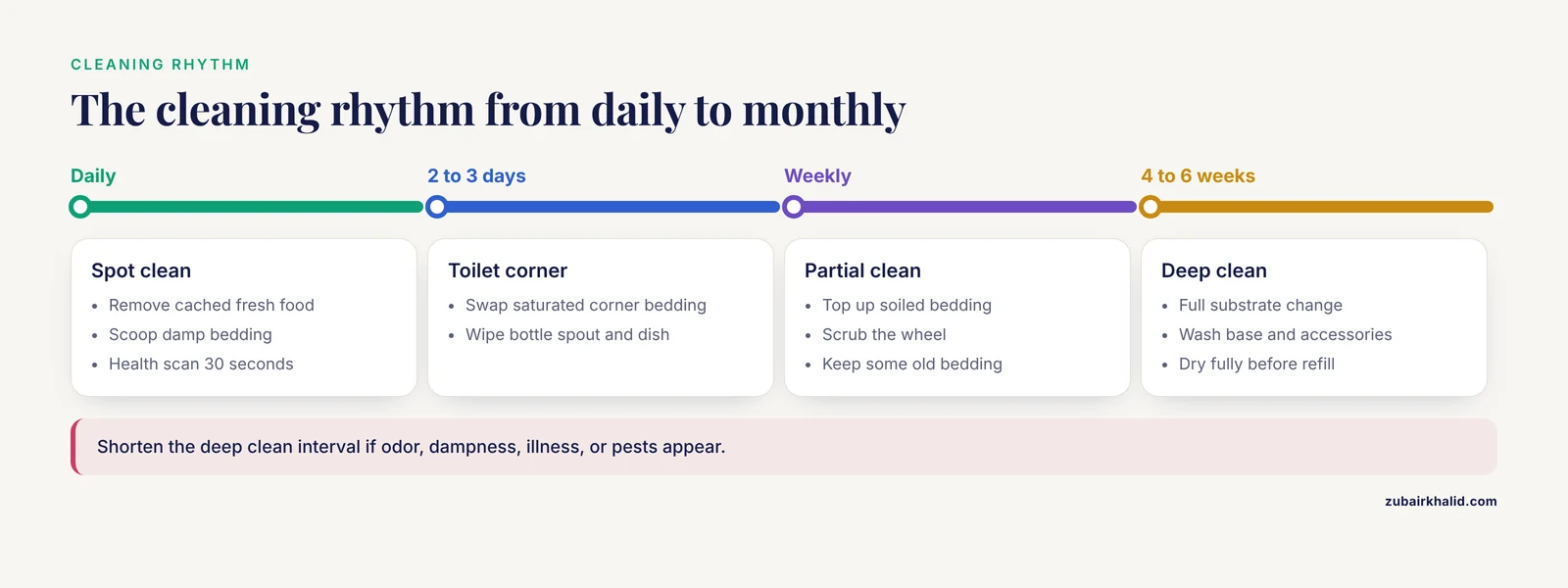
Most hamsters stay healthy on a three-tier routine: a quick spot clean every day, a partial bedding refresh once a week, and a full deep clean every four to six weeks. A single hamster in a large enclosure with deep, absorbent bedding can usually go the full interval between deep cleans. A hamster in a small cage, a pair of dwarf hamsters, or an animal that receives fresh vegetables daily will need shorter intervals. Published care guidelines for hamsters vary widely, and the research base on their husbandry is still limited, so owners do best when they combine general principles with close observation of their own animal [1].
This guide answers how often to clean a hamster habitat, lays out a complete hamster cage cleaning schedule, explains deep cleaning a hamster enclosure step by step, and covers safe cleaning products for hamsters.
This article is educational and is not a substitute for veterinary diagnosis or treatment.
At a Glance: Your Hamster Cleaning Schedule
| Task | How often | What it involves |
|---|---|---|
| Spot clean | Daily | Remove perishable food hoards, scoop damp or soiled bedding, check the water bottle |
| Toilet corner refresh | Every 2 to 3 days | Swap saturated bedding in the urination corner for fresh substrate |
| Partial clean | Weekly | Replace soiled bedding, scrub the wheel and dishes, wipe surfaces, keep some clean old bedding |
| Deep clean | Every 4 to 6 weeks, sooner if odor, dampness, illness, or pests appear | Full substrate change, wash base and accessories, disinfect only if needed, dry fully, refill to burrowing depth |
| Health scan | Daily | Watch appetite, droppings, breathing, coat, and activity for 30 seconds |
Why Cleaning Frequency Matters for Hamster Habitat Hygiene
Hamsters live at substrate level. They tunnel through their bedding, hoard food in hidden corners, and urinate in one or two favored spots. Urine breaks down into ammonia over time, and damp bedding grows mold and bacteria. Because a hamster's nose sits inches from the floor of the cage, hygiene lapses affect the animal directly.
Over-cleaning creates its own problems. Hamsters orient through scent, and a full teardown removes every familiar cue at once. Many hamsters respond by hiding, refusing food for a few hours, or chewing bars. The goal of hamster habitat hygiene is a middle path: remove waste promptly, keep the familiar scent map intact, and save full teardowns for when they are genuinely needed.
Substrate depth sits at the center of this balance. In a survey of 548 Syrian hamster owners, shallower substrate was significantly associated with more owner-reported bar biting [2]. Deep bedding pulls urine away from the surface, lets the hamster bury waste out of sight, and stretches the interval between partial cleans. Enclosure size works the same way. In a cross-sectional survey of dwarf hamster owners, 12% of hamsters were housed in enclosures under 75 cm in length [1]. Small habitats saturate quickly and demand shorter cleaning intervals than large, deep setups.
How Your Hamster Uses the Habitat
Four natural habits shape the schedule:
- A toilet corner. Most hamsters urinate in one or two fixed spots. Scooping that corner like a litter box removes most of the odor load without touching the rest of the cage.
- Food hoards. A hamster moves food from the dish to hidden caches. Fresh vegetables and fruit rot within a day and must be found and removed daily. Dry mixes last longer but still mold once damp.
- A burrow system. Established tunnels are part of your hamster's territory. Stripping all bedding destroys them. When you do replace substrate, pack the fresh layer down firmly so tunnels hold their shape.
- Shared surfaces. The wheel, hides, and dishes collect droppings and urine scale. These need scrubbing on a weekly rhythm even when the bedding itself looks clean.
Timing matters too. Reference works such as the Merck Veterinary Manual describe hamsters as nocturnal, so plan cleaning for early evening when your hamster is naturally waking, or move the animal to a secure temporary space first.
So, How Often Should You Clean a Hamster Habitat?
Use the daily, weekly, monthly framework as a starting point, then adjust for these factors:
- Enclosure size and bedding volume. A large enclosure with deep bedding holds waste far longer than a small cage with a thin layer of shavings.
- Number of hamsters. Syrian hamsters must live alone. Dwarf hamsters are sometimes co-housed, but co-housing failure was nearly five times more likely in dwarf hamsters older than 6 months in the 2023 survey (odds ratio 4.75) [1]. The same survey found many co-housed animals had fewer food and water sources than animals. If you keep a pair, provide one water bottle and one feeding station per hamster, spot clean daily, and watch closely for conflict.
- Diet. Daily fresh produce means daily removal duty, no exceptions.
- Health status. A hamster with diarrhea or an animal recovering from illness needs a cleaner environment than a healthy adult. Change soiled bedding daily and ask your veterinarian about disinfection.
- Your nose. If you smell urine from a step away before the scheduled deep clean, move the deep clean up. A clean habitat should smell like bedding and food, not ammonia.
Adjusting the Schedule for Special Situations
- A new hamster. Leave the setup you prepared alone for the first weeks beyond daily spot cleaning. Familiar scent helps a new animal settle.
- A sick hamster. Remove soiled bedding daily, isolate the toilet corner, and follow your veterinarian's disinfection instructions.
- An elderly hamster. Keep the same schedule but watch for accidents outside the toilet corner, which are common in older animals.
- A co-housed dwarf pair. Add extra food and water stations, spot clean daily, and check the cage twice a day for signs of aggression.
Your Hamster Cage Cleaning Schedule in Detail
Daily (2 to 5 minutes)
- Hunt for cached fresh food and remove it.
- Scoop out visibly soiled or damp bedding with a scoop or spoon.
- Rinse and refill the water bottle, then confirm that it flows.
- Do a 30-second health scan. Is your hamster eating, producing normal droppings, moving normally, and breathing quietly?
Every 2 to 3 Days
- Replace the bedding in the toilet corner with a handful of fresh substrate.
- Wipe the bottle spout and the food dish with warm water.
- Sweep for any produce you missed on earlier checks.
Weekly (10 to 20 minutes)
- Remove all visibly soiled bedding and top up with fresh substrate to the original depth.
- Scrub the wheel. Wheels collect droppings fast and are the most common source of lingering odor.
- Wash the dish and any soiled hides with warm water.
- Wipe urine scale from the cage floor and walls with a damp cloth.
- Keep a portion of clean, unsoiled old bedding and mix it into the fresh layer so the scent map survives.
Monthly (every 4 to 6 weeks)
Perform the full deep clean described below. If your hamster is elderly, ill, or new to your home, ask your veterinarian whether to adjust the interval.
Supplies for a Hamster Cleaning Routine
- A small scoop or spoon for lifting soiled bedding without disturbing clean areas.
- A dedicated sponge and scrub brush, kept separate from kitchen items and used only for the cage.
- A narrow bottle brush that fits the water bottle and its spout.
- A spray bottle for diluted vinegar or plain water, clearly labeled.
- Unscented dish soap and, if desired, a commercial small-animal cage cleaner.
- Paper towels and garbage bags for bedding removal.
- Spare bedding, stored sealed and dry so it does not mold before use.
- A secure carrier or travel cage with a lid, stocked with a handful of bedding, a small hide, and a water source for deep clean days.
Selection criteria are simple. Choose unscented everything, choose tools you will use only for the hamster, and choose a temporary enclosure that latches securely, because hamsters are escape artists.
Deep Cleaning a Hamster Enclosure, Step by Step
- Pick the right time. Early evening works best. Never dig a sleeping hamster out of its bed at midday.
- Set up temporary housing. A secure carrier, travel cage, or playpen with a layer of bedding, a hide, and water works well. Skip the exercise ball. In the Syrian hamster owner survey, 18.4% of owners used hamster balls, and ball use was significantly associated with more reported bar biting [2].
- Strip the bedding. Bag all substrate and throw it away. Composting is an option when your hamster is healthy.
- Wash the base and walls. Use warm water with a mild, unscented dish soap or a small-animal cage cleaner. Pay attention to corners, the area under the bottle, and any tube connections.
- Wash the accessories. Scrub the wheel, dishes, and plastic hides. Spot clean wooden items, which cannot be soaked, and replace them once they smell or stay damp.
- Rinse thoroughly. Rinse every surface until you see no suds and smell no soap. Residue is the main chemical risk in cage cleaning.
- Disinfect only when needed. Routine cleans do not require a disinfectant. Use one after illness, after a pest sighting, or when setting up a secondhand cage. Follow the product label for contact time, rinse repeatedly, and never mix bleach with vinegar or ammonia-based products.
- Dry completely. Damp cages grow mold. Air dry until every surface, including tube interiors, is dry to the touch.
- Refill substrate to burrowing depth. Pack it lightly firm so tunnels hold their shape. Depth should let your hamster dig a tunnel and disappear from view.
- Rebuild a familiar layout. Keep the wheel, hides, and bottle in roughly the same positions. Mix a handful of clean old bedding into the fresh substrate.
- Return your hamster and watch. Give the animal 30 quiet minutes. Some initial frantic redecorating is normal.
Safe Cleaning Products for Hamsters
Safe defaults
- Warm water and mild, unscented dish soap. This handles routine soil on nearly every cage surface.
- Commercial small-animal cage cleaners. Use as directed and rinse well.
- Diluted white vinegar. Good for urine scale and the white mineral crust inside water bottles. Rinse afterward.
- Baking soda paste. Useful for stuck-on debris on plastic and ceramic. Rinse afterward.
Use with caution
- Diluted, unscented bleach. Appropriate for disinfection after illness or pests, not for routine cleaning. Rinse until you cannot smell it, then air dry fully. Never combine bleach with vinegar or ammonia products, because the mixture releases harmful gases.
Never use
- Scented cleaners, disinfectant wipes, and spray disinfectants. These leave fragrances and active residues on surfaces a hamster walks across and grooms off its paws.
- Quaternary ammonium products left unrinsed. Quats appear in many household disinfectant sprays and some detergents and soaps. In toxicity screening of one quat, rats showed reduced food consumption at a moderate dose, and regulators derived a very low acceptable exposure level of 0.025 mg per kg body weight per day [3]. A hamster's body weight is measured in tens of grams, so leftover film on a shelf or wheel is a meaningful exposure for the animal that licks its paws afterward. If a quat product is your only disinfectant option, rinse and dry repeatedly.
- Essential oil products, pine and cedar scented cleaners, ammonia glass cleaners, and oven cleaner. Strong fragrances and fumes concentrate inside an enclosed habitat.
- Any aerosol sprayed near the cage. Research in Syrian hamsters shows that foreign material entering the lower respiratory tract triggers inflammation [4]. Move your hamster out of the room, spray there, and ventilate before the animal returns.
To judge any product, read the label for added fragrance, check whether it is a spray or aerosol, and assume that anything left on a surface will end up in your hamster's mouth. When in doubt, soap and water with a thorough rinse is the safest choice.
Bedding Choices That Make Cleaning Easier
Bedding is your main cleaning tool, so choose it with the schedule in mind.
- Choose unscented, low-dust, absorbent material. Paper-based bedding and aspen shavings are the common defaults. Avoid strongly scented wood products.
- Go deep. Depth lets your hamster urinate below the surface, where it dries instead of pooling, and supports natural tunneling behavior.
- Match volume to interval. The more substrate in the cage, the longer you can go between full changes.
- Store spare bedding sealed and dry so it does not mold before you use it.
Hamster Habitat Hygiene Between Cleanings
- Wash your hands before and after handling your hamster or cage items. This protects both of you and keeps food and soap smells off your hamster.
- Keep food dry. Store seed mix in a sealed container, discard damp food, and clean the storage bin occasionally.
- Brush the bottle weekly. A slimy film develops inside water bottles. A bottle brush and hot water handle it.
- Scoop the toilet corner on sight. Treat it like a litter box.
- Read behavior after every clean. In a 2025 survey of 723 UK small mammal owners, owners most often judged their animals' health and welfare through behavior and activity rather than appearance alone [5]. If your hamster hides for a full day after cleaning, keep more old bedding next time. If it settles within minutes, your routine is working.
Common Cleaning Mistakes That Backfire
- Full strip-outs every week. This wipes out scent cues and burrows and is the most common cause of post-cleaning stress.
- Cleaning while your hamster sleeps. Midday teardowns interrupt sleep for a nocturnal animal.
- Using an exercise ball for containment. A playpen or secured carrier is a calmer option.
- Scented wipes and sprays. Convenient for humans, risky as residues on surfaces a hamster grooms.
- Leaving damp patches. Wet bedding under the bottle or in the toilet corner molds within days.
- Changing everything at once. All-new bedding plus rearranged furniture plus scrubbed hides is a triple scent loss. Stage changes when you can.
- Skipping the rinse. Soap residue on plastic gets ingested during grooming.
- Ignoring the water bottle. A clogged spout becomes a dehydration risk within a day.
Troubleshooting Odor, Mess, and Stress
The cage smells within two days of cleaning. Check for buried fresh produce, a saturated toilet corner, and a bottle leak. If none apply, the enclosure is probably too small for the animal's waste output. Surveys of small mammal owners repeatedly identify unsuitable enclosures as the main barrier to better welfare [5], and upgrading to a larger habitat with deeper bedding is the single most effective fix for odor.
My hamster hides or bites bars after cleaning. Preserve more old bedding, keep the layout identical, and clean in stages rather than all at once. Persistent bar biting deserves a conversation with your veterinarian.
White crust on the bottle or cage walls. Urine and mineral scale. Soak in diluted vinegar, scrub, rinse.
The wheel smells even after scrubbing. Some plastic wheels hold odor permanently. Replace it.
Wooden hides smell or stay damp. Wood absorbs urine and cannot be disinfected reliably. Replace soiled wood items at deep cleans.
My hamster scratches constantly or has flaky skin. Cleaning will not fix mites or skin disease. Book a veterinary visit and deep clean the habitat afterward as your vet directs.
Droppings are soft or the tail area is wet. Stop routine cleaning and call your veterinarian. Diarrhea in hamsters can progress quickly.
Limitations and When to Contact a Veterinarian
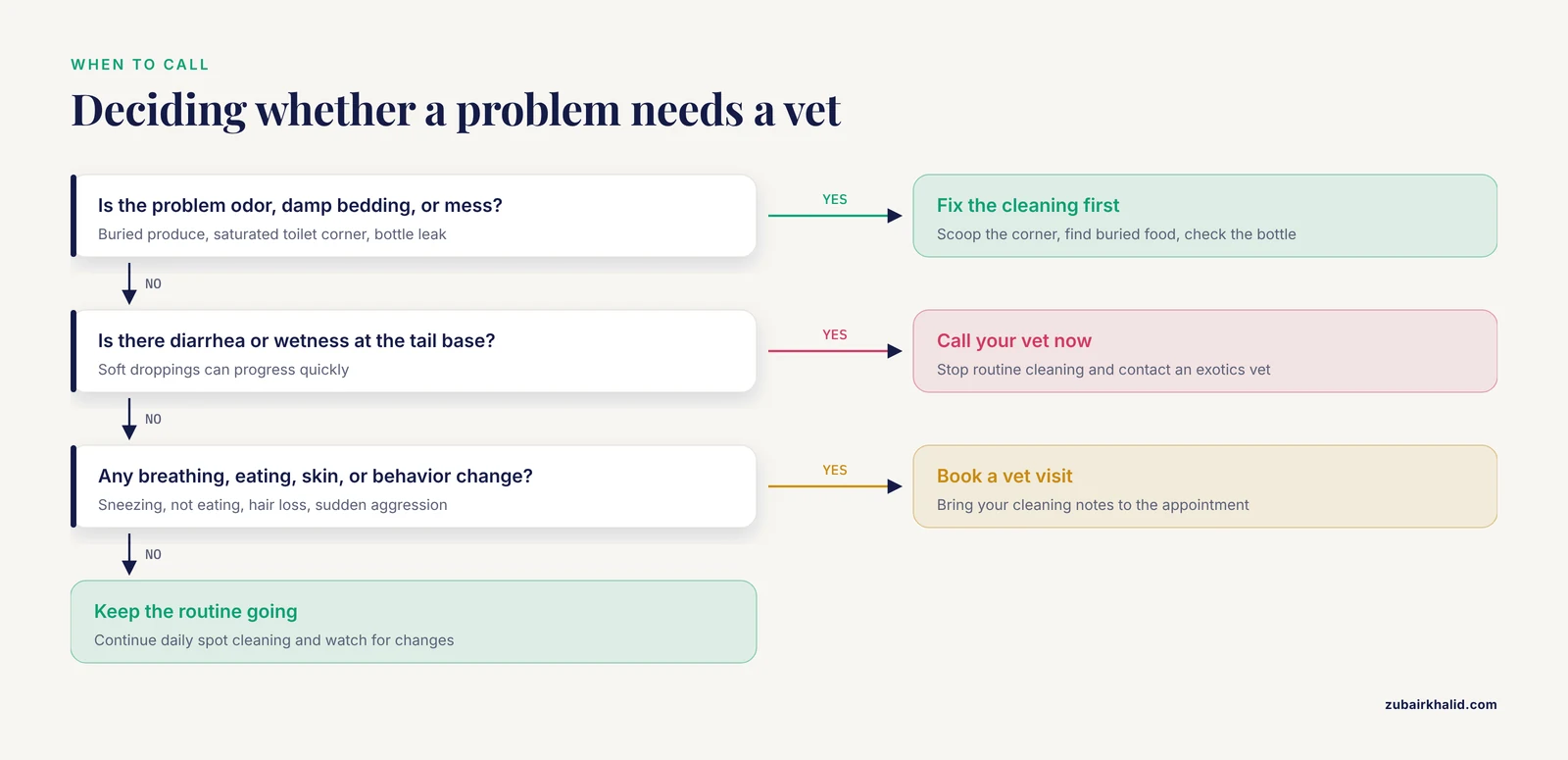
No single schedule fits every animal, and individual cases need a veterinarian. Treat the framework above as a starting point and adjust it to your hamster's age, health, enclosure, and behavior.
Contact an exotics or small mammal veterinarian promptly if you see any of the following:
- Diarrhea, soft droppings, or wetness around the tail base
- Sneezing, clicking sounds, discharge from the nose or eyes, or labored breathing
- Not eating or drinking for more than a few hours, or a sudden drop in hoarding activity
- Lethargy, hunched posture, or unsteady movement
- Hair loss, intense scratching, red or flaky skin, or visible wounds
- Overgrown, broken, or discolored teeth, or drooling
- Blood in the urine, a swollen abdomen, or straining to urinate
- Sudden aggression or any abrupt behavior change
Bring your cleaning notes to the appointment. Veterinarians combine husbandry history with physical examination and laboratory work, and hemograms are a standard part of small mammal assessment [6]. Knowing your substrate, cleaning products, and schedule helps your vet rule out environmental causes.
Do not wait for symptoms to prove themselves. In the Syrian hamster owner survey, 65.9% of owners reported their hamster had never been taken to a veterinarian [2]. Establishing care with an exotics vet before an emergency makes every later decision easier. After any illness, ask your veterinarian which disinfectant and contact time to use on the habitat, then rinse and dry thoroughly before your hamster returns.
Frequently Asked Questions
How often should you fully clean a hamster cage?
For most single hamsters, a full deep clean every 4 to 6 weeks is enough, supported by daily spot cleaning and a weekly partial refresh. Shorten the interval if odor, dampness, illness, or pests appear.
Can you clean the cage while the hamster is inside?
Spot cleaning around a hamster is fine. For a deep clean, move the animal to a secure carrier or playpen stocked with bedding, a hide, and water.
What cleaning products are safe for hamsters?
Warm water with mild, unscented dish soap, commercial small-animal cage cleaners, and diluted white vinegar are the safe defaults. Rinse every surface until no suds or scent remain, then dry.
Is white vinegar safe to use around hamsters?
Yes, diluted vinegar works well on urine scale and bottle crust. Rinse it off afterward and never mix vinegar with bleach.
How often should you change hamster bedding?
Remove soiled bedding every 2 to 3 days, refresh the rest weekly, and replace all of it at the deep clean. Keep a handful of clean, unsoiled old bedding to preserve familiar scent.
Why does my hamster's cage smell after two days?
Look for buried fresh food, a saturated toilet corner, a leaking bottle, or an enclosure that is too small. A strong odor with no obvious source also warrants a veterinary check.
Do hamsters get stressed when you clean their cage?
Some do, especially after full teardowns. Reduce stress by keeping some old bedding, rebuilding the same layout, and cleaning in the evening rather than during daytime sleep.
Can I use disinfectant wipes or sprays like Lysol on the cage?
No. Wipes and spray disinfectants leave fragrances and active residues on surfaces your hamster walks on and grooms off its paws. Use pet-safe products and rinse thoroughly instead.
Sources
- Preliminary investigation into the housing of dwarf hamsters.
- Burrowing for answers: Investigating Syrian hamster welfare through owner surveys.
- Initial hazard assessment of ethyl(dimethyl)(tetradecyl)ammonium ethyl sulfate: Genotoxicity tests and combined repeated-dose and reproductive/developmental toxicity screening in rats.
- Volume-Associated Clinical and Histopathological Effects of Intranasal Instillation in Syrian Hamsters: Considerations for Infection and Therapeutic Studies.
- Small mammal owners' experiences of housing challenges and animal welfare: A COM-B and word frequency analysis.
- Hematologic Assessment in Pet Rats, Mice, Hamsters, and Gerbils: Blood Sample Collection and Blood Cell Identification.