How Often to Clean a Chinchilla Habitat: Cleaning Schedule
By Dr. Zubair Khalid, DVM, MS, PhD ·

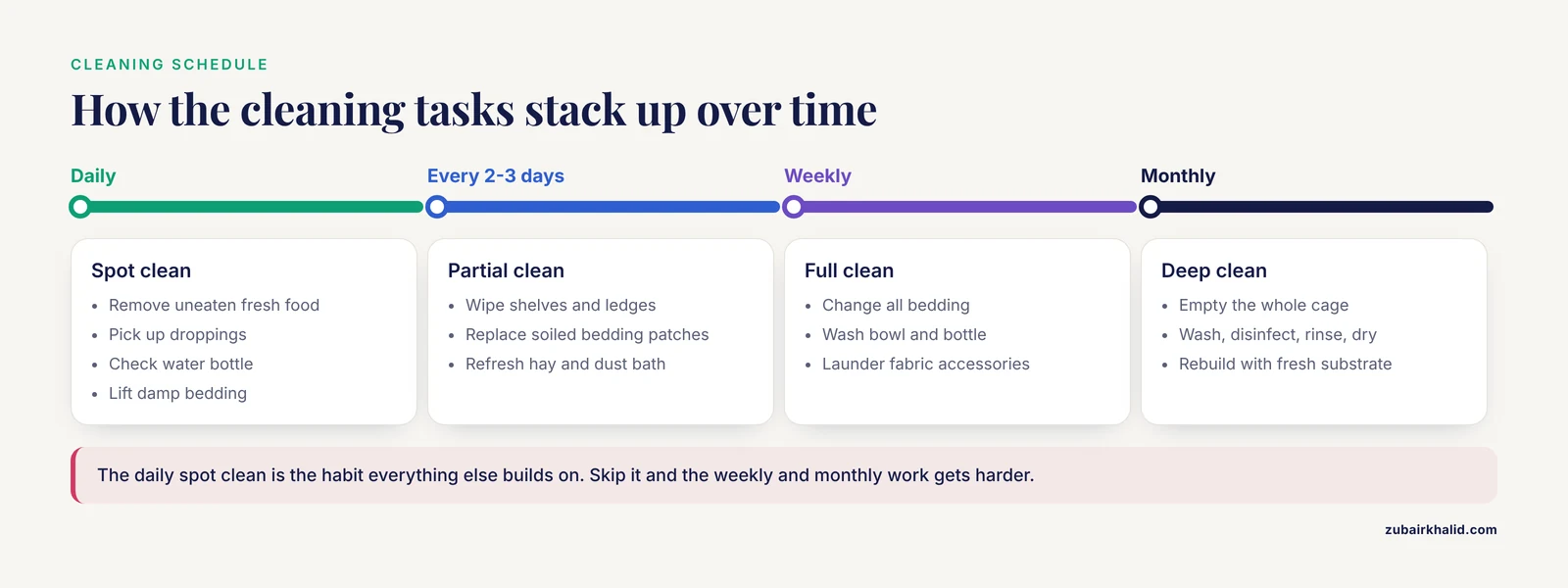
Clean a chinchilla habitat on a tiered schedule. Spot clean droppings and soiled bedding daily, perform a partial clean of shelves and accessories two to three times per week, change bedding and wash bowls and bottles once a week, and deep clean the entire enclosure about once a month. Increase the frequency whenever there is dampness, odor, spillage, or illness in the home. This layered approach, sometimes called a chinchilla cage cleaning schedule, keeps ammonia and moisture under control without stripping the cage so often that your chinchilla loses its familiar scent environment.
Chinchillas are clean animals by nature. They groom their dense coats, they tend to designate latrine corners, and they spend a large share of the day resting rather than moving through the enclosure. Research on farmed female chinchillas found that the animals spent about 68 percent of the day resting and roughly 23 percent in locomotion, which means the surface they rest on and the air they breathe are in near-constant contact with their bodies [1]. A habitat that stays dry and clean is therefore one of the most direct welfare investments you can make.
This article gives you the full schedule, the reasoning behind each task, a step-by-step method for deep cleaning a chinchilla enclosure, guidance on safe cleaning products for chinchillas, and the warning signs that mean you should call your veterinarian.
At a Glance: Chinchilla Habitat Cleaning Checklist
| Frequency | Task | Time Commitment |
|---|---|---|
| Daily | Spot clean droppings, remove uneaten fresh food, refresh water, check for damp bedding | 5 minutes |
| Every 2 to 3 days | Wipe shelves and ledges, replace soiled bedding patches, refresh hay, clean the dust bath area if soiled | 10 minutes |
| Weekly | Full bedding or liner change, wash food bowl, scrub water bottle and sipper tube, launder fabric accessories | 20 to 30 minutes |
| Monthly | Deep clean the entire enclosure: empty, wash, disinfect, rinse, dry, and replace all substrate and accessories | 45 to 60 minutes |
| As needed | Clean immediately after spills, urine accidents, mold discovery, or if a chinchilla is ill | Varies |
Print this table or save it on your phone. The single habit that matters most is the daily spot clean. Everything else builds on it.
Why Chinchilla Habitat Hygiene Matters
Chinchilla habitat hygiene is not cosmetic. It affects four body systems at once: respiratory, skin, urinary, and digestive.
Respiratory health. Ammonia builds up quickly in any enclosure where urine soaks into bedding. Chinchillas have sensitive airways, and a cage kept in a warm, humid, poorly ventilated room compounds the problem. Routine removal of wet bedding and urine-soaked corners keeps airborne irritants low.
Skin and coat health. The chinchilla coat is famously dense, and veterinary husbandry reviews emphasize coat condition as a central element of this species' care [2]. A chinchilla that sits on damp or soiled shelving can develop urine scalding and fur staining. Clean, dry resting surfaces protect the coat and the skin underneath it.
Urinary health. Clean water is part of habitat hygiene, not just nutrition. A study comparing water intake in small mammals, including chinchillas, noted that adequate water supply is indispensable for health reasons, including prophylaxis of urolithiasis, and that water intake varies widely between individuals and with diet [3]. A water bottle that grows slime or algae discourages drinking and undermines that protection. Washing bottles and sipper tubes weekly is direct disease prevention.
Digestive health. Chinchillas are hindgut fermenters with a high-fiber requirement, and poor diets are a recognized route to disease in this species [2]. Hygiene interacts with diet directly. Damp hay grows mold, dropped pellets attract flies, and spoiled fresh foods cause gastrointestinal upset. Removing perishables daily is as much a hygiene task as a feeding task.
There is also a welfare dimension. A large survey of 723 small mammal owners in the United Kingdom found that opportunity, especially access to suitable enclosures, was the main barrier to good housing, even though most owners were willing and motivated to provide good welfare [4]. A practical cleaning schedule lowers that barrier. Owners who know exactly what to do each day, each week, and each month are far more likely to follow through than owners facing an intimidating monthly overhaul with no plan.
The Daily Routine (About 5 Minutes)
Do these tasks at roughly the same time each day, ideally during the early evening when chinchillas naturally become active.
- Remove uneaten fresh foods. Take out any greens, vegetables, or other perishables after a few hours so they cannot spoil.
- Spot clean droppings. Sweep or pick up droppings from shelves, the litter area, and around the food bowl. A small handheld brush and dustpan dedicated to the cage works well.
- Check the water bottle. Confirm the sipper tube dispenses water and the water looks clear. Do not skip this even if the bottle looks full, because a stuck sipper ball can leave a full bottle inaccessible.
- Look for damp spots. Urine-soaked bedding under a favorite corner should be lifted out and topped up with fresh substrate.
- Scan the hay. Toss hay that fell into the litter area or looks damp.
Five focused minutes daily prevents most of the odor and contamination problems that push owners into unnecessary full cage teardowns.
The Twice-Weekly Partial Clean
Two to three times per week, add a short second pass:
- Wipe wooden shelves and ledges with a damp cloth and dry them fully. Chinchillas chew wood, so never leave cleaning residue on surfaces they can mouth.
- Replace soiled bedding sections rather than the whole tray, unless the tray is small.
- Refresh the dust bath container. Chinchillas bathe in fine dust rather than water, and regular dust bathing is part of standard husbandry described in veterinary care reviews for this species [2]. Used dust collects feces, fur, and moisture. Many owners remove the bath after each use and offer it a few times per week. Ask your veterinarian for the dusting frequency they recommend for your climate and humidity, because there is genuine variation in practice.
- Launder any soiled fleece liners or fabric hides with unscented detergent and no fabric softener, then dry them completely before returning them to the cage.
The Weekly Full Clean
Once a week, reset the habitat.
- Move your chinchilla to a safe space. A pet carrier lined with a towel, or a chinchilla-proofed room, works. Chinchillas can overheat easily and are quick jumpers, so choose a cool area away from other pets.
- Remove all substrate and dispose of it. Bag it and take it outside the living area.
- Wash the food bowl with hot water and a small amount of unscented dish soap. Rinse thoroughly and dry.
- Scrub the water bottle and sipper tube. Use a bottle brush. The sipper tube is where biofilm accumulates, and it is the spot most often missed. If mineral scale builds up, soak the tube in diluted white vinegar, then rinse extremely well.
- Wash plastic shelves, ceramic hides, chew toys that are water-safe, and the wheel with hot soapy water. Rinse and dry completely.
- Wipe cage bars and wire surfaces with a damp cloth.
- Add fresh substrate. Provide enough depth to absorb urine. Deep litter beds of shavings are a recognized housing option for chinchillas, and a study comparing housing types found that chinchillas kept in enlarged cages with deep shavings bedding showed less timid responses toward humans than those on wire floors, suggesting that a well-managed litter floor supports both comfort and confidence [1].
- Return your chinchilla. Only when everything is bone dry. Dampness is the enemy of chinchilla habitat hygiene.
Deep Cleaning a Chinchilla Enclosure (Monthly)
Deep cleaning a chinchilla enclosure goes beyond the weekly reset. Plan for about an hour, and pick a cool, dry day.
Step 1. Empty the cage completely. Remove every accessory, shelf, hide, toy, and the substrate. Nothing stays in.
Step 2. Inspect everything. Check wooden items for urine soaking or gnaw damage. Check plastic for cracks. Discard anything you cannot clean or that has become a splinter hazard.
Step 3. Wash with hot soapy water. Use unscented dish soap on the cage pan, walls, and all accessories. Physical removal of organic matter always comes before disinfection, because disinfectants work poorly on soiled surfaces.
Step 4. Disinfect with a chinchilla-safe product. See the product guidance below. Apply the disinfectant, let it sit for its labeled contact time, then rinse every surface thoroughly with clean water. Residue matters more than the disinfectant itself, because chinchillas chew nearly everything in their cage.
Step 5. Address mineral and urine scale. White vinegar dissolves urine scale and hard-water deposits on wire and plastic. Apply, let it fizz and loosen the deposits, scrub, and rinse well.
Step 6. Dry completely. Air dry in a ventilated space or towel dry, then let the cage sit until no trace of moisture remains. Do not rush this step.
Step 7. Rebuild with fresh substrate and clean accessories. Place the litter area where your chinchilla already tends to use it, rather than relocating everything. Keeping the layout consistent preserves your chinchilla's mental map of its territory and reduces stress after the deep clean.
Step 8. Return your chinchilla and observe. Watch for normal activity that evening. A brief period of sniffing and re-marking the space is normal.
If you keep more than one chinchilla in separate cages, clean the healthy animals' cages first and the sick animal's cage last, and use separate cleaning tools. Ask your veterinarian about quarantine cleaning protocols if any animal in the home is under treatment.
Safe Cleaning Products for Chinchillas
Choosing safe cleaning products for chinchillas comes down to three rules: remove the animal first, remove all residue afterward, and avoid anything strongly scented.
Good choices:
- Hot water and unscented dish soap. The workhorse for routine washing. Rinse until no suds remain.
- Diluted white vinegar. Effective on urine scale and hard water deposits. Safe when rinsed away completely.
- Unscented detergent for fleece liners and fabric accessories. Skip fabric softener and dryer sheets, which leave residues and fragrances.
Use with caution and only with your veterinarian's guidance:
- Diluted bleach solutions and commercial small-animal disinfectants can be appropriate for deep cleaning when properly diluted and rinsed, but concentrations and contact times vary by product. Ask your veterinarian to recommend a specific disinfectant and dilution for your situation, and always rinse and dry fully before returning your chinchilla.
- Pet-safe enzymatic cleaners can help with stubborn urine odor in litter corners.
Avoid entirely:
- Products with strong fragrances, essential oils, or pine and cedar residues, since small mammals have sensitive respiratory tracts and enclosed cages concentrate fumes.
- Any product left as a residue on surfaces the chinchilla can chew.
- Aerosol sprays used inside or directly next to the cage.
If you smell the product after the cage is rebuilt, the residue level is too high. Rinse again and dry again.
Common Cleaning Mistakes
- Cleaning the whole cage daily. Constant teardowns remove scent cues and can stress a prey species. Spot cleaning preserves the familiar environment while managing waste.
- Ignoring the sipper tube. A clean bottle with a slimy tube still discourages drinking and undermines the urinary health benefits described in the small mammal water intake research [3].
- Letting hay sit under the water bottle spout. Damp hay molds within a day. Position the bottle so drips fall away from food.
- Using scented bedding as an odor cover. Fragrance masks a hygiene problem instead of solving it. Odor means the schedule needs tightening, not a stronger perfume.
- Skipping the dry step. Returning a chinchilla to a cage with damp corners invites skin and respiratory problems.
- Leaning the cage against a wall with no airflow. Stagnant air traps ammonia. Good ventilation matters as much as cleaning frequency.
- Cleaning with the chinchilla in the cage. Fumes, splashes, and stress are all avoidable by moving the animal first.
Troubleshooting Common Problems
The cage smells within two days of cleaning. Urine is pooling somewhere you are not reaching. Check under shelves, inside plastic hides, and at the base of the cage where bedding is too shallow. Add substrate depth in the favored latrine corner and increase spot cleaning there.
Your chinchilla kicks bedding out of the cage. This is normal foraging and digging behavior, not defiance. Place a mat or tray beneath the cage for easy sweeping, and accept that daily sweeping is part of chinchilla ownership.
White crust forms on the cage bars and bottle. That is mineral scale from urine and hard water. Vinegar dissolves it. Heavy scale means the weekly bottle scrub is being skipped.
Wooden shelves smell of urine. Unsealed wood absorbs urine over time. If a shelf cannot be deodorized by cleaning and drying, replace it. Many owners rotate two sets of wooden shelves so a freshly cleaned set can dry fully between uses.
Mold appears on hay or bedding. Discard the affected material entirely, find and fix the moisture source, usually the bottle position or humid room air, and inspect surrounding items. Mold is a same-day problem, not a weekly one.
Substrate, Cage Design, and Cleaning Frequency
Housing design shapes how often you must clean. Wire floors with drop-through pans reduce substrate contact but require daily pan cleaning. Solid floors with deep shavings bedding absorb urine better and support natural behaviors, but they demand weekly bedding changes and good dryness management. The comparative housing study mentioned above found that chinchillas on deep shavings bedding in larger cages were less timid toward humans than animals on wire floors, and that cage type measurably influenced behavior [1]. If you choose a deep litter system, budget the extra weekly cleaning time that comes with it.
Larger enclosures also change the cleaning math. More space means waste is distributed over a bigger area, odor builds more slowly, and monthly deep cleaning stays manageable. Given that owners surveyed in the welfare study most often cited lack of access to suitable enclosures as their barrier to good housing [4], planning your cleaning routine around a cage you can actually maintain is a legitimate welfare decision. A slightly smaller enclosure that you clean on schedule beats an oversized one you dread touching.
When Cleaning Is Not Enough: Signs of Illness
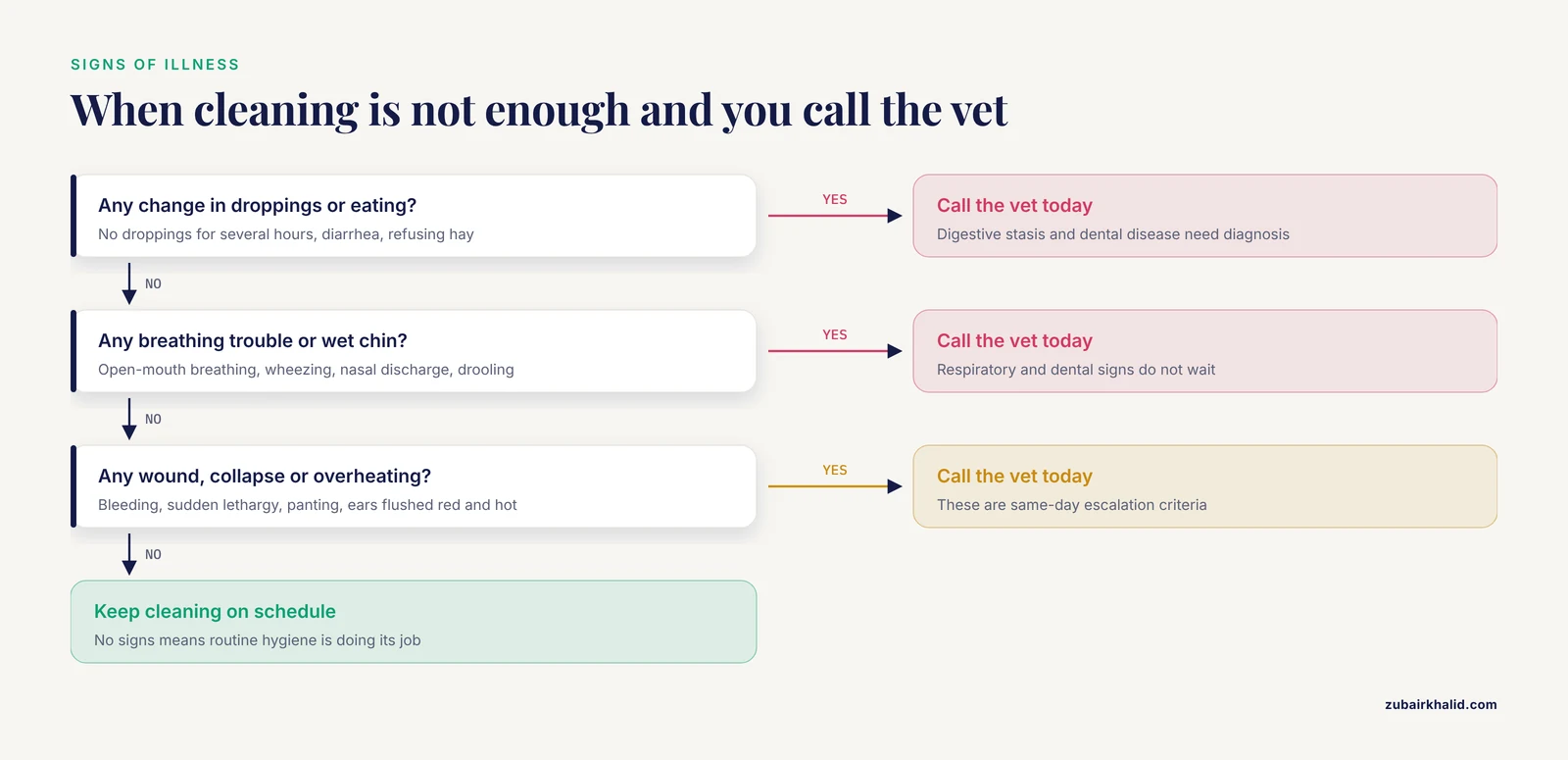
Some problems that look like hygiene problems are actually health problems. Contact your veterinarian if you notice any of the following:
- Diarrhea, soft or sticking droppings, or no droppings at all
- Wet or stained fur around the anus or chin, which can signal dental or digestive disease
- Drooling, dropping food, or refusing hay
- Redness, discharge, or crusting around the eyes
- Fur loss, scabs, or persistent urine staining on the skin
- Labored breathing, wheezing, or discharge from the nose
- A sudden change in water intake, drinking far more or far less than usual
- Lethargy or hiding during the chinchilla's normal active period
Dental disease and gastrointestinal stasis are among the recognized health concerns in this species, and poor diets are a documented route to disease in chinchillas and related hystricomorph rodents [2]. Never delay a veterinary visit to see whether more frequent cleaning resolves a symptom. Cleaning supports health. It does not replace diagnosis.
Limitations and When to Contact a Veterinarian
This article provides general husbandry guidance for healthy pet chinchillas in a typical home. Individual cases need a veterinarian. Frequency recommendations may need adjustment for very young or very old animals, animals recovering from illness, multi-animal households, hot or humid climates, and any chinchilla with a chronic condition. Your veterinarian can recommend a specific disinfectant, dilution, and contact time suited to your enclosure and your situation, and can advise on dust bathing frequency for your local humidity.
Contact a veterinarian promptly, the same day when possible, for any of these escalation criteria:
- No droppings for several hours, or persistent diarrhea
- Refusal to eat hay or pellets
- Open-mouth breathing, wheezing, or nasal discharge
- Drooling or wet chin fur
- Sudden lethargy or collapse
- Any wound, bleeding, or suspected fracture
- Signs of overheating, such as lying stretched out, panting, or ears flushed red and hot
- Any illness in a chinchilla housed with others, since you will need advice on separating and cleaning
If you are unsure whether a symptom is serious, call the clinic and describe what you see. Waiting is the most common and most costly mistake owners make with small exotic mammals.
Frequently Asked Questions
How often should you clean a chinchilla cage?
Spot clean daily, do a partial clean two to three times per week, change bedding weekly, and deep clean the entire enclosure about once a month. Increase frequency if there is dampness, odor, spillage, or illness in the home.
Can I use vinegar to clean a chinchilla cage?
Yes. Diluted white vinegar is a practical choice for urine scale and hard water deposits on wire, plastic, and glass. Scrub, rinse thoroughly with plain water, and dry completely before your chinchilla returns to the cage.
Is bleach safe for cleaning a chinchilla enclosure?
Diluted bleach can be used for periodic deep cleaning if the cage is completely empty, the solution is properly diluted, all surfaces are rinsed thoroughly, and the cage dries fully before the animal returns. Ask your veterinarian for a specific dilution and contact time, and never use bleach for quick daily wipes.
How often should I change chinchilla bedding?
Change the full bedding layer once a week under normal conditions, and remove soiled patches daily or every other day. If odor or dampness develops sooner, change bedding more often rather than adding fragrance or fresh topping over wet material.
How do I clean a chinchilla water bottle?
Wash the bottle with hot soapy water and a bottle brush weekly, and scrub the sipper tube separately because biofilm collects there. Soak scaled parts in diluted white vinegar, rinse extremely well, and refill with fresh water daily.
Should I clean the cage while my chinchilla is inside?
No. Move your chinchilla to a secure, cool carrier or chinchilla-proofed room before cleaning. This protects the animal from fumes, splashes, and stress, and lets you deep clean without obstruction.
How often should my chinchilla get a dust bath, and can it stay in the cage?
Dust bathing is a core husbandry need for chinchillas, but the bath should not stay in the cage permanently because used dust collects feces, fur, and moisture. Offer the bath in supervised sessions several times per week, remove it afterward, and replace the dust when it looks soiled. Your veterinarian can suggest a frequency for your home's humidity.
Why does my chinchilla cage smell even after cleaning?
Persistent odor almost always means urine is soaking into something you are not cleaning, such as wooden shelves, a plastic hide, the cage base, or bedding that is too shallow. Find and replace the source, increase spot cleaning in the favored corner, and confirm the room has good airflow.
This article is educational and is not a substitute for veterinary diagnosis or treatment.
Sources
- The effects of age, size, and cage complexity on the behaviour of farmed female chinchillas (Chinchilla lanigera).
- Guinea pig and chinchilla care and husbandry.
- Water consumption in small mammals (dwarf rabbits, Guinea pigs and chinchillas): New data about possible influencing factors.
- Small mammal owners' experiences of housing challenges and animal welfare: A COM-B and word frequency analysis.