Complete Guinea Pig Care Guide
By Dr. Zubair Khalid, DVM, MS, PhD ·
Key Takeaways
- Guinea pigs (Cavia porcellus) are obligate social animals requiring companionship; solitary housing is considered welfare-compromising. Minimum recommended cage floor space for two guinea pigs is 1.0 square metres (10.5 sq ft), with solid flooring and a minimum height of 45 cm (18 inches).
- Due to a defective L-gulonolactone oxidase gene, guinea pigs cannot synthesize vitamin C and require a daily intake of 30-50 mg (up to 100 mg for sick/pregnant individuals) from fresh sources like bell peppers and kale to prevent scurvy.
- The foundation of a guinea pig's diet (80%) must be timothy, orchard, or meadow hay to ensure adequate long-strand fiber for continuous dental wear and gastrointestinal motility; alfalfa hay is too high in calcium and protein for adults.
- Common health issues include dental malocclusion, respiratory infections (often Bordetella bronchiseptica), urolithiasis (bladder stones), ovarian cysts, and parasitic infestations (e.g., Trixacarus caviae mites), necessitating regular veterinary examinations.
- Guinea pigs possess a unique physiological trait of dense collateral artery networks, conferring natural resilience to ischemic damage, though this does not negate the importance of preventive health measures and avoiding obesity.
- Weekly weight monitoring is a critical indicator of health status in guinea pigs, with a lifespan of 4-8 years achievable with optimal husbandry, including diet, social interaction, spacious housing, and proactive veterinary care.
Guinea pigs (Cavia porcellus) are popular small pets known for their gentle nature and vocalisations. They require specialised husbandry that differs significantly from other rodents, including an absolute dietary need for vitamin C and mandatory social companionship. This comprehensive guide integrates current veterinary recommendations from the Merck Veterinary Manual, VCA Animal Hospitals, and AVMA guidelines, along with emerging research on guinea pig physiology, to help owners provide optimal care.
Quick Q&A
Question: What is the minimum cage size for two guinea pigs? Answer: The absolute minimum floor space for a pair of guinea pigs is 7.5 square feet (0.7 square metres), but 10.5 square feet (1.0 square metres) or larger is strongly recommended. Cages must be solid-bottomed, well-ventilated, and at least 18 inches (45 cm) tall to allow rearing.
Housing and Cage Size
Guinea pigs are active foragers that require spacious enclosures. The AVMA and European guidelines (EFSA) recommend a minimum of 0.7 square metres (7.5 sq ft) for two guinea pigs, but 1.0 square metres (10.5 sq ft) or larger is best to encourage exercise and species-typical behaviours such as popcorning (joyful jumping). Commercial cages labelled “guinea pig” are often too small; owners should measure the floor area and avoid wire-bottomed cages, which can cause pododermatitis (bumblefoot). Solid flooring with soft, absorbent bedding (fleece liners, paper-based bedding, or aspen shavings) is preferred. Avoid pine and cedar due to aromatic phenols that can damage the respiratory tract.
Cage height should be at least 45 cm (18 inches) to allow the animal to stand on its hind legs. Guinea pigs are poor climbers, so a low barrier (15 cm) may suffice, but taller sides prevent escape during excited movements. Provide multiple hides (tunnels, igloos, hay piles) to reduce stress, as guinea pigs are prey species. Daily spot-cleaning and weekly full cage changes maintain hygiene and reduce ammonia build-up, which predisposes to respiratory disease.
Diet and Nutrition
Vitamin C: An Absolute Requirement
Unlike most mammals, guinea pigs have a defective L-gulonolactone oxidase gene and cannot synthesize vitamin C (ascorbic acid). This was elegantly highlighted in a 2026 study by Fan et al., which used guinea pig-mouse comparisons to identify unique genetic traits in this species, including mechanisms for collateral artery formation. While that work focused on ischemia resistance, it underscores the guinea pig’s distinct evolutionary pathway. For owners, the key takeaway is that scurvy (vitamin C deficiency) develops within 2-3 weeks if intake is insufficient. Clinical signs include lethargy, poor coat quality, swollen joints, bleeding gums, and delayed wound healing.
Adult guinea pigs require 30-50 mg of vitamin C per day; pregnant/lactating or sick individuals may need up to 100 mg. Commercial pellets labelled “guinea pig” are fortified, but vitamin C degrades rapidly (half-life as short as 6 weeks after milling). Therefore, fresh sources are essential. Excellent options include bell peppers (especially red), kale, broccoli, kiwi, and a small amount of orange. Avoid high-oxalate greens (e.g., spinach, Swiss chard) in large amounts, as they can contribute to bladder stone formation. Supplement tablets (non-acidic, 50 mg) can be used if dietary intake is uncertain, but they should not replace fresh vegetables.
Hay: The Foundation of the Diet
Timothy hay, orchard grass, or meadow hay should constitute 80% of the daily intake. Hay provides long-strand fibre for dental wear (guinea pig teeth grow continuously) and gastrointestinal motility. Alfalfa hay is too high in calcium and protein for adult guinea pigs and should be reserved for growing pups (<6 months) or pregnant sows. Offer an unlimited supply of hay in a rack or on the cage floor; guinea pigs will eat small amounts frequently throughout the day.
Commercial pellets should be timothy-based, plain (no seeds, nuts, or coloured pieces), and fed in measured amounts (1/8 cup per guinea pig per day, roughly 20-25 g). Excessive pellets lead to obesity and selective feeding (ignoring hay). Provide fresh, clean water daily, preferably in a heavy ceramic bowl (easier to drink from and less likely to tip than bottles). In areas with hard water, owners may consider filtered water to reduce mineral accumulation, though this is not a substitute for proper diet.
Foods to Avoid
Do not feed chocolate, dairy, meat, grains, or any human sugary/processed foods. Cruciferous vegetables (cabbage, broccoli, Brussels sprouts) can cause bloating if introduced suddenly; provide in moderation. Fruits should be limited to small pieces once or twice a week due to high sugar content.
Companionship and Social Needs
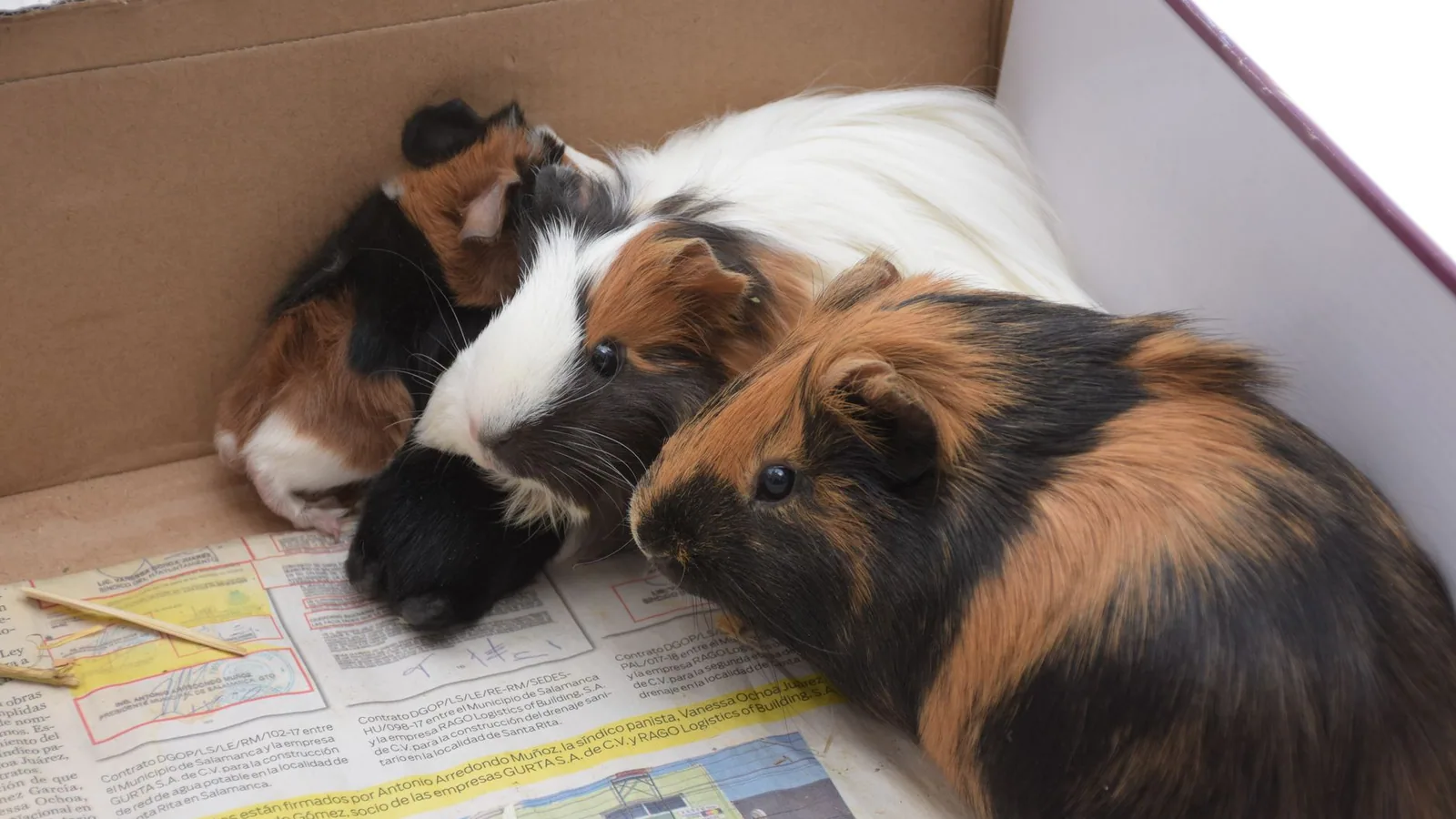
Guinea pigs are obligate social animals. In their natural habitat, they live in herds of 5-10 individuals. Solitary housing is considered welfare-compromising by the AVMA and European animal welfare guidelines. Pairs or small groups (preferably littermates or neutered males with females) thrive. Females are generally easier to group; male, male pairs may work if introduced young (before 8 weeks) or after neutering. Neutering males (castration) is safe when performed by an experienced exotic veterinarian and allows mixed-sex bonding.
Signs of social distress include excessive hiding, bar-biting, reduced appetite, and repetitive vocalisations (e.g., high-pitched wheeking that is not associated with food anticipation). If solo housing is unavoidable (e.g., due to aggression after attempts to bond), the owner must provide extra human interaction, but this is a poor substitute. Guinea pigs housed in pairs have lower cortisol levels and more active exploratory behaviour, according to behaviour studies.
Handling and Socialization
Guinea pigs are prey animals and can be easily frightened. Desensitize them from a young age: sit quietly near the cage, offer treats (small herb leaf), and gradually place a hand inside. To pick up, use two hands, one under the chest, the other supporting the hindquarters. Never lift by the limbs or scruff the neck. Guinea pigs may “freeze” when lifted; this is a fear response, not compliance. Support the full body and keep the animal against your chest when carrying, especially to prevent falls.
Allow daily floor time in a guinea-pig-proofed area (no electrical cords, small gaps, or other pets). Supervised handling for 20-30 minutes per day strengthens the human-animal bond and allows health checks.
Preventive Health and Common Conditions
Veterinary Care
Guinea pigs should receive a wellness examination every 6-12 months by a veterinarian experienced in exotic small mammals. Annual fecal testing for parasites (e.g., Eimeria caviae) and regular nail trims (every 4-6 weeks) are recommended.
Dental Disease
Malocclusion (overgrown teeth) is common. Signs include drooling, weight loss, preference for soft foods, and reduced faecal output. Prevention relies on unlimited hay and appropriate chew toys. If diagnosed, teeth must be filed under sedation by a veterinarian.
Respiratory Infections
Bordetella bronchiseptica is a primary pathogen, often carried asymptomatically by dogs and cats. Stress, poor ventilation, or high ammonia levels can precipitate pneumonia. Clinical signs: nasal discharge, sneezing, open-mouth breathing, lethargy. Immediate veterinary attention is needed; treatment involves antibiotics (e.g., sulfamethoxazole-trimethoprim) and supportive care.
Urinary Disease
Urolithiasis (bladder stones) is frequent, especially in females and in guinea pigs fed high-calcium diets (alfalfa hay, excessive kale). Signs include straining, blood in urine (hematuria/pigmenturia), and hunched posture. Radiographs are diagnostic; surgical removal may be necessary. Prevention: Timothy hay, monitored calcium intake, adequate water intake.
Ovarian and Uterine Conditions
Unspayed female guinea pigs are prone to ovarian cysts, cystic endometrial hyperplasia, and pyometra. Spaying (ovariohysterectomy) before 2 years of age dramatically reduces these risks. Consult with a veterinarian experienced in guinea pig surgery.
Parasites
Mites (Trixacarus caviae) cause intense pruritus, alopecia, and dandruff. Diagnosis via skin scraping; treatment with ivermectin or selamectin under veterinary guidance. Ringworm (dermatophytosis) is zoonotic and should be treated with antifungal agents.
Vitamin C Deficiency (Scurvy)
As noted earlier, ensure daily vitamin C intake. Affected guinea pigs show joint pain, bruising, and delayed wound healing. Treatment involves oral vitamin C supplementation (50-100 mg/kg daily) and dietary adjustment.
Lifespan and Quality of Life
The average lifespan of a well-cared-for guinea pig is 4-8 years, with some reaching 10 years. Factors that promote longevity include: a consistent diet of Timothy hay and fresh vegetables, social companionship, spacious housing, and preventive veterinary care. Quality of life assessment should consider mobility, appetite, social engagement, and absence of pain. Weight loss is a sensitive indicator of illness in guinea pigs; owners should weigh them weekly and track trends.
As guinea pigs age (geriatric, >4 years), they may develop arthritis, heart disease, and cataracts. Adjust the cage environment: soften bedding, lower food bowls, and provide ramps to favourite spots. Veterinary visits should increase to every 6 months for geriatric assessments including cardiac auscultation and blood pressure measurement.
Unique Physiology: Collateral Arteries
Recent research from Fan et al. (2026) revealed that guinea pigs possess exceptionally dense collateral artery networks in the brain and heart, making them naturally resistant to ischemic damage from arterial blockages (such as stroke and heart attack). The study identified that guinea pigs achieve this by downregulating certain artery repressor genes, allowing more endothelial cells to adopt an arterial identity. While this finding has implications for human stroke therapy, it also underscores the guinea pig’s remarkable cardiovascular resilience. Owners may appreciate that their pet’s unique genetics contribute to a robust vascular system, though this does not eliminate the need for preventive health care (e.g., avoiding obesity which can still compromise cardiovascular function).
Regional Considerations
- United States and Canada: The AVMA and CVMA recommend housing pairs and provide exotic species resources. Vitamin C degradation in commercial pellets is particularly problematic in warmer climates; store pellets in airtight containers away from light.
- Europe and United Kingdom: The FVE and EFSA guidelines emphasize minimum enclosure sizes similar to those above. The RWAF (Rabbit Welfare Association, also applicable to guinea pigs in many UK shelters) advises against wire floors.
- Australia: The AVA notes that guinea pigs are popular family pets, but quarantine regulations for import are strict. Australian owners should be aware of regional disease risks, such as Ectoparasites (mites) that thrive in humid environments.
Related Articles
Related Clinical & Scientific Guides
- Hamster Medicine: Safe Use and Common Treatments
- Ferret Aleutian Disease: Testing, Clinical Assessment, and Household Management
- Ferret Dilated Cardiomyopathy: Diagnosis, Staging, and Long-Term Monitoring
References
Fan X, Zhou R, Raftrey BC, et al. A Perturb-seq screen guided by species divergence uncovers pathways for collateral artery formation. bioRxiv. 2026. PMID: 42146601.
Merck Veterinary Manual. Guinea Pigs: Overview. Accessed online at merckvetmanual.com.
VCA Animal Hospitals. Guinea Pig Care: Diet, Housing, and Health. Accessed at vcahospitals.com.
American Veterinary Medical Association (AVMA). Guidelines for the Care of Small Mammals. 2023.
European Food Safety Authority (EFSA) Panel on Animal Health and Welfare. Scientific Opinion on the minimum space requirements for guinea pigs. EFSA Journal. 2022.
Hawkins MG, Bishop CR. Disease of Guinea Pigs. In: Quesenberry KE, Carpenter JW, eds. Ferrets, Rabbits, and Rodents: Clinical Medicine and Surgery. 4th ed. Elsevier; 2021: 238-272.
Jenkins JR. Guinea Pig Husbandry and Medicine. Veterinary Clinics of North America: Exotic Animal Practice. 2020;23(1):1-16.
This article is for educational purposes and does not replace veterinary consultation. Always consult a qualified veterinarian for diagnosis and treatment of your pet.