Guinea Pig Cage Odor Control: Fixes That Work
By Dr. Zubair Khalid, DVM, MS, PhD ·
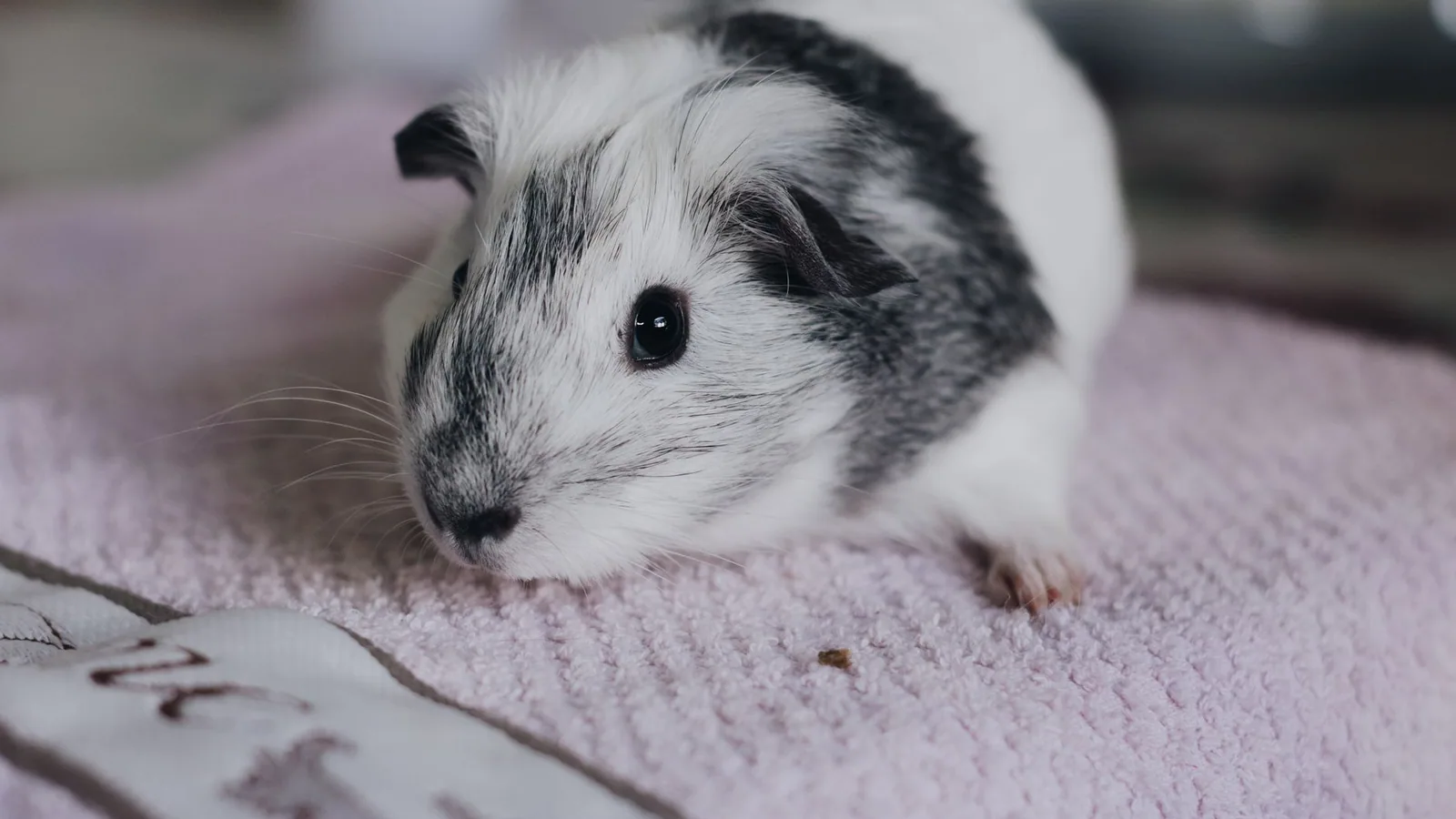
A guinea pig cage should smell like hay, not ammonia. If yours does not, the fix is almost never a stronger air freshener. Odor comes from urine soaking into absorbent material faster than the material can handle it, wet patches left in place too long, droppings and spoiled vegetables fermenting in warm corners, and cages that are too small or too enclosed for fresh air to move through. The fixes that work are boring and reliable: absorb the urine properly, remove the wet spots daily, change the bedding on a schedule, feed a hay-based diet that produces normal droppings, and give the cage enough space and airflow.
This guide walks through guinea pig cage odor control causes step by step, then gives you the cleaning routines, bedding choices, and troubleshooting steps that solve the problem for good. It also covers the moments when odor is not a cleaning problem at all but a medical one that needs a veterinarian.
This article is educational and is not a substitute for veterinary diagnosis or treatment.
At a Glance: Your Odor Control Checklist
You can start all of this today.
| Step | What to do | How often |
|---|---|---|
| Spot clean | Remove wet bedding, droppings, and discarded vegetables from corners and under hay racks | Daily |
| Full bedding change | Replace all bedding, wash the cage base with mild soap or diluted white vinegar, rinse, and dry | Once a week, more often for multiple guinea pigs |
| Bedding depth | Use enough paper-based or kiln-dried bedding to absorb urine before it pools | Check at every clean |
| Litter zone | Place a small litter area or absorbent pad where your guinea pigs actually urinate | Refresh every 1 to 2 days |
| Hay management | Feed hay from a rack or feeder so it does not sit in urine | Top up daily, clear old hay at cleaning |
| Ventilation | Keep the cage in an open, aired room, never in a closed cabinet or damp basement | Ongoing |
| Health watch | Note any change in urine smell, droppings, appetite, or posture | Every day, escalate to a vet when signs appear |
Guinea Pig Cage Odor Control Causes: Where the Smell Actually Comes From
Understanding the source makes every fix obvious. Cage odor is a mixture of several things, and each one has a specific remedy.
Urine and ammonia
Urine is the main culprit. When urine soaks into bedding and sits, bacteria break down urea and ammonia is released. Ammonia has the sharp smell people describe as a dirty cage, and in enclosed spaces it irritates the respiratory tract of small mammals whose noses sit close to the bedding line. The amount of ammonia you smell depends on three things: how much urine is present, how wet the bedding stays, and how much airflow moves through the cage. That is why a small cage in a stuffy corner smells worse than a large cage in an airy room, even with the same number of guinea pigs.
Wet bedding and forgotten food
Vegetable scraps, leafy greens, and fruit pieces buried under bedding ferment quickly. Soggy patches around water bottles, under hay piles, and in the favorite sleeping corner breed bacteria within a day. These patches smell sour or earthy rather than sharp, and they are the reason a cage can smell bad only two days after a full clean.
Droppings and cecal content
Guinea pigs produce two kinds of droppings. The dry oval pellets are harmless and nearly odorless in small amounts. Cecotropes, the soft sticky pellets guinea pigs eat directly from their anus as part of normal digestion, smell strong if they are left uneaten or smeared around the cage. A guinea pig that is unwell, overweight, or unable to reach its hindquarters may leave cecotropes behind, and the cage odor changes with them.
The guinea pigs themselves
Guinea pigs are generally clean animals with little natural body odor, but their grooming behavior matters for cage hygiene. In rodents, grooming removes dirt and debris and follows structured, predictable movement patterns, which is one reason rodents stay cleaner than their environment suggests [1]. When a guinea pig stops grooming properly because of pain, obesity, dental disease, or long fur that has become matted, urine and fecal material accumulate on the fur and the cage smell worsens. Boars also have scent glands and may mark more than sows, so some owners notice a muskier smell in male-dominated cages.
Why odor matters for the guinea pig, not just the household
Guinea pigs live in a world of smell. Their olfactory abilities are central to how they learn about their environment, and research in guinea pigs has shown that odor-associated learning can be disrupted when the animals' biology is altered, demonstrating how much of their behavior is anchored to scent cues [2]. A cage that reeks of ammonia is not merely unpleasant for the animal. It sits centimeters from the bedding, and constant exposure to irritating gases and damp conditions is a welfare concern recognized in small mammal husbandry guidance from sources such as the Merck Veterinary Manual and VCA Animal Hospitals. Fixing odor is animal welfare work, not housekeeping.
How to Fix Guinea Pig Cage Odor: The Cleaning System That Works
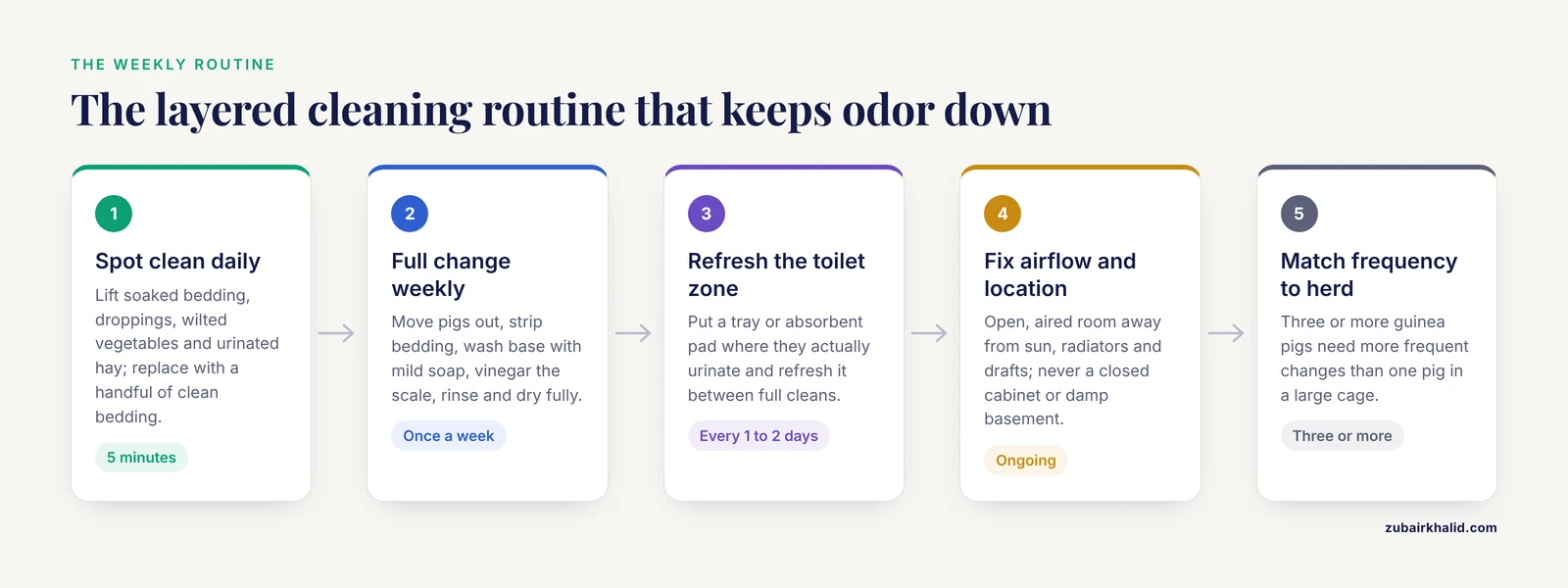
The single most effective change most owners can make is moving from an occasional deep clean to a layered routine of quick daily work plus a thorough weekly reset. Here is the full system.
Step 1: Daily spot cleaning, five minutes
Every day, lift out the wet spots. Use a small scoop or gloved hand to remove:
- Soaked bedding under and around the water bottle
- Droppings, especially from the sleeping area and any litter zone
- Wilted vegetables and fruit that have been pushed into corners
- Clumps of hay that have been urinated on
Replace the removed material with a handful of clean bedding. This one habit does more for odor than any product you can buy, because it removes urine before ammonia builds and bacteria colonize the patch.
Step 2: A weekly full change
Once a week, or more often if you keep three or more guinea pigs, empty the cage completely.
- Move the guinea pigs to a safe carrier or playpen with hay and water.
- Remove all bedding and dispose of it.
- Wash the cage base with warm water and mild dish soap.
- For white mineral scale where urine has dried on plastic surfaces, wipe with diluted white vinegar, let it sit briefly, then scrub and rinse thoroughly.
- Rinse until no soap or vinegar smell remains and dry the base completely before adding fresh bedding. Damp bases make new bedding soggy from underneath.
- Wash bowls, bottles, and hides. Scrub the water bottle nozzle, which accumulates biofilm that owners often miss.
Step 3: Manage the toilet zone
Guinea pigs tend to urinate in one or two preferred corners. Once you identify the spot, concentrate your absorbency there. Many owners place a shallow tray with paper-based litter or a washable absorbent pad in that corner. Refreshing a single litter zone every one to two days is far easier than refreshing an entire cage and dramatically cuts smell between full cleans. Do not expect perfect litter training. The goal is containment, not precision.
Step 4: Fix airflow and location
Odor concentrates in still, humid air. Place the cage in a room where air moves, away from direct sunlight, radiators, and drafty windows. An open-sided cage or C-and-C style enclosure with a mesh top ventilates far better than a solid-walled aquarium, which traps ammonia at guinea pig nose height. Avoid basements and bathrooms, where humidity keeps bedding damp.
Step 5: Match your cleaning frequency to your herd
One guinea pig in a large cage may be fine with a weekly full change. Three guinea pigs in the same cage are not. Multiply guinea pigs, multiply cleaning. If your schedule cannot support the routine a herd needs, the honest solutions are a larger cage with more absorbent bedding, more frequent litter zone changes, or rehoming to reduce the group. Masking odor with sprays is not a solution and adds respiratory irritants to the air.
Guinea Pig Cage Odor Control Solutions: Choosing the Right Bedding
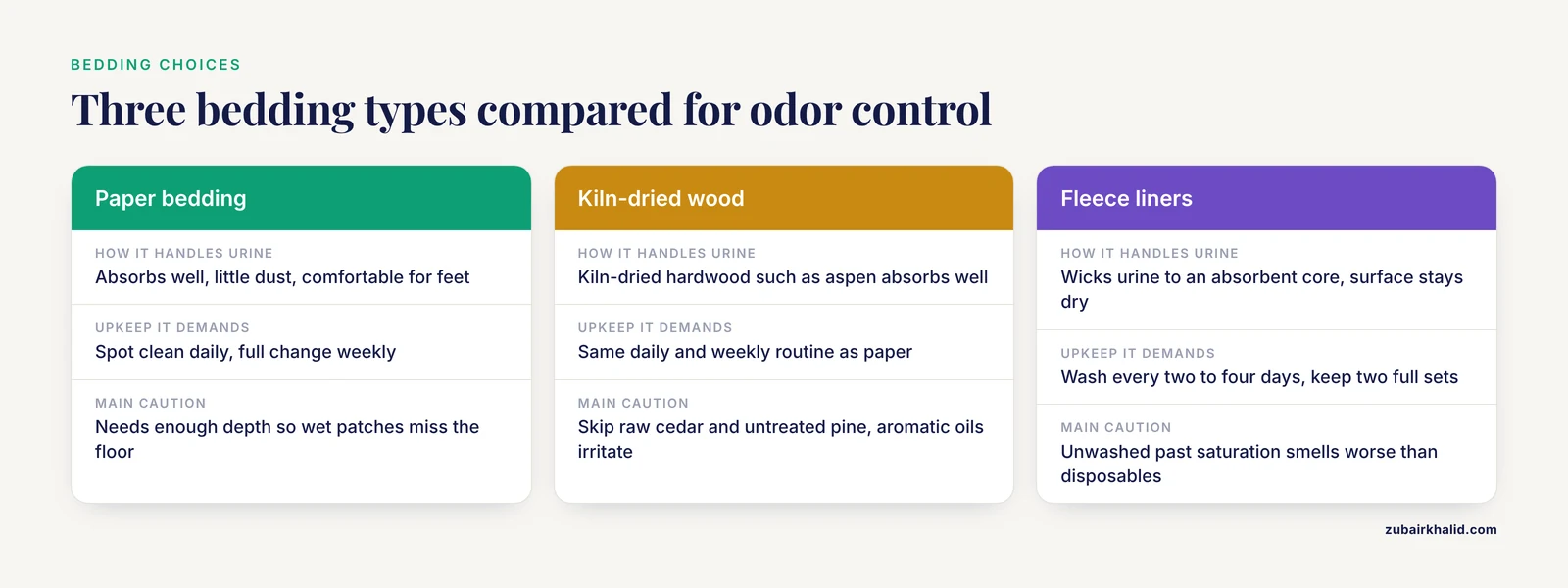
Bedding is your odor control engine. It has one job, which is to pull urine away from the surface and hold it so ammonia cannot evaporate freely. The right choice depends on your cleaning routine and your washing capacity.
Paper-based bedding
Unscented paper bedding made from recycled paper is a strong all-around choice. It absorbs well, produces little dust, and is comfortable for feet. Its weakness is capacity, so it needs enough depth to work, generally deep enough that wet patches do not reach the cage floor. Spot clean daily and change fully weekly.
Kiln-dried wood shavings
Kiln-dried hardwood shavings, such as aspen, are another widely used option. Small mammal husbandry references, including the Merck Veterinary Manual's exotic animal resources, caution against raw cedar and untreated pine bedding because the aromatic oils in untreated softwoods can irritate the respiratory tract. If you use wood, choose kiln-dried hardwood and skip strongly scented products entirely.
Fleece liners with an absorbent core
Fleece wicks urine through to an absorbent layer underneath, such as multiple layers of an absorbent inner material, and stays dry on the surface. Owners who wash liners every two to four days often report the driest, least smelly cages. Fleece requires honest commitment. If liners sit unwashed past the point of saturation, they smell worse than any disposable bedding. If you choose fleece, keep at least two full sets so a clean one is always ready.
What to avoid
Avoid cat litter, especially clumping clay, which can be dangerous if ingested and is dusty. Avoid sawdust and strongly scented products. Avoid anything marketed as odor masking rather than moisture absorbing. A perfumed bedding hides ammonia from your nose while the guinea pig continues to breathe it.
Cage Size, Space, and Setup
Undersized cages are one of the most underappreciated odor causes. In a cramped cage, the sleeping area, toilet corner, and food area overlap, so hay, droppings, and urine mix constantly and nothing stays dry. A larger cage lets a guinea pig move away from its toilet area, keeps the sleeping zone cleaner, and dilutes the same urine output across more bedding area.
Practical setup criteria:
- The largest footprint your space and budget allow, with a solid, easy-to-wash base
- Open sides or a mesh top for airflow
- Hay offered in a rack or a designated feeder, off the floor, so hay does not sit in urine and rot
- Hides placed away from the toilet corner, which encourages the guinea pig to keep the sleeping area clean
- A heavy ceramic bowl or a bottle checked daily for leaks, because a slow drip creates a permanent wet patch
Diet: The Overlooked Part of the Odor Equation
What goes in determines what comes out. A guinea pig care guide that ignores diet misses half of the odor story.
Unlimited grass hay, such as timothy hay, should form the bulk of the diet. High hay intake produces well-formed, relatively dry droppings that are easy to remove and low in odor. A diet heavy on pellets, sugary vegetables, or fruit produces softer droppings and gut upset, both of which increase cage smell. Fresh water must always be available, because dehydration concentrates urine and makes ammonia stronger.
Guinea pigs also require dietary vitamin C, which they cannot synthesize themselves. This is a core point in every veterinary small mammal resource, including the Merck Veterinary Manual. A guinea pig eating a balanced hay-based diet with appropriate fresh vegetables and a suitable pellet usually meets its needs, and specific supplementation is a question for your veterinarian rather than a guessing game.
Watch the droppings daily. Soft, misshapen, or smeared droppings, or uneaten cecotropes stuck to the bedding or fur, change both cage odor and the health picture. That is a signal to review the diet with a veterinarian, not just to clean more.
Grooming and Body Hygiene: When the Pig Is the Smell Source
Sometimes the cage is clean and the odor walks around on four feet. Check your guinea pig's rear end regularly. Long-haired breeds, older animals, and overweight guinea pigs are prone to soiled perineal fur, where droppings and cecal content stick to the coat. This is both an odor source and a welfare risk, because warm, soiled fur in hot weather attracts flies and can lead to flystrike, a serious and rapidly progressing condition.
Grooming is a basic hygiene need for companion animals, and lapses in routine grooming carry real health and welfare consequences [3]. Research on barriers to pet grooming care shows that many owners face practical obstacles to maintaining these routines, and that simple demonstrations and supports significantly improve owners' confidence in hands-on care tasks [3]. Translating that finding here, if you struggle with nail trims, brushing, or checking your guinea pig's rear end, ask a veterinary clinic or groomer experienced with small mammals to show you the technique once. That single lesson usually removes the barrier permanently.
Grooming behavior itself is also a health indicator. Rodent grooming follows organized, predictable movement sequences, and disruptions to those patterns can signal neurological or physical problems [1]. A guinea pig that stops maintaining its coat, or that has an unkempt, greasy, or soiled coat despite a clean cage, needs a veterinary examination.
Do not bathe a guinea pig routinely to control smell. Frequent bathing strips skin oils, causes stress, and can trigger illness. Bathing is reserved for specific medical reasons or genuine soiling, on your veterinarian's advice. Spot cleaning a dirty rear end with a damp cloth is safer and sufficient in most cases.
Common Mistakes That Keep Cages Smelly
- Masking instead of removing. Air fresheners, scented sprays, and odor beads hide ammonia from you while the guinea pig keeps breathing it. Remove the source instead.
- Too little bedding. A thin sprinkle over the cage floor saturates within a day. Depth is what gives bedding its capacity.
- Cleaning everything at once, then nothing for a week. A weekly full clean without daily spot cleaning still leaves four days of fermentation. The daily five minutes is nonnegotiable.
- Deep-clean stress. Removing every trace of scent during a full clean can temporarily unsettle some guinea pigs. Leaving a small handful of the old, clean, dry bedding in the cage after a full change keeps familiar cues without keeping odor.
- Ignoring the water bottle drip. A slow leak at the nozzle creates a permanent swamp in one corner. Check it daily.
- Wrong cleaning products. Strongly scented disinfectants, bleach solutions that are not fully rinsed, and pine or citrus cleaners leave residues that irritate small mammal airways. Mild soap, diluted white vinegar, and thorough rinsing are enough.
- Diapers or deodorizing powders. These are not appropriate for guinea pigs and can cause skin and respiratory problems. If odor persists despite good hygiene, look for a medical cause instead of a product.
Troubleshooting: The Cage Still Smells After Doing Everything Right
Work through this list in order.
- Recheck your absorbency math. More guinea pigs, larger guinea pigs, or a smaller cage all mean more urine per square foot. Increase bedding depth, add a second litter zone, or shorten the interval between full changes.
- Inspect the hides and tunnels. Plastic hides and fabric tunnels absorb urine and hold odor. Wash plastic weekly, wash or replace fabric regularly, and throw away any item that stays smelly after washing.
- Check the water bottle and bowl zone. Persistent dampness under the bottle grows bacteria and smells sour even when bedding is fresh.
- Sniff the guinea pig, not just the cage. Lift your guinea pig and check the belly, rear end, and scent gland area. A soiled or greasy coat, urine scald on the skin, or a strong smell from the mouth points to a medical or grooming problem the cage clean cannot fix.
- Look at the droppings and urine. Very dark, sandy, or gritty urine deposits, straining to urinate, soft droppings, or droppings stuck to the fur all warrant a veterinary visit. Urinary problems and dental disease that reduce hay chewing both change odor and need diagnosis.
Welfare and Safety Points
Odor control and welfare are the same project. Ammonia buildup and damp bedding irritate the respiratory tract and skin. Soiled fur invites flies in warm weather. Stress from a smelly, cramped environment shows up as reduced grooming and reduced interaction. The guidance from organizations such as the AVMA in its pet owner resources and the Merck Veterinary Manual is consistent on this point, that environmental cleanliness is a pillar of small mammal health, not an optional extra.
Keep in mind that guinea pigs are prey animals. They hide illness until it is advanced, so subtle changes in droppings, grooming, appetite, or odor are often your earliest and only warning signs.
A Note for Rabbit Households
If you keep rabbits as well as guinea pigs, the same principles apply, and a good rabbit care checklist overlaps heavily with the routine above, with daily soiled litter removal, weekly full cleans, hay feeding off the floor, and constant attention to the rabbit's rear end in warm weather. The Rabbit Welfare Association and Fund and House Rabbit Society publish detailed husbandry resources that pair well with this guinea pig care guide, and house rabbits in particular depend on clean, dry litter areas for both odor control and urinary health. Keep the housing separate, however. Rabbits and guinea pigs have different dietary and social needs, and co-housing is not recommended by modern rabbit welfare organizations.
Limitations and When to Contact a Veterinarian
Every guinea pig, cage, and household differs, and the routines here are general husbandry guidance rather than a prescription for any individual animal. Individual cases need a veterinarian, especially when odor and health change together.
Contact a veterinarian promptly if you notice any of the following, because each can turn a cleaning problem into a medical emergency:
- Straining to urinate, vocalizing while urinating, or blood in the urine
- No urine output for several hours or a wet, hunched, painful posture
- Diarrhea or a sudden change in dropping size or number
- Reduced appetite or refusal of hay, which in guinea pigs can lead to serious gut slowdown within hours
- Drooling, a wet chin, or a foul smell from the mouth, which suggests dental disease
- A soiled, matted, or fly-attracting rear end, especially in warm weather
- Labored breathing, sneezing, discharge from the nose or eyes, or lethargy
- A strong odor from the body or mouth despite a freshly cleaned cage and clean fur
Guinea pigs deteriorate quickly. When in doubt, an examination the same day is the right call.
Frequently Asked Questions
How often should I clean a guinea pig cage to control odor?
Spot clean daily and do a full bedding change and cage wash about once a week. Increase the frequency if you keep multiple guinea pigs, notice damp patches within a day, or use a smaller cage.
What bedding controls guinea pig cage odor best?
Unscented paper-based bedding and kiln-dried hardwood shavings absorb urine well when used deep enough, and fleece liners with a washable absorbent layer work well for owners who launder them every few days. The best bedding is the one you will maintain consistently.
Why does my guinea pig cage smell like ammonia even after cleaning?
Ammonia persists when urine reaches the cage floor, bedding is too shallow, airflow is poor, or the cage is too small for the number of guinea pigs. Fix absorbency depth, ventilate the room, and shorten the interval between cleans.
Do male guinea pigs smell more than females?
Boars have scent glands and may produce a muskier smell, particularly where marking behavior is involved. Sudden or strong odor from any guinea pig, male or female, deserves a health check rather than a cleaning assumption.
Can I use air fresheners or scented sprays near my guinea pig?
No. Sprays and plug-ins add respiratory irritants to air the guinea pig cannot escape, and they mask problems rather than fixing them. Remove the odor source instead.
Is fleece or paper bedding better for odor control?
Fleece keeps the surface dry when it is washed every two to four days and suits owners who can commit to laundering. Paper bedding is lower maintenance and very absorbent when used deeply. Both control odor well when matched to your routine.
When does cage odor signal a health problem?
Sudden odor changes, urine scald, a soiled rear end, foul mouth odor, straining to urinate, or soft droppings point to medical causes that cleaning will not fix. Contact a veterinarian the same day if appetite or behavior also changes.
Where should I place the cage to keep odor down?
Place it in an open, airy room with stable temperature, away from direct sun, radiators, drafts, humidity, and kitchens. Avoid enclosed cabinets, aquariums, basements, and bathrooms, which trap ammonia and moisture.
Further Reading
- Practitioners' experiences of deteriorating personal hygiene standards in people living with depression in Australia: A qualitative study.
- The effect of personal grooming on self-perceived body image.
- Feminine Intimate Hygiene: A Review of Healthy and Unhealthy Habits in Women.
Sources
- Decoding diversity: Are there patterns in the organization of grooming movements in domestic cats?
- Impaired performance on odor-aversion testing following prenatal aspartame exposure in the guinea pig.
- Barriers to and facilitators of pet grooming among clients served by a subsidized grooming service program.