Chinchilla Grooming Guide: Coat, Nails, and Skin Checks
By Dr. Zubair Khalid, DVM, MS, PhD ·
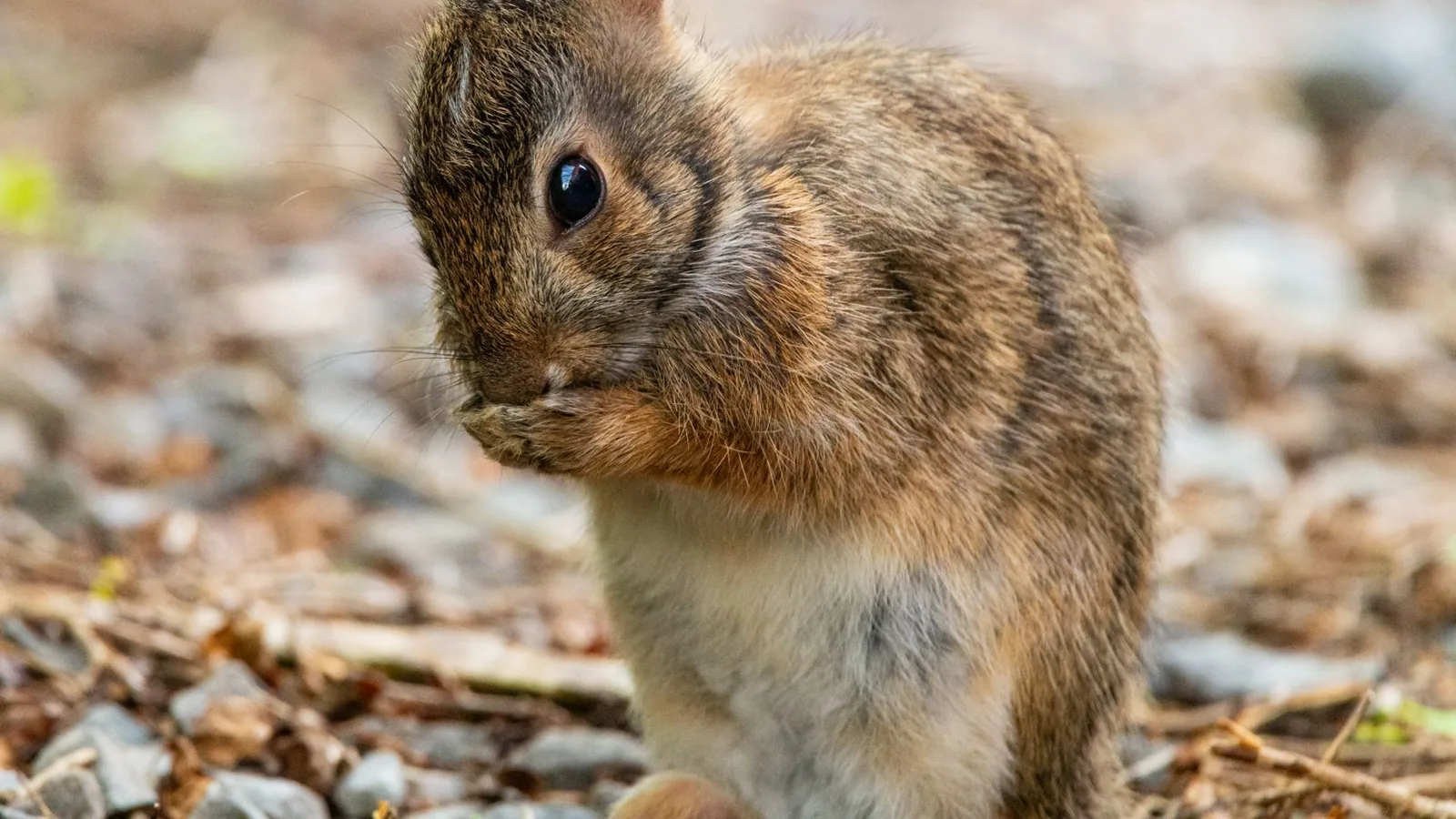
Chinchillas do most of their own grooming, and they do it well. Your job as an owner is narrower than most people expect: provide a dust bath a few times a week, run a short hands-on coat and skin check weekly, keep nails at a safe length, and watch daily for changes in behavior, appetite, and droppings. Water never touches the coat. Chinchilla grooming goes wrong when owners treat these animals like rabbits or guinea pigs, because the chinchilla coat is far denser, holds moisture, and reacts badly to wet washing.
This guide walks through the full routine, from dust baths to nail trims to the skin changes that deserve a veterinary visit.
This article is educational and is not a substitute for veterinary diagnosis or treatment.
Chinchilla Grooming at a Glance
| Task | How often | Time needed | What you are checking for |
|---|---|---|---|
| Dust bath | A few times a week, short sessions | About 10 minutes | Even, fluffy coat afterward, no damp patches |
| Hands-on coat and skin check | Weekly | 5 to 10 minutes | Mats, bald patches, flaking, scabs, redness, sore heels |
| Nail check | Every 2 to 4 weeks | 2 minutes | Curling, splitting, nails snagging on fabric |
| Nail trim | Only when nails are too long | 5 minutes | Trim clear tips only, avoid the pink quick |
| Daily observation | Every day | 1 to 2 minutes | Appetite, droppings, water intake, posture, activity |
| Veterinary wellness exam | At least once a year, sooner for any change | Varies | Skin, teeth, nails, weight, coat quality |
Why Chinchilla Coat Care Is Different
The chinchilla coat is exceptionally dense, with many fine hairs growing from a single follicle, a trait covered in depth in veterinary reviews of chinchilla anatomy and husbandry [1]. That density is the reason water bathing is off the table. The underfur holds moisture, dries slowly, and traps dampness against the skin, which invites chilling and skin trouble.
Instead of water, chinchillas clean themselves by rolling in fine dust. The dust absorbs oil and moisture, lifts debris from the coat, and restores the fluff. A chinchilla that dust bathes regularly needs nothing more from you in the way of washing, ever.
Two more traits shape the routine. First, chinchillas can release a patch of fur when grabbed or frightened, a defense response known as fur slip. Second, they rest through most of the day. In a round-the-clock study of farmed female chinchillas, the animals rested about 68 percent of the day, spent 23 percent in locomotion, and used most of the remaining time eating [2]. Grooming works best when the animal is naturally awake and moving, and it works best in short sessions.
How Often to Groom a Chinchilla
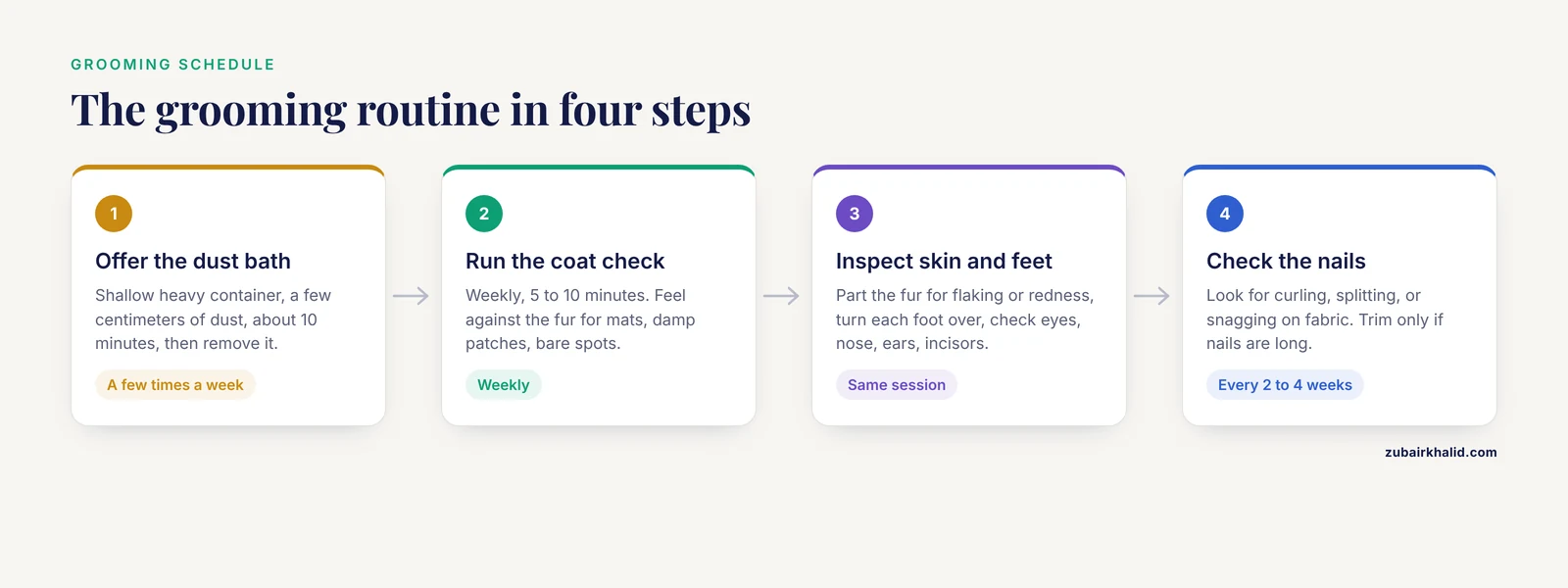
A workable schedule for a healthy adult chinchilla looks like this:
- Daily, 1 to 2 minutes. Watch appetite, droppings, posture, and activity from across the room, and check the water bottle level.
- Dust bath, a few times a week. Short sessions of about 10 minutes, then remove the container. Many owners offer baths more often in humid weather and less often in very dry homes. Ask an exotics veterinarian to fine-tune the frequency for your climate.
- Weekly, 5 to 10 minutes. A hands-on coat and skin check, described below.
- Every 2 to 4 weeks. A nail check. Trim only when nails are actually long.
- At least once a year. A wellness exam with a veterinarian comfortable with chinchillas, sooner if anything changes.
Watching the water bottle matters more than most owners realize. Water and feed intake are tightly linked in small mammals, and steady intake protects the urinary tract, including against urolithiasis [3]. A sudden jump in drinking can even reflect a behavioral problem rather than simple thirst, because drinking can become a substitute action when something is wrong [3].
Grooming time also doubles as a welfare check. Small mammals are particularly dependent on owner-provided husbandry, and surveys show many are kept in conditions that fall short of their welfare needs [4]. The few hands-on minutes you spend each week are often where problems get caught first.
How to Groom a Chinchilla, Step by Step
Step 1: Offer the Dust Bath
Use a shallow, heavy container or a covered dust bath house, large enough for a full body roll. Fill it a few centimeters deep with commercial chinchilla dust, usually fine volcanic ash. Place it in the cage, or move your chinchilla into it, for about 10 minutes, then remove it.
Do not leave the bath in the cage permanently. Constant access leads to soiled dust, possible eye and respiratory irritation, dry skin in some animals, and a bath that doubles as a toilet. Replace the dust whenever it clumps or looks dirty. Skip the session if the coat is wet, and never add water to a dust bath.
Step 2: Run the Hands-On Coat Check
Wait for a calm moment when your chinchilla is awake. Scoop from below, one hand under the chest and one under the hindquarters, and hold the animal close to your body. Never grab from above.
Run your fingers against the direction of the fur from nose to tail. You are feeling for mats, damp patches, lumps, bare spots, and clumps of loose fur. Then look. Check for staining around the eyes, nose, chin, and vent, and part the fur in a few spots to see the skin underneath. Most chinchillas never need brushing, because the dense coat sheds debris on its own. A soft brush can lift loose fur after a fur slip episode, but brushing is optional, checking is not.
Step 3: Inspect the Skin, Feet, and Face
Parted fur should reveal clean, unbroken skin with no flaking, redness, or crusts. Turn each foot over. Pads should be smooth, and heels should be free of redness, swelling, or sores. Sore heels need veterinary assessment, and your vet can talk through flooring and other management changes.
Finish at the face. Eyes should be bright and dry, the nose clean, the ears free of discharge. Glance at the incisors, which should look straight and meet evenly. Drooling, a persistently wet chin, or pawing at the mouth points to dental disease and needs a prompt appointment.
Step 4: Check the Nails
Look at each nail for curling under, splitting, or snagging on fleece and fabric. If nails are long, move to the trimming section below. If not, you are done.
What Never to Do
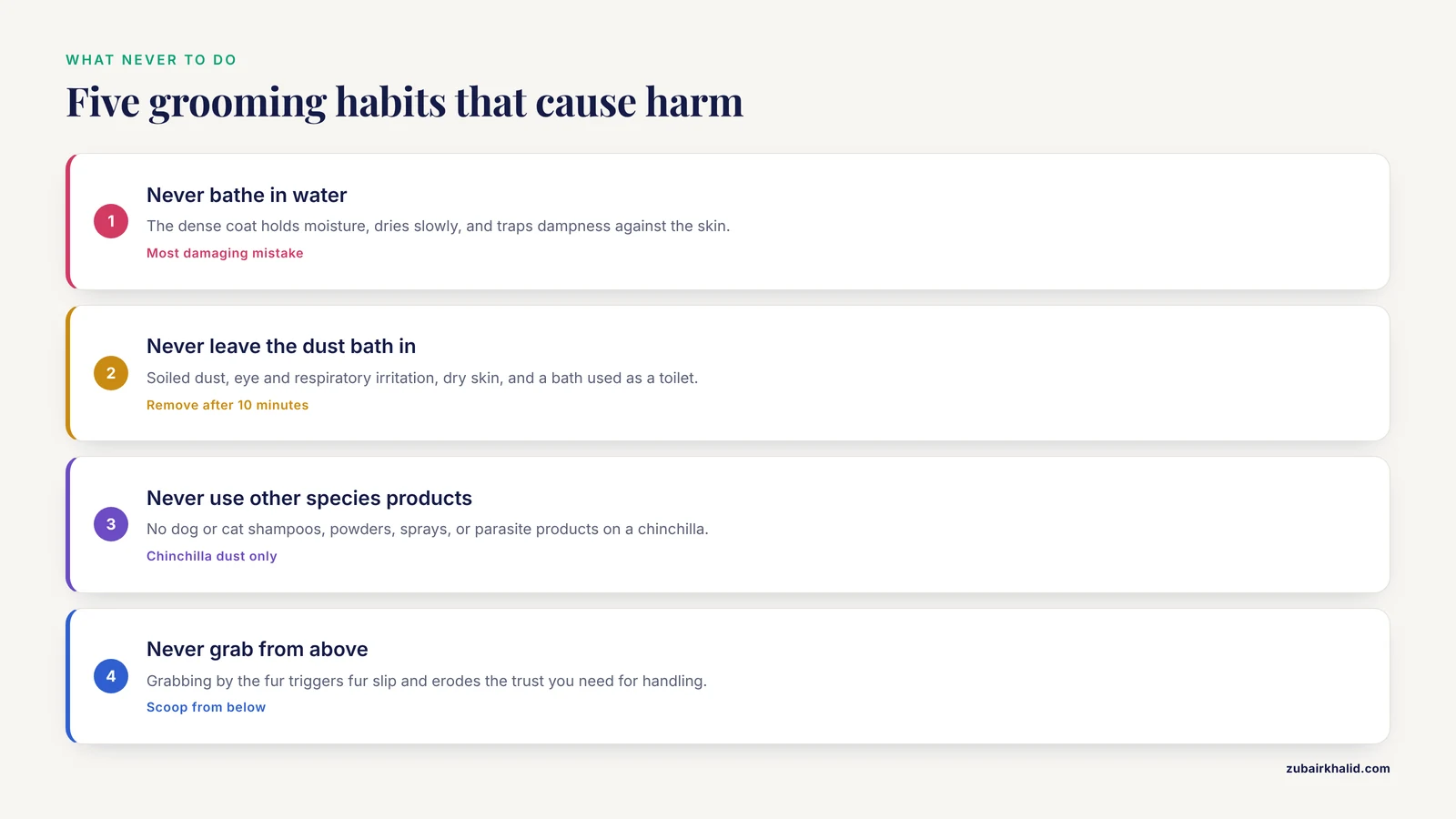
- Never bathe a chinchilla in water, and never aim a hot hair dryer at a damp coat as a fix.
- Never use shampoos, powders, or sprays made for dogs, cats, or other species.
- Never grab from above, chase the animal around the cage, or restrain it tightly for long periods.
- Never leave the dust bath in the cage around the clock.
- Never give any medication, including antibiotics, without a prescription for this specific animal.
How to Trim Chinchilla Nails Safely
Nail trims are the part of grooming owners fear most, and the fear is understandable. Chinchilla nails are small, the blood vessel inside (the quick) is easy to nick, and one bad experience can make handling harder for months. The upside is that many chinchillas need trims rarely. Animals with plenty of rough, varied surfaces, ledges, and safe wood to climb often wear their nails down naturally, so trim only what actually needs trimming.
If you have never trimmed a small mammal's nails, ask your veterinary team to demonstrate on your own chinchilla at the next visit. A five-minute lesson prevents most trim injuries.
What you need:
- Small scissor-style clippers made for small animals or human infants, with sharp blades
- Good lighting
- A small towel for gentle, loose wrapping
- Styptic powder, or cornstarch in a pinch
- A helper, at least for the first trims
- A small treat for afterward
The trim, step by step:
- Pick a time when your chinchilla is awake and settled.
- Have your helper hold the animal against their body with the feet exposed, or wrap loosely in a towel and work on one foot at a time.
- Find the quick. In pale nails it shows as a pink line down the center. In dark nails you may not see it at all, so plan to remove less.
- Clip only the clear tip, a millimeter or two at a time, following the natural curve of the nail.
- Stop after a few nails if your chinchilla struggles hard, and finish later. Several short, calm sessions beat one long fight.
- If a nail bleeds, press styptic powder or cornstarch into the tip and keep the animal calm for a minute.
- Reward, return your chinchilla to the cage, and note the date so you can track how fast the nails grow.
Call your veterinarian if a nail breaks near the base, bleeds heavily, or keeps bleeding after about ten minutes of pressure. A broken nail that will not clot needs professional care, not more powder.
Chinchilla Skin Problems Owners See Most
Most skin problems start as small changes that the weekly check catches early. Skin changes also rarely come alone. Owners of small mammals rely most heavily on behavioral indicators, such as appetite, activity, and posture, to judge health at home, and that instinct is well placed [4]. A chinchilla that stops dust bathing, sits hunched in a corner, or eats less is telling you something before the skin shows much.
Fur slip. A bald patch that appears right after handling or a fright, with normal-looking skin underneath. The fur usually regrows over weeks to months. The fix is better handling, not more grooming.
Fur chewing. Some chinchillas chew their own coat or a cage mate's, leaving uneven, chewed-looking fur. Causes range from stress and boredom to pain, so bring it to your veterinarian rather than guessing at a solution.
Mats and damp patches. Fur that stays damp from spills, urine contact, or a humid room can mat and irritate the skin underneath. Dry the area, fix the source of the moisture, and watch the spot for sores.
Flaking, crusting, or patchy loss with visible skin. Several infections and skin conditions look alike in chinchillas and need different treatments. Any patch where you can see flaking, crusting, redness, or bare skin, especially one that spreads, needs a veterinary exam.
Greasy or stained fur. A coat that looks yellowed or greasy, or staining around the vent, points to a husbandry or health problem. Review the dust bath routine and the diet, since poor diets drive disease in these species [1], and ask your vet if the change persists.
Sore heels. Redness, swelling, or open sores on the heel pads need veterinary assessment along with a look at flooring and activity levels.
One medication warning belongs in every skin discussion. Chinchillas have sensitive digestive systems, and research in this species shows that an oral broad-spectrum antibiotic can alter the gut microbiome, with gut dysbiosis and diarrhea recognized consequences of such drugs [5]. Veterinary reviews of chinchilla care also flag antibiotic toxicity as a real risk in this group of rodents [1]. Never use leftover antibiotics, and never split a prescription meant for another animal.
Handling and Stress During Grooming
Handling technique decides whether grooming is a routine or a battle. Support the whole body, keep the animal close to your chest, and stay low over a table or your lap so a sudden leap does not end in a fall. Watch for stress signals such as standing tall, barking calls, and attempts to leap away, and end the session before they escalate.
Housing shapes how much handling a chinchilla will tolerate. Farmed chinchillas kept in enlarged, more complex cages with deep litter flooring showed significantly less timid reactions toward humans than animals in standard cages [2]. A spacious, interesting home with places to climb and hide builds the confidence that makes grooming sessions possible.
The wider research on small mammal owners points the same direction. Opportunity, especially access to suitable enclosures, was the main barrier to good husbandry in a large owner survey, while most owners were willing and able to provide good welfare [4]. If grooming is hard because your chinchilla is fearful or your setup is cramped, the answer usually starts with the enclosure, not the animal.
Chinchilla Grooming Supplies
- Chinchilla dust. Choose a commercial dust formulated for chinchillas, typically fine volcanic ash. Avoid powders made for other species and dusty materials not intended for bathing.
- Dust bath container. Heavy, stable, and easy to clean, either an open shallow pan or a covered bath house that keeps dust contained.
- Nail clippers. Small scissor-style clippers with sharp blades. Dull clippers crush instead of cut.
- Styptic powder or cornstarch. For minor nail bleeding.
- Small towel. For gentle wrapping during trims.
- Treats. Used sparingly as rewards, since poor diets drive disease in these species [1].
- Optional soft brush. For lifting loose fur after a fur slip episode.
- Optional small scale. A kitchen or small pet scale lets you track weight trends. Ask your vet what range to expect for your animal.
Common Mistakes to Avoid
- Water bathing the coat, the single most damaging grooming mistake in this species.
- Leaving the dust bath in the cage permanently, which soils the dust and can dry the skin.
- Cutting nails too short or using dull or oversized clippers.
- Scheduling grooming for midday, when a chinchilla naturally wants to sleep.
- Skipping hands-on checks because the animal grooms itself.
- Using dog or cat shampoos, sprays, or parasite products.
- Giving leftover or borrowed medications.
- Grabbing from above or by the fur, which triggers fur slip and erodes trust.
Limitations and When to Contact a Veterinarian
Every chinchilla is an individual, and this guide covers general patterns rather than a diagnosis, so an exotics veterinarian who knows your animal should interpret anything unusual.
Contact your veterinarian for a routine visit if you see patchy fur loss, flaking, scabs, redness, or sores, a nail broken near the base, a sudden start to fur chewing, a persistently greasy or stained coat, or any weight change on the scale. If your veterinarian treats a skin problem, ask when to recheck, since coat regrowth takes time and some conditions return without a follow-up plan.
Seek same-day or emergency care for no interest in food, a gap in droppings, drooling or a persistently wet chin, labored breathing, bleeding that will not stop, a limp, sudden lethargy, or collapse. These signs move fast in small herbivores, and waiting through a weekend rarely ends well.
Frequently Asked Questions
How often should I groom a chinchilla?
Offer a dust bath a few times a week in short sessions, run a hands-on coat and skin check weekly, check nails every two to four weeks, and observe appetite, droppings, and behavior daily. Adjust the dust bath frequency for your humidity with guidance from your veterinarian.
Can I give my chinchilla a water bath?
No. Water bathing is the most damaging grooming mistake in this species. The dense coat holds moisture, dries slowly, and traps dampness against the skin. Chinchillas clean themselves with dust baths, and that is all they need.
How do I trim chinchilla nails without hurting them?
Use small, sharp scissor-style clippers in good light, clip only the clear tip a millimeter or two at a time, and avoid the pink quick. Have a helper hold the animal or wrap loosely in a towel, and keep sessions short. If you are new to this, ask your veterinary team for a demonstration first.
Why is my chinchilla losing fur in patches?
Fur slip after handling or fright, fur chewing, and skin infections are the common causes. If the skin under the bald patch looks normal, review your handling first. If you see flaking, crusting, redness, or spreading loss, book a veterinary exam.
Do chinchillas need brushing?
Usually no. The dense coat sheds debris on its own, and most chinchillas stay well groomed with dust baths alone. A soft brush helps lift loose fur after a fur slip episode, but the weekly hands-on check matters far more than brushing.
What does healthy chinchilla skin look like?
Clean and unbroken, with no flaking, redness, crusts, or scabs under an even, dense coat. Feet should have smooth pads and unbroken heels, and the fur around the eyes, nose, and vent should be dry and unstained.
What kind of dust should I use for a dust bath?
Use a commercial dust formulated for chinchillas, typically fine volcanic ash, in a heavy shallow container or covered bath house. Replace the dust when it clumps or looks dirty, and skip products made for other species.
When should a skin problem go to the vet?
Book a visit for any patchy fur loss with visible flaking, crusting, redness, or bare skin, sores on the heels, a nail that breaks near the base or keeps bleeding, sudden fur chewing, or a coat that stays greasy or stained after you fix the dust bath routine.
Sources
- Guinea pig and chinchilla care and husbandry.
- The effects of age, size, and cage complexity on the behaviour of farmed female chinchillas (Chinchilla lanigera).
- Water consumption in small mammals (dwarf rabbits, Guinea pigs and chinchillas): New data about possible influencing factors.
- Small mammal owners' experiences of housing challenges and animal welfare: A COM-B and word frequency analysis.
- Immunization with a Biofilm-Disrupting Nontypeable Haemophilus influenzae Vaccine Antigen Did Not Alter the Gut Microbiome in Chinchillas, Unlike Oral Delivery of a Broad-Spectrum Antibiotic Commonly Used for Otitis Media.