Best Travel Carriers for Rabbits and Guinea Pigs
By Dr. Zubair Khalid, DVM, MS, PhD ·

Rabbits need a carrier built around size, strength, and a latch they cannot defeat, while guinea pigs need a smaller, snugger carrier with strong airflow and a covered corner to hide in. For most households, the best travel carrier for rabbits and guinea pigs is a top-loading, hard-sided carrier sized to your largest animal, lined with a slip-proof mat and a towel that smells like home. Ask five owners to name the best best travel carrier for rabbits and guinea pigs and you will hear five answers, because the right choice depends on the animal in front of you, the length of the drive, and how often you travel.
Travel is not optional for these species. Dental disease, urinary problems, skin conditions, and reproductive disease all send small herbivores to the clinic repeatedly over their lives, and every one of those visits starts with a carrier. This guide compares the main carrier types side by side, weighs the pros and cons of each, and walks through real scenarios so you can match a carrier to your animal instead of to a marketing photo.
This article is educational and is not a substitute for veterinary diagnosis or treatment.
Why a Good Carrier Is Preventive Care, Not an Accessory
Small herbivores tend to hide illness until a problem is advanced, so owners meet their veterinarian far more often than they expect. A retrospective analysis of 600 pet guinea pigs seen at a specialist exotic-animal clinic found that molar malocclusion was the single most common problem at 27.5% of patients, followed by urinary tract disease at 18.67%, reproductive tract disease at 16.2%, ectoparasites at 16.5%, and neoplasms or tumor-like lesions at 15.8% [1]. Nearly a third of intact females, 32.4%, had ovarian cysts, and males were more likely to develop malocclusion of the molars and incisors [1]. The authors concluded that regular, detailed dental examinations matter for early diagnosis [1].
Dental disease alone can turn into a schedule of repeat visits. In a cone-beam CT study of 62 guinea pigs, 42 had at least one macrodontic cheek tooth, a common dental pathology and a frequent cause of malocclusion, and advanced alveolar remodeling surrounded 84.6% of the affected teeth [2]. Imaging, occlusal assessment, and rechecks all require calm, secure transport.
Lumps are another recurring reason for travel. A biopsy survey from an exotic animal clinic in Tokyo found integumentary disorders in 61.9% of sampled guinea pigs, with mammary carcinoma the most prevalent, and ovarian cysts the leading female reproductive finding [3]. Once a sick guinea pig reaches the hospital, abscesses and the urinary tract are the sites most often cultured, and the bacteria recovered, led by Streptococcus, Corynebacterium, and Prevotella species, vary in antibiotic susceptibility, which is why culture-driven treatment depends on hands-on visits and follow-up [4].
Stress is the third reason carrier choice is a medical decision. In a guinea pig model of herpes simplex virus infection, the acute stress hormone epinephrine initiated viral reactivation, and treatment with adrenergic receptor blockers reduced clinical recurrences, with a nonspecific beta-blocker cutting recurrences by 43.6% [5]. A carrier that keeps travel calm and contained is part of protecting a prey species, not a luxury purchase.
Rabbit owners should expect the same pattern of frequent, hands-on care and should ask their veterinarian what examination schedule fits their rabbit.
What Makes a Carrier Safe for a Rabbit or a Guinea Pig
Judge every carrier against eight criteria before you buy.
- Size and posture. The animal should turn around freely and sit in a natural crouch. A low, long interior beats a tall one, because a tall empty carrier lets a rabbit slip, flip, and kick. Measure your pet from nose to the base of the tail and compare that length to the carrier's interior floor, not to the packaging photo.
- Ventilation. Air should move through openings on at least two sides. In a study of weaning guinea pigs across 71 farms in Colombia, pneumonia was diagnosed in 73.7% of animals examined, higher animal density per cage increased the odds of pneumonia, and routine washing and disinfection of facilities lowered those odds [6]. Crowding and stale air work against the respiratory tract, so a closed box with one small hole is the wrong design.
- Security. Doors need positive locks, zippers need locking sliders or clips, and seams need to resist incisors. Test every latch with a firm push before each trip.
- Chew resistance. Hard plastic and coated wire survive teeth. Canvas, mesh windows, and straps do not, and a determined rabbit can open a soft zipper from the inside.
- Floor traction. A washable, slip-resistant liner prevents sliding during turns and braking. Wire floors have no place in travel carriers for either species.
- Loading style. A top-loading door lets you lower a reluctant animal in feet first, which avoids the wrestling match that front-loading doors invite.
- Cleanability. Smooth interiors, removable pans, and machine-washable liners matter, because urine, cecotropes, and hay travel with your pet. The farm study above found that routine washing and disinfection reduced respiratory disease odds [6], and the same habit of cleaning between trips protects the animal riding in the carrier.
- Privacy. Guinea pigs settle faster with a covered corner or a hay-filled hide area, and rabbits calm down when two sides of a wire carrier are draped. Less perceived exposure means less struggling, and struggling is where injuries happen.
Best Travel Carrier for Rabbits and Guinea Pigs Options at a Glance
Retailers group the best travel carrier for rabbits and guinea pigs options into five main types. Use this table to shortlist, then read the detailed pros and cons that follow.
| Carrier type | Best for | Pros | Cons | Watch for |
|---|---|---|---|---|
| Hard-sided plastic, top-loading | Most rabbits and guinea pigs, anxious or first-time travelers | Sturdy shell, top door lets you lower the animal in, easy to clean, holds bedding in place | Bulky to store, budget models flex, hinge pins can loosen | Push-test the latch and hinges before every trip |
| Hard-sided plastic, front-loading (two-door) | Calm animals, car mounting, multi-pet homes | Familiar design, second door speeds loading, many models accept a seatbelt strap | Front loading invites wrestling, budget doors can flex open | Confirm the front door cannot rattle open in transit |
| Soft-sided fabric bag | Short trips, calm guinea pigs, backup carrier | Lightweight, stores flat, cozy, some unzip flat for the exam table | Chewable, zippers can fail, hard to disinfect, little structure | Never for a chewer or a strong rabbit, inspect seams and zipper tracks |
| Wire-frame crate with removable pan | Large rabbits, long drives, hospital stays | Excellent airflow, roomy, pan slides out for cleaning, doubles as recovery space | Open walls admit drafts, paws can catch, needs liner and partial cover, overkill for guinea pigs | Add a secure liner and drape two sides for privacy |
| Disposable cardboard carrier | Emergencies, rides home after procedures, shelter transfers | Cheap, warm, disposable after infectious visits, usually top-opening | Not chew-proof, softens when wet, no structure, one trip only | Line thickly, support the base, discard after a suspected infectious visit |
Pros and Cons of Each Carrier Option
When you weigh the best travel carrier for rabbits and guinea pigs pros and cons, four factors decide more than everything else combined, loading style, security, cleanability, and size. Here is how each option performs on those factors.
Hard-Sided Plastic, Top-Loading
This is the workhorse. A rigid polypropylene shell with a large top door lets you lower a rabbit or guinea pig straight down onto bedding, feet first, without chasing it around a small box. The structure resists chewing, contains accidents, and rinses clean in a utility sink. Bedding and a towel stay put because the animal cannot push them out of an open front.
The downsides are bulk and variable build quality. These carriers take up closet space, and inexpensive models may have doors that flex or hinge pins that work loose over time. Check the top opening is wide enough for an adult rabbit's shoulders, and make the latch test part of every departure. For a single household with one or two small herbivores, this type is the best default for both species.
Hard-Sided Plastic, Front-Loading (Two-Door)
The classic kennel shape, with a hinged front door and, on many models, a second door on top. Calm animals will walk in through the front, and the top door rescues you when they will not. Side and rear vents provide airflow, and many designs include a slot for a car seatbelt strap.
The cons mirror the design. A reluctant rabbit braces all four legs at the front door frame, and a guinea pig will dart past your hands. Budget front doors can pop open if the animal throws its weight at them. Use the top door for guinea pigs and for any rabbit with an opinion, face the front door away from your body while closing, and confirm the door sits flush before you lift the carrier.
Soft-Sided Fabric Carriers
Framed fabric bags with mesh panels are light, store flat, and feel cozy to a small animal. Some unzip completely into a mat, which is genuinely useful at the exam table because the animal arrives already on a surface your veterinarian can inspect.
The limits are serious. Fabric and mesh are chewable, zippers are the first failure point, and the soft structure gives a rabbit leverage to force a seam. Disinfection is difficult, so these bags suit short, clean trips rather than sick visits. Reserve a soft-sided carrier for a calm guinea pig on a quick ride, keep nails trimmed, inspect seams and zipper tracks before each use, and never leave the animal unattended inside one.
Wire-Frame Carriers With Removable Pans
A folding wire crate with a plastic pan, usually sold for dogs, earns its place for large rabbits and long drives. Airflow is excellent, the interior is roomy enough for a crouch and a small litter area, the pan slides out for cleaning, and the crate can double as a quiet recovery space after a procedure.
The cons are the open walls. Drafts reach the animal, toes and nails can catch in the wire, and a bare crate offers no privacy. You must add a washable liner or rubber-backed mats over the pan, drape two sides with a light sheet, and secure the crate with a seatbelt or in the footwell. For a guinea pig, this setup is overkill, a smaller enclosed carrier with good ventilation serves better.
Disposable Cardboard Carriers
Pet stores, shelters, and breeders move animals in ventilated cardboard boxes, and every small-mammal owner should keep one in the closet. They are cheap, warm, and disposable, which matters after a visit where an infectious or parasitic problem is suspected, because you can throw the carrier away instead of disinfecting it.
The cons are structural. Cardboard is not chew-proof, softens with urine, and offers no grip against tipping. Line the base thickly with paper bedding and a towel, support the bottom with both hands, keep the box level, and treat it as a single-trip tool. For a planned emergency run at night, a prepared cardboard carrier with a liner already inside beats a scramble for a clean towel.
How to Match a Carrier to Your Animal
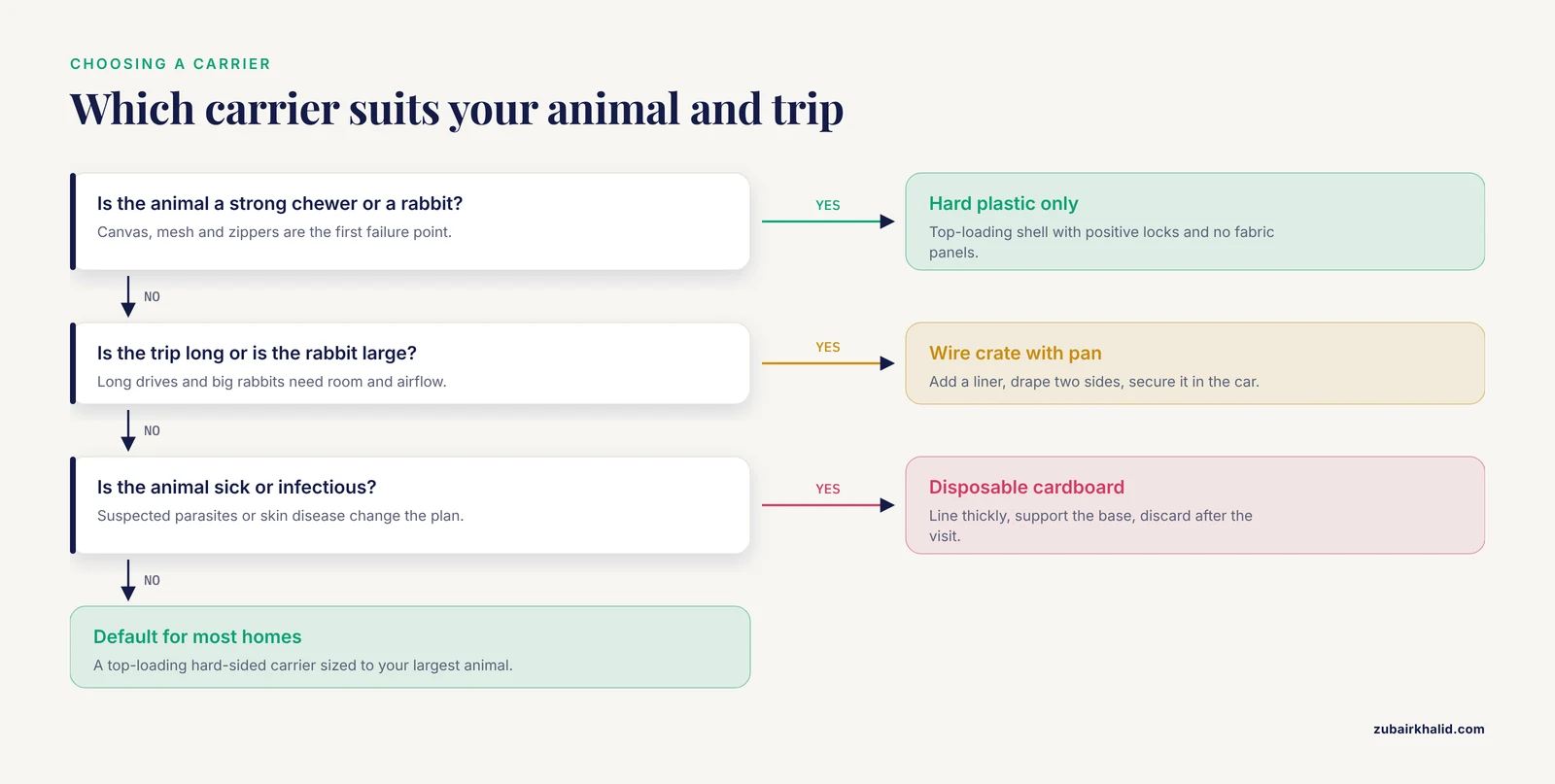
Size the carrier to the animal, not the brand claim. Interior floor length should allow a full turn plus, for a guinea pig, room for a small hide area. For a rabbit, choose a low profile that discourages standing and leaping.
Plan for one animal per carrier. For the crowding reasons described in the ventilation criteria above, a separate carrier for each animal is the safe default, even for bonded pairs. If you must transport a bonded pair briefly, use a divided carrier or a roomy crate with a visual barrier.
For rabbits, prioritize top loading and chew-proof construction. A strong rabbit can defeat a zipper in minutes. Hard plastic with metal or reinforced hardware, plus a towel for traction, covers most situations.
For guinea pigs, prioritize snugness, airflow, and a hideout. A cavernous dog carrier lets a guinea pig slide around and panic. A smaller hard-sided carrier with vents on two sides and a covered corner travels better.
For seniors, favor easy access and easy cleaning. In the Budapest clinic data, the odds of ovarian cysts, neoplasms, and urinary tract disease rose with age [1], so older animals often travel more. Wide top openings, low entry heights, and removable pans spare arthritic joints and spare you scrubbing.
Label carriers in multi-species homes. Never share one carrier between a rabbit and a guinea pig on the same day without cleaning between uses, and keep each animal's carrier associated with its own scent.
Worked Scenarios
A healthy adult rabbit and an annual checkup
Use a top-loading hard-sided carrier with a towel and a thin layer of the bedding your rabbit normally sits on. Lower the rabbit in feet first, close the top door, and strap the carrier into the back seat or set it secured in the footwell. Keep the drive quiet and the radio low. At the clinic, ask the team to lift the rabbit out in the carrier if the rabbit is nervous, rather than pulling it through a front door.
A guinea pig with suspected dental disease
Drooling, a wet chin, or weight loss points toward the mouth, and dental problems were the most common diagnosis in the large Budapest case series [1]. Expect imaging and possible sedation, which means repeat trips. Choose the easiest carrier to clean, line it with an absorbent pad, and bring a written log of appetite and dropping output. A top-loading carrier spares a painful animal any dragging at a front door.
Two bonded guinea pigs and a household move
Give each guinea pig its own carrier, each with a familiar hide cup or a towel-wrapped corner from the shared enclosure. Move the carriers side by side in the car so the pair can hear and smell each other without crowding one box. On arrival, set both carriers in the new room, open the doors toward each other, and let the animals walk out on their own schedule.
A newly adopted guinea pig's first ride home
Shelters screen adoptees, but results vary by test. In a Southern California screening of 85 shelter and rescue guinea pigs, culture identified active dermatophyte infection in only one animal, while PCR detected dermatophyte DNA in 63.5%, and most animals carrying that DNA had no visible lesions [7]. Practical takeaways for the ride home, use a lined cardboard or hard-sided carrier, wash your hands after handling, keep the new arrival's bedding and dishes separate until your veterinarian advises, and book a new-pet examination within the timeframe your veterinarian recommends.
An urgent evening trip
Pull out the prepared cardboard carrier, or the hard-sided carrier you keep clean year-round. Add a towel, secure it in the car, and call the clinic on the way so a team is ready. Bring any fresh fecal sample if droppings look abnormal, because fecal testing is a standard route for diagnosing the gastrointestinal parasites that recur in guinea pigs, including Paraspidodera uncinata and Eimeria species [8]. Keep the cabin calm, dim, and warm.
Common Mix-Ups to Avoid
- Buying for looks. Bubble backpacks and novelty bags trade ventilation and structure for style, and they expose a prey animal to constant visual stimulation.
- Using a glass aquarium. Tanks have poor airflow, no secure lid system designed for travel, and real weight. They belong at home, not in a car.
- Letting the animal ride loose. A braking event turns an unrestrained rabbit or guinea pig into a projectile. The carrier itself must be belted or footwell-secured.
- Wire floors. They trap toes and nails and resist proper disinfection. Always cover a pan with a solid, washable surface.
- A carrier sized for a different species. Too large invites sliding, too small forces a hunched posture for the whole drive.
- Skipping the liner. Plastic floors are slippery, and slipping during a turn is a common travel injury.
- Overcrowding for comfort. Two animals in one small box raise stress and heat, not comfort.
- No rehearsal. The first ride should not be the emergency ride. Run a two-minute test trip around the block and reward calmly afterward.
- Leaving the carrier in a parked car. Treat the car as part of the carrier plan, keep the animal in the cabin with you, out of direct sun, for the whole trip.
Getting the Carrier Ready: A Pre-Travel Checklist
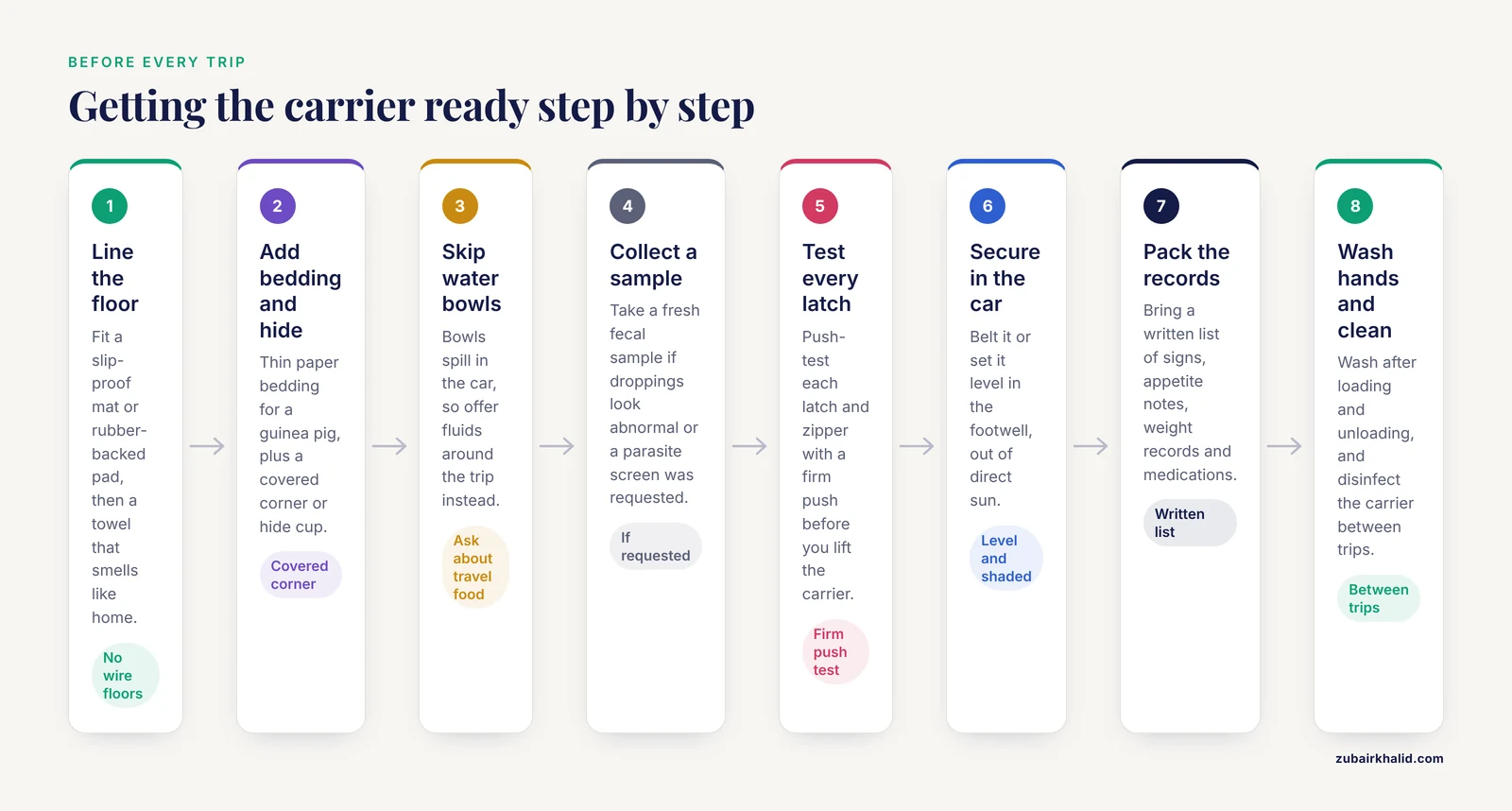
If you keep a rabbit care checklist for hay, water, and grooming, add a quarterly carrier check to it, test the latch, wash the liner, and retire any carrier with cracked hinges or a loose door. Any thorough guinea pig care guide puts dental health and weight monitoring near the top, and both connect directly to how often you will drive to a clinic, so the carrier deserves the same routine attention.
Before every trip:
- Fit a slip-proof mat or rubber-backed pad, then a towel that smells like home.
- Add a thin layer of paper bedding for a guinea pig, and a covered corner or hide cup.
- Skip water bowls inside the carrier, they spill, and offer fluids around the trip instead. Ask your veterinarian what travel food suits your pet for drives longer than an hour.
- Collect a fresh fecal sample if droppings look abnormal or if your veterinarian requested a parasite screen [8].
- Push-test every latch and zipper.
- Secure the carrier in the car, belted or footwell, level and out of direct sun.
- Pack a written list of signs, appetite notes, weight records, and medications.
- Wash your hands after loading and unloading, and wash and disinfect the carrier between trips. Dermatophytosis is contagious and zoonotic, and transmission can come from newly acquired pets [7].
For deeper background reading, the Merck Veterinary Manual's exotic and laboratory animal section, VCA Animal Hospitals' small mammal guides, the Rabbit Welfare Association & Fund, and House Rabbit Society publish owner-facing resources that pair well with your veterinarian's advice.
Limitations and When to Contact a Veterinarian
Individual animals vary, and the right carrier for an arthritic senior, a travel-panicked rabbit, or a post-operative guinea pig is a judgment call to make with your veterinarian. The clinic data cited here come from guinea pig populations, and rabbit-specific schedules should come from your own veterinary team.
Contact your veterinarian before traveling, or go directly, if you see any of the following, because these signs mean the animal needs care more than it needs a calm ride, and your team can tell you how to stabilize transport:
- Labored breathing, open-mouth breathing, or blue-tinged gums or lips
- Drooling, a wet chin, or dropping food, which can indicate painful teeth
- Not eating, or a clear drop in dropping production
- Blood in the urine, straining to urinate, or a hunched, tense posture
- A new lump, swelling, or a wound
- Hair loss, crusting, or scabs, which deserve professional cytology rather than home treatment, because diseased guinea pig skin carries different organisms than healthy skin, and some yeast are seen on cytology even when culture misses them [9]
- Sudden lethargy, a hunched stance, or a cold, unresponsive animal
After any trip, watch for a day. A brief quiet period is normal, but refusal to eat, hiding that does not resolve, or changes in droppings warrant a call.
This article is educational and is not a substitute for veterinary diagnosis or treatment.
Frequently Asked Questions
What is the best travel carrier for rabbits and guinea pigs?
A top-loading, hard-sided plastic carrier sized to your largest animal is the best default for both species. It resists chewing, loads a reluctant animal without a wrestling match, and cleans up quickly. Soft-sided bags suit only calm animals on short trips, and wire crates suit large rabbits on long drives.
Can I use a cat carrier for my rabbit?
Yes, if the interior floor lets your rabbit turn around and crouch naturally and the latch passes a firm push test. Top-loading models work best for rabbits. Skip fabric cat bags for any rabbit that chews, and add a slip-proof liner before the first ride.
Can two guinea pigs share one carrier?
Only a bonded pair on a short trip, and a separate carrier for each animal is the safer default. Crowding raises stress and respiratory risk, and two animals in one box double the mess and the heat. Use a divided carrier if you must transport a pair together.
Should my guinea pig's carrier have a hideout?
Yes. A covered corner, a small hide cup, or a towel draped over part of the carrier helps a prey animal settle and reduces struggling during the drive. Familiar scent does most of the work, so reuse the same towel.
How do I keep the carrier calm and clean?
Line it with a slip-proof mat and a familiar towel, secure it in the car, keep the ride quiet and dim, and wash and disinfect the carrier between trips. Wash your hands after handling, especially after clinic visits or when cleaning up accidents.
What should I bring to the veterinary visit?
Bring a fresh fecal sample if droppings look abnormal, a written list of signs and appetite changes, and the carrier lined with familiar bedding. Bring prior records and a current medication list if you are visiting a new clinic.
Sources
- Diseases of Pet Guinea Pigs (Cavia porcellus) Presented to a Specialist Exotic-Animal Clinic: A Retrospective Study.
- Cone-beam computed tomographic features of macrodontic cheek teeth (premolars and molars) in guinea pigs.
- A retrospective study (2006-2020) of biopsy cases in pet guinea pigs (Cavia porcellus), degus (Octodon degus) and chinchillas (Chinchilla lanigera) at an exotic animal clinic in Tokyo, Japan.
- Corynebacterium species and Streptococcus species are the most commonly isolated bacteria from clinically ill pet guinea pigs.
- Inhibition of Adrenergic Receptors Reduces Genital HSV-1 Clinical Recurrences in Guinea Pigs.
- Prevalence, spatial distribution, and risk factors associated with pneumonic lesions in weaning guinea pigs from Pasto, Colombia.
- Prevalence of Lesional and Nonlesional Dermatophytosis in Shelter/Rescue Guinea Pigs (Cavia porcellus) in Southern California, USA.
- Gastrointestinal and hepatic endoparasites of domestic guinea pigs (Cavia porcellus (Linnaeus, 1758)): Diversity, diagnosis, epidemiology, and clinical relevance.
- Cutaneous populations of bacteria and yeast as determined by culture and cytology in healthy and diseased guinea pigs.