Best Bedding for Guinea Pigs and Rabbits
By Dr. Zubair Khalid, DVM, MS, PhD ·
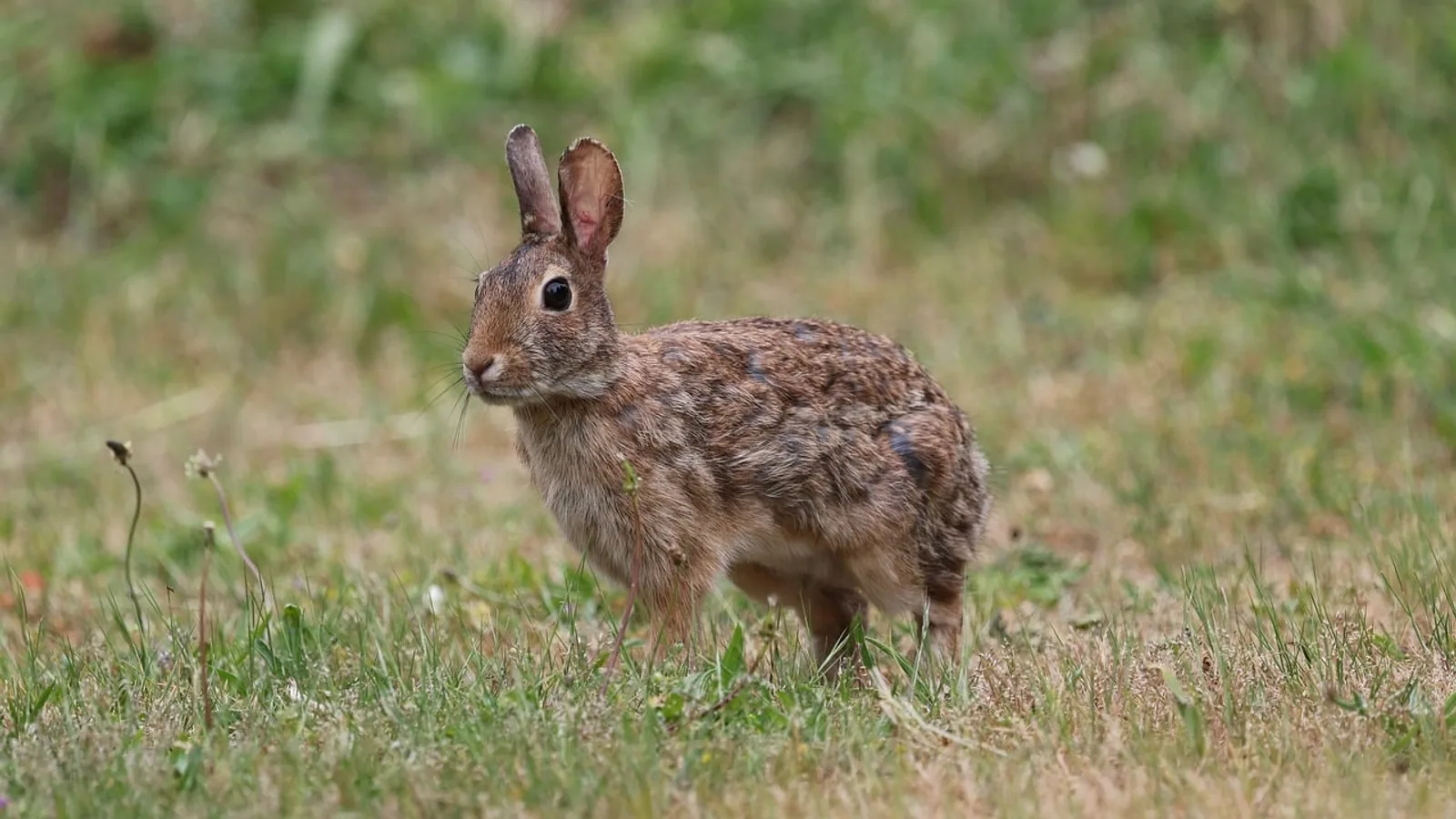
The single biggest difference between the two species is this, guinea pigs need deep, absorbent floor bedding across the whole enclosure because they live on the floor, while rabbits do best with an absorbent layer under their litter area plus soft flooring elsewhere, since a litter-trained rabbit uses one corner for waste. The rule of thumb for both: pick a bedding that absorbs urine well, produces little dust, stays dry, and gets changed often enough that ammonia never has a chance to build.
This article is educational and is not a substitute for veterinary diagnosis or treatment.
Why Bedding Choice Matters More Than Most Owners Realize
Bedding is not decoration. It is the material your pet stands on, digs in, eats around, and breathes beside for most of the day. Two problems drive most bedding-related illness in small mammals, wet bedding and dust.
Wet bedding generates ammonia from urine. Ammonia damages the respiratory tract. A field study of livestock housed on urine-soaked wood shavings found that poor ventilation plus soiled bedding produced high ammonia concentrations, and the lung damage seen in those animals, subacute purulent pneumonia with necrotising bronchiolitis, matched lesions that had been produced experimentally in guinea pigs and rabbits exposed to ammonia gas [1]. That detail matters for owners. Guinea pigs and rabbits have sensitive airways, they cannot move to another room when their cage smells sharp, and respiratory disease in both species is notoriously difficult to clear once established.
Airborne dust and allergens add a second layer of risk. Researchers measuring air quality in a rabbit housing room tracked particulates, endotoxin, ammonia, carbon dioxide, and a rabbit salivary protein used as an allergen marker. Ammonia rose as soiled excreta pans sat between changes, which is why the authors noted that housing conditions should drive how often bedding and pans are changed [2]. A house rabbit sitting over a dirty pan all week is breathing that same air.
There is also a hygiene dimension. A survey of laboratory animal facilities housing guinea pigs, rabbits, and rodents found wide variation in bedding practices, including whether bedding was used at all for some applications and whether materials were sterile or non-sterile [3]. Pet owners do not need sterile bedding, but the underlying principle transfers, the material itself, how it is stored, and how cleanly it is handled all affect the microbial load your pet lives with. A bale of bedding left damp in a garage grows mold and mites. The same product stored dry stays safe.
Quick Comparison of the Best Bedding Options
This table is the core of the decision. Details and trade-offs for each option follow.
| Bedding | Absorbency | Dust level | Comfort and digging | Main drawback | Best fit |
|---|---|---|---|---|---|
| Paper-based bedding (unscented) | High | Very low | Good for burrowing | Needs frequent full changes, can look messy | Guinea pigs, whole-floor coverage |
| Aspen shavings (kiln-dried) | Moderate | Low | Good for digging, light and crunchy | Less absorbent than paper, quality varies | Both species, especially diggers |
| Kiln-dried pine shavings | Moderate | Low | Good | Must be kiln-dried, never raw pine | Budget-conscious owners who buy quality product |
| Fleece liner over absorbent core | Depends on core | Very low | Soft underfoot, not diggable | Requires washing every few days, wicking failures cause wet patches | Indoor rabbits and guinea pig cages with habits |
| Hay (timothy, meadow) | Low to moderate | Low | Encourages foraging, edible | Stays wet where rabbits urinate, molds fast | Rabbits, layered over an absorbent base |
| Straw | Low | Moderate | Warm and insulating | Poor absorbency, hollow stems trap moisture | Outdoor hutches as a top layer, not the only layer |
| Cedar shavings, raw sawdust, clumping litter | Varies | Often high | Poor to fair | Aromatic oils, dust, or GI risk if eaten | Not recommended for either species |
The Main Bedding Options in Detail
Paper-based bedding
Unscented paper bedding made from recycled paper pulp is the default recommendation for guinea pigs in most small mammal practices, including resources such as VCA Animal Hospitals' small mammal guides. It absorbs several times its weight in liquid, produces almost no dust, and holds up well for burrowing, which matters because guinea pigs are prey animals that feel safer with cover and depth. Pour it two to three inches deep across the full floor so the animals can tunnel at the edges.
The trade-off is labor. Paper bedding saturates visibly, and once a patch stays wet, ammonia production accelerates, which is exactly the mechanism documented in the shavings study [1]. Spot-clean daily, remove wet clumps, and do a full change at least weekly for a pair of guinea pigs in a adequately sized cage.
Pros: excellent absorbency, minimal dust, safe if ingested in small amounts, compostable. Cons: more frequent full changes than fleece, quality varies between brands, heavier when wet to carry out.
Aspen and kiln-dried pine shavings
Hardwood shavings, aspen in particular, are the classic small animal bedding. They are light, encourage digging and foraging behavior, and are inexpensive in bulk. Pine is acceptable only if kiln-dried, a process that drives off much of the aromatic resin. Raw pine and all cedar are different stories, covered below.
Shavings are less absorbent than paper bedding, so wet spots under water bottles and in toilet corners need daily attention. Buy a brand that bags cleanly with little visible dust when you shake a handful, and store the bag sealed and dry, a point that echoes the laboratory survey finding that bedding handling and material condition vary widely and matter [3].
Pros: cheap per volume, encourages natural digging, low dust when well manufactured. Cons: moderate absorbency, quality control varies, splinters in very fine grades can irritate paws and eyes.
Fleece liners over an absorbent core
Fleece cage liners have become the standard for indoor rabbits and many guinea pig setups. Fleece itself does not absorb, it wicks urine through to an absorbent layer underneath, typically an absorbent pad or washable mat. When the system works, the surface stays dry and the animals walk on clean fabric.
The system fails in a predictable way, saturation. Once the core is wet, urine pools on top, and you get the same wet-surface ammonia problem described in the rabbit room air-quality study, where soiled surfaces between changes drove measurable ammonia levels [2]. Liners need washing every two to four days for a pair of guinea pigs, more often for rabbits, with a spare set for rotation. Sweep or vacuum hay and droppings off daily.
Pros: very low dust, soft for feet, reusable so long-term waste is low, attractive in living rooms. Cons: upfront washing routine, not suitable for diggers who bunch it up, wicking can fail with wrong detergents or fabric softener.
Hay as bedding for rabbits
For rabbits, hay is both food and bedding, and rabbit welfare organizations such as the Rabbit Welfare Association and Fund and House Rabbit Society emphasize that rabbits should have constant access to hay. Feeding hay at the toilet end of the enclosure works with the rabbit's habit of eating while relieving itself. A layer of hay over an absorbent base gives a rabbit forage material, warmth, and something to rearrange.
The limitation is absorbency. Hay stays wet where a rabbit urinates, and wet hay molds quickly, so it should sit over paper bedding, wood pellets, or washable pads rather than serve as the sole floor covering. Never confuse bedding hay with the straw section below.
Pros: edible, encourages natural foraging, rabbits genuinely prefer it, cheap in bales. Cons: molds when wet, low absorbency alone, needs a true absorbent layer beneath.
Straw
Straw is the insulation bedding, valued in outdoor hutches because hollow stems trap air and hold warmth. Rabbit welfare guidance from groups such as the RWAF treats deep straw as the standard winter bedding for outdoor rabbits. For guinea pigs kept outdoors in mild weather, the same principle applies, though indoor housing is safer for guinea pigs overall because they are more heat and cold sensitive than rabbits.
Straw absorbs poorly and can harbor dust and mold if baled or stored badly, so use it as a thick top layer over an absorbent base, change it before it feels damp, and check under it daily.
Pros: warm, cheap, rabbits like to rearrange it. Cons: poor absorbency, mold risk in damp conditions, sharper stems than hay.
Beddings and products to avoid
- Cedar shavings and raw pine. Aromatic softwoods contain volatile oils that irritate airways. Given the demonstrated sensitivity of guinea pig and rabbit lungs to airborne irritants and ammonia [1], keeping respiratory irritants out of the enclosure is the conservative, defensible choice.
- Raw sawdust. Fine, dusty, and often from unknown wood species. The dust load alone argues against it in an animal with a sensitive respiratory tract.
- Clumping or scented cat litter. Rabbits and guinea pigs chew. Clumping litters expand when wet and can cause gastrointestinal blockage, and added fragrances add another airborne irritant.
- Scented anything. Bedding with perfume, deodorizer granules, or baking-soda fragrance additives masks the odor signal that tells you the enclosure needs cleaning. The smell you should act on is ammonia, not cover it.
How to Compare Bedding on the Criteria That Decide Real Choices
Absorbency and ammonia control
Ammonia is the health-critical criterion. Urine sitting in bedding produces ammonia, and ammonia exposure damages airways, with experimental lung lesions documented in guinea pigs and rabbits at elevated exposure [1]. Rank the options by how quickly they pull urine away from the surface and how long they stay dry. Paper bedding and a properly built fleece system lead. Shavings sit in the middle. Hay and straw trail, which is why both belong over an absorbent base rather than alone.
The practical control is change frequency. The rabbit facility study showed ammonia rising between excreta pan changes and demonstrated that measurement of soiled conditions should drive cleaning schedules rather than a fixed calendar [2]. In a home, the equivalent test is your nose at cage level. Any sharp, acrid smell means the schedule is wrong, whatever the calendar says.
Dust and respiratory health
Shake a handful of any bedding at arm's length. If you see a visible puff or smell it, your pet will be breathing it all week. Paper bedding and fleece win this test easily. Shavings vary by brand and bag handling. Straw can be surprisingly dusty, and hay dust rises when hay is stale or moldy. The laboratory survey noted that facilities use a mix of bedding materials with different handling standards [3], and the home equivalent is simple, buy products bagged for small animal use, not agricultural byproducts of unknown history.
Comfort and natural behavior
Guinea pigs hide, tunnel, and pop. Give them depth. Two to three inches of loose paper bedding or shavings along the cage floor, with a hideout at each end, satisfies that. Rabbits dig, rearrange, and chew, so hay and a rug or fleece over a solid floor serve them better than deep loose bedding, which they tend to scatter. Solid flooring with soft covering also protects hocks, a common pressure-sore site in rabbits kept on wire.
Cleaning effort and long-term cost
There is no free bedding. Cheap bulk shavings and straw cost less per bag but demand more frequent changes because absorbency is lower. Paper bedding and fleece systems cost more upfront or per change but stretch the interval between full cleans. Match the option to the routine you will actually keep, because a bedding system you resent is a bedding system that stays wet, and wet bedding is the health risk described above.
Worked Scenarios
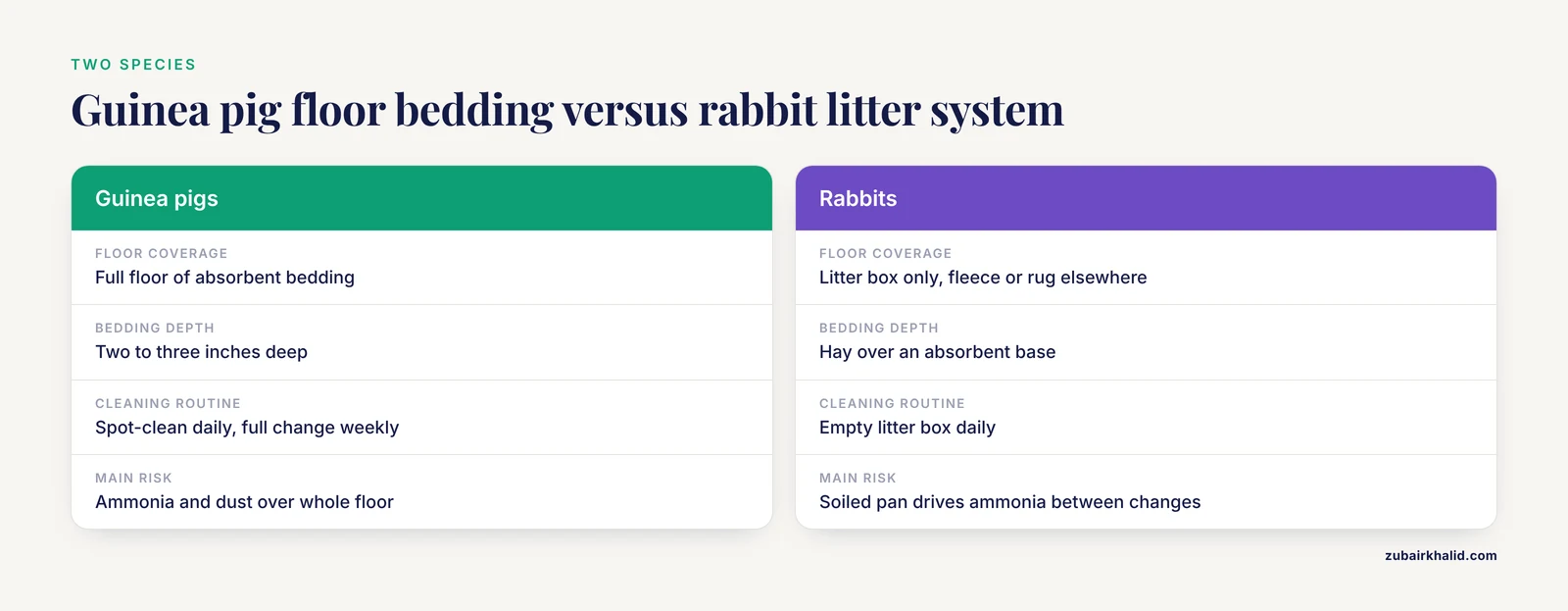
Scenario one, a pair of guinea pigs in an indoor cage. Full floor of paper bedding, two to three inches deep, hay fed in a rack or a separate pile, fleece or vet-bed pads under hideouts for comfort. Spot-clean daily, full change weekly, more often in summer. This is the setup most small mammal veterinarians describe first in a guinea pig care guide, and it minimizes the ammonia and dust exposure that drives respiratory disease in this species.
Scenario two, a litter-trained house rabbit in a pen. Absorbent bedding or paper-based pellets in the litter box only, hay over or beside the litter area, fleece or a rug on the pen floor elsewhere. Clean the litter box daily, wash liners on a rotation. The rabbit room study reminds us that soiled excreta pans drive ammonia levels between changes [2], so a daily litter scoop is the single highest-value habit in rabbit care.
Scenario three, an outdoor hutch rabbit in winter. Deep straw as the top insulating layer over an absorbent paper or shavings base, refreshed before it feels damp, with daily checks under the surface. This is the RWAF-style approach for cold weather. Bring the animal into indoor housing during heat waves, because heat risk exceeds cold risk for rabbits in most climates.
Scenario four, an allergy-sensitive household. Someone sneezes around the cage. Choose paper bedding and fleece, both near-zero dust, increase ventilation around the enclosure, and shorten change intervals. The rabbit room measurements showed measurable allergen and endotoxin in the air alongside particulates [2], so reducing dusty bedding and increasing change frequency attacks the problem from both ends.
How Often to Change Bedding
There is no single universal interval, and the laboratory literature makes that point explicitly, housing conditions should determine change frequency rather than a fixed rule applied everywhere [2]. What transfers reliably from that setting to a home are the drivers, the number of animals, the size of the enclosure, the absorbency of the bedding, and the ventilation. Use these as starting points and adjust to your nose and your eyes.
- Guinea pig cage, paper bedding: spot-clean daily, full change every five to seven days.
- Guinea pig cage, fleece: sweep daily, wash liners every two to four days.
- Rabbit litter box: empty and refresh daily.
- Rabbit pen flooring: sweep daily, wash or replace liners every two to four days.
- Outdoor hutch: full bedding change at least weekly, straw topped up whenever damp.
Wet spots always get removed the same day, whatever the schedule says, because wet patches are where ammonia generation happens fastest.
Where Bedding Fits in a Rabbit Care Checklist and Guinea Pig Care Guide
Bedding is one line on a longer list. A complete rabbit care checklist includes unlimited hay, fresh water, appropriate pellets and greens, a litter box, daily exercise space, hiding places, chew items, nail trims, and a relationship with a rabbit-savvy veterinarian. A guinea pig care guide adds the vitamin C requirement through diet, since guinea pigs cannot synthesize it, daily hideouts, and same-species company. In both lists, bedding connects to everything else, clean bedding supports urinary and respiratory health, adequate depth supports normal behavior, and the cleaning routine is your daily health check, because changes in droppings, urine, or behavior are usually noticed first while your hands are in the cage.
Resources such as the Merck Veterinary Manual's exotic and laboratory animal section and VCA Animal Hospitals' small mammal guides cover the wider husbandry picture, and both rabbit welfare groups named above maintain detailed husbandry and diet resources for owners.
Common Mix-Ups Owners Make
- Confusing straw and hay. Hay is food and can serve as rabbit bedding over a base. Straw is bedding only, and neither animal should be expected to eat it as a substitute for grass hay.
- Assuming all wood shavings are equivalent. Aspen and kiln-dried pine are workable. Cedar and raw pine carry aromatic oils, and none of the shavings excuse you from daily wet-spot removal, since soiled shavings were the bedding implicated in the ammonia and respiratory disease field study [1].
- Laying fleece directly on the cage floor. Without an absorbent core, fleece pools urine on the surface. The liner is the wicking layer, not the absorbent layer.
- Using bedding as a substitute for cleaning. Deeper bedding buys time, it does not eliminate ammonia. Change frequency still drives air quality, as the rabbit room study demonstrated [2].
- Buying dusty agricultural byproducts. Product intended for farm use may carry mold, mites, and fine dust. Bagged small animal products with visible quality control are the safer buy, consistent with the variation in material handling documented across facilities [3].
- Confusing litter and bedding. Rabbits can be litter trained, and the litter box is a target zone, not floor covering. Guinea pigs generally are not reliably litter trained and need full-floor absorbent bedding.
Limitations and When to Contact a Veterinarian
Every animal and household differs, and individual cases need a veterinarian, especially animals with existing respiratory disease, chronic skin problems, or mobility issues, since the right bedding and cleaning plan for those animals may differ from the general recommendations here.
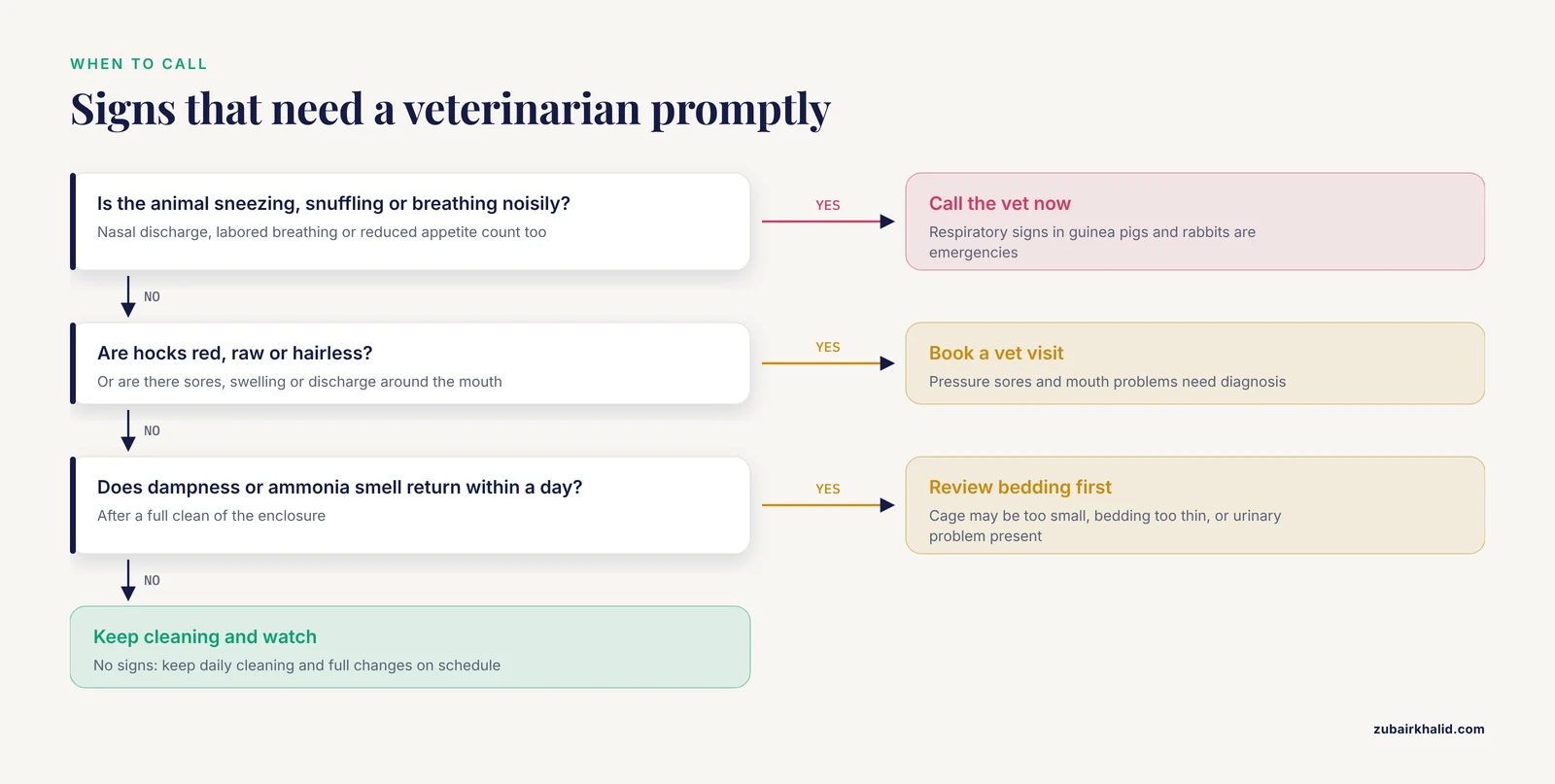
Contact your veterinarian promptly if you see any of the following:
- Snuffling, sneezing, nasal discharge, noisy or labored breathing, or reduced appetite in either species, respiratory signs in guinea pigs and rabbits are emergencies, not watch-and-wait findings.
- Red, raw, or hairless patches on hocks or heels, which can indicate pressure sores from hard or wet flooring.
- Persistent dampness or ammonia smell that returns within a day of cleaning, which suggests the enclosure is too small, the bedding too thin, or an underlying urinary problem.
- Hair loss, scratching, or visible flaking that persists after a bedding change and cage disinfection, which can indicate mites or other parasites requiring diagnosis and treatment.
- Sores, swelling, or discharge around the mouth, or droppings that shrink, soften, or stop, which need same-day assessment.
Frequently Asked Questions
What is the best bedding for guinea pigs?
Unscented paper-based bedding is the best all-around choice for guinea pigs, with aspen shavings as a close second. Lay it two to three inches deep across the whole floor, spot-clean daily, and do a full change at least weekly. The absorbency and low dust of paper bedding directly address the two main bedding risks for this species, ammonia from wet patches and inhaled dust.
What is the best bedding for rabbits?
The best bedding for a rabbit is a system, not a single material, an absorbent layer such as paper-based bedding or wood pellets in the litter box, hay over or beside it for foraging, and fleece or a rug on the remaining floor. This matches how litter-trained rabbits actually use space and keeps the waste area, which drives ammonia between cleanings, easy to refresh daily.
Is cedar bedding safe for guinea pigs or rabbits?
No, cedar bedding is not recommended for either species. Cedar and raw pine contain aromatic oils that irritate the respiratory tract, and both guinea pigs and rabbits have demonstrated sensitivity to airborne respiratory irritants. Aspen shavings or paper bedding give you the wood-bedding experience without the aromatic load.
How often should I change guinea pig and rabbit bedding?
Spot-clean daily and plan a full change every five to seven days for guinea pigs on paper bedding, and daily litter box refreshes for rabbits. Adjust based on your animals, enclosure size, and bedding type rather than a fixed calendar, and treat any ammonia smell as an immediate signal that the interval is too long.
Is fleece bedding better than disposable bedding for guinea pigs?
Fleece is better for dust-sensitive households and long-term waste reduction, while paper bedding is better for owners who cannot commit to washing liners every few days. Fleece needs an absorbent core underneath and a strict wash rotation, otherwise urine pools on the surface and recreates the wet-bedding problem you were trying to avoid.
Can I use straw for my rabbit or guinea pig?
Yes, straw works as a warm top layer for outdoor hutches, especially in cold weather for rabbits, but it absorbs poorly and molds when damp. Always place it over an absorbent base, check under the surface daily, and remember that straw is bedding only, grass hay remains the food.
Sources
- Some preliminary observations on the possible relationship between ammonia production from soiled bedding in calf rearing sheds and calf illness.
- Concentration and emission of airborne contaminants in a laboratory animal facility housing rabbits.
- Laboratory animal bedding and nesting materials for rodents and lagomorphs: the South African situation.