Lump in a Cat's Primordial Pouch: Causes
By Dr. Zubair Khalid, DVM, MS, PhD ·
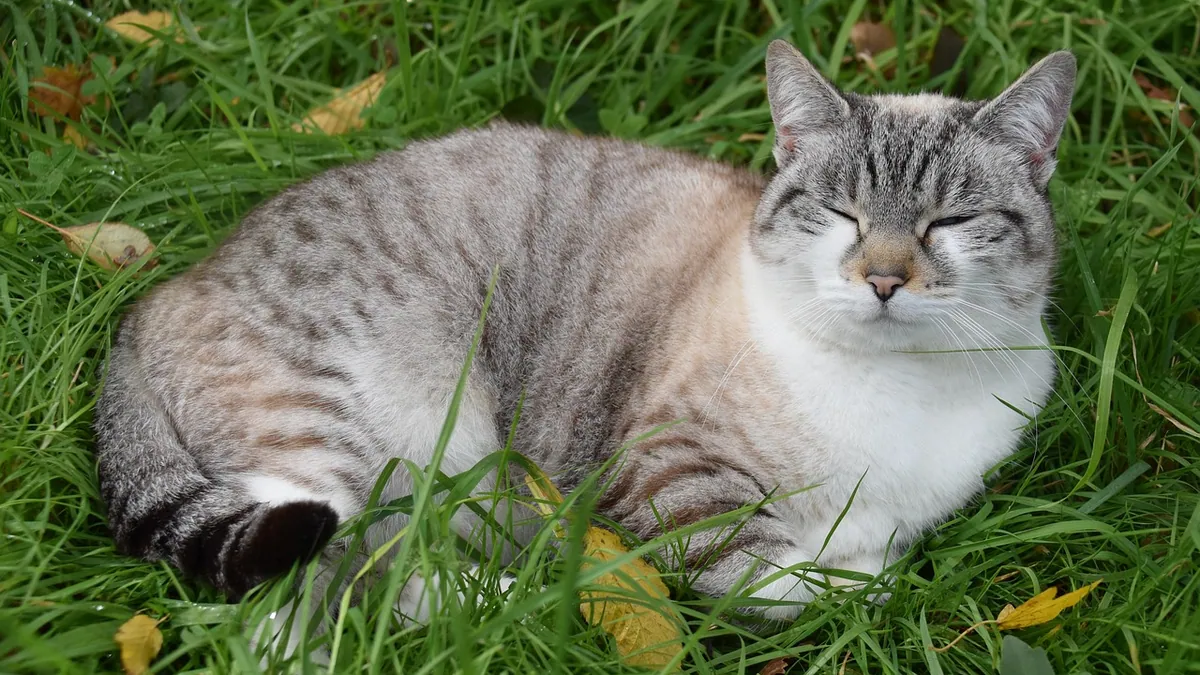
A cat lump in the primordial pouch is usually harmless, and most turn out to be normal fat, a small cyst, or a scar from an old surgery or bite. Some lumps in this hanging belly flap are more serious, including infections and tumors. Because you cannot tell them apart by feel alone, any new or changing lump deserves a veterinary look.
This article is educational and is not a substitute for veterinary diagnosis or treatment.
Quick Answer
- The primordial pouch is the loose flap of skin and fat that hangs along the lower belly of most cats. It is normal anatomy, not a sign of illness.
- A soft, movable lump that feels like the rest of the pouch is often just fat or a fluid pocket, and your vet may simply monitor it.
- A lump that is firm, fixed in place, growing, painful, warm, or draining pus or fluid needs a veterinary exam soon.
- Lumps that come with weight loss, vomiting, poor appetite, or a swollen belly can point to a problem inside the abdomen, not just in the skin.
- Never squeeze, poke, or try to drain a lump at home. You can cause bleeding, infection, or spread of a tumor.
What the Primordial Pouch Is and What Normal Feels Like
The primordial pouch is a stretchy fold of skin, fat, and connective tissue that runs along the underside of your cat's belly, from the ribcage toward the hind legs. It is present in most cats, though it is more obvious in some breeds and in cats who have been spayed or neutered. It protects the belly, allows the skin to stretch when a cat runs or jumps, and stores a layer of fat.
Normal pouch tissue feels soft and squishy. You can usually lift it, and it moves freely under the skin. It may feel thicker in overweight cats and thinner in older or very lean cats. It is common for the pouch to look uneven or to sag more on one side, especially after a spay incision.
A lump is anything you can feel that is different from the surrounding tissue. It may be a distinct bump, a firm patch, or a swelling that blends into the pouch. Size alone does not tell you whether a lump is safe. What matters is texture, how fixed it is, whether it is growing, and whether your cat has other signs.
Cat Lump in Primordial Pouch: Main Causes
Lumps in this area fall into a few broad groups. Benign skin and fat lumps are the most common. Infections and inflammatory masses come next. Tumors are less common but serious. Problems inside the abdomen can also push the pouch outward and look like a lump from the outside.
| Cause | Typical clues | How urgent |
|---|---|---|
| Fat lump (lipoma) or normal fat pocket | Soft, movable, same feel as the rest of the pouch, slow or no growth | Routine visit |
| Cyst, blocked oil gland, or ingrown hair | Round, smooth, may have a small dark dot or a little discharge | Routine visit, sooner if red or painful |
| Abscess or bite wound | Warm, painful, swelling, pus or bloody fluid, sometimes fever or limping | Same day |
| Hernia (fat or intestine pushing through a weak spot) | Soft bulge that changes size when your cat stands or strains, may feel like it can be pushed back | Same day, emergency if firm and painful |
| Scar tissue from spay or prior surgery | Firm, flat or rope-like, right along the old incision line, stable for months | Routine visit |
| Skin tumor (including lymphoma of the skin) | Firm lump or thick patch, may lose hair or ulcerate, can spread quickly | Same day to urgent |
| Malignant follicular tumor | Firm subcutaneous mass, often on the trunk, may be mistaken for a cyst | Urgent |
| Inflammatory mass such as feline eosinophilic sclerosing fibroplasia (FESF) | Firm, sometimes large mass, often with high globulin on blood work, can involve organs beyond the gut | Urgent |
| Internal mass pushing the pouch out (organ, spleen, kidney, ovary, liver, or reproductive tract) | Firm belly, weight loss, vomiting, poor appetite, or a belly that looks swollen all over | Emergency or same day |
A few details are worth knowing. Skin lymphoma in cats often appears as single or multiple lumps or thick patches on the trunk, most often in middle-aged or older cats, and it can spread quickly even when a single lump is removed [1]. Malignant follicular tumors are rare in cats and can look like a simple cyst or a carcinoma on a needle sample, so a biopsy is sometimes needed to get the answer right [2].
Inflammatory masses are another possibility. Feline eosinophilic sclerosing fibroplasia (FESF) is a firm, fibrous mass that was once thought to involve mainly the stomach and intestine, but cases are now reported in other parts of the body, including the abdomen and chest [3]. A related pattern of T-cell lymphoma with severe fibrosis and eosinophils has also been described in cats with an abdominal mass and high eosinophil counts [4]. These conditions can look similar on an exam, which is why testing matters.
Fungal infections are rare but possible. One cat with a draining abdominal skin lesion and black granular material turned out to have a deep fungal infection (phaeohyphomycosis) with a large mass inside the abdomen attached to the spleen and kidney [5]. This is uncommon, but it shows why a lump that drains pus or dark material needs a real workup.
Finally, some "pouch lumps" are not in the pouch at all. A large ovarian tumor in a spayed cat, a giant liver cyst, or a blood-filled fallopian tube can all cause a big abdominal mass and a distended belly [6][7][8]. If your cat's whole belly looks swollen, read Cat Swollen Belly Causes and Why Is My Cat's Belly Swollen?.
Red Flags That Make It an Emergency
Go to an emergency clinic now if you see any of these:
- The lump is firm, hot, very painful, or your cat cries when you touch the belly.
- The lump appeared suddenly and is growing fast.
- The lump is draining pus, blood, or dark material, or it has an open sore that will not heal.
- Your cat is vomiting, drooling, gagging, or struggling to breathe.
- Your cat is weak, collapsed, pale, or breathing fast.
- Your cat has not eaten for more than a day or is hiding and refusing to move.
- The belly looks swollen all over, not just in the pouch.
A firm, painful bulge that cannot be pushed back could be a hernia with trapped intestine. That is a surgical emergency. Sudden collapse with a large abdominal mass can mean internal bleeding, as in one reported case of a blood-filled fallopian tube that caused severe anemia [8].
What You Can Safely Do at Home While You Wait
You cannot diagnose a lump at home, but you can gather useful information and keep your cat comfortable.
- Take a photo of the lump next to a coin or ruler so you can track size over days.
- Gently feel the lump once a day with clean hands. Note whether it is soft or firm, movable or stuck, and whether it is tender.
- Do not squeeze, poke, or try to pop it. Do not apply heat, ice, or human creams.
- Check for fleas and for scabs or small puncture wounds that could be bite abscesses.
- Keep your cat indoors so you can watch appetite, litter box use, and energy.
- Offer normal food and water. Do not give any human pain medicine, since many are toxic to cats.
- Write down when you first noticed the lump and any changes since.
If your cat has a small, soft, stable lump and is eating and acting normal, a routine visit within a week or two is reasonable. If anything is changing, call your vet the same day.
What Your Veterinarian Will Check and Test
Your vet will start with a full physical exam. They will feel the lump and compare it to the rest of the pouch, check its size, depth, and whether it moves with the skin or is attached to deeper tissue. They will also check your cat's lymph nodes, gums, heart, lungs, and belly, and take a weight and temperature.
Next steps depend on what they find:
- Fine needle aspirate. A thin needle collects cells from the lump. This is quick and often done in the exam room. It can identify fat, pus, or tumor cells, though some tumors are hard to classify this way [2].
- Biopsy. A small piece of tissue is sent to a lab. This gives the most reliable diagnosis and is often needed for fibrous or unusual masses [3][2].
- Blood work. A complete blood count and chemistry panel check for infection, anemia, and organ function. High globulin or high eosinophils can point toward inflammatory or neoplastic disease [3][4].
- Imaging. X-rays and ultrasound look inside the abdomen. Ultrasound can show whether a mass is in the skin, the abdominal wall, or an organ, and whether it has blood flow [5][7].
- Urine and hormone testing. In a spayed cat with a large abdominal mass, estradiol testing has been used to support a diagnosis of an ovarian remnant tumor [6].
- Referral. If cancer is suspected, your vet may send you to a veterinary oncologist for staging and treatment planning [1].
Treatment depends on the cause. Benign fat lumps may need nothing. Abscesses need drainage and antibiotics. Hernias need surgery. Tumors may need surgery, chemotherapy, or both. Your veterinarian will calculate any drug dose from your cat's weight and health, so never use a dose from the internet.
If the lump turns out to be a skin growth, see Cat Skin Bumps and Lumps: When to See a Vet and When to Monitor for more on monitoring.
Prevention and Monitoring
You cannot prevent most lumps, but you can catch problems early.
- Weigh your cat monthly and write it down. Unexplained weight loss or gain is a clue.
- Run your hands over the belly, sides, and legs once a month. Get to know what normal feels like.
- Keep up with wellness exams. Older cats should be seen at least twice a year.
- Keep your cat indoors to lower the risk of bite wounds and abscesses.
- Spay and neuter your cat. This prevents ovarian and uterine tumors, though a small amount of ovarian tissue can be left behind in rare cases [6].
- If your cat has had a lump removed, ask your vet how often to recheck. Some tumors, including skin lymphoma, often come back even after surgery [1].
Limitations and When to Contact a Veterinarian
No article can tell you what your cat's lump is. Only an exam and testing can do that. Use these timing guidelines:
- Emergency now: trouble breathing, collapse, pale gums, a firm painful bulge that will not go back in, heavy bleeding, or a draining wound with a very sick cat.
- Same day: a new firm lump, a lump that is growing fast, fever, vomiting, not eating, or a lump that is red, hot, and painful.
- Routine visit within one to two weeks: a small, soft, stable lump in a cat who is eating, playing, and acting normal.
Call your veterinarian if you are unsure. It is always fine to ask for a phone triage check before deciding.
Frequently Asked Questions
Is a lump in a cat's primordial pouch usually cancer?
No, most pouch lumps are benign fat, cysts, or scar tissue. Cancer is less common but cannot be ruled out by touch alone. A firm, growing, or ulcerated lump raises the concern level and should be checked.
Can a hernia look like a lump in the primordial pouch?
Yes. A hernia can appear as a soft bulge along the belly that changes size when your cat stands, strains, or lies down. If the bulge becomes firm, painful, or cannot be pushed back, treat it as an emergency.
Should I worry if the lump is soft and moves easily?
A soft, movable lump that feels like the rest of the pouch is more likely to be fat or a fluid pocket. Still have your vet confirm it at a routine visit, especially if it is new or getting bigger.
Can an internal problem cause a lump that shows in the pouch?
Yes. Masses on the spleen, kidney, liver, ovary, or other organs can push the belly wall outward and look like a pouch lump. Signs like weight loss, vomiting, or a swollen belly point to a problem inside the abdomen.
How long can I safely watch a lump at home?
If the lump is small, soft, stable, and your cat is acting normal, a week or two of monitoring is usually reasonable. If it grows, changes texture, becomes painful, or your cat gets sick, call your vet right away.
Related Articles
- Cat Swollen Belly Causes
- Why Is My Cat's Belly Swollen?
- Cat Skin Bumps and Lumps: When to See a Vet and When to Monitor
- Ear Polyps in Cats: Signs, Diagnosis, Surgery, and Recurrence
- Cat Choking Causes
- Abdominal Ultrasound in Cats: Normal Findings and Common Abnormalities
- Lump on a Cat's Belly or Side: Causes and Next Steps
- Cysts in Cats: Skin, Belly, Kidney, and Leg Lumps
- Cat Lump With Pus: Abscess or Something Else?
References
- Tumors of the Skin in Cats - Cat Owners. Merck Veterinary Manual.
- Malignant Follicular Tumors With Myxoid Mucopolysaccharide-Like Stroma on Cytology and Histology in a Cat. Veterinary clinical pathology, 2026.
- Bicavitary involvement of feline eosinophilic sclerosing fibroplasia with intralesional methicillin-resistant Staphylococcus aureus. JFMS open reports, 2025.
- Nodal T-cell lymphoma with eosinophilic infiltration and sclerosing fibroplasia in a cat with eosinophilia. The Journal of veterinary medical science, 2024.
- A case of Exophiala dermatitidis-induced phaeohyphomycosis in a cat with multiple intra-abdominal masses. The Journal of veterinary medical science, 2024.
- Granulosa Cell Tumour in a Spayed Cat With Ovarian Remnant Syndrome and Hyperestrogenaemia Without Estrus Signs. Veterinary medicine and science, 2026.
- Giant Hepatobiliary Cystadenoma Requiring Biliary Reconstruction in a Cat: A Case Report. Veterinary medicine and science, 2026.
- First Report of Hematosalpinx in a Cat With a Large Hematoma and Severe Anemia. Case reports in veterinary medicine, 2025.