Cyst on a Cat's Nose or Face: What It Could Be
By Dr. Zubair Khalid, DVM, MS, PhD ·
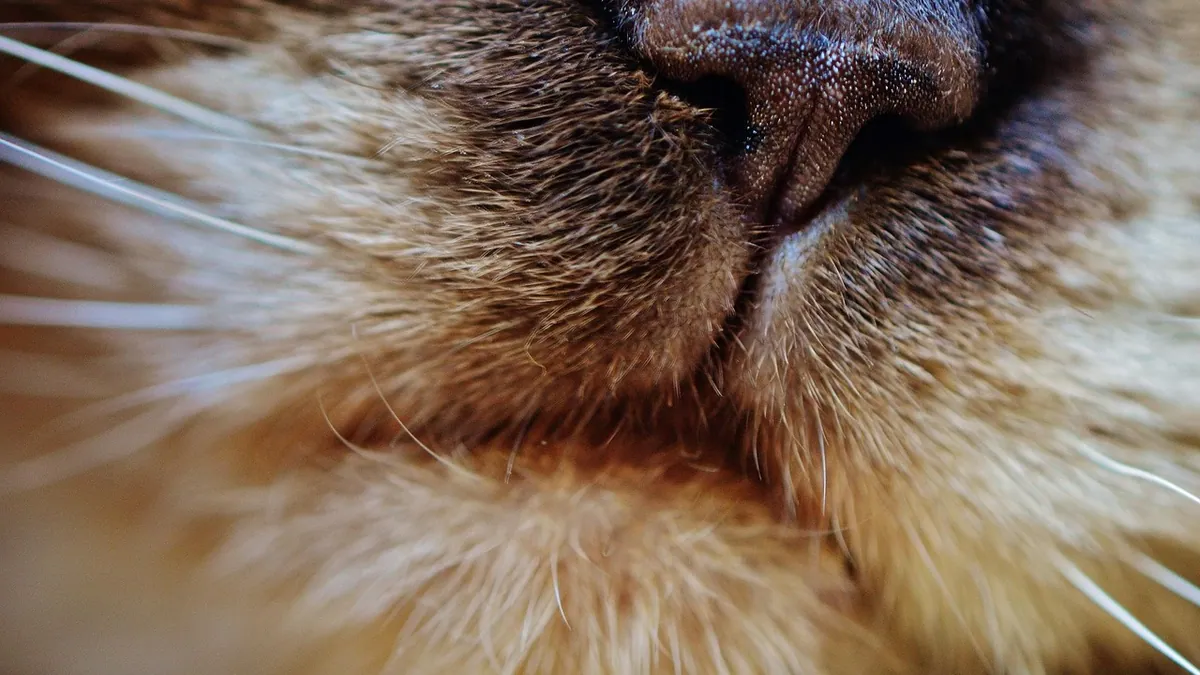
A cat cyst on the nose or face is usually a benign, fluid-filled or solid bump under the skin, but the same appearance can come from tumors, infections, or other growths. You cannot tell the difference by looking or touching alone. A veterinarian needs to sample the lump to know what it is.
This article is educational and is not a substitute for veterinary diagnosis or treatment.
Quick Answer
- Most facial lumps in cats are benign, and benign tumors that are not ulcerated and do not interfere with the cat's normal routine may not need treatment at all, especially in older cats [1].
- A cyst is a contained pocket of fluid or material, while a tumor is a growth of cells. They can look identical on the surface.
- Any lump that grows quickly, bleeds, ulcerates, blocks breathing, or changes your cat's eating or grooming needs prompt veterinary attention.
- The only way to know what a lump is involves sampling it, often with a fine needle aspirate first, then a biopsy if needed.
- After any surgical removal, the tissue should be sent to a laboratory to confirm the tumor type and whether the edges (margins) are clean [1].
What a Cat Nose Lump Usually Looks Like
Lumps on a cat's nose or face show up in a few common ways. You may feel a small pea-sized bump while petting. You may see a raised area that changes the shape of the nose bridge or the side of the muzzle. Some lumps sit under normal-looking fur and only become visible when the fur parts or the area swells.
Cysts tend to be round, smooth, and movable under the skin. They may feel soft or firm. Some drain a thick material, and some stay the same size for months.
Tumors can feel similar. A liposarcoma, for example, is a rare tumor that is lumpy and soft to firm [1]. That description could also fit a harmless cyst. This is why touch and appearance are not enough.
What Is Normal on a Cat's Face
Cats normally have some bumps and irregularities. The chin may have acne-like spots. The nose leather can have pigment changes. Whisker pads are naturally raised. Small sebaceous glands can produce tiny bumps that stay unchanged for years.
What matters is change. A lump that has been the same size and texture for a long time is less worrying than one that appeared last week and has doubled.
Main Causes of a Cat Cyst on the Nose or Face
The table below groups the common possibilities. Urgency reflects how fast a veterinarian should see the cat, not how serious every case turns out to be.
| Cause | Typical clues | How urgent |
|---|---|---|
| Benign cyst or benign skin tumor | Round, smooth, slow growing, no ulceration, cat acts normal | Routine visit, monitor for change |
| Malignant skin tumor (including liposarcoma) | Lumpy and soft to firm, growing, may recur after removal [1] | Prompt visit, sampling needed |
| Nasal carcinoma | Nasal discharge, sneezing, facial deformity, possible epistaxis [2] | Prompt to urgent visit |
| Nasal acinic cell carcinoma | Chronic one-sided nasal discharge and excessive tearing, worsens despite antibiotics [3] | Prompt visit |
| Infection or abscess | Warm, painful, swelling, discharge, sometimes fever | Same-day to urgent visit |
| Allergic or inflammatory skin disease | Itching, redness, hair loss, often along with other skin signs [4] | Routine visit |
Benign Cysts and Benign Tumors
Benign growths are the most common explanation for a stable facial lump. For benign tumors that are not ulcerated and do not impair the cat's normal routine, treatment may not be necessary, and this can be the most prudent option, especially in aged cats [1].
That does not mean ignore it. It means your veterinarian may recommend watching the lump and measuring it over time instead of removing it right away.
Malignant Tumors
Malignant tumors of the skin and nose do occur in cats. Liposarcomas are rare, lumpy, and soft to firm, and they have a low potential to spread to other organs, though wide surgical removal plus surrounding tissue is recommended and recurrence is common, so follow-up radiation treatment may be required [1].
Carcinomas are the second most common feline intranasal neoplasm [2]. A nasal acinic cell carcinoma is exceptionally uncommon in cats, and in one reported case the cat had chronic one-sided nasal discharge and excessive tearing that worsened despite antimicrobial therapy [3].
Infections and Abscesses
A bacterial infection or abscess can create a firm, painful swelling on the face. In one reported case, a cat with a nasal mass had Pasteurella species cultured from nasal secretions, and the clinical condition worsened despite antimicrobial therapy [3]. That pattern, meaning a lump or nasal sign that does not improve with antibiotics, is a reason to look deeper for a mass.
Allergic and Inflammatory Skin Disease
Feline atopic dermatitis and other skin conditions can cause bumps, crusts, and swelling on the face [4]. These often come with itching, hair loss, or similar changes elsewhere on the body. They are usually managed medically, not surgically.
Red Flags That Make It an Emergency
Some signs mean you should stop watching and go now.
- Your cat is struggling to breathe, breathing with an open mouth, or making noisy breathing sounds. Respiratory distress is an emergency.
- There is heavy bleeding from the nose or the lump that will not stop.
- The face is swelling rapidly, especially around the eyes or muzzle.
- Your cat cannot eat, drink, or swallow normally.
- The lump ruptured and is draining pus or foul material with fever or lethargy.
- Your cat is collapsing, weak, or unresponsive.
For a cat with a nose lump, also watch for nosebleeds. If you are seeing blood, this guide on Cat Bleeding from Nose: When to See a Vet walks through the timing.
Safe Things You Can Do at Home While Waiting
You cannot diagnose or treat the lump at home, but you can gather useful information and avoid harm.
- Take photos with a ruler or a coin next to the lump. Do this weekly so you can compare size.
- Note the date you first saw it and any change in size, color, or texture.
- Do not squeeze, poke, or try to pop the lump. You can cause infection or spread cells.
- Do not apply human acne creams, hydrogen peroxide, or essential oils to the face.
- Keep your cat indoors so you can monitor eating, drinking, and litter box use.
- Write down any other signs, such as sneezing, nasal discharge, eye tearing, or bad breath.
If your cat is sneezing a lot along with the facial lump, that combination points toward the nasal cavity. This article on Cat Sneezing a Lot: Allergies, Infection, or Something Else? explains how vets sort those causes. If the sneezing comes with a runny nose, see Why Is My Cat Sneezing So Much And Has A Runny Nose.
What Your Veterinarian Will Check and Test
Your veterinarian will start with a full physical exam. They will look at the lump, feel its size, depth, and mobility, and check the nearby lymph nodes, eyes, and nasal passages. They will also ask about how long it has been there and whether it has changed.
Fine Needle Aspirate
A fine needle aspirate uses a thin needle to collect cells from the lump. The cells are spread on a slide and examined under a microscope. This is often the first test because it is quick and minimally invasive. In some cases, fine needle aspiration of a mass can yield diagnostic material even for rare conditions [5].
Biopsy and Histopathology
If the aspirate is not conclusive, your veterinarian may recommend a biopsy. A biopsy removes a piece of tissue or the whole lump so a pathologist can examine the structure of the tissue. This is how the type of growth is confirmed.
Imaging
If the lump involves the nose or the cat has nasal signs, imaging may be needed. X-rays, CT, or other imaging can show whether a mass is inside the nasal cavity or sinuses. In a reported case of nasal acinic cell carcinoma, post-mortem examination revealed a whitish mass destroying the nasal turbinates and extending to the frontal sinus [3]. Imaging helps your vet see that kind of extension before surgery.
Margins After Removal
If the lump is removed, the tissue should be evaluated by a laboratory to confirm the tumor type and whether all of the tumor was likely removed [1]. The pathologist checks the edge of the removed tissue, called the margins. Dirty margins mean tumor cells extend to the edge, so tumor cells likely remain in the cat's body. Narrow margins mean tumor cells are close to but not at the edge, so some cells could be left behind. Wide or clean margins mean tumor cells are far from the edge, so it is unlikely that tumor cells remain [1].
Other Tests
Blood work and a urinalysis may be done before anesthesia or to check overall health. If a malignant tumor is found, your veterinarian may recommend staging tests to see whether it has spread.
Treatment Options Your Vet May Discuss
Treatment depends largely on the type of tumor, its location and size, and the overall physical condition of the cat [1].
For benign tumors that are not ulcerated and do not impair the cat's normal routine, treatment may not be necessary, and this could be the most prudent option, especially in aged cats [1].
For malignant tumors, surgery is common. Wide surgical removal of the tumor plus surrounding tissue is recommended for liposarcomas, and because recurrence is common, follow-up radiation treatment may be required [1].
For nasal carcinomas, options include radiotherapy, surgery, or a combination of both [2]. A retrospective study of cats with nasal carcinoma compared antineoplastic treatment with palliative treatment alone. In that study, 48 percent of the whole group had worsening of clinical signs, 36 percent remained stable, and 16 percent showed clinical benefit [2]. Your veterinarian will discuss what is realistic for your cat.
Any medication dose is calculated by your veterinarian from your cat's weight and health. Do not give human pain relievers or antibiotics to a cat.
Prevention and Monitoring
You cannot prevent most cysts or tumors. You can catch them early.
- Check your cat's face, ears, and nose weekly with your hands.
- Measure and photograph any lump you find.
- Keep routine wellness visits so your vet can examine the whole cat.
- Treat skin allergies and infections as directed, since inflamed skin can hide new lumps [4].
- If a lump was removed, keep follow-up appointments. Recurrence is possible, especially with liposarcomas [1].
If you find other lumps on the body, this guide on Cat Skin Bumps and Lumps: When to See a Vet and When to Monitor covers how to track them.
Limitations and When to Contact a Veterinarian
No article can tell you what your cat's lump is. Only a veterinarian who examines and samples it can do that. Individual cases need a veterinarian.
Contact your veterinarian the same day if the lump is new, growing, painful, or draining, or if your cat has nasal discharge, sneezing, or eye tearing on one side.
Go to an emergency clinic now if your cat is struggling to breathe, has heavy nose bleeding that will not stop, cannot eat or swallow, or is weak or collapsing.
Schedule a routine visit if the lump has been stable for months but you want it checked, or if your cat has a history of skin problems and you find a new bump.
Frequently Asked Questions
Can a cyst on a cat's nose go away on its own?
Some cysts stay the same size for years and never cause a problem. Others may drain or shrink on their own. Because a cyst and a tumor can look identical, have your veterinarian check it instead of waiting for it to resolve.
Is a lump on a cat's face always cancer?
No. Benign cysts, benign tumors, infections, and allergic skin disease are all common causes of facial lumps. Cancer is possible, which is why sampling is the only way to be sure.
Will my vet remove the lump right away?
Not always. For benign tumors that are not ulcerated and do not affect the cat's normal routine, treatment may not be necessary, and watching may be the most prudent choice, especially in older cats [1]. Your vet will base the decision on the type of growth and your cat's overall health.
How long does it take to get biopsy results?
Turnaround time varies by laboratory and by the type of test. Your veterinarian will give you an expected timeline when the sample is submitted. Ask whether a preliminary result is possible while you wait.
Does pet insurance cover lump removal?
Coverage depends on your specific policy, when it was purchased, and whether the lump was noted before coverage started. Contact your insurance company directly with the diagnosis code your veterinarian provides.
Can I use human antibiotic ointment on the lump?
No. Human products can be toxic to cats if licked off, and they do not treat the underlying cause. Keep the area clean and let your veterinarian decide on treatment.
Related Articles
- Cat Bleeding from Nose: When to See a Vet
- Cat Skin Bumps and Lumps: When to See a Vet and When to Monitor
- Why Is My Cat Sneezing So Much And Has A Runny Nose
- Cat Hissing at Nothing: When to Worry About Hallucinations or Medical Issues
- Cat Sneezing a Lot: Allergies, Infection, or Something Else?
- Why Is My Cat Sneezing?
- Cat Bump on the Head, Nose, or Face: What to Do
- Lumps and Cysts on a Cat's Mouth, Jaw, and Face
- Cat Skin Cysts: What They Are and When to Worry
References
- Tumors of the Skin in Cats - Cat Owners. Merck Veterinary Manual.
- Tolerability and Outcome of Medical Treatment in Feline Nasal Carcinomas: A Multi-Institutional Retrospective Study. Veterinary and comparative oncology, 2026.
- Case Report: Nasal acinic cell carcinoma in a cat: clinicopathological and immunohistochemical characterization of a rare neoplasm. Frontiers in veterinary science, 2026.
- Dermatitis and Dermatologic Problems in Cats - Cat Owners. Merck Veterinary Manual.
- Fine-Needle Aspirate Cytology of Feline Pulmonary Langerhans Cell Histiocytosis in Two Cats. Veterinary clinical pathology, 2026.