When to Euthanize a Corn Snake: Quality of Life Signs
By Dr. Zubair Khalid, DVM, MS, PhD ·
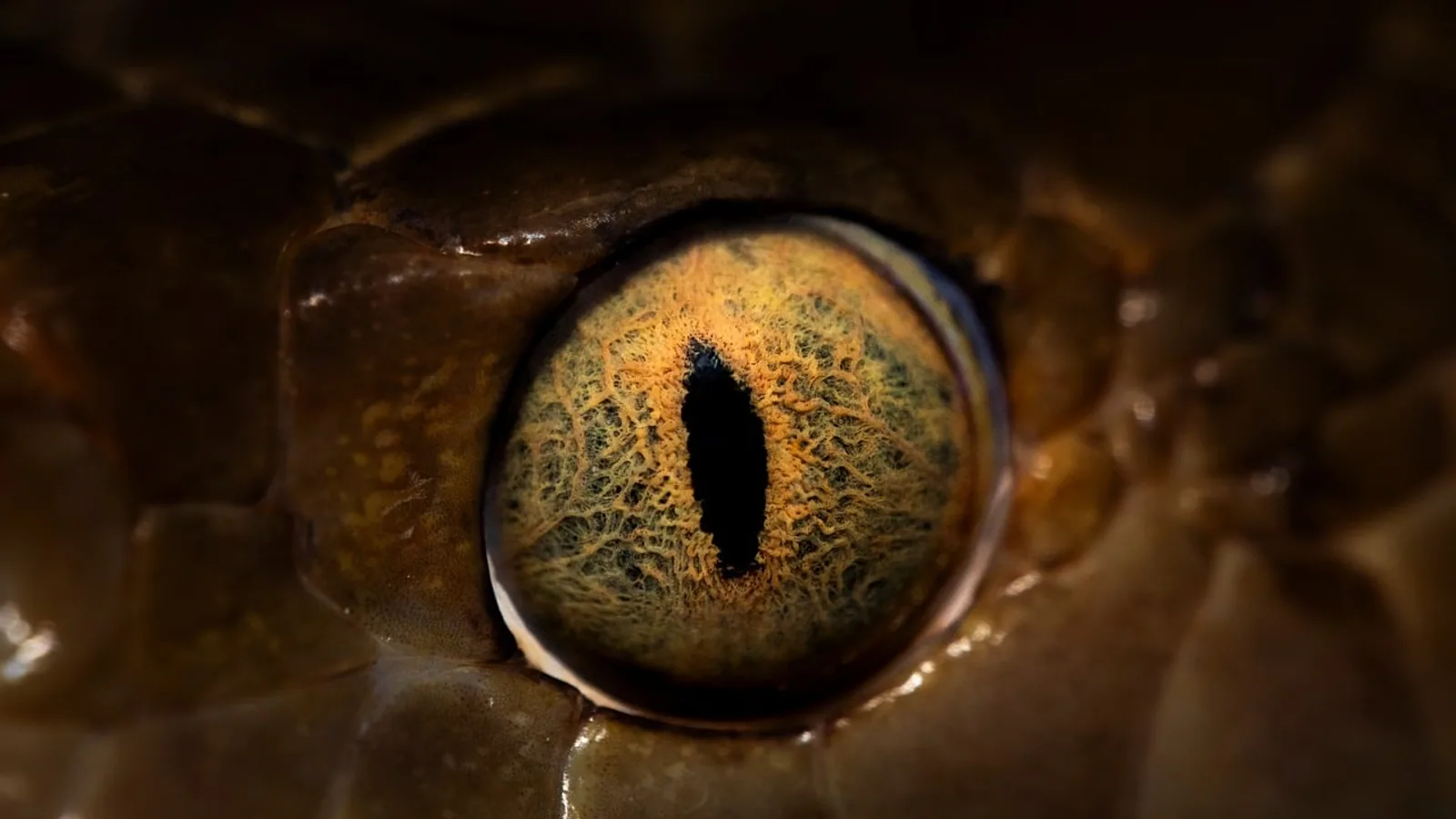
Euthanasia becomes the humane choice for a corn snake when a documented, progressive decline in quality of life cannot be reversed by veterinary treatment, husbandry correction, or palliative care. In practical terms, that means your snake spends most of its time inactive and withdrawn, has stopped eating despite appropriate environmental and medical intervention, is losing body condition, shows unrelieved signs of pain or neurologic disease, and your veterinarian confirms the underlying condition is not treatable. The decision should rest on trends measured over weeks, not on a single bad day, and it should be made together with a reptile veterinarian who has examined your snake.
This guide walks you through how snakes show suffering, how to track quality of life at home, which conditions commonly push aging corn snakes toward end of life, what palliative care can still offer, and how to recognize and grieve the loss of a corn snake. Every case is different, so treat the framework here as a structured way to prepare for a conversation with your veterinarian rather than a substitute for one.
This article is educational and is not a substitute for veterinary diagnosis or treatment.
At a Glance: A Quality of Life Checklist for Corn Snake Owners
Use this checklist weekly if your corn snake is old, chronically ill, or in decline. Score each item, bring the record to every veterinary visit, and look for a worsening trend over time.
| Area | What to observe | Green (acceptable) | Red (concerning) |
|---|---|---|---|
| Appetite | Strikes, takes prey, digests normally | Eats on or near schedule | Refuses multiple consecutive meals with weight loss |
| Body condition | Palpable spine and tail base, silhouette | Muscle mass maintained | Visible spine, prominent ribs, thin tail base |
| Activity | Exploring, tongue flicking, using enclosure | Normal activity for age | Most hours motionless, no tongue flicking |
| Pain and mobility | Movement, climbing, posture | Moves freely | Reluctant to move, abnormal posture, suspected joint pain |
| Respiration | Breathing effort, mouth, nostrils | Quiet, effortless breathing | Open-mouth breathing, wheezing, mucus |
| Digestion | Feces and urates, shedding | Normal stools, complete sheds | Diarrhea, regurgitation, prolonged incomplete sheds |
| Hydration and skin | Skin folds, eyes | Supple skin, clear eyes | Wrinkled skin, retained eyecaps, sunken appearance |
| Response to care | Reaction to corrective husbandry and treatment | Improves over weeks | No improvement despite veterinary plan |
If two or more areas sit in the red column for several consecutive weeks despite treatment, schedule a quality of life conversation with your reptile veterinarian.
Why Euthanasia Decisions Look Different in Snakes
Dog and cat owners rely on facial expression, limping, and loss of house training to judge suffering. Snakes hide nearly all of that. As ectotherms with slow metabolisms, corn snakes can appear deceptively stable while a disease process advances, and they compensate quietly until reserves run low. This is why the decision to euthanize a corn snake depends heavily on objective tracking, weighed measurements, feeding records, and photographs, rather than on intuition alone.
There are three complications that make the timing harder for reptile owners than for mammal owners.
First, snakes normally fast. Corn snakes may skip meals for weeks during breeding season, before a shed, or after a husbandry change. Anorexia alone is therefore a weak signal. Anorexia combined with measurable weight loss, lethargy, or abnormal feces is a different story. A case report of a captive corn snake documented Salmonella Paratyphi B infection presenting with anorexia, diarrhea, and lethargy, a combination that signaled genuine gastrointestinal disease rather than a harmless fast [1].
Second, age-related pain is easy to miss. Geriatric snakes commonly develop osteoarthritis, and researchers note that this declining quality of life often ends in euthanasia when pain goes unrecognized and untreated [2]. A snake that simply stops climbing or stops visiting its water dish may be expressing joint pain, not old age.
Third, chronic stress masquerades as slow decline. Housing design has measurable effects on reptile welfare. Research using corticosterone measured in shed skins found that corn snakes kept in low-stimulus rack systems showed elevated stress hormone levels compared with corn snakes kept in enriched terraria, the opposite pattern seen in ball pythons [3]. A corn snake living in a chronically stressful enclosure may look flat, anorexic, and unthrifty for reasons that are correctable, which matters enormously when you are deciding whether decline is truly irreversible.
A Practical Corn Snake Quality of Life Scale
Formal scoring systems exist for dogs and cats, and the same logic works for snakes with snake-specific criteria. Use the framework below as your corn snake quality of life scale. Score each domain from 0 (severe impairment) to 2 (normal), giving a total between 0 and 14. Track it weekly in a notebook or spreadsheet. The absolute number matters less than the trend and the pattern across domains.
- Hunting and feeding behavior. Does the snake strike with intent, constrict, and swallow normally? A snake that strikes weakly, refuses prey repeatedly, or regurgitates scores low. Record every offer, refusal, and regurgitation with dates.
- Body condition. Weigh the snake on the same scale at the same time each week. Note muscle mass along the spine and at the tail base. Steady weight loss that persists after husbandry correction scores low.
- Activity and engagement. Does the snake tongue flick when you open the enclosure, explore at night, use its thermal gradient? A snake that lies in the same position day after day with minimal tongue flicking scores low.
- Comfort and mobility. Watch for reduced climbing, reluctance to move, and posture changes. Research on osteoarthritic geriatric snakes found that anecdotal clinical improvement, including increased activity level, followed analgesic treatment, which tells us activity level is a meaningful window into pain status in these animals [2].
- Respiratory ease. Quiet, closed-mouth breathing at rest scores high. Open-mouth breathing outside of defensive behavior, audible clicking, or visible mucus scores low and warrants immediate veterinary attention.
- Hydration and integument. Supple skin, complete sheds, and clear eyecaps score high. Persistent dehydration signs and repeated incomplete sheds score low.
- Response to intervention. This is the decisive domain. If a documented husbandry correction and a veterinary treatment plan have been applied and the score keeps falling over several weeks, that trajectory is the strongest argument for euthanasia. If the score stabilizes or climbs, palliative care remains worthwhile.
Two practical rules make this tool work. First, never score from memory, because snakes decline gradually and owners adapt to each small change. Second, score in partnership with your veterinarian. Weight data, photographs, and video of your snake's normal behavior give a reptile veterinarian far more to work with than a verbal description.
Signs a Corn Snake Is Dying Versus Signs It Needs a Vet
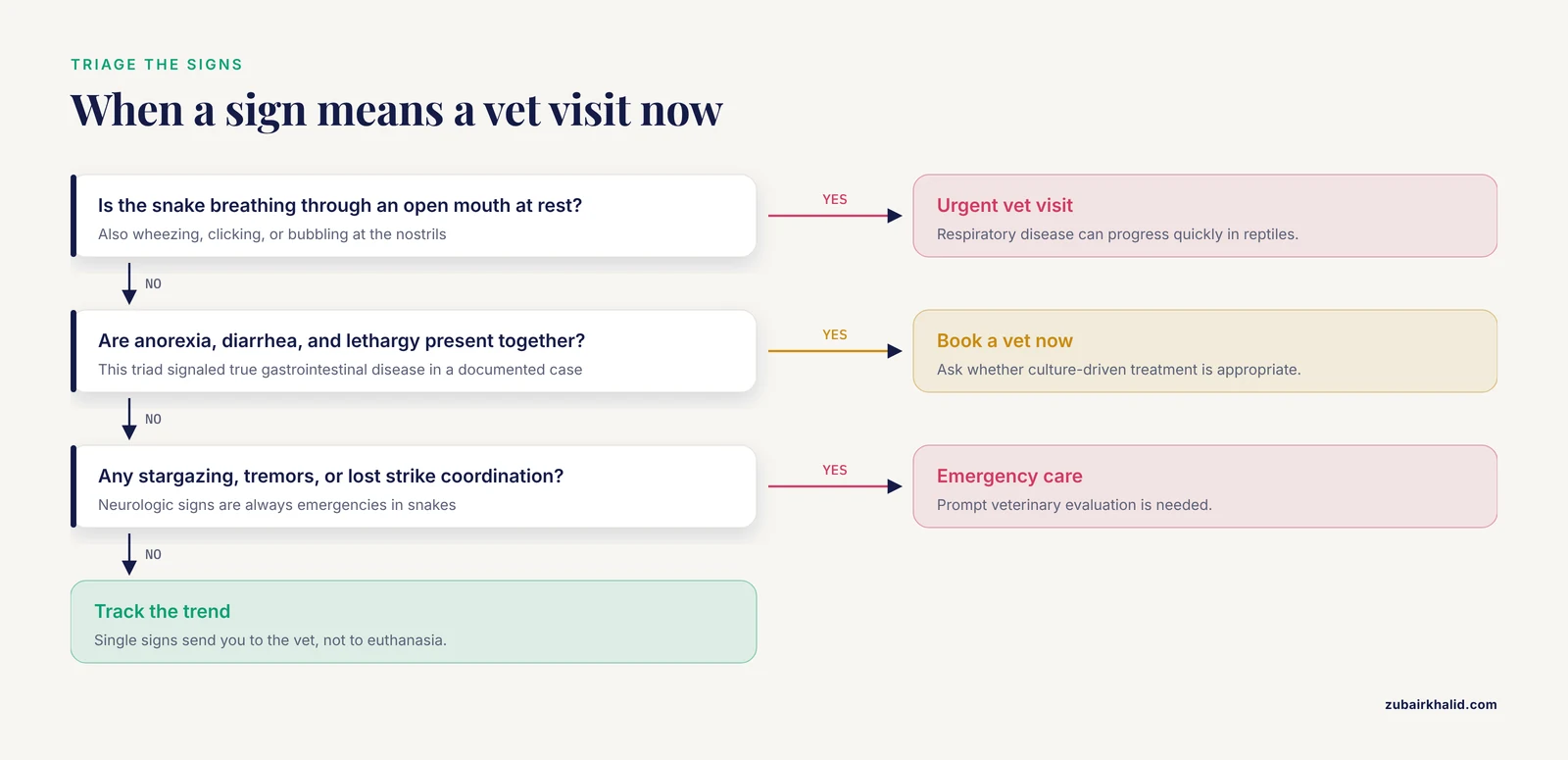
Almost any single abnormal sign means your snake needs a reptile veterinarian, not that it is dying. The distinction between "sick and treatable" and "dying" comes from veterinary assessment, diagnostic findings, and response to treatment. That said, owners should know the full range of red flags so the trip to the veterinarian happens early enough to matter.
Gastrointestinal red flags. Anorexia paired with diarrhea, regurgitation, or lethargy was the presentation documented in a captive corn snake later diagnosed with Salmonella Paratyphi B [1]. Bacterial enteritis is treatable when caught early. That case also matters for you as an owner, because Salmonella in reptiles is zoonotic and antimicrobial resistance is an emerging problem, so hygiene and microbiological monitoring protect both the snake and your household [1].
Respiratory red flags. Open-mouth breathing at rest, extended neck posture, wheezing, or bubbling at the nostrils indicate possible respiratory disease, which can progress quickly in reptiles. Treat any of these as an urgent veterinary matter.
Pain and mobility red flags. Unexplained reduction in climbing, reluctance to use enclosure furnishings, or a stiff, guarded posture in an older snake suggests musculoskeletal pain. Because geriatric snakes commonly develop osteoarthritis that leads to declining quality of life [2], pain should be actively evaluated rather than assumed to be age.
Neurologic red flags. Stargazing, disorientation, tremors, or inability to coordinate strikes are always emergencies in snakes and require prompt veterinary evaluation.
Depletion red flags. Pronounced muscle wasting along the spine, a thin tail base, deeply wrinkled skin, and lethargy that does not resolve with warming and hydration indicate the snake has been compensating for a problem long enough to exhaust its reserves. This is the stage at which owners often first notice something wrong, and it is why weekly tracking matters so much.
Chronic stress presentation. A snake that remains anorexic, inactive, and unthrifty despite correct temperatures and feeding schedules may be experiencing chronic stress from its housing itself. The finding that corn snakes in rack systems had higher shed-skin corticosterone than corn snakes in enriched terraria [3] shows that enclosure design alone can shift a corn snake's stress physiology in ways an owner can see as poor quality of life. Before concluding that decline is terminal, review the enclosure with your veterinarian and consider whether an enriched, appropriately sized habitat might reverse the picture.
The common thread is this: individual signs send you to the veterinarian, but the decision to euthanize comes from the trend after diagnosis and treatment have had a fair trial.
Conditions That Commonly End in the Euthanasia Conversation
Understanding which diseases drive the end-of-life discussion helps you ask better questions at the clinic.
Osteoarthritis in geriatric corn snakes
Osteoarthritis is one of the most common reasons geriatric snakes reach a declining quality of life that often results in euthanasia [2]. It develops silently. Owners typically notice the downstream effects first, such as reduced activity, fewer climbs, and less interest in roaming the enclosure. Because snakes cannot limp or vocalize, joint disease is frequently advanced before anyone suspects it.
The encouraging news is that pain management in snakes is an active area of veterinary research. A study on transdermal fentanyl patches in corn snakes demonstrated long-lasting serum concentrations, exceeding four weeks, consistent with analgesic efficacy, and mean serum fentanyl concentrations of 11.5 plus or minus 5.5 ng/ml at four weeks during 12.5 microgram per hour patch application [2]. Behavior monitored by video and an ethogram changed during patch application, with decreased mean time spent active, decreased mean number of climbs, and decreased mean number of water visits, while feeding behavior was unchanged, and the authors concluded that transdermal fentanyl may provide safe, clinically effective analgesia in corn snakes [2]. The clinical takeaway for owners is straightforward: before you accept that your old snake's decline is untreatable, ask your reptile veterinarian whether pain is being adequately assessed and managed. Euthanasia should be the answer after analgesia fails or is inappropriate, not before it has been tried.
Bacterial disease, including zoonotic Salmonella
Bacterial infections of the gastrointestinal tract present with the triad owners should never ignore, namely anorexia, diarrhea, and lethargy [1]. Diagnosis relies on microbiological testing rather than guesswork. In the documented corn snake case, antimicrobial susceptibility testing revealed resistance to commonly used antibiotics including cefalexin, gentamicin, and amikacin, while the isolate remained susceptible to levofloxacin, ceftazidime, ciprofloxacin, and trimethoprim/sulfamethoxazole [1]. This is a useful lesson in itself. The right antibiotic depends on culture and sensitivity results, so if your snake has persistent gastrointestinal signs, ask whether culture-driven treatment is appropriate. Responsible husbandry, regular veterinary monitoring, and hygiene around the enclosure protect both the snake and the humans in the home from zoonotic Salmonella risk [1].
Chronic stress and inadequate housing
Stress is not a cosmetic issue in reptiles. Non-invasive corticosterone measurement in shed skins has established that housing system design is a key factor influencing welfare, with species-specific responses, and that corn snakes specifically showed elevated stress hormone concentrations when maintained in rack systems compared with enriched terraria [3]. For an owner weighing euthanasia against continued care, this research carries a hopeful message. Some declines that look terminal are actually the slow erosion of a snake kept in an environment that does not meet its behavioral needs. Enriched, appropriately sized enclosures can be part of the treatment plan, not a luxury.
Irreversible advanced disease
Some conditions progress past the point of meaningful recovery. When diagnostics show advanced, irreversible disease, or when a snake with known chronic illness stops responding to therapy, the euthanasia conversation becomes appropriate. Your reptile veterinarian can explain what is reversible, what is manageable, and what is not, based on examination and testing rather than on appearance alone.
How to Comfort a Dying Corn Snake
Once cure is off the table or while diagnostics are pending, your role shifts toward comfort. Reptile palliative care rests on warmth, hydration, easy access to resources, pain control, and low handling.
Thermal support. Confirm your thermal gradient with a thermometer, not by feel. A weak or declining snake cannot thermoregulate effectively, so provide a reliably warm basking zone and a secure warm retreat. Discuss exact target temperatures for your snake's condition with your veterinarian, because illness changes what is optimal.
Reduce effort for every resource. Move the water dish close to the snake's preferred resting spot, offer food at the resting location, and simplify the enclosure so the snake never has to travel far for warmth or water. Behavioral monitoring in the fentanyl study counted water visits as a meaningful behavior, which reflects how much energy snakes spend simply accessing water [2]. Make access effortless.
Secure, quiet hiding. Ill snakes feel vulnerable. Offer a dark, snug hide at the warm end, and minimize handling, enclosure rearrangement, and household traffic around the habitat.
Pain control. Do not assume pain management is impossible in snakes. Analgesia research in corn snakes exists and suggests clinical benefit [2]. Ask your reptile veterinarian directly whether analgesia is appropriate for your snake's condition, and never administer any medication without a prescription and dosing plan from a veterinarian.
Hydration. Offer fresh water daily and discuss soaking, fluid therapy, and assisted hydration with your veterinarian if your snake shows dehydration signs.
Honest comfort, not heroic discomfort. Some owners prolong decline with repeated force-feeding, frequent handling to "check on" the snake, or repeated invasive interventions after the trajectory is clearly downward. Comfort means warmth, quiet, easy access to water, and pain relief. It does not mean endless procedures that serve the owner's need to act rather than the snake's need for peace. Your veterinarian can help you draw that line.
Making the Decision: A Step-by-Step Approach
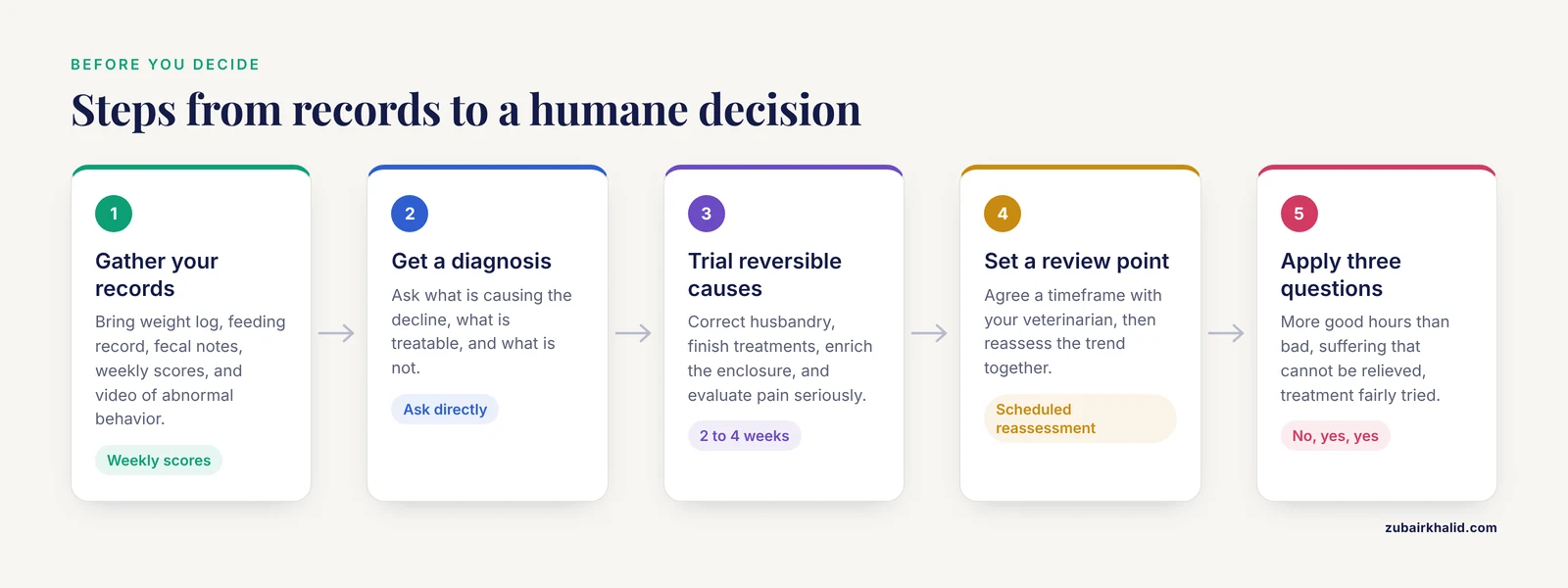
When you suspect the time is near, work through these steps deliberately.
- Gather your records. Bring your weight log, feeding record, fecal observations, weekly quality of life scores, and photographs or video of abnormal behavior to a reptile veterinarian.
- Get a diagnosis or a confirmed prognosis. Ask specifically, what is causing this decline, what is treatable, and what is not. Request diagnostics where they would change the plan.
- Give reversible causes a fair trial. Correct husbandry errors, complete prescribed treatments, address chronic stress with enclosure improvements where indicated, and evaluate pain seriously [2], [3].
- Set a defined review point. Agree with your veterinarian on a timeframe, for example two to four weeks, after which you will reassess the trend together. Open-ended decline is harder on both snake and owner than a scheduled reassessment.
- Apply the three-question test. Is my snake having more good hours than bad hours. Is suffering present that analgesia and supportive care cannot relieve. Has treatment had a reasonable opportunity to work. When the answers are no, yes, and yes, euthanasia is the humane choice.
- Decide with the snake's experience at the center. The American Veterinary Medical Association frames euthanasia in companion animal practice as a way to relieve suffering when relief cannot otherwise be achieved, and reptile practitioners affiliated with the Association of Reptilian and Amphibian Veterinarians apply that same welfare lens to snakes. Your grief, real as it is, does not get a vote, but your snake's daily experience does.
- Plan the logistics. Ask in advance where the procedure will happen, whether you can be present, what the snake's body will receive afterward such as cremation options, and what the appointment will cost. Reptile owners sometimes assume routine small-animal clinics can handle snake euthanasia, so confirm in advance that your clinic has reptile experience or ask for a referral.
What Happens During Euthanasia of a Snake
Owners often worry because snakes look calm and still even at the end. Ask your veterinarian to explain the chosen method and what you will see, and expect the procedure to follow the humane principles outlined in the AVMA Guidelines for the Preservation of Animal Welfare During Euthanasia, which your veterinarian applies to every species they treat. In general, your veterinarian will confirm the snake is properly sedated or anesthetized before the final step so that no pain or distress occurs, will verify death afterward, and will treat the body with respect. If witnessing the procedure matters to you, say so when you schedule, and ask whether the clinic can accommodate it for a reptile patient.
One detail worth knowing: reptile physiology means that reflexes can persist for some time after death, so snakes may twitch briefly after the procedure. Your veterinarian can prepare you for this so it does not alarm you in the moment.
Common Mistakes Owners Make at This Stage
- Waiting too long to involve a reptile veterinarian. Snakes compensate quietly, and by the time an owner sees obvious illness, reserves are low. Early consultation preserves options, including options that are lost by the time the snake looks truly sick.
- Reading a food strike as hunger strike. Fasting has many benign causes in corn snakes. Judge anorexia by its company, specifically weight loss, diarrhea, and lethargy, which together signaled true disease in a documented case [1].
- Attributing everything to age. Reduced activity in an old snake can reflect osteoarthritis that may respond to analgesia [2], not inevitable decline. Age is a description, not a diagnosis.
- Overlooking the enclosure as a health factor. Housing design measurably shifts stress physiology in corn snakes [3]. Before concluding decline is terminal, review temperatures, hides, space, and enrichment with your veterinarian.
- Guessing at medications. Never give antibiotics or pain drugs without culture-informed or veterinarian-directed plans. Antimicrobial resistance is already documented in pet snake pathogens [1], and inappropriate treatment worsens it.
- Deciding in a single bad moment. One refusal, one regurgitation, or one motionless day is data, not a verdict. Trends decide.
- Skipping the goodbye plan. Owners who postpone the decision until an emergency visit sometimes lose the chance to say goodbye calmly at home or with their snake settled, which compounds grief later.
Grieving the Loss of a Corn Snake
Grieving the loss of a corn snake is real grief, and it deserves the same respect as grief for any companion animal, even though others may not see it that way. Snakes live for many years, often well into their second decade with good care, and owners build quiet daily rituals around them, from feeding nights to watching them explore after a shed. When that rhythm ends, the silence in the room is genuine.
A few approaches help. First, allow the grief without defending it. Losing an animal you cared for competently for years is a legitimate loss. Second, mark the ending deliberately. Many owners keep a shed skin, a photograph of the snake in its favorite pose, or a written account of the years together. Third, close the loop with your records. Reviewing your weight logs and quality of life scores after the loss often brings peace of mind, because the data confirms that the decision tracked the snake's decline rather than your fatigue. Fourth, wait before acquiring another snake. There is no correct interval, but a new animal introduced during acute grief sometimes inherits expectations the previous snake spent years earning. Fifth, lean on communities of reptile keepers who understand the bond, because support from people who recognize snake companionship eases the isolation that snake owners sometimes feel when grieving among mammal-centric friends.
If grief stays heavy, disrupts sleep or work, or lasts far longer than you can function within, talking with a counselor experienced in pet loss is a reasonable and common step. Veterinary associations, including the AVMA, acknowledge pet loss as a significant life event and point owners toward support resources.
Limitations and When to Contact a Veterinarian
Individual cases need a veterinarian, and no article can substitute for hands-on examination of your snake. The research base for reptile palliative care and end-of-life assessment is far thinner than for dogs and cats, so treat the frameworks here as organizing tools for a veterinary conversation rather than as decision rules.
Contact a reptile veterinarian promptly, within days rather than weeks, if your corn snake shows any of the following:
- Open-mouth breathing at rest, wheezing, or nasal or oral discharge
- Anorexia lasting more than a few weeks in an adult snake that is also losing weight, or anorexia accompanied by diarrhea, regurgitation, or lethargy [1]
- Neurologic signs, including stargazing, tremors, disorientation, or loss of strike coordination
- Rapid or unexplained weight loss, pronounced spine prominence, or a thinning tail base
- Suspected pain, including marked reduction in activity or climbing in a geriatric snake [2]
- Severe dehydration, sunken eyes, or wrinkled skin that does not improve with normal husbandry
- Prolonged, repeated incomplete sheds or retained eyecaps
- Any bleeding, swelling, or mass that grows over time
Ask for a direct quality of life conversation when your snake has a confirmed chronic or incurable diagnosis, when two or more checklist domains remain red for several weeks despite treatment, or when you find yourself keeping the snake alive mainly because you cannot yet face the decision. A veterinarian experienced with reptiles can tell you honestly which of those situations they are seeing, and asking the question directly usually produces a clearer answer than waiting for the veterinarian to raise it.
Frequently Asked Questions
How do I know when it is time to euthanize my corn snake?
Time the decision on trends, not single events. When progressive decline in appetite, body condition, activity, and comfort persists for several weeks despite correct husbandry and veterinary treatment, and your reptile veterinarian confirms the underlying cause is not reversible or manageable, euthanasia is the humane choice. Your weekly quality of life scores and weight records are the best evidence you and your veterinarian can review together.
What signs suggest a corn snake is dying rather than just sick?
No single sign separates the two, but a combination of persistent anorexia with weight loss, muscle wasting along the spine and tail base, profound lethargy, labored or open-mouth breathing, diarrhea or regurgitation, and failure to improve after treatment points toward end-stage decline. A documented corn snake case with Salmonella enteritis showed anorexia, diarrhea, and lethargy as the presenting signs of serious illness [1], which is why that combination should always trigger a veterinary visit rather than a wait-and-see approach.
Can an old corn snake recover, or is decline permanent?
Recovery depends on the cause, and age alone does not settle it. Geriatric snakes commonly develop osteoarthritis that erodes quality of life, yet analgesic options such as transdermal fentanyl have shown evidence of clinical benefit in corn snakes [2], and stress-related decline can improve when housing is enriched [3]. Ask your veterinarian to identify which parts of your snake's decline are treatable before assuming the trajectory is permanent.
How long can a corn snake go without eating before it is an emergency?
There is no single safe number of days, because healthy corn snakes can fast for weeks during breeding season, before shedding, or after environmental changes. The emergency combination is anorexia plus weight loss, lethargy, diarrhea, regurgitation, or other abnormal signs. Bring your feeding and weight records to a reptile veterinarian, who can judge whether the fast is benign or part of a disease process.
How do veterinarians euthanize a snake?
Your veterinarian will follow the humane principles set out in the AVMA euthanasia guidelines for all species, which means confirming the snake is unconscious and insensible before the final step, verifying death afterward, and treating the body respectfully. Ask your veterinarian in advance to walk you through the specific method planned for your snake and whether you can be present. Brief reflexive twitching after death can occur because of reptile physiology, and your veterinarian can prepare you for it.
How can I comfort a dying corn snake at home?
Prioritize effortless access to warmth and water, a secure dark hide, minimal handling, and veterinarian-prescribed pain control where indicated. Move the water dish and food to the snake's preferred resting spot, keep the household quiet around the enclosure, and confirm temperatures with a thermometer. Analgesia for corn snakes is an active area of veterinary practice and research [2], so ask about pain relief rather than assuming nothing can be done.
Do corn snakes feel pain?
Yes. Corn snakes have documented nociception and analgesic responses, and researchers have studied opioid analgesia in this exact species [2]. Behavioral changes such as reduced activity, reduced climbing, and altered water visits are measurable indicators associated with analgesic drug administration [2], which confirms both that snakes' behavior reflects their internal state and that pain in snakes is a clinical concern worth treating.
How do I cope with grieving the loss of a corn snake?
Treat the loss as real grief, because it is. Mark the ending with a keepsake such as a shed skin or photographs, review your records to confirm the decision followed your snake's decline, lean on reptile-keeping communities that understand the bond, and wait until grief has softened before bringing a new snake home. If grief interferes with daily functioning for an extended period, pet loss counseling is a reasonable next step, and veterinary organizations including the AVMA provide owner resources for pet loss support.
Sources
- FIRST RECORD OF SALMONELLA PARATYPHI B IN A CAPTIVE CORN SNAKE IN BULGARIA - CASE REPORT
- SERUM FENTANYL CONCENTRATIONS AND BEHAVIOR ASSOCIATED WITH TRANSDERMAL FENTANYL APPLICATION ON HEALTHY CORN SNAKES (PANTHEROPHIS GUTTATUS).
- Species-specific variations in corticosterone concentrations in captive snake shed skins: implications for housing systems and welfare.