When to Euthanize a Bearded Dragon: Quality of Life Signs
By Dr. Zubair Khalid, DVM, MS, PhD ·
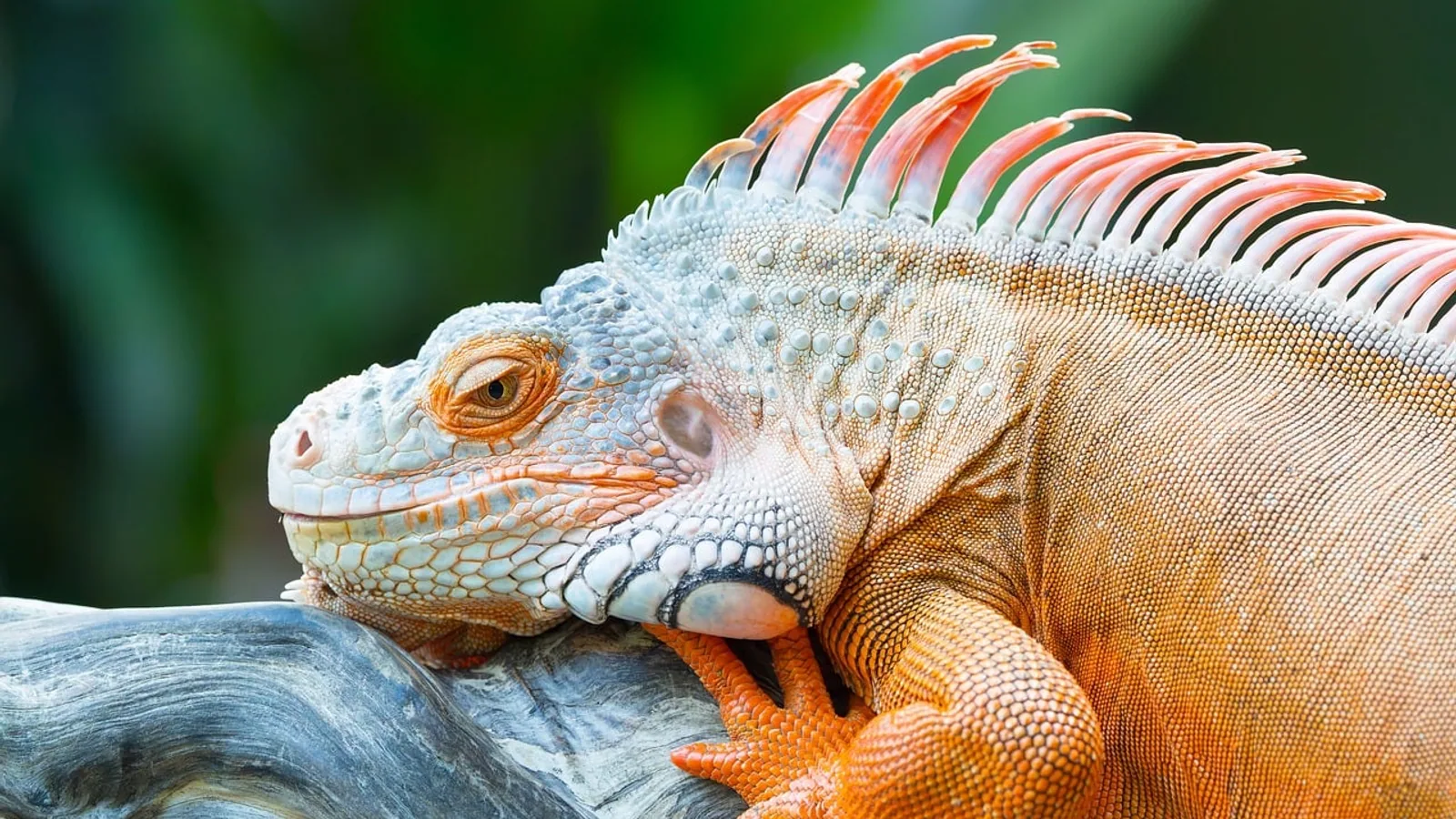
Euthanasia becomes the humane choice when your bearded dragon's suffering outweighs its capacity for comfort, and that judgment rests on a small number of measurable signs. The clearest indicators are sustained refusal of food and water despite treatment, inability to move or thermoregulate normally, chronic pain or distress that medication cannot relieve, labored breathing, and the loss of interest in everything the dragon once engaged with, including food, basking, and interaction. Most reptile veterinarians recommend combining a structured quality of life assessment with a hands-on examination before making the decision, because many conditions that look terminal are actually treatable.
This article walks you through a practical quality of life scale for bearded dragons, the physical and behavioral signs that a dragon is approaching the end of life, concrete ways to keep a declining dragon comfortable, and what to expect from the euthanasia process itself. Every case is individual, so use this as a framework for a conversation with your veterinarian rather than a substitute for one.
This article is educational and is not a substitute for veterinary diagnosis or treatment.
At a Glance: Daily Quality of Life Checklist
Use this checklist each day while your dragon is declining. Any single red-flag finding justifies a veterinary visit within 24 hours. Multiple persistent findings across several days support a serious end-of-life discussion.
| Observation | What it may suggest | What to do today |
|---|---|---|
| No food interest for more than a few days outside normal seasonal slowdown | Advanced illness, pain, or organ failure | Track dates, offer favorite foods once, call an exotic animal veterinarian |
| No response to food enrichment or interaction | Loss of engagement, poor welfare state | Record the response, review the quality of life scale below |
| Cannot right itself, drags limbs, or stays on the floor unable to reach basking spots | Weakness, metabolic bone disease, neurologic disease | Veterinary exam urgently, adjust enclosure for safety |
| Labored or open-mouth breathing at rest, other than normal thermoregulation | Respiratory infection or end-stage disease | Veterinary visit within 24 hours |
| Sunken eyes, wrinkled skin, sticky or dry saliva, no urination | Significant dehydration | Veterinary assessment, do not force large volumes of water |
| Constant dark beard, stress marks, hiding, or persistent left-eye use while basking | Chronic stress, pain, or negative affective state | Review husbandry first, then seek a welfare-focused exam |
| Rapid weight loss, prominent spine and hip bones | Starvation, parasite burden, organ disease | Weigh the dragon if possible, book a veterinary visit |
| Remaining in a heat zone continuously or unable to move to cool areas | Loss of thermoregulation, often late-stage illness | Veterinary exam urgently, verify temperatures with a thermometer |
What Quality of Life Means for a Bearded Dragon
Quality of life in a reptile is not the same as in a dog or cat, and this trips up many well-meaning owners. Bearded dragons are naturally sedentary animals. Research comparing captive-bred dragons in naturalistic and standard enclosures found that they spent the majority of the day inactive and tended to remain in one area of the enclosure regardless of how enriched their habitat was [1]. That means a calm, motionless dragon is not automatically a dying dragon. The goal of a quality of life assessment is not to count minutes of activity but to identify whether your individual dragon can still do the things a healthy bearded dragon chooses to do.
Those things include thermoregulating by moving between warm and cool zones, basking with a relaxed posture, responding to food, defecating regularly, and showing the alert, curious eye and head movements that characterize an engaged dragon. Welfare researchers have confirmed that these observable behaviors matter. A 2025 study found that bearded dragons housed in bare, standard enclosures showed significantly greater use of their left eye, which reflects right-brain processing associated with negative emotional states, compared with dragons in enriched enclosures [2]. This gives owners a genuinely useful, non-invasive window into how a dragon feels. A dragon that keeps its left eye turned toward the world during basking, combined with other clinical signs, may be telling you that its affective state is poor.
The practical takeaway is this: judge your dragon against its own healthy baseline, not against a generic activity level. An eight-year-old dragon that has always spent long periods motionless under its basking light has not changed just because it is still motionless. A dragon that used to sprint to the glass when you approached and now lies with its eyes closed and its beard darkened has changed, and that change is the signal to investigate.
A Practical Bearded Dragon Quality of Life Scale
Veterinarians commonly use structured scoring tools for end-of-life decisions in companion animals, and the same logic works for reptiles. Score each of the six domains below from 0 to 2, where 0 means normal for your dragon, 1 means compromised but present, and 2 means absent or severely impaired. A total score is not a diagnosis, but a pattern of rising scores across several domains, documented over days, is exactly the kind of objective record that helps you and your veterinarian decide together.
| Domain | 0 (Normal) | 1 (Compromised) | 2 (Absent or severe) |
|---|---|---|---|
| Appetite and foraging | Eats offered food with normal enthusiasm | Eats some items, ignores others, needs encouragement | Refuses all food for days despite variety and assistance |
| Hydration and elimination | Drinks or takes moisture normally, passes formed urates and stool | Reduced intake, drier urates, infrequent stool | No urination or defecation, sunken eyes, tacky mucous membranes |
| Mobility and thermoregulation | Moves between warm and cool zones, climbs, righting reflex intact | Slower, hesitates, avoids climbing but still repositions | Cannot right itself, drags limbs, cannot reach heat or leave heat |
| Comfort and breathing | Relaxed posture, easy breathing, normal coloration | Occasional dark beard, mild labored breathing, tense posture | Constant dark beard, open-mouth breathing at rest, tremors, apparent pain |
| Engagement and response | Alerts to your presence, responds to enrichment, tracks movement | Delayed or muted responses, brief interest only | No response to food, handling, or movement in the room |
| Hygiene and skin | Clean vent, intact skin, normal shedding | Occasional soiling, minor retained shed | Persistent soiling, pressure sores, severe dysecdysis |
Two patterns matter more than the raw total. First, a dragon scoring 2 in the mobility and comfort domains is likely suffering in a way that husbandry changes cannot fix. Second, scores that stay flat in one domain while others collapse, such as a dragon that still eats enthusiastically but can no longer move, need individual veterinary interpretation, because a fixable cause may exist.
If you use the scale, write down the scores and the date. Owners who see their dragon every day often miss gradual decline. Written scores turn a fog of worry into a trend line you can share at the clinic.
Signs a Bearded Dragon Is Dying
The signs a bearded dragon is dying overlap heavily with signs of serious but treatable illness, which is why an examination matters before any decision is final. The following findings, especially in combination and especially when they persist, indicate that your dragon may be in the final stages of disease.
Physical signs
- Persistent anorexia with weight loss. Prominent spine and pelvic bones, a visibly thinned tail base, and a gaunt head indicate the dragon is consuming its own tissues. A single skipped meal means little in a species that can naturally reduce intake seasonally, but progressive weight loss over weeks is a serious finding.
- Dehydration. Sunken eyes, wrinkled or tented skin, dry or sticky saliva, and reduced or absent urates all point to fluid depletion. Hydration status deserves special attention in certain morphs. Research on scale phenotypes found that silkback bearded dragons lose water evaporatively at roughly twice the rate of wild-type dragons, with leatherbacks falling closer to silkbacks than to normal-scaled animals [3]. If you own one of these morphs, dehydration can develop faster and earlier than you might expect from experience with other dragons.
- Abnormal breathing. Open-mouth breathing while the dragon is at rest and not overheated, audible clicking, exaggerated body movement with each breath, or mucus around the nostrils can indicate respiratory disease, which in advanced form is exhausting and painful.
- Loss of thermoregulation. A healthy dragon shuttles between its basking zone and cooler areas to fine-tune its body temperature. A dragon that parks itself under the heat lamp and never moves, or one that cannot move away from heat it no longer needs, has lost one of the most fundamental behaviors a reptile has. Enclosure design research confirms that thermal choice is central to how these animals maintain themselves, with well-designed enclosures providing the thermal heterogeneity dragons rely on [1]. Losing the ability to use that heterogeneity is a late sign.
- Neurologic and postural changes. Inability to right itself when flipped, head tilting, tremors, seizures, or dragging the hind limbs indicate advanced disease, often metabolic bone disease, infection, or toxin exposure.
- Failure to eliminate. No stool or urates for a prolonged period, straining, or persistent soiling of the vent and body suggests obstruction, weakness, or systemic collapse.
Behavioral signs
- Loss of engagement. This is the sign owners report most consistently at the end. The dragon stops tracking movement in the room, stops reacting to the opening of the enclosure, and stops responding to favorite foods.
- Sustained stress signaling. A constantly darkened beard, stress marks on the ventral surface, glass surfing combined with refusal to settle, or prolonged hiding indicate chronic negative states rather than momentary annoyance.
- Collapse of enrichment response. Interest in novel food presentation is one of the most reliable windows into a reptile's welfare. In a study of food enrichment in captive bearded dragons, both disabled and non-disabled individuals increased foraging behavior when food was presented with greater challenge, and the response was consistent across the group [4]. A dragon that no longer even investigates a favored treat presented in its usual way has lost a core positive behavior.
What these signs are not
None of these signs, on its own, proves that death is near. Brumation, the reptile equivalent of winter dormancy, produces months of reduced appetite and inactivity in healthy dragons. Impaction, parasitism, dental disease, respiratory infection, and nutritional deficiencies all mimic end-stage signs and are frequently reversible. This is precisely why the decision to euthanize should rest on a veterinary examination plus your documented quality of life record, never on one symptom observed at home.
How to Comfort a Dying Bearded Dragon
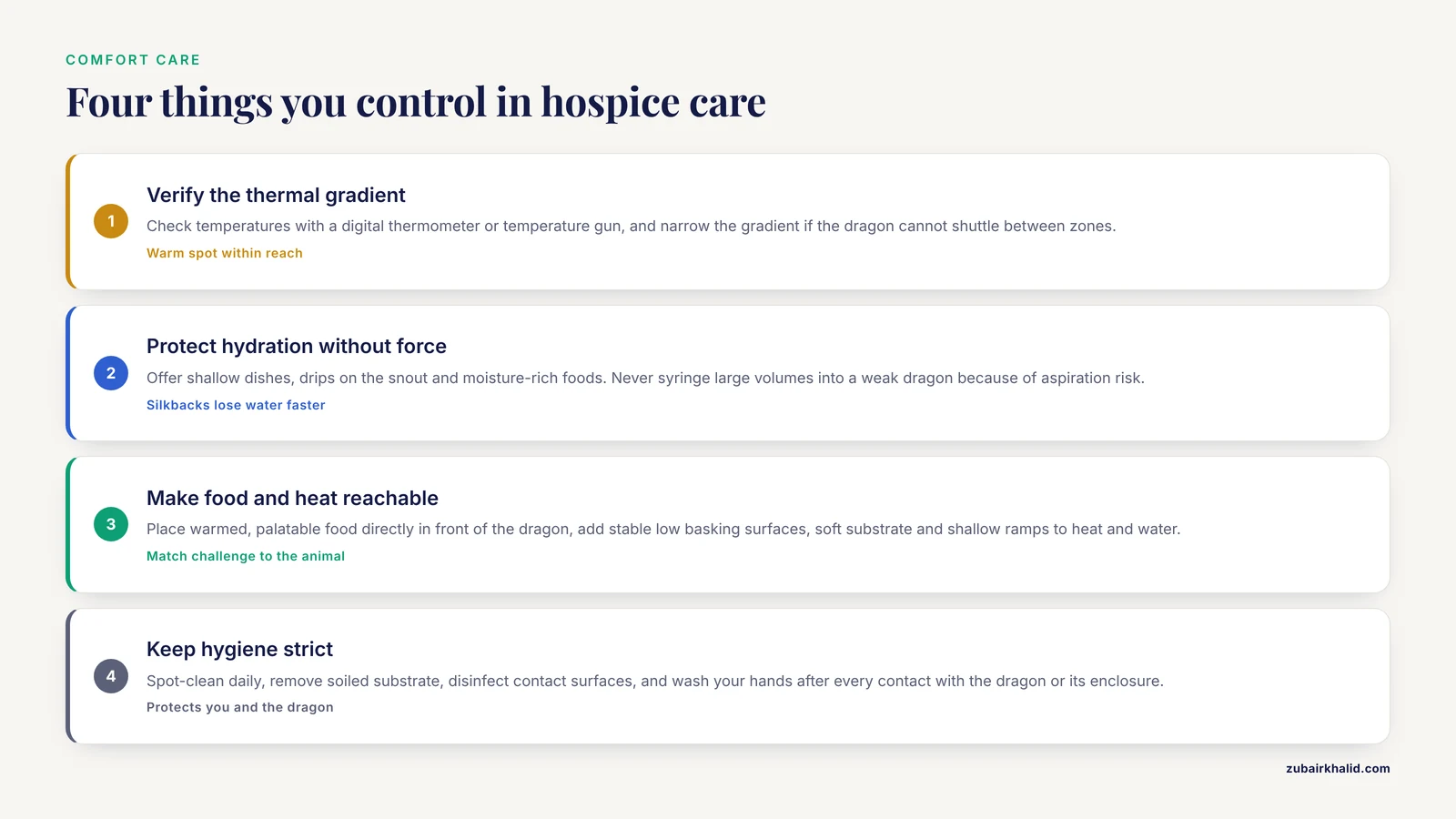
Whether your dragon is receiving treatment, recovering from a setback, or in a hospice phase where the goal is comfort rather than cure, the same principles apply. Comfort care for a declining bearded dragon rests on warmth, hydration, accessibility, gentle enrichment, and hygiene.
Get the thermal environment right
Thermoregulation is the single most important thing you control. Verify temperatures with a digital thermometer or temperature gun rather than guessing, and make sure a proper thermal gradient exists so the dragon can choose. If your dragon is too weak to shuttle between zones, narrow the gradient so that everything within reach is safe, with a warm basking area and no part of the enclosure so hot or so cold that weakness becomes dangerous. Enclosure studies in bearded dragons show that thermal heterogeneity is a core feature of the habitat these animals use, and that even well-designed enclosures must be checked against the animal's actual behavior rather than assumed [1]. Watch where your weak dragon actually rests and adjust the heat so that its chosen spot is within its optimal range.
Protect hydration
Offer water by shallow dish, by dripping on the snout, and through moisture-rich foods such as gut-loaded insects and hydrated greens, depending on what your dragon still accepts. Silkback and leatherback morphs lose water through the skin at substantially higher rates than normal-scaled dragons [3], so owners of these morphs should be especially proactive. Do not syringe large volumes of water into a weak dragon, because aspiration is a real risk. If your dragon will not drink, ask your veterinarian about fluid therapy rather than forcing oral fluids at home.
Make food and enrichment accessible
Appetite often fades late in illness, but presentation still matters. Offer the most palatable items you have, warmed to appropriate temperature, placed directly in front of the dragon so no hunting is required. The enrichment study mentioned earlier found that greater food challenge increased foraging across the group, which means presentation difficulty can itself be a tool: for a dragon with some reserve, a mildly challenging presentation may stimulate interest, while for a dragon near the end, zero-effort presentation is kinder [4]. Match the challenge to the animal.
Adapt for disability
Bearded dragons that have lost limbs or mobility still live full lives when their environment is adapted. The same study found that amputee and non-amputee dragons responded similarly to enrichment items, differing mainly in activity level, with amputees showing more stationary and lying-down behavior [4]. For a weak or disabled dragon, this means providing stable, low, reachable basking surfaces, soft substrate that prevents pressure sores, ramps or shallow paths to heat and water, and food placed within easy reach. Do not interpret stillness in a disabled or dying dragon as absence of welfare. Judge welfare by engagement, comfort, and response.
Read the eyes
Lateralized eye use is an emerging, non-invasive welfare indicator in this species. Dragons in barren conditions showed significantly greater left-eye use during basking, reflecting a negative affective state, while the same animals shifted eye use when their environment improved [2]. While your dragon is declining, glance at which eye it uses to view you and its surroundings during calm basking. Persistent left-eye orientation alongside other negative signs is a meaningful observation to report to your veterinarian.
Handle less, but touch well
Weak dragons have nothing left to spend on stress. Keep handling short and low to the ground, avoid restraint, and let the dragon rest. Many owners find that a hand placed flat in the enclosure, allowing the dragon to lean or rest against it, provides contact without the cost of being lifted.
Keep hygiene strict, for your dragon and for you
A declining dragon is more vulnerable to infection, and its environment accumulates bacteria faster when it is soiling itself and its food is left uneaten. Spot-clean daily, remove wet or soiled substrate promptly, and disinfect surfaces the dragon contacts. Hygiene also protects you and your household. A survey of apparently healthy pet bearded dragons and leopard geckos found that roughly 18 percent carried third-generation cephalosporin-resistant Enterobacterales in their oral and cloacal cavities, including organisms such as Citrobacter freundii and Klebsiella aerogenes carrying ESBL and AmpC resistance genes [5]. Wash your hands thoroughly after every contact with the dragon or its enclosure, keep enclosure items out of the kitchen, and supervise any child who helps with care. This matters even more when a sick dragon is on medications or receiving assisted feeding.
Minimize stress from the environment
Move the dragon away from household noise and traffic if you can, keep lighting photoperiods stable, and avoid introducing new tank mates, scents, or rearrangements during hospice. Change one thing at a time so the dragon is never surprised.
When to Euthanize a Bearded Dragon: A Decision Framework
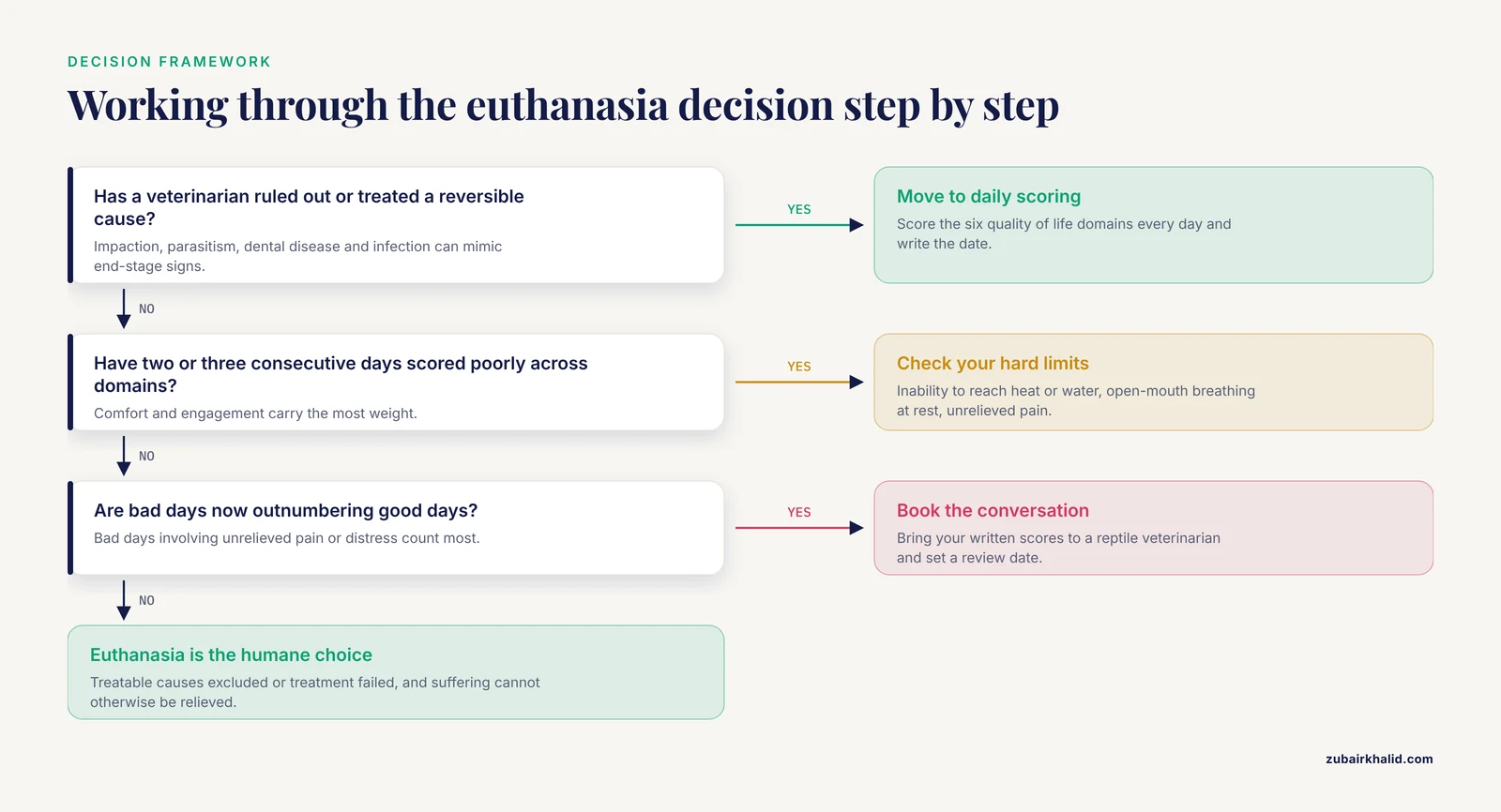
The question of when to euthanize a bearded dragon has no single numeric answer, but a consistent decision process produces consistent, defensible conclusions. Veterinarians generally frame euthanasia as an act performed to relieve suffering when suffering cannot otherwise be relieved, and the AVMA's position on companion animal euthanasia emphasizes minimizing pain and distress as the guiding principle. Work through the following steps.
- Rule out treatable disease. Before you discuss euthanasia, confirm that the decline has a cause that cannot be reversed. Many late-looking bearded dragons have advanced but manageable conditions, and others have conditions that worsen rapidly without specific treatment. Ask your veterinarian directly: what is the diagnosis, what is the treatment, what is the expected response, and how long will improvement take.
- Score the quality of life daily. Use the scale above. Two or three consecutive days of poor scores across multiple domains, especially comfort and engagement, carry more weight than any single bad day.
- Identify your hard limits. Decide in advance, while you are calm, what findings would mean suffering that you are unwilling to prolong. Common examples include inability to reach heat or water, constant open-mouth breathing, unrelieved pain, or total disengagement from all food and interaction.
- Consult a reptile veterinarian. General practice veterinarians may have limited reptile experience. The Association of Reptilian and Amphibian Veterinarians maintains a member directory, and resources such as the Merck Veterinary Manual and VCA Animal Hospitals provide reptile-specific owner guidance that can help you prepare questions. Bring your written quality of life scores.
- Separate your suffering from the dragon's. Anticipatory grief is real, and owners sometimes delay euthanasia because they cannot face it, or rush it because they cannot face caregiving. The quality of life record protects the dragon from both errors.
- Set a review date. If you begin palliative treatment, agree with your veterinarian on a specific recheck interval and on the criteria that would trigger the euthanasia conversation if improvement does not occur. A scheduled decision point prevents drift.
A reasonable summary rule that many exotic veterinarians use with clients: when the dragon has more bad days than good days, when the bad days involve unrelieved pain or distress, and when treatable causes have been excluded or treatment has failed, euthanasia is the humane choice.
What Euthanasia Involves for a Reptile
Reptile euthanasia is a veterinary procedure with species-specific requirements, and it should never be attempted at home. Reptiles have slow metabolisms and unique physiology, so the drugs, doses, routes, and confirmation of death differ from mammalian practice, which is one more reason the procedure belongs with a veterinarian experienced in reptiles. Home methods such as cooling or freezing are inhumane and are not acceptable substitutes.
When you call a clinic, ask three questions. First, does the veterinarian have reptile experience with euthanasia. Second, what the appointment will look like, including whether you can be present and how the clinic confirms death. Third, what aftercare options the clinic offers, such as communal or private cremation, or whether you may take your dragon home for burial where local regulations allow. Reputable clinics answer these questions plainly, and asking them in advance lifts a weight from the day itself.
Some owners choose an at-home visit from a mobile or house-call reptile veterinarian so the dragon remains in its own familiar enclosure environment. Availability varies by region, so inquire early rather than at a crisis point.
Grieving the Loss of a Bearded Dragon
Grieving the loss of a bearded dragon is real grief, and it is often underestimated by people who never kept one. Bearded dragons live long enough, typically a decade or more with good care, to become woven into daily routine. Their stillness is part of their presence, and an empty basking spot changes the shape of a room.
A few points help owners through this period. Give the loss the same acknowledgment you would give the loss of any companion animal. Children often process the death of a reptile differently than the death of a furry pet, and honest, simple explanations serve them better than euphemisms. Many owners find that documenting the dragon's life, including photographs of its normal behaviors such as basking and hand-feeding, helps transform the final weeks of illness into a smaller part of the overall story. If you maintained quality of life records and made the decision with veterinary guidance, revisit that record when guilt arrives, because it almost always does. The record shows that you watched closely, acted on evidence, and chose relief over prolongation of suffering.
There is no required timeline. Some owners are ready to consider another dragon within weeks, and others wait years. If you do get another reptile, disinfect or replace enclosure furnishings appropriately and have a reptile veterinarian review your husbandry setup, since enclosure design and enrichment both have measurable effects on bearded dragon welfare [1][2].
Limitations and When to Contact a Veterinarian
Every bearded dragon case is individual, and a quality of life scale is a structured conversation tool, not a diagnostic test. Individual cases require examination by a veterinarian, ideally one with reptile experience, and this article cannot replace that examination.
Contact a reptile veterinarian promptly, meaning within 24 hours or sooner, if your dragon shows any of the following:
- Open-mouth breathing, clicking sounds, or visible effort while breathing at rest
- Inability to right itself, seizures, tremors, or paralysis of the hind limbs
- Complete refusal of food lasting beyond what your veterinarian has established as normal for your dragon's season and age, especially combined with weight loss
- No urination or defecation, or straining to eliminate
- Sunken eyes, severe skin tenting, or other signs of significant dehydration
- A swollen or discolored limb, jaw swelling, or any visible mass
- Prolonged exposure to temperatures outside the safe range, followed by lethargy
- Any black beard that persists after the apparent cause is removed
Contact a veterinarian for a same-day or emergency visit if the dragon is unresponsive, cold to the touch after prolonged warming, bleeding, or has suffered trauma from a fall or a dog or cat attack.
Contact a veterinarian for an end-of-life planning appointment, which is less urgent but equally important, when your dragon has a diagnosed terminal condition, when quality of life scores are trending downward over one to two weeks, or when you find that caregiving is consuming your ability to function and you need help setting boundaries around your dragon's decline.
Frequently Asked Questions
How do I know when it is time to euthanize my bearded dragon?
Time the decision to the balance between suffering and comfort rather than to any single symptom. When your dragon has more bad days than good days, when bad days involve unrelieved pain, inability to reach heat and water, or total loss of engagement, and when your veterinarian has confirmed that no treatable cause remains, euthanasia is the humane choice. A written daily quality of life score shared with your veterinarian turns this judgment from a guess into a documented trend.
What are the signs a bearded dragon is dying?
The most consistent end-stage signs are progressive weight loss with complete food refusal, dehydration with sunken eyes and wrinkled skin, labored or open-mouth breathing at rest, inability to move or thermoregulate, failure to pass stool or urates, and loss of response to food, handling, and movement in the room. Any of these signs can also reflect treatable disease, so a veterinary examination should precede any conclusion that the dragon is dying.
Is my bearded dragon brumating or dying?
Brumation produces reduced appetite and long periods of stillness in otherwise healthy dragons, usually in response to seasonal light and temperature cues, and brumating dragons remain alert and responsive when awakened and maintain their body weight. A dying dragon loses weight, stops responding entirely, and shows physical signs such as dehydration, labored breathing, or inability to move. If you are unsure, your veterinarian can examine the dragon and run basic tests to distinguish the two.
How can I comfort a dying bearded dragon?
Keep the thermal gradient correct and verified with a thermometer, narrow the temperature range if the dragon is too weak to move, offer water and moisture-rich food without forcing fluids, place food directly within reach, provide stable low basking surfaces and soft substrate, minimize handling and household stress, and clean the enclosure daily. Judge comfort by whether the dragon can rest in its preferred temperature zone and still shows moments of engagement.
Do bearded dragons feel pain?
Yes. Reptiles have the neurologic machinery to perceive pain, even though they hide it far better than mammals, and a prey species instinctively conceals weakness. Signs consistent with pain in bearded dragons include persistent dark beard, hunched or tense posture, reluctance to move, anorexia, and aggression or flinching when a previously handled area is touched. Assume that a sick dragon is at minimum uncomfortable and discuss analgesia with your veterinarian.
Can a veterinarian euthanize a bearded dragon, and what does the procedure involve?
Yes, and it should only be performed by a veterinarian with reptile experience, because reptile metabolism and physiology require species-specific drugs, routes, and confirmation of death. Call ahead to confirm the clinic has reptile experience, ask whether you can be present, and ask about aftercare options such as cremation. Never attempt home methods, which are inhumane and unreliable in reptiles.
What should I do with my bearded dragon's body after euthanasia?
Most owners choose either cremation through the veterinary clinic or home burial where local regulations permit. Ask the clinic in advance which options it offers and whether private cremation with return of ashes is available. If you bury at home, check municipal and state rules on pet burial, choose a site away from water sources, and place the body deep enough to prevent scavenger disturbance.
Is it normal to grieve the loss of a bearded dragon?
Yes, and the grief can be surprisingly intense. Bearded dragons live for many years, participate in daily routines, and develop recognizable individual personalities, so their loss is a genuine loss of companionship. Acknowledge the loss, allow the timeline to be your own, lean on reptile-keeper communities or friends who understand the bond, and revisit your quality of life records when guilt surfaces, because those records show the care behind your decision.
Sources
- Influence of enclosure design on the behaviour and welfare of Pogona vitticeps.
- Visual lateralization as an indicator of animal welfare.
- Bearded dragons (Pogona vitticeps) with reduced scalation lose water faster but do not have substantially different thermal preferences.
- Inclusive Enrichment for Dragons: Behavioral Responses of Amputee and Non-Amputee Individuals of Bearded Dragons Pogona vitticeps to Different Food Enrichment Items
- ESBL/pAmpC-producing Enterobacterales in common leopard geckos (Eublepharis macularius) and central bearded dragons (Pogona vitticeps) from Portugal.