Why Is My Turtle Tank Water Green?
By Dr. Zubair Khalid, DVM, MS, PhD ·
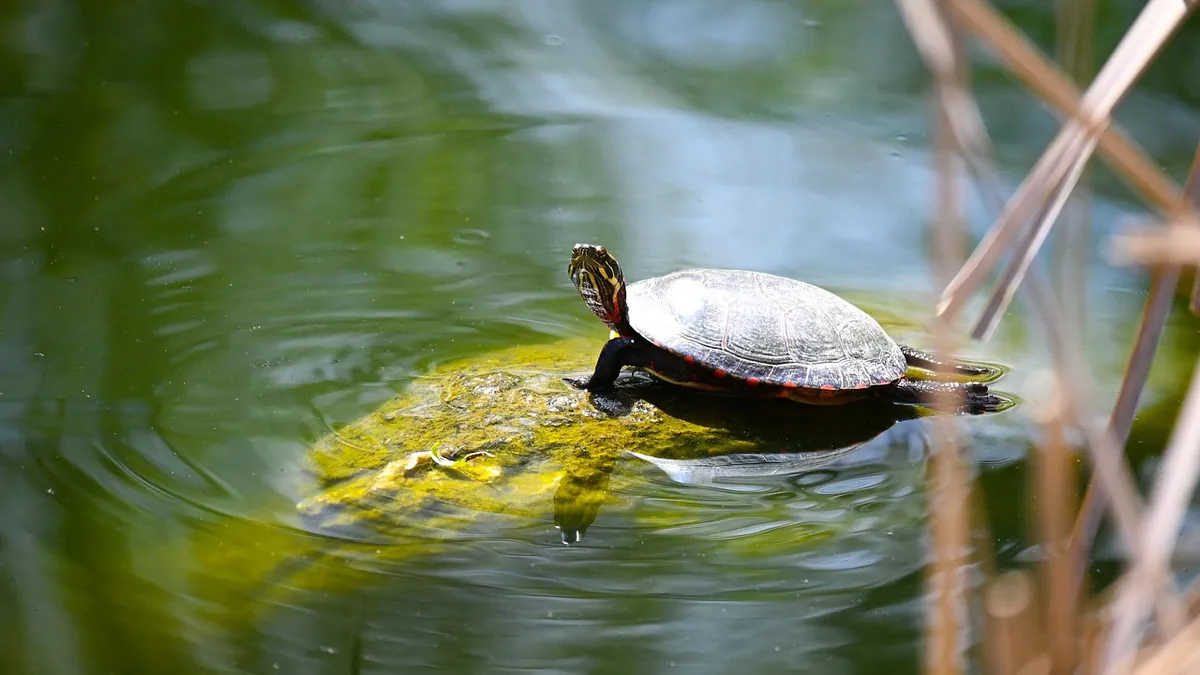
Green turtle tank water is almost always an algae bloom, which means your tank has more light and nutrients than your filtration and water changes can remove. The green color comes from microscopic algae growing in the water itself, not from dirt or turtle waste alone. Fixing it means correcting the balance between light, waste, and filtration, not just dumping in a chemical.
This article is educational and is not a substitute for veterinary diagnosis or treatment.
Quick Answer
- Green water is a free-floating algae bloom fed by light and dissolved nutrients (mostly nitrate and phosphate from turtle waste).
- The most common triggers are too much light, too few or too small water changes, and a filter rated for fish instead of a messy turtle.
- A full water change alone will not fix it. The bloom returns within days unless you reduce light and nutrients.
- Green turtle poop is usually diet-related and not a sign of the same problem, but green, runny, or foul stool can point to illness.
- Harmful algal blooms can produce toxins, so never let your turtle drink or swim in water that looks like pea soup or has a surface scum [1].
Why Is My Turtle Tank Water Green? The Real Cause
The green is algae, and algae need two things to explode: light and nutrients. Turtles are messy. They eat, poop, and shred food in the water, and all of that breaks down into nitrate and phosphate. Add strong lighting or direct sun, and you have a perfect algae farm.
Water quality is not a cosmetic issue for turtles. The health of a freshwater turtle is tied directly to the quality of its water, and poor habitat conditions affect their physical and behavioral health [2]. That is why green water deserves real attention, not just a scrub and a shrug.
There is also a microbial side to this. Red-eared sliders and other freshwater turtles carry diverse microbial communities on their skin, shell, and in their mouths and cloacas, and those communities shift with the habitat they live in [3]. A dirty tank does not just look bad. It changes what your turtle is exposed to every day.
Step-by-Step: How to Clear Green Water
Step 1: Test the water before you change anything
Test for ammonia, nitrite, nitrate, and pH. Write the numbers down. Nitrate is the fuel for most blooms, so if nitrate is high, you know where to start. If ammonia or nitrite is high, stop and do a large water change right away, because those are toxic.
Step 2: Cut the light
Turn off the tank light unless you are viewing your turtle. Aim for 8 to 10 hours of light maximum, and keep the tank out of direct sunlight. If the tank sits by a window, move it or block the window. Light is the switch that turns a small algae population into a bloom.
Step 3: Do bigger, more frequent water changes
For a turtle tank, 25 to 50 percent weekly is a reasonable starting point, and more if nitrate keeps climbing. Vacuum the substrate while you are in there. Waste sitting in gravel keeps feeding the water column.
Step 4: Upgrade filtration
Most filters sold for aquariums are rated for fish, not turtles. Turtles produce far more waste. You want a filter rated for at least two to three times your actual water volume, and you want to clean the media in tank water, not tap water, so you do not kill the bacteria that process waste. If you are not sure what fits your setup, see Turtle Tank Filtration: Keeping the Water Clean and Clear.
Step 5: Feed outside the tank or remove leftovers
Feed in a separate container if your turtle will cooperate, or net out every uneaten piece within a few minutes. Food that sinks and rots is a nutrient pump.
Step 6: Consider a UV sterilizer
A UV sterilizer kills free-floating algae as water passes through it. It treats the symptom, not the cause, so use it alongside the steps above, not instead of them.
Step 7: Skip the algaecides
Do not pour pond algaecides or hydrogen peroxide products into a tank with a live turtle. Those products are studied for open water bodies, not enclosed habitats with animals [4]. The risk to your turtle is not worth it.
Maintenance Schedule and Setup Checklist
| Task | How Often | Why It Matters |
|---|---|---|
| Test ammonia, nitrite, nitrate | Weekly | Catches nutrient spikes before algae blooms |
| Partial water change (25 to 50%) | Weekly | Removes dissolved waste |
| Vacuum substrate | Weekly to every other week | Removes rotting debris |
| Rinse filter media in tank water | Every 2 to 4 weeks | Keeps beneficial bacteria alive |
| Replace filter media | As manufacturer directs | Worn media stops trapping waste |
| Full filter teardown | Every 1 to 2 months | Removes trapped sludge |
| Check UV bulb (if used) | Every 6 to 12 months | Bulbs lose power before they burn out |
| Full tank deep clean | Every 2 to 3 months | Resets the system |
Your setup matters as much as your schedule. A tank that is too small for the species, a filter that is too weak, and a bare bottom with no plan for waste all push you toward green water. For the equipment side, see Aquatic Turtle Tank Setup: Essential Equipment and Maintenance. If you are choosing a bottom material, Turtle Tank Substrate: Choosing the Right Bottom for Your Turtle explains which options are easiest to keep clean.
Why Is My Turtle Tank Green Even After Water Changes?
If you change the water and the green returns within a day or two, the cause is still in the tank. Common reasons include:
- The light schedule is too long or the tank gets direct sun.
- Nitrate is high because water changes are too small or too infrequent.
- The filter is undersized or the media is clogged.
- You are overfeeding, or food is rotting under a decoration.
- The tank is overcrowded or the water volume is too small for the turtle.
Algae blooms are stubborn. In open water, even strong treatments only suppress a bloom for a short time, from the day of application to about a week, because water keeps moving and nutrients keep coming [4]. Your tank works the same way. If nutrients keep arriving, the bloom keeps coming back.
Green Turtle Poop: When It Matters
Green stool in a turtle is often normal. If your turtle eats leafy greens, aquatic plants, or algae, the poop can take on a green color. That is diet, not disease.
It matters when green stool comes with other signs. Watch for:
- Stool that is green, watery, and foul-smelling for more than a day or two.
- Stool with mucus, blood, or undigested food.
- A turtle that stops eating, becomes lethargic, or sits with its eyes closed.
- Swollen eyes, a soft shell, or unusual basking behavior.
Diet quality affects turtle health in measurable ways. In one freshwater turtle species, females at sites where filamentous green algae were scarce and the turtles were more carnivorous produced smaller clutches relative to their body size [5]. That is a reminder that what a turtle eats shapes its whole biology, including digestion and reproduction.
If the stool change is the only sign and your turtle is eating, basking, and swimming normally, monitor for a couple of days and review the diet. If anything else changes, call your veterinarian.
Signs That Something Is Actually Wrong
Green water is a maintenance problem. These signs are health problems:
- Ammonia or nitrite above zero on a test kit.
- A strong rotten or swampy smell from the tank.
- Surface scum, foam, or a paint-like film on the water.
- A turtle that floats unevenly, lists to one side, or cannot dive.
- Open-mouth breathing, wheezing, or bubbles from the nose.
- Shell softness, shell rot, or white or pink patches.
- Refusing food for more than a few days.
- Swollen eyes or cloudy eyes.
Some algae are not harmless. Cyanobacterial harmful algal blooms can produce toxins with liver, nerve, and cell-damaging effects, and those toxins can move through the food web and affect human health [1]. If your tank water looks like thick green paint or has a scum layer, do not let your turtle swim in it and do not handle the water without gloves.
Common Mistakes Turtle Owners Make
- Doing a 100 percent water change and scrubbing everything. This crashes the beneficial bacteria and the bloom often returns worse.
- Using fish-sized filtration. Turtle waste loads are much higher.
- Leaving the tank light on all day for viewing.
- Feeding inside the tank and leaving leftovers.
- Using algaecides or hydrogen peroxide in a tank with a live animal [4].
- Assuming green water is harmless because the turtle seems fine.
- Ignoring the water test because the tank "looks clear enough" after a change.
Supplies and Setup Details That Matter for Health
The right gear prevents most green water problems. Focus on these:
- Tank size. Bigger water volume dilutes waste and slows algae growth.
- Filter rated for turtles. Look for a canister or powerful hang-on filter rated well above your water volume.
- UV sterilizer. Optional, but helpful for stubborn blooms.
- Test kit. Liquid test kits for ammonia, nitrite, nitrate, and pH.
- Basking area and heat lamp. Turtles need to dry off and thermoregulate.
- Separate feeding container. Keeps food out of the water column.
- Gravel vacuum. Removes waste before it dissolves.
Water quality is the foundation of all of this. For a deeper look at testing, cycling, and long-term maintenance, see Turtle Tank Water Quality: Maintaining a Healthy Aquatic Environment.
Limitations and When to Contact a Veterinarian
No article can diagnose your turtle. Individual cases need a veterinarian who can examine the animal, test the water, and review the whole setup.
Contact a veterinarian the same day if your turtle has:
- Stopped eating for more than two or three days.
- Swollen, closed, or cloudy eyes.
- Trouble swimming, floating sideways, or gasping at the surface.
- A soft or deformed shell.
- Green, watery, bloody, or foul stool along with any other sign of illness.
Go to an emergency clinic now if your turtle:
- Is unresponsive or limp.
- Has labored breathing or open-mouth breathing at rest.
- Has prolapsed tissue from the cloaca.
- Was exposed to tank water with a thick scum or bloom and is now weak or twitching [1].
Call a routine visit if the water keeps turning green despite your best efforts, if you cannot get nitrate under control, or if you are not sure your filter and lighting are right for your species.
Frequently Asked Questions
Is green tank water dangerous for my turtle?
It can be. Mild green water from common algae is mostly a nuisance, but thick blooms and surface scum can involve cyanobacteria that produce toxins [1]. If the water looks like pea soup or has a film on top, remove your turtle and clean the tank.
Will a water change fix green water?
Not by itself. A water change removes nutrients for a few days, but the bloom returns if light and waste keep feeding it [4]. You need to fix the light schedule, filtration, and feeding habits at the same time.
Why is my turtle's poop green?
Green poop is often diet-related, especially if your turtle eats leafy greens or aquatic plants. It is more concerning when it is watery, foul-smelling, or comes with lethargy or appetite loss. Call your veterinarian if other signs appear.
Can I use algae chemicals in my turtle tank?
No. Algaecides and peroxide treatments are studied for open water bodies, not tanks with live animals [4]. They can harm your turtle. Use light control, water changes, and better filtration instead.
How often should I change turtle tank water?
Weekly partial changes of 25 to 50 percent work for most setups, with more frequent changes if nitrate climbs. Test the water weekly so you are reacting to numbers, not guesses. Adjust based on tank size, filter strength, and how many turtles you keep.
Related Articles
- Turtle Tank Water Quality: Maintaining a Healthy Aquatic Environment
- Turtle Tank Filtration: Keeping the Water Clean and Clear
- Aquatic Turtle Tank Setup: Essential Equipment and Maintenance
- Turtle Tank Substrate: Choosing the Right Bottom for Your Turtle
- Turtle Tank Filters: Choosing and Maintaining the Right System
- Why Is My Turtle Tank Water Cloudy? Causes and Fixes
- Why Is My Turtle Floating? Causes and What to Do
- Why Is My Turtle Peeling? Shell and Skin Shedding
References
- Health and Environmental Impacts of Cyanobacteria and Cyanotoxins from Freshwater to Seawater. Toxins, 2025.
- A Review of the Effects of Freshwater Habitat Quality on Aquatic & Semi-Aquatic Turtles. Ecology and evolution, 2026.
- Comparative analysis of the mucosal and shell microbiota of Trachemys scripta elegans across multiple urban freshwater habitats. PloS one, 2026.
- Microcystis bloom control using hydrogen peroxide and floating sodium percarbonate algaecide Lake Guard Oxy in Florida. Applied and environmental microbiology, 2025.
- Maternal diet influences fecundity in a freshwater turtle undergoing population decline. Conservation physiology, 2024.