Tortoise Healthy Weight: Body Condition and Weight Charts
By Dr. Zubair Khalid, DVM, MS, PhD ·
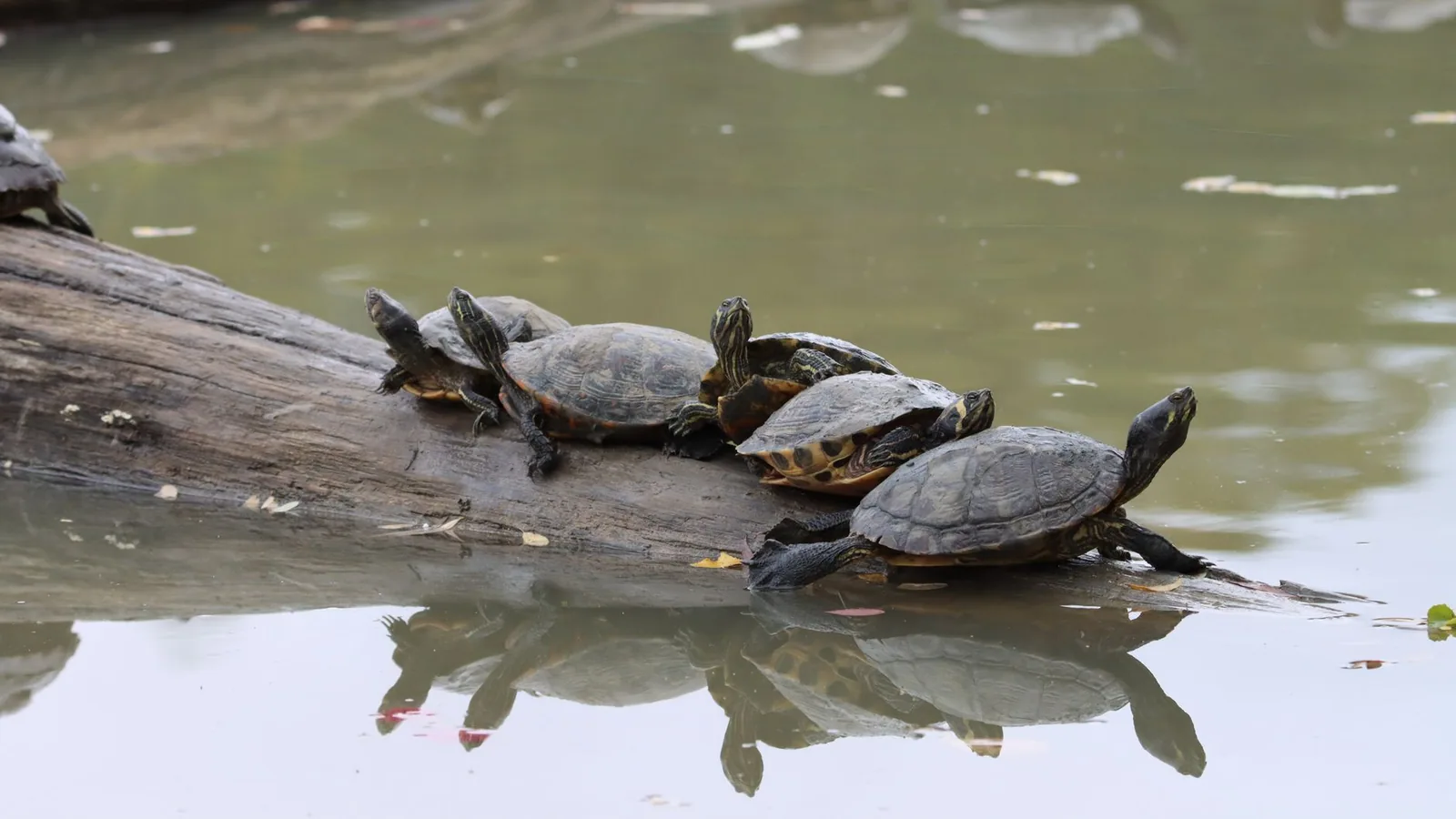
There is no single healthy weight for every tortoise. A healthy tortoise has a body condition score near 3 on a 1 to 5 scale, a weight trend that fits its species and life stage, and shell dimensions that are proportional for its size [1]. A number on a scale matters only when it is paired with a clinical body condition assessment and a consistent measurement record.
This article is educational and is not a substitute for veterinary diagnosis or treatment.
At a Glance
| Action | What to do | Why it matters |
|---|---|---|
| Weigh on a consistent scale | Use the same scale and record the date | A trend is more useful than one reading |
| Measure the shell | Record carapace length, width, and height with the same technique each time [1] | Weight alone cannot separate a large healthy tortoise from an overweight one |
| Ask for a body condition score | Have a veterinarian assign a score from 1 to 5 during an exam [1] | A score of 3 is ideal, while 1 is cachectic and 5 is obese |
| Keep a simple log | Record weight, shell measurements, appetite, diet, activity, and visible changes | Patterns become clear before small problems become major ones |
| Review growth rate | Ask whether growth is appropriate for the species and age | Captive tortoises can grow faster than free-ranging animals [2] |
| Add safe activity and enrichment | Ask your veterinarian what is safe for your species and enclosure | Enrichment can affect locomotion and species-typical behavior in tortoises [3] |
| Set a recheck plan | Let your veterinarian decide the next exam and weigh-in | Weight changes need medical supervision when illness is possible |
What a Healthy Tortoise Weight Actually Means
Weight is one piece of a health assessment. Two tortoises can weigh the same and have very different body condition because their shell size, species, sex, and life stage differ. A large shell can carry more weight without excess fat. A small shell can carry less. The clinical problem is not the number by itself. The problem is whether the tortoise has appropriate body reserves, normal shell proportions, and a healthy growth or maintenance pattern.
This is why reptile veterinarians use body condition scoring. Earlier systems based on weight and shell measurements were laborious and ignored the clinical presentation of the animal [1]. A body condition score adds the veterinarian's hands-on assessment to the measurements. In a study of Hermann's tortoises, a modified 1 to 5 body condition score correlated with all the shell measurement methods tested [1]. That finding supports using the score alongside measurements rather than replacing them.
Captive environments can shift weight and size. In the same Hermann's tortoise study, captive German tortoises were significantly heavier and larger than French specimens from free-ranging or rearing-station settings [1]. That does not mean the heavier tortoises were healthier. It means that husbandry, food access, and growth conditions change the numbers. A healthy weight for a pet tortoise should be interpreted against its own history and species-appropriate references, not against a random tortoise on the internet.
A useful definition of a healthy tortoise weight includes four elements:
- A body condition score around 3 on the 1 to 5 scale, as assigned by a veterinarian [1].
- Shell measurements that are recorded consistently and reviewed over time [1].
- A weight trend that fits the tortoise's age, species, and sex.
- No signs of illness, poor shell health, or welfare problems.
Tortoise Body Condition Score: The 1 to 5 Scale
The body condition score is a clinical tool. It was adapted from a score used for Mojave Desert Tortoises and tested in Hermann's tortoises [1]. The scale is simple:
| Score | Label | Interpretation |
|---|---|---|
| 1 | Cachectic | Severe undercondition [1] |
| 2 | Thin | Between cachectic and ideal |
| 3 | Ideal | Healthy condition [1] |
| 4 | Overweight | Between ideal and obese |
| 5 | Obese | Severe overcondition [1] |
Scores 2 and 4 fall between the defined anchors. A veterinarian assigns the score after examining the tortoise, not from a photograph alone. The score reflects the animal's clinical presentation, which is exactly what older measurement-only systems tended to miss [1]. The score is also not a judgment about shell shape alone. Shell deformity, pyramiding, and metabolic bone disease can change appearance and must be assessed separately.
A body condition score is most useful when it is repeated. A tortoise that stays at 3 across multiple exams is in a different situation from a tortoise that moves from 3 to 4 over a year. A tortoise that drops from 3 to 2 needs a medical review even if its absolute weight still sounds normal. The score gives the veterinarian a way to track healthcare monitoring over time [1].
Owners can help by learning what questions to ask:
- What score did you assign today?
- How does that compare with the last exam?
- Is the weight trend appropriate for this species and age?
- Do the shell measurements suggest normal growth or excess growth?
- Should we adjust diet, feeding frequency, or activity?
Do not try to force a score at home. Use the score as a communication tool with your veterinarian.
How to Use a Tortoise Weight Chart
A tortoise weight chart is a record of change over time. It is not a species-wide target and it is not a breed standard. The chart becomes useful when it includes more than weight. In the Hermann's tortoise study, weight, carapace length, width, and height were recorded in a standard protocol [1]. That combination gives a better picture than weight alone.
A practical chart should include:
| Field | What to record |
|---|---|
| Date | The day of measurement |
| Weight | The same scale and a consistent method |
| Carapace length | The same landmarks and technique each time [1] |
| Carapace width | The same landmarks and technique each time [1] |
| Carapace height | The same landmarks and technique each time [1] |
| Body condition score | Assigned by a veterinarian at exams [1] |
| Diet | What was offered, how much, and how often |
| Activity and enrichment | Changes in enclosure, exercise, or enrichment |
| Observations | Appetite, droppings, shell changes, lethargy, behavior |
Captive tortoises can grow faster than free-ranging tortoises. Leopard tortoise hatchlings kept in captivity grew distinctly faster than free-ranging animals over a study period of more than four years [2]. The likely cause was constant access to highly digestible food with low fiber content [2]. Similar patterns have been suggested in other tortoise species [2]. This is why a chart built from free-ranging animals may not match a captive pet. Use species-appropriate references as a guide, then let your veterinarian interpret your tortoise's curve.
Weight monitoring is also used in conservation work. In a tortoise translocation program, survival, health, growth, and breeding were tracked, and most animals either maintained or gained weight with low annual mortality [4]. That example shows why weight is part of a broader health record. It does not mean that gaining weight is always desirable in a pet. For an adult pet tortoise, the goal is a stable, veterinarian-approved range. For a growing tortoise, the goal is a healthy growth curve.
How to weigh and measure consistently
Use a scale with enough capacity and precision for your tortoise. A small hatchling and a large adult do not need the same equipment. Place the tortoise on a stable, clean surface. Record the weight to the same precision each time. For shell measurements, ask your veterinarian to show you the exact landmarks once, then repeat the same technique at every check [1]. Changing technique creates false trends.
Do not weigh a tortoise immediately after a large meal or a long soak if you can avoid it. Consistency matters more than a perfect empty state. Pick a routine and keep it.
How Much Should a Tortoise Weigh?
There is no universal answer to how much a tortoise should weigh. A healthy weight depends on species, sex, age, shell size, and body condition. A juvenile should be gaining weight as it grows. An adult should be maintaining a stable weight within a range that fits its shell and body condition. A tortoise recovering from illness may need a different plan.
The better question is: does this tortoise have a body condition score of about 3, a shell measurement record that fits its species, and a weight trend that the veterinarian considers appropriate [1]? If the answer is yes, the absolute number is less important. If the answer is no, the number needs context.
Captive tortoises can be heavier and larger than free-ranging tortoises of the same group [1]. Fast growth in captivity has been documented in leopard tortoises and suggested in other species [2]. A tortoise that is heavier than a published average is not automatically overweight. A tortoise that is lighter than a published average is not automatically healthy. The clinical exam and the trend decide.
Ask your veterinarian these questions at the next wellness visit:
- What body condition score would you assign today?
- What weight range should I expect for this species, sex, and age?
- Is the growth rate appropriate?
- Are the shell measurements proportional?
- What changes should I make if the weight trend shifts?
Is My Tortoise Overweight?
The clearest sign of overweight is a body condition score above 3, especially a score of 5, which is defined as obese [1]. A score of 4 falls between ideal and obese. Weight alone can mislead because a large tortoise can weigh more without excess condition, and a captive tortoise can be heavier than a free-ranging one [1].
Fast growth is a related concern. Captive leopard tortoise hatchlings grew faster than free-ranging animals, likely because of constant access to highly digestible, low-fiber food [2]. Increased growth rates are suspected to have negative consequences that include obesity, high mortality, gastrointestinal illnesses, renal diseases, pyramiding, fibrous osteodystrophy, and metabolic bone disease [2]. These are suspected risks, not a guaranteed outcome for every fast-growing tortoise. They are reasons to review husbandry early rather than wait for a problem.
A tortoise may look heavy and still be in poor health for another reason. Shell deformity, fluid retention, gastrointestinal disease, and other medical problems can change weight and appearance. Do not start a weight-loss plan without a veterinary exam. Do not withhold food or water to force weight loss. Do not use human weight-loss products or supplements unless a veterinarian prescribes them for your tortoise.
How to Help a Tortoise Lose Weight
Weight loss in a tortoise should be gradual and supervised. The goal is to reduce excess body condition while protecting muscle, shell health, and normal behavior. A crash diet can cause malnutrition and worsen underlying disease.
Step 1: Get a veterinary exam
The first step is a physical exam and a body condition score [1]. The veterinarian can check for illness, assess shell health, review the growth curve, and decide whether weight loss is actually needed. Some tortoises are large but healthy. Some are not overweight but have a medical condition that changes weight.
Step 2: Review the diet
Captive tortoise growth has been linked to constant access to highly digestible food with low fiber content [2]. Ask your veterinarian to review what you feed, how much you feed, and how often. The plan may involve changing fiber content, portion size, feeding frequency, or the type of food. Do not make large diet changes all at once. A veterinarian or reptile nutritionist should set the plan.
Step 3: Increase safe activity and enrichment
Enrichment can affect locomotion and species-typical behavior in tortoises [3]. Ask your veterinarian or an experienced keeper to help you design safe enclosure changes and enrichment. The goal is more natural activity, not forced exercise. Avoid overcrowding, unsafe surfaces, and stressful handling.
Step 4: Use food rewards carefully
Food can be a highly preferred stimulus for tortoises [5]. If you use food for training or enrichment, make it part of the planned daily ration rather than an extra. Individual tortoises also vary in their preference for human interaction and food [5]. A reward that works for one tortoise may not work for another.
Step 5: Monitor behavior and welfare
Weight management should not create chronic stress. In a high-constraint captive setting, spur-thighed tortoises showed chronic stress and stereotypic pacing, and a monotonous anthropogenic diet with a disrupted calcium-to-phosphorus ratio was linked to potential metabolic bone disease [6]. That is an extreme example, but it shows why diet and welfare must be reviewed together. Visitor presence can also affect aggression and activity in Galapagos tortoises [7]. Keep changes calm and observe your tortoise's behavior.
Step 6: Set a recheck plan
Ask your veterinarian when to return for a weight and body condition check. The timing depends on the tortoise's health, the size of the change, and the diet plan. Bring your weight chart and shell measurements to every recheck. Do not judge success by a single weigh-in.
Common Mistakes in Tortoise Weight Management
- Using one target weight from the internet. Species, sex, age, and shell size change the expected range [1].
- Weighing without measuring the shell. Weight alone cannot show body condition [1].
- Assuming a tortoise is healthy because it eats well. Appetite does not rule out obesity or metabolic disease.
- Feeding highly digestible, low-fiber food without limits. This pattern is linked to faster growth in captive tortoises [2].
- Cutting food suddenly. A gradual, veterinarian-guided plan is safer.
- Ignoring fast growth in a juvenile. Fast growth has suspected health consequences [2].
- Changing diet, enclosure, and handling all at once. Then you cannot tell what helped or caused a problem.
- Forgetting to record data. A chart is only useful if it is complete and consistent.
Equipment and Record Keeping for Weight Checks
You do not need expensive equipment. You need consistent equipment and a consistent method.
- A digital scale with enough capacity and precision for your tortoise.
- A flexible tape measure or calipers for shell length, width, and height [1].
- A notebook or spreadsheet with fields for date, weight, shell measurements, body condition score, diet, activity, and observations.
- A veterinarian who will assign a body condition score and interpret the trend [1].
Choose a scale with a stable platform and a surface that is easy to clean. Choose a measuring tool that does not stretch or bend out of shape. Ask your veterinarian to demonstrate the shell landmarks once. Then use the same landmarks every time [1].
Welfare and Safety During Weight Changes
A weight plan is a welfare plan. The tortoise should have appropriate food, clean water, a safe enclosure, and the ability to express normal behavior. Poor diet and chronic stress can occur together in captive tortoises [6]. Weight loss achieved through hunger, confinement, or rough handling is not a success.
Environmental enrichment can support activity and species-typical behavior [3]. Individual tortoises respond differently to human interaction and food rewards [5]. Visitor presence can change aggression and activity in some tortoises [7]. Observe your tortoise during any change and contact your veterinarian if behavior worsens.
Never restrict water. Never use a starvation diet. Never give medication or supplements for weight loss without veterinary direction. If your tortoise stops eating, becomes lethargic, develops a soft or deformed shell, or has diarrhea, stop the weight plan and call your veterinarian.
Limitations and When to Contact a Veterinarian
This article is educational and is not a substitute for veterinary diagnosis or treatment. Individual tortoises need individual assessment.
Contact a veterinarian if you observe any of the following:
- A body condition score of 1 or 5 [1].
- Rapid weight loss or rapid weight gain.
- A weight trend that continues to move in the wrong direction despite your plan.
- A soft, deformed, or visibly changing shell.
- Poor appetite, refusal to eat, or a sudden change in feeding behavior.
- Lethargy, weakness, or difficulty moving.
- Diarrhea, constipation, or abnormal droppings.
- Breathing difficulty, swelling, or discharge from the eyes or nose.
- A tortoise that cannot right itself or appears distressed.
Bring your weight chart, shell measurements, diet record, and any photos of the enclosure. A single weight is not a diagnosis. A trend, an exam, and a body condition score give your veterinarian the information needed to help.
Frequently Asked Questions
How much should a tortoise weigh?
There is no single healthy weight for all tortoises. A veterinarian should assess body condition, shell size, species, sex, age, and weight trend together [1].
Is my tortoise overweight?
A body condition score above 3 suggests excess condition, and a score of 5 is obese [1]. Weight alone can mislead, so ask a veterinarian for a hands-on score.
What is a tortoise body condition score?
It is a 1 to 5 clinical scale. A score of 1 is cachectic, 3 is ideal, and 5 is obese [1]. A veterinarian assigns the score during an exam.
Can I use a weight chart to decide if my tortoise is healthy?
A weight chart shows trends, not a diagnosis. Use it with shell measurements and a veterinary body condition score [1].
How often should I weigh my tortoise?
Ask your veterinarian to set the interval. Use the same scale and method each time, and bring the record to every recheck.
How can I help my tortoise lose weight?
Start with a veterinary exam and a body condition score. Then follow a supervised plan for diet, activity, enrichment, and rechecks [1][2].
Do fast growth rates matter in captive tortoises?
Yes, they are worth reviewing. Captive leopard tortoise hatchlings grew faster than free-ranging animals, and fast growth has suspected health risks [2].
When should I call the vet about my tortoise's weight?
Call if the body condition score is 1 or 5, if weight changes rapidly, or if your tortoise has poor appetite, lethargy, shell changes, diarrhea, or breathing difficulty [1].
Sources
- Body condition scoring facilitates healthcare monitoring in Hermann's Tortoises (Testudo hermanni ssp.).
- Body size development of captive and free-ranging Leopard tortoises (Geochelone pardalis).
- Is preference a predictor of enrichment efficacy in Galapagos tortoises (Chelonoidis nigra)?
- The welfare implications of using exotic tortoises as ecological replacements.
- Assessing preferences of two zoo-housed Aldabran giant tortoises (Aldabrachelys gigantea) for three stimuli using a novel preference test.
- Ecological and Ethological Assessment of Captive Testudo graeca in an Urban Bazaar: A Case of High-Constraint Wildlife Tourism in Kastamonu, Northern Anatolia.
- Documenting Aggression, Dominance and the Impacts of Visitor Interaction on Galápagos Tortoises (Chelonoidis nigra) in a Zoo Setting.