Switching Reptile Food: Step-by-Step Guide
By Dr. Zubair Khalid, DVM, MS, PhD ·
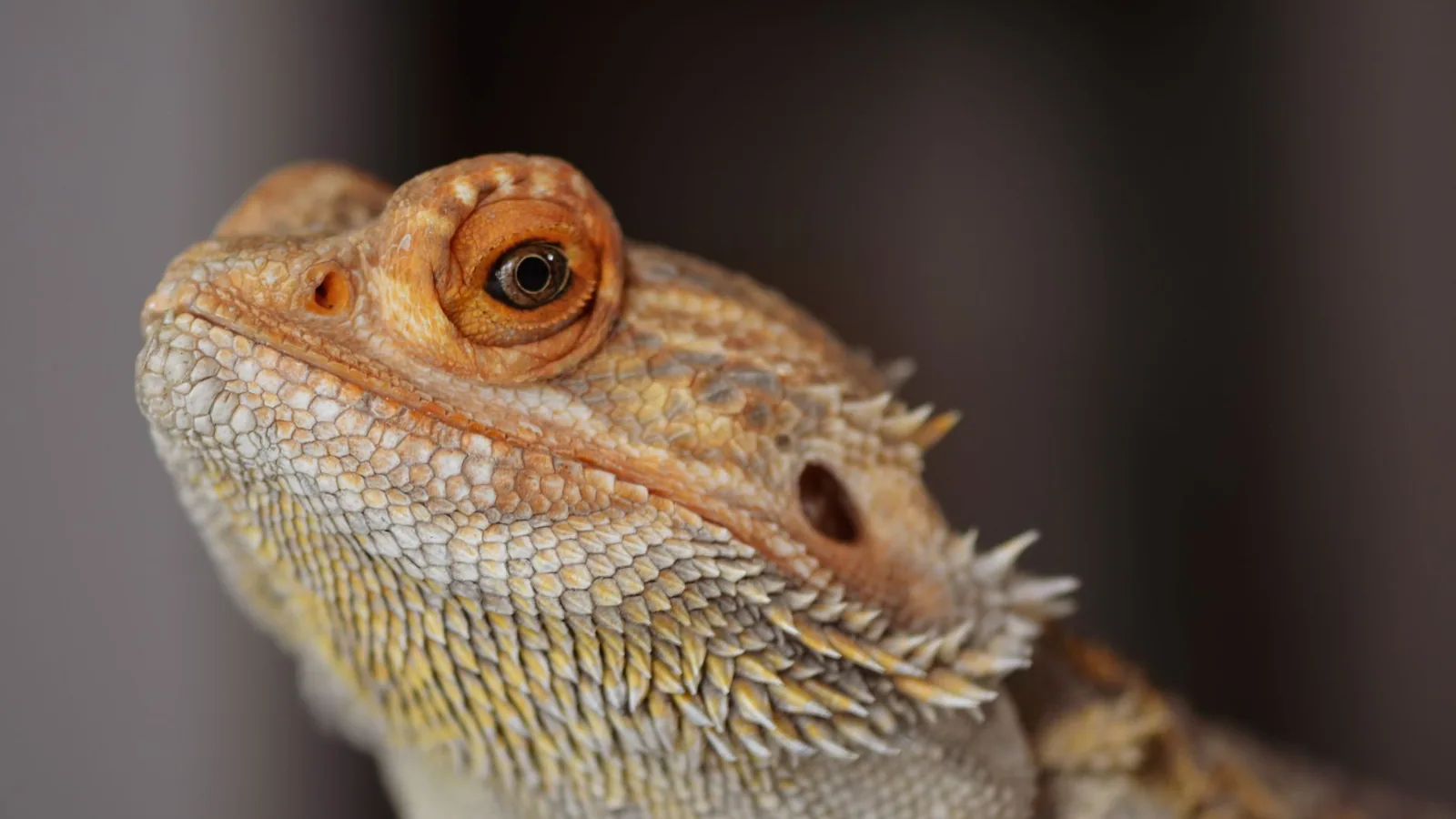
Switching reptile food works best as a slow, planned transition done over days to weeks, with the old and new foods offered together in gradually changing proportions while you watch body weight, droppings, and appetite. Reptiles are ectotherms, which means their appetite and digestion depend on enclosure temperature, so the habitat must be correct before any new food is offered. Species matter too. Research on freshwater turtles shows that generalist feeders adjust to diet changes far more easily than specialists, and that forced diet shifts can reduce body condition even in flexible species [1]. Plan the switch around your individual animal, its species, and its life stage, and involve a reptile veterinarian whenever weight drops or refusal lasts longer than expected.
This guide walks through the entire process step by step, from the pre-switch reptile care checklist to troubleshooting a stubborn eater, along with the tips and common mistakes that separate a smooth transition from a stressful one.
Switching Reptile Food at a Glance
| Step | What you do | Success check |
|---|---|---|
| 1. Confirm the reason | Identify why the diet is changing (life stage, availability, veterinary advice) | You can state the goal in one sentence |
| 2. Verify the target diet | Match the new food to the species' natural feeding strategy | Species-appropriate, from a reputable supplier |
| 3. Check the enclosure setup | Confirm temperatures, humidity, lighting, and hiding places first | Warm side and basking area reach species-appropriate range |
| 4. Stabilize the animal | No other recent stressors such as new tank mates, relocation, or shedding | Normal behavior and regular droppings |
| 5. Introduce gradually | Offer new food alongside the familiar food, shifting proportions slowly over days to weeks | Some interest or sampling of the new item |
| 6. Monitor | Weigh periodically, record intake and droppings | Stable weight, normal feces |
| 7. Adjust or escalate | Slow down if refusal occurs, call a reptile veterinarian if problems persist | Steady progress toward the new diet |
Why Owners Switch Reptile Food
There are several legitimate reasons to change what a reptile eats, and knowing your reason shapes the transition plan.
Life stage changes. Juveniles of many species have different nutritional demands than adults, and what suited a rapidly growing hatchling may not suit a mature animal.
Availability and supply problems. A feeder item may become unreliable, expensive, or inconsistent in quality, forcing a practical change. In commercial wildlife trade, animals and their feed animals move through many hands, and that movement carries disease risks, so changing suppliers or feed types is also a biosecurity decision [2].
Veterinary recommendation. Veterinarians sometimes adjust diet to manage illness, obesity, or nutritional disease. Follow the specific plan your veterinarian gives you rather than a generic transition schedule.
Welfare and enrichment. Adding appropriate dietary variety supports natural foraging behavior. Optimal foraging theory, which describes how animals weigh food availability, nutritional content, and handling effort, underlies why varied, species-appropriate diets are considered best practice for captive reptiles [1].
Seasonal rhythm. Many reptiles naturally shift between feeding and non-feeding states across the year. In male red-sided garter snakes, the transition from courtship to feeding behavior is regulated by hormonal changes, and treated males begin preferring feeding cues over reproductive cues significantly earlier than controls [3]. This biology matters because a diet switch attempted during a natural low-appetite phase often fails for reasons that have nothing to do with the food itself.
How Reptile Appetite Actually Works
Understanding three biological facts makes every step of switching reptile food easier.
Appetite is temperature dependent
Crocodilian feeding research provides one of the clearest demonstrations. At a Bangladesh crocodile farm, average food consumption of hatchlings was significantly correlated with ambient temperature, and consumption peaked in the warmest months while dropping in cooler periods, even in areas where water temperature was held constant [4]. The authors concluded that food consumption in crocodilians is temperature dependent and rises in warmer months [4].
The practical takeaway for any reptile owner is simple. Before you judge whether your animal "likes" a new food, confirm that the thermal gradient in the enclosure is correct. A reptile kept too cool cannot digest properly and will often refuse food entirely, no matter what you offer. The Merck Veterinary Manual's exotic animal resources and the Association of Reptilian and Amphibian Veterinarians both emphasize species-appropriate temperature gradients as the foundation of feeding health, and both are excellent references to review before transitioning diets.
Appetite is seasonal
Seasonal anorexia is normal in many species. The garter snake research cited above showed that the behavioral switch between reproduction and foraging is hormonally mediated, and that courting males maintain elevated glucocorticoids while males dispersing to feed do not [3]. Ball pythons, bearded dragons, and many tortoises similarly show seasonal appetite swings under natural light cycles.
The lesson for switching reptile food is timing. Start a transition when your animal is in an active, feeding-positive phase, not during a breeding season, pre-shed period, or natural winter fast.
Feeding strategy shapes flexibility
Not every species handles dietary change the same way. In a study of three sympatric freshwater turtle species, the generalist Emydura macquarii consumed a varied diet and switched toward more carnivorous feeding when primary producers became scarce, following optimal foraging predictions [1]. The two more specialized carnivorous species, Chelodina expansa and Chelodina longicollis, did not change their diets across wetlands [1]. When the generalist was forced into a more carnivorous diet, it showed higher rates of empty stomachs and females had reduced body condition, while the specialist species were unaffected [1].
Two conclusions follow for captive care. First, specialists should not be casually converted to a different diet, and any change for a specialist needs veterinary guidance. Second, even flexible species show measurable costs when a change is imposed rather than gradual, which is the strongest scientific argument for slow transitions.
Step-by-Step: Switching Reptile Food
Step 1. Write down the reason and the goal
Before touching the food bowl, define the change. Are you moving from live prey to frozen-thawed, from one pellet brand to another, from juvenile to adult formula, or adding plant matter to an omnivore's diet? Each goal has a different risk profile and timeline. If the change was recommended by a veterinarian, ask exactly what the new diet should replace, in what proportions, and over what timeframe.
Step 2. Run a reptile care checklist on the whole husbandry picture
Feeding problems are usually husbandry problems first. Work through this checklist before the first meal of new food:
- Temperatures on the warm and cool sides match the species' published requirements, verified with a thermometer, not a guess
- Basking area reaches the correct surface temperature
- UVB lighting, where the species requires it, is within its replacement age and unobstructed
- Humidity is in range for the species
- Fresh water is always available
- The animal has secure hiding places on both the warm and cool sides
- The enclosure is large enough for normal movement and thermoregulation
- No recent stressors exist, such as a new enclosure, new cage mates, or recent transport
If you are changing food because the animal stopped eating, and your reptile enclosure setup has never been audited, fix the habitat first. A reptile with incorrect temperatures will refuse new food and old food alike.
Step 3. Source the new food carefully
Where you get the new food matters as much as what it is.
Live feeder animals. Research on the commercial wildlife trade shows that pathogens move with traded animals and can switch hosts, with ranaviruses infecting amphibians, reptiles, and fish and moving through bait and trade channels [2]. In that research, largemouth bass injected with a tiger salamander ranavirus from the bait trade became infected without showing disease, meaning traded animals can carry infection silently [2]. Apply this to your reptile room by sourcing live feeders from reputable suppliers, quarantining new feeder colonies away from your existing animals where practical, and never releasing leftover feeders outdoors.
Frozen and prepared foods. Verify the product is labeled for the correct species and life stage, and check that packaging is intact and has been stored cold throughout transport.
Whole prey and processed reptile-derived products. Product authenticity is a real issue in reptile-derived foods. A molecular study of crocodile dried food products on the Chinese market used DNA barcoding to identify the species in every sample and found three different crocodilian species sold under one generic label, with traceability shortcomings noted [5]. When buying processed or dried products, choose suppliers who can document what species and tissue the product actually contains.
Nutritional variability. Analytical work on animal-derived foods shows that nutrient content varies widely between food types. In a vitamin K analysis of many food items, chicken meat contained by far the highest menaquinone-4 content among the animal tissues tested, while levels differed dramatically across fish, snails, bivalves, and other items [6]. For reptile owners, this supports the principle that no single prey or food item delivers a complete profile, and that variety within a species-appropriate plan is nutritionally meaningful.
Step 4. Time the switch around your animal's condition
Choose a window when the animal is eating its current food reliably, has recently passed normal droppings, is not in shed, and is not in a breeding or brumation period. For species with strong seasonality, aim for the active warm-season feeding window. If the animal has recently arrived in your home, let it settle and establish a consistent feeding pattern on its familiar diet before changing anything.
Step 5. Introduce the new food gradually
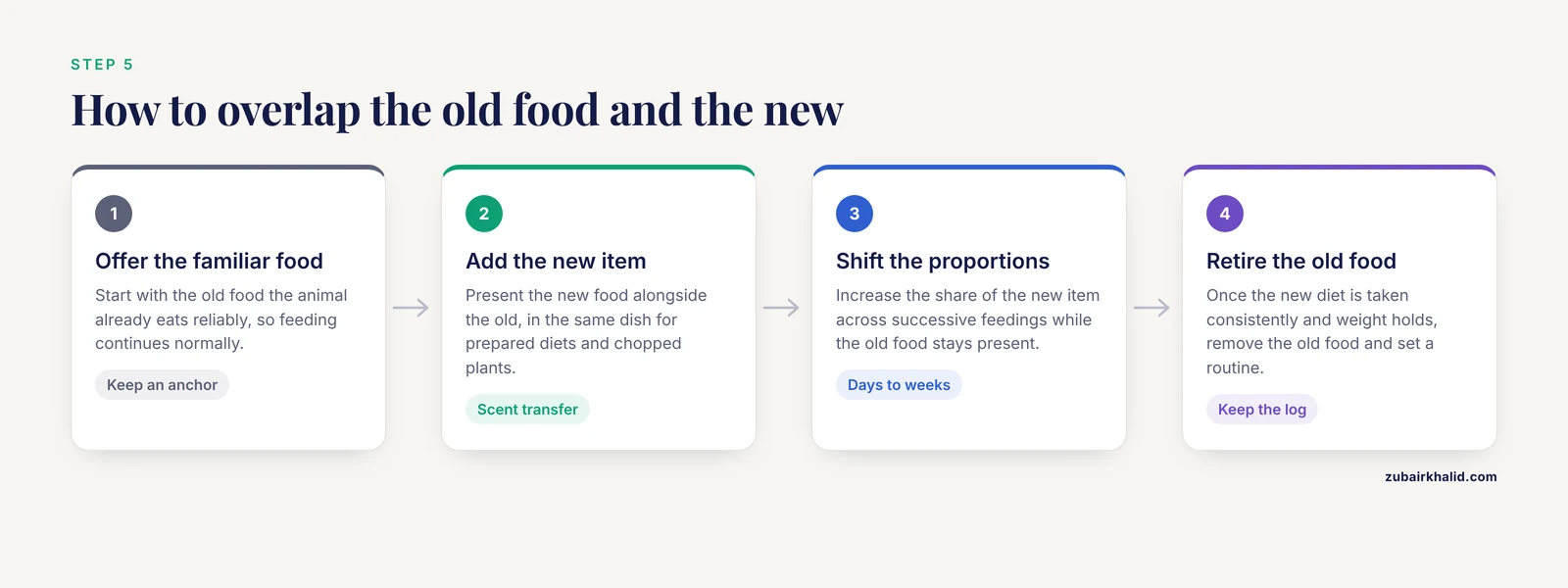
The mechanics depend on what you are switching from and to, but the principle is constant: overlap the old and the new so the animal always has a familiar option, then shift the balance slowly.
- For prepared diets and pellets: offer the new food alongside the old, gradually increasing the proportion of the new item across successive feedings. Some keepers mix the foods in the same dish so scent cues transfer, which is especially useful for picky omnivores.
- For whole prey and prey-type changes: offer the familiar prey first, then present the new prey item while the feeding response is active. Scenting the new item by contact with the familiar food, or presenting it warm at the temperature the animal expects, often improves acceptance.
- For moving from live to frozen-thawed prey: begin with freshly thawed prey warmed to near body temperature, presented with movement using feeding tongs. Never leave live rodents unattended with a reptile, since prey animals can injure the reptile.
- For herbivores adding new greens or vegetables: introduce one new item at a time in small amounts so a digestive upset can be traced to a specific food.
There is no universal number of days, because species, age, and reason for switching all matter. A juvenile fast-growing animal moving between two nutritionally similar foods may accept the change within a handful of feedings, while an adult specialist moving to a fundamentally different diet may need weeks of patient overlap. Your reptile veterinarian can suggest a timeframe appropriate for your species and situation.
Step 6. Monitor weight, intake, and droppings
Objective monitoring turns a gut-feeling process into a measurable one.
- Weight: weigh the animal on the same scale and the same day of the week where practical. Expect small fluctuations, but a clear downward trend during a transition is a signal to pause or slow down.
- Intake: log what was offered and what was actually eaten, including partial strikes on prey items.
- Droppings: normal feces and urates indicate digestion is proceeding. Persistent diarrhea, unusual color, or absent droppings after feeding warrant attention.
- Body condition: watch the spine, hips, and tail base in lizards and snakes. The turtle research showed reduced female body condition after a forced diet shift [1], which is a reminder that condition changes can appear even while an animal is technically eating.
Step 7. Complete the transition and settle into a routine
Once the animal consistently accepts the new diet and maintains weight, retire the old food entirely and establish a consistent feeding schedule appropriate to the species and life stage. Keep the transition log. If you ever need to change foods again, the notes from this transition will tell you your animal's acceptance patterns and warning signs.
Switching Reptile Food Tips That Make a Difference
Warm prey and food to the right state. Reptiles key on scent and temperature. Prey or food presented too cold is frequently rejected regardless of the animal's willingness to eat.
Use scent transfer. Rubbing or contacting a new food item with the familiar one, or offering them together in the same dish, helps hesitant feeders recognize the new item as food.
Feed during the animal's active window. Offer food at the time of day the species naturally feeds. Diurnal lizards often feed best under proper lighting during the day, while many nocturnal species feed after lights out.
Reduce handling during the transition. Extra handling is an added stressor that competes with feeding motivation. Keep interactions minimal and purposeful until the new diet is established.
Match presentation to natural behavior. Moving prey presented with tongs triggers strike responses in predators. Grazing species need food presented at ground level in a familiar location.
Keep one familiar anchor. During any switch, retain a small amount of the old food in the presentation until the new food is reliably taken. Removing the old food abruptly turns a transition into a fast, which is riskier.
Document everything. A simple notebook of dates, foods offered, amounts eaten, weights, and droppings lets you and your veterinarian see patterns that memory will miss.
Common Mistakes When Switching Reptile Food
Changing the diet and the husbandry at the same time. If the animal refuses the new food, you will not know whether the food or the new enclosure setup is the cause. Make one change at a time.
Starting during a natural fast or breeding season. Seasonal appetite suppression is hormonally driven in many species, as demonstrated in garter snakes where the feeding transition itself is endocrine-mediated [3]. Fighting that biology with a new diet wastes effort and stresses the animal.
Judging acceptance at incorrect temperatures. A cool reptile is a fasting reptile. The crocodilian feeding data showing consumption rising and falling with ambient temperature [4] applies in principle across reptile keeping, and basking reptiles offered food in an underheated enclosure will often refuse it.
Converting a specialist casually. The turtle study showed that specialist species did not shift their diets even when conditions changed [1]. If your species is a dedicated specialist in the wild, treat any diet change as a veterinary conversation, not a do-it-yourself project.
Switching too fast. Abrupt changes risk refusal, weight loss, and digestive upset. The measurable body-condition cost of a forced dietary shift even in a flexible generalist species [1] is the evidence-based case for gradualism.
Ignoring the feeder supply chain. Live feeders bought from inconsistent sources can introduce pathogens, and the ranavirus host-switching documented in the trade illustrates how disease moves between traded animals, including from amphibians to fish and potentially to reptiles [2]. Buy from reliable sources and quarantine new colonies where feasible.
Trusting unlabeled products. The crocodile product study found a single generic market label covering three different crocodilian species, with gaps in the traceability system [5]. Buy products with clear species and content labeling.
Assuming refusal is stubbornness. Refusal is information. It may mean temperatures, humidity, stress, illness, seasonal state, or presentation is wrong. Work the checklist before labeling the animal picky.
Troubleshooting a Reptile That Refuses the New Food
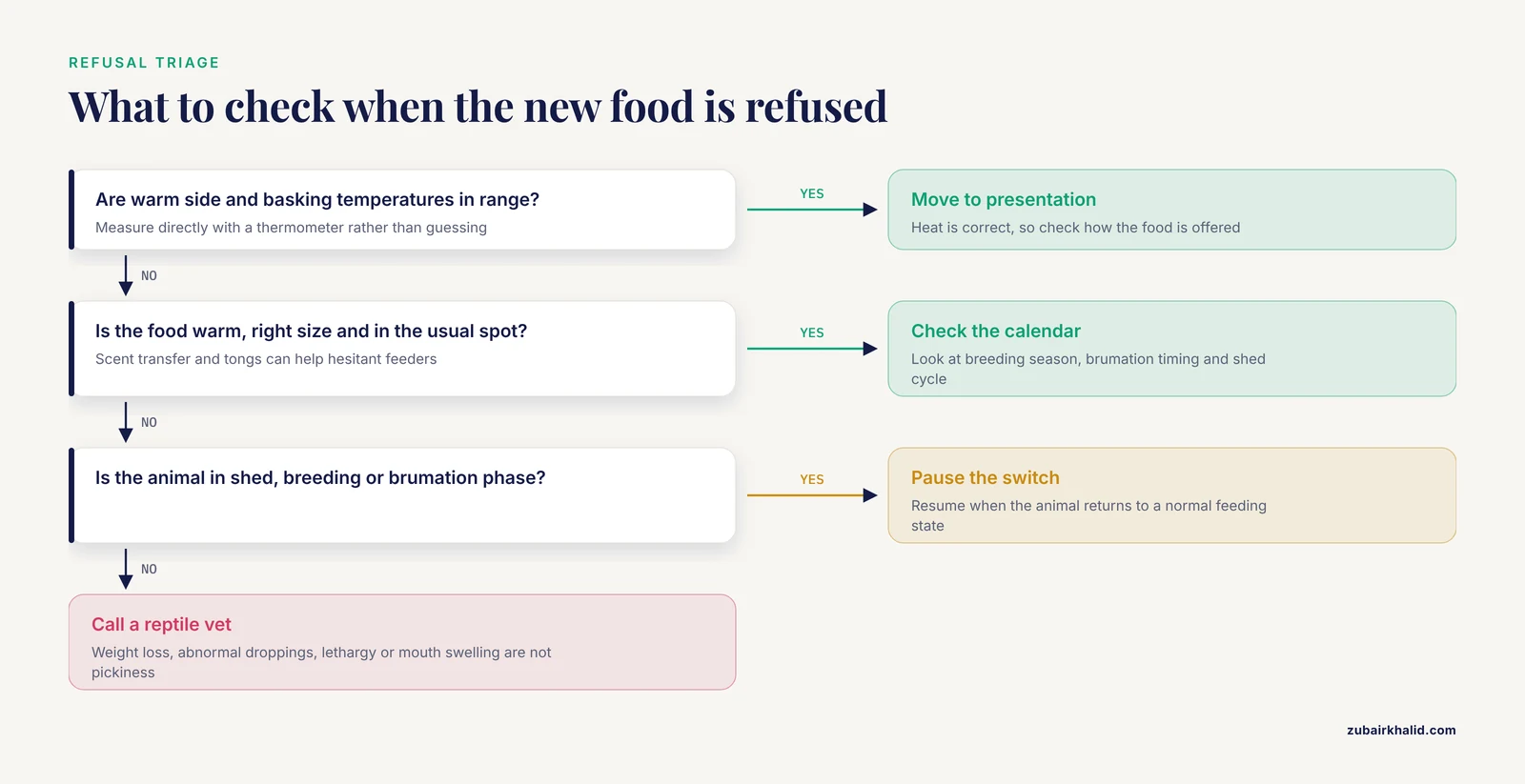
First, re-verify the environment. Measure temperatures directly. Most refusals trace back to a thermal gradient that has drifted out of range.
Second, check the presentation. Is the food at the expected temperature, size, and position? Many reptiles prefer prey that moves, food placed in a consistent spot, or items scented with a familiar smell.
Third, slow the transition down. Return to a higher proportion of the old food and advance more slowly. A transition that takes twice as long is still a success.
Fourth, review the calendar. If breeding season, brumation timing, or a shed cycle is underway, pause and resume when the animal returns to a normal feeding state.
Fifth, watch for red flags. Weight loss, abnormal droppings, lethargy, open-mouth breathing, or swelling around the mouth are veterinary problems, not pickiness problems.
Safety and Welfare During a Diet Switch
Never leave live prey unattended with a reptile. Rodents and other prey animals can bite and seriously injure a reptile that is not interested in eating.
Never release uneaten live feeders into the environment. The trade-pathogen research showed that released traded animals and their pathogens can reach naive wild populations with unpredictable outcomes [2]. Humanely dispatch or rehome feeders through proper channels instead.
Use feeding tongs and safe handling practice. This protects you from accidental strikes and teaches the animal that food comes from tongs rather than from fingers near the enclosure opening.
Protect water quality in aquatic and semi-aquatic setups. Uneaten food degrades water quickly. Remove uneaten items promptly in turtle, crocodilian, and amphibian-adjacent setups.
Respect fasting biology. Healthy adult reptiles of many species tolerate natural fasting periods, but a forced fast layered on top of a stressful diet switch is different. Juveniles, underweight animals, and sick animals should not be fasted, and any refusal in these groups deserves prompt veterinary attention.
Limitations and When to Contact a Veterinarian
This article is educational and is not a substitute for veterinary diagnosis or treatment.
Every reptile is an individual, and species, age, health status, and history all change what a safe transition looks like. The studies discussed here come from specific species and contexts, including farmed crocodilians, wild turtles [1], garter snakes [3], and traded amphibians and fish [2], so their findings inform principles rather than exact protocols for your pet.
Contact a reptile veterinarian, ideally one affiliated with the Association of Reptilian and Amphibian Veterinarians, if any of the following occur:
- Complete refusal of both old and new food beyond the timeframe your veterinarian considers acceptable for the species and age
- Measurable weight loss during the transition
- Abnormal droppings, diarrhea, regurgitation, or absent defecation after feeding
- Lethargy, weakness, open-mouth breathing, wheezing, or swelling in or around the mouth
- Signs of injury from live prey
- Any diet change involving a specialist species or an animal with existing medical problems
- An animal that has never eaten reliably since arriving in your home
Bring your feeding and weight log to the appointment. It shortens the diagnostic process considerably.
Frequently Asked Questions
How long does switching reptile food take?
Most gradual transitions take days to weeks, but the honest answer depends on species, age, and how different the new food is from the old. Generalist feeders often accept a new food within a handful of overlapped feedings, while specialists and adults on fundamentally different diets can need many weeks. Let acceptance, weight, and droppings set the pace rather than a fixed calendar.
Can I mix the old food and the new food together?
Yes, in most cases. Mixing works especially well for prepared diets and chopped plant foods because scent cues transfer. For whole prey, offer the familiar item first and present the new item alongside it. The goal is that the animal always has a recognizable option during the overlap period.
Why is my reptile refusing food even though the enclosure is correct?
Seasonal appetite suppression, breeding condition, pre-shed behavior, and recent stress are the most common non-food reasons. In garter snakes, the shift between reproductive behavior and feeding is controlled by hormonal changes [3], and similar seasonality exists in many popular pet species. If the animal is otherwise behaving normally, pausing the switch and resuming after the seasonal phase often solves the problem.
Should I feed live prey or frozen-thawed prey?
Frozen-thawed prey is safer for the reptile and simpler to store, and many keepers transition to it successfully with tongs and warmed presentation. Live prey carries injury risk if the reptile does not strike promptly, and the commercial trade in live animals can move pathogens between species, as ranavirus research in the bait trade demonstrated [2]. Discuss the safest option for your species with your veterinarian.
Do I need to change the enclosure setup when I change the diet?
You do not need to change the layout, but you do need to confirm the setup is correct before the switch. Temperature is the key variable, since feeding research in crocodilians showed food consumption rising and falling significantly with ambient temperature [4]. Correct heat, light, humidity, and hiding places give the animal the physiological capacity to digest and accept new food.
Is variety in a reptile diet actually beneficial?
Yes, for most species. Nutrient content varies widely between food types, which analytical work on animal-derived foods illustrates clearly [6], and wild generalist reptiles naturally exploit that variety through diet switching [1]. Variety must stay within the species' natural feeding strategy, since forcing a species outside its niche carries measurable costs, including reduced body condition [1].
What is the biggest mistake owners make when switching reptile food?
Changing too much at once. Switching food while also moving the animal to a new enclosure, changing lighting, or altering temperatures makes it impossible to identify the cause of any refusal. Make one change at a time, keep the old food as an anchor, and advance only when the animal is eating consistently.
Can I switch back to the old food if the new one is not accepted?
Yes, and you should. If the animal refuses the new food across multiple presentations, or loses weight, reverse to the last accepted proportion and reassess with your veterinarian. Reversing is not failure, it is information about your animal, and a diet the reptile eats reliably and thrives on is always the right endpoint.
Sources
- Prey-switching does not protect a generalist turtle from bioenergetic consequences when its preferred food is scarce.
- Pathogen host switching in commercial trade with management recommendations.
- Sex or candy? Neuroendocrine regulation of the seasonal transition from courtship to feeding behavior in male red-sided garter snakes (Thamnophis sirtalis parietalis).
- Food consumption of saltwater crocodile (Crocodylus Porosus) in a reptile farm of Bangladesh
- Molecular authentication of crocodile dried food products (meat and feet) and skin sold on the Chinese market: Implication for the European market in the light of the new legislation on reptile meat
- Development of vitamin K analysis method using column switching high-performance liquid chromatography method and analysis results of various food items for vitamin K content