Senior Tortoise Care: Aging Signs, Diet, and Comfort
By Dr. Zubair Khalid, DVM, MS, PhD ·
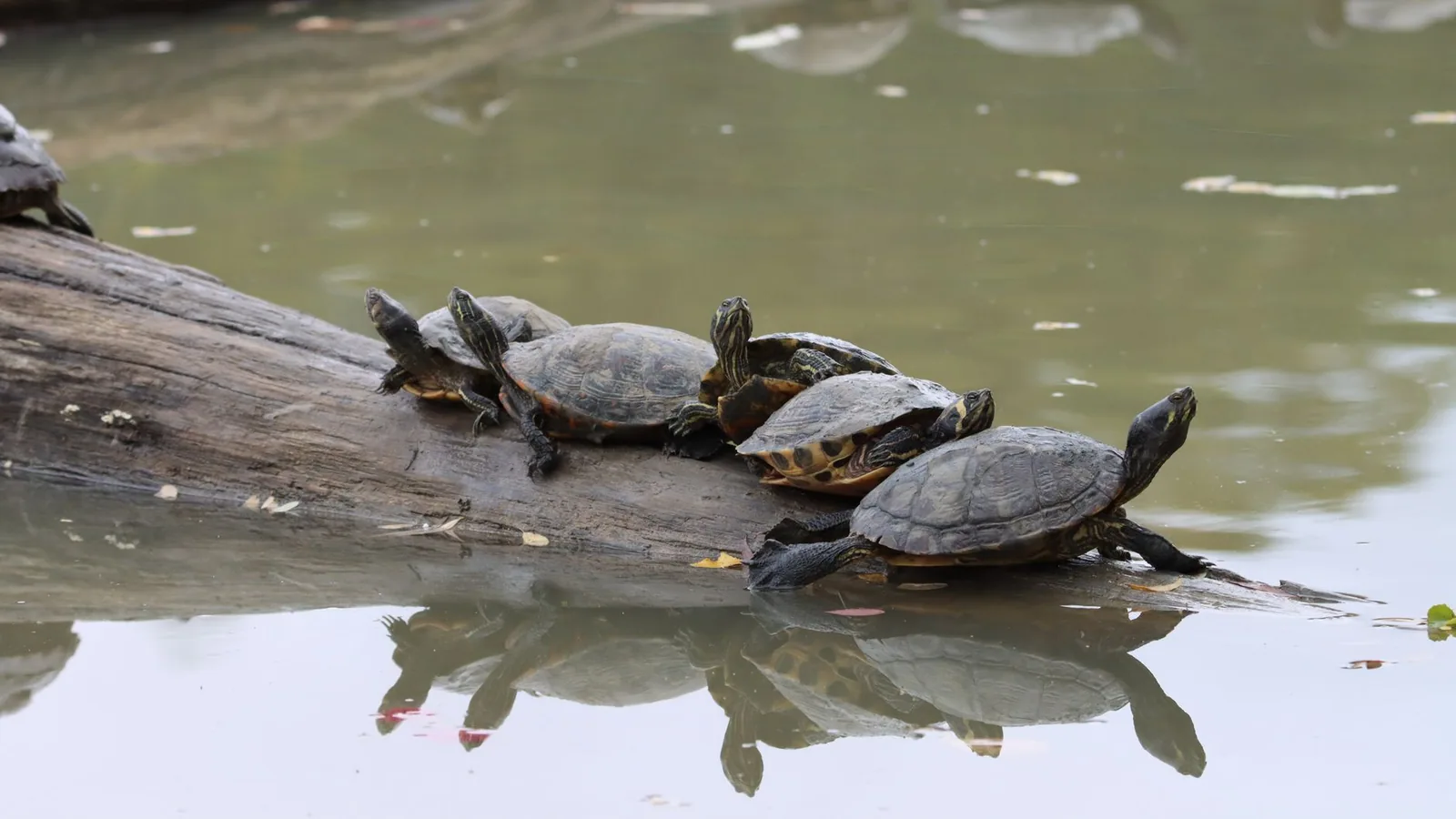
A tortoise becomes a senior when it enters the final third of its species' expected lifespan, not at a fixed birthday. For a Russian, Hermann's, or Greek tortoise that often lands somewhere in the late 20s to mid 30s. For a sulcata, leopard, or Aldabra tortoise it may not arrive until the 40s or beyond. Senior care is less about a special diet and more about protecting what still works: holding body condition steady, matching food to a slower metabolism, and rebuilding the enclosure so an old animal can reach heat, water, and food without climbing.
The work is mostly observational. An old tortoise will not tell you that its hips hurt or that the ramp is now too steep. You find that out by weighing it, scoring its body condition, and watching how it moves across the enclosure. This guide covers how aging shows up in tortoises, what to change in the diet, how to make the environment easier to live in, and which changes mean a veterinary visit rather than a normal part of getting old.
This article is educational and is not a substitute for veterinary diagnosis or treatment.
At a Glance
| Task | How often | What good looks like |
|---|---|---|
| Weigh the tortoise | Every 4 to 8 weeks | Weight stays stable, or declines slowly with a reason you can name |
| Score body condition | Monthly | Limbs feel full, no hollows behind the head, no bony ridges at the hips |
| Watch movement | Monthly | Can right itself on flat ground and climb the shallowest ramp without struggling |
| Inspect shell and skin | Weekly | No new cracks, pressure sores, swelling, or discolored patches |
| Offer fresh water | Daily | Shallow, low-sided dish the tortoise can walk into and out of |
| Test the UVB lamp | Every 6 to 12 months | Verified output with a meter, not just a bulb that still glows |
| Log food intake | Daily during active season | Eating most days, with a predictable pattern you can describe to a vet |
| Review the enclosure | Each season | Basking spot reachable, no vertical climb required, traction on all surfaces |
| Veterinary exam | Annually, plus any sudden change | A baseline and a trend, not a single snapshot |
How Old Is a Senior Tortoise?
Age in tortoises is relative to the species, and the range across species is enormous. Small Mediterranean tortoises are commonly reported to live 40 to 60 years in captivity. Mid-sized species often reach 50 to 70. The giant species are the outliers, with sulcatas, leopards, Aldabra, and Galápagos tortoises frequently reported well past 70 and sometimes past 100. These figures are ranges, not guarantees, and husbandry history shifts them more than any single number does.
A practical planning rule is to treat the final third of the species' expected lifespan as senior years. For a 50-year species, that is roughly age 33 onward. For a 90-year species, it is the 60s. This is a rule of thumb for care planning, not a validated cutoff, and no published consensus defines a universal senior threshold across tortoise taxa.
Birth year matters less than three other things:
- Species. A 25-year-old Russian tortoise may be entering its senior decade. A 25-year-old sulcata is barely a young adult.
- Growth history. Tortoises that grew too fast on high-protein diets often carry shell deformity that accelerates joint and mobility problems later.
- Husbandry exposure. Years without adequate UVB, without a proper thermal gradient, or on the wrong diet show up as organ and shell problems in the second half of life.
If you do not know the hatch date, a veterinarian at an ARAV-listed practice can estimate age class from shell wear, growth rings, size, and overall condition. The estimate will be rough. It is still useful for deciding how aggressively to modify diet and enclosure.
Signs of Aging in Tortoises
Most signs of aging in tortoises are slow and cumulative. The useful skill is separating changes that are expected from changes that point to disease. The two lists overlap more than owners expect.
Expected changes
- Shell wear. Scutes smooth out. Growth rings fade. Edges chip and round. Pigment dulls with years of sun and abrasion. This is normal.
- Slower movement. A senior tortoise covers less ground per day and takes longer to cross the same enclosure. It still moves deliberately and with purpose.
- More rest. Longer basking sessions and more hours inactive are common. The tortoise should still be responsive when handled and interested in food.
- Reduced reproductive behavior. Males mount less, head-bob less, and show less territorial aggression. Females may lay smaller or fewer clutches.
- Appetite shifts. Some old tortoises eat less per sitting but take longer to eat. Others become more selective.
- Slight muscle loss. Limbs feel less firm than they did five years ago. This is where body condition scoring becomes useful.
Changes that need a veterinary look
- Weight loss without a diet change. A steady drop over two or three weigh-ins is the single most reliable early warning sign you can collect at home.
- Sunken areas around the head, hips, or tail base. This suggests muscle wasting or dehydration rather than normal aging. Body condition scoring, described for radiated tortoises as both a welfare and a management tool, gives you a repeatable way to track this instead of relying on memory [1].
- Eyes that look cloudy, dull, or persistently half-closed. Lens changes and eye infections look similar to an owner.
- Soft or discolored shell patches, new cracks, or a bad smell. These suggest infection or shell disease.
- Prolonged anorexia. Not eating for days in the active season is a medical finding, not a personality trait.
- Straining, prolapse, or bloody discharge.
- Limping, dragging a limb, or failing to right itself. This deserves prompt attention.
- Open-mouth breathing, wheeze, or nasal discharge.
- Sudden personality change. A tortoise that was social and is now withdrawn is telling you something.
Research in dogs with chronic musculoskeletal pain found that pain altered every welfare domain measured, including mobility, engagement with enrichment, social interaction, and the frequency of fearful responses [2]. Tortoises do not express pain the same way, but the domains to watch are identical. Reduced movement, reduced food interest, less exploration, and more withdrawal from handling are all reasons to look past "he's just old."
A comparison table you can use
| Observation | Usually aging | Needs a vet |
|---|---|---|
| Weight | Stable or slowly declining | Rapid or unexplained loss |
| Appetite | Slightly reduced, still eating | No food for several days in active season |
| Movement | Slower but purposeful | Limping, dragging, cannot right itself |
| Shell | Smooth, worn, duller color | Soft spots, new cracks, discharge, odor |
| Eyes | Mild cloudiness, clear discharge | Swelling, persistent closure, thick discharge |
| Behavior | More rest, less breeding display | Withdrawal, aggression change, hiding constantly |
| Droppings | Slightly less frequent | Diarrhea, mucus, blood, worms visible |
What Actually Changes in an Older Tortoise's Body
Aging in reptiles is not the same as aging in a dog. Tortoises have slow metabolisms, long lifespans, and a shell that limits how much they can compensate for internal decline. The practical consequences are:
- Digestion slows further. A senior tortoise may take longer to process a large meal and may do better with smaller, more frequent offerings.
- Thermal tolerance narrows. Old animals regulate body temperature within a tighter band. A temperature gradient that a young tortoise navigates easily can leave an old one parked in one spot.
- Immune response weakens. Infections that a young animal shrugs off can become chronic in an older one.
- Healing slows. Minor shell injuries take longer to resolve.
- Renal and hepatic reserve falls. This matters because it changes how a veterinarian approaches medication and anesthesia. It is also a reason to catch problems early, while options are broad.
- Mobility declines. Arthritis, old fractures, and shell deformity all compound.
None of these require you to become a reptile physiologist. They require scheduled measurement and a veterinarian who sees the animal periodically rather than only in a crisis.
The Senior Tortoise Diet
A senior tortoise diet is not a new diet. It is the same species-appropriate diet, adjusted in quantity, texture, and timing, and calibrated against body condition rather than appetite.
Start with body condition, not the calendar
Body condition scoring is the tool that tells you whether to increase or decrease what you offer. The approach developed for radiated tortoises treats body condition as a management and welfare measure rather than a cosmetic judgment [1]. Applied at home, it means the same hands-on assessment every month: how full do the limbs feel, is there hollowing behind the head, do the hip bones stand out, does the shell sit heavy or light in your hand.
A tortoise that scores thin should get more food and a veterinary workup. A tortoise that scores heavy should get less. Chronological age alone never justifies a portion change.
Fiber and calcium come first
For grazing and browsing species, the foundation is fiber-rich plant material: grasses, leafy weeds, and appropriate greens. These are what the gut evolved to process. Calcium-rich, low-phosphorus greens should dominate, and a veterinarian or an evidence-based husbandry guide such as ReptiFiles can confirm which plants suit your species.
Calcium supplementation is standard for many captive tortoises, but the product and amount depend on species, diet, and UVB provision. Ask your veterinarian for a specific plan rather than guessing from a label.
Protein stays modest
Growing tortoises need more protein than adults. Senior tortoises generally need less, not more. Excess protein in herbivorous species is linked to rapid growth, shell deformity, and strain on the kidneys and liver. Cat and dog food, commercial pellets designed for growing animals, and high-protein treats are common culprits in well-meaning owners trying to "build up" an old animal.
Water matters more than most owners think
Dehydration is one of the most common findings in older reptiles and one of the easiest to prevent. Provide fresh water daily in a shallow dish the tortoise can walk into. Soak appropriate species in shallow, lukewarm water under supervision and according to your veterinarian's guidance. Offer water-rich greens. Watch for sunken eyes and loose skin, both of which suggest dehydration rather than simple aging.
UVB, calcium, and the shell
UVB lighting and dietary calcium work together. Without adequate UVB, calcium is absorbed poorly and the shell and bones suffer. Old tortoises are not exempt. A bulb that still produces visible light may have stopped producing useful UVB, so verify output with a meter or replace it on the manufacturer's schedule. ReptiFiles and the Merck Veterinary Manual's exotic animal section both cover species-specific lighting requirements.
Changing the diet without triggering a food strike
Tortoises are conservative eaters. Sudden diet changes are often refused outright, which is worse for an old animal than a gradual shift.
- Chop new foods finely and mix them into familiar food.
- Introduce one new item at a time over one to two weeks.
- Offer new foods in the morning when appetite is highest.
- Keep the familiar base present so the tortoise always has something it recognizes.
- Do not withhold food to force acceptance. An old tortoise can afford a missed meal far less than a young one.
- If the tortoise refuses food for more than a few days in the active season, stop adjusting and call your veterinarian.
Feeding frequency and portion size
Many senior tortoises do better with slightly smaller portions offered more often, rather than one large meal. This reduces the digestive load and gives you more observation points per week. The right total quantity is the amount that maintains stable weight and a good body condition score, which is a target you and your veterinarian set together.
Special situations
- Beak overgrowth. Older tortoises with reduced wear from natural grazing often develop an overgrown beak that interferes with eating. This needs trimming by a veterinarian or experienced technician.
- Missing or worn claws. Affects grip on smooth surfaces. Fix the surface, not the tortoise.
- Post-illness recovery. A tortoise recovering from infection or surgery needs a specific feeding plan from the veterinarian managing the case.
- Picky eaters. Offer variety within the species-appropriate list, and stop offering items the tortoise should not have. A tortoise will not starve itself indefinitely when appropriate food is available, but a senior one may need a slower transition.
Comfort: Environment and Daily Life
Comfort for an old tortoise means removing obstacles, not adding luxuries. The enclosure should demand less climbing, less travel, and less thermal navigation than it did five years ago.
Thermal design for an older body
A tortoise that cannot reach the right temperature cannot digest food, fight infection, or regulate itself. For a senior animal:
- Keep the basking area easy to reach, at ground level, with no ramp required.
- Provide a temperature gradient across the enclosure, not just a hot spot. An old tortoise needs to move between warm and cool without a long trek.
- Use thermostats and timers so temperatures do not swing while you are at work.
- Provide a cool retreat that stays cool, not one that overheats in the afternoon.
- Check surface temperatures with an infrared thermometer, not just air temperatures.
Research on chelonian extinction risk notes that projected rates of environmental change exceed the rates of evolution for traits linked to resilience [3]. That finding concerns wild populations, and it makes a simple point for captivity: for a long-lived animal with slow adaptation, stability is worth more than novelty. Consistent temperatures and photoperiods beat experimental adjustments.
Ramps, traction, and low-entry fixtures
An old tortoise with weak grip slips on smooth plastic, glazed ceramic, and polished wood. It also struggles with steep inclines and vertical lips.
Criteria for senior-friendly enclosure furniture:
- Ramps with a shallow angle, a textured surface, and side rails. If the tortoise hesitates more than a few times, the angle is too steep.
- Food and water dishes with low sides and wide diameters. The tortoise should be able to walk in, not climb in.
- Substrate that holds shape and offers grip without being loose enough to cause slipping.
- Hides with a single wide entrance and enough floor space to turn around.
- No vertical climbing challenges. An old tortoise that has always climbed should be given an alternative, not a challenge.
Rest sites and hide design
A senior tortoise sleeps more. Give it a rest site that stays at a comfortable temperature, is out of direct light, and is easy to enter and exit. A hide that requires a tight squeeze becomes a trap risk if the tortoise weakens.
Outdoor time and sun
Natural sunlight is valuable when it can be provided safely. Outdoor enclosures need shade at all times, a shallow water source, and protection from predators and escape. Supervise outdoor time for an old animal that moves slowly. If the tortoise cannot right itself, an unsupervised outdoor session is a hazard.
Handling and stress
Handling an old tortoise should be brief, supported, and infrequent unless it is medically necessary. Support the shell with both hands, keep the animal level, and avoid lifting it high. Prolonged restraint is stressful for any tortoise and harder on one with reduced reserves.
Choosing equipment
Selection criteria matter more than brand:
- A UVB fixture you can actually measure output on, with a published replacement interval.
- A thermostat with a probe placed where the tortoise basks, not where the cord reaches easily.
- A digital scale accurate to a few grams for smaller species.
- A shallow, heavy water dish that will not tip.
- A shallow soaking tub for species that benefit from soaking, sized so the tortoise can keep its head above water.
Monitoring a Senior Tortoise
Welfare assessment frameworks for reptiles kept in private collections organize observations into four domains: environment, nutrition, physical health, and behavior [4]. That structure works well for a home monitoring routine because it forces you to look at more than the shell.
Measurement needs to be repeatable. Welfare assessment researchers emphasize that assessment results should be reliable, consistent, and reproducible, and that the underlying definition and framework should be explicit before tools are applied [5]. For an owner, that translates to: same scale, same day of the week, same scoring method, written down.
The broader welfare literature also points out that protocols vary in standardization, which makes quantitative, comparable data valuable [6]. Your own records are a small private version of that principle. A single weight is a number. Twelve weights over two years is a trend, and a trend is what a veterinarian can act on.
Combining animal-based observations (weight, body condition, movement) with resource-based observations (lamp output, temperatures, food offered) gives a fuller picture than either alone, an approach consistently recommended in welfare assessment work across species [7]. Reviews of indicator selection in other companion and laboratory species reach the same conclusion: use multiple validated, feasible indicators rather than one [8].
A monitoring log that takes five minutes
| What to record | When | Why it matters |
|---|---|---|
| Weight in grams | Every 4 to 8 weeks | Earliest objective sign of decline |
| Body condition score | Monthly | Distinguishes thin from dehydrated from wasted |
| Food offered and eaten | Daily | Reveals appetite trends before weight drops |
| Droppings (frequency, form) | Weekly | First sign of gut or parasite problems |
| Basking time | Weekly | Shifts signal thermal or health problems |
| Activity level | Weekly | A one-line note is enough |
| Shell and skin checks | Weekly | Catches wounds and shell disease early |
| Lamp and thermostat checks | Monthly | Prevents silent equipment failure |
Bring this log to every veterinary visit. It changes the conversation from "he seems slower" to "he lost 90 grams over ten weeks while eating normally."
Reading Welfare in an Old Tortoise
The Five Domains structure used in modern welfare assessment asks you to consider nutrition, environment, physical health, and behavior, then draw a conclusion about the animal's mental state. Reptile-specific frameworks built on this model are designed for both zoo and private-keeping settings and use a mix of resource-based and animal-based indicators [4].
Translated to a home setting, ask four questions each month:
- Nutrition. Is the tortoise getting appropriate food, in the right amount, with water available?
- Environment. Can it reach heat, cool, shelter, and water without difficulty?
- Physical health. Is the shell intact, the body condition stable, the eyes clear, the droppings normal?
- Behavior. Is it exploring, basking, eating, and responding to handling in the way that is normal for this individual?
A "yes" to all four is a reasonable proxy for good welfare in an old tortoise. A "no" anywhere is a prompt to investigate rather than wait.
Common Mistakes in Senior Tortoise Care
- Assuming slow means fine. Slowness is expected. Withdrawal, anorexia, and weight loss are not.
- Feeding more protein to "build them up." This is one of the most damaging things an owner can do for an herbivorous tortoise.
- Skipping UVB because the tortoise goes outside sometimes. Partial exposure does not replace measured, scheduled UVB.
- Keeping the tortoise constantly warm. Tortoises need a gradient. Constant heat removes their ability to regulate.
- Changing the whole diet at once. Gradual transition prevents food strikes.
- Ignoring the enclosure because the tortoise "knows it." Familiarity does not equal accessibility. An old tortoise that has always climbed a ramp may now be unable to.
- Over-handling. Frequent lifting is stressful and increases fall risk.
- Brumating an unassessed animal. Dormancy protocols carry real risk for a senior tortoise with organ or weight problems. Discuss it with a veterinarian before each season.
- Trusting a bulb's visible light. UVB output declines before the bulb fails.
- Waiting for obvious signs. By the time an old tortoise looks visibly ill, reserves are often low.
Troubleshooting
| Problem | First step | Escalate if |
|---|---|---|
| Not eating for 2 to 3 days in season | Check temperature gradient, UVB, recent diet changes | No food for 4 or more days, or any weight loss |
| Weight dropping | Review portions and food intake log | Loss continues across two weigh-ins |
| Cannot right itself | Check substrate and ramp angles | Happens on flat ground |
| Swollen or soft shell | Photograph and note the location | Any softness, discharge, or odor |
| Lethargy | Confirm basking and cool zone temperatures | Unresponsive to handling or cannot lift head |
| Refusing new food | Mix with familiar food, offer in the morning | Total refusal for several days |
| Eye discharge or swelling | Note both eyes, take photos | Any swelling or persistent closure |
| Diarrhea or abnormal droppings | Check diet and hydration | Blood, mucus, or more than a few days |
Limitations and When to Contact a Veterinarian
This article describes general patterns in tortoise aging. Individual animals differ in species, growth history, and concurrent disease, and only a veterinarian who has examined your tortoise can diagnose or treat a specific problem.
Contact a veterinarian promptly, ideally one listed through ARAV or experienced with reptiles, if you observe any of the following:
- Weight loss across two consecutive weigh-ins, or any rapid loss.
- No food intake for more than a few days during the active season.
- Inability to right itself on flat ground, dragging a limb, or visiblelimb swelling.
- Soft, cracked, discharging, or foul-smelling shell areas.
- Open-mouth breathing, wheezing, nasal discharge, or repeated gaping.
- Persistent eye swelling, cloudiness with discharge, or a closed eye.
- Straining, prolapse, or blood in the droppings.
- A sudden change in behavior or temperament.
- Any plan to induce brumation or dormancy in an animal that has not had a veterinary assessment this season.
Call immediately, or seek emergency exotic animal care, if the tortoise is unresponsive, cannot lift its head, has prolapsed tissue, or has been attacked by another animal.
Frequently Asked Questions
At what age is a tortoise considered senior?
A tortoise is generally treated as senior during the final third of its species' expected lifespan, which for small Mediterranean species often means the late 20s to mid 30s and for giant species the 40s or later. Species and husbandry history matter more than birth year.
How can I tell if my old tortoise is in pain?
Watch for reduced movement, reluctance to bear weight, withdrawal from handling, loss of interest in food, and changes in posture or resting position. These are the same domains affected in other companion animals with chronic pain, and they warrant a veterinary assessment rather than watchful waiting.
Should I change my senior tortoise's diet?
Adjust quantity and texture rather than switching to a new diet. Keep the species-appropriate, fiber-rich, calcium-rich base, reduce excess protein, and calibrate portions against monthly body condition scoring rather than appetite alone.
Do senior tortoises need more heat?
They need easier access to the same gradient, not a uniformly hotter enclosure. Keep the basking spot reachable at ground level, preserve a cool retreat, and verify temperatures with a probe or infrared thermometer.
Should an old tortoise still brumate?
That is an individual veterinary decision. Dormancy carries more risk for a thin, dehydrated, or medically compromised senior tortoise, so discuss it with your veterinarian before each season and do not begin without an assessment.
How often should a senior tortoise see a veterinarian?
An annual examination is a reasonable baseline for a healthy senior, with earlier visits any time weight, appetite, movement, or shell condition changes. Bring your weight and body condition log to each visit.
Is a slow, sleepy tortoise just old?
Sometimes. A senior tortoise that rests more but still eats, responds, and moves purposefully is within normal range. A tortoise that stops eating, loses weight, or stops responding to handling is not showing normal aging.
Can a senior tortoise still breed or lay eggs?
Yes, older tortoises can remain reproductively active. Egg binding and dystocia risk rises in females with poor body condition or inadequate nesting sites, so any straining or nesting behavior without progress deserves veterinary attention.
Sources
- Body condition assessment - as a welfare and management assessment tool for radiated tortoises (Astrochelys radiata)
- How does chronic pain impact the lives of dogs: an investigation of factors that are associated with pain using the Animal Welfare Assessment Grid
- Global assessment of current extinction risks and future challenges for turtles and tortoises
- Laying the groundwork for reptile welfare assessment in zoos and private keeping: A literature-based proposal
- Animal welfare definitions, frameworks, and assessment tools: Advancing the measurement and laying the foundation for improved animal welfare through a three-step approach
- A review of existing scientific literature on welfare assessment of farmed species applied in commercial practice: identification of strengths, weaknesses, and areas for further development
- Zoo Animal Welfare Assessment: Where Do We Stand?
- Review of Rat (Rattus norvegicus), Mouse (Mus musculus), Guinea pig (Cavia porcellus), and Rabbit (Oryctolagus cuniculus) Indicators for Welfare Assessment