Senior Ball Python Care: Aging Signs, Diet, and Comfort
By Dr. Zubair Khalid, DVM, MS, PhD ·
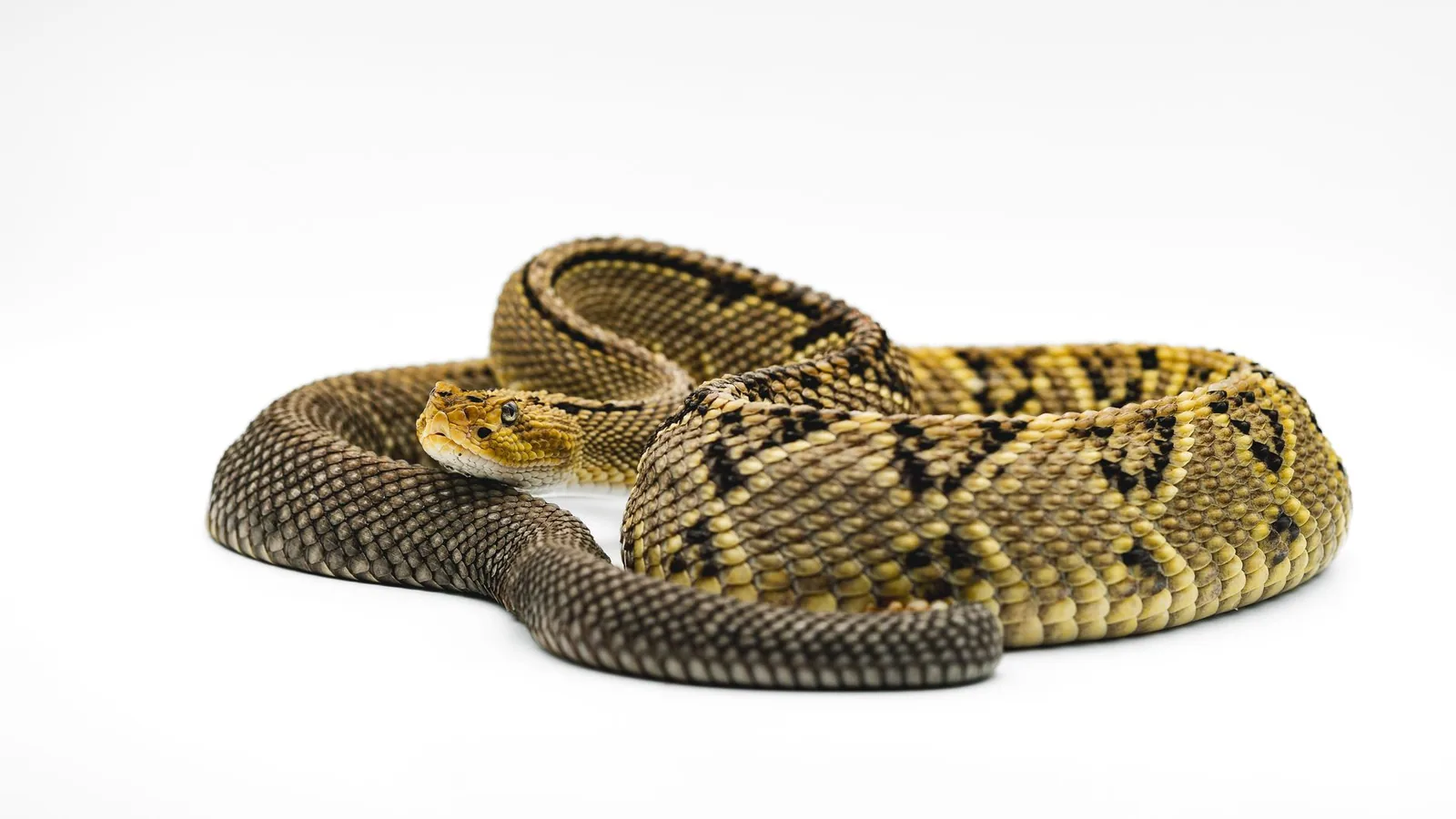
A ball python does not become senior on a birthday. There is no accepted age at which a healthy Python regius crosses a line into old age, and no single blood value that announces it. Senior status is a working label that owners and veterinarians apply when the animal's body and behavior begin to show the slow costs of time: a strike that arrives a fraction late, a shed that comes off in pieces, weight that drifts in either direction, and a preference for the warm hide over the climbing branch.
That framing shapes everything else in this guide. Senior ball python care rests on two skills. The first is noticing change early, with records rather than memory. The second is adjusting the enclosure and the feeding plan so an older snake does not have to work as hard as it once did. Housing, diet, and comfort are the levers you actually control. This article covers each one, along with the aging signs worth tracking and the point at which a change stops looking like ordinary aging and starts looking like a veterinary problem.
This article is educational and is not a substitute for veterinary diagnosis or treatment.
At a Glance: Senior Ball Python Care Checklist
| Area | Action | Why it matters |
|---|---|---|
| Baseline | Weigh the snake in grams on a regular schedule and keep a written log | Trends reveal problems that a single snapshot cannot |
| Body condition | Photograph the snake from above and from the side at the same distance each time | Slow muscle wasting and slow weight gain both become visible |
| Feeding | Review prey size and frequency against current weight, not against the schedule you used five years ago | Older snakes often need smaller meals more often rather than larger meals less often |
| Refusals | Log every refusal with the date and the snake's weight that week | Ball pythons refuse food for many reasons. Weight loss separates the benign reasons from the medical ones |
| Enclosure footprint | Measure the snake and confirm it can extend its full length without bending | Space that restricts full extension is a documented welfare problem |
| Furnishings | Provide substrate, a hiding place, climbing access, a water basin wide enough for soaking, and an elevated basking spot | These are the elements associated with a broader behavioral repertoire in furnished terrariums |
| Heat | Run every heat source through a thermostat and lower the climbing structures | An older snake with slower righting reflexes is more vulnerable to falls and burns |
| Light | Provide a light cycle with a fluorescent tube and a UV lamp | Furnished terrarium setups associated with better behavioral outcomes included both |
| Hygiene | Spot-clean daily, replace substrate on a schedule, disinfect the water basin | Hygiene is one of the scored welfare provisions in ball python housing assessments |
| Records | Keep dated shed skins and note any change in shed quality | Shed quality is one of the clearest early indicators of husbandry or health drift |
| Veterinary relationship | Identify a reptile-experienced veterinarian before you need one | Emergencies with snakes are not the moment to start searching |
What "Senior" Means for a Ball Python
Ball python lifespan in plain terms
Ball pythons are long-lived. Captive longevity is best described in decades rather than years, and a snake bought as a hatchling can plausibly still be alive when the owner retires. That single fact explains most of the confusion around this topic. Owners who keep dogs and cats are used to a compressed timeline in which a seven-year-old animal is visibly middle-aged. A ball python at a comparable stage of life may show nothing at all.
Precise population-level longevity figures are hard to pin down because no one systematically collects the ages of captive ball pythons. Longevity is influenced by husbandry quality, genetics, the morph background of the animal, and access to veterinary care. The practical consequence is that age alone should never drive a care decision. A well-muscled, actively feeding, clean-shedding older snake does not need to be treated as fragile. A ten-year-old snake with a declining weight trend needs attention regardless of how young that sounds.
How old is a senior ball python?
There is no universal answer, and any source that offers a hard number is simplifying. In practice, reptile veterinarians tend to apply the senior label across the later portion of an animal's expected lifespan and then individualize it based on body condition, organ function, and behavior. Some clinicians set the boundary by age. Others use the snake's own trajectory.
A functional definition is more useful than a calendar one. A ball python is functioning as a senior when three things shift together:
- Reproductive output changes. In females, follicular cycling may become less predictable or stop altogether, and recovery from egg laying takes longer.
- Physical capacity declines. Strikes slow, climbing decreases, righting from a flipped position takes longer, and grip strength in the tail weakens.
- Metabolic stability narrows. Weight becomes easier to lose and harder to regain, appetite becomes less reliable, and the margin for husbandry error shrinks.
When you see one of these, you have a reason to review the whole setup. When you see two or three, it is time for a veterinary baseline. Ask your veterinarian where they place the senior boundary for your particular snake, because the answer depends on the animal in front of them.
Signs of Aging in Ball Pythons
Aging in snakes is gradual and mostly non-specific. There is no equivalent of a graying muzzle. What you get instead is a collection of small deviations from the snake's own normal, which is exactly why a written baseline matters more than a checklist of universal symptoms.
What owners usually notice first
Appetite drift. The snake still eats, but the strike is less committed. It may take longer to recognize the prey, miss on the first attempt, or lose interest partway through. Some older snakes begin refusing larger prey while continuing to take smaller items.
Slower movement. Response to the enclosure door slows. The snake takes longer to emerge from a hide. Climbing drops off, and the elevated basking spot goes unused while the warm floor hide becomes the default.
Changes in shed quality. Sheds that once came off in one piece start coming off in fragments. Retained patches may appear at the tail tip, around the vent, or as retained eye caps. Since shed quality reflects hydration and husbandry as much as health, a change here is a signal to review both.
Weight and body shape. Two opposite patterns matter. Gradual loss with a visible ridge along the spine suggests muscle wasting and inadequate intake. Gradual gain with a rounded, doughy cross-section suggests the calorie intake has outlasted the snake's activity level.
Skin and eye changes. Duller tone, more prominent skin folds, or a persistent haze that does not resolve after the opaque phase of the shed cycle.
Cloacal changes. Staining, swelling, or any tissue protruding from the vent. These are not normal at any age and require same-day veterinary contact.
Reduced grip and righting. A healthy ball python can right itself and grips firmly with the tail. A senior that struggles with either is showing a neurological or musculoskeletal change worth investigating.
None of these findings is diagnostic on its own. Each one is a data point that belongs in a log and, eventually, in a conversation with a veterinarian.
Changes that are not normal aging
Some findings get mistakenly attributed to age when they are signs of active disease. These deserve prompt veterinary assessment:
- Refusal to eat accompanied by measurable weight loss
- Regurgitation, especially more than once
- Open-mouth breathing, wheezing, or respiratory noise
- Bloody, mucoid, or persistently loose stool
- Any prolapse
- A retained shed that does not resolve after a complete shed cycle
- Sudden loss of righting ability, tremors, or head tilt
- A swollen or discolored area anywhere on the body
A useful rule for owners: aging is slow and bilateral. Disease is often fast and one-sided. A gradual change in how the snake climbs over a year is different from a sudden weakness in one limb over a weekend.
Building a monitoring routine
Three tools cover most of what you need. A digital kitchen scale for body weight in grams. A phone camera used at a fixed distance from above and from the side. A notebook or spreadsheet that records every feed, every refusal, every defecation, and every shed with a date.
Keep shed skins. Note the date and whether the shed was complete. Shed skin is a useful biological sample, and researchers have measured corticosterone concentrations in the shed skins of captive snakes as a non-invasive marker of chronic stress, including in Python regius [1]. If your veterinarian wants to review shedding history, you will have the material.
Weigh on a consistent schedule and use the same scale. Weighing a snake is easier inside a light cloth bag or a smooth-sided container, tared to zero. Track the trend over months, not days. Because ball pythons can hold a meal and a bowel movement for a while, single weights bounce around.
Senior Ball Python Diet
The goal changes from growth to stability
A young ball python's feeding plan is designed to build an animal. A senior's feeding plan is designed to hold one together. That means adequate calories, adequate hydration, and a prey size that matches the snake's current capacity rather than its historical capacity.
Many older ball pythons do best with the same total food intake delivered in smaller packages. A snake that used to take a large rat every few weeks may do better with a medium rat offered on a slightly shorter interval, or with the same prey size at the same interval but with careful attention to body condition. There is no universal schedule. The right answer for your snake comes from the weight trend, the body condition score, and a conversation with a veterinarian who can see the animal.
Judging prey size against the snake, not the chart
A reasonable starting point is prey roughly the diameter of the snake's widest body section. Once a ball python is mature, the prey does not need to keep growing with the snake. An oversized meal is a common and underappreciated problem in older animals because digestion slows and the risk of regurgitation rises.
Weigh the prey. Feeding by eye is where most drift creeps in, especially when a keeper is buying from several sources. Knowing that a given rat weighs a certain number of grams makes it possible to compare one month to the next.
Watch for two specific failure patterns:
Undersized feeding. The snake eats regularly but the spine becomes prominent and the cross-section becomes triangular. This is not healthy aging. It is chronic underfeeding, and its causes include prey that has been gradually reduced, appetite decline that has been accepted rather than investigated, and underlying disease.
Oversized feeding. The snake eats well and looks impressive, but the body becomes round and soft and the snake becomes reluctant to move. Obesity in reptiles is a real welfare concern and it compounds every mobility problem an older snake already has.
Refusals, fasting, and the winter slowdown
Ball pythons are famous for irregular feeding. A single refusal means very little. A pattern means something. Before you assume a refusal is normal, check the obvious variables:
- Is the enclosure at the correct temperature, with a working basking spot?
- Is the snake deep in a shed cycle? Many ball pythons refuse while opaque.
- Has anything changed in the enclosure, the room, or the handling routine?
- Is this the time of year when the snake has historically slowed down?
- Is the prey the right temperature and the right size?
If the snake is refusing and holding weight, the situation is manageable with monitoring. If the snake is refusing and losing weight, the situation is medical. Weight loss in a senior reptile can move quickly, and by the time a snake looks thin to an owner it has often lost a meaningful amount of mass.
Never extend a fast in an older snake to "reset" it. That advice circulates in hobby spaces and it is a poor fit for an aging animal with less metabolic reserve.
Senior females and reproductive cycling
Reproduction does not automatically stop in an older female ball python, and the seasonal cycle continues to shape her appetite and body condition. A study of captive female ball pythons that used monthly ultrasonography found that 58.3% of females ovulated and laid eggs, with ovulation occurring mainly between April and August and egg laying occurring between June and November [2]. The median clutch size was six eggs and incubation lasted approximately 58 days [2].
The clinical lesson from that study is about diagnosis, not just biology. Manual palpation of the abdomen had a 25% false-negative rate when compared with ultrasonography, while ultrasound tracked follicular development reliably, showing progressive changes in echogenicity and significant increases in follicular diameter across the breeding season [2]. The same work found a strong negative correlation between follicle size and days to ovulation, and follicles measuring 20 mm or more grew at a median rate of 0.38 mm per day [2].
What this means for an owner of an older female: if you feel a mid-body swelling and wonder whether it is follicles, food, or something else, imaging beats palpation. A veterinarian with reptile ultrasound experience can distinguish these far more reliably than hands can.
A female that lays eggs at an advanced age also deserves specific attention. Egg production is metabolically expensive, and a senior female has less reserve to draw on. Plan for rehydration, a return to feeding, and a veterinary check afterward rather than assuming she will bounce back the way she did when she was younger.
Water and hydration
Hydration is the quiet variable in senior reptile care. Provide a water basin large enough for the snake to soak its whole body, not just to drink from. Furnished terrarium setups associated with a broader behavioral repertoire included a water basin for bathing [3]. Soaking behavior often increases before a shed, and a snake that cannot fully submerge loses an important self-care option.
Signs that hydration needs review include skin that tents rather than snaps back, sunken eyes, and repeated problem sheds. Address humidity and water access first, then involve a veterinarian if the problem persists.
Comfort Comes First in Senior Ball Python Care
Space: the snake should be able to extend its full length
A welfare assessment of more than 5,000 ball pythons across six exotic pet expositions and 113 YouTube videos found that breeders and vendors typically used small, highly restrictive enclosures with dimensions that prevented occupants from extending their bodies to full and unrestricted natural length [4]. The same assessment scored provisions for hygiene, mobility, shelter, substrate, and water against minimum welfare guidelines and found that most entities were not meeting them [4]. It also found that most potential buyers could not recognize unsuitable housing conditions [4].
The practical takeaway is simple and measurable. Put a tape measure along your snake. A ball python should be able to stretch out straight inside its enclosure, at least along one axis. In the furnished terrarium arm of a behavior-based housing study, terrarium size was correlated with the body length of each individual python [3]. That is a sensible starting criterion for any age, and it matters more for a senior because a snake that cannot extend fully cannot exercise what mobility it still has.
Smaller is not kinder. A common and well-intentioned mistake is to move an aging snake into a smaller enclosure because it moves less. Reduced mobility is a reason for easier access, lower climbing heights, and closer basking spots. It is not a reason for less floor space.
Furnishings that support an aging body
The furnished terrarium design used in the behavior-based housing study contained substrate, a hiding place, opportunities for climbing, a water basin for bathing, an elevated basking spot, and living plants, with automatic temperature control and illumination from a fluorescent tube and a UV lamp [3]. The study compared the same 35 ball pythons housed individually in a conventional rack system and then in furnished terrariums, and found that the behavior spectrum differed between the two setups. The authors concluded that rack housing is not an alternative to furnished terrariums from an animal welfare perspective [3].
For a senior snake, those elements stay the same but the geometry changes:
- Hiding places should be easy to enter without squeezing. A hide that a younger snake could push into may become a hide an older snake avoids.
- Climbing access should be lower and wider. Wider branches, ramps, and platforms reduce the cost of a slip.
- The basking spot should be reachable from the floor, so the snake does not have to climb to thermoregulate.
- Plants and cover should not block the snake's route to food, water, or heat.
- The water basin should be shallow enough to exit easily and wide enough to soak.
None of this requires a rebuild. Most of it is a rearrangement. The question to ask about every item in the enclosure is whether it still serves the snake you have now, not the snake you brought home.
Heat and light for an older snake
The study enclosure used automatic temperature control and both a fluorescent tube and a UV lamp [3]. For a senior, the priority is stability. A thermostat on every heat source, a generous thermal gradient, and a basking site with a surface temperature your veterinarian considers appropriate for the species. Measure surface temperatures with an infrared thermometer rather than trusting the dial on a heat mat.
Older snakes digest more slowly. A cool enclosure turns a large meal into a long, uncomfortable event and increases the risk of regurgitation. If you notice that the snake now parks itself directly under the heat for long stretches after eating, that is information. Check the gradient, then check the prey size.
Light matters too. A predictable day and night cycle supports normal behavior, and full-spectrum lighting is part of the furnished terrarium model that produced a broader behavioral repertoire [3]. Use timers so the cycle does not depend on your schedule.
The stress question: what a hormone marker can and cannot tell you
Recent work measured corticosterone concentrations in shed skins from three commonly kept snake species, including Python regius, maintained either in low-stimulus rack systems or in enriched terraria [1]. The results were not a simple endorsement of either setup. In P. regius, snakes kept in enriched terraria showed higher shed corticosterone concentrations than those in rack systems, and there was a positive association between enclosure volume and corticosterone concentration [1]. In corn snakes (Pantherophis guttatus), the pattern ran the other way, with elevated concentrations in rack-housed animals [1]. No clear housing-related differences appeared in boa constrictors [1]. The authors emphasized that these relationships are species-specific.
The two lines of evidence do not point in the same direction for ball pythons, and that tension is worth sitting with rather than resolving prematurely. A behavioral study found that furnished terrariums allowed a broader behavioral repertoire and concluded they are the welfare-appropriate option [3]. A hormone marker in shed skin found higher values in the enriched setups for this species [1]. Neither result should be used to justify a small bare enclosure. What they suggest is that enrichment is not a one-time upgrade and that a single hormone reading is not a verdict on your husbandry.
Use behavior as your primary guide. Is the snake using the enclosure, moving between zones, feeding, shedding completely, and recovering from handling within a reasonable time? If yes, the setup is working. If the snake is hiding constantly, refusing food, and rubbing its face raw on the glass, the setup is not working, regardless of how elaborate it looks.
Hygiene and cleaning for an aging snake
Hygiene was one of the provisions scored in the housing welfare assessment, alongside mobility, shelter, substrate, and water [4]. For a senior snake, cleaning frequency should not slip because the animal is less active. Older reptiles often have a narrower margin for bacterial and fungal exposure.
Spot-clean waste the day you find it. Replace soiled substrate promptly. Disinfect the water basin on a regular schedule and refill with fresh water. Remove uneaten prey within a few hours. Wash your hands before and after handling, and keep a dedicated set of tools for the enclosure.
Special Situations in Older Ball Pythons
Spider morph seniors and wobble syndrome
Ball pythons are among the most frequently bred reptiles, and breeders have selected for a large number of color and pattern morphs. The spider morph is frequently associated with wobble syndrome, a neurological presentation that affects coordination and balance. A comparative imaging study using computed tomography and magnetic resonance imaging examined five spider and three wild-type ball pythons and identified distinctive structural differences in inner ear morphology in the spider animals that were highly likely related to wobble syndrome [5]. The authors described this as the first report of these anomalies and framed it as a basis for further anatomical and genetic work, with implications for welfare in reptile breeding [5].
For owners, the practical point is that a spider morph with wobble may experience more difficulty as it ages. Strength and coordination decline with time in any animal, and a snake that already compensates for a balance problem has less reserve. Adaptations worth discussing with your veterinarian include:
- Presenting food with tongs at a predictable spot, so the snake does not have to track a moving target
- Keeping climbing structures low and horizontal
- Using wider water basins with gentle ramps
- Reducing handling that requires the snake to support its own body weight at height
- Feeding smaller prey to reduce the effort of a single strike and a single swallow
A sudden worsening of wobble in an older spider morph should be treated as a medical change, not as an inevitable progression. Head tilt, circling, or new tremor warrants a veterinary examination.
The female after egg laying
As noted above, ovulation and egg laying can still occur in an older female, and clutches are typically modest in size, with a median of six eggs in the study population [2]. Recovery afterward is the part that changes with age. Watch for returning appetite, normal shedding, and a return to baseline weight. A female that is still refusing food and still losing weight several weeks after laying needs a veterinary assessment.
Sudden decline in a previously stable snake
Older snakes can decompensate quickly. A snake that was eating last month and is now lethargic, thin, and disinterested in heat has a medical problem until proven otherwise. In these situations, a thermometer reading and a photograph of the enclosure are more useful to your veterinarian than a description over the phone.
Common Mistakes in Senior Ball Python Care
Cutting food because the snake is old. Age is not a reason to underfeed. Adjust prey size and frequency based on body condition and weight trend, not on a belief that old snakes should eat less.
Accepting weight loss as normal aging. Some weight change is expected over years. Steady loss is not.
Shrinking the enclosure for a less active snake. Keep the footprint that allows full body extension and lower the furnishings instead.
Keeping a rack setup because the snake seems fine. Behavior-based evaluation of ball python housing concluded that rack systems are not an alternative to furnished terrariums from a welfare standpoint [3]. A snake that cannot perform a normal behavioral repertoire is not thriving just because it is eating.
Judging the setup by appearance. Most potential consumers in one welfare assessment were unable to recognize unsuitable housing conditions for ball pythons [4]. Compare your enclosure against specific criteria, not against photographs on social media.
Palpating a female's abdomen instead of imaging it. Palpation had a 25% false-negative rate compared with ultrasonography in one study of follicular development [2]. Hands are not a substitute for a probe.
Changing several things at once. If you alter the heat, the substrate, the prey size, and the schedule in the same week, you will not know which change helped or which one caused the next refusal.
Skipping the veterinary baseline because the snake "seems fine." A baseline examination and a recorded weight establish the reference point against which every future change will be measured.
Troubleshooting an Older Ball Python
| Problem | First checks | Escalate to a veterinarian when |
|---|---|---|
| Persistent food refusal | Enclosure temperature, shed stage, recent changes, prey size and temperature | Weight is dropping or the snake appears lethargic |
| Gradual weight loss | Prey weight, feeding frequency, body condition, stool quality | Loss continues after feeding adjustments or the spine is visibly prominent |
| Fragmented or retained shed | Humidity, water basin size, hydration, rough surfaces for shedding | Retained shed persists through a full cycle or eye caps are retained |
| Regurgitation | Prey size, handling after feeding, basking temperature | It happens more than once |
| Reduced climbing | Access route, basking spot placement, grip strength | New weakness or tremor develops |
| Worsening wobble in a spider morph | Feeding method, furnishings, handling | Head tilt, circling, or rapid change |
| Swelling in a female's mid-body | Recent feeding, breeding season, imaging availability | Any swelling that cannot be explained |
| Lethargy or unresponsiveness | Temperature gradient, recent meals, recent shed | Same day contact |
Welfare and Safety Points
The welfare provisions that matter most in ball python housing are measurable: hygiene, mobility, shelter, substrate, and water, plus enough space for the animal to extend its full body [4]. Review your enclosure against each of these in order, one at a time, rather than trying to fix everything in a weekend.
Handling should get shorter and more deliberate as the snake ages. Support the body along its length. Avoid lifting a senior snake by the tail or allowing it to hang unsupported. Do not handle a snake within a day of a large meal.
Guard every heat source. An older snake that is slow to move away from an unregulated heat mat or a hot rock is at risk of thermal burns, and burn injuries in reptiles heal slowly.
Keep the water clean and the enclosure dry where it should be dry and humid where it should be humid. A respiratory infection in an older snake is a serious event.
Finally, write things down. Records are a welfare tool. They let you and your veterinarian see a trajectory instead of a moment.
Limitations and When to Contact a Veterinarian
Individual animals vary, and this article cannot replace a physical examination by a veterinarian who can see, feel, and image your snake. Use the guidance here to prepare for that visit and to recognize when it is needed.
Contact a reptile-experienced veterinarian promptly if you observe:
- Weight loss that continues after you have corrected prey size, feeding frequency, and temperature
- Any regurgitation, especially repeated episodes
- Open-mouth breathing, wheezing, or a visible discharge from the nose or mouth
- A prolapse of any kind
- Bloody or persistently abnormal stool
- A retained shed that does not resolve after a full cycle, or retained eye caps
- Sudden loss of righting ability, head tilt, circling, or tremor
- A swelling, discoloration, or wound anywhere on the body
- A female that is not recovering appetite and weight several weeks after laying eggs
- Any sudden change in a snake that was stable the previous week
For finding a suitable clinician, the Association of Reptilian and Amphibian Veterinarians (ARAV) maintains a member directory, and the exotic and laboratory animal section of the Merck Veterinary Manual is a useful reference point for understanding what a reptile workup typically involves. Reptile-specific husbandry resources such as ReptiFiles and the reptile care guides at VCA Animal Hospitals can help you prepare accurate enclosure and feeding histories to bring to the appointment.
Bring three things to the visit: your weight log, your feeding and shedding log, and current photographs of the enclosure. These usually save more diagnostic time than a verbal description.
Frequently Asked Questions
How old is a senior ball python?
There is no universal cutoff. Senior status is best defined by function rather than by a number, meaning changes in appetite, mobility, body condition, and reproductive cycling. Ask your veterinarian where they place the boundary for your individual snake.
Do ball pythons stop eating when they get old?
Not reliably. Appetite often becomes less predictable with age, but a refusal on its own is common in ball pythons at any age. A refusal combined with weight loss is the pattern that needs veterinary attention.
What is the lifespan of a ball python?
Ball pythons are long-lived snakes whose captive lifespan is measured in decades rather than years. Precise figures vary with husbandry, genetics, and veterinary care, and no central record exists for captive ages.
Should I change my senior ball python's prey size?
Review it, yes. Many older snakes do better with somewhat smaller prey offered on a slightly shorter interval, but the decision should follow body condition and the weight trend rather than a fixed rule. Weigh both the snake and the prey.
Can an old ball python still breed?
Yes. Older females can still ovulate and lay eggs, and one study found that ovulation in captive females occurred mainly from April to August with egg laying from June to November. Recovery after laying is slower in an older female and deserves a veterinary check.
Will my spider ball python's wobble get worse with age?
It can appear more pronounced as strength and coordination decline, though the progression is individual. Keep furnishings low, feed at a predictable spot, and have any sudden worsening evaluated, especially head tilt or circling.
How often should a senior ball python see a veterinarian?
A reasonable approach is an annual examination with a weight and body condition record, plus additional visits whenever you see unexplained weight loss, regurgitation, or a change in behavior. Your veterinarian may recommend a different interval based on your snake's health status.
Are larger enclosures better for an aging ball python?
A larger enclosure is not automatically better, but an enclosure that prevents the snake from extending its full body is a documented welfare problem. The goal is enough space for full extension plus furnishings the snake can actually use, including low climbing access and easy basking.
Sources
- Species-specific variations in corticosterone concentrations in captive snake shed skins: implications for housing systems and welfare.
- Follicular Growth Evaluation, Oviposition and Egg Hatching in the Ball Python (Python regius).
- Animal-appropriate housing of ball pythons (Python regius)-Behavior-based evaluation of two types of housing systems.
- Dropping the Ball? The Welfare of Ball Pythons Traded in the EU and North America.
- Comparative Assessment of Computed Tomography and Magnetic Resonance Imaging of Spider Morph and Wild Type Ball Pythons (Python regius) for Evaluation of the Morphological Correlate of Wobble Syndrome.