Safe Toys and Equipment for Crested Geckos: What to Avoid
By Dr. Zubair Khalid, DVM, MS, PhD ·
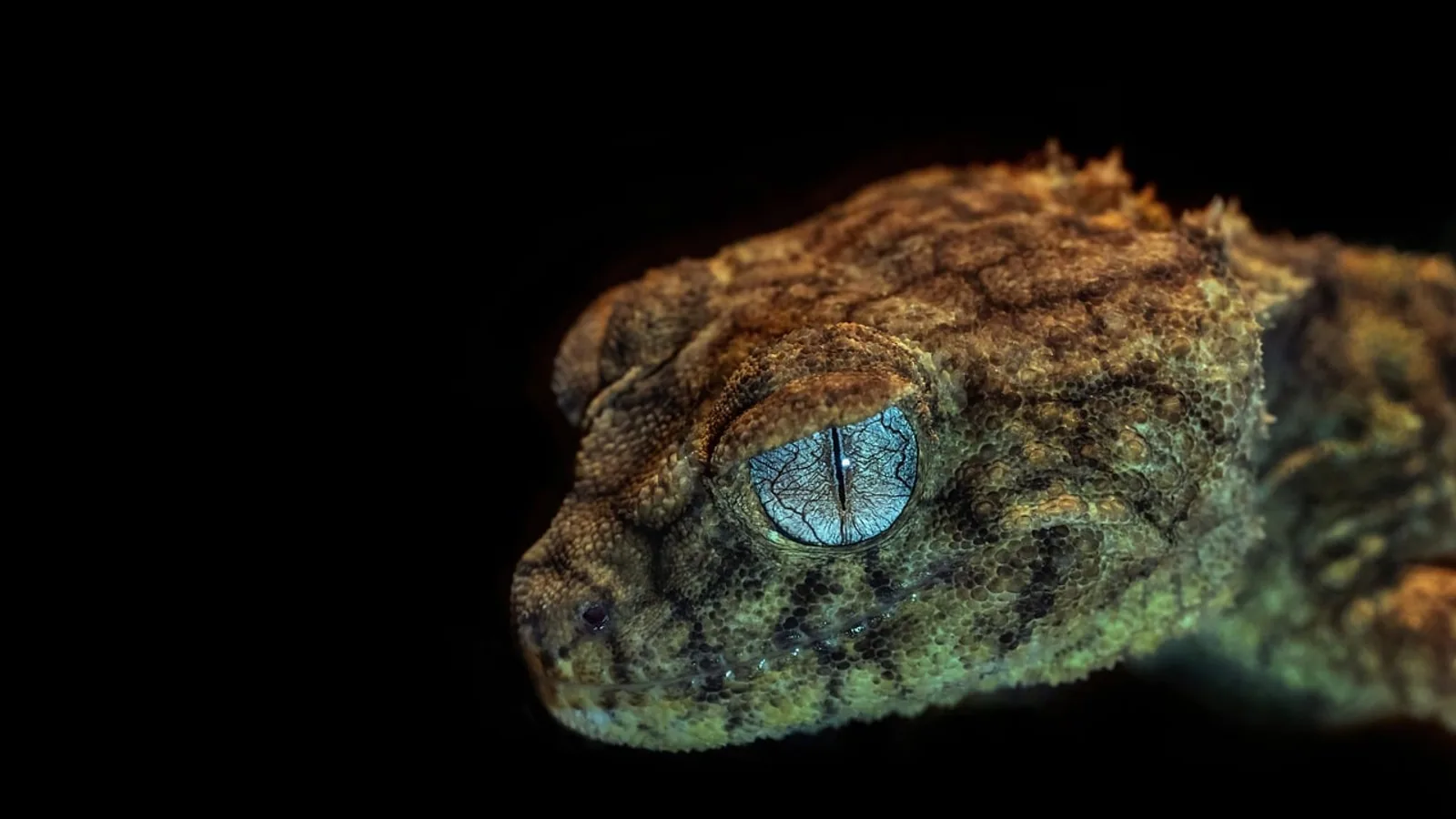
The safest toys for crested geckos are unscented, sturdy, non-toxic climbing and hiding items built for terrarium life: cork bark tubes and flats, grapevine or ghost wood branches, terrarium-rated fake plants, coconut hides, and ledges mounted with magnets or fully cured silicone. The most dangerous items are heat rocks, adhesive-backed hooks, scented or soft plastics, small loose parts, toys made for cats, birds, or rodents, and anything made of cedar, pine, or pressure-treated wood. Crested geckos explore with their tongues, climb constantly, and jump before they land carefully, so every accessory in the cage has to survive all three behaviors without shedding, tipping, or leaking chemicals.
This guide explains how to choose safe toys for crested geckos, which materials are toxic, which popular products cause injuries, and how to prepare, install, and maintain every accessory in the enclosure.
This article is educational and is not a substitute for veterinary diagnosis or treatment.
At a Glance: Safe and Unsafe Cage Accessories
| Item or material | Verdict | Why |
|---|---|---|
| , - | , - | , - |
| Cork bark tubes and flats | Use | Natural texture, holds climbing, hides moisture safely |
| Grapevine, ghost wood, manzanita branches | Use | Sturdy climbing surfaces for an arboreal species |
| Terrarium-rated fake plants and vines | Use | Cover and visual security, check edges and strands |
| Coconut hides and halves | Use | Secure shelter at multiple heights |
| Magnetic or silicone-mounted ledges | Use | Elevated feeding and basking-style perches within weight limits |
| 100% silicone sealant, fully cured | Use | Inert, flexible, standard for terrarium builds |
| Heat rocks | Avoid | Surface temperature cannot be controlled, causes burns |
| Cedar, pine, pressure-treated wood | Avoid | Aromatic oils and pesticide preservatives |
| Adhesive hooks, foam tape, hot glue mounts | Avoid | Fail in humidity, fall, leave lickable adhesive |
| Bells, beads, googly eyes, marbles | Avoid | Swallowable parts that can obstruct the gut |
| Cat, bird, or rodent toys | Avoid | Dyes, zinc hardware, glue, small parts |
| Scented items, essential oils, potpourri | Avoid | Airborne irritants for reptile lungs |
| Galvanized metal, copper, lead | Avoid | Metal particles can flake or leach |
| Gravel or calcium sand around food | Avoid | Ingestion risk during tongue-based feeding |
Why Toy Safety Matters for Crested Geckos
Crested geckos (Correlophus ciliatus) are arboreal, nocturnal lizards from New Caledonia that spend nearly their entire lives off the ground. In captivity, their health depends on correct husbandry, and the Merck Veterinary Manual identifies improper husbandry as a leading contributor to illness in pet reptiles. Toys and cage accessories are part of that husbandry, not decoration.
Three natural behaviors drive every rule in this article:
- Tongue exploration. Crested geckos lick new surfaces to investigate them, so chemical residues and loose particles end up in the mouth quickly.
- Constant climbing and jumping. A slippery branch, a failing suction cup, or a wobbling tower produces falls, and a fall onto a hard object can injure the jaw, limbs, or spine.
- Hiding behavior. A gecko wedged into a gap can be crushed or trapped if a heavy item shifts.
VCA Animal Hospitals describes appropriate crested gecko housing as a vertically oriented enclosure with branches, plants, and hiding cover. Accessories supply that structure, which means accessory choice is a welfare decision. Reptile skin can also absorb residues from scented soaps and cleaners, so anything the gecko touches should be free of fragrance and film.
Choosing Safe Toys for Crested Geckos: Selection Criteria
Run every candidate item through this checklist before it enters the cage:
- Unscented and uncoated. No perfume, no scented soap residue, no varnish, no paint of unknown origin.
- Sturdy and stable. It should not tip, roll, collapse, or slide when pushed firmly.
- No small detachable parts. Nothing smaller than the gecko's head that can come loose.
- No sharp edges. Sand splinters, cut zip-tie ends, and sharp plastic seams off.
- Right size. Branches thick enough to grip, gaps wide enough to pass through without wedging.
- Cleanable. It must survive scrubbing, disinfection, and rinsing without degrading.
- Terrarium or aquarium rated. Products sold for reptile or aquarium use have already been screened for this kind of exposure.
ReptiFiles recommends building enrichment from naturalistic, species-appropriate materials rather than novelty products, because the structure of the enclosure is what a crested gecko actually interacts with. A juvenile gecko is small enough to treat tiny parts as food, so the small-parts rule matters most in a young animal's cage.
Best Crested Gecko Toys and Enrichment
Climbing structures
Cork bark tubes and flats are the workhorse of a crested gecko cage. They are lightweight, they hold humidity without rotting quickly, and their texture gives toe pads something to grip. Grapevine, ghost wood, and manzanita branches add diagonal travel routes so the gecko can move from floor to canopy without long falls. Flexible jungle vines with suction cups or twist ties work well along glass. Bamboo is acceptable if it is untreated and inspected for insects and loose splinters.
Arrange branches so the longest jumps are short and landings are soft, meaning a plant or cork flat below every route. Anchor heavy wood so it cannot shift and pin the gecko against the glass.
Plants and cover
Fake plants rated for terrarium use provide the visual security a nocturnal species needs. Layer them so the gecko can move under cover along every wall. Coconut hides and cork rounds give secure sleeping spots at several heights, because crested geckos choose different resting spots as humidity and light change.
Ledges and feeding stations
Magnetic ledges, silicone-mounted platforms, and suction-cup ledges create elevated resting and feeding spots. Mount feeding cups high, since crested geckos prefer to eat off the ground, and keep the area beneath feeding ledges free of loose particulate material. Test every ledge below its rated weight before the gecko returns to the cage.
Enrichment that costs nothing
The best crested gecko toys are often rearrangements of what you already own. Rotate branches between positions, reposition hides, vary where the feeding cup sits, and change the misting pattern so the gecko experiences fresh droplets on different surfaces. ReptiFiles describes environmental enrichment for reptiles as structural change and varied presentation of food rather than add-on gadgets. A crested gecko does not need a wheel, a ball, or an exercise device.
Toxic Materials for Crested Geckos
Wood to avoid
Cedar and pine contain aromatic oils and phenols associated with respiratory and skin irritation in small animals, and ReptiFiles lists cedar among woods that should never be used in reptile enclosures. Pressure-treated lumber carries pesticide preservatives designed to resist rot and insects, which is exactly what you do not want in a humid, warm cage. Avoid yew, oleander, and other toxic ornamental woods entirely. When collecting branches yourself, choose unsprayed areas away from roadsides and treated landscapes, and never take wood from an orchard or a utility right-of-way.
Paints, finishes, and adhesives
Only use items labeled food-safe or aquarium-safe after full curing. Peeling paint, unknown glazes on imported ceramics, and craft-store paints have no place in the cage, because a gecko can lick or flake them off. For building, fully cured 100% silicone sealant is the standard adhesive for terrarium work, since it stays inert and flexible in warm, humid conditions. Hot-melt glue can soften in that same environment and peel off in swallowable pieces, so treat it as temporary at best and inspect it often. ReptiFiles covers adhesive safety for reptile builds and favors fully cured silicone for permanent construction.
Plastics and metals
Choose rigid, terrarium-rated plastics. Skip soft vinyl, glitter coatings, foam that sheds crumbs, and anything with a chemical smell when you open the package. Avoid galvanized hardware, because the zinc coating can flake, and skip copper, brass, and lead-containing weights. Stainless steel fasteners and hooks are the safer choice for anything metal inside the enclosure.
Cleaners and airborne hazards
Clean decor with unscented products and rinse thoroughly. Never use pine or citrus cleaners, ammonia-based products, or essential-oil diffusers near the enclosure, because reptiles are sensitive to airborne irritants. VCA Animal Hospitals stresses using reptile-safe disinfectants and rinsing until no residue or odor remains before an animal returns to the cage. Aerosol sprays, furniture polish, and insect foggers used in the same room can also reach the cage through the air, so ventilate and cover the enclosure during any household spraying.
Dangerous Toys for Crested Geckos
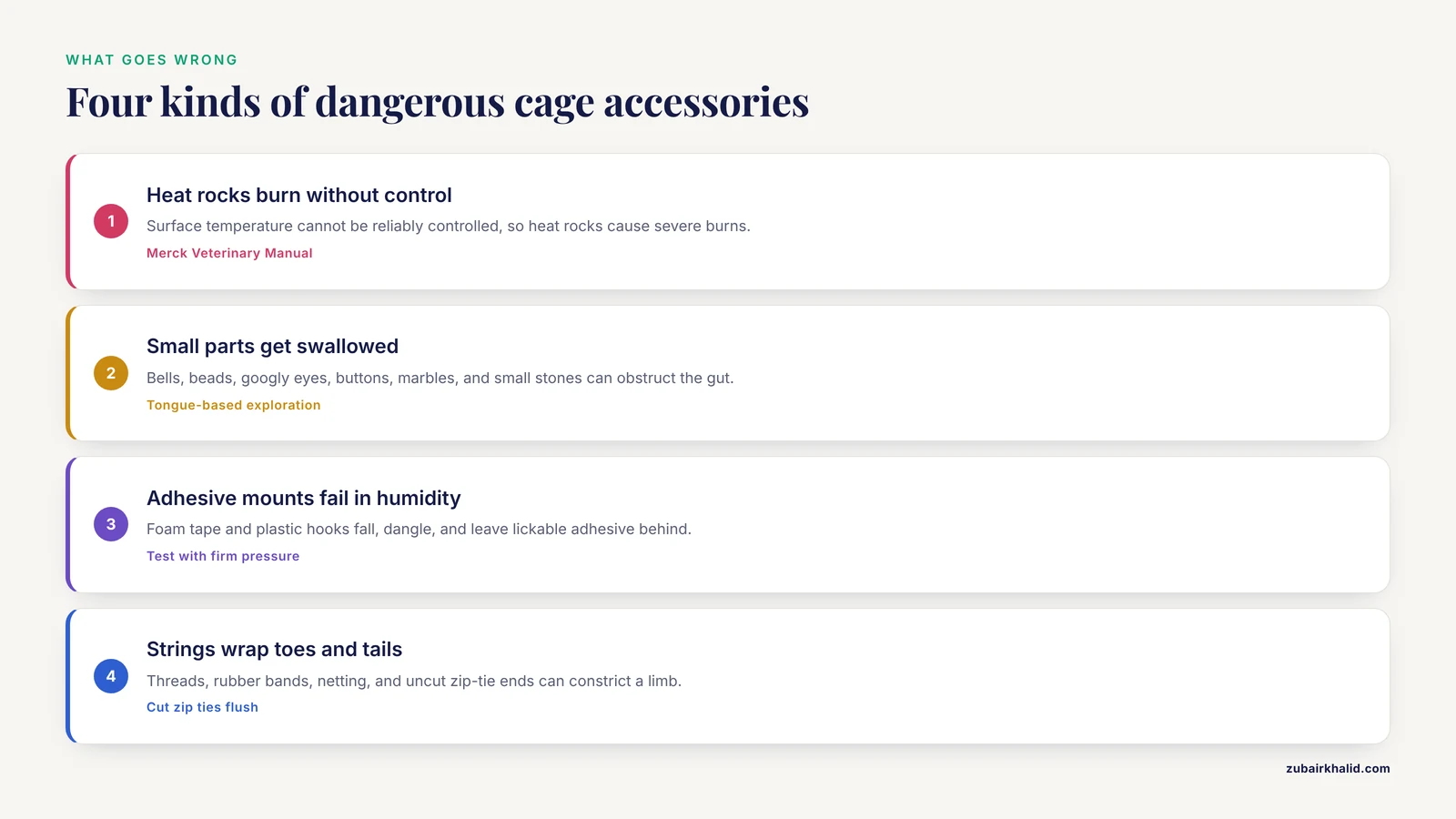
Heat rocks and unregulated heaters
The Merck Veterinary Manual warns that heat rocks can cause severe burns because their surface temperature cannot be reliably controlled. Crested geckos generally do not need supplemental heat in a home kept in the low to mid 70s Fahrenheit, the range VCA Animal Hospitals describes for this species. If your home runs cold, use a low-wattage heat source controlled by a thermostat with its probe placed where the gecko sits, never a heat rock.
Small parts and swallowable items
Bells, beads, googly eyes, buttons, marbles, and small stones near a feeding ledge can be swallowed during tongue-based exploration. Swallowed foreign material is a recognized cause of gastrointestinal obstruction in reptiles, per the Merck Veterinary Manual. Appetite loss, bloating, and absent droppings are the warning signs owners should know.
Toys made for other pets
Cat toys carry catnip, glued feathers, and strings. Bird toys use dyed wood, zinc-plated chain, and small links. Rodent wheels have wire rungs that trap toes. All of them are dangerous toys for crested geckos, no matter how much the gecko seems to investigate them.
Adhesive hooks and failing mounts
Foam tape and plastic adhesive hooks fail in humidity. They fall, dangle, and leave exposed adhesive the gecko can grab or lick. Every mount should be tested with firm pressure before the gecko returns, and suction cups should be rechecked weekly, since they release gradually as films build up.
Strings and entanglement hazards
Threads, rubber bands, netting, and uncut zip-tie ends can wrap around a toe or tail. Cut zip ties flush and run a finger over every cut end before installation.
Loose substrate as play material
Gravel, walnut shell, and calcium sand around feeding ledges invite ingestion, and impaction from loose particulate material is a recurring problem in reptile medicine. Use paper-based lining under feeding stations or feed from elevated cups so food never lands in loose bedding.
Crested Gecko Cage Accessories Safety: Equipment Checklist
Enclosure and doors
Use a front-opening glass or PVC enclosure tall enough for climbing, with a secure screen top held by clips. Crested geckos are jumpers and escape artists, so check the mesh for gaps and confirm the door latches fully after every feeding.
Heating done safely
Most homes need no heater for this species, since crested geckos do well at room temperatures in the low to mid 70s Fahrenheit. If heat is required, use a thermostat-controlled, low-wattage element and verify the probe placement, because unregulated heat sources cause burns. Never place a heat source where the gecko can press directly against it with no escape route.
Lighting
An LED on a timer provides a consistent day-night cycle and supports live plants if you keep them. Avoid colored night bulbs, since a nocturnal species needs a true dark period. UVB lighting is optional for this species and depends on your overall husbandry plan, so discuss it with your reptile veterinarian if you are unsure. Provide shaded retreats so the gecko can always move away from light.
Misting and water
A hand sprayer or automatic mister maintains the humidity spikes this species needs. Give electrical cords a drip loop so water cannot run into the outlet, use an outlet protected by a ground-fault circuit interrupter near any water equipment, and empty standing water that collects on ledges. Offer a shallow water dish that the gecko cannot become trapped in.
Monitoring tools
Place a digital thermometer and hygrometer where the gecko actually spends time, not on the far wall of the room. Dial gauges are often inaccurate, and ReptiFiles recommends digital probe units for reptile enclosures. Check readings at the same times each day so you notice drift early.
Weight limits and stability
Magnetic ledges have rated weight limits, and glass surfaces reduce their holding power. Test each ledge with firm pressure before use, keep heavy wood anchored to the structure rather than balanced on it, and keep heavy items off silicone seams and glass edges.
How to Prepare and Install New Toys and Accessories
- Inspect. Run your hands over every surface. Feel for splinters, sharp seams, loose parts, and adhesive residue.
- Wash. Scrub new items with warm water and unscented dish soap, then rinse until the water runs clear.
- Disinfect wood and rocks. Soak or wipe with a dilute unscented bleach solution, rinse until no bleach odor remains, and air dry completely, ideally in sunlight, which helps residual chlorine off-gas.
- Prepare collected wood. Choose unsprayed sources away from roads, remove loose bark, and inspect for insects. ReptiFiles notes that wild-collected wood needs cleaning and inspection before it enters an enclosure. If you cannot verify a piece is clean and pesticide-free, buy reptile-grade wood instead.
- Cure adhesive builds. Let silicone construction dry until fully cured and completely odor-free before installation.
- Install and test. Press on every branch and ledge with firm hand pressure. Rearrange until nothing wobbles.
- Observe. Return the gecko and watch the first interactions. Check mounts and surfaces daily for the first week, then weekly.
Cleaning and Maintenance Schedule
Daily. Remove uneaten food, spot clean droppings, check the water dish, and glance at every mount.
Weekly. Wipe ledges and glass, rinse plants, retest suction cups and magnets, and confirm the thermostat and probe readings.
Monthly and as needed. Deep clean decor with the bleach-and-rinse method described above, and retire porous items that stay stained or hold odor, because they cannot be fully disinfected. VCA Animal Hospitals supports routine disinfection of cage furniture with thorough rinsing before the animal returns.
Common Mistakes and Troubleshooting
Overcrowding. Too much decor blocks travel routes and makes spot cleaning impossible. Leave open flight paths between anchored structures.
Unstable stacks. Stacked cork and stone can collapse on the gecko. Anchor tall pieces to the enclosure structure or the background.
Cleaning with the gecko inside. Never spray or scrub an occupied enclosure. Move the gecko to a temporary container during deep cleaning.
Skipping quarantine for new items. Driftwood, plants, and secondhand decor can carry mites or pesticide residue. Clean and inspect everything before it joins the cage, and watch new items closely for the first week.
Ignoring early warning signs. Constant licking of a new item is normal exploration. Repeated chewing is not, and chewed items should come out immediately.
Troubleshooting specific problems:
- The gecko ignores a new ledge. Reposition it along an existing travel route, near plants the gecko already uses.
- Stuck shed on the toes. Raise humidity, add a piece of cork for rubbing, and if shed bands a toe or the tail tip, contact a reptile veterinarian before tissue damage occurs.
- Snout rubbing on the glass. Add visual cover along the glass with plants or a background, and reduce reflections from room lighting. If wounds develop, seek veterinary care.
- A dropped tail. Crested geckos can drop their tails when grabbed or startled, and the tail does not regrow. Support the whole body during handling, never grab the tail, and handle near a soft landing zone.
Welfare and Safety Principles
A crested gecko's welfare depends on complexity it can trust. Provide multiple hides at different heights, visual barriers along the glass, stable climbing routes, and clean surfaces free of scent. Observe how your gecko uses the cage at night, since that is when most activity happens, and adjust the layout based on where it rests and travels. The Association of Reptilian and Amphibian Veterinarians promotes species-appropriate husbandry and environmental management as the foundation of reptile health. Good accessories are not entertainment for you, they are the environment the animal lives in.
Limitations and When to Contact a Veterinarian
Individual cases vary, and anything beyond routine care belongs with a reptile veterinarian. The Association of Reptilian and Amphibian Veterinarians maintains a directory that helps owners find a qualified reptile practitioner. Contact a veterinarian promptly for any of the following:
- Suspected swallowed object or impaction, with appetite loss, bloating, straining, or an unusual gap between droppings
- Any burn, cut, bleeding, or swelling
- A toe or tail that is caught, discolored, or constricted by retained shed
- A hard fall followed by lethargy or reluctance to move
- Repeated snout rubbing that has produced wounds
- Regurgitation, weight loss, or prolonged appetite loss
- Open-mouth breathing, wheezing, or mucus around the mouth or nostrils
Do not attempt home treatment for any of these conditions. Reptiles hide illness until it is advanced, so early veterinary evaluation gives the best outcome.
This article is educational and is not a substitute for veterinary diagnosis or treatment.
Frequently Asked Questions
Do crested geckos need toys?
They need climbing structures and cover more than toys in the mammal sense. Branches, plants, hides, and ledges provide the enrichment a crested gecko actually uses, and rearranging those items refreshes the environment.
What are the best crested gecko toys?
Cork bark tubes and flats, grapevine or ghost wood branches, terrarium-rated vines and plants, coconut hides, and magnetic or silicone-mounted ledges. These match the species' natural climbing and hiding behavior.
Are fake plants and vines safe for crested geckos?
Yes, when they are rated for terrarium use. Trim loose strands, check for sharp plastic edges, and replace any vine that sheds or fades in humidity.
Can I use toys made for cats, birds, or rodents?
No. Those products carry dyes, glue, bells, zinc hardware, and small parts, which make them dangerous toys for crested geckos even if the gecko shows interest in them.
Is hot glue safe for building gecko decor?
Use fully cured 100% silicone sealant for permanent builds. Hot glue can soften in a warm, humid enclosure and peel off in pieces a gecko may swallow, so limit it to temporary, lightweight items and inspect them often.
Which woods are safe, and which are toxic materials for crested geckos?
Cork bark, grapevine, manzanita, and ghost wood are safe staples. Avoid cedar, pine, pressure-treated lumber, yew, and oleander, and never collect wood from sprayed or roadside areas.
How do I disinfect cage accessories safely?
Scrub with unscented soap, disinfect wood and rocks with a dilute unscented bleach solution, rinse until no odor remains, and air dry completely. Never clean inside an occupied enclosure and never use pine, citrus, or ammonia cleaners.
What should I do if my gecko may have swallowed part of a toy?
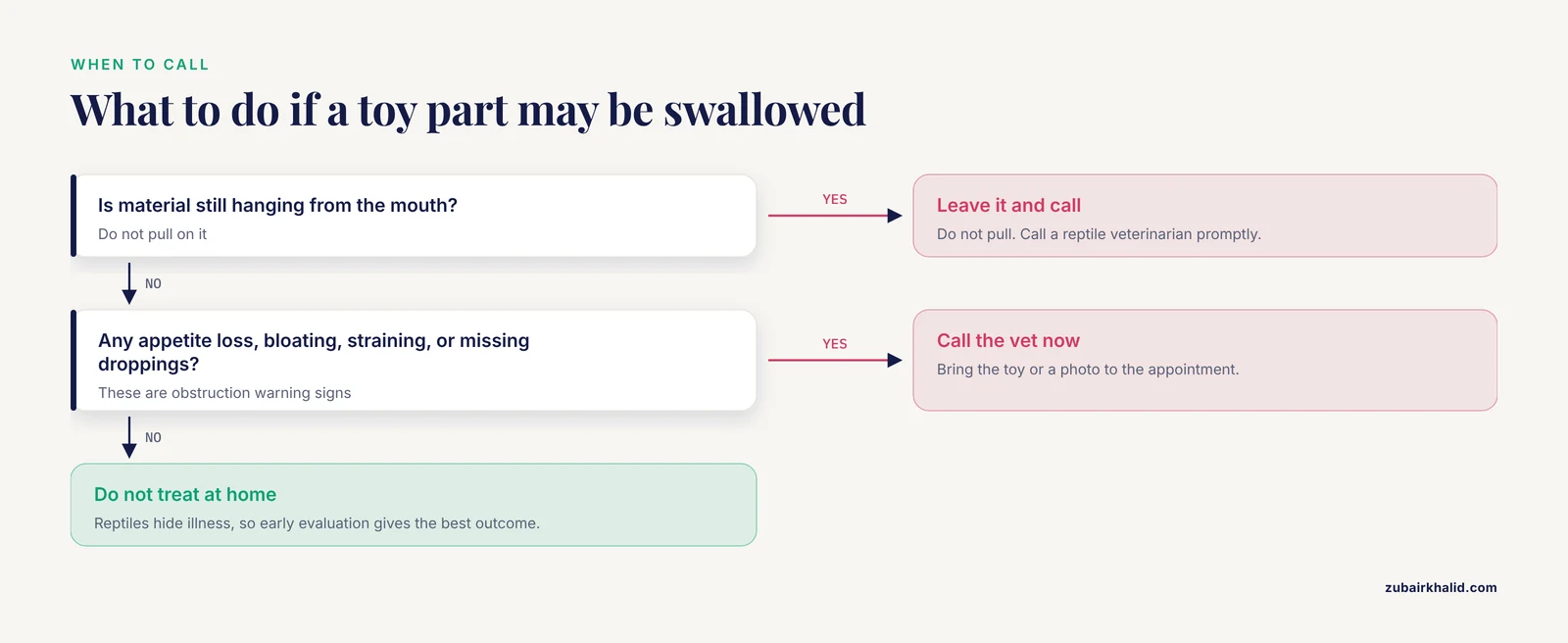
Watch for appetite loss, bloating, straining, or missing droppings and call a reptile veterinarian promptly. Do not pull on any material hanging from the mouth, and bring the toy or a photo of it to the appointment.