Bringing Home a New Crested Gecko: First Week Guide
By Dr. Zubair Khalid, DVM, MS, PhD ·
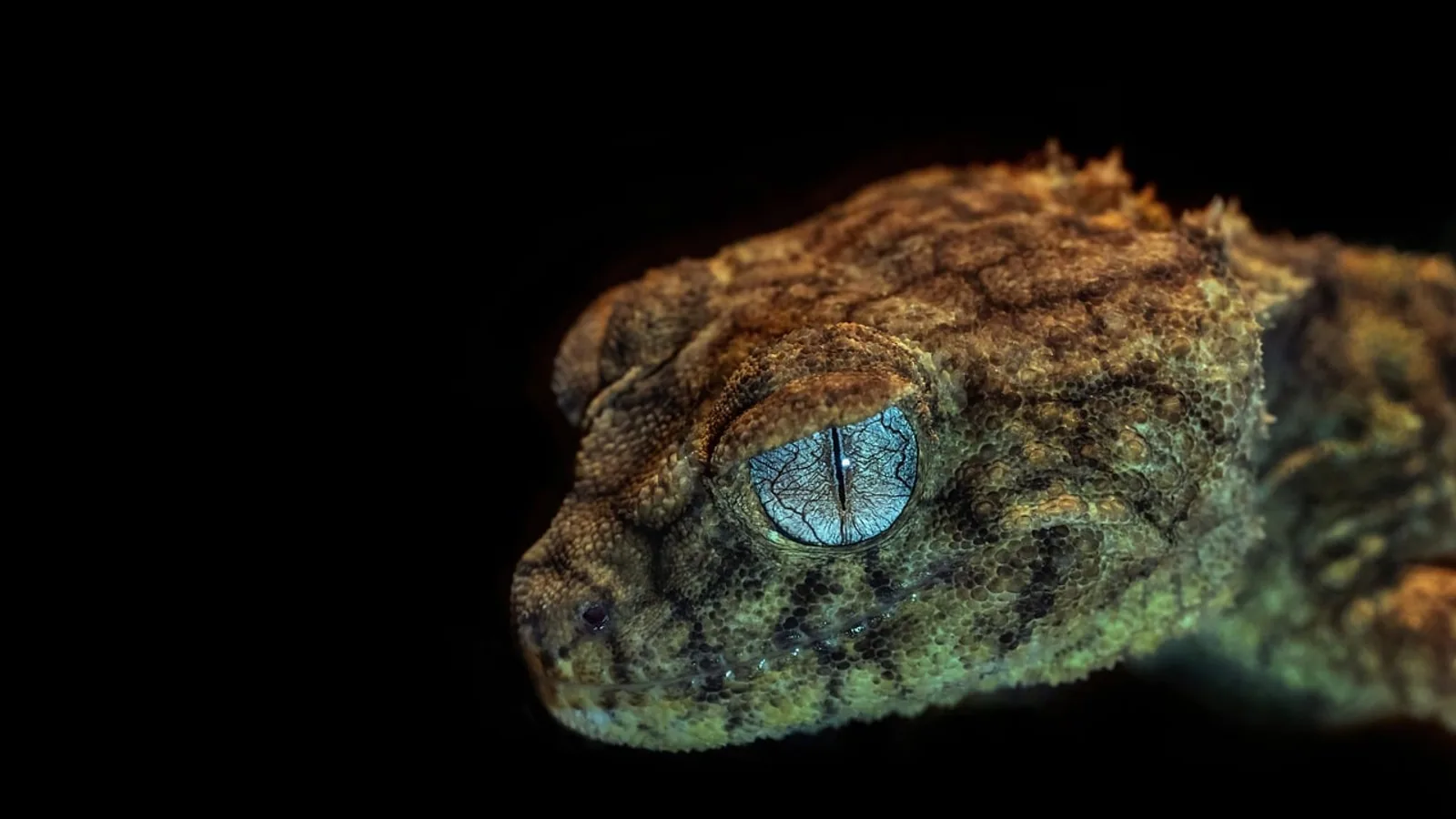
Your new crested gecko's first week is about one thing, and it is not handling or showing your pet off. It is about a quiet, correctly built enclosure, minimal disturbance, and careful observation while your gecko settles in. Most crested geckos need several days to two weeks to feel secure in a new home. Your job during the new crested gecko first week is to provide stable conditions, offer food and water, watch for droppings, and keep hands out of the enclosure unless there is a real reason to reach in.
This guide walks you through each day of that first week. It covers the setup checklist to complete before pickup, what to do on day one, how to read normal settling-in behavior versus warning signs, and how to plan the first vet visit for a crested gecko. Every recommendation is written for a first-time owner in the United States keeping a single gecko.
At a Glance: Your First Week Checklist
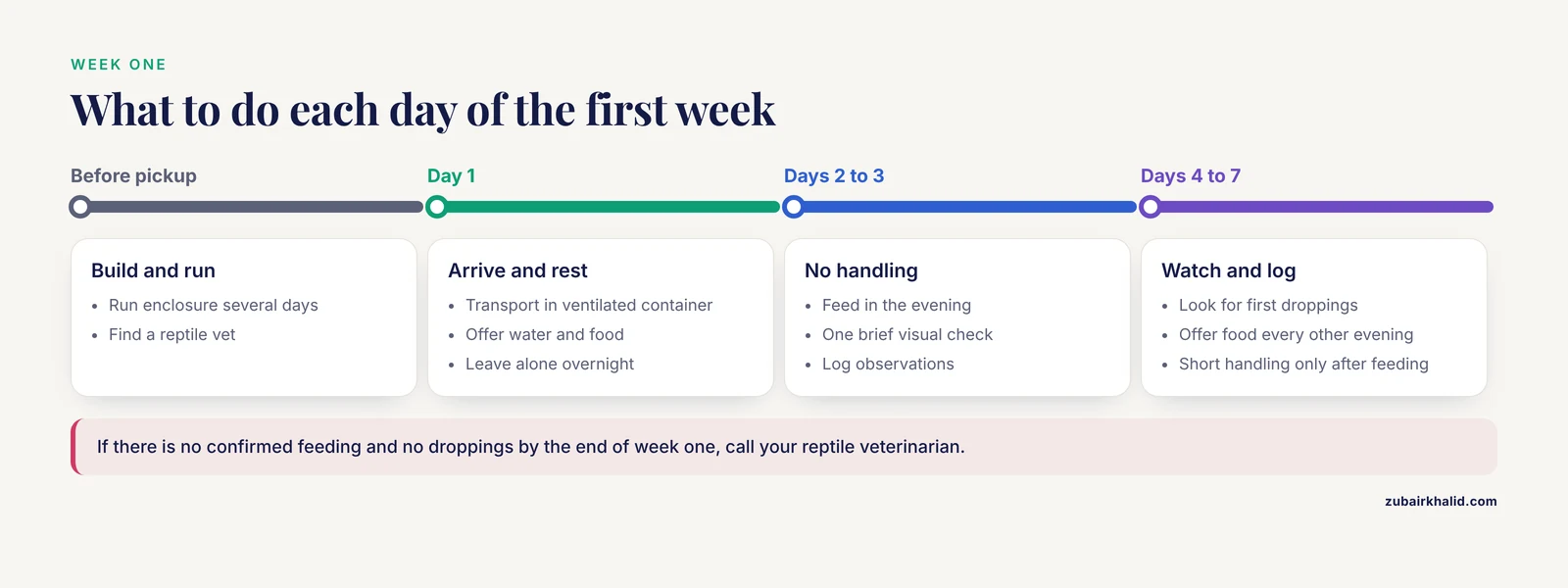
Use this checklist as your action plan. Each step is explained in detail in the sections below.
| Step | When | What to Do |
|---|---|---|
| 1 | Before pickup | Assemble and run the full enclosure for several days so temperature and humidity stabilize |
| 2 | Before pickup | Find a veterinarian who treats reptiles, ideally an Association of Reptilian and Amphibian Veterinarians member near you |
| 3 | Day 1 | Transport the gecko in a secure, ventilated container, place it in the enclosure, and leave it alone overnight |
| 4 | Day 1 | Offer fresh water and a small amount of food, then record whether either is touched |
| 5 | Days 2 to 3 | No handling. Feed in the evening, spot check, log observations |
| 6 | Days 4 to 7 | Watch for the first confirmed droppings. Offer food every other evening. Consider very short handling only once the gecko is eating and passing droppings |
| 7 | Any time | Escalate to a reptile veterinarian for refusal to eat past the settling window, no droppings, lethargy, open-mouth breathing, or visible injury |
Why the First Week Matters
The crested gecko, Correlophus ciliatus, is native to New Caledonia and was once thought to be extinct before the species became one of the most widely bred lizards in the pet trade [1]. That history matters to a new owner in a practical way. Captive-bred crested geckos are generally hardy and adapt well to human care, but the move from a breeder's rack, a pet store shelf, or a shipping box into your home is still a genuine stressor. Reptiles respond to relocation with hiding, reduced appetite, and reduced activity. Those responses are normal for a short period, and the first week is when you either support a smooth transition or accidentally prolong it.
Research on crested gecko welfare has shown that even established adults show measurable behavior patterns that shift with their environment and social setting [1]. For a newly arrived juvenile or adult, the equivalent signal is a burst of hiding and vigilance that fades as the animal maps its enclosure. The first week is when you confirm that your husbandry is right and that your gecko is physically healthy enough to make that transition.
Before Pickup: The New Crested Gecko Checklist
Bringing home a crested gecko goes far better when the enclosure has been running for days before the animal arrives. Reptiles do not acclimate to a cage that is still being adjusted. Complete this checklist at least three to four days before pickup, and longer if you can.
Enclosure
Choose a tall, ventilated enclosure rather than a long, low one. Crested geckos are arboreal, meaning they live in vegetation and climb, so vertical space and sturdy climbing surfaces matter more than floor area. Glass terrariums and well-built plastic or acrylic enclosures both work. The non-negotiable features are:
- A secure, escape-proof lid. Crested geckos are capable climbers and surprisingly strong for their size.
- Adequate cross-ventilation so air does not become stagnant. Stagnant, permanently wet air promotes skin and respiratory problems.
- Enough height to allow climbing and enough planting to allow the gecko to hide within foliage.
Furnishing
A bare enclosure is a welfare problem, not a minimal aesthetic. Your gecko needs:
- Multiple climbing structures at different heights, such as cork bark rounds, branches, or commercial reptile ledges.
- Live or artificial plants arranged so the gecko can move around the enclosure largely concealed. Dense foliage on the upper half of the enclosure gets the most use.
- At least one hide at a lower level in addition to foliage cover higher up.
- A shallow, stable water dish and a low-profile food dish that cannot easily tip.
Environment
Crested geckos are comfortable at typical indoor room temperatures, which is part of why they are popular. The key husbandry points to confirm before pickup are:
- A temperature gradient, meaning the enclosure has a slightly warmer zone and a cooler zone rather than one uniform temperature. Avoid heat rocks entirely. They cause burns in reptiles and have no place in a crested gecko setup.
- Moderate humidity with a drying period between moisture peaks rather than constantly saturated air. A digital hygrometer lets you track this.
- No intense basking lamps required for this species in most homes, though many keepers provide gentle low-level lighting on a natural day-night cycle so the gecko has a clear photoperiod.
Because specific target numbers for temperature and humidity depend on your home, your enclosure, and your gecko's age, confirm the exact parameters your setup should hold with an exotics veterinarian or your breeder before the gecko arrives. The Merck Veterinary Manual's exotic animal resources and VCA Animal Hospitals' reptile care guides both provide general orientation for new reptile keepers, and ReptiFiles publishes detailed evidence-based crested gecko husbandry guides if you want to go deeper on equipment selection.
Supplies to Have on Hand
- A commercially formulated crested gecko diet powder, which forms the staple diet for most pet crested geckos
- Appropriate feeder insects if you plan to offer them, plus a safe container for gut-loading and dusting them as your veterinarian advises
- A digital thermometer and a digital hygrometer
- A soft-coated small container or ventilated travel cup for transport home
- A simple logbook or notes app for feedings, droppings, and weight if you have a scale
- The exact food the gecko was already eating, if you know it, so you can avoid an abrupt diet change in week one
Finding Your Reptile Veterinarian Before You Need One
Do not wait for an emergency. Search the Association of Reptilian and Amphibian Veterinarians member directory at arav.org or ask local exotic animal clinics whether they see geckos. Having the clinic's phone number, hours, and after-hours plan written down before pickup turns a scary week-two decision into a simple phone call.
Bringing Home a Crested Gecko: Day One
Day one sets the tone for the entire settling-in period.
Transport
Transport the gecko in a small, ventilated, secure container with a soft paper lining and, if the trip is long, a slightly dampened paper towel for humidity. Keep the container out of direct sun, away from air conditioning vents, and as level as possible. A car ride is stressful enough without temperature swings and tipping. If you are buying from a breeder who ships, follow their arrival instructions exactly, which typically means confirming the animal is active and responsive as soon as the box arrives and reporting concerns immediately.
The First Hours
When you get home, do the following in order:
- Place the travel container inside the enclosure or transfer the gecko gently with minimal restraint. Do not chase, grab, or tail-check your new pet on day one.
- Provide fresh water and a small serving of prepared diet in the dish.
- Close the enclosure, dim the room lights, and leave the gecko alone. No handling, no visitors, no photography with flash.
A newly arrived crested gecko will usually spend day one hidden in foliage or tucked into a hide. This is expected. Resist the urge to check repeatedly. One calm visual check per evening is enough for the first several days.
Start Your Log
From day one, write down what you see each evening. Note whether the gecko moved positions, whether food or water was touched, and eventually whether droppings appear. Behavior records are more useful than memory, and they give your veterinarian objective information if a problem develops. Researchers studying crested gecko welfare rely on exactly this approach, defining behaviors and tracking where in the enclosure animals spend their time [1].
Days Two and Three: Letting Your Gecko Settle
Days two and three look boring, and that is the goal. Your tasks are limited to:
- Feeding in the evening, when crested geckos naturally become active, and removing or refreshing food the next morning as appropriate
- Topping up water
- A single brief visual check
- Recording observations
Expect your gecko to be mostly hidden, active only after lights out, and possibly uninterested in food. None of this is alarming yet.
A Note on Checking at Night
If you want to see your gecko actually living rather than hiding, use a dim red or blue flashlight briefly after lights out, or simply note the state of the food dish each morning. A licked-clean food dish or a dish with tongue marks tells you the gecko is eating even when you never see it happen.
How Long for a Crested Gecko to Settle In
This is the question every new owner asks, and the honest answer is a range rather than a date. Most crested geckos begin acting normally within several days to two weeks of arrival. Juveniles sometimes bounce back faster. Adults rehomed from established collections sometimes take the full two weeks, particularly if they were moved with a change in diet or enclosure style.
Settling in means the gecko shows all of the following, even if you rarely see it happen:
- Reliable feeding, confirmed by food disappearing or tongue marks on the dish
- Regular droppings
- Normal alertness when observed after dark, with purposeful climbing and positions held on branches rather than slumped low in the enclosure
- A gradual return to exploratory behavior, using multiple zones of the enclosure rather than one fixed hiding spot
If your gecko is eating and passing droppings by the end of week one, the transition is going well regardless of how much you see of the animal. If there is no confirmed feeding and no droppings by the end of the first week, that is the point to contact your reptile veterinarian rather than waiting indefinitely. Very young geckos have less reserve and should be evaluated sooner.
Days Four Through Seven: Food, Droppings, and First Handling
Feeding Through the Week
Offer the prepared diet your gecko is used to every evening or every other evening during week one. Many keepers alternate prepared diet with insects on a schedule, but week one is not the time to introduce anything new. Consistency helps a stressed animal recognize food quickly. If your gecko came from a breeder, ask what brand and consistency they used and match it.
Remove uneaten prepared diet within roughly a day so it does not spoil or attract fruit flies, and rinse the dish between feedings.
Watching for the First Droppings
A first dropping is the single most reassuring event of the first week. It confirms the gut is working and, in most cases, that feeding has occurred at least once. Crested gecko droppings are small, dark, and typically accompanied by a chalky white urate portion. Note the date of the first dropping in your log. After that, a healthy adult on a normal feeding schedule produces droppings at a regular interval, though you may not find them daily in a large planted enclosure.
Handling: Slow Is Fast
There is no prize for handling your gecko early, and there is a real cost. Handling a gecko that has not yet established feeding and normal droppings delays settling in and can cause a dropped tail. Crested geckos cannot regrow their tails once dropped, which makes early restraint genuinely consequential for this species.
A reasonable standard, which you can discuss and adjust with your veterinarian, is to wait until the gecko has fed at least twice and passed droppings before the first handling session. When you do begin, start with sessions measured in seconds to a couple of minutes inside the enclosure or just above it, letting the gecko walk from hand to hand rather than being held. Never grab from above, which mimics a predator strike. Scoop from below and let the animal grip you.
Reading Your Gecko's Behavior
Crested geckos communicate their state through where they position themselves and how they respond to disturbance. Structured behavior observation is how researchers evaluate crested gecko welfare, and it works just as well for a single pet owner [1].
During the first week, pay attention to:
- Position. A gecko perched on branches or within upper foliage is behaving like a healthy arboreal lizard. A gecko that stays flat on the floor in the open, unable to grip, is a red flag that needs veterinary attention.
- Grip strength. Crested geckos should cling confidently to surfaces and to your hand later on.
- Response to your presence. Brief alertness followed by retreating is normal. Complete lack of response, or frantic, repeated attempts to escape the glass when you approach, both warrant a closer look.
- Body posture. A relaxed gecko rests with limbs tucked in a natural position. A gecko lying sprawled, gasping, or holding its head oddly needs a veterinarian.
Welfare research on this species has also shown that individual geckos within the same enclosure occupy and use space differently, and that consistent individual behavior patterns are observable over time [1]. Learning your own gecko's baseline during a calm first week gives you the reference point you need to recognize when something changes later.
Should You Cohabitate Crested Geckos?
If you are bringing home more than one crested gecko, or planning to combine geckos later, read this section carefully. Housing males together is widely understood to be a problem because males are aggressive toward one another [1]. Because of that, keeping multiple females together has been common practice among keepers and zoological institutions on the assumption that females are not aggressive toward each other [1].
Research specifically examining cohabitated female crested geckos challenges that assumption. In a study that placed two groups of three female crested geckos in a shared vivarium and video recorded each group for 60 days, the investigators identified distinct aggressive behaviors, analyzed how often each occurred, and mapped where in the enclosure aggression happened [1]. In both groups, one female emerged as clearly dominant while the other two were consistently submissive [1]. In other words, cohabitated females were not behaving as an equal, peaceful group. They were operating under a dominance hierarchy sustained by submissive behavior from the lower-ranking animals [1].
For the first week this means one clear rule. Your new gecko should live alone. Quarantine and solo housing for a new arrival is standard reptile practice, and this research gives an additional species-specific reason to make solo housing permanent rather than temporary. If you were considering a pair or a group, discuss the welfare implications of female dominance hierarchies with your veterinarian and review the study data before deciding [1].
The First Vet Visit for a Crested Gecke
Timing the first vet visit for a crested gecko is a judgment call, and here is the framework most experienced keepers and exotics veterinarians work from.
Option A: Scheduled Wellness Visit in Week One or Two
If a reptile veterinarian is available near you, scheduling a new-patient wellness exam during the first two weeks is the gold standard approach. The visit typically includes a weigh-in, a whole-body examination, a look at the mouth and vent, a discussion of your husbandry with actual numbers from your thermometer and hygrometer, and a fecal parasite screening if the veterinarian recommends one. Going early means baseline data is recorded while the gecko is new, and any husbandry corrections happen before bad habits set in.
Option B: Settling-In First, Then a Wellness Visit
If your gecko arrived by ship, is very small, or seems stressed, some owners wait until the gecko is eating reliably before adding a car trip. This is a defensible choice if the gecko is feeding and producing droppings normally. The tradeoff is that a health problem discovered later has had more time to progress. If you choose this path, the visit should still happen within the first several weeks, not someday in the vague future.
Either way, the visit itself should not be skipped. Ask the clinic whether they want a fresh fecal sample brought along, and bring your observation log. The log turns "he seems fine I guess" into concrete data.
Reptile appointments differ from dog and cat appointments in one way worth knowing in advance. Because reptiles hide illness, exotics veterinarians rely heavily on history and husbandry review. Expect detailed questions about your temperatures, humidity, enclosure, and diet. Accurate answers from your log make the visit far more valuable.
Common First-Week Mistakes
These are the errors seen repeatedly in new crested gecko homes. Each one is avoidable.
- Handling in the first days. The most common and most damaging mistake. Every early handling session resets the settling-in clock and risks a dropped tail.
- Adding the gecko to an unprepared enclosure. Setting up the same day as pickup means unstable temperature and humidity during the most sensitive window. Build first, run the enclosure, then bring the animal home.
- Overfeeding out of worry. A gecko that is not eating on day two does not need more food offered more often. It needs time and undisturbed evenings.
- Diet switching immediately. Changing brands or adding new foods during the stress of relocation suppresses appetite further. Match the previous diet first, transition later.
- Cohabiting with another gecko, even temporarily. Dominance behavior in cohabitated females is well documented, and a subordinate gecko in a shared enclosure experiences chronic low-level stress [1]. Week one is the time to commit to solo housing.
- Ignoring the enclosure's dry or saturated extremes. Guessing at humidity without a hygrometer, or adding a heat source without a thermometer, are how new keepers create problems that only show up weeks later.
- Frequent deep cleaning or rearranging. A gecko that finally mapped its enclosure loses that map when the furniture moves. Leave the layout alone for the first weeks.
- Posting for advice instead of calling the vet. Online forums are full of confident answers about individual animals nobody has examined. For health questions, the person who has seen your gecko beats the person who has not.
Troubleshooting the First Week
My gecko is not eating
Not eating in the first several days is normal and usually resolves on its own. Confirm the food is the type the gecko already knew, offer it in the evening, and keep handling at zero. If there is no confirmed feeding by roughly the end of week one, contact your reptile veterinarian. Small juveniles should be assessed sooner because they have less energy reserve.
My gecko is always hiding
Hiding is the default posture of a settling gecko. As long as the animal is feeding and passing droppings, hidden is fine. If hiding comes with a gecko that has stopped eating, stopped producing droppings, or is consistently on the floor rather than climbing, escalate.
I have not seen a dropping yet
Check under foliage and on enclosure walls, since geckos often defecate while perched. If you genuinely find none by the end of the first week, contact your veterinarian. Also consider that a dropping may have been missed or eaten by feeder insects if you have offered any.
My gecko dropped its tail
Do not panic, and do not attempt any home treatment. The tail will not regrow, but crested geckos live full, healthy lives without one. Keep the enclosure clean, confirm the injury site stays dry and uninfected, and have your veterinarian examine the gecko. Identify what startled the animal and remove that trigger before resuming any handling.
My gecko seems too active at night and stressed by day
Crested geckos are naturally nocturnal. Nighttime activity is normal and desirable. Daytime frantic behavior, persistent pacing, or repeated attempts to push through the glass suggests something in the environment needs review. Check temperatures, enclosure security, and whether the enclosure is in a high-traffic location. Discuss persistent escape behavior with your veterinarian or an experienced mentor keeper.
Welfare and Safety Points
A few principles should govern everything you do in week one and beyond.
- Solitary housing is the welfare-safe default. The research on female crested geckos found a dominant-submissive structure rather than the peaceful coexistence that cohabitation assumes [1]. Solo housing removes that chronic social pressure entirely.
- The tail does not grow back. Crested geckos that drop their tails keep them dropped for life [1]. Treat every potential startle, grab, or premature handling session as a permanent decision.
- Welfare is measurable. Modern reptile welfare work uses defined behaviors and time budgets to evaluate how animals are doing, not just whether they are alive [1]. Your evening observation log is a simplified version of the same tool.
- Stability beats optimization. A slightly imperfect but stable environment is better for a settling gecko than constant adjustments chasing perfect numbers. Change one variable at a time and give the animal days to respond before changing anything else.
Limitations and When to Contact a Veterinarian
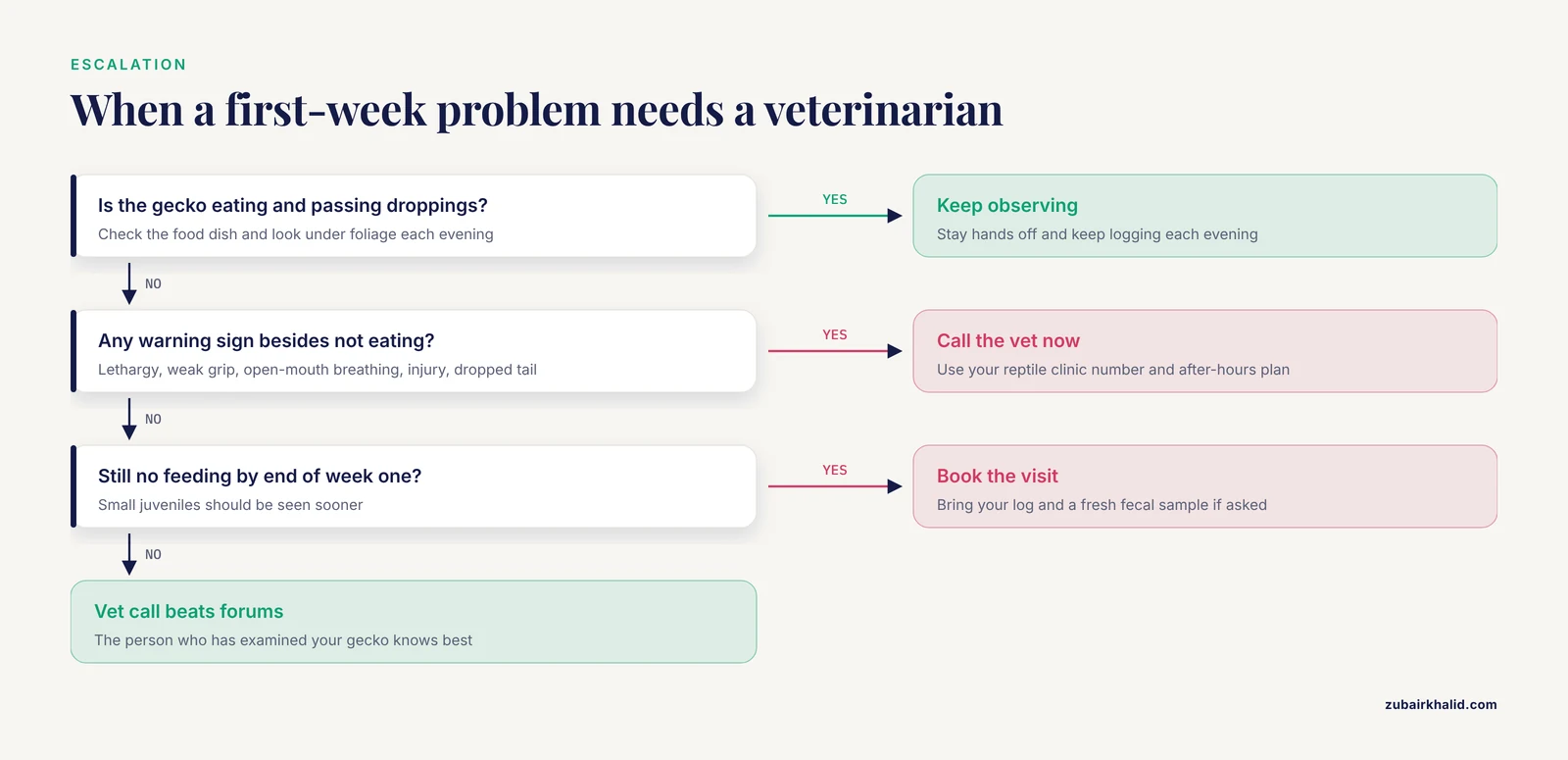
Every individual gecko is different, and only a veterinarian who has physically examined your animal can diagnose or treat a health problem. The guidance here describes the normal first-week transition and the clear escalation points, not a diagnosis tool.
Contact a reptile veterinarian promptly, within days rather than weeks, if you observe any of the following:
- No confirmed food taken and no droppings by the end of the first week, or sooner in a very small juvenile
- Lethargy, weak grip, or a gecko found on the enclosure floor unable to climb
- Open-mouth breathing, clicking sounds, mucus around the mouth or nose, or any suspected respiratory problem
- Swelling, wounds, stuck shed around toes or the tail tip, or a visibly bent or soft jaw
- A dropped tail, any prolapse of tissue from the vent, or a seizure-like episode
- Regurgitation, diarrhea, or droppings that are strikingly abnormal in color or consistency
- Rapid weight loss, if you have a scale, or a visibly thinner body or sunken eyes
If you do not yet have a reptile veterinarian, use the Association of Reptilian and Amphibian Veterinarians directory at arav.org to find one now, before the situation becomes urgent.
Frequently Asked Questions
How long does it take a crested gecko to settle in?
Most crested geckos settle in within several days to two weeks. Eating reliably and producing normal droppings are the milestones that tell you the transition is complete, not how often you see the gecko out in the open.
Should I feed my crested gecko on the first day?
Yes. Offer a small amount of the food it already knows, plus fresh water, on the evening it arrives. Expect that it may not eat for a few days, which is normal during relocation.
When can I start handling my new crested gecko?
Wait until the gecko is feeding regularly and passing droppings, which is usually by the end of the first week or shortly after. Keep the first sessions very short, scoop from below, and remember that a dropped tail never regrows.
Can I keep two crested geckos together?
Keep them separately, especially during the new arrival period. Males are aggressive toward one another, and research on cohabitated females shows they establish a dominance hierarchy rather than living as peaceful equals, so solo housing is the safest welfare choice.
Do I need a vet visit right away for a new crested gecko?
A scheduled wellness exam with a reptile veterinarian within the first two weeks is the ideal approach, including a weight, examination, and possible fecal test. If your gecko shows any warning sign such as no droppings, lethargy, or breathing difficulty, call sooner.
Why is my new crested gecko not eating?
Relocation stress is the most common cause, and brief appetite suppression is expected. Confirm the food matches what it was eating before, offer in the evening, and keep handling at zero. Unconfirmed feeding by the end of week one warrants a veterinary call.
What does a proper crested gecko enclosure look like?
A tall, secure, well-ventilated enclosure with climbing branches, dense foliage for hiding, a hide, a shallow water dish, a stable food dish, and monitored temperature and humidity. Ask your exotics veterinarian to review your specific temperature and humidity targets, since they vary with your setup and your gecko's age.
Is a crested gecko a good first reptile?
For many beginners, yes. Crested geckos are captive-bred, adapted well to human care, do not require intense basking equipment in most homes, and eat a convenient prepared diet. The main beginner pitfalls are premature handling and housing multiple geckos together, both of which this guide is designed to prevent.
This article is educational and is not a substitute for veterinary diagnosis or treatment.