Bringing Home a New Bearded Dragon: First Week Guide
By Dr. Zubair Khalid, DVM, MS, PhD ·
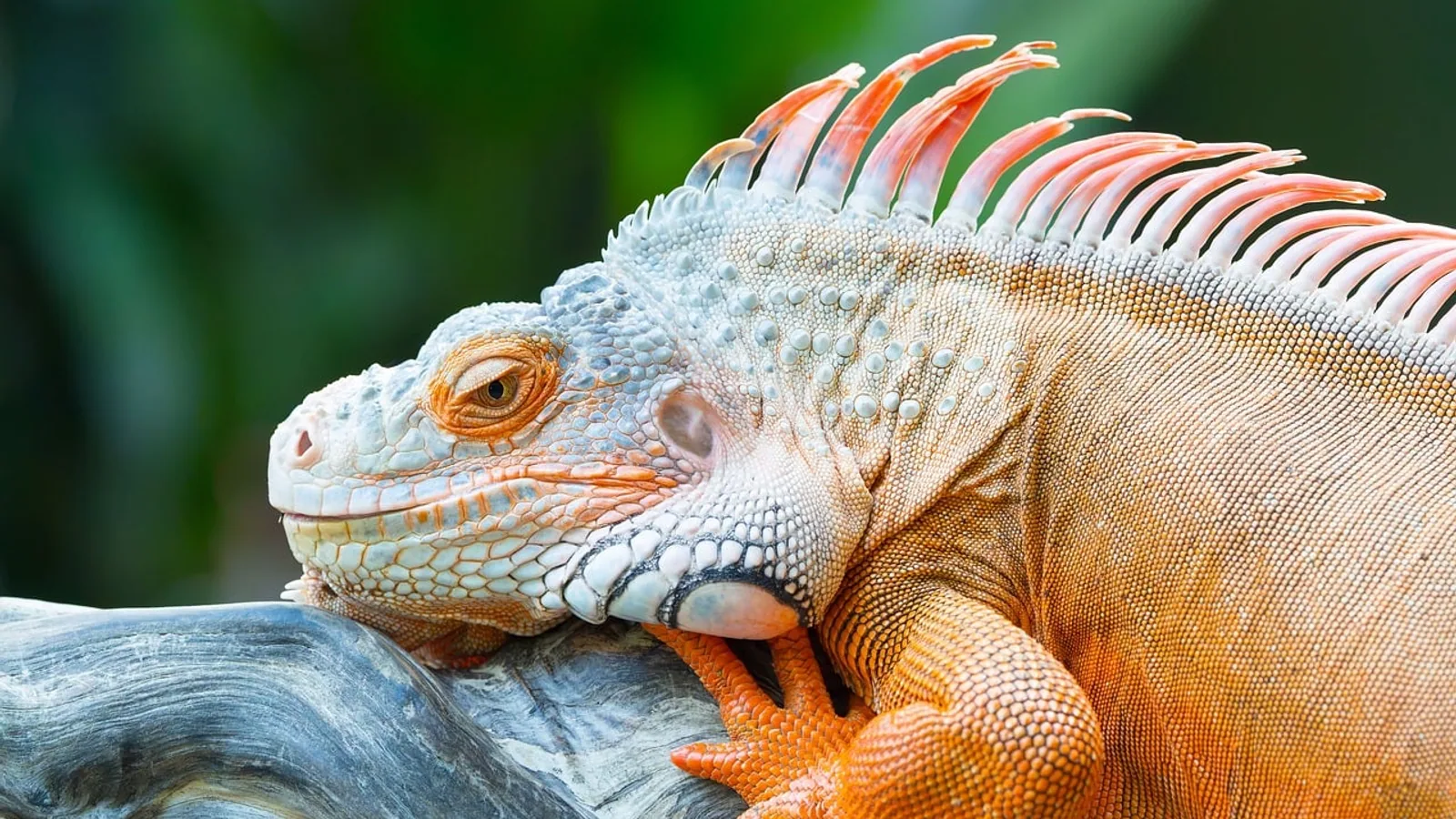
Bringing home a bearded dragon goes best when you treat the first week as a settling-in period rather than an introduction period. Set up the complete enclosure before the lizard arrives, keep handling to a minimum for the first several days, offer small meals once the animal is warm and alert, and schedule a wellness examination with a reptile veterinarian within the first week or two. Most bearded dragons need roughly one to two weeks to settle into a new home, though some confident juveniles eat within a day and some cautious adults take longer. Your job in week one is simple: deliver correct heat, light, food, water, and quiet, then watch.
This guide walks through the setup, the daily routine, the behaviors that are normal during adjustment, the mistakes that cause most first-week problems, and what to expect at the first vet visit.
At a Glance: New Bearded Dragon First Week Checklist
| Priority | Action | Timing |
|---|---|---|
| Enclosure | Fully set up and running (heat, UVB light, hides, water) | 1 to 2 days before arrival |
| Transport | Warm, ventilated container, minimal stops | Day of pickup |
| Acclimation | No handling beyond essential health checks | Days 1 to 3 |
| Feeding | Small portions of appropriate prey and greens once the dragon is active and warm | Days 1 to 7 |
| Observation | Track appetite, basking, droppings, and behavior daily | Every day |
| Hygiene | Hand washing before and after contact, enclosure cleaning away from kitchen surfaces | Every day |
| Veterinary care | Book a wellness visit with a reptile-experienced veterinarian | Week 1 or 2 |
Print this list or keep it on your phone. Every step below expands on one of these rows.
Day One: Bringing Home a Bearded Dragon
The trip home is the first stressor your new lizard experiences, and you can control most of it. Transport the animal in a ventilated plastic container or small carrier lined with paper towel. Keep the container out of direct sun and away from air conditioning vents. A bearded dragon that arrives chilled cannot digest food or behave normally, so the first stop at home is warmth.
Place the dragon gently into the prepared enclosure, close the doors, and leave it alone. Resist the urge to hold, photograph, or show off your new pet on day one. A young bearded dragon arriving in a new environment is processing unfamiliar light, smells, surfaces, and handlers all at once. Giving it a dark hide and uninterrupted quiet lets the animal map its territory, find its basking spot, and learn where the food comes from. Many owners report their dragon hiding constantly for two or three days. This is normal, not a sign of illness, as long as the animal emerges to bask and drink.
Two things are worth doing on day one rather than later. First, confirm your temperatures with a digital thermometer or temperature gun at the basking surface and at the cool end, since readings taken on the glass wall do not reflect what the lizard actually experiences. Second, note the time of your local pet store or breeder so you can ask what the animal was eating. A sudden diet change on top of relocation stress often causes a feeding strike.
New Bearded Dragon Checklist: Equipment and Setup
Everything on this list should be purchased, installed, and running before the animal arrives. Reptile husbandry guides from the Merck Veterinary Manual and VCA Animal Hospitals describe the same core requirements: a secure enclosure, a thermal gradient, full-spectrum ultraviolet lighting, a water source, and appropriate furnishings.
Enclosure
A juvenile can start in a smaller enclosure, but plan for an adult-size habitat quickly, because bearded dragons grow fast. Recent research compared captive-bred bearded dragons in naturalistic versus standard enclosures and found that naturalistic setups provided better thermal heterogeneity, meaning a wider range of microclimates the lizard could move between [1]. In practical terms, a longer, well-structured tank or vivarium with a genuine warm side and cool side serves your animal better than a small bare box. The same study found that lizards in both styles spent most of the day inactive and concentrated their time in one area, so do not assume extra floor space alone fixes behavior. Furnishing matters as much as footprint.
Heating and Lighting
Bearded dragons are heliothermic baskers from arid Australia. They need a basking zone that reaches a surface temperature in the range described by mainstream reptile care guides, generally around the high 90s to low 100s Fahrenheit for adults, with a cooler retreat substantially lower, and a nighttime drop. Confirm the exact targets for your animal's age with your exotics veterinarian or the care sheet your breeder provides, because juveniles run hotter schedules than adults.
Two lighting elements are non-negotiable in standard husbandry practice:
- A basking lamp that creates the warm zone and a visible day-night cycle.
- Full-spectrum UVB lighting, replaced on the schedule recommended by the manufacturer, because UVB output declines before the bulb burns out visibly.
Keep all lighting on a timer so the photoperiod is consistent from day one. Consistency is one of the strongest settling cues you can give a new reptile.
Furnishings, Substrate, and Hides
Provide at least one solid hide on the cool side and a basking platform or rock-like structure under the warm light. Branches or ledges give climbing options. Avoid loose particulate substrate for a brand-new animal that you have not yet had a fecal examination performed on, since impaction and parasite exposure risks are easier to manage on paper towel, reptile carpet, or tile during the first weeks. Simple, cleanable substrate also makes droppings easy to find, which matters for daily health monitoring.
Skip the crowds of decorations for now. A few well-placed items create the thermal and security structure the lizard needs without giving prey-species nerves twelve hiding places you cannot monitor.
Food and Water
Offer a shallow water dish and a simple feeding dish. Keep greens fresh and available, and have appropriately sized feeder insects on hand before pickup. Insects should be no wider than the space between the dragon's eyes, a sizing rule repeated across reputable care guides including ReptiFiles and VCA Animal Hospitals materials.
How Long for a Bearded Dragon to Settle In
Most bearded dragons settle within one to two weeks, but the range is wide. Juveniles from a breeder that were already eating well often resume eating within 24 to 72 hours. Rescues, adults from pet stores, and animals that traveled far can take a week or more to act relaxed. Settling is a behavior pattern, not a single milestone. You are looking for these signs appearing together:
- Regular basking under the heat and UVB lights, in an open position rather than pressed into a corner
- Interest in food, first tentative and then consistent
- Well-formed droppings on a predictable schedule
- Relaxed posture while resting, limbs sprawled rather than tightly tucked
- Tolerance of your presence near the glass without fleeing or darkening
Research on bearded dragon welfare is actively developing better ways to read these states. One 2025 study found that lizards housed in standard, less enriched enclosures used their left eye significantly more during basking, a lateralized eye-use pattern associated with negative affective states, while lizards in enriched enclosures did not [2]. Eye use during basking is not something a first-time owner needs to score formally, but the underlying message is useful: the way your dragon behaves while basking carries information about how it feels about its environment. A dragon that basks openly, in the open, is telling you something different from one that basks only while wedged behind furniture.
Behavioral adjustment is also shaped by the enclosure itself. The naturalistic versus standard enclosure study found no clear welfare advantage in stress-related behaviors between the two styles, and lizards in both spent the majority of the day inactive [1]. So if your new dragon sleeps a lot and moves little, that alone is not a red flag. Judge settling by feeding, basking quality, droppings, and response to your approach.
Feeding During the First Week
Feed small amounts on day one only if the dragon is alert, warm, and showing interest. Many will not eat for two or three days, and forcing the issue does not help. The pattern to establish looks like this:
- Offer a small number of appropriately sized insects in the late morning, after the animal has had time to warm up under its basking light, since digestion depends on body temperature.
- Leave a shallow dish of chopped greens and vegetables available daily, even if ignored at first.
- Remove uneaten insects after the feeding window so they cannot stress or nip the dragon overnight.
- Keep a simple log of what was offered and what was eaten.
Juveniles eat predominantly insect prey with daily feedings, while adults shift toward a largely plant-based diet with insects offered less frequently. Your source, whether breeder, rescue, or store, should tell you what the animal was eating. Match that diet for the first week and change gradually later if needed. Discuss calcium and vitamin supplementation with your reptile veterinarian rather than guessing, because appropriate dosing depends on the animal's age, diet, and UVB setup.
A feeding strike of three to four days in an otherwise alert, active dragon is common during acclimation. A feeding strike with lethargy, weight loss signs, sunken eyes, or no droppings is a veterinary problem.
Handling and Trust Building
The fastest way to slow down settling is to handle too much too soon. Follow this progression:
- Days 1 to 3: No handling. Speak and move calmly near the enclosure so the dragon learns your presence is not a threat.
- Days 4 to 5: Rest your hand in the enclosure for a few minutes without grabbing. Let the animal choose to approach.
- Days 6 to 7: If the dragon is eating and basking normally, short sessions of gentle lifting, low to the ground, a few minutes at a time.
- Always: Support the whole body, never grab from above, and never pick up a dragon by the tail.
Watch for the stress signals that say you moved too fast: a darkened beard, arm waving, gaping mouth, flattening the body sideways, or frantic escape attempts. When you see them, end the session and give the animal a day of quiet. Pushing through a stress response teaches the dragon that hands are bad news.
Special Considerations for Leatherback and Silkback Morphs
If you are bringing home a bearded dragon with reduced or absent scales, the first week has one added layer. Research on the three common scalation phenotypes found that scaleless dragons, called silkbacks, lost water evaporatively at roughly twice the rate of normal-scaled wild-types, while leatherbacks fell closer to silkbacks than to wild-types in their water loss rates [3]. Notably, the phenotypes showed almost no meaningful difference in thermal preference, differing by about one degree Celsius at most [3].
For you, this means a leatherback or especially a silkback may need closer attention to hydration during the settling period, when stress and irregular drinking compound evaporative losses. Offer water consistently, watch for wrinkled or tacky skin, and consider offering brief shallow soaks if your veterinarian recommends them. Do not assume the animal will thermoregulate differently, because the evidence says thermal preference is similar across phenotypes. The difference is water, not temperature.
Hygiene and Household Safety in Week One
Reptiles can carry bacteria that affect humans, and the first week, when you are handling the animal and its enclosure most intensively, is when hygiene habits should be locked in. A 2025 surveillance study of apparently healthy bearded dragons and leopard geckos in Portugal detected third-generation cephalosporin-resistant Enterobacterales in 17.9 percent of sampled reptiles, including organisms carrying ESBL and AmpC resistance genes [4]. The practical takeaways for a new owner are straightforward and apply regardless of where your dragon came from:
- Wash hands with soap and water after every handling session and after any contact with enclosure contents.
- Clean enclosures, dishes, and décor away from kitchen food-preparation surfaces, ideally in a utility sink or bathtub dedicated to the task.
- Supervise interactions between the dragon and children, and make hand washing non-negotiable for them.
- Do not wash reptile equipment in the kitchen sink.
The Association of Reptilian and Amphibian Veterinarians publishes owner-facing hygiene guidance consistent with these points, and your first vet visit is a good time to ask about the routine that fits your household.
The First Vet Visit for a Bearded Dragon
Schedule a wellness examination within the first week or two, even if the animal appears completely healthy. A prompt visit accomplishes three things. It establishes a baseline weight and body condition for future comparison. It catches problems acquired before you brought the animal home, which is common in store-sourced lizards. And it gives you a professional check on your husbandry, which is the root cause of most reptile illness.
Use the ARAV veterinarian directory at arav.org to find a clinician with reptile experience near you. Not all general practice veterinarians see exotics, so confirm before you book, and ask whether the clinic sees bearded dragons regularly.
What Happens at the Visit
A typical new-reptile appointment includes:
- A hands-on physical examination, including body condition, oral cavity, eyes, limbs, and vent.
- Measurement and recording of weight and length as your baseline.
- A review of your enclosure setup. Bring photos of the full habitat, the lighting, and your thermometer readings. Many reptile veterinarians consider this the most valuable part of the visit.
- A fecal examination to screen for parasites, which are common in newly imported and store-sourced animals and can be present even in dragons that look healthy.
- Discussion of diet, supplementation, and your specific questions.
Transport the dragon in its carrier with a paper towel lining, and bring a fresh fecal sample from that morning if you can collect one. Ask the clinic in advance whether they want the sample kept cool or delivered fresh.
Quarantine From Other Reptiles
If you keep other reptiles, house the newcomer in a separate room with dedicated equipment for the quarantine period your veterinarian recommends, commonly several weeks to a few months. New animals can carry parasites and bacteria that are harmless to them but problematic for your existing collection. Strict hand hygiene and separate cleaning tools are the minimum standard, a practice reinforced by the finding that apparently healthy pet reptiles can carry resistant organisms without any outward sign [4].
Common First-Week Mistakes

Most first-week failures trace back to a short list of errors:
- Setting up the enclosure after the animal arrives. Heat and UVB need to be running and verified before the dragon enters. A dragon in a cold enclosure stops digesting and stops eating, and you lose settling days fixing problems that were preventable.
- Measuring temperature on the glass. Glass and wall temperatures can differ substantially from the surface temperatures the lizard actually uses. Use a digital probe or infrared thermometer pointed at the basking surface.
- Handling too early and too long. Every forced session during acclimation adds stress hormones to an animal already at its coping limit.
- Feeding oversized insects. Impaction risk is real and avoidable with the eye-width sizing rule.
- Co-housing with another dragon. Bearded dragons are not social in the way mammals are. Tail nips, toe injuries, and chronic stress result from shared housing. One dragon, one enclosure, permanently.
- Ignoring the cool end. Owners focus on the basking spot and forget the dragon needs a genuinely cooler zone to thermoregulate. A gradient, not a hot box, is the goal.
- Skipping the wellness visit because the animal looks fine. Parasites and early husbandry-related problems are invisible to owners and obvious to a reptile veterinarian with the right tests.
Troubleshooting the First Week
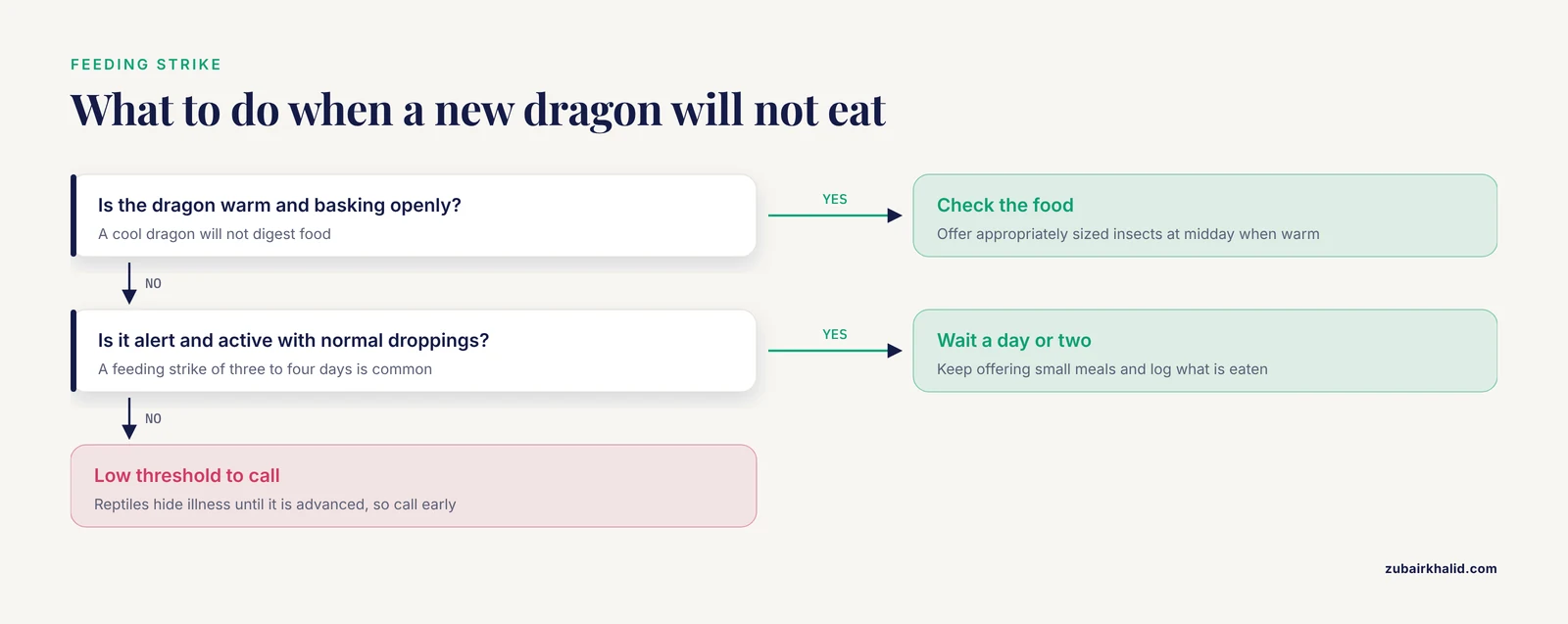
The dragon has not eaten in three days. Check temperatures first, since a cool dragon will not digest. Confirm the animal is basking openly. Offer food at midday when it is warm. If it remains alert and active with normal droppings, wait another day or two. If lethargy accompanies the refusal, call your veterinarian.
The beard is black constantly. Occasional darkening during displays is normal. A persistently black beard in a new animal signals stress or discomfort. Review temperatures, handling frequency, and whether the enclosure sits in a high-traffic or noisy location. A black beard with lethargy or open-mouth breathing warrants a vet call.
The dragon hides all day. Common in week one. Confirm the hide is on the appropriate side and that temperatures are correct. Give it more time. Persistent hiding beyond two weeks with no basing or feeding means veterinary evaluation.
Glass surfing. Frantic pacing against the glass usually means the enclosure is too small, too bare, too hot, or reflecting light oddly, or that the animal is stressed by constant handling. This is one behavior the enclosure research speaks to directly, because lizards in both naturalistic and standard enclosures concentrated their activity in limited areas, and enclosure structure strongly shapes behavior patterns [1]. Simplify and verify temperatures before assuming a behavioral disorder.
Loose or runny droppings. Stress from transport can cause temporary soft stools. Persistent diarrhea, especially with blood or a striking odor, needs a fecal examination promptly, which is another reason the first vet visit should not wait.
Limitations and When to Contact a Veterinarian
Every bearded dragon is an individual, and this guide describes patterns, not guarantees. Individual cases need a reptile veterinarian, and nothing here replaces an in-person examination, diagnostic testing, or treatment decisions made by a licensed clinician who has seen your animal.
Contact a veterinarian promptly, or an emergency exotics service after hours, for any of the following:
- No food intake combined with lethargy, especially beyond three or four days
- Open-mouth breathing, wheezing, or mucus around the nose or mouth
- Sunken eyes, wrinkled skin, or other signs of dehydration
- Tremors, twitching, seizures, or loss of limb control, which can indicate metabolic bone disease
- Swelling of the jaw, limbs, or body
- Persistent diarrhea, straining, or absence of droppings
- Injuries from cage mates, feeder insects, or falls
- A black beard that persists for more than a day without an obvious environmental cause
- Regurgitation or repeated vomiting
Reptile patients often hide illness until disease is advanced, so the threshold for calling should be low in the first weeks of ownership.
Frequently Asked Questions
How long does it take for a bearded dragon to settle in?
Most bearded dragons settle within one to two weeks of arriving home. Confident juveniles may eat on day one, while cautious adults or rescues can take longer. Judge settling by the return of normal basking, feeding, and droppings rather than by a fixed number of days.
Should I handle my bearded dragon during the first week?
Keep handling to a minimum for the first three days and introduce short, calm sessions only once the dragon is eating and basking normally. Early forced handling is the most common cause of prolonged settling periods.
Is it normal for a new bearded dragon not to eat?
Yes, a feeding strike of three to four days is common during acclimation as long as the animal stays alert, basks normally, and passes droppings. A refusal to eat combined with lethargy, weight loss, or no droppings needs veterinary attention.
What should I feed a new bearded dragon in the first week?
Feed whatever diet the breeder, store, or rescue was already providing, in appropriately sized portions, and change diets gradually later. Juveniles eat mainly insects with daily feedings, while adults eat mostly greens and vegetables with insects offered less often. Ask your reptile veterinarian about supplementation for your specific setup.
When should I schedule the first vet visit for a bearded dragon?
Book a wellness examination within the first week or two of ownership, ideally sooner for a store-sourced or rescued animal. Use the ARAV directory to find a veterinarian who sees reptiles regularly.
Do bearded dragons carry diseases that can infect humans?
Reptiles can carry bacteria of concern to people, including antimicrobial-resistant organisms, which is why hand washing after every contact and cleaning equipment away from kitchen surfaces are standard practice. Ask your veterinarian about the hygiene routine for your household.
What temperature should my bearded dragon's enclosure be?
Your dragon needs a thermal gradient with a warm basking zone and a substantially cooler retreat, with a drop at night, and exact targets vary with age. Verify surface temperatures with a probe or infrared thermometer and confirm the specific numbers for your animal with your exotics veterinarian or a reputable care guide.
Do leatherback and silkback bearded dragons need different first-week care?
Silkbacks lose water through their skin at roughly twice the rate of normal-scaled dragons, and leatherbacks fall between the two, so watch these morphs closely for dehydration during the settling period. Their temperature needs are similar to wild-types, so focus on hydration and regular skin checks.
This article is educational and is not a substitute for veterinary diagnosis or treatment.
Sources
- Influence of enclosure design on the behaviour and welfare of Pogona vitticeps.
- Visual lateralization as an indicator of animal welfare.
- Bearded dragons (Pogona vitticeps) with reduced scalation lose water faster but do not have substantially different thermal preferences.
- ESBL/pAmpC-producing Enterobacterales in common leopard geckos (Eublepharis macularius) and central bearded dragons (Pogona vitticeps) from Portugal.