Leopard Geckos Enrichment Ideas That Match Natural Behavior
By Dr. Zubair Khalid, DVM, MS, PhD ·
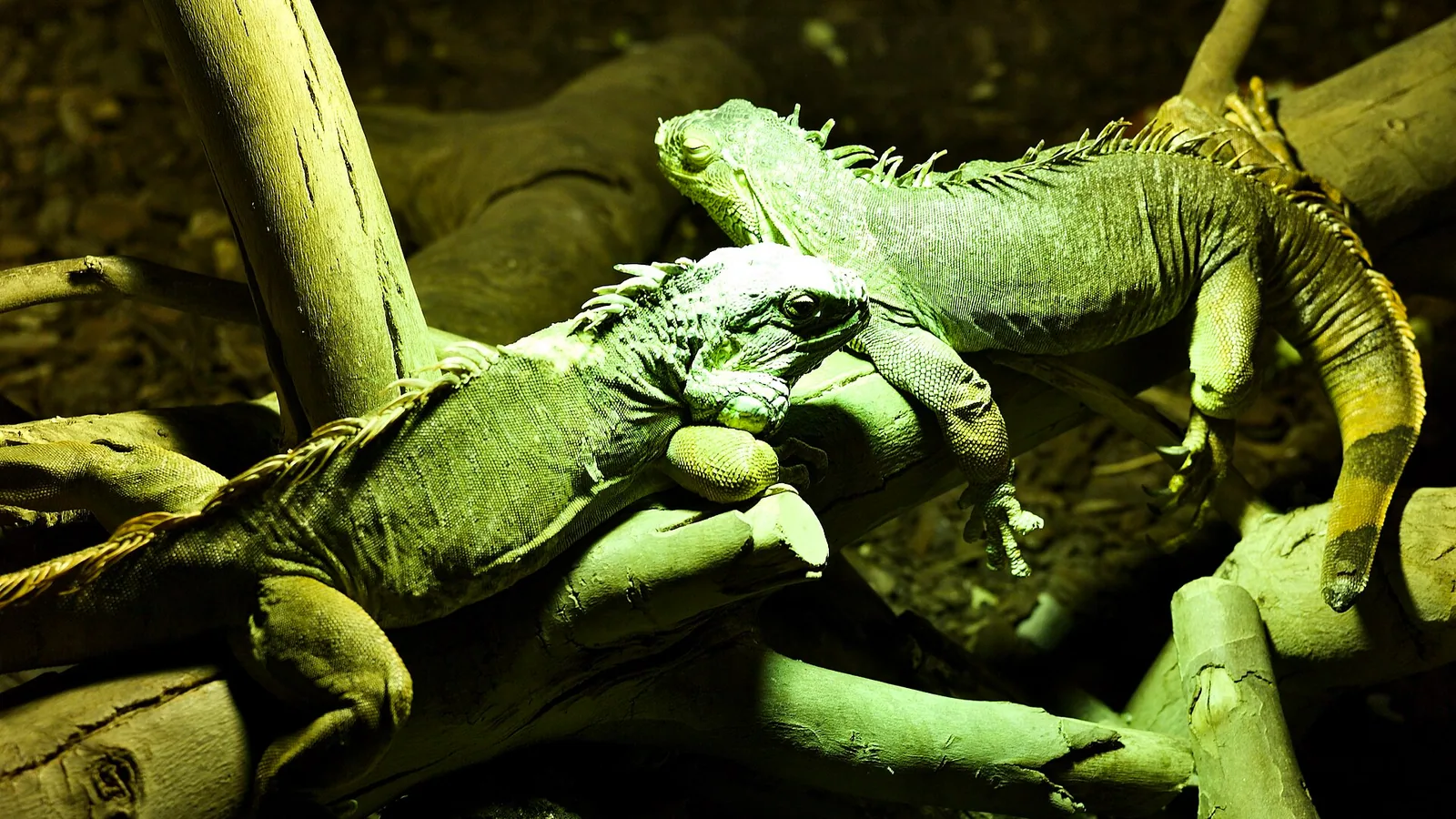
The most effective leopard gecko enrichment ideas are the ones that let the animal do what its body and instincts are built for: squeezing into tight dry and humid hides, climbing over rockwork, hunting live insects, digging, and investigating new objects on its own schedule. A controlled study of enrichment in leopard geckos found that every gecko tested showed interest in items that allowed hiding and climbing, and that geckos kept in low-stimulus enclosures approached enrichment items faster and interacted with them more often than geckos in more complex terrariums [1]. In plain terms, hiding places and climbing structures are not decoration. They are the enrichment items a leopard gecko is most likely to actually use.
This guide covers the behavior behind good enrichment, specific ideas you can set up today, do-it-yourself projects, how to introduce new items safely, hygiene around enrichment equipment, the signs of a bored leopard gecko, and when to call a reptile veterinarian.
This article is educational and is not a substitute for veterinary diagnosis or treatment.
At a Glance: Enrichment You Can Set Up Today
| Enrichment type | What to provide | Natural behavior it matches | Frequency |
|---|---|---|---|
| , - | , - | , - | , - |
| Structural | Multiple hides, including a warm dry hide, a cool dry hide, and a humid hide | Shelter seeking, crevice use | Permanent |
| Climbing | Low, stable rock stacks, cork rounds, secured ledges | Low-level climbing and perching | Permanent |
| Foraging | Live prey delivered in varied locations, scattered feeding spots | Active insect hunting | Every feeding |
| Digging | A dig box with safe substrate in part of the enclosure | Burrowing and excavating | Permanent or rotating |
| Novelty | A new safe object placed in the enclosure periodically | Investigation of novel items | Weekly or biweekly |
| Sensory | Rearranged decor, varied textures along a temperature gradient | Exploration and thermoregulation | Every few weeks |
| Routine | Evening activity windows, consistent feeding times | Crepuscular activity pattern | Daily |
Why Enrichment Matters for Leopard Geckos
Enrichment means changing or structuring an animal's environment so it can express species-typical behavior and make choices. For reptiles, enrichment was once considered optional. That view has changed as research has shown that reptiles respond measurably to novelty and complexity in their surroundings.
A study published in Animals (Basel) specifically tested enrichment in leopard geckos (Eublepharis macularius). Researchers housed 21 female geckos in two different maintenance systems, a biotope terrarium and a rack system, and presented enrichment items including dry and wet hides, a new feeding method, and a new object. Each enrichment session was observed for 45 minutes. Two findings stand out for pet owners. First, all geckos, in both systems, showed interest in enrichment items that enabled hiding and climbing. Second, geckos kept in the extremely low-stimulus rack system approached enrichment items faster and interacted with them more frequently than geckos in terrariums, although the total time spent interacting was similar between the two groups [1].
For owners, that study supports three practical conclusions. Hides and climbing structures should be the foundation of any enrichment plan. Geckos living in simple, sparse enclosures benefit the most from added items and will seek them out quickly. And novelty itself, meaning a genuinely new feeding method or a new object, is something leopard geckos will investigate.
Reptile husbandry resources such as the Merck Veterinary Manual's exotic animal section, the Association of Reptilian and Amphibian Veterinarians (ARAV), and VCA Animal Hospitals' reptile care guides all emphasize that appropriate enclosure complexity, thermal gradients, and species-appropriate feeding are baseline requirements for reptile health. Enrichment builds on that baseline. It does not replace correct temperature, humidity, diet, or space.
Understanding Leopard Gecko Natural Behavior
Good enrichment starts with knowing what the animal actually does in nature. Leopard geckos are small terrestrial lizards native to arid rocky grassland and desert-edge habitats in parts of Afghanistan, Pakistan, and northwestern India. Their natural behavior pattern includes the following.
Crevice and shelter use. Wild leopard geckos spend daylight hours hidden in rock crevices, burrows, and under stones. They emerge at dusk and during the night to forage. Multiple hiding spots at different temperatures let a captive gecko do the same thing.
Low-level climbing. Although they are ground dwellers, leopard geckos climb over and around rock piles. The enrichment study confirmed that climbing structures attract real interaction from geckos [1].
Active insect hunting. Leopard geckos are insectivores. In nature they locate, stalk, and strike moving prey. Feeding only from a dish removes this entire behavioral sequence.
Digging and burrowing. Geckos dig, excavate under objects, and move substrate. Females also need a suitable substrate or laying box for egg deposition, and a humid microclimate supports normal shedding.
Thermoregulation. Reptiles move between warmer and cooler zones to regulate body temperature. An enclosure with a proper thermal gradient turns temperature regulation itself into enrichment, because the gecko is constantly making movement choices.
Enrichment that matches these behaviors will be used. Enrichment that does not, such as tall vertical climbing walls designed for arboreal species, will largely be ignored.
Enrichment Ideas That Match Natural Behavior
Structural Enrichment: Hides First
Hides are the single most important enrichment category for this species, and the research supports that directly. In the enrichment study, items that enabled hiding drew interest from every gecko tested [1].
Set up at least three hides at the same time:
- A warm dry hide on the basking side of the enclosure.
- A cool dry hide on the opposite end.
- A humid hide, such as a closed container with a entry hole and damp sphagnum moss or paper towel, which supports shedding and gives the gecko a moisture choice.
Rock-style caves, cork bark halves, and half logs all work. Choose hides with an entrance the gecko fits through comfortably and an interior dark enough that the animal feels concealed. A hide the gecko can be seen inside from every angle is a poor hide. Place hides so the gecko can move between warm and cool zones without leaving cover, creating a connected shelter path.
Climbing and Rockwork
Climbing enrichment for a terrestrial gecko means low, broad, and stable, not tall and vertical. Good options include stacked flat rocks (secured so they cannot topple), cork rounds laid on their sides, cork flats wedged against the back wall, and low slate or flagstone ledges. Climbing structures earn their space when they connect to hides or lead to a preferred basking ledge, so the gecko uses them as part of a route rather than as isolated decor.
Feeding Enrichment and Hunting Behavior
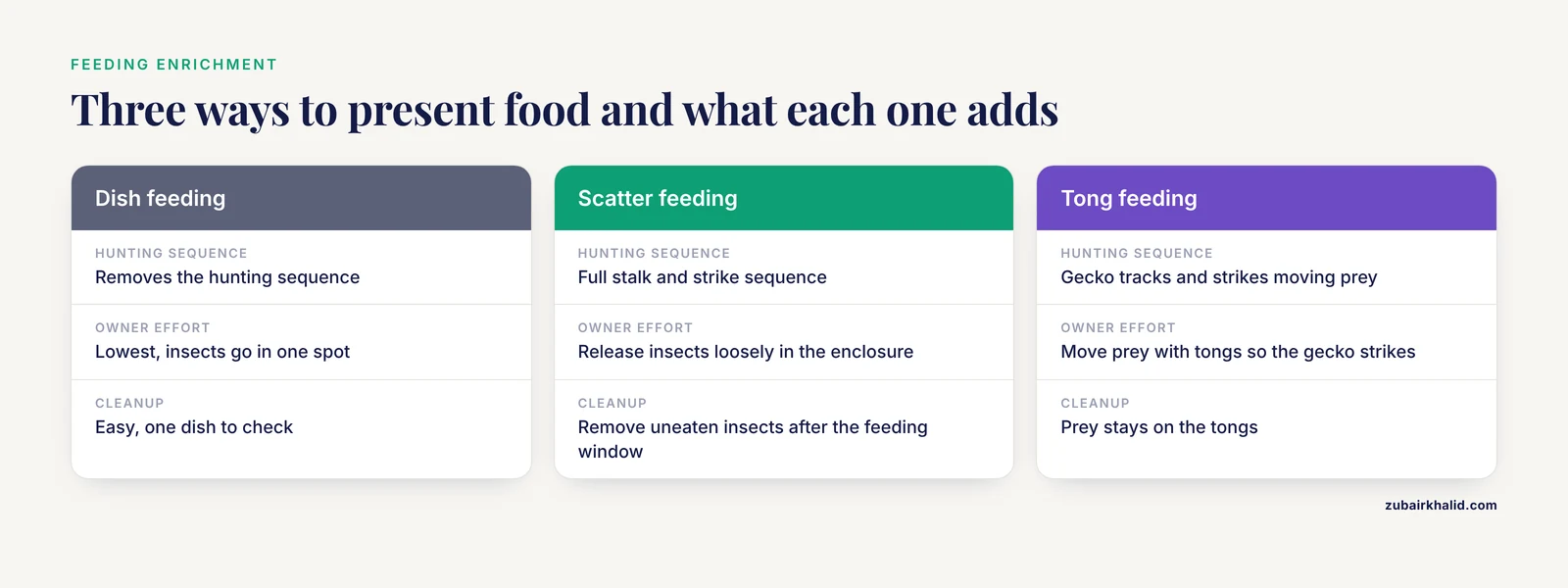
Feeding enrichment is where leopard gecko owners have the most room to improve. Standard practice, dropping insects into a dish, removes the hunting sequence. Alternatives that match natural foraging include:
- Varied delivery points. Place feeder insects in different locations across the enclosure so the gecko must search.
- Scatter feeding. Release appropriate feeder insects loosely in the enclosure rather than in one spot, letting the gecko stalk them.
- Feeding tongs with movement. Move prey with tongs so the gecko tracks and strikes.
- Alternate feeding method days. Rotate between dish feeding, scatter feeding, and tong feeding. The study specifically used a new feeding method as an enrichment item and found geckos interacted with it [1], which supports rotating how food is presented rather than using a single method every time.
- Buried or partially hidden feeding stations. Place a dish partially under a cork arch so the gecko must approach and investigate.
Always remove uneaten feeder insects after the feeding window so crickets and similar insects cannot harass or bite a resting gecko.
Digging Enrichment
A dig box satisfies excavation behavior without requiring loose substrate across the whole enclosure, which some owners avoid for hygiene or impaction-management reasons discussed with their veterinarian. Provide a shallow container, at least a few inches deep and wide enough for the gecko to turn around in, filled with a reptile-safe substrate such as pre-washed play sand mixed with soil, or a commercial dig-box substrate. Place it on the warm side so digging behavior stays active. Check the box after feeding so the gecko is not ingesting substrate during excited feeding, an individual risk point to discuss with your reptile veterinarian.
Novelty Objects and Sensory Enrichment
The study included a simple new object as one of its enrichment items, and geckos interacted with it [1]. Novelty can be that basic. Rotate a clean, inert object into the enclosure, a new cork shape, a terracotta pot on its side, a large smooth stone, a cardboard tube. Watch the gecko investigate. Scent variation is more subtle for reptiles than for mammals, so texture, shape, and placement changes tend to produce the clearest responses.
Periodic rearrangement of existing decor also counts as enrichment. Moving a rock stack or swapping hide positions every few weeks refreshes the enclosure without any new purchases.
Social and Observational Enrichment
Leopard geckos are not social animals that need companions. Housing males together leads to fighting, and even females can injure each other, so group housing is not an enrichment strategy. Enrichment for a singly housed gecko comes from its environment, its feeding routine, and gentle habituation to the presence and handling routines of its owner. Short, predictable handling sessions once the animal is settled are a form of positive interaction for many geckos, but they should never be forced on a stressed animal.
The Best Toys for Leopard Geckos
The phrase "best toys for leopard geckos" needs a reptile translation. A leopard gecko does not play with a toy the way a dog does. It interacts with objects that offer shelter, a surface, a challenge to navigate, or something new to investigate. With that definition, the best toys for leopard geckos are:
- Hide caves and tunnels. The most used enrichment category in the research.
- Cork rounds and cork flats. Textured, safe to climb, easy to clean, and reusable in different positions.
- Rock stacks and ledges. Match natural rock-crevice behavior. Secure every piece so nothing can shift.
- Dig boxes. A container of safe substrate turns excavation into a daily option.
- Live prey. Moving feeder insects are the most behaviorally complete "toy" available, because they trigger the full hunt.
- Novelty items. Clean, inert objects added briefly and rotated out, exactly the kind of item used in the enrichment study [1].
Selection criteria apply to all of these. Choose items that are solid, unscented, free of small parts that could be swallowed, free of loose fibers, stable under the gecko's weight, and easy to disinfect. Avoid anything painted with unknown paints, treated wood, glued decorations that could shed fragments, or items with gaps that could trap a toe or limb. ReptiFiles' evidence-based husbandry guides make the same core point about safety-first decor for terrestrial reptile enclosures.
DIY Leopard Gecko Enrichment
Do-it-yourself enrichment works well for this species because the gecko's needs are modest. Here are five reliable diy leopard gecko enrichment projects.
DIY Humid Hide
Take a plastic container with a snap-on lid. Cut or melt an entry hole in the side or lid, and smooth every sharp edge with fine sandpaper. Fill the bottom with damp sphagnum moss or paper towel. Close the lid and place the hide over the humid-warm zone or as directed by your husbandry setup. Replace the moss or towel regularly so it stays damp and clean. This project costs almost nothing and doubles as shedding support.
DIY Cork and Rock Hide Complex
Instead of buying a single cave, build a structure. Place a flat rock across two supporting stones to create a shaded cavity, and butt a cork flat against it to form a tunnel. Build from the bottom up, testing each layer for stability with a firm press. Aim for at least two exits so the gecko never feels cornered.
DIY Dig Box
Use a low plastic storage container with a lid if you want the box partially contained, or an open ceramic baking dish. Fill with a reptile-safe dig substrate. Spot clean daily and fully change the substrate when soiled. Position it on the warm side of the enclosure.
DIY Cardboard and PVC Tunnels
A short section of large-diameter PVC pipe, sanded smooth at the edges and cleaned thoroughly, makes a durable tunnel. A cardboard tube from paper towels works as a disposable version for short-term novelty. Because these items are cheap, they suit the rotate-and-replace style of enrichment, in and out every week or two.
DIY Foraging Board
Use a shallow, unscented tray. Arrange a few clean stones and a cork piece so feeder insects can hide between them, then place the tray in the enclosure during feeding time. The gecko has to search the tray to find prey, which converts a two-second meal into several minutes of natural hunting behavior.
After any DIY project, inspect it before each use. Discard cardboard once it is soiled or damp, and disinfect reusable items between placements.
How to Introduce Enrichment Step by Step
Rapid change can stress some geckos. Follow this sequence when adding enrichment.
- Confirm the baseline first. Verify temperatures, the thermal gradient, humidity, diet, and enclosure size are appropriate before adding complexity. Enrichment cannot compensate for incorrect core husbandry.
- Add one item at a time. Introduce a single new hide, dig box, or object, then observe for a few days.
- Watch the latency. The study measured how quickly geckos approached enrichment items and how often they interacted with them [1]. At home, your version of this measurement is simple. Does the gecko investigate the item within the first evening or two, and does it use it repeatedly?
- Keep what is used, rotate what is not. If an item is ignored after a couple of weeks, remove it and try something different in its place.
- Maintain at least the core setup permanently. Hides and the thermal gradient should never be removed or rotated away. Novelty items rotate around that fixed core.
How to Keep a Leopard Gecko Entertained Day to Day
Owners often ask how to keep a leopard gecko entertained between feedings. The honest answer is that a well-built enclosure does most of the work, because the gecko's own activity cycle drives its day. Leopard geckos are crepuscular to nocturnal, so their active window is evening and night. Practical daily and weekly habits include:
- Feed on a consistent schedule during the gecko's active period, rotating delivery methods (dish, scatter, tongs) through the week.
- Provide an evening lights-off observation window when the gecko is naturally active.
- Rearrange one decor element every few weeks rather than the whole enclosure at once.
- Add one novel object every week or two, following the novelty approach used in the research [1].
- Offer regular short handling sessions only if the gecko is calm and habituated, and keep them brief.
- Perform daily spot checks of the dig box, humid hide, and feeding areas so enrichment items stay clean and inviting.
Consistency matters as much as variety. A gecko in a stable, complex enclosure with predictable feeding routines generally shows more natural activity than one in a constantly disrupted enclosure.
Signs of a Bored Leopard Gecko
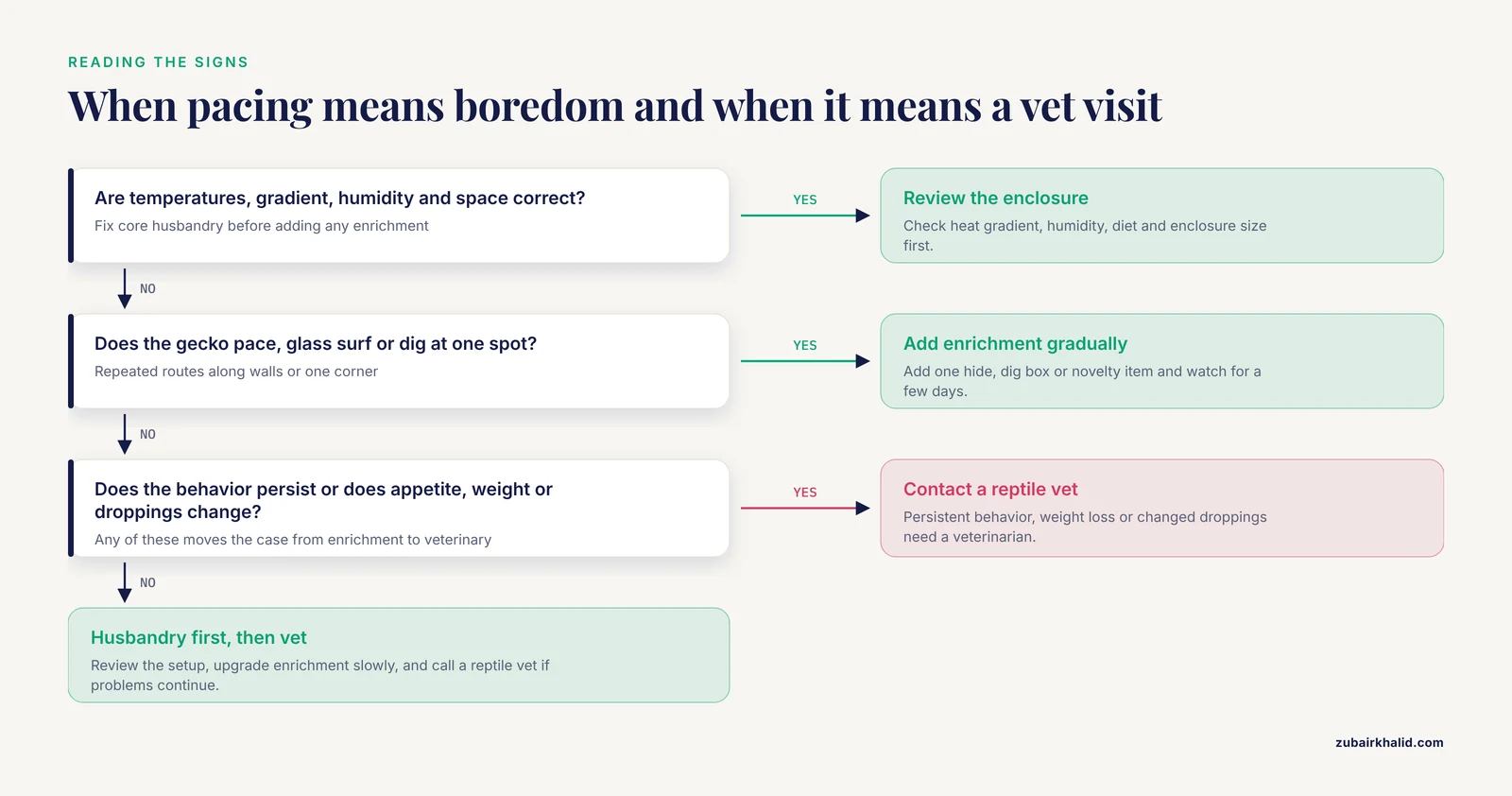
There is no single validated checklist for reptile boredom, but certain behavior changes suggest an enclosure is not meeting the animal's behavioral needs. Watch for the following signs of a bored or under-stimulated leopard gecko:
- Repeated pacing or glass surfing. The gecko climbs the glass or patrols the same route endlessly, especially along enclosure walls.
- Restlessness at the same spot. Persistent digging at one corner or repeated attempts to reach a boundary can signal the animal is seeking something the enclosure lacks.
- Lethargy out of the active window. A gecko that never emerges in the evening, week after week, may simply have nothing to do, or may be ill.
- Loss of interest in food. Persistent appetite changes always deserve attention, first from a husbandry review and then from a veterinarian if they continue.
- Flattened, static posture day after day. Constant pressed-flat hiding with no exploration can reflect either stress or a barren environment.
Interpret these signs in context. Glass surfing and pacing can also indicate temperatures are wrong, the enclosure is too small, or the animal is stressed by handling or a visible threat. So the correct response to suspected boredom is a full husbandry review first, then enrichment upgrades, then a veterinary visit if the behavior persists or if appetite, weight, or droppings change. Persistent abnormal behavior, refusing food beyond the normal variation for the animal, visible weight loss, or changes in feces are veterinary issues, not enrichment issues.
Common Mistakes
- Over-climbing. Filling the enclosure with vertical structures meant for arboreal geckos wastes space and risks falls. Keep climbing low and broad.
- Enrichment instead of husbandry. A puzzle feeder cannot fix a broken heat gradient. Fix temperatures, humidity, and space first.
- Too much novelty too fast. Rebuilding the entire enclosure in one evening can cause hiding and refusal to eat. Add gradually.
- Unsafe materials. Adhesives, treated wood, sharp edges, small loose parts, and unstable stacks are the most common DIY hazards.
- Leaving live prey loose overnight. Feeder insects left in the enclosure can injure a resting gecko.
- Rotating away the humid hide. The humid hide and the warm and cool hides are permanent equipment, not novelty items.
- Ignoring hygiene. Enrichment items collect waste and bacteria like any other enclosure surface.
Safety, Hygiene, and Welfare Around Enrichment
Every enrichment item should be treated as part of the enclosure's hygiene system. Clean and disinfect decor on a regular schedule, spot clean daily, and quarantine new decor the same way you would quarantine new animals when possible.
Hygiene also protects you. A 2025 study in Frontiers in Veterinary Science sampled the oral and cloacal cavities of healthy pet common leopard geckos and central bearded dragons in the Lisbon area and found third-generation cephalosporin-resistant Enterobacterales in 17.9 percent of the reptiles sampled, including organisms such as Citrobacter freundii and Klebsiella aerogenes carrying ESBL and AmpC resistance genes [2]. The authors highlighted the zoonotic potential of these bacteria in settings where humans and reptiles interact frequently. For enrichment routines, that translates into simple rules. Wash your hands with soap and water after handling your gecko, cleaning the enclosure, or touching enrichment items. Keep enclosure cleaning equipment separate from household kitchenware, and never wash enclosure items in a kitchen sink used for food. Supervise children around the enclosure and enforce handwashing after contact.
These precautions are standard reptile-owner practice supported by organizations such as the AVMA in its pet-owner resources and the Association of Reptilian and Amphibian Veterinarians, and they matter more when young children, elderly household members, or immunocompromised people share the home. If anyone in the household becomes ill after reptile contact, mention reptile ownership to the treating physician.
Welfare-wise, enrichment should always be voluntary. A gecko that repeatedly hides when an item appears is telling you to slow down. Watch body language, keep handling brief and predictable, and never use food deprivation as a way to force interest in a feeding gimmick.
Limitations and When to Contact a Veterinarian
Individual animals vary, and any behavior or husbandry question specific to your gecko deserves a conversation with a reptile veterinarian, ideally one affiliated with ARAV or experienced with Eublepharis. Contact a veterinarian promptly if you observe any of the following:
- Refusal to eat for a duration that is unusual for your individual gecko, or any refusal alongside visible weight loss or tail thinning.
- Incomplete or stuck shed, especially around toes, eyes, or the tail tip.
- Vomiting, regurgitation, diarrhea, or persistently abnormal droppings.
- Suspected ingestion of substrate, decor fragments, or foreign objects, including loss of defecation.
- Injury from a fall, a rock stack collapse, or cage-mate aggression.
- Lethargy, tremors, weakness, difficulty walking, or hanging jaw posture.
- Any persistent repetitive behavior, such as constant glass surfing, that does not improve after a full husbandry review.
- Signs of illness in a gecko housed with others, since infectious problems can spread within a group.
Also ask your veterinarian before making substrate changes if your gecko has a history of impaction, regurgitation, or digestive disease, since a dig box or loose-substrate enrichment may not suit every individual. Reptile patients benefit from wellness examinations like any other pet, and baseline weight records make subtle problems far easier to catch early.
Frequently Asked Questions
What are the best enrichment ideas for leopard geckos?
The best enrichment ideas are multiple hides at different temperatures, a humid hide, low climbing structures such as cork and rock stacks, live prey hunting opportunities, a dig box, and rotating novelty objects. Research on leopard gecko enrichment found that hiding and climbing items attracted interest from every gecko tested [1].
How do I keep a leopard gecko entertained?
Build an enclosure with a thermal gradient, at least three hides, and low climbing routes, then rotate feeding methods and novelty objects during the gecko's evening activity window. Consistent routines plus gradual changes keep the environment engaging without causing stress.
What are the best toys for leopard geckos?
Reptile toys are objects the gecko can shelter in, climb on, dig in, or investigate. Hide caves, cork rounds, secured rock ledges, dig boxes, live feeder insects, and clean novelty items are the most effective options for this terrestrial species.
What are the signs of a bored leopard gecko?
Repeated glass surfing, pacing along the walls, obsessive digging at one spot, persistent lethargy during the normal active period, and loss of interest in food are the main warning signs. Review temperatures, space, and enclosure complexity first, and contact a reptile veterinarian if the behavior continues or appetite and weight change.
Can I make DIY leopard gecko enrichment at home?
Yes. A humid hide made from a plastic container with a smoothed entry hole, a dig box in a shallow tray, PVC or cardboard tunnels, a cork and rock hide complex, and a foraging tray with hidden insects are all safe, inexpensive DIY projects when built from clean, inert, stable materials.
How often should I change enrichment items?
Keep the core items, the hides and climbing structures, in place permanently, and rotate one novelty object or decor position every one to two weeks. Add only one new item at a time and give the gecko several days to investigate before adding another.
Is live prey enrichment safe for my gecko?
Live prey that is an appropriate size for your gecko is one of the most natural enrichment options because it triggers real hunting behavior. Remove uneaten insects after the feeding window so they cannot bite or stress a resting gecko, and review your feeder insect choices with your reptile veterinarian.
Do leopard geckos in simple enclosures need enrichment more than others?
Yes. Research found that geckos kept in low-stimulus rack systems approached enrichment items faster and interacted with them more often than geckos in more complex terrariums, which supports prioritizing enrichment for geckos in sparse setups [1].