Introducing Enrichment to Reptiles: Step-by-Step Guide
By Dr. Zubair Khalid, DVM, MS, PhD ·
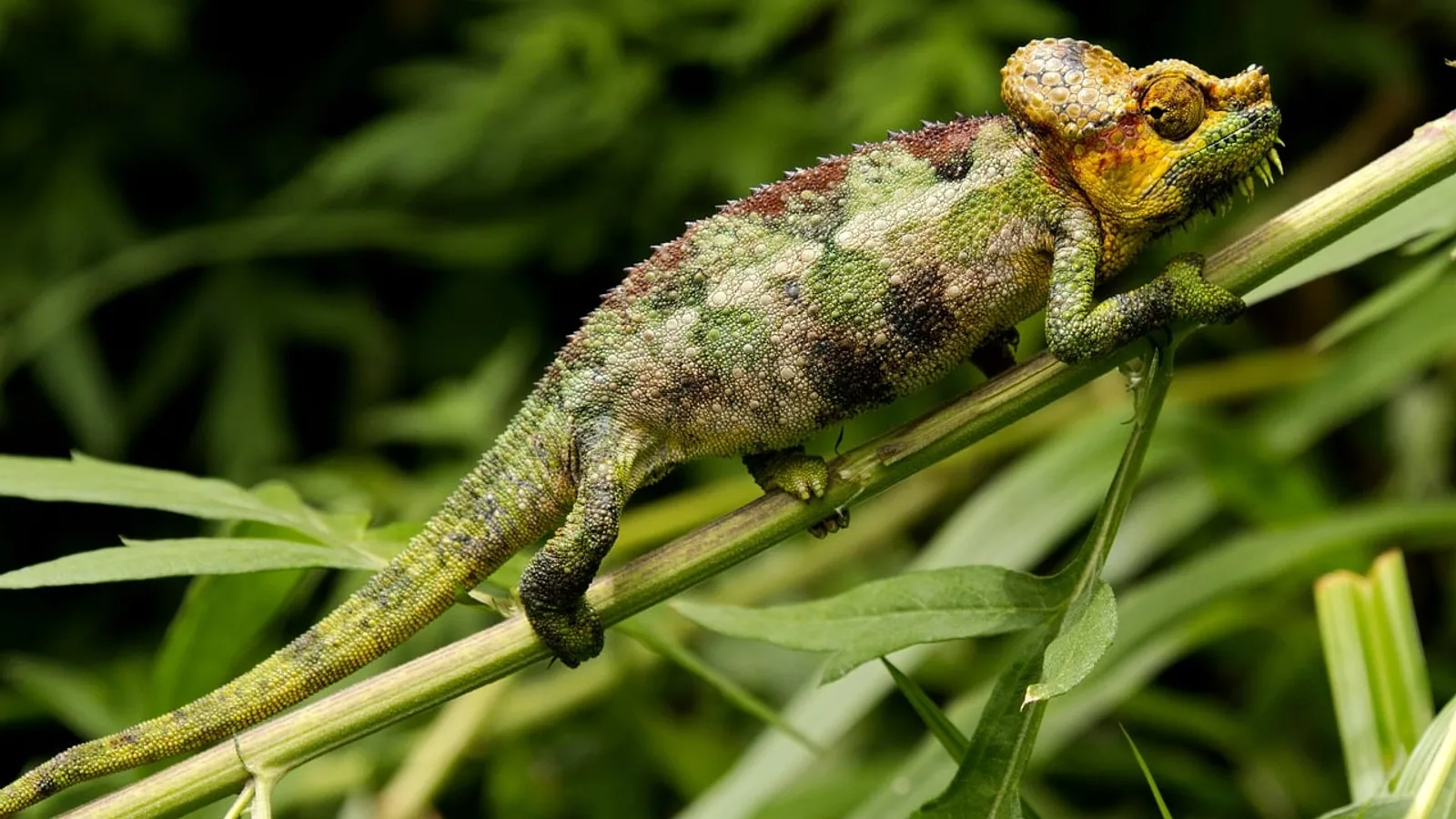
Start enrichment by making sure the baseline husbandry is correct, then add one simple change at a time, watch the animal for at least a few days, and keep what works. In practice that means confirming temperature gradients, humidity, lighting, substrate, and diet first, because a reptile in the wrong thermal or humidity environment will not benefit from toys, climbing structures, or training. Once the foundation is solid, enrichment means giving the animal more space, more choices, and more chances to perform natural behaviors such as climbing, burrowing, swimming, foraging, basking, and exploring. Peer-reviewed reviews of reptile wellness describe exactly this shift in modern captive care, away from sterile, spartan enclosures toward larger, more naturalistic habitats that raise activity levels, reduce stress, and increase opportunities for natural behavior [1].
This guide walks through the why, the step-by-step process, practical tips, the mistakes owners most often make, and when to stop and call your veterinarian.
At a Glance: Your First Enrichment Plan
| Step | Action | What success looks like |
|---|---|---|
| 1 | Verify core husbandry (heat gradient, humidity, UVB and visible lighting, clean water, correct diet) | Stable parameters, normal shedding, normal appetite, normal droppings |
| 2 | Confirm the enclosure is at least adequate in size for the species, then plan for more space | Room for a full thermal gradient and a retreat on each end |
| 3 | Add one enrichment item (a new hide, climbing branch, or textured substrate patch) | Mild investigation, no prolonged hiding or refusal to eat |
| 4 | Observe for 3 to 7 days | Normal basking, feeding, and resting pattern, some interaction with the new item |
| 5 | Add the next element or introduce scent-based or food-based enrichment | Increased exploration without chronic stress signs |
| 6 | Begin simple training, such as target or station training with food rewards | The animal voluntarily approaches the target over repeated sessions |
| 7 | Rotate and log what you offer | A short notebook entry per change and the animal's response |
Why Reptiles Need Enrichment
Older husbandry advice often treated reptiles as display animals that needed little more than heat, water, and food. Modern reptile wellness management rejects that model. Current recommendations emphasize larger, more naturalistic habitats that provide space and choices, and the published veterinary literature states plainly that reptiles benefit from enrichment and can even be trained to reduce stress and allow easier handling and veterinary care [1].
The logic is behavioral, not sentimental. A wild reptile spends its day making decisions: where to bask, where to hide, what to investigate, when to hunt or forage. An empty box removes all of those decisions. The result can be an animal that sits in one corner, ignores food, patrols the glass, or becomes difficult to handle. Husbandry factors such as improper caging, lighting, substrate, temperature, and humidity are well documented causes of stress and disease in captive reptiles, and enrichment is one of the tools that addresses the psychological side of that stress [1].
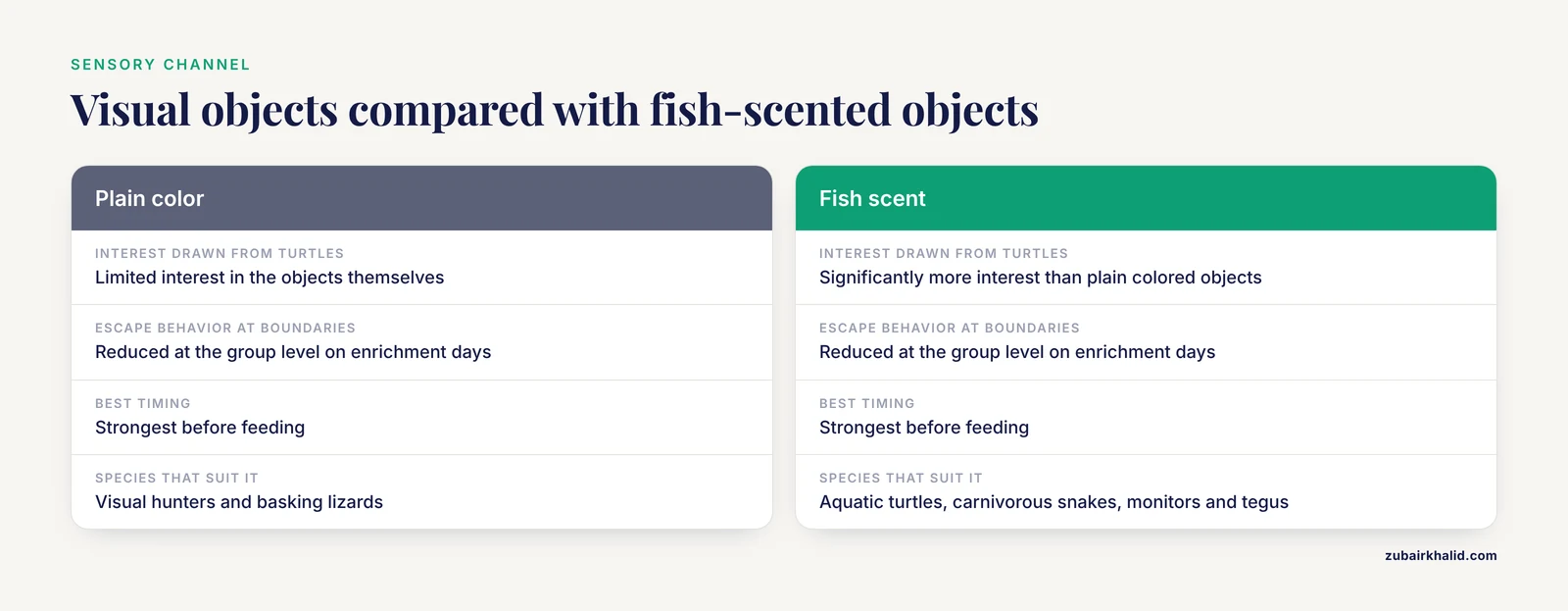
Enrichment also has measurable behavioral effects. In an aquarium study of 15 freshwater turtles (cooters of the genus Pseudemys and sliders of Trachemys scripta), adding colored objects, some with fish scent, reduced escape behavior, meaning interaction with the transparent boundaries of the enclosure, at the group level on days with new enrichment. Fish-scented objects drew significantly more interest than plain colored objects, and the turtles showed more random swimming and more focus on the enrichment before feeding [2]. That study is a useful reminder of two things at once: enrichment changes behavior, and the direction of change is not identical for every individual.
Step-by-Step: Introducing Enrichment to Reptiles
The sequence below is written for a typical pet reptile in a home vivarium or terrarium. Adjust the pace for your species. A young, active monitor lizard will cycle through enrichment faster than an adult nocturnal gecko.
Step 1: Lock Down Baseline Husbandry First
Enrichment on top of bad husbandry fails. Before adding anything new, verify the fundamentals that veterinary reviews identify as the core of reptile wellness: nutrition, supplementation, caging, lighting, substrate, temperature, and humidity [1].
Work through this basic reptile care checklist:
- A thermal gradient the animal can move through, from a warm basking zone to a cooler retreat, measured with thermometers at animal level, not just at the glass
- Species-appropriate humidity, measured with a hygrometer and adjusted with misting, humidity boxes, or ventilation
- Appropriate lighting, including any UVB requirement for the species, on a sensible day and night cycle
- Substrate that supports natural behavior (burrowing species need depth, aquatic species need clean water of adequate volume)
- Clean water available at all times, sized for soaking in species that soak
- A diet and supplementation schedule appropriate to the species and life stage
- At least one secure hide on each end of the temperature gradient
- An enclosure large enough for the animal to thermoregulate by moving, not by being trapped in one zone
If any of these are off, fix them before Step 2. Introducing enrichment into an enclosure where the animal cannot thermoregulate simply adds novelty to a stressful environment.
Step 2: Audit the Current Reptile Enclosure Setup
Walk through your reptile enclosure setup and ask three questions about each square foot. Can the animal use this space? Does it offer a choice? Does it invite a natural behavior?
Most default setups are deficient in one of three areas: vertical space for climbing species, substrate depth for burrowing species, and visual security for shy species. Your audit should produce a short list of gaps. Those gaps become your enrichment priorities, in order.
Step 3: Add One Element at a Time
The single most important rule of introducing enrichment to reptiles is to change one thing at a time. Reptiles are sensitive to novelty, and some individuals respond to any change with several days of reduced activity or appetite. If you add a new branch, a new hide, new substrate, and rearrange the whole tank in one afternoon, you cannot tell which change caused which response.
Add one item, then wait at least three to seven days before adding the next. Good first choices include:
- An additional hide or cork bark tube that adds a new secure retreat
- A climbing branch or ledge placed so the animal can reach the basking area by choice
- A deeper substrate patch in one corner for digging species
- A large water basin for species that soak
Step 4: Observe and Record
Spend ten minutes watching your reptile after each change, then check in over the following days. You are looking for a balance between investigation and normal routine. Positive signs include tongue flicking toward the new item, climbing or digging on it, resting on or under it, and unchanged feeding and basking behavior.
Signs that the change is too much include prolonged hiding, refusing food for longer than is normal for the species, spending all day pressed against the glass or the lid, and abandoning the basking site. If you see these, remove the new item and give the animal a few quiet days before trying a smaller version of the same idea.
The turtle study cited above found large differences between individual animals, with some turtles showing increases and others decreases in escape behavior, aggression, and activity on enrichment days [2]. Expect individual variation in your own animal. A response that differs from a care sheet or a forum post is not automatically wrong, but it does deserve attention.
Step 5: Use Food and Scent as Low-Cost Enrichment
Food-based enrichment is the easiest category for most owners. Options include scattering or hiding food items so the animal must search, offering whole prey or whole plant materials that require processing, and presenting food in a way that mimics how the species finds it in nature.
Scent is powerful for many species. In the freshwater turtle study, objects scented with fish attracted significantly more interest than identical unscented colored objects [2]. For aquatic and semi-aquatic turtles, carnivorous snakes, and many monitors and tegus, adding a prey-associated scent to an object, a feeding station, or a puzzle feeder can turn a static item into something worth investigating. Match the scent to the species' natural diet and check with your exotic animal veterinarian before introducing any food or scent item if your animal has dietary restrictions.
Step 6: Introduce Simple Training
Training is one of the most underused forms of reptile enrichment, and it is supported by the veterinary literature. Reviews of reptile wellness note that reptiles are amenable to training to reduce stress and allow easier handling and veterinary care [1].
The best-documented approach uses classical and operant conditioning with positive reinforcement. In one study, a shaping plan was developed for 28 juvenile false water cobras (Hydrodynastes gigas), a rear-fanged venomous species. Snakes were rewarded with food for completing behaviors that built toward following a target into a shift container, so that routine husbandry could be done with less stress for the animals and less risk for the keepers [3].
You do not need that level of formality at home. A simple protocol:
- Pick a consistent cue, such as a colored ball on a stick (a target) presented at the same spot in the enclosure.
- Present the target briefly, then immediately offer a small food reward when the animal approaches or touches it.
- Repeat in short sessions on a predictable schedule. Most reptiles learn fastest when sessions are brief and calm.
- Gradually shape longer or more complex responses, such as following the target to a transport container before feeding days, vet exams, or enclosure cleaning.
Training gives the animal choice and control. Voluntary participation in husbandry is exactly what zoos use positive reinforcement to achieve, and snakes in particular have historically been overlooked in this area despite being fully capable learners [3].
Step 7: Rotate, Log, and Refine
Keep a simple log. For each change, note the date, what you added, and the animal's response over the first week. After a month or two you will have a personalized record of what your individual animal values. Rotate items so novelty returns periodically, but keep the permanent features (secure hides, the thermal gradient, water access) stable, because those are the environmental anchors a reptile relies on.
Tips for Introducing Enrichment to Reptiles
These tips compress the most useful habits of successful keepers and the conclusions of the published behavioral work.
- Match enrichment to species biology. A chameleon needs varied foliage heights and visual screens. A monitor needs digging substrate and problem-solving feeders. A semi-aquatic turtle needs swimming space and water-column interest. Species-specific husbandry guides from organizations such as the Association of Reptilian and Amphibian Veterinarians (ARAV), the Merck Veterinary Manual's exotic animal section, VCA Animal Hospitals, and ReptiFiles are reasonable places to confirm what natural behaviors matter most for your species.
- Use scent deliberately. Scented enrichment outperformed plain visual enrichment in the turtle study [2], so think about the animal's nose and tongue, not only its eyes.
- Time enrichment around feeding. Effects on behavior were strongest before feeding in the turtle study and smaller after feeding [2]. Presenting new enrichment shortly before scheduled feeding days may maximize engagement for many species.
- Favor choice over decoration. Every item should give the animal a decision to make, such as sun or shade, open or covered, high or low. A decorative plastic plant that cannot be touched, hidden behind, or climbed is neutral at best.
- Keep sessions short and calm. Training and novel items work best in brief, predictable, low-stress sessions, which is the same principle behind the shaping plans used in the false water cobra study [3].
- Prioritize the transparent boundary problem. Glass surfing and pacing at the front wall are classic captive stress behaviors. In turtles, enrichment reduced escape behavior even though the animals showed only modest interest in the objects themselves [2]. For glass-patrolling lizards and turtles, structural cover along the front glass, such as a low visual barrier, is often the single highest-impact change.
- Watch weight and diet. Food-based enrichment adds handling time and can add calories. Adjust meal portions with your veterinarian's guidance if foraging enrichment changes intake.
Common Mistakes in Reptile Enrichment
These are the errors that show up most often, and nearly all of them are fixable.
Adding too much at once. A full redecoration of the enclosure is a stressor, not an enrichment program. One change at a time preserves your ability to interpret the response.
Enriching a broken enclosure. A puzzle feeder does not compensate for a thermal gradient that is too narrow, a humid hide that never holds humidity, or a UVB bulb that expired months ago. Husbandry fundamentals come first, because improper caging, lighting, substrate, temperature, and humidity are documented drivers of stress and disease in captive reptiles [1].
Assuming all individuals react the same. The turtle enrichment study documented substantial individual variation, with both increases and decreases in escape behavior, aggression, and activity among animals exposed to the same items [2]. The neighbor's bearded dragon loved the mirror. Yours may not. Judge by your animal's behavior.
Misreading interest as stress, or stress as interest. Rapid repeated tongue flicking with tense body posture and flight attempts is different from slow investigation followed by resting. Learn your species' normal posture and locomotion before judging new items.
Leaving live or unsafe items unattended. Anything the animal can ingest, become entangled in, or be injured by needs supervision or removal. This includes loose strings, small ingestible objects, untreated wood with splinters or residues, and electrical components within reach.
Overfeeding through food enrichment. Foraging setups should distribute normal rations, not add extra food on top of them.
Expecting instant results. Some reptiles need days or weeks to explore a new structure. Quiet, repeated exposure usually beats frequent dramatic changes.
Training with punishment. The documented success of reptile training comes from positive reinforcement, where the animal chooses to participate and is rewarded with food [3]. Forcing interactions teaches avoidance, which is the opposite of the goal.
Troubleshooting Common Problems
My reptile hides for days after a change. Remove the newest item, restore the previous layout, and re-introduce a smaller version later. Persistent hiding that outlasts a week, especially with appetite loss, is a signal to recheck all husbandry parameters and contact your veterinarian.
My turtle or lizard paces at the glass. Glass surfing frequently reflects an inability to get away from view or to satisfy a drive such as breeding movement or searching for food. Add a front-facing visual barrier, enlarge usable space, and verify the thermal gradient. Enrichment reduced this escape behavior in turtles [2], and the same principle applies broadly.
My reptile ignores every item. Check the sensory channel. A species that relies heavily on chemoreception may ignore visual objects until scent is added, exactly as fish scent drew significantly more turtle interest than color alone [2]. Also confirm timing, since pre-feeding presentation produced the strongest engagement in that study.
My snake will not take food during training. Pause training, confirm the enclosure temperatures support digestion, and resume with smaller, calmer sessions. Never withhold meals to force motivation in a species prone to feeding pauses, and discuss any extended anorexia with a reptile veterinarian.
Aggression appeared after enrichment. Increased aggression on enrichment days was documented in the turtle group [2], so a rise in defensive behavior is a known possible outcome, not proof the idea is worthless. Space resources farther apart, remove competitive food presentation, or slow the rotation schedule. If aggression risks injury, separate animals rather than managing it with enrichment alone.
Welfare and Safety Points
Enrichment is a welfare intervention, and welfare includes safety. Every item should pass four tests: it cannot be swallowed, it cannot trap or entangle the animal, it is cleanable or disposable, and it does not alter the thermal or humidity profile in a way that undermines the gradient. Wash and disinfect removable items between uses with reptile-safe products, rinse thoroughly, and dry completely before returning them.
Handle the animal according to its tolerance, not the enrichment schedule. The purpose of training and choice-based care is to reduce stress around necessary procedures, which is the outcome documented in conditioned reptiles [3], not to increase handling for entertainment.
Legal husbandry obligations still apply. Keep any permits and species-specific requirements current for regulated species in your state, and rely on your veterinarian and your state wildlife agency for species-specific rules.
Limitations and When to Contact a Veterinarian
Individual cases need a veterinarian. Enrichment supports welfare, but it is not medical care, and behavioral signs can be the first visible evidence of illness in reptiles, which commonly mask disease until it is advanced.
Contact a reptile veterinarian, ideally one affiliated with ARAV, promptly if you observe any of the following:
- Appetite loss lasting beyond the species' normal fasting pattern, or any unexplained anorexia in an animal that was eating reliably
- Weight loss, muscle wasting along the spine or limbs, or a visibly reduced body condition
- Lethargy that persists after the enclosure returns to its previous, familiar state
- Abnormal posture, tremors, weakness, stargazing, or loss of the righting reflex
- Retained shed, stuck eye caps, swelling of the limbs or jaw, mouth discoloration or discharge
- Abnormal droppings, diarrhea, regurgitation, or straining
- Open-mouth breathing, wheezing, or mucus around the nostrils or mouth
- Self-injury from rostral rubbing, repeated escape attempts causing snout or shell damage, or bite wounds between housed animals
- A female reptile that is gravid, straining, or showing signs of possible egg retention
- Any new enrichment item that may have been ingested
An annual or new-patient examination with an experienced exotic animal veterinarian is also the right time to review your reptile care checklist and enclosure setup against current standards, since recommendations have moved substantially toward naturalistic, choice-rich habitats in recent years [1].
This article is educational and is not a substitute for veterinary diagnosis or treatment.
Frequently Asked Questions
What is enrichment for reptiles?
Enrichment is any change to the enclosure or routine that gives the reptile more choices, stimulation, or opportunities to express natural behaviors, such as climbing, digging, foraging, swimming, basking, and exploring. Modern reptile wellness care treats it as a standard part of husbandry, alongside correct temperature, lighting, diet, and substrate, rather than an optional extra [1].
How do I start introducing enrichment to reptiles step by step?
Confirm basic husbandry first, then add one item at a time, observe for several days, record the response, and only then add the next element. Begin with a low-risk item such as an extra hide or climbing branch, then progress to scent and food-based enrichment and, eventually, simple target training with food rewards.
How often should I change my reptile's enrichment?
There is no fixed schedule, but rotating one element every one to two weeks is a common starting rhythm for active species, while shy species may need longer between changes. Use your log to decide. If the animal engages with an item and then stops, rotate it out. If a change causes hiding or appetite loss, slow down.
Can snakes benefit from enrichment, or is it only for lizards and turtles?
Snakes benefit, and they can be trained. A study of 28 juvenile false water cobras used positive reinforcement and shaping to teach the snakes to follow a target into a shift container, giving them choice and control during routine husbandry [3]. Hiding cover, climbing structures for arboreal species, scent trails, and target training all apply to snakes.
What are the most common mistakes owners make with reptile enrichment?
The most common are changing too much at once, adding enrichment on top of incorrect temperature or humidity, assuming every individual reacts the same way, misreading stress as curiosity, and using food-based enrichment in a way that adds excess calories. Individual responses vary widely, so judge by your own animal's behavior [2].
My turtle keeps swimming at the glass. Will enrichment help?
Possibly, and it is worth trying. In a study of cooters and sliders, escape behavior at the transparent boundaries decreased on days when colored object enrichment was added, even though the turtles showed limited interest in the objects themselves [2]. Also review tank size, water quality, and feeding schedule, and ask a reptile veterinarian if the behavior persists or causes injury.
Do I need special equipment to enrich my reptile's enclosure?
No. Most effective enrichment uses items you already have, such as cork bark, sterilized branches, cardboard boxes, deep substrate, and food hidden under leaves. Selection criteria matter more than brands: the item must be safe to ingest or chew, cleanable, appropriately sized, and stable so it cannot fall or collapse.
When should enrichment stop and a veterinary visit take over?
Stop adding enrichment and call your reptile veterinarian whenever behavioral changes come with appetite loss, weight loss, lethargy, abnormal droppings, respiratory signs, retained shed, or self-injury. Enrichment changes behavior, but it should never mask or replace evaluation of illness, and reptiles often hide disease until it is advanced.
Further Reading
- Optimizing Phylogenomics with Rapidly Evolving Long Exons: Comparison with Anchored Hybrid Enrichment and Ultraconserved Elements.
- Phage display-derived alpaca nanobodies as potential therapeutics for Naja atra snake envenomation.