How to Store Feeder Insects and Vegetables
By Dr. Zubair Khalid, DVM, MS, PhD ·

Store live feeder insects in a smooth-sided, well-ventilated container held at the right temperature for the species, and keep them supplied with dry food and a safe moisture source until feeding day. Store vegetables in the refrigerator crisper in a ventilated container, wash them before use, and plan to use most fresh produce within three to five days of purchase. Healthy, well-fed feeders pass better nutrition to your reptile, and research on captive animal nutrition consistently emphasizes that balanced, properly handled diets are the foundation of health, reproduction, and longevity in captive animals [1].
This guide walks through storage for the feeder insects most reptile keepers use, the produce side of the diet, pest prevention, and the mistakes that cause most colony die-offs.
At a Glance: Feeder Storage Checklist
| Task | What good looks like |
|---|---|
| , - | , - |
| Container | Smooth-sided plastic bin or glass tank with a secure, ventilated lid |
| Ventilation | Screen or drilled vents, enough airflow to keep the bin dry |
| Temperature | Species-appropriate range, stable, measured with a thermometer |
| Food | Dry grain-based diet, chicken feed, or gut-load mix available at all times |
| Moisture | Water crystals, fresh vegetable slices, or cotton in a dish, never open water |
| Cleaning | Remove dead insects and frass weekly or more often in warm bins |
| Vegetables | Refrigerated crisper drawer, ventilated storage container, wash before feeding |
| Monitoring | Check the colony daily, count survivors, and note any smell or escapees |
Why Proper Storage Matters for Reptile Health
Feeder insects are not just packaging around a nutrient payload. Whatever an insect eats in your home ends up in your reptile. Studies of zoo animal feeding highlight that ex-situ conservation and captive keeping programs succeed only when animals receive adequate, balanced nutrition, and that diet formulation directly affects reproduction, longevity, and welfare [1]. The same principle applies to a bearded dragon or leopard gecko in your living room. A starved, dehydrated cricket has little nutritional value, and a gut-load meal needs time inside the insect before it reaches your pet.
Storage conditions also determine survival. Insects are ectotherms, meaning their body temperature and metabolic rate track the environment around them. The physiology of heat and cold sensitivity in insects is well characterized, and temperature manipulation is used deliberately in pest management and in the cold storage of insects for biological control [2]. That same sensitivity is your main tool as a keeper. The right temperature keeps a colony alive and growing. The wrong temperature, either direction, can wipe out a bin overnight or send it racing into reproduction and cannibalism.
Finally, storage hygiene protects your home. Stored feed, bedding, and insect colonies can attract or harbor stored-product pests such as moths and beetles, which are a documented management challenge in any facility that holds grain-based products [3][4]. A clean, sealed, well-managed feeder setup prevents a small inconvenience from becoming a kitchen infestation.
How to Store Feeder Insects Step by Step
The steps below work for crickets, roaches, and worm-type feeders alike. Species-specific adjustments follow.
- Choose the container. Use a smooth-sided plastic storage bin or a glass aquarium with a tight-fitting lid. Crickets and roaches cannot climb bare smooth plastic, so a slick wall is your primary escape barrier. Screen lids or rows of small drilled holes provide airflow while keeping insects in.
- Add ventilation. Cut and hot-glue metal mesh over vent holes if you modify a lid yourself. Fine mesh blocks escapes while allowing heat and humidity to escape. Poor airflow is the most common cause of damp bins, damp bins breed bacteria, and damp bins kill colonies.
- Set up the interior. Add egg crates or cardboard tubes stacked vertically for crickets and roaches to climb on, which multiplies usable surface area and lowers crowding. For worms, add a shallow layer of wheat bran, oatmeal, or a commercial bedding as both substrate and food.
- Place a food dish. Keep a shallow dish of dry gut-load diet, unmedicated chicken feed, or rolled oats available at all times. Insects kept with continuous access to appropriate food maintain their nutritional value for your reptile.
- Provide water without open water. Insects drown easily. Offer water crystals, slices of carrot, potato, or leafy vegetable, or a damp cotton ball in a shallow dish. Refresh moisture sources every one to two days. Do not leave sugary liquids or open moist dishes standing in the bin, because standing sweet and moist baits are known to attract non-target insects and pests [5].
- Position the bin. Keep it on a shelf away from windows, radiators, and air conditioning vents. A stable room that holds a moderate temperature without daily swings is better than a warm spot that overheats at noon.
- Establish a daily routine. Spend two minutes each day checking survivors, removing dead insects, refreshing moisture, and confirming the temperature. Dead insects in a warm, humid bin are the main source of odor and disease spread within a colony.
- Buy appropriate quantities. Size purchases to your feeding schedule. Most hobbyists do better with smaller, more frequent orders than with large bins they struggle to keep alive.
Temperature Management: The Core Skill of Insect Storage
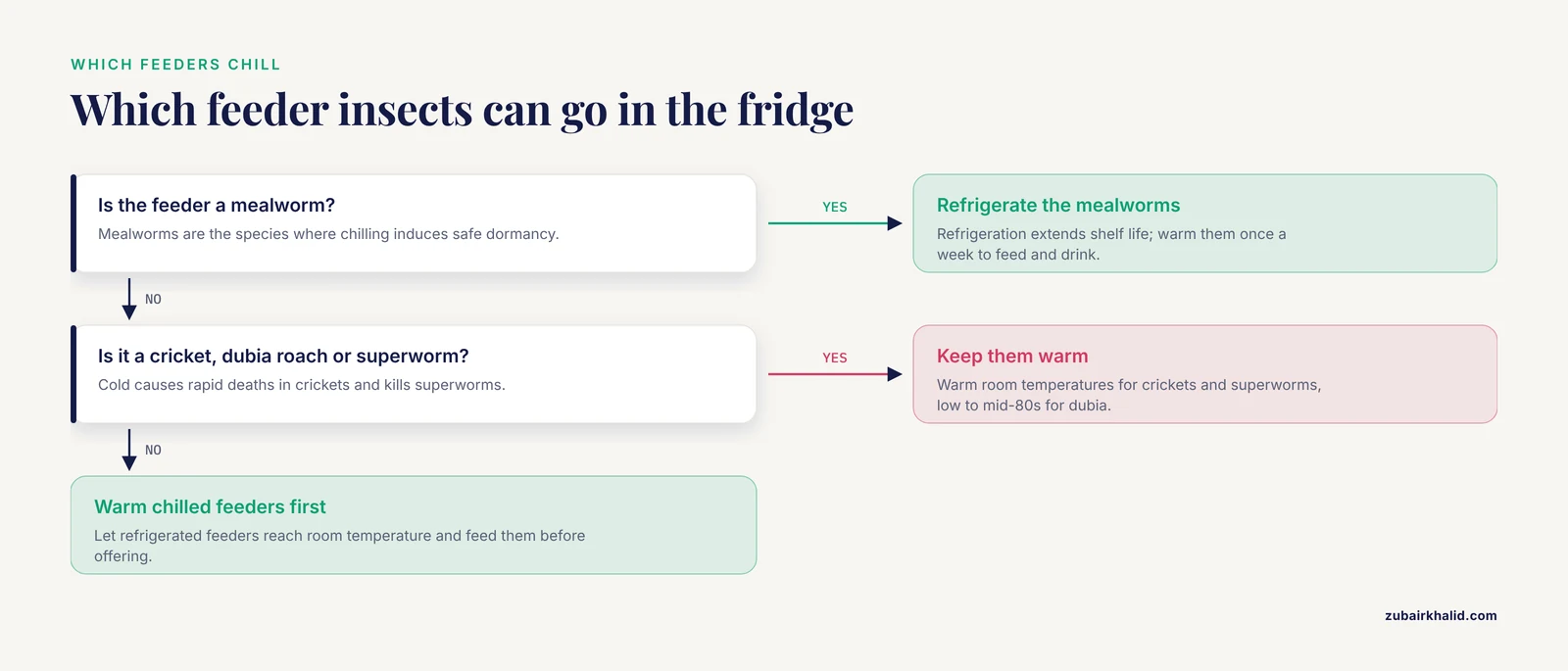
If you learn one skill in feeder insect husbandry, make it temperature control. Insects have defined thermal ranges for survival, development, and reproduction, and temperature sensitivity in insects is a central theme of both stored-product pest management and the controlled cold storage of beneficial insects [2]. Push past the upper limit and you get die-offs. Drop below the lower limit and activity, digestion, and immunity slow, which in some species is useful and in others is fatal.
Typical keeper targets for common feeders are:
| Feeder insect | Typical storage temperature | Notes |
|---|---|---|
| , - | , - | , - |
| Crickets | Warm room temperatures, roughly the mid-70s to mid-80s Fahrenheit | Do not refrigerate. Cold causes rapid deaths. Warm bins need extra ventilation and daily cleaning |
| Dubia roaches | Warm, roughly the low to mid-80s and higher for breeding | They tolerate room temperature short term but stop eating and reproducing when cool |
| Mealworms | Cool room temperature or refrigeration | Refrigeration puts them in dormancy and dramatically extends shelf life. Remove them from the fridge at least once a week to let them feed and drink |
| Superworms | Warm room temperature | Do not refrigerate. Cold temperatures kill them. Keep them in bran or oat bedding |
| Hornworms | Cool room temperature | Sold in cups with food. Keep them upright and use them before they pupate |
| Black soldier fly larvae | Cool room temperature | Refrigeration slows development and extends usable life |
Two practical points follow from insect temperature physiology. First, temperature effects are not just about death, they change feeding, movement, and metabolic state, so a chilled insect offered immediately to a reptile may be sluggish and poorly digested [2]. Pull refrigerated feeders out, let them warm to room temperature, and offer them food and moisture for a few hours before they go into the enclosure. Second, heat builds fast in crowded bins. A cricket bin in a warm room can cook itself, so when ambient temperatures climb, increase ventilation, reduce crowding, and check the bin in the afternoon, not just the morning.
Feeding and Hydrating Insects in Storage
Gut loading means feeding nutritious food to feeder insects for a period before they are offered to a reptile, so the nutrients pass along inside the insect's digestive tract. Captive feeding programs for zoo animals stress that prey and diet items must deliver balanced nutrition, not just calories, and that nutritional strategies directly influence health and reproductive outcomes [1]. In practice, this means the dry grain dish in your cricket bin is not optional, it is part of your reptile's diet.
Use a dedicated gut-load diet or a simple mix of dry grains with small amounts of high-calcium vegetable matter. Offer moisture through vegetables rather than open water. Hydrated feeders are heavier, more active, and more nutritious, and dehydrated feeders are one reason reptiles in otherwise good setups show chronic mild dehydration.
One caution comes from bait research. Sugar-water and moist baits attract a wide range of insects, including non-target species, which is precisely why researchers studying invasive ant management track what shows up at bait stations [5]. In a feeder bin, spilled sweet food or sugary gut-load slurries attract flies, ants, and roaches you did not buy. Keep the diet dry in the dish, deliver moisture through vegetables or crystals, and remove spoiled wet food daily.
How to Store Vegetables for Reptile Diets
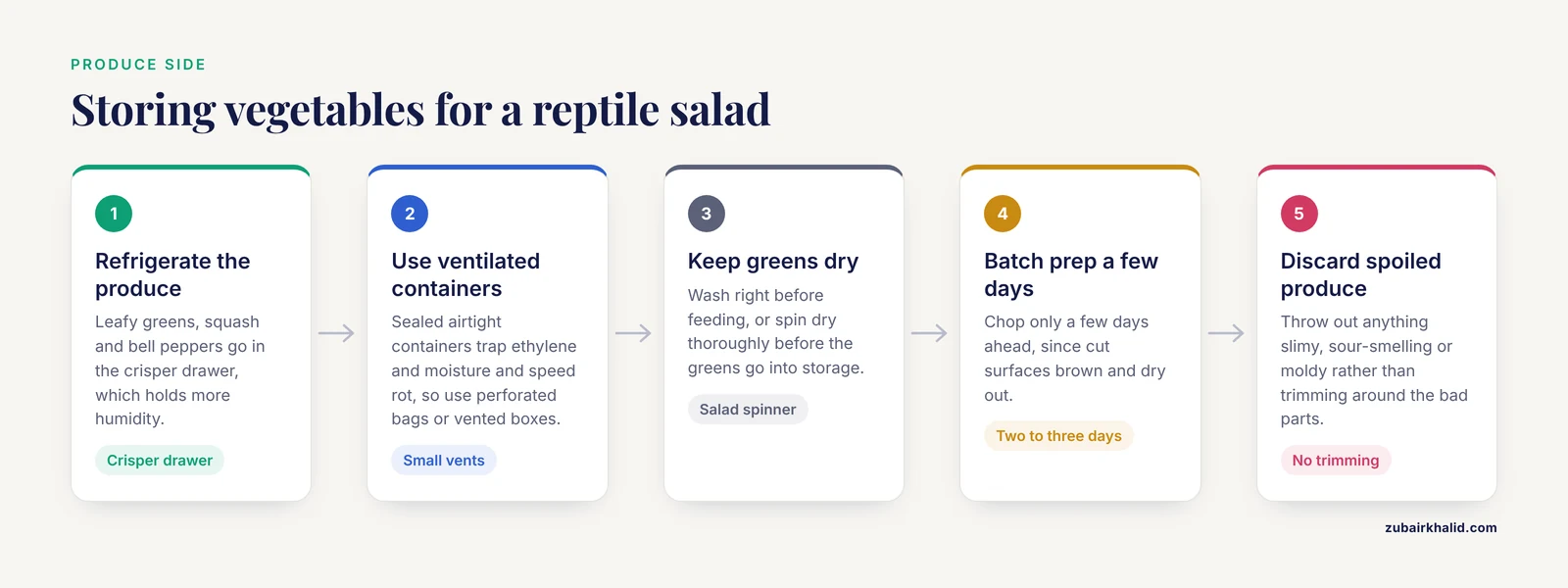
Vegetable storage is simpler than insect storage, but the same principle applies, nutrition degrades with time and mishandling, and your reptile depends on the quality of what you offer.
- Refrigerate most produce. Leafy greens, squash, bell peppers, and most vegetables used in reptile salads keep best in the refrigerator crisper drawer, which holds higher humidity than the main cabinet.
- Use ventilated containers. Sealed, airtight containers trap ethylene and moisture and accelerate rot. Perforated bags or containers with small vents keep greens crisp for several days.
- Keep greens dry until use. Wash greens right before feeding rather than before storage, or wash them and dry them thoroughly with a salad spinner before refrigerating. Trapped surface water speeds bacterial and fungal spoilage.
- Batch prep carefully. Chopping a week of salads at once saves time, but cut surfaces brown and dry out. Batch prep only a few days ahead, and store chopped vegetables in a clean, ventilated container in the crisper.
- Do not freeze fresh salad vegetables. Freezing destroys the texture of leafy greens and high-water vegetables, and thawed produce is unpalatable and watery for most reptiles.
- Discard wilted or slimy produce. If a vegetable smells sour, feels slimy, or shows mold, throw it out. Do not trim around the bad parts.
- Buy for the week. Fresh produce loses vitamin content over storage time. Frequent small purchases beat a single bulk trip followed by two weeks of increasingly tired vegetables.
If you offer vegetables to tortoises or omnivorous lizards as a major part of the diet, talk with your veterinarian about which greens and vegetables suit your specific species, because vegetable selection is a species-level nutritional decision, not a storage decision.
Keeping Pests Out of Stored Feed and Grain
Every reptile keeper who stores crickets also stores grain, in the form of cricket food, chicken feed, oatmeal, or bedding bran. Grain-based products are the classic host material for stored-product insects, and a whole field of integrated pest management exists around protecting stored commodities from moths and beetles [4]. The same management logic keeps your feeder area clean.
- Store dry feed in sealed containers. Airtight bins deny pantry moths and grain beetles access to your feed stock. Cardboard bags are an open invitation.
- Sanitation first. Reviews of stored-product integrated pest management consistently identify sanitation, meaning removal of spilled food and residue, as the foundation of control, because food cues in the environment compete with and sustain pest populations [3]. Vacuum crumbs around the feeder bin and feed containers weekly.
- Monitor. Look for webbing, clumping, off odors, or small moths near stored feed. Sampling to detect insect populations early is a core component of stored-product management programs [4]. Discard any feed that shows infestation rather than trying to sift it clean.
- Do not use chemical insecticides or strong repellent oils near feeder colonies. Botanical compounds such as citronella oil have demonstrated strong repellent and fumigant activity against stored-product moths in laboratory testing [6]. That same activity makes scented oils, sprays, and plug-ins a hazard around a feeder bin and its ventilation. Keep anything aromatic, including essential oils, away from insect storage areas.
- Prefer physical and cultural controls. Physical measures, including proper sealing, temperature management, and removal of infested material, are central pillars of integrated stored-product insect management [4], and they are the only measures appropriate inside a reptile-feeding area.
Common Mistakes When Storing Feeder Insects
- No food in the bin. Feeder insects kept on empty stomachs lose gut content and hydration, and they offer your reptile far less nutrition. Continuous access to appropriate food is part of good captive nutrition practice.
- Open water dishes. Water dishes drown insects, contaminate the bin, and breed bacteria. Moisture belongs in crystals, cotton, or vegetables.
- Refrigerating the wrong species. Chilling kills crickets, dubia roaches, and superworms. Refrigeration is a dormancy tool for mealworms and a slowing tool for some other larvae, not a universal storage method.
- Airtight bins. Colonies suffocate and cook in sealed containers. Ventilation is mandatory.
- Letting dead insects accumulate. Dead insects and frass in a warm bin drive ammonia odor, mold, and disease. Daily removal is the single highest-value maintenance task.
- Buying too many insects at once. Large bins crowd, crash, and smell. Size orders to what you can keep healthy, not to what looks economical per dozen.
- Storing the bin next to the reptile enclosure. Insect bins add heat, humidity, odor, noise, and escape risk to the room. As you plan your reptile enclosure setup, place the feeder station in a separate area with stable temperatures and easy cleaning access.
- Ignoring your feed stock. Unsealed grain in the same room as a feeder bin invites pantry pests, and food cues in the environment sustain pest populations that are hard to eliminate once established [3].
- Feeding insects straight from cold storage. Cold, sluggish feeders are poor meals. Warm and feed them before offering.
Troubleshooting Common Problems
Sudden die-off in a cricket bin. The most likely causes are overheating, drowning, ammonia buildup from dirty bins, or contamination. Check the thermometer, remove the dead, replace moisture sources, and increase ventilation. If the die-off started after you introduced new feed or bedding, suspect a contaminated or treated product and replace it.
Bad smell. Odor means dead insects, moisture, or crowding. Clean the bin, remove frass, cut moisture, and consider splitting the colony into two bins.
Escapees. Crickets climbing from a bin usually means the walls are dusty or condensation lets them grip. Wipe the walls, verify the lid seal, and check for gaps around vent mesh. A wide smooth moat of clean plastic is the best barrier.
Slow growth in a roach colony. Dubia roaches stop growing and breeding when temperatures drop. Move the bin warmer and confirm they have continuous food and moisture.
Moths or beetles in the feed room. Seal all grain, discard infested product, clean thoroughly, and monitor for recurrence. Behaviorally based and integrated approaches to stored-product pests rely on sanitation, monitoring, and physical exclusion rather than routine pesticide use in areas like yours [3][4].
A Practical Reptile Care Checklist
Feeder storage fits into the bigger picture of husbandry. A working reptile care checklist looks like this:
- Enclosure sized to the species, with secure hides and appropriate substrate as part of a sound reptile enclosure setup
- Temperature gradient measured with thermometers at both ends, plus appropriate humidity for the species
- Full-spectrum lighting and UVB exposure where the species requires it, replaced on the manufacturer's schedule
- Fresh water available and cleaned daily
- A written feeding schedule matched to species and life stage
- Feeder insects stored, fed, and hydrated as described in this article, with gut loading before use
- Fresh vegetables stored in the crisper, washed before feeding, and rotated on a short buying cycle
- Vitamin and mineral supplementation as directed by your reptile veterinarian
- Weekly visual health checks and an annual wellness examination
- Clean, sealed feed storage with regular pest monitoring
If your husbandry checklist is solid and your reptile still loses weight, refuses food, or shows bone or shell deformities, the next step is a veterinarian experienced with reptiles, not another storage tweak.
Welfare and Safety Points
Feeder insects are living animals and deserve basic humane handling. Avoid overcrowding, provide food and water, and cull humanely using methods your veterinarian can discuss. Colony insects and mass-reared insects are managed successfully in dense groups because many insect species carry traits, including high biomass, numerical abundance, and stress tolerance, that make them comparatively easy to keep in managed settings [7], but ease of management is not permission for neglect.
On the human safety side, wash your hands after handling feeders, bins, or produce. Keep insect bins out of bedrooms and food-preparation areas. Prevent children and pets from accessing the feeder station. Finally, never release surplus feeder insects outdoors, because non-native establishment can harm local ecosystems, a concern that mirrors the invasive-ant problems researchers manage with targeted baiting programs [5].
Limitations and When to Contact a Veterinarian
This article covers storage and handling. It does not replace species-specific dietary advice, and individual cases need a veterinarian. Contact a reptile veterinarian if your animal shows any of the following:
- Refusal to eat beyond the normal fasting pattern for the species
- Weight loss, visible spine or hip bones, or a softening shell or jaw in a chelonian or lizard
- Signs of metabolic bone disease, including tremors, weakness, or difficulty walking
- Repeated regurgitation, diarrhea, or changes in droppings
- Swelling of the mouth, discharge from the eyes or nose, or lethargy
- Suspected impaction after eating substrate or oversized prey
- Any parasite concern, because feeders from unreliable sources can introduce parasites
Bring a photo or sample of your feeder setup, your gut-load products, and your feeding log to the appointment. Ask your veterinarian to confirm that your temperature ranges, gut-loading routine, and supplementation plan match your species, age, and life stage.
Frequently Asked Questions
How long can I keep crickets before they die?
Adult crickets typically survive a few weeks in storage, while younger nymphs last longer, and both depend heavily on temperature, ventilation, and hygiene. Buy only what you can feed out within a week or two, and keep the bin clean, fed, and hydrated to maximize survival.
Do feeder insects need food while in storage?
Yes. Feeder insects need continuous access to dry food and moisture, because their gut content and hydration directly determine their nutritional value to your reptile, and captive nutrition programs treat feed quality as central to animal health [1].
Can I refrigerate dubia roaches?
No. Dubia roaches do not tolerate cold well, and refrigeration suppresses their feeding and activity and can kill them. Keep them warm at room temperature or above, and use refrigeration only for feeders such as mealworms where chilling induces safe dormancy.
How do I keep feeder insects from escaping?
Use smooth-sided plastic or glass containers with tightly sealed, mesh-ventilated lids, wipe interior walls so insects have no grip, and store the bin on a smooth surface. Crickets and roaches cannot climb clean, bare smooth plastic, so wall condition matters as much as the lid.
How long do chopped vegetables last in the fridge for reptiles?
Chopped vegetables generally stay fresh for two to three days in a ventilated container in the crisper drawer, while whole vegetables last longer. Discard anything slimy, sour-smelling, or moldy, and wash produce before it goes into the food bowl.
Should I wash vegetables before feeding them to my reptile?
Yes. Rinse produce under running water before feeding to remove surface residue and debris, and dry leafy greens well if you are storing them washed. Washing belongs in your prep routine regardless of whether the produce is labeled organic.
What is gut loading and when should I do it?
Gut loading means feeding nutritious food to feeder insects for a day or more before offering them, so nutrients pass through the insect to your reptile. Offer a gut-load diet continuously in the storage bin, so every feeder is loaded whenever it is needed, rather than trying to load one insect on the spot.
When should I call a veterinarian about my reptile's diet?
Call a reptile veterinarian when your animal loses weight, refuses food longer than normal for its species, shows tremors, weakness, or jaw or shell softening, or has persistent digestive changes. Bring your storage and feeding records so the veterinarian can evaluate the whole diet chain.
This article is educational and is not a substitute for veterinary diagnosis or treatment.
Sources
- Current trends in feeding and nutrition of zoo animals: A review
- Temperature Sensitivity in Insects and Application in Integrated Pest Management
- Towards developing areawide semiochemical-mediated, behaviorally-based integrated pest management programs for stored product insects.
- Integrated Management of Insects in Stored Products
- Evaluation of non-target bait attraction by pollinating insects when using water-storing granules for invasive ant management
- Isolation, Identification and Evaluation of the Effective Phyto-Compounds for The Management of Insects Infesting Stored Groundnuts (Arachis Hypogaea L.)
- The ecosystem services provided by social insects: traits, management tools and knowledge gaps