How to Quarantine a New Leopard Gecko: Steps and Timeline
By Dr. Zubair Khalid, DVM, MS, PhD ·
Quarantine a new leopard gecko for at least 30 days, and ideally 60 to 90 days, in a room separate from every other reptile, with its own enclosure, tools, and cleaning routine. During the leopard gecko quarantine period, schedule a reptile veterinarian exam, submit a fecal sample, weigh the gecko weekly, and check droppings daily. The reason is simple. A gecko can look healthy, eat well, and act normal while carrying Salmonella, antibiotic-resistant gut bacteria, or parasites, and those organisms can move to your other animals and to people [1].
This guide walks through the entire process, from building a quarantine setup for leopard geckos before the animal arrives to the final checks that make introducing new leopard geckos safely possible at the end.
This article is educational and is not a substitute for veterinary diagnosis or treatment.
At a Glance: Quarantine Steps and Timeline
| Phase | Timing | Key actions |
|---|---|---|
| , - | , - | , - |
| Prepare | 2 to 7 days before arrival | Set up a separate room, run the enclosure on paper towels with a thermostat-controlled heat source, gather a dedicated cleaning kit, scale, and log, and book a reptile veterinarian |
| Arrival | Day 0 | No handling, offer water, weigh and photograph a baseline, start the log, wash hands |
| Settling in | Days 1 to 7 | Offer first food after 24 to 48 hours, collect a fecal sample, complete a veterinary exam, keep handling minimal |
| Observation | Weeks 2 to 4 | Weigh weekly, check droppings daily, watch the first shed, keep hygiene strict |
| Checkpoint | Day 30 | Minimum end point for homes with no other reptiles, only with a clean exam, stable weight, normal droppings, and fecal results your veterinarian accepts |
| Extended watch | Days 31 to 90 | Preferred window when other reptiles live in the home, with repeat fecal testing as directed |
| Stand down | End of quarantine | Final exam and fecal recheck, deep clean or discard gear, move the gecko to its permanent enclosure, keep handwashing for life |
Why Quarantine a New Leopard Gecko
Quarantine is the period when a new animal lives alone under daily observation before it joins an established collection. Reptile veterinarians, including members of the Association of Reptilian and Amphibian Veterinarians (ARAV), treat quarantine as a core biosecurity step for every new reptile, the same principle hospitals apply to new admissions. Evidence-based husbandry guides such as ReptiFiles recommend at least 30 days, with longer periods whenever the animal will live near other reptiles.
Three things happen during quarantine. First, the gecko recovers from the stress of capture, shipping, and a new environment, which suppresses appetite and immune function for days to weeks. Second, hidden problems get a window to surface, because many parasites and infections show up in droppings, weight trends, or behavior within weeks. Third, your household gains protection, because organisms carried by healthy-looking reptiles matter most in homes where people and animals interact closely every day.
Quarantine also protects the newcomer. Your home carries bacteria and parasites your gecko has never met, and a stressed animal is more susceptible. Isolation lowers risk in both directions.
Diseases Spread by New Leopard Geckos
A new gecko can arrive carrying bacteria, internal parasites, and occasionally external parasites. Knowing the main threats explains every rule in the setup and timeline below.
Bacteria, including antibiotic-resistant organisms
Salmonella is the best known risk. The AVMA notes that reptiles can carry and shed Salmonella without appearing sick, and the bacteria move through feces, contaminated surfaces, and unwashed hands. Most carrier reptiles look completely normal, which is why hygiene rules apply to every gecko, not only sick ones.
Antibiotic-resistant gut bacteria are a newer concern. In a 2025 study from Lisbon, Portugal, researchers collected 132 samples from the oral and cloacal cavities of healthy pet leopard geckos and bearded dragons [1]. Enterobacterales resistant to third-generation cephalosporins, antibiotics that matter in both human and veterinary medicine, were detected in 17.9 percent of the reptiles tested (14 of 78) [1]. The most common organisms were Citrobacter freundii and Klebsiella aerogenes, and some isolates carried extended-spectrum beta-lactamase (ESBL) and AmpC resistance genes, including bla CMY-2, bla CTX-M-15, and bla TEM-1 [1]. The authors emphasized the zoonotic potential of these bacteria in settings where people and reptiles interact closely [1].
The practical lesson is that a clean-looking, eating, active gecko can still shed organisms you cannot see. Quarantine relies on process, not appearance.
Parasites
Internal parasites are the most common reason quarantine catches a problem. Pinworms (oxyurids) are widespread in captive geckos and often cause little harm at low numbers, but heavy burdens contribute to diarrhea and weight loss. Coccidia can cause similar signs, especially in juveniles. Cryptosporidium deserves special attention because infection in lizards is associated with chronic wasting and progressive tail thinning, a pattern often called stick tail disease. The Merck Veterinary Manual covers cryptosporidiosis in reptiles, and treatment options are limited, so prevention carries the weight.
Intermittent shedding matters here. Many parasites release eggs or oocysts in bursts, so a single negative fecal test does not guarantee a parasite-free animal. That limitation is a key reason reptile veterinarians often recommend repeat fecal exams and a longer quarantine period when other reptiles live in the home.
External parasites
Mites are uncommon in leopard geckos compared with snakes but possible. Check the skin folds around the eyes, armpits, and vent during the first weeks. Anything moving that should not be there goes to the veterinarian, ideally with a photo or the mite itself in a sealed container.
How these organisms travel
Transmission follows feces and contact. Shared water dishes, hands that touch one animal and then another, sleeves, unwashed decor, and reused cleaning tools can all move eggs, oocysts, and bacteria between enclosures. Separate rooms, dedicated equipment, and handwashing interrupt every one of those routes.
Choosing a Quarantine Location
The ideal quarantine room has a closable door, low foot traffic, no food preparation, and no other reptiles. A spare bedroom, office, or laundry room works well. Distance is your main tool, because most reptile pathogens travel on hands, tools, and droppings rather than through the air.
If a fully separate room is impossible, use the farthest practical point from your existing reptiles, keep doors closed, and never share water sources, decor, or cleaning tools between setups. Keep the enclosure away from drafts and away from splash zones when you clean other tanks.
Avoid kitchens and dining areas entirely. The AVMA advises keeping reptiles and their equipment out of areas where food is prepared or consumed, because reptile-associated Salmonella and food preparation do not mix.
Quarantine Setup for Leopard Geckos
A quarantine enclosure should be simple, warm, secure, and easy to disinfect. Every item either gets disinfected at the end or thrown away, so favor inexpensive, nonporous materials. VCA Animal Hospitals' leopard gecko guidance and ReptiFiles stress the same basics for general care, a proper thermal gradient, clean simple housing, and secure lids, and quarantine raises the bar on all three.
Enclosure
A glass aquarium or a plastic or PVC tub with a secure, ventilated lid works well. For an adult, a footprint of about 30 by 12 inches (a 20 gallon long equivalent) is a workable quarantine minimum, and 36 by 18 inches is better because it allows a real thermal gradient. Modern evidence-based guides such as ReptiFiles use the larger footprint as the adult standard. Juveniles do fine in smaller tubs with room to move between warm and cool zones. Smooth, nonporous surfaces clean fastest. Check the lid for gaps, because geckos are persistent escape artists.
Substrate
Paper towels are the standard quarantine substrate. They cost little, show feces clearly, carry no impaction risk, and replace in seconds. Skip sand, soil, moss floors, and reptile carpet for now. Loose substrates hide droppings, complicate fecal collection, and cannot be reliably disinfected.
Hides and furnishings
Provide three hides: one on the warm side, one on the cool side, and a humid hide packed with damp paper towel or sphagnum for sheds. Choose plastic or ceramic hides with smooth interiors. Save wood, cork, and porous rock for after quarantine, because they are hard to disinfect. Paper taped over two or three sides of a tub gives a nervous gecko cover and speeds settling.
Heating and lighting
Create a thermal gradient with a thermostat-controlled heat mat or overhead heat source covering roughly one third of the floor. Typical targets in mainstream care guides are a warm side around 88 to 92°F (31 to 33°C) and a cool side around 73 to 78°F (23 to 26°C). Confirm exact targets with your reptile veterinarian, and verify them with a digital thermometer with its probe at floor level where the gecko actually rests. A thermostat is essential for heat mats, because unregulated mats can cause serious burns.
Provide a 12 hour light and 12 hour dark cycle with a plain household LED. Low-output UVB is increasingly recommended for leopard geckos in general care, and you can discuss adding it with your veterinarian. During quarantine, consistency matters more than complexity.
Water and food dishes
Use shallow, heavy ceramic or plastic dishes that survive disinfection. Offer fresh water daily. Feeding insects in a dish or on the paper towel keeps prey from hiding under decor and makes leftovers easy to remove.
Cleaning kit
Keep a dedicated quarantine cleaning kit stored away from the kitchen: disposable gloves, a stiff brush, a plastic scraper, a spray bottle, paper towels, trash bags, and a disinfectant. A commonly used approach in reptile practice is a freshly mixed 1:10 dilution of household bleach (one part bleach to nine parts water) with about 10 minutes of contact time, followed by a thorough rinse and complete drying. A commercial reptile disinfectant used strictly per label directions is an alternative. Never use kitchen sinks, kitchen sponges, or the family bathtub for gecko cleaning.
Records and tools
Buy a digital kitchen scale that reads in grams. Weekly weights catch problems long before the eye does. Keep a simple log with date, weight, stool quality, appetite, and shed events, and photograph the gecko on arrival and weekly.
Step-by-Step: How to Quarantine a New Leopard Gecko
Step 1: Prepare before the gecko arrives
Set up the enclosure at least two days early so temperatures stabilize and you can fix problems before the animal is inside. Gather substrate, hides, dishes, a thermostat, a thermometer, a scale, and disinfectant. Find a reptile veterinarian and call about new-pet exams and fecal testing, because not every clinic sees exotics. The ARAV website maintains a directory of member veterinarians who treat reptiles. Buy feeder insects and gut-loading food. Set household rules for who handles the gecko, where handwashing happens, and which door stays closed.
Step 2: Arrival day (Day 0)
Transport the gecko home in its shipping container without opening it en route. Place it in the pre-warmed enclosure, offer water, and let it settle. Weigh it for a baseline, photograph the whole body including the tail base, and record anything the seller shared about feeding and history. Check temperatures, wash your hands, and write the first log entry. Loose stool from shipping stress is common on arrival and in the first days.
Step 3: Days 1 to 7
Offer the first food 24 to 48 hours after arrival. Use a few small, appropriately sized, gut-loaded insects, no wider than the space between the gecko's eyes. Leopard geckos are most active at dusk, so evening feeding usually works best. Remove uneaten insects.
Collect a fecal sample during the first week. Take a fresh, unsoiled portion of stool, place it in a clean sealed container, keep it cool, and deliver it to your veterinarian the same day whenever possible. Book the new-pet exam within the first one to two weeks and bring the sample and your log.
Keep handling minimal this week. Check temperatures morning and evening, replace soiled paper towels promptly, record every dropping, and wash hands after every contact.
Step 4: Weeks 2 to 4
Weigh the gecko weekly, on the same day and at a similar time, and record the number. Stable or slowly rising weight is reassuring. Watch for the first shed, confirm the humid hide is being used, and continue daily stool checks and strict hygiene. If anything concerns you, call the veterinarian instead of trying home remedies.
Step 5: The 30 day checkpoint
Day 30 is the minimum quarantine period, not an automatic finish line. In a home with no other reptiles, quarantine can end around day 30 when all of the following are true: the gecko eats reliably, weight is stable or rising, droppings are normal, the veterinary exam found no concerns, and fecal results satisfy your veterinarian. Discuss the decision with your veterinarian rather than counting days alone. If any box is unchecked, extend quarantine.
Step 6: Extended quarantine (Days 31 to 90)
When other reptiles live in the home, most reptile veterinarians prefer 60 to 90 days. Intermittent parasite shedding, slow-building infections, and the seriousness of organisms such as Cryptosporidium justify the longer window. Keep the same routine, repeat fecal testing as your veterinarian directs, and continue weekly weights. If your veterinarian recommends additional screening based on the gecko's history, schedule it during this period so results are in hand before any introductions.
Step 7: Ending quarantine and standing down
End quarantine with a final veterinary check and, where recommended, a repeat fecal exam. Then stand down in order:
- Move the gecko to its permanent enclosure in its normal location.
- Scrub and disinfect the quarantine enclosure, hides, and dishes, or discard disposable items.
- Launder towels or clothing used around the quarantine area.
- Replace paper towels with your chosen long-term substrate in the new enclosure.
- Keep handwashing between animals as a permanent habit, because reptiles can shed Salmonella intermittently for life.
Daily and Weekly Routine Through the Leopard Gecko Quarantine Period
Daily tasks take about ten minutes:
- Check warm and cool side temperatures morning and evening.
- Refresh water.
- Spot clean feces and replace soiled paper towel.
- Feed according to the schedule you set with your veterinarian or care guide, typically daily for juveniles and every two to three days for many adults, and remove uneaten insects.
- Record droppings, appetite, and behavior.
- Wash hands before and after.
Weekly tasks:
- Weigh and record.
- Photograph for a visual record.
- Disinfect soiled spots promptly and do a full clean and disinfection every week or two.
- Review the log for trends, because slow changes are exactly what quarantine is designed to catch.
Consistency beats intensity. A short, boring, well-documented routine catches more problems than occasional deep cleans followed by gaps in observation.
Health Checks and Veterinary Screening
What a healthy gecko looks like
Healthy quarantine residents have plump tails, clear eyes, smooth sheds, and regular droppings that combine dark feces with a white urate portion. They hide by day and hunt at dusk. Weight holds steady or climbs slowly in a growing juvenile.
Red flags during quarantine
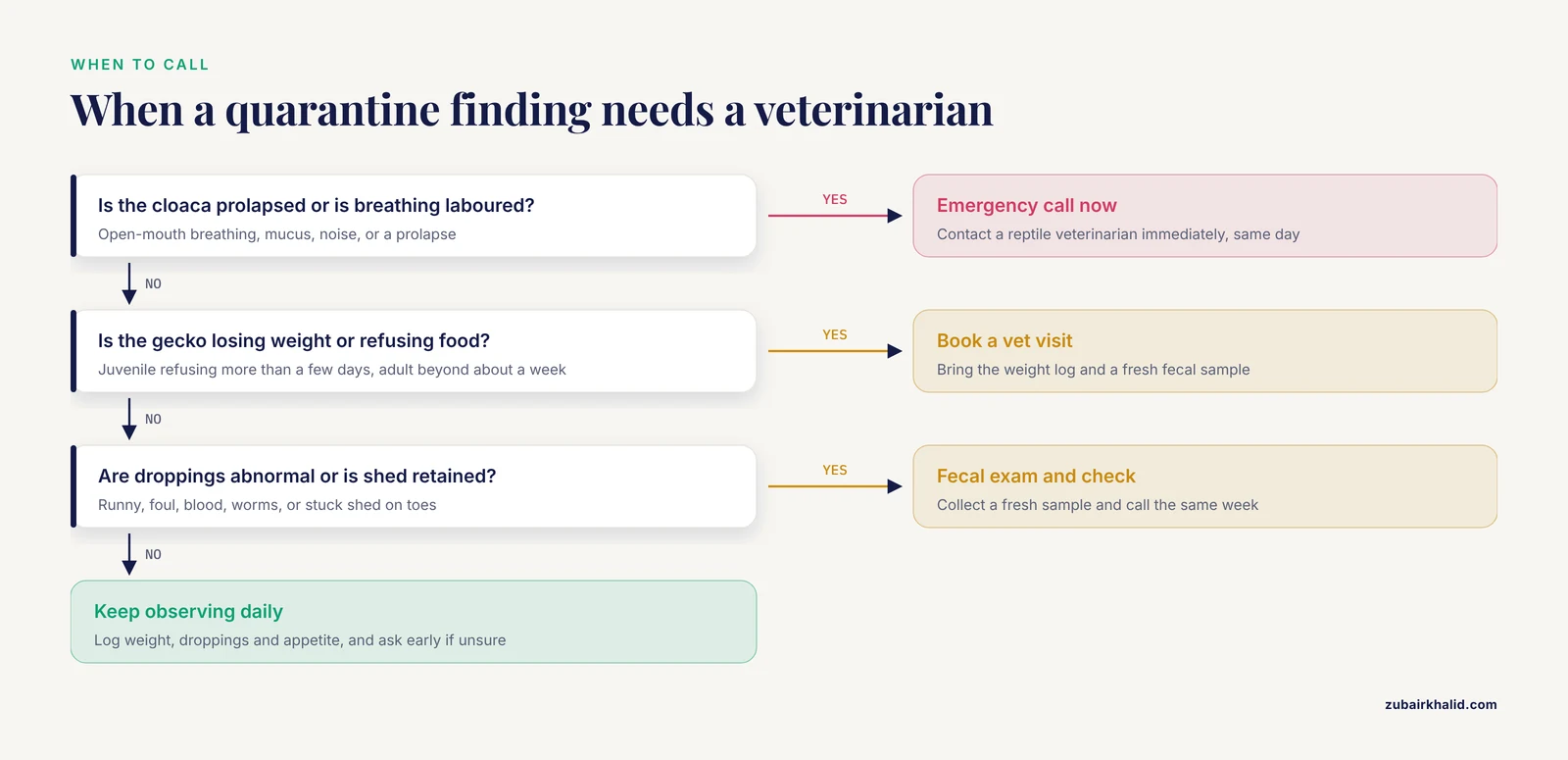
Call your reptile veterinarian promptly for any of the following:
- Refusal to eat beyond the settling-in window, especially in a juvenile
- Weight loss, particularly a drop of roughly 10 percent or more from baseline
- A tail that visibly thins
- Runny, very foul, or unusually colored droppings, or visible worms
- Regurgitation
- Lethargy, weakness, or a gecko that stops using its hides normally
- Open-mouth breathing, mucus, or noise with breathing
- Retained shed, especially on toes or the tail tip
- Swollen or closed eyes, or mouth lesions
- A prolapsed cloaca, which is an emergency
- Any injury
Bring your weight log and, when asked, a fresh fecal sample.
Fecal exams and other screening
Fecal testing is the workhorse of reptile quarantine. Your veterinarian chooses the method, commonly a direct smear, a flotation, or both, and interprets results alongside the gecko's history. Because parasites shed intermittently, repeat tests are often recommended, typically toward the end of quarantine. Ask your veterinarian whether additional screening makes sense for your gecko's source and your collection, and follow their plan for any treatment, including drug choice and duration, rather than using products intended for other species.
Common Quarantine Mistakes
- Skipping quarantine because the gecko looks healthy. The organisms that matter most, including Salmonella and resistant gut bacteria, shed without symptoms.
- Quarantining in the same room as other reptiles or sharing tools between setups.
- Handling the new gecko and then your established animals without washing hands in between. Work established animals first and the newcomer last.
- Using loose substrate, which hides droppings and complicates fecal collection.
- Ending quarantine on day 30 by the calendar despite red flags or incomplete results.
- Reaching for leftover or borrowed antibiotics. Reptile infections need species-appropriate prescribing, and the Lisbon study's authors specifically connect responsible antimicrobial use with limiting the spread of resistant bacteria [1].
- Cleaning gecko items in the kitchen or in the bathtub the household uses.
- Skipping the scale and log, which removes your best early-warning system.
- Overhandling in week one, which adds stress precisely when the immune system is down.
- Forgetting that disease moves both directions, from the newcomer to your collection and from your collection to the newcomer.
Troubleshooting Common Quarantine Problems
The gecko will not eat
New geckos often refuse food for the first few days after shipping. Confirm temperatures first, because a cold gecko will not digest. Feed in the evening, offer a few small live insects, and remove leftovers. If an adult refuses food beyond about a week while losing weight, or a juvenile refuses more than a few days, contact your veterinarian. Never force feed without veterinary guidance.
Hiding and stress signs
Hiding for most of the day is normal leopard gecko behavior, especially in week one. Stress looks different: frantic climbing at the walls, a darkened or washed-out color, a tail held tight, or refusal to settle at night. Add cover, keep the room quiet, and reduce handling. Most geckos settle within one to two weeks.
A bad shed
Dampen the humid hide and let the gecko work. Never pull loose skin, especially from toes or the tail tip, because tearing injures the tissue underneath. If shed remains after a day or two despite the humid hide, or if toes look constricted, contact your veterinarian.
Abnormal droppings
Loose stool right after arrival is common. Diarrhea that persists, blood, a strong foul smell, or visible worms calls for a fecal exam. Collect a fresh sample and call your veterinarian the same week.
Escapes
Secure lids prevent most escapes. If one happens, search warm, dark, low spots near the enclosure at dusk when geckos become active, and set the open enclosure on the floor with food inside. Weigh the gecko once recovered and watch the next few droppings.
Introducing New Leopard Geckos Safely
Final clearance before any move
Before quarantine ends, confirm three things with your reptile veterinarian: a clean physical exam, fecal results your veterinarian accepts, and a stable weight trend. Then deep clean the quarantine gear and move the gecko to its permanent enclosure. Even after clearance, keep handwashing between animals permanent, because reptiles can shed Salmonella intermittently for life.
Should leopard geckos share an enclosure?
Most leopard gecko keepers and veterinarians advise housing them individually. Cohabitation creates competition for hides and food, risk of bites and tail injuries, chronic stress, and a direct route for disease even after a clean quarantine. Two geckos that seemed compatible for months can injure each other suddenly.
If you have a specific, planned reason to house geckos near each other, such as breeding under guidance from an experienced mentor or veterinarian, do it deliberately: supervise every interaction, provide duplicate hides and food stations, and keep separate enclosures ready so either animal can be removed immediately. Any gecko that leaves your home, even briefly for a show or a friend's house, should return through a fresh quarantine period.
Ongoing biosecurity for the whole collection
Quarantine is a habit, not a one-time event. Every new reptile, from any source, restarts the process. Handle established animals before new or quarantined ones, keep dedicated tools per room, and wash hands between enclosures. These small habits do more for long-term collection health than any single perfect setup.
Welfare and Household Safety During Quarantine
Quarantine restricts where a gecko lives, not how well it lives. A proper thermal gradient, three hides, fresh water, appropriate food, and a quiet room meet the animal's needs. Short, calm interactions, such as feeding with tongs once the gecko settles, build trust without risk.
Protect people too. The AVMA advises thorough handwashing after any contact with reptiles or their habitats and extra caution in homes with young children, older adults, pregnant people, or anyone with a weakened immune system. Keep reptiles, their water, and their equipment out of kitchens and away from dishes people use. Supervise children's contact, and make handwashing the non-negotiable last step of every handling session.
Limitations and When to Contact a Veterinarian
Every quarantine is individual. The right length, the screening plan, and the end point depend on the gecko's age and history, the source, your existing animals, and test results, so set the details with a reptile veterinarian rather than a fixed calendar. This article is educational and is not a substitute for veterinary diagnosis or treatment.
Contact your reptile veterinarian promptly if any of the following occur:
- Your new gecko stops eating past the settling-in window, loses weight, or develops a thin tail
- Droppings stay abnormal for more than a day or two, or contain blood
- You see regurgitation, breathing effort, retained shed that will not release, eye or mouth changes, or a prolapse, which is an emergency
- Any existing reptile develops signs after the new arrival, and mention the new animal, because the timeline matters for diagnosis
- You are unsure whether a finding is normal, ask early, because small problems are easier to solve
If you do not have a reptile veterinarian, the ARAV website offers a directory of members who treat reptiles, and many exotics clinics also see leopard geckos. Early calls are almost always more successful than late ones.
Frequently Asked Questions
How long should I quarantine a new leopard gecko?
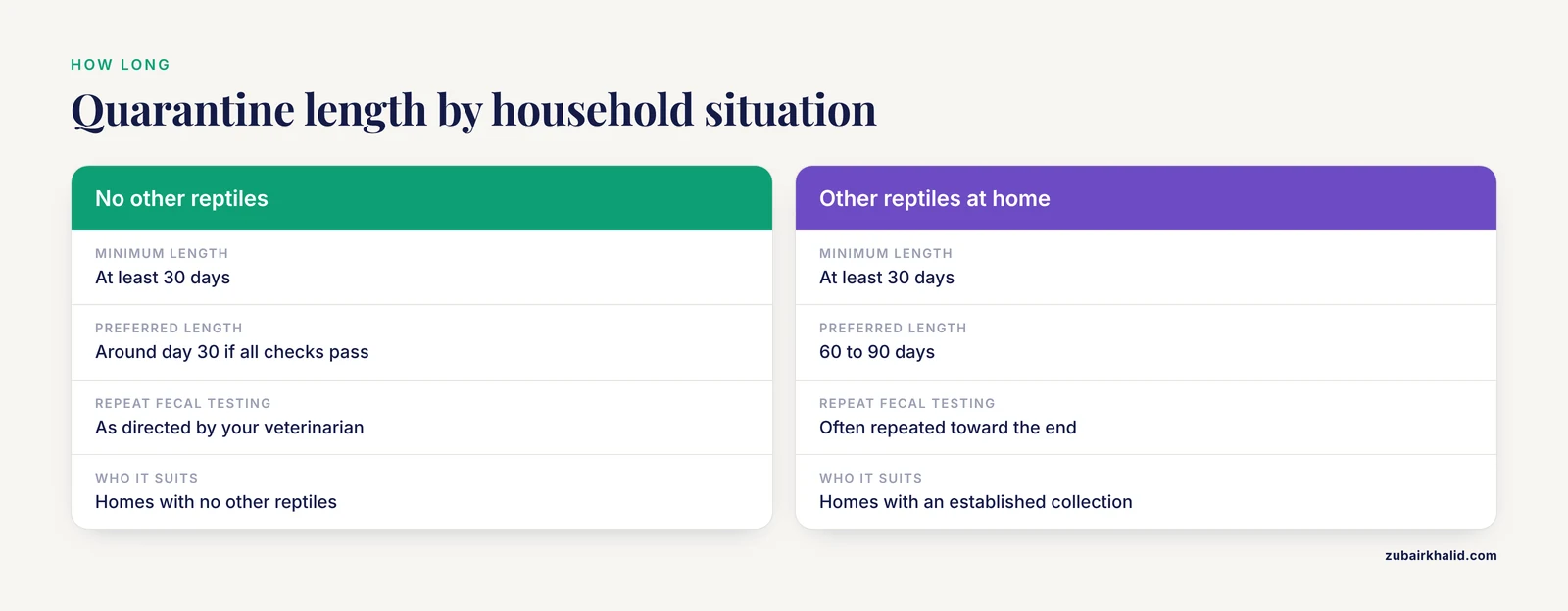
At least 30 days, and 60 to 90 days when other reptiles live in your home. Treat 30 days as the floor, not the goal, and confirm the end point with a reptile veterinarian based on the exam and fecal results.
Do I need to quarantine a gecko that looks completely healthy?
Yes. The organisms that matter most, including Salmonella, antibiotic-resistant gut bacteria, and parasites such as coccidia and Cryptosporidium, can be shed by animals that act and look normal.
What diseases can a new leopard gecko spread?
Mainly Salmonella and antibiotic-resistant gut bacteria, plus internal parasites such as pinworms, coccidia, and Cryptosporidium. Spread happens through feces, shared equipment, and unwashed hands.
Can I quarantine a new gecko in the same room as my other reptiles?
A separate room is strongly preferred. If it is impossible, use the greatest possible distance, closed doors, and completely separate tools, and accept that the protection is weaker.
Should a new leopard gecko see a veterinarian during quarantine?
Yes, ideally within the first one to two weeks. Bring a fresh fecal sample and your weight log, and ask the veterinarian to set the quarantine end point with you.
What substrate should I use during quarantine?
Paper towels. They show droppings clearly, cost little, carry no impaction risk, and can be replaced or discarded during cleaning.
How do I disinfect quarantine equipment when quarantine ends?
Throw away disposable items, scrub everything, disinfect with a freshly mixed dilute bleach solution or a reptile disinfectant used per the label, rinse thoroughly, dry completely, and launder any towels or clothing used nearby.
When can my new leopard gecko live with my current gecko?
Only after quarantine ends with veterinary clearance, and even then most veterinarians recommend housing leopard geckos separately because cohabitation risks bites, tail injuries, chronic stress, and disease transfer.