How Often to Feed a Reptile
By Dr. Zubair Khalid, DVM, MS, PhD ·
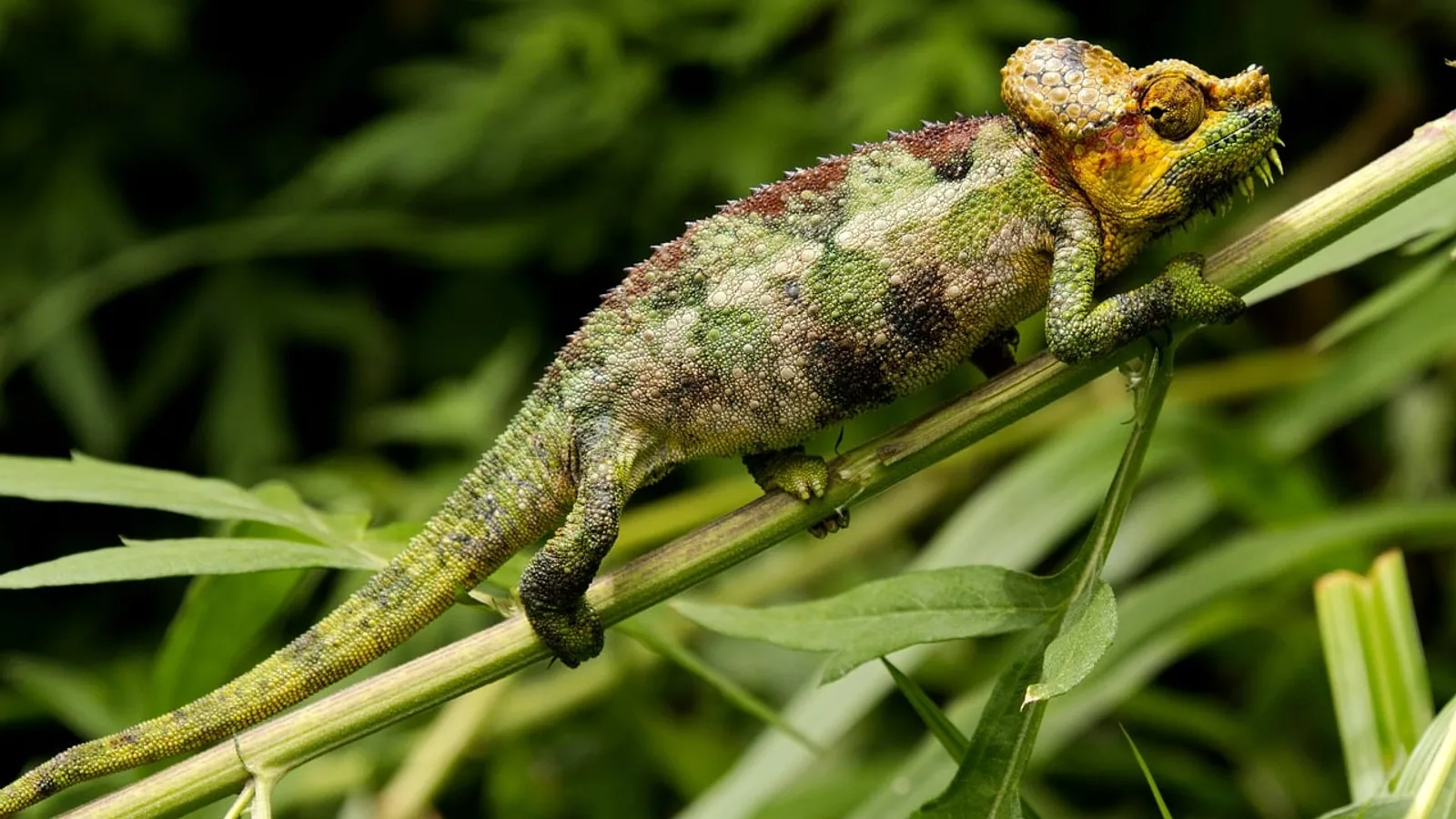
Most healthy adult reptiles eat somewhere between once a day and once every one to two weeks. The correct answer for your animal depends on three things: what it eats in nature, how old it is, and how warm its enclosure is. Herbivorous tortoises usually eat every day. Omnivores such as bearded dragons eat most days, with the balance of plant matter and insects shifting as they mature. Insectivorous lizards typically eat daily as juveniles and every two to three days as adults. Large snakes often do well on one appropriately sized meal every seven to fourteen days, and some species tolerate even longer intervals.
This article gives you a working framework, a feeding schedule template you can copy, and a care checklist that keeps feeding on track within a well-built enclosure. Exact frequency varies by species, so use these ranges as starting points and confirm the plan for your specific animal with a reptile veterinarian.
This article is educational and is not a substitute for veterinary diagnosis or treatment.
Feeding Frequency at a Glance
| Reptile group | Typical adult pattern | Juvenile pattern | Examples |
|---|---|---|---|
| Herbivores | Daily, mostly leafy greens and grasses | Daily | Greek tortoise, sulcata tortoise, green iguana |
| Omnivores | Every one to two days, plant-heavy in adults | Daily or near daily, insect-heavy | Bearded dragon, blue-tongued skink |
| Insectivores | Every two to three days | Daily or every other day | Leopard gecko, crested gecko, chameleon |
| Snakes | Every seven to fourteen days | Every five to seven days, smaller prey | Ball python, corn snake, garter snake |
| Turtles (aquatic and semi-aquatic) | Every one to two days, growing juveniles daily | Daily | Red-eared slider, map turtles |
| Crocodilians (advanced keepers only) | Several times weekly, species dependent | More frequent, small portions | Caiman species in licensed facilities |
Why Reptile Feeding Frequency Is Different
Reptiles are ectotherms. They regulate body temperature with their environment rather than with their metabolism, so the pace of digestion depends on how warm the animal is. A snake digesting a meal in a properly heated enclosure processes that meal on a predictable timeline. The same snake in a cold room may take far longer, and repeated feeding before the previous meal is digested can create real medical problems.
Research on bearded dragons shows how strongly diet and timing shape reptile metabolism. After a single meal following a 72-hour fast, plasma glucose, uric acid, bile acids, and beta-hydroxybutyric acid all changed significantly over the following 72 hours, and the pattern differed between a plant-based diet and a cricket diet. Glucose stayed elevated for up to 48 hours in the plant-fed group, while uric acid rose in the cricket-fed group but declined in the plant-fed group [1]. The practical takeaway is that a reptile's body is still actively processing a meal for one to three days after you offer it, so feeding frequency must respect that processing window.
Research in snakes points the same direction. Ten snakes across seven species showed substantial elevations in plasma uric acid after eating, with postprandial concentrations remaining significantly elevated for extended periods, and the rise scaled with the amount of food offered [2]. Larger or more frequent meals create a larger metabolic load on the kidneys. This is one reason snake keepers favor fewer, appropriately sized meals rather than frequent small ones.
How Age Changes the Schedule
Young, growing reptiles need energy and protein at a much higher rate per unit of body weight than adults. A review of turtle nutrition across species and life stages emphasizes elevated protein demands during early growth phases alongside the need for balanced minerals to support skeletal development [3]. In practice, juveniles of nearly every reptile group eat more often than adults, sometimes daily or more, and adults shift to less frequent meals as growth slows.
How Season Changes the Schedule
Many temperate reptiles naturally reduce food intake in cooler months. If your animal brumates or shows a seasonal appetite drop, most experienced keepers and reptile veterinarians reduce or pause feeding during that window rather than forcing food. Discuss seasonal management for your species before making changes, because the safe approach differs between a bearded dragon and a temperate colubrid.
A Feeding Schedule Template You Can Adapt
A consistent format makes feeding easier to track and easier for a veterinarian to review if something goes wrong. Use this simple template on a wall calendar, a phone note, or a spreadsheet. The template has four columns: date, food offered, amount accepted, and notes such as shedding, refusal, or weight.
Here is one worked example of how often to feed a reptile using this format, for a two-year-old bearded dragon in an enclosure with a proper thermal gradient:
- Monday: collard greens and mustard greens dusted with calcium, eaten well
- Wednesday: five dubia roaches, all taken, note "pre-shed, dull coloration"
- Thursday: offered roaches, refused two of five, note "entering shed"
- Saturday: salad with squash and greens, full portion eaten
- Sunday: weighted animal, mass stable
And a second example for an adult ball python, fed on a longer cycle:
- Week 1, Saturday: one adult mouse, consumed overnight
- Weeks 2 and 3: no food offered, fresh water checked daily
- Week 4, Saturday: one adult mouse, consumed, weight recorded
The template matters more than any single schedule because it creates a record. Over several months it reveals whether your frequency is right. Steady weight, regular defecation, and eager feeding mean the schedule is working. Refusals, weight drift, or loose stools mean it needs adjustment.
How Much to Offer at Each Meal
Frequency and portion size work together. A common starting rule for snake keepers is to offer prey that is no wider than the thickest part of the snake's body, and to confirm the appropriate prey size and interval for your species with a reptile veterinarian. Prey hardness also matters more than many keepers realize. A comparative study of 63 snake species found that snakes eating hard-shelled or armored prey have thicker tooth enamel with broader coverage, while snakes eating soft prey such as invertebrates carry thin enamel confined to the tooth tip [4]. This is a reminder that prey type is part of the animal's evolved biology, not just a preference, and that offering structurally appropriate food supports normal oral health.
For lizards and turtles, portion control usually means limiting insects or protein items to what the animal can finish in a short feeding window and offering plant matter freely for herbivorous and omnivorous species. Free-feeding dry pellets in water turtle enclosures is a common source of overfeeding, because many turtles will eat far past their energy needs.
Reptile Enclosure Setup Makes Feeding Frequency Work
The phrase reptile enclosure setup appears in nearly every care guide for a good reason. You cannot separate feeding frequency from the environment the food is digested in.
- Thermal gradient: every reptile needs a warm basking zone and a cooler zone so it can select the body temperature it needs to digest. A meal offered to an animal that cannot reach its preferred body temperature may sit undigested and ferment.
- Appropriate heat source and thermostat: unregulated heat rocks and bulbs without thermostats cause burns. Use a thermostat on every heat source.
- Full-spectrum lighting: for many diurnal species, ultraviolet B lighting supports vitamin D metabolism and calcium use, which directly affects how well the animal uses the nutrients in its food.
- Hiding places on both the warm and cool sides: a stressed reptile often refuses food, and insecurity is one of the most common causes of appetite problems in new animals.
- Species-appropriate substrate and space: animals that feel exposed hunt and forage poorly. Some lizards are highly visual hunters, and research on the common wall lizard shows dense retinal areas specialized for detecting prey and predators on the ground [5], which is why low, cluttered enclosures with sight lines work better than sparse ones for many foraging species.
When a reptile refuses food, check the enclosure before checking the menu. Incorrect temperatures are the leading husbandry cause of appetite loss.
A Practical Reptile Care Checklist

Use this reptile care checklist alongside your feeding template. It covers the routine tasks that keep feeding predictable and safe.
Daily tasks:
- Check temperatures at the basking site and the cool zone with a measured reading, not by feel.
- Offer fresh water in a clean dish.
- Remove uneaten fresh food before it spoils or attracts pests.
- Observe posture, activity, and attitude for a few minutes.
Weekly tasks:
- Feed according to your template and record what happened.
- Spot-clean substrate and remove waste.
- Check the fecal output pattern for your animal. Most healthy reptiles defecate on a predictable cycle relative to meals.
- Wipe surfaces, verify the thermostat reading, and inspect lighting dates.
Monthly tasks:
- Weigh the animal on a gram scale and log the number.
- Deep clean the enclosure, hides, and water dishes.
- Review the feeding log for trends in acceptance and weight.
Seasonally:
- Reassess the schedule as your animal matures. Juvenile intervals rarely remain correct for adults.
- Discuss brumation plans with a reptile veterinarian before the cool season if your species naturally cycles.
Common Feeding Mistakes and How to Fix Them
Overfeeding. The most frequent error in captive reptiles. Obesity shortens lifespan in bearded dragons, skinks, and monitors. If you cannot see a defined body condition, cut portion size before cutting frequency, and review the plan with a veterinarian.
Feeding a monotonous diet. Captive diets often rely on one or two items. For insectivores, a review of current nutrition knowledge stresses that feeder insects alone have incomplete nutrient profiles and that a proper diet combines feeder variety with other categories such as formulated feeds and appropriate produce [6]. Variety is not decoration. It is how nutrient gaps get closed.
Forcing a single prey type on species with natural ontogenetic shifts. A study on Bothrops jararacussu compared young and adult captive snakes fed mice versus native anurans and found that snakes fed bullfrog gained less weight and grew less than snakes on other diet groups, while native anurans still proved to be a viable alternative food item for this species in captivity [7]. The lesson generalizes: prey type affects growth, and what works for a juvenile may not suit an adult of a species whose wild diet changes with age.
Feeding inappropriate plant matter to carnivores, or expecting it to work. Crocodilian research shows the relationship is nuanced. In broad-snouted caimans fed diets with 0, 25, or 40 percent soybean meal over 90 days, growth and serum protein values were not significantly harmed, and intestinal villi lengthened and widened, indicating gradual adaptation to plant-enriched diets [8]. Separate work on broad-snouted caimans supplemented with flaxseed and thymol found improved fatty acid profiles and higher natural antibody titers in the supplemented groups, suggesting immune benefits from thoughtful diet enrichment [9]. The correct interpretation is that diet formulation for captive carnivores is a technical field. Owners should not improvise. Follow species-specific guidance from a qualified source.
Leaving live prey unattended. Rodents left in a snake enclosure can injure the snake. Feed live prey only when the animal refuses pre-killed food, and never leave a rodent in the enclosure unmonitored.
Ignoring digestion timing before vet visits. Because feeding measurably changes blood values in both snakes [2] and bearded dragons [1], ask your veterinarian whether your animal should be fasted before scheduled bloodwork, and for how long. Uninformed sampling can make normal values look abnormal.
Species Notes That Affect Feeding Frequency
Herbivorous Tortoises and Lizards
The Greek tortoise offers a clear anatomical example of herbivorous design. Its oropharyngeal floor carries a V-shaped, serrated rhamphotheca or beak, specialized filiform and conical lingual papillae, and abundant mucous glands, all features suited to grinding and processing fibrous plant material [10]. Animals built this way are meant to spend long periods eating fibrous greens. Daily feeding of appropriate high-fiber vegetation, not fruit and not dog food, matches their biology.
Snakes
Snake feeding is episodic by nature. Meals are large relative to body size and processed over days, with measurable metabolic effects on uric acid that scale with meal size [2]. Most adult snakes thrive on intervals of one to two weeks, and juveniles eat more often on smaller prey. Some specialist species are genuinely difficult to feed. Coral snakes maintained ex situ for antivenom production, for example, face a chronic shortage of their natural prey of snakes and amphisbaenians. Researchers developed a beef and chicken liver sausage formulation that achieved a 77 percent acceptance rate with weight gain comparable to traditional prey [11]. A private owner of a specialist-feeding species should expect similar challenges and work closely with an experienced exotics veterinarian rather than forcing unfamiliar prey.
Some snakes also accept formulated or alternative diets in research settings, and gelatin-based artificial diets have been optimized for head-started leatherback sea turtles, with formulations around four to six percent gelatin by weight supporting better growth and feed utilization than lower levels [12]. These results show that artificial diets can work when carefully formulated, but they are developed through controlled trials. Homemade replacements rarely match them.
Turtles
Turtle nutrition research highlights species- and stage-specific protein requirements, the importance of mineral balance for shell and skeletal health, and the roles of natural versus artificial feeds and additives such as probiotics and trace elements [3]. Growing aquatic turtles are typically fed daily or near daily in controlled amounts, while adults shift to less frequent meals with more vegetation for many species. Aquatic turtles also eat in water, so feeding in a separate container can keep the main tank cleaner.
Monitoring: How to Know Your Frequency Is Right
Weight is the single most useful number. Weigh your reptile monthly on a digital gram scale. Stable weight in an adult, and steady growth along the species curve in a juvenile, indicate the schedule is correct. Rapid gain suggests overfeeding. Ongoing loss despite eaten meals suggests parasites, dental or oral disease, inappropriate temperatures, or organ illness, and warrants a veterinary visit.
Also track:
- Feeding enthusiasm and strike accuracy
- Fecal frequency and quality relative to meals
- Shed cycles, which often pause appetite for a week or more
- Activity level and posture
If your veterinarian plans bloodwork, mention the timing of the last meal. Postprandial changes in uric acid and other analytes are documented in snakes [2] and in bearded dragons, where a single meal shifted glucose, uric acid, and bile acid values for up to 72 hours depending on diet type [1]. Sampling during that window can mislead interpretation without that context.
Supplements, Feed Additives, and Caution
Supplementation is one of the most misunderstood parts of reptile feeding. Calcium and vitamin products are widely used, but dosing and necessity depend on species, diet, and lighting, so get a specific protocol from your veterinarian rather than following generic bottle instructions. Regulatory reviews also show that even established feed additives require scrutiny for the target species. The European Food Safety Authority has evaluated cobalt carbonate and related cobalt feed additives authorized for herbivore reptiles and other species, confirming safety under authorized conditions of use while noting gaps in data for some coating agents and consumer deposition [13]. The practical point for owners is that supplements are regulated inputs with real toxic potential, not harmless garnish. Use only products and rates your veterinarian specifies for your species.
Limitations and When to Contact a Veterinarian
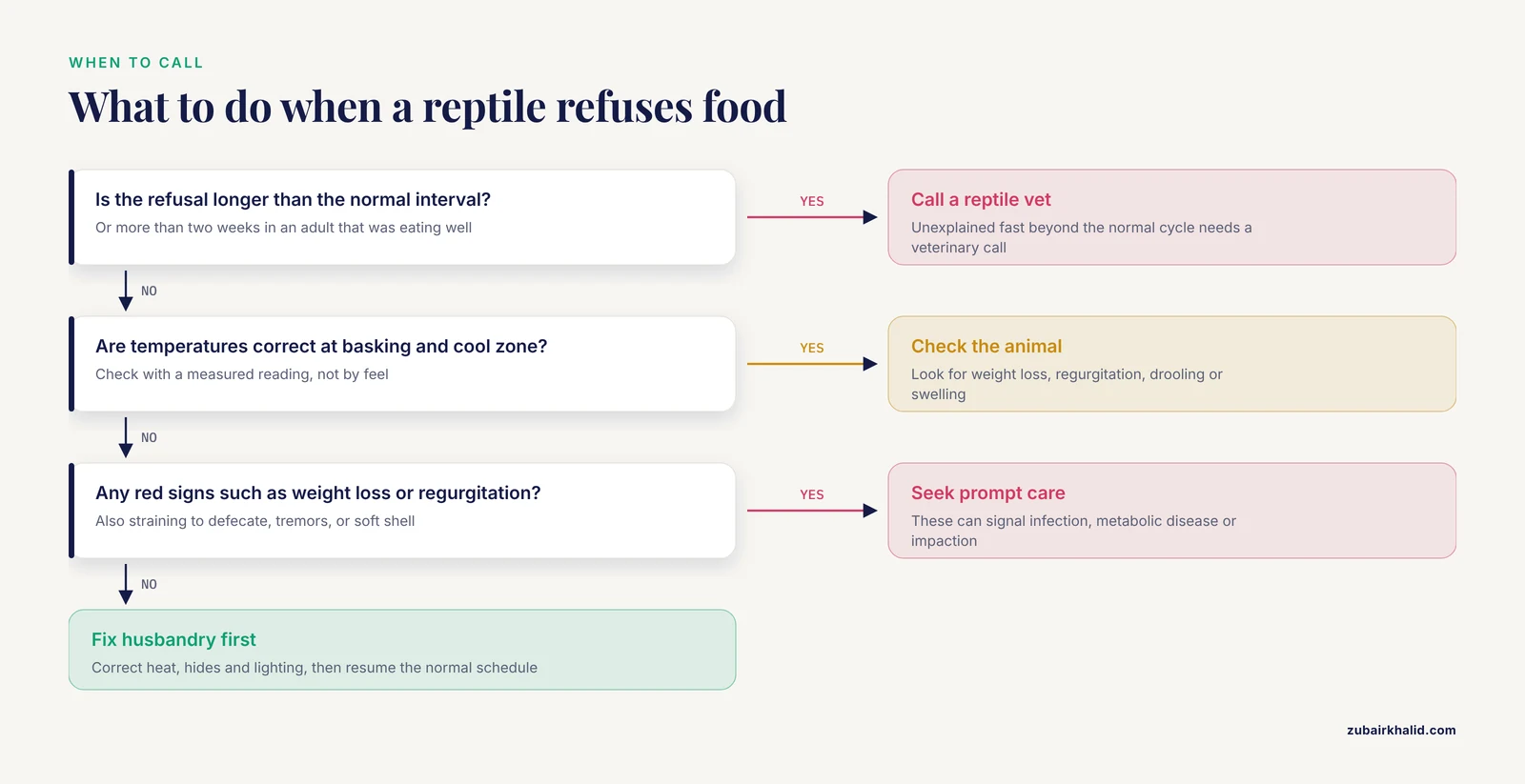
Feeding frequency guidance in this article reflects general patterns across reptile groups. Individual cases need a veterinarian, especially for species with specialized natural diets, very young animals, animals with existing disease, and breeding females, whose energy demands differ from the standard adult pattern.
Contact a reptile veterinarian promptly if you see any of the following:
- Complete refusal of food lasting beyond your species' normal inter-meal interval, or any refusal lasting more than two weeks in an adult animal that was previously eating well
- Progressive weight loss, visible spine or hip prominence, or a shrinking tail base in lizards and geckos
- Regurgitation, repeated open-mouth breathing, drooling, or swelling in the mouth, which can indicate infection or oral disease
- Straining to defecate, no fecal output over several cycles, or a change in stool consistency lasting more than a few defecations
- Lethargy combined with cold-seeking behavior, muscle tremors, or weakness, which can signal metabolic disease or hypocalcemia
- Any suspicion that the animal ingested substrate, prey bedding, or a foreign object
- Swollen limbs, soft shell, or deformity in turtles and tortoises, which points to mineral imbalance
For urgent signs such as profound lethargy, inability to lift the head, or suspected prey-animal bite injury, seek emergency exotic animal care the same day.
Frequently Asked Questions
How often should I feed an adult snake?
Most adult snakes do well on one appropriately sized meal every seven to fourteen days, and some species go longer. Postprandial uric acid in snakes stays elevated for extended periods after a meal, which is one reason frequent large meals are not advisable [2]. Confirm the interval for your exact species with a reptile veterinarian.
How often should I feed a bearded dragon?
Juveniles eat insect-heavy meals daily or near daily, while adults typically shift to an every other day or so pattern built around salads with periodic insect feedings. Bearded dragon metabolism continues processing a meal for 48 to 72 hours, and the response differs between plant and insect meals [1].
Can I leave food in the enclosure?
Remove fresh produce, insects, and any prey item the animal does not eat within a short window. Live rodents should never be left unattended with a snake. Water stays available at all times.
How long can a reptile safely go without eating?
It depends entirely on species, age, body condition, and health. Many adult snakes tolerate weeks between meals as a normal pattern, while a young insectivorous lizard missing several days is already a concern. Any unexplained fast longer than your animal's normal cycle deserves a veterinary call.
What time of day should I feed?
Feed when your species is naturally active. Diurnal lizards and tortoises feed during the day. Nocturnal geckos and many snakes feed best at dusk or after lights out. Aligning feeding with the animal's active phase improves strike response and digestion.
How do I know if I am overfeeding my reptile?
Watch monthly weight and body condition. Loss of a visible waist, thickened tail base in lizards, and fat deposits along the body are early signs. Adjust portions first, then frequency, and have a veterinarian confirm a target weight.
Do reptiles need vitamin supplements?
Many captive reptiles benefit from calcium and vitamin supplementation, but the correct product and schedule are species specific and depend on your lighting and diet. Have a reptile veterinarian prescribe a protocol rather than guessing, since even regulated feed additives carry safety limits for reptile species [13].
Should I feed my reptile during shedding?
Many reptiles reduce or refuse food during a shed cycle, and this is usually normal. Keep water fresh, maintain humidity, and resume the regular schedule once the shed is complete and the animal shows normal behavior again.
Sources
- Diet type, fasting duration, and computed tomography hepatic attenuation influence postprandial plasma lipids, β-hydroxybutyric acid, glucose, and uric acid in bearded dragons (Pogona vitticeps).
- The Amount of Food Ingested and Its Impact on the Level of Uric Acid in the Blood Plasma of Snakes.
- Comparative Nutrition and Physiology of Turtles: Mechanistic Insights for Sustainable Aquaculture and Conservation.
- Show Me Your Teeth And I Will Tell You What You Eat: Differences in Tooth Enamel in Snakes with Different Diets.
- How lacertids resolve spatial details: visual acuity in the common wall lizard (Podarcis muralis).
- Insectivore Nutrition - A Review of Current Knowledge.
- Anurans or Mice: What is the Best Food Item for Young and Adults of Bothrops jararacussu (Lacerda, 1884) in Captivity?
- Serum Biochemical Profile, Intestinal and Liver Histomorphometry of Captive Broad-Snouted Caiman (Caiman latirostris) Fed With a Diet Enriched With Soybean (Glycine max).
- Flaxseeds and thymol feed as dietary supplementation for Caiman latirostris: effects on immune status, meat quality and intestinal morphology.
- Macroscopic, microscopic, and immunofluorescent characterization of the Greek tortoise (Testudo graeca graeca) oropharyngeal floor with concern to its feed adaptation as a herbivorous land reptile.
- Hot dogs for snakes: alternative method for feeding coral snakes (Micrurus corallinus) maintained at Butantan Institute.
- Effects of Feeding Graded Levels of Gelatin Content on Growth, Feed Utilization and Health Status in Head-Started Leatherback Sea Turtles (Dermochelys coriacea).
- Safety and efficacy of the feed additives cobalt(II) acetate tetrahydrate, cobalt(II) carbonate, cobalt(II) carbonate hydroxide (2:3) monohydrate and cobalt(II) sulphate heptahydrate for bovines with a functional rumen, equidae, lagomorphs, rodents, herbivore reptiles, zoo mammals and camelids (Regal B.V.).